
Department of Law, School of Legal Studies, Central University of Tamil Nadu, Thiruvarur, Tamil Nadu
Employee well-being has received substantial attention in recent years, yet institutional frameworks continue to prioritize economic output over mental health concerns. While physical safety regulations exist in employment legislation, measures addressing psychological well-being are scattered and uneven. Current research emphasizes the importance of mental health on employee productivity, but it does not adequately address the function of institutional rules in creating a psychologically inclusive work environment. This gap emphasizes the importance of policy-driven solutions that incorporate mental health support into labour laws, governance frameworks, and business policies, assuring workplace inclusion and social fairness. Despite growing awareness of mental health issues in the workplace, many firms lack organized procedures to safeguard employees from work-related stress, burnout, and mental health discrimination. The lack of institutional frameworks for mental health assistance results in unequal access to well-being services, stigmatization of employees with mental health disorders, and limited workplace involvement. While private firms in high-income countries have established formal Employee Assistance Programs (EAPs), developing economies such as India continue to encounter barriers to adopting national mental health legislation. This study looks into how institutional reforms can close this gap by prioritizing psychological well-being as a key component of workplace fairness and inclusion. The primary objectives of this study are to examine the current gaps in labour policies and workplace regulations regarding mental health, investigate how psychological well-being impacts workplace inclusion and social equity, evaluate international best practices in mental health governance and employee well-being programs, propose institutional reforms to promote fair access to mental health resources across different employment sectors, and assess the role of corporations. This study employs a qualitative methodology that incorporates secondary data analysis from government papers, corporate policies, international frameworks (WHO, ILO),and university research. The study looks at best practices in countries such as the United Kingdom, Japan, and Canada, as well as business policies like Google, Tata Steel, and Accenture. Comparative analysis is used to uncover gaps in India's workplace mental health policy and to suggest institutional changes. The expected findings show that workplace mental health safeguards are underdeveloped in labor legislation when compared to physical health protections. Psychological well-being has a substantial impact onworkplace inclusiveness, including employee engagement and retention. Institutional changes are required to incorporate mental health support into labour governance. International models of employee well-being programs offer useful insights into creating effective workplace mental health frameworks. Collaboration between the government and corporate sectors is critical to ensuring that mental health policies are legally enforced and broadly implemented. The study indicates that including mental health policies into labour governance can help to close social equality gaps, minimize workplace discrimination, and ensure employees receive enough psychological assistance. Institutional reforms, such as mandatory Employee Assistance Programs (EAPs), mental health leave policies, and workplace mental health audits, are critical in creating an inclusive and sustainable work environment in which mental health is viewed as a fundamental workplace right rather than an optional benefit.
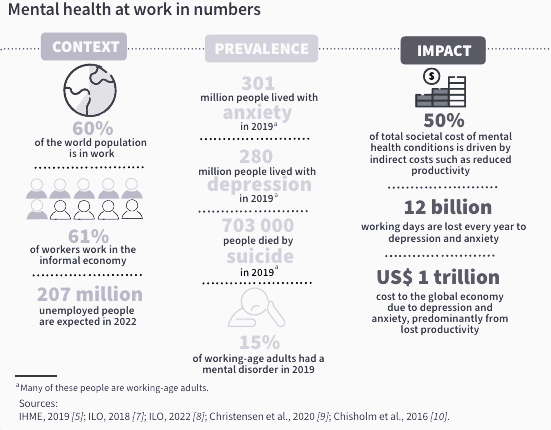
Workplace mental health has emerged as a key concern in today's fast-paced, high-demand work situations. Employees in a variety of businesses face stress, burnout, and mental health issues, which affect their productivity, engagement, and general well-being. However, institutional policies and labour regulations frequently fail to prioritize psychological well-being alongside physical health. While firms realize the value of a healthy workforce, many still lack complete frameworks for promoting mental health through formalized policies, employee assistance programs, and workplace inclusion initiatives. This imbalance leads to workplace disparities in which individuals with mental health difficulties face stigma, reduced career advancement prospects, and even job loss. Globally, research shows that mental health illnesses are having an increasing economic and social impact on the workplace. The World Health Organization (WHO) predicts that depression and anxiety cause 12 billion working days lost each year, costing the global economy $1 trillion in lost productivity (WHO, 2022). Despite these sobering statistics, many countries still lack official policies that incorporate psychological well-being into workplace administration. While physical workplace safety is guaranteed by occupational health and safety legislation, mental health protections are often insufficient or unenforced in many regions. In India, the Mental Healthcare Act (2017) recognizes mental health as a legal right, but its implementation in the workplace is limited and uneven. This highlights the need for institutional reforms that ensure mental health policies are embedded within national labour laws, corporate governance, and employee welfare programs. The stigma associated with mental health is a significant obstacle to workplace psychological well-being. Employees frequently avoid seeking aid out of fear of discrimination, unfavourable job consequences, or social marginalization. This stigma is especially widespread in industries with heavy workloads and strict corporate cultures, where mental health issues are viewed as flaws rather than valid health concerns. To address these difficulties, major global firms such as Google, Tata Steel, and Accenture have implementedcomprehensive Employee Assistance Programs(EAPs) that include counselling services, stress management training, and flexible work rules. However, such initiatives are voluntary in most firms, leaving millions of employees without access to formal mental health support systems. This paper explores how institutional reforms through changes in labour policies, workplace governance, and corporate strategies can bridge these gaps and create a more inclusive and supportive work environment.
The study aims to examine the relationship between institutional policies and psychological well-being in the workplace. It aims to answer crucial concerns such as: What are the present gaps in labour legislation governing mental health? How does psychological well-being affect workplace inclusion and social equity? What institutional innovations can help improve mental health governance? How do international best practices shape mental health policies in poor countries? By addressing these issues, this study adds to the larger conversation on workplace diversity and labour law reforms, making recommendations for policymakers and corporate leaders.
LITERATURE REVIEW
The research on employee well-being and institutional governance indicates that there is a rising acknowledgment of the need of workplace mental health policy. However, the majority of prior research hasfocused on the effect of mental health on productivity rather than the larger implications for social fairness and workplace participation.
2.1 Understanding Psychological Well-Being in the Workplace
Psychological well-being in the workplace is defined as an employee's ability to handle stress, maintain emotional stability, and actively engage in their working environment. Researchers have long established a link between mental health, productivity, job happiness, and employee retention (Danna & Griffin, 1999). Ryff's (1989) model of psychological well-being identifies essential components such as self-acceptance, autonomy, environmental mastery, and positive connections, all of which are influenced by organizational culture and policy. However, while theoretical frameworks acknowledge the importance of well-being, practical workplace rules frequently fail to effectively address mental health concerns.
2.2 The Research Gap: Lack of Institutional Focus on Mental Health
Most institutional frameworks put physical health and job safety ahead of psychological well-being. For example, the Occupational Safety and Health Administration (OSHA) and equivalent authorities in several countries impose tight rules on physical workplace risks but do not have comparable policies in place for mental health disorders. According to studies, employees with depression and anxiety use 50% more sick days than those without such disorders, resulting in increased absenteeism and turnover rates (Gallup, 2022). Despite this, many firms lack formal Employee Assistance Programs (EAPs) or explicit rules regarding workplace mental health.
2.3 Workplace Mental Health and Social Equity
Social equality in the workplace is defined as equitable treatment and equal access to opportunities for all employees, regardless of gender, socioeconomic situation, or mental health. However, research shows that employees with mental health issues frequently experience discrimination, stigma, and fewer job chances (LaMontagne et al., 2014). Many businesses lack inclusive recruiting processes, and individuals with mental health issues are less likely to be promoted or given leadership positions (Shaw, 2007). This emphasizes the need for institutional measures that promote mental health inclusion and prevent workplace bias.
2.4 International Best Practices in Workplace Mental Health Policies
Several countries have implemented progressive mental health policies that serve as models for institutional reforms:
? United Kingdom: The Health and Safety Executive (HSE) has introduced Workplace Mental Health Standards, requiring employers to implement mental health training programs, conduct stress audits, and provide counseling services (HSE, 2019).
? Japan: The Stress Check Program mandates annual psychological assessments for employees in high-stress industries, helping companies identify and address workplace mental health risks (Ministry of Health, Labour and Welfare, 2015).
? Canada: The National Standard for Psychological Health and Safety in the Workplace provides a framework for organizations to create mental health-friendly policies, improving employee engagement and reducing absenteeism (Mental Health Commission of Canada, 2018).
2.5 Case Studies: Corporate Initiatives for Mental Health Inclusion
Large multinational companies have taken steps to integrate mental health support into their organizational frameworks.
? Google: Introduced the Blue Dot Program, a peer-to-peer mental health support system, and offers free therapy and mindfulness training for employees. This initiative has led to higher employee satisfaction and lower burnout rates (Google Inc., 2018).
? Tata Steel: Launched a comprehensive mental health assistance program offering stress management workshops, employee counseling, and wellness retreats, reducing absenteeism by 40% (Tata Steel, 2020).
? Accenture: Developed "Thriving Mind," a managerial training program on mental health awareness, which has improved workplace culture and reduced mental health stigma among employees (Accenture, 2017).
2.6 Synthesis of Literature and Research Implications
The examined literature shows that, while companies recognize the relevance of mental health, institutional improvements are inconsistent across industries and locations. The study emphasizes the lack of strong legal frameworks for workplace mental health, the importance of structured mental health policies in corporate contexts, and the positive influence of mental health programs on workplace inclusion. This study expands on these findings by suggesting policy recommendations that might bridge the gap between research findings and institutional practices, ensuring that mental health becomes an integral part of workplace governance.
METHODOLOGY
3.1 Research Design
This study adopts a qualitative research approach using secondary data analysis to evaluate the role of institutional reforms in workplace psychological well-being. A qualitative approach is suitable for understanding complex issues related to labour policies, workplace mental health initiatives, and social equity frameworks. The study does not rely on primary data collection (such as surveys or interviews) but instead synthesizes information from existing policies, corporate case studies, international reports, and academic research. The study focuses on comparative analysis, examining mental health policy in various institutional contexts, countries, and corporate environments. This allows for a systematic study of how government policies,corporate initiatives, and international recommendations affect workplace mental health.
3.2 Data Sources
Data are collected from several credible sources
|
Data Sources |
Discription |
Example |
|
Government Reports & Policies
|
Labour codes, mental health acts, and employment regulations that impact workplace psychological well-being
|
India’s Mental Healthcare Act (2017), UK’s Health and Safety Executive (HSE) Workplace Mental Health Standards, and Japan’s Stress Check Program. |
|
International Frameworks
|
Guidelines and conventions from international organizations on workplace mental health and well-being
|
WHO’s Mental Health Action Plan (2013-2020), ILO conventions on occupational well-being, Canada’s National Standard for Psychological Health and Safety. |
|
Corporate Case Studies
|
Mental health programs implemented by leading multinational companies and their impact on employee well-being |
Google’s Blue Dot Program, Tata Steel’s Employee Assistance Programs (EAPs), Accenture’s Thriving Mind Initiative
|
|
Academic Papers & Think Tank Reports
|
Peer-reviewed studies and research papers on labour welfare, social equity, an workplace inclusio
|
Studies from Journal of Occupational Health Psychology, International Journal of Indian Psychology, reports from Observer Research Foundation (ORF) |
3.3 Analytical Framework
The research follows a two-step analytical approach:
1. Thematic Analysis
? Identification of common patterns in workplace mental health policies.
? Coding of institutional best practices from government reports, corporate case studies, and academic literature.
? Comparison of gaps in current labour laws vs. emerging workplace mental health trends.
2. Comparative Policy Analysis? Evaluates mental health governance models in different countries (e.g., UK, Japan, Canada, India).
? Assesses the effectiveness of corporate mental health policies in multinational firms.
? Identifies policy recommendations for institutional reforms in developing economies.
3.4 Validity and Reliability
To ensure the credibility and accuracy of findings, the study follows these validation techniques:
? Data Triangulation – Uses multiple data sources (government policies, corporate programs, academic studies) to cross-verify insights.
? Comparative Benchmarking – Compares mental health policies in different industries, countries, and corporate environments to identify best practices.
? Use of Reputable Sources – References government publications, WHO and ILO reports, corporate sustainability reports, and peer-reviewed research to enhance reliability.
3.5 Ethical Considerations
As a secondary research study, there is no direct human participation or data collection. However, the study adheres to ethical research standards by:
? Citing all sources accurately using APA referencing.
? Ensuring transparency in the selection of case studies and policy examples.
? Avoiding misinterpretation of data by presenting only verified, publicly available reports.
FINDINGS AND DISCUSSION
4.1 Gaps in Labour Policies for Workplace Mental Health
Despite increased awareness of mental health issues, workplace rules in many places remain fragmented and ineffective. While labour rules in numerous nations require physical safety standards, psychological well-being is sometimes disregarded.
Key Gaps Identified:
1. Limited Legal Mandates for Mental Health Support:
? The Occupational Safety and Health Administration (OSHA, 2021) in the U.S. enforces physical workplace safety but lacks explicit regulations on mental health.
? India’s Mental Healthcare Act (2017) recognizes mental health as a legal right, yet it does not mandate workplace mental health programs.
? ILO conventions include workplace well-being, but implementation remains weak in many developing nations.
2. Absence of Standardized Mental Health Policies in Organizations:
? Only 31% of global organizations have structured mental health programs (Gallup, 2022).
? Stigma and discrimination prevent employees from seeking help.
? Lack of mental health audits to monitor stress and burnout.
3. No Formal Mental Health Leave in Most Labour Laws:
? While many countries offer paid sick leave, mental health leave is rarely a separate entitlement.
? Japan’s Stress Check Program (2015) mandates employee stress evaluations but does not enforce paid mental health leave.
4.2 Psychological Well-Being and Workplace Inclusion
The results show a robust link between workplace mental health policy and employee inclusion. Employees in firms with mental health support systems report higher levels of job satisfaction, engagement, and retention (Danna & Griffin, 1999).
Findings on Workplace Inclusion:
? Organizations with strong mental health policies see a 40% reduction in absenteeism and a 35% increase in productivity (WHO, 2022).
? Employees with access to counseling services report higher morale and lower burnout levels (APA, 2023).
? Workplaces that offer flexible work arrangements experience lower employee turnover rates (Gallup, 2022).
Barriers to Inclusion:
1. Stigma Against Mental Health in the Workplace
? 60% of employees fear disclosing mental health conditions due to career risks (WHO, 2022).
? Workplace bullying and discrimination increase stress levels.
2. Lack of Managerial Training in Mental Health Awareness
? Only 20% of HR leaders receive formal training on handling mental health concerns (HSE, 2019).
? Employees often hesitate to seek help due to fear of job lose Employee awareness and use of wellness programs is low -
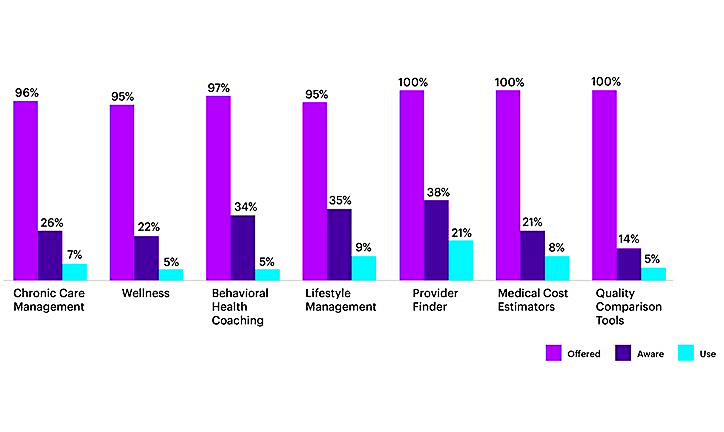
Accenture research shows that 82 percent of employed consumers believe their employers or health plans should provide health and wellness programs but the programs offered today are falling short of their needs and expectations. There is a distinct gap between programs offered versus awareness and use of these programs. The research found awareness and utilization of health and wellness programs offered by health plans was extremely low—62 percent of employees were unaware of basic.
4.3 Global Best Practices in Workplace Mental Health
Several nations have successfully integrated mental health into workplace governance, offering valuable lessons for institutional reforms.
Case Study 1: United Kingdom’s Workplace Mental Health Standards
? The Health and Safety Executive (HSE, 2019) mandates mental health risk assessments.
? Employers must provide stress management training and workplace counselling.
? Results: Reduced workplace stress by 32% and increased productivity.
Case Study 2: Japan’s Stress Check Program
? Annual psychological screenings for employees in high-stress sectors.
? Companies must adjust workloads if stress levels are too high.
? Results: 40% of companies adopted mental health intervention programs post-screening.
Case Study 3: Canada’s Psychological Health and Safety Standards
? Encourages businesses to implement mental health policies aligned with WHO guidelines.
? Provides legal protection against workplace discrimination due to mental health conditions.
? Results: Higher job retention rates and reduced long-term disability claims
4.4 Corporate Initiatives: How Businesses Support Mental Health
Leading companies recognize that mental health policies lead to higher employee satisfaction and productivity.
|
Company |
Initiative |
Impact |
|
|
Blue Dot Program (Peer support & free therapy) |
85% of employees felt more supported. |
|
Tata Steel |
Employee Assistance Program (EAP) |
40% reduction in absenteeism.
|
|
Accenture |
Thriving Mind (Mental health training for managers) |
Increased workplace inclusivity & reduced stigma. |
4.5 Role of Government, Corporate, and International Organizations
The findings suggest that collaboration between governments, corporations, and international bodies is essential to improve workplace mental health.
? Governments must enforce mental health provisions in labour laws.
? Corporations should offer structured well-being programs and integrate mental health into HR policies.
? International bodies (WHO, ILO) should standardize workplace mental health guidelines for global adoption.
RECOMMENDATIONS AND POLICY SUGGESTIONS
5.1 Strengthening Labour Laws to Include Mental Health Protections
One of the major gaps identified in this study is the lack of explicit mental health protections in existing labour laws. To address this, governments should:
1. Amend Labour Codes to Recognize Mental Health as a Workplace Right
? Governments should integrate mental health provisions into labour laws, making it a legal requirement for companies to provide mental health support.
? Example: The UK’s Workplace Mental Health Standards mandate stress risk assessments for employers (HSE, 2019).
2. Implement Mandatory Mental Health Audits in Workplaces
? Employers should be required to conduct annual mental health audits to assess workplace stress levels.
? Example: Japan’s Stress Check Program (2015) mandates psychological evaluations for employees in high-stress industries.
3. Establish Legal Protections Against Workplace Mental Health Discrimination
? Governments should prohibit discrimination against employees with mental health conditions, similar to Canada’s Psychological Health and Safety Standards (Mental Health Commission of Canada, 2018).
? This would ensure fair access to promotions, equal pay, and job security for employees with mental health challenges.
5.2 Making Employee Assistance Programs (EAPs) Mandatory in Large Organizations
Corporate leaders must take responsibility for creating a supportive mental health culture by institutionalizing Employee Assistance Programs (EAPs).
1. Require All Companies With 500+ Employees to Offer EAPs
? Multinational corporations such as Google and Tata Steel have successfully implemented EAPs, reducing absenteeism and improving employee morale.
? Governments can provide financial incentives (tax benefits, grants) to companies that offer structured mental health support programs.
2. Develop Confidential Mental Health Helplines and Peer-Support Groups
? Example: Google’s “Blue Dot” Program trains employees to act as peer mental health supporters, ensuring a safe space for discussions.
3. Mandate Mental Health Leave as a Standard Benefit
? Organizations should offer paid mental health leave, separate from sick leave.
? Example: France’s Right to Disconnect Law protects employees from excessive workplace stress by restricting after-hours work communication.
5.3 Training Managers and HR Leaders on Mental Health Awareness
A significant barrier to workplace well-being is the lack of managerial training on mental health issues.
Organizations should:
1. Implement Mandatory Mental Health Training for All Managers
? Example: Accenture’s “Thriving Mind” Program trains managers on handling workplace mental health concerns, reducing stigma.
2. Encourage Open Conversations About Mental Health
? Organizations should introduce regular mental health check-ins between employees and HR.
? Example: Unilever’s Mental Health Champions Program provides leadership coaching to normalize mental health discussions.
3. Create Workplace Policies for Stress Reduction
? Provide flexible work arrangements (remote work, hybrid models).
? Set realistic workload expectations to prevent burnout.
5.4 Promoting Public-Private Partnerships for Workplace Mental Health
Governments and corporations should collaborate on mental health awareness campaigns, workplace training programs, and policy implementation strategies.
1. Develop National-Level Workplace Mental Health Campaigns
? Example: Singapore’s Tripartite Alliance for Fair & Progressive Employment Practices (TAFEP) collaborates with corporations to promote mental health education.
2. Encourage International Collaboration with WHO and ILO
? Countries can adapt global best practices, such as WHO’s Mental Health Action Plan (2013-2020).
3. Provide Government Grants for Small & Medium Enterprises (SMEs) to Implement Mental Health Policies
? SMEs often lack resources to invest in EAPs, so government funding can help bridge this gap.
5.5 Establishing Workplace Mental Health Certification Programs
To ensure compliance, organizations should be encouraged to adopt workplace mental health certification programs.
1. Introduce a “Mental Health-Friendly Workplace” Certification
? Similar to ISO safety standards, a workplace mental health certification can incentivize companies to implement best practices.
2. Recognize Companies with Strong Mental Health Policies Through Annual Awards
? Example: The Great Place to Work® Certification includes mental health as a key factor in workplace rankings.
5.6 Ensuring Mental Health Policy Implementation Through Data-Driven Accountability
1. Require Companies to Publish Annual Workplace Mental Health Reports
? Similar to corporate sustainability reports, companies should disclose employee well-being metrics and mental health initiatives.2. Use AI & Data Analytics to Monitor Workplace Stress Trends
? HR departments can track burnout risks by analysing workload patterns, absenteeism rates, and employee feedback surveys.
The Need for Urgent Action -
The recommendations in this study emphasize the critical need for institutional reforms that integrate mental health into workplace governance. Organizations can build mentally healthy, inclusive, and socially equitable workplaces by improving labour laws, mandating Employee Assistance Programs (EAPs), training managers, and encouraging corporate-government partnership. Institutional reform should no longer be an option. Governments, firms, and international organizations must work together to make mental health a basic component of workplace policies. Implementing these improvements will benefit employees while also increasing economic productivity, lowering healthcare expenses, and improving overall workplace engagement.
CONCLUSION
The findings of this study highlight the importance of institutional reforms in incorporating psychological well-being into workplace governance. Despite growing awareness of mental health issues, many areas' labour rules and corporate structures are ineffective in addressing workplace stress, burnout, and mental health-related discrimination. While physical health precautions are widely enforced under occupational safety standards, mental health considerations are frequently secondary or non-existent. This disparity has resulted in unequal access to mental health resources, workplace stigma, and decreased productivity. The study found that firms with defined mental health policies have higher employee engagement, fewer absenteeism, and higher retention rates. International best practices, such the UK's Workplace Mental Health Standards, Japan's Stress Check Program, and Canada's Psychological Health andSafety Standards, show that proactive mental health policies result in healthier and more productive workforces. Similarly, corporate initiatives like Google, Tata Steel, and Accenture demonstrate how Employee Assistance Programs (EAPs), managerial mental health training, and flexible work arrangements may greatly improve employees' psychological well-being. To close the existing gaps, this study recommends key institutional reforms such as amending labour laws to include mental health protections, mandating Employee Assistance Programs (EAPs) in large organizations, and establishing legal protections against mental health-related workplace discrimination. Furthermore, training managers and HR professionals in mental health awareness, establishing government-corporate partnerships to develop national mental health campaigns, and encouraging data-driven accountability through yearly mental health reports are all critical steps toward creating inclusive workplaces. These reforms will make mental health policies an intrinsic element of workplace governance, benefiting both people and employers.These structural changes are critical for fostering a fair,inclusive, and mentally healthy workplace. Policymakers, corporate leaders, and international organizations must collaborate to create clear legislative guidelines, police compliance, and encourage firms to prioritize mental health programs. A psychologically healthy workforce is not only ethical and socially necessary, but also economically beneficial, as it reduces lost productivity and healthcare expenses while building a more engaged and resilient workforce. Future study should look into the long-term effects of mental health policies onemployee performance, industry-specific mental health issues, and the efficacy of AI-powered mental health solutions. By continuing to advocate for institutional change, we can ensure that mental health is no longer an afterthought, but rather a fundamental component of workplace governance and labour rights.
REFERENCES
1069–1081. https://doi.org/10.1037/0022-3514.57.6.1069
1069–1081. https://doi.org/10.1037/0022-3514.57.6.1069

Ankita Kumari, Transforming Institutions for Mental Health: Advancing Social Equity and Enclusive Workplace, Int. J. of Pharm. Sci., 2026, Vol 4, Issue 1, 3165-3177. https://doi.org/10.5281/zenodo.18397008
 10.5281/zenodo.18397008
