

We use cookies to ensure our website works properly and to personalise your experience. Cookies policy
Department of Pharmaceutics, Poona District Education Association’s Seth Govind Raghunath Sable College of Pharmacy, Saswad, Pune, Maharashtra, India.
The evolution of additive manufacturing has transitioned from static 3D structures to dynamic 4D-printed systems, marking a paradigm shift in pharmaceutical technology [1,2]. 4D printing incorporates the dimension of time, allowing 3D-printed constructs to undergo programmed transformations in response to external stimuli such as pH, temperature, moisture, or enzymatic activity [1,3,6].This review examines the application of 4D printing in developing smart drug delivery systems (SDDS) tailored for personalized medicine [11, 28]. We examine the fundamental principles of shape-memory polymers and hydrogels used as smart inks [4, 17, 25]. The manuscript further discusses how these systems overcome the limitations of traditional dosage forms by providing site-specific release and adaptive mechanical properties [7, 15].By utilizing patient-specific anatomical data, 4D printing enables fabrication of bespoke delivery devices that synchronize drug-release kinetics with individual physiological needs [27,28]. Challenges regarding regulatory approval, material biocompatibility, and large-scale manufacturing are also addressed [20,21,24]. Ultimately, 4D printing represents the next frontier in achieving truly personalized pharmaceutical care [29].
The pharmaceutical industry is transitioning from mass-produced blockbuster drugs toward a patient-centric model known as personalized medicine [13,21]. While 3D printing (3DP) has demonstrated the ability to create complex geometries and customized dosages—as evidenced by FDA approval of Spritam®—the printed structures remain static and incapable of responding to physiological changes [13,14].4D printing (4DP) addresses this limitation by enabling printed structures to change shape, properties, or functionality over time in response to specific stimuli [1,6] . In drug delivery, this allows the development of smart systems capable of navigation, anchoring, and site-specific release triggered by internal biological cues such as pH or temperature changes [7,11].The pharmaceutical landscape is currently undergoing a transformative shift from the traditional "one-size-fits-all" blockbuster drug model toward a patient-centric paradigm known as personalized medicine [13, 21]. This evolution aims to tailor therapeutic interventions to the individual physiological needs, anatomical variations, and circadian rhythms of patients [28]. Central to this transition has been the advent of Additive Manufacturing (AM). 3D printing (3DP) has already demonstrated significant success in creating complex geometries and customized dosages, highlighted by the landmark FDA approval of Spritam® [13, 14] . However, traditional 3D-printed constructs remain essentially static; they lack the capacity to adapt or respond to the dynamic and fluctuating environment of the human body [16, 21].4D printing (4DP) emerges as the technological solution to these limitations. First conceptualized by Tibbits, 4DP is defined as the use of additive manufacturing techniques to fabricate objects that can change their shape, properties, or functionality over time when exposed to specific external stimuli [1, 6]. In this context, the "fourth dimension" is time [1, 10]. By integrating stimuli-responsive materials—often referred to as "smart inks"—4DP allows for the pre-programming of biological or mechanical behaviors into a dosage form [3, 15] .In the field of pharmaceutics, 4D-printed Smart Drug Delivery Systems (SDDS) offer unprecedented control over pharmacokinetics [11, 28]. These devices can be engineered to navigate the complex vasculature, anchor themselves to specific target tissues, or trigger the release of a therapeutic payload only upon encountering internal biological cues such as local pH shifts, enzymatic concentrations, or temperature changes [7, 9, 23]. For example, 4DP enables the fabrication of gastro-retentive systems that expand upon reaching the stomach to prevent premature emptying, as well as stents that self-deploy via thermal activation [2, 4, 27].Despite its potential, the transition from 3D to 4D printing in clinical pharmacology introduces new complexities regarding material biocompatibility, the stability of active pharmaceutical ingredients (APIs) during high-temperature fabrication, and a currently undefined regulatory framework for "dynamic" medical devices [20, 24, 29]. .This review examines the fundamental principles of 4DP, the chemistry of stimuli-responsive polymers, including Shape Memory Polymers (SMPs) and hydrogels, and the future trajectory of these systems in achieving truly autonomous, personalized pharmaceutical care [18, 25, 26].
Role of Smart Polymers in Personalized Pharmaceuticals
Smart polymers play a central role in enabling personalization in 4D-printed drug delivery systems by providing programmable, stimuli-responsive, and adaptable material properties. Unlike conventional pharmaceutical excipients, smart polymers possess the ability to change their shape, structure, permeability, or mechanical behavior over time when exposed to specific environmental triggers such as temperature, pH, moisture, light, or biological signals[¹¹,²6]. This dynamic behavior allows drug delivery systems to be designed according to individual patient needs rather than relying on uniform, one-size-fits-all dosage forms.One of the most important characteristics of smart polymers is their shape-memory effect, which enables a printed dosage form to be temporarily fixed in one shape and later recover its original configuration under physiological conditions[³,4]. Polymers such as polycaprolactone, polyurethane, and shape-memory hydrogels have been widely studied for this purpose due to their biocompatibility, biodegradability, and tunable transition temperatures[¹8,²7]. These properties allow dosage forms to be programmed to expand, unfold, or activate drug release only after reaching the target site, thereby improving therapeutic precision and patient compliance[¹²].Smart polymers also allow precise control over drug release kinetics, which is essential for personalized therapy. By modifying polymer composition, cross-linking density, and molecular architecture, it is possible to tailor drug release profiles such as immediate, sustained, delayed, or pulsatile release within a single 4D-printed system[¹4,¹5]. This is particularly beneficial for patients requiring individualized dosing regimens, such as pediatric, geriatric, or chronically ill populations, where standard doses may be ineffective or unsafe[12].The use of multi-material smart polymer systems further enhances personalization by enabling spatial control of both mechanical properties and drug distribution. Different polymer regions within the same dosage form can respond differently to stimuli, allowing complex, sequential drug release behaviors to be programmed during the design stage[7,²³]. Such systems enable the fabrication of personalized oral devices capable of releasing multiple drugs at different time points or locations within the gastrointestinal tract[¹?].In addition, smart polymers contribute significantly to patient-specific design flexibility in 4D printing. Digital design files can be easily modified to adjust dosage strength, geometry, and release behavior based on individual patient data such as age, metabolism, disease severity, and genetic profile[¹?,²?]. This capability aligns strongly with the principles of precision medicine and represents a major advancement over traditional mass-manufactured pharmaceuticals[¹²].Despite their advantages, the pharmaceutical application of smart polymers requires careful material selection to ensure long-term stability, reproducibility, and safety. Ongoing research focuses on optimizing polymer formulations to maintain drug integrity during printing and storage while ensuring predictable transformation behavior after administration[¹¹,²?]. Continued advancements in smart polymer science are therefore critical to the successful clinical translation of 4D-printed personalized pharmaceuticals[¹?,³?].
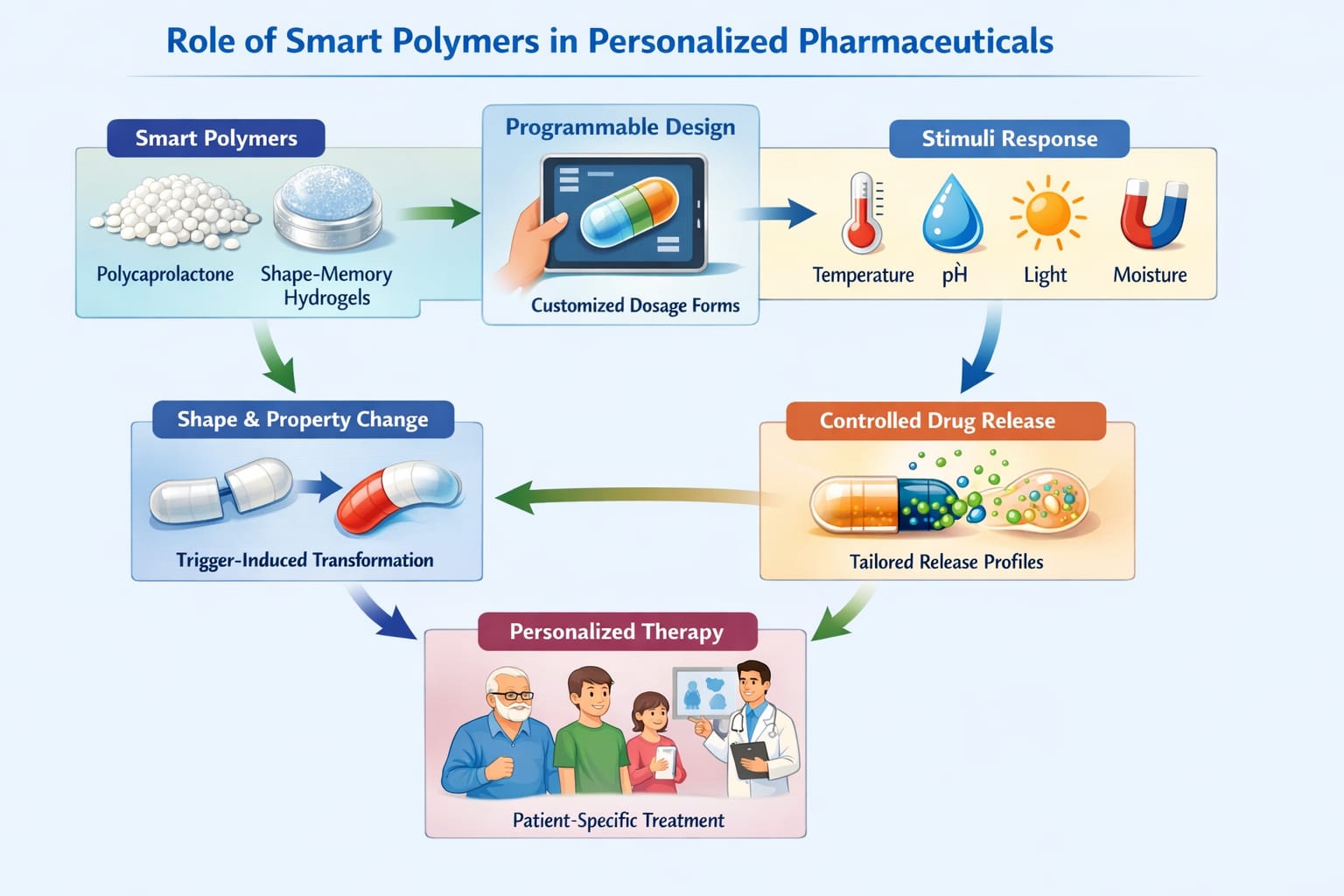
MECHANISM:
1. The Shape Memory Effect (SME)
?The primary mechanism behind 4D-printed pharmaceutical devices is the Shape Memory Effect. This process involves three distinct stages:
?Programming (Setting the Temporary Shape): The 3D-printed device is deformed under specific conditions (e.g., heating above its glass transition temperature, T_g) into a temporary, compact form—such as a folded pill or a compressed stent [4, 6].
?Storage: The material is cooled, "locking" the polymer chains in a high-energy, frustrated state [9, 19] .
?Recovery (Activation): Upon exposure to a stimulus (e.g., body temperature of 37°C), the internal stresses are released, and the device returns to its "permanent" or original 3D-printed geometry [26, 27].
?2. Stimuli-Responsive Transformation Mechanisms
?4D-printed systems are engineered to respond to specific biological triggers that act as the "key" to unlock the drug payload.
?A. Thermal and Physical Triggers
?Many SDDS utilize polymers like Polycaprolactone (PCL) or Polyurethane (PU), which respond to the body's thermal energy [4, 27]. When the device reaches the target site, the heat triggers a phase transition, causing the structure to expand or contract, thereby altering the surface area available for drug release [11, 28].
?B. Chemical and pH Triggers
?In gastrointestinal delivery, pH-responsive hydrogels act as the primary mechanism. These polymers contain acidic or basic functional groups that ionize at specific pH levels [3, 24].
?Mechanism: In the acidic environment of the stomach, the polymer chains remain collapsed. Upon entering the more alkaline environment of the small intestine, the chains ionize and repel each other, causing the hydrogel to swell and release the encapsulated drug [18, 24] .
?C. Biological and Enzymatic Triggers
?Recent advancements focus on "biomimetic" mechanisms where the presence of specific enzymes or glucose levels triggers a structural change [10, 16]. For instance, a 4D-printed shell may degrade only in the presence of colon-specific enzymes, ensuring site-specific delivery and reducing systemic side effects [5, 12].
?3. Kinetic Control via Structural Programming
?The mechanism of drug release in 4D printing is often a result of geometric evolution. As the structure changes shape, it alters the mathematical parameters of release:
?Surface-to-Volume Ratio: A 4D-printed device might unfold from a sphere into a star shape, drastically increasing the surface area exposed to fluid, which accelerates drug dissolution at a programmed time [1, 29].
?Mechanical Actuation: Some 4D structures act as "soft actuators" or "theragrippers" that physically grip the mucosal tissue upon activation, preventing the device from being washed away by peristalsis and allowing for sustained, localized absorption [17, 20] .
?4. Multi-Material and Hierarchical Mechanisms
?Advanced 4D printing often employs multi-material structures where different parts of the device react to different stimuli [7, 23]. This allows for a "sequential" mechanism:
?Stimulus 1 (e.g., Magnetism): Navigates the device to the target site [20].
?Stimulus 2 (e.g., Light or Heat): Triggers the unfolding and release of the drug [11, 25] .
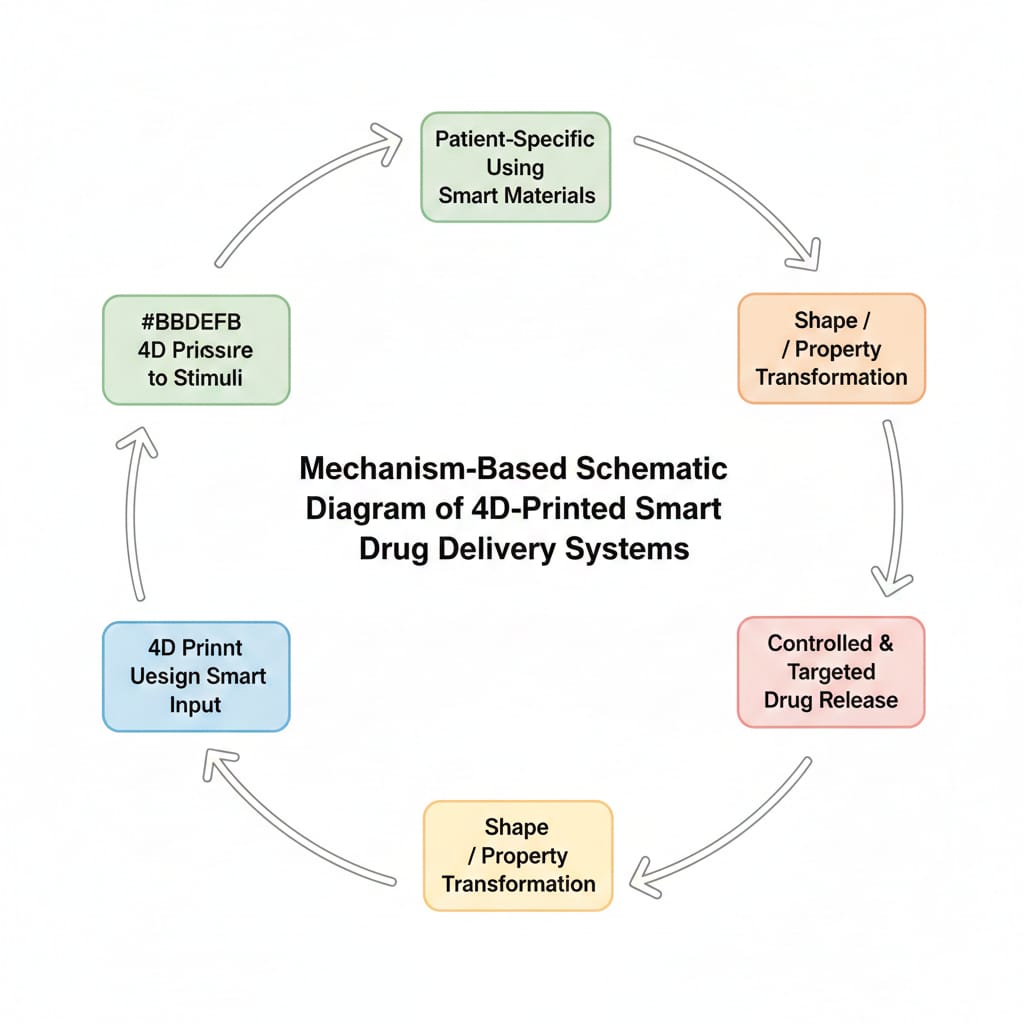
2. FUNDAMENTALS OF 4D PRINTING IN PHARMACEUTICS
2.1 The Dimension of Time
The defining feature of 4D printing is the pre-programming of material behavior through computational and mathematical modeling [1,15]. .Time-dependent transformations enable delayed-onset, pulsatile, or sustained drug-release profiles that respond to physiological triggers rather than passive erosion [3,11] .
2.2 Stimuli-Responsive Mechanisms
Stimuli activating 4D systems are broadly classified as [25] .
Physical stimuli: temperature, light, electric and magnetic fields [6,19]
Chemical stimuli: pH, ionic strength, solvent composition [3,17]
Biological stimuli: glucose levels, enzymes, protein concentrations [9,28]
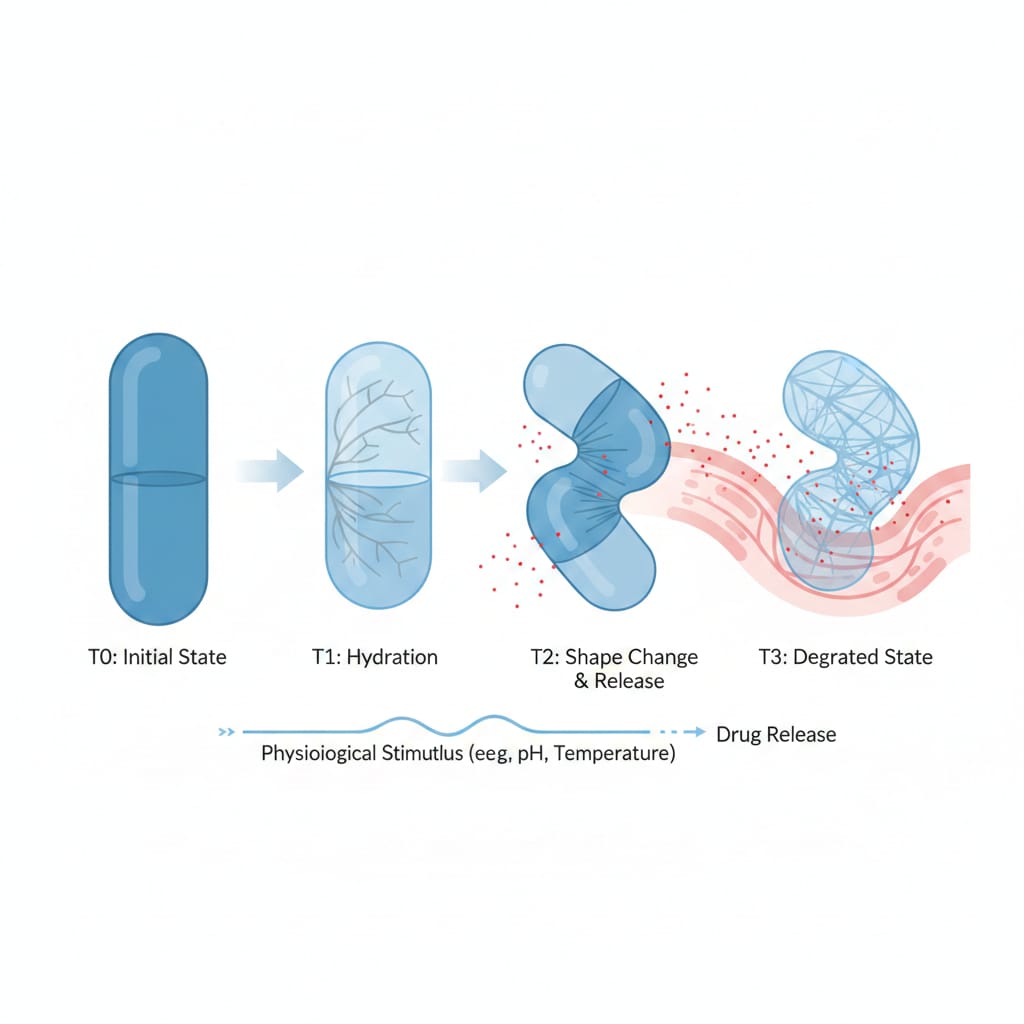
3. ADVANCED MATERIALS FOR 4D PRINTING
3.1 Shape-Memory Polymers (SMPs)
Shape-memory polymers (SMPs) can be deformed into a temporary shape and recover their original configuration upon exposure to an external stimulus such as heat [4,18] .Their tunable glass-transition temperature makes them ideal for pharmaceutical applications [25] .
Polyurethane (PU): Exhibits excellent biocompatibility and adjustable thermal properties [6,8] .
Polycaprolactone (PCL): A biodegradable polymer with low melting temperature widely used in 4D-printed drug-delivery scaffolds [4,26] .
3.2 Stimuli-Responsive Hydrogels
Hydrogels are cross-linked polymer networks capable of reversible swelling or shrinking [17,23].
pH-responsive hydrogels: Poly(methacrylic acid) expands in alkaline environments, suitable for enteric drug delivery [3,23]
Thermo-responsive hydrogels: Poly(N-isopropylacrylamide) (PNIPAM) exhibits a phase transition near body temperature [17,25]
4. FABRICATION TECHNIQUES
4.1 Fused Deposition Modeling (FDM)
FDM involves extrusion of drug-loaded thermoplastic filaments. Polymers such as PCL and PLA enable fabrication of compressible structures suitable for minimally invasive administration [13,14,26].
4.2 Stereolithography (SLA) and Digital Light Processing (DLP)
SLA and DLP employ UV-induced polymerization of liquid resins, offering superior resolution (up to 25 μm) for micro-scale drug-delivery systems such as microneedles and microdevices [12,23].
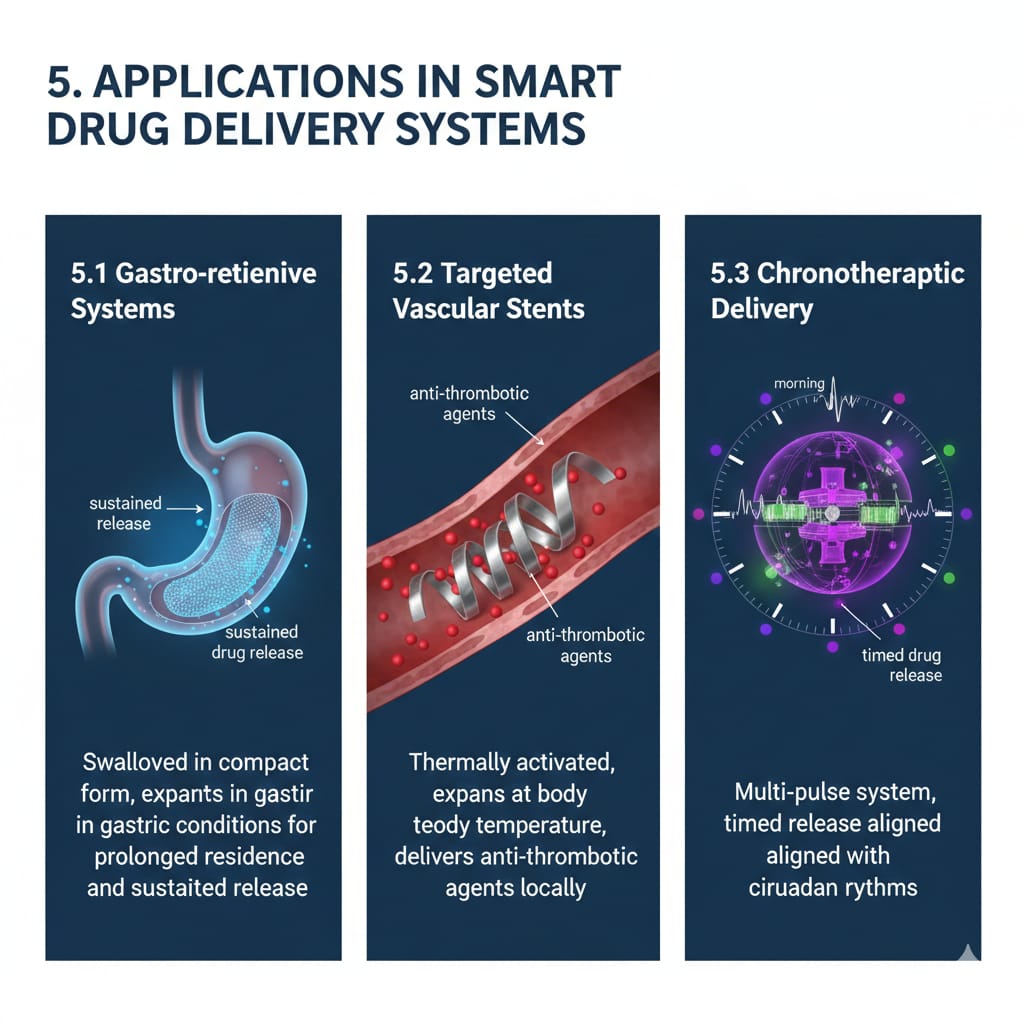
5. APPLICATIONS IN SMART DRUG DELIVERY SYSTEMS
5.1 Gastro-retentive Systems
4D-printed expandable devices can be swallowed in compact form and expand upon exposure to gastric conditions, enabling prolonged gastric residence and sustained drug release [11,22].
5.2 Targeted Vascular Stents
Thermally activated 4D-printed stents expand at body temperature and deliver anti-thrombotic agents locally, reducing systemic side effects [8,27].
5.3 Chronotherapeutic Delivery
4D-printed multi-pulse systems enable timed drug release aligned with circadian rhythms, improving therapeutic outcomes in diseases like asthma and rheumatoid arthritis [7,29].
RESULTS AND DISCUSSION
6.1 Performance Evaluation
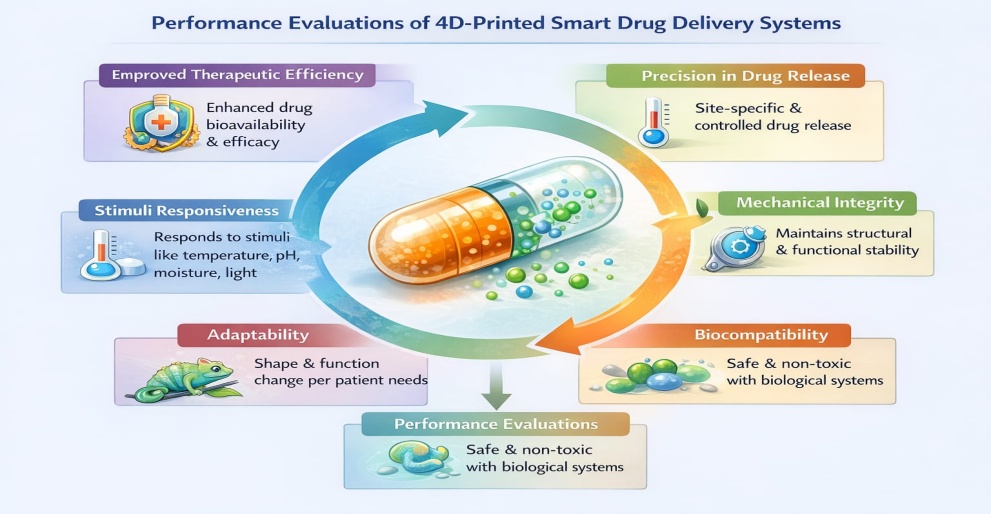
Studies report that 4D-printed PCL scaffolds loaded with ibuprofen exhibit more consistent release profiles compared to static 3D-printed systems due to programmed surface-area changes [26,28]. The performance of 4D-printed smart drug delivery systems is evaluated based on their stimuli responsiveness, precision in drug release, mechanical integrity, biocompatibility, adaptability, and therapeutic efficiency. Unlike conventional and 3D-printed dosage forms, 4D-printed systems incorporate time-dependent functional transformations, enabling them to respond dynamically to environmental stimuli such as temperature, pH, moisture, light, and magnetic fields.[1,3]Several studies have demonstrated that shape-memory polymers (SMPs) and smart hydrogels used in 4D printing exhibit reliable shape recovery and controlled deformation, ensuring predictable drug release kinetics[4,18,26]. Zhou et al. reported that smart polymers employed in 4D-printed systems significantly improve site-specific drug release, minimizing premature drug loss and enhancing therapeutic efficiency[3]. Similarly, Melocchi et al. showed that pharmaceutical formulations utilizing shape-memory materials achieve programmable release profiles, outperforming traditional matrix systems [4]From a mechanical standpoint, 4D-printed dosage forms maintain sufficient structural integrity during handling and administration, while enabling transformation at the target site[?,¹?]. Studies on polycaprolactone-based and polyurethane-based SMPs confirm adequate tensile strength, elasticity, and repeatability of transformation, which are crucial for oral and implantable drug delivery systems[27,6]Biocompatibility and safety assessments indicate that most materials used in 4D printing—such as hydrogels, biodegradable polymers, and elastomers—demonstrate minimal cytotoxicity and favorable biological interactions[10,16,24] Additionally, 4D printing allows patient-specific customization, enabling personalized dosing, geometry, and release behavior, which significantly enhances treatment outcomes in chronic and complex diseases[8,29].Overall, the performance of 4D-printed smart drug delivery systems surpasses conventional and 3D-printed platforms by integrating adaptability, precision, and personalization, marking them as a transformative advancement in novel drug delivery systems[12,25].
6.2 Comparative Analysis of Technologies
|
Parameter |
3D Printing |
4D Printing |
|
Material |
Static Polymer |
Stimuli-Responsive Polymer |
|
Design |
Fixed Architecture |
Transformative Architecture |
|
Drug Release |
Passive(Diffusion) |
Active ( Triggered) |
|
Application |
Patient-specific dose |
Patient- specific Response |
6.3 Current Challenges
??Drug Stability: The high temperatures used in FDM can degrade sensitive APIs.
?Regulatory Hurdles: The FDA currently lacks a specific framework for "dynamic" medical devices that change shape inside the body.Despite promising advancements, several technical, material, regulatory, and translational challenges hinder the widespread clinical adoption of 4D-printed drug delivery systems. One of the primary challenges is the limited availability of pharmaceutical-grade smart materials that exhibit predictable shape transformation while maintaining drug stability and biocompatibility[3,11].Material complexity presents another significant obstacle. Many stimuli-responsive polymers require precise environmental conditions to activate transformation, making it difficult to ensure consistent performance across diverse physiological environment [26,20]. Moreover, long-term stability of shape-memory behavior under storage and physiological conditions remains inadequately explored[4,18].From a manufacturing perspective, complex fabrication processes and high production costs limit scalability[6,23] Achieving reproducibility in multi-material printing, especially for drug-loaded systems, poses challenges related to print resolution, drug uniformity, and batch-to-batch consistency[1,8]Regulatory uncertainty is another major barrier. Current regulatory frameworks are primarily designed for conventional pharmaceuticals and medical devices, making it difficult to classify and approve 4D-printed drug delivery systems[21,22]. The lack of standardized guidelines for evaluating safety, efficacy, and quality control further delays clinical translation[21]Additionally, integration into existing healthcare systems requires advanced digital infrastructure, skilled personnel, and validated quality assurance protocols[14,15] Ethical and legal considerations related to personalized manufacturing and data security also remain unresolved[21]
7. FUTURE PERSPECTIVES
?The integration of Artificial Intelligence (AI) with 4D printing—sometimes called 5D printing—will allow for the creation of devices that not only react to stimuli but also "learn" and adapt their release rates based on real-time physiological feedback.
The future of 4D-printed smart drug delivery systems is highly promising, with the potential to redefine personalized medicine and digital healthcare. Advances in smart polymer chemistry and hydrogel engineering are expected to yield multi-stimuli responsive materials capable of more precise and programmable drug release[3,11,24] Integration of artificial intelligence (AI) and computational modeling with 4D printing may enable predictive design of dosage forms tailored to individual patient physiology, disease progression, and pharmacokinetics[¹²,²?]. Furthermore, the combination of 4D printing with bioprinting and microfluidic technologies could facilitate responsive implantable systems for localized and sustained drug delivery[10,13].Regulatory evolution is anticipated as authorities increasingly recognize additively manufactured pharmaceuticals. Development of standardized testing protocols and regulatory pathways will accelerate clinical translation[21,25]. Collaborative efforts between academia, industry, and regulatory bodies are essential to establish manufacturing standards and validation frameworks.In the long term, 4D-printed systems may enable self-regulated drug delivery, where dosage forms autonomously adjust release in response to real-time physiological feedback, significantly improving treatment safety and efficacy[29,30]. This paradigm shift aligns closely with the goals of precision medicine and patient-centric therapy.
CONCLUSION
4D printing is no longer a theoretical concept but a burgeoning reality in pharmaceutical science. Bridging the gap between material science and clinical pharmacy offers a path toward truly personalized, autonomous, and highly effective therapeutic interventions.4D-printed smart drug delivery systems represent a significant evolution in novel drug delivery technologies, offering dynamic, stimuli-responsive, and patient-specific therapeutic solutions. Performance evaluations demonstrate superior control over drug release, enhanced adaptability, and improved therapeutic outcomes compared to conventional and 3D-printed systems. However, challenges related to material limitations, manufacturing complexity, regulatory uncertainty, and scalability must be addressed to enable widespread clinical implementation. Ongoing research in smart materials, digital design, and regulatory science is expected to overcome these barriers.With continued interdisciplinary collaboration and technological advancements, 4D-printed smart drug delivery systems have the potential to transform pharmaceutical manufacturing and personalized healthcare, marking a new frontier in the future of drug delivery science.
ACKNOWLEDGMENT
?The authors declare no conflict of interest. This work was supported by the University Research Grant.The authors would like to express their sincere gratitude to all researchers and scholars whose published work has contributed significantly to the understanding and advancement of 4D printing and smart drug delivery systems. The insights derived from their studies formed the scientific foundation for this review.The authors also acknowledge the support and guidance received from faculty members and mentors for their valuable suggestions, academic encouragement, and constructive feedback during the preparation of this manuscript. Their expertise and critical insights greatly enhanced the quality and clarity of the review.Additionally, the authors are thankful to the academic and institutional resources that provided access to scientific literature, journals, and databases essential for completing this work. Special appreciation is extended to peers and colleagues for their continuous motivation and discussions that helped refine the concepts presented in this article.No specific funding was received for the preparation of this review article, and the authors declare no conflict of interest related to this work.
REFERENCES







Rukkaiya Mokashi*, Gauri More, Akshada Jamdade, Tejal Pabale, Manoj Palve, Abhishek Kamble., 4D-Printed Smart Drug Delivery Systems: The Next Generation of Personalized Pharmaceuticals, Int. J. of Pharm. Sci., 2026, Vol 4, Issue 2, 1800-1810. https://doi.org/10.5281/zenodo.18619671
 10.5281/zenodo.18619671