View Article

Abstract

Human beings have been using herbs for different purpose like food, medicine, beautifying. The word cosmetic was derived from the Greek word “Kosmo tikos” meaning having the power, arrange, skill in decorating. Cosmeceutical are a combination of cosmetics and pharmaceuticals. These are cosmetic preparations that also provide health-related functions. An herb is a plant or plant extract, including leaves, bark, berries, roots, gums, seeds, stems and flowers which are bestowed with nourishing and healing elements. Herbs and spices have been used in maintaining and enhancing human beauty. Indian women have long used herbs such as Sandalwood and Turmeric for skin care, Henna to color the hair, palms and soles; and natural oils to perfume their bodies. The herbal cosmetics manufactured and used commonly for daily purpose include herbal face wash, herbal conditioner, herbal soap, herbal shampoo etc. The natural herbs and their products when used for their aromatic value in cosmetic preparation are termed as herbal cosmetics. The increased demand for the natural product has created new avenues in cosmeceuticals market.

Keywords

Herbal cosmetics, skin cosmetics, hair cosmetics, tooth cosmetics, preparation and evaluation of cosmetics.

Introduction

Cosmetics are products that are created for application on the body for the purpose of cleansing, beautifying or altering appearance and enhancing attractive features.

Herbal cosmeceuticals:

Cosmetics containing an active ingredient obtained from plant origin are generally known as herbal cosmetics.

Cosmetic Preparation are divided into 3 categories.

  • Solid: Face Powder, Talcum Powder, Compact Powder
  • Semisolid: Cream, Ointment, Liniments
  • Liquid: Lotion, Hair Oil, Shampoo, Mouthwashes, Sprays etc.

In earlier time, herbs were used for both medicinal purpose as well as for beautification. These had been used in both forms, i.e. fresh form & dried form. These can be used by mashing & directly applying to the body with or without using other ingredients.

  • Infusions: These are basically strong teas of herbs and can be prepared either in China clay pots or stainless-steel vessels. Aluminium vessels should not be used as these can taint infusions.
  • Decoctions: these are prepared by boiling the herb with water.
  • Extracts and tinctures: extracts are generally prepared with hydro alcoholic solvents with high percentage of alcohol.
  • Flower waters: flower waters are made in the same way as infusions. the same proportions of herbs and water can be used.      

Raw Materials Generally Used in Herbal Cosmetics:

Oils, Waxes, Gums, Hydrophilic Colloids, Colours, Perfumes, Protective Agents, Bleaching Agents, Preservatives, Antioxidants and Other Auxillary Agents.

Oils: Oils are derived from vegetable and mineral sources, and are used in cosmetics.

Examples of vegetable oils are almond oil, arches oil, castor oil, olive oil and coconut oil. Examples of mineral oils are light and heavy paraffin.

Waxes: Waxes are the esters resulting from the condensation of high molecular straight chain fatty acids with high molecular straight chain monohydric alcohol of the methanol series. They are used in cosmetics as a base, along with oils and fats.

Examples Beeswax, Carnauba Wax, Paraffin Wax, Spermaceti.

Colours: Colours have been used in cosmetics, since time immemorial, by human beings. Basically, the desire to buy a cosmetic product is controlled by three senses, namely, sight, touch and smell. Color is a visual sensation which can be caused by a definite wavelength or a group of wavelengths by an object through one or more of the following phenomena - emission, refection, refraction or transmission.

Natural colors such as cochineal, saffron and chlorophyll, Rose, Jasmine Essential Oil, Lavender, Tuberose, Champa, Cinnamon, Sandalwood.

Protective Agents: In the formulation of creams, silicones act as protective agents; a combination of silicones with other barrier agents like petroleum jelly beeswax, paraffin etc. can produce excellent barrier creams.

Examples: Bleaching agents, Hydroquinone’s, Catechol and its derivatives, ascorbic acid and its derivatives, oxidizing agents, opaque covering agents.

Preservatives: These are the agents which are used to prevent spoilage of cosmetic products/They are products of the oxidation of oils and fats and also the growth of microorganisms. Most cosmetic preparations, especially those containing water are likely to deteriorate if preservatives are not added.

Examples:

  • Organic acids: Benzoic acid, Formic acid
  • Alcohols: Ethyl alcohol, Isopropyl alcohol
  • Aldehydes: Formaldehyde, Cinnamic aldehyde
  • Phenolics: Cresol, Phenol
  • Esters: Methyl p-hydroxy benzoate, Ethyl p-hydroxy benzoate
  • Mercury: Thiomersol, Nitromersol
  • Surface active agents: Benzalkonium chloride, Cetylpyridinium chloride
  • Miscellaneous compounds: Ethyl Vanillin and Vanillin

Antioxidants: Natural antioxidants like tocopherols present in fats and oils are destroyed during their fining process. Hence, the addition of antioxidants is essential to avoid the rancidity of fats and oils in cosmetics due to oxidative deterioration. Some of the common antioxidants used in cosmetic preparation are:

  • Amines: Purines and lecithin
  • Phenols: Gallic acid, Methyl gallate
  • Quinones: Tocopherols, Hydroxychromans
  • Esters: Di-lauryl thiopropionate
  • Organic acids: Ascorbic acid
  • Alcohols: Sorbitol and Mannitol

Advantages of herbal cosmetics:

  • Prepared from natural plant-based ingredients, making them safer for use.
  • Less skin irritation and fewer side effects compared to synthetic cosmetics.
  • Free from harsh chemicals like parabens and artificial colors.
  • Provide nourishment and protection due to vitamins and antioxidants.
  • Suitable for long-term and regular use.
  • Eco-friendly and biodegradable, causing minimal environmental harm.
  • Possess therapeutic properties such as anti-aging and antimicrobial effects.
  • Better skin compatibility, especially for sensitive skin.

Disadvantages of herbal cosmetics:

  • Herbal drugs have slower effects as compare to Allopathic dosage form. Also, it requires long term therapy.
  • They are difficult to hide taste and odour.
  • Most of the herbal drugs are not easily available.
  • Manufacturing process is time consuming and complicated.
  • No pharmacopoeia a defines any specific procedure or ingredients to be used in any of herbal cosmetics.

Some Important Applications of Herbal Cosmetics:

  • Herbal Skin Care Products: Lavender Silk Soaps, Lotions creams, Body powder, Lavender Herbal body powder, Skin Care Creams.
  • Herbal Hair Care Cosmetics: Henna (Lawsonia Inermis), Amla (Emblica Officinalis), Shikakai (Acacia Concinna), Brahmi (Bacopa, bhringraj.)
  • Herbal Lip Care Cosmetics: Herbal Lipsticks, Herbal Lip Gloss, Herbal Lip Balm, Herbal Lip plumper.
  • Herbal Eye Care Cosmetics: Eye Make Up, Eye Shadows, Eye Gloss, Liquid Eye Liners.
  • Herbal Creams, Lotions, and Gel: Creams: Aloe Moisturizing Hand Cream, Rich Face and Hand Cream, Herbal Moisturizers.
  • Herbal Oils: Herbal oils are Effective for Baldness, Falling of Hair, Thinning of Hair, Dandruff, and Irritation & Itching of Scalp, Patchy Baldness, and Maintenance of fine head of Hair.

Classification of Herbal Cosmetics:

1. Skin cosmetics:

  • Cream
  • Scrub
  • Lip balm
  • Powder
  • Lotion & Liniment
  • Face pack
  • Deodorant & antiperspirant
  • Bath preparation

2. Hair cosmetics:

  • Shampoo
  • Hair Oil
  • Hair colorant

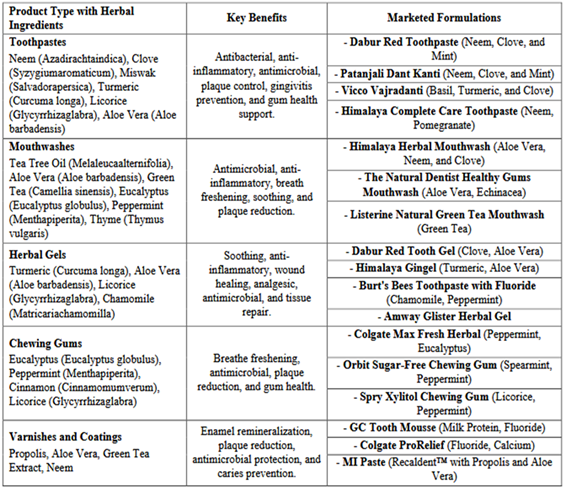
3. Tooth cosmetics:

  • Tooth powder
  • Tooth paste
  • Mouth wash

4. Nail preparations

5. Shaving preparations

6. Foot preparations

Herbs for Skin Cosmetics:
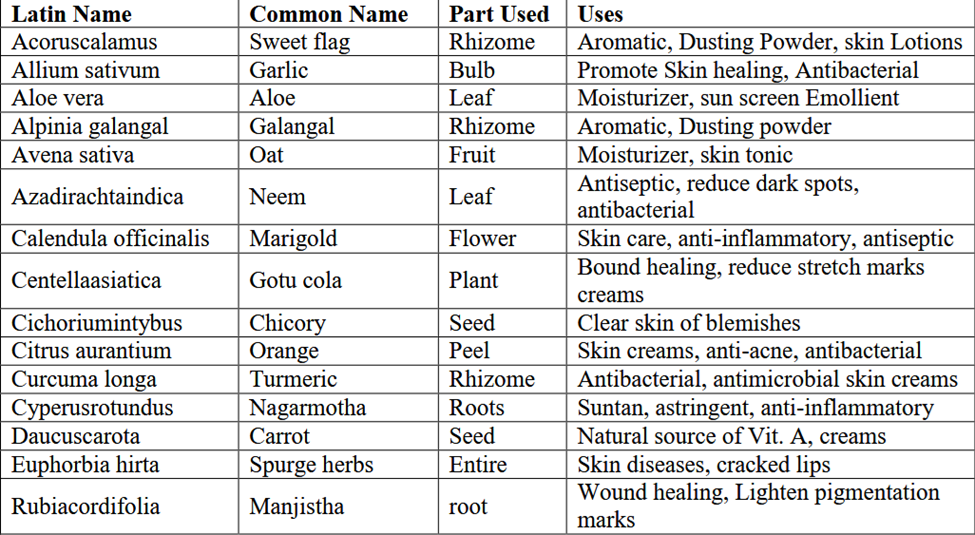
Herbs for Hair:
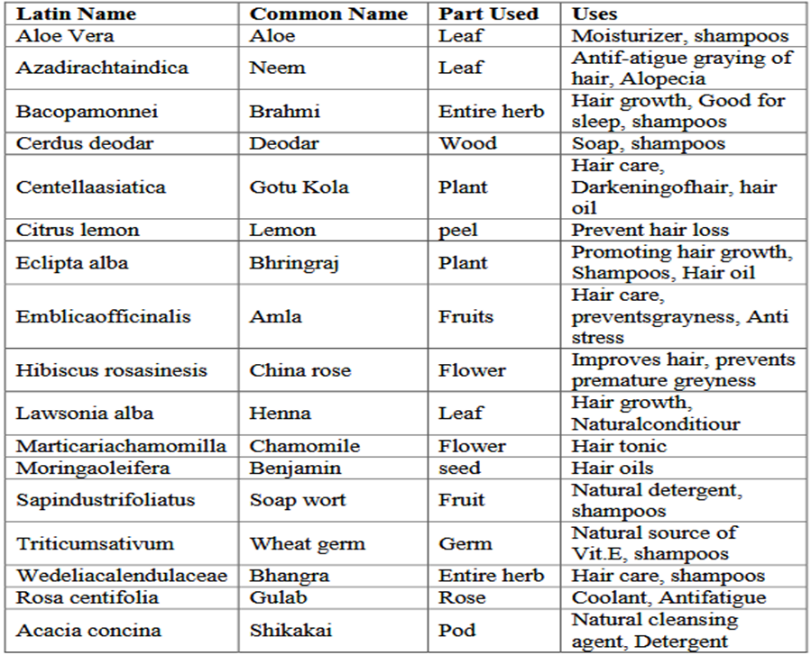
Drugs Used for Tooth Preparation:
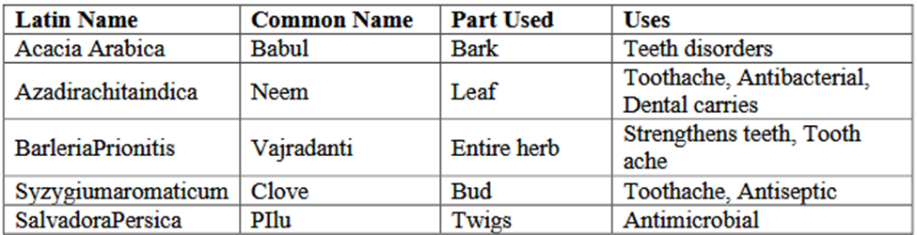
Preparation methods used for herbal cosmetics:

Maceration:

It is an old method used for medicinal preparation. It is considered as a widely and low-cost way to get natural products from plant material. The maceration is a method of solid–liquid extraction. In this process, the powdered solid materials are placed in a closed vessel and the solvent is added. Sufficient time is allowed for the solvent to diffuse through the cell wall to solubilize the constituent present in plant. The process takes place only by molecular diffusion. After the desired time, the liquid is strained off; the solid residue is pressed to recover as much solvent as possible. When the solvent is water and the period of maceration is long, a small quantity of alcohol may be added to prevent microbial growth. Maceration involve three principals’ steps. Firstly, plant materials are converted to powder form by grinding. This allows good contact between solvent and materials. After grinding, a chosen solvent is added in a closed vessel. Then, the liquid is strained off but the solid residue of this extraction process is pressed to recover large amounts of occluded solutions. During the process of maceration occasional shaking facilitate extraction by increasing diffusion and remove concentrated solution from the sample surface for bringing new solvent to the menstruum for more extraction yield.
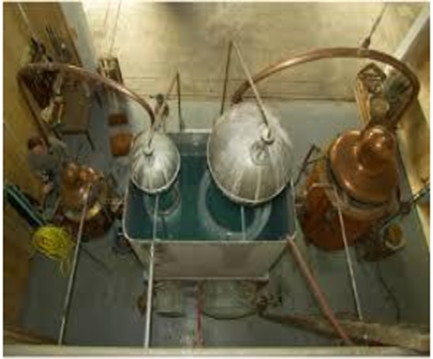
Fig:2 maceration apparatus

Percolation:

This is the procedure used most frequently to extract active ingredients in the preparation of tinctures and fluid extracts. A percolator (a narrow, cone-shaped vessel open at both ends) is generally used. The solid ingredients are moistened with an appropriate amount of the solvent and allowed to stand for approximately 4 h in a well closed container, after which the mass is packed and the top of the percolator is closed. Additional solvent is added to form a shallow layer above the mass, and the mixture is allowed to macerate in the closed percolator for 24 h. The outlet of the percolator then open and the liquid contained there is allowed to drip slowly. Additional solvent is added as required, until the percolate measures about three-quarters of the required volume of the finished product. The extract is then pressed and the liquid is added to the percolate. Sufficient solvent is added to produce the required volume, and the mixed liquid is clarified by filtration or by standing followed by decanting. The process is repeated until a drop of the solvent from the percolator when evaporated does not leave a residue.
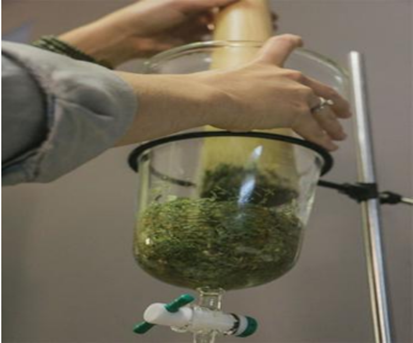
Fig:3 percolation process

Decoction:

It a suitable method for the extraction of the constituents soluble in water and that cannot also be destroyed by the effect of heat. Decoction is a water-based preparation to extract active compounds from medicinal plant materials. In this process, the liquid preparation is made by boiling the plant material with water. Decoction is the method of choice when working with tough and fibrous plants, barks and roots and with plants that have water-soluble chemicals. The plant material is generally broken into small pieces or powdered. Water is added and the pot is heated on a fi re. If the material is soft, four times water is used per 1 part drug; if the drug is moderately hard, eight times water is used and if the drug is very hard, sixteen times water is recommended. The mixture is then boiled on low flame until it is reduced to one-fourth starting volume, in case of soft drugs, and one-eighth in case of moderately or very hard drugs. The extract is then cooled and strained and the filtrate is collected in clean vessels.
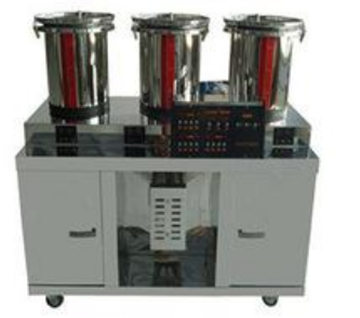
Fig:4 decoction process

Soxhlet Extraction:

Named after ‘Franz Ritter von Soxhlet’, a German agricultural chemist, it is the best method for the continuous extraction of a solid by a hot solvent. Soxhlet apparatus is a specialized glass refluxing unit mainly used for organic solvent extractions. Soxhlet extraction is a general and well-established technique, which surpasses in performance other conventional extraction methods except for, in limited fields of application, the extraction of thermolabile compounds. The powdered solid material is placed in a thimble made up of filter paper and is placed inside the Soxhlet apparatus. The apparatus is fitted to a round bottomed (RB) flask containing the solvent and to a reflux condenser. The solvent in the RB flask is boiled gently, the vapor passes up through the side tube, condensed by the condenser and falls into the thimble containing the material and slowly fills the Soxhlet. When the solvent reaches the top of the attached tube it siphons over into the flask, thus removes the portion of the substance, which it has extracted. The operation is repeated until complete extraction is achieved.
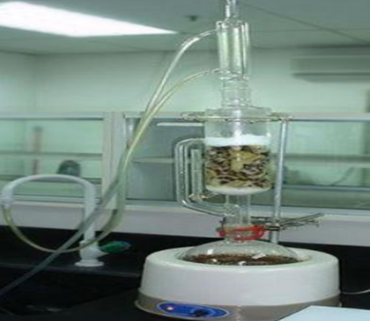
Fig:5 Soxhlet extraction apparatus

Hydro distillation:

Hydro distillation is a traditional method for extraction of plants materials that doesn’t used organic solvents. In hydro distillation, plant materials are packed in a still compartment and water is added in sufficient amount, and then brought to boil. Alternatively, direct steam is injected into the plant sample. Hot water and steam act as the main influential factors to free bioactive compounds of plant tissue. Indirect cooling by water condenses the vapor mixture of water and oil. Hydro Distillation is potentially a very useful method to extract essential oil from various plants and from their different parts. The yield is dependent on various parameters like weight of raw material, volume of water, size of raw material and nature of raw material. Hydro distillation involves three main physio chemical processes; Hydro diffusion, hydrolysis and decomposition by heat. At a high extraction temperature some volatile components may be lost. This drawback limits its use for thermolabile compound extraction.

There are three types of hydro distillation for isolating essential oils from plant materials:
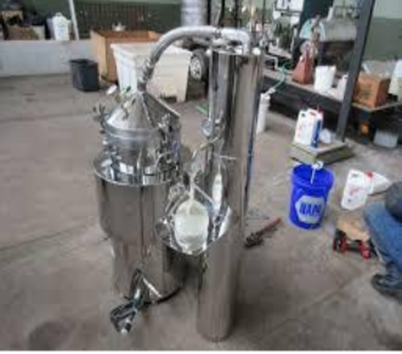
  1. Water distillation
  2. Water and steam distillation
  3. Direct steam distillation

Fig:6 hydro distillation process

Evaluation parameters:      

Parameter

Significance

pH

Determines the acidity or alkalinity; should align with skin pH (~5.5) for safe use.

Viscosity

Assesses thickness and flow behavior, important for creams, gels, and lotions

Refractive index

Indicates the purity and concentration of some cosmetic bases

Specific gravity

Used to detect adulteration and maintain formulation uniformity

spreadability

Measures how easily a cream or gel spreads on the skin.

Melting point

Applicable to solid or semi-solid products like balms and lipsticks.

Foaming index

Evaluates the foaming capability, mainly for shampoos and soaps

Ash content

Determines total mineral residue, including acid-insoluble and water-soluble ash

1. Physicochemical Evaluation:

These tests help in assessing the physical and chemical characteristics of the formulation.

1. pH

    • Meaning: pH reflects the concentration of hydrogen ions (H?) in a solution, serving as an indicator of its acidic or basic nature.
    • Scale: Ranges from 0 (highly acidic) to 14 (highly alkaline), with 7 representing neutrality.
    • Relevance:
  • Ensures dermal compatibility in topical products.
  • Impacts solubility and stability of pharmaceutical ingredients.
  • Plays a role in absorption and therapeutic activity, especially in different physiological environments.
    • How It's Measured: With a calibrated pH meter.

2. Viscosity

    • Meaning: A measure of a liquid’s resistance to flow or deformation.
    • Units: Expressed in centipoise (cP) or Pascal-seconds (Pa·s).
    • Relevance:
  • Determines ease of application and feel in topical products.
  • Affects injectability of parenteral formulations.
  • Influences drug release rate and formulation stability.
    • How It's Measured: Typically assessed using a viscometer, such as a Brookfield model.

3. Refractive Index (RI)

    • Meaning: Describes how much the path of light is bent, or refracted, when entering a substance compared to a vacuum.
    • Relevance:
  • Used to check purity and concentration of liquid formulations.
  • Aids in detecting adulterants or inconsistencies.
    • Measurement Tool: Refractometer.
    • Units: Unitless; usually reported at 20°C.

4. Specific Gravity

    • Meaning: The ratio comparing the density of a sample to the density of water under the same temperature conditions.
    • Relevance:
  • Indicates formulation strength and batch consistency.
  • Crucial in the quality control of liquid products.
    • How It's Measured: Using instruments like a pycnometer, hydrometer, or digital densimeter.
    • Units: Dimensionless.

5. Spreadability

    • Meaning: Refers to how easily a semi-solid formulation (such as a cream or gel) spreads over a surface or skin.
    • Relevance:
  • Directly impacts user experience and efficacy of topical products.
  • Reflects the texture and consistency of the formulation.
    • Evaluation Method:
  • A fixed quantity of the sample is sandwiched between two glass plates, and a known weight is applied.
  • The time for the top plate to slide is recorded.
  • Formula:

Spreadability = (Weight × Length)/ Time

(expressed in g·cm/sec).

6. Melting Point

    • Meaning: The temperature at which a solid material transitions to a liquid under normal pressure.
    • Relevance:
  • An indicator of compound purity — impurities typically lower the melting point.
  • Helps in identifying substances and ensuring raw material quality.
    • Measurement Tools: Instruments such as the Thiele tube or digital melting point apparatus.

7. Foaming Index

    • Meaning: A measure of the foam-forming capability of an extract or product, often indicating the presence of natural surfactants like saponins.
    • Applications: Commonly tested in herbal extracts, shampoos, and cleansers.
    • Methodology:
  • A set quantity of the sample is shaken with water.
  • Foam height is observed after allowing it to stand.
  • Calculation:
  • Find the dilution where 1 cm foam persists after 15 minutes.
  • Foaming Index = 1000 / Dilution Factor.
  • Relevance: Confirms presence of foaming constituents.

8. Ash Content

  • Meaning: Represents the inorganic residue left behind after the complete combustion of organic substances.
  • Types:
  • Total Ash: Indicates the overall mineral content.
  • Acid-Insoluble Ash: Reflects contamination with insoluble impurities like sand.
  • Water-Soluble Ash: Shows the portion of ash dissolvable in water.
    • Procedure:
  • Samples are incinerated in a muffle furnace at ~500–600°C.
  • The residue is cooled, weighed, and reported as a percentage of the original sample.
    • Relevance:
  • Useful in standardization of herbal drugs.
  • Helps detect foreign matter or adulterants.

CONCLUSION:

Herbs play a significant role, especially in modern pharmaceutical preparations, when the damaging effects of food processing and over medication have assumed alarming proportions. They are now being increasingly cosmetics, food and teas, as well as alternative medicines. The growing interest in herbs is a part of the movements towards change in life styles. This movement is based on the belief that the plants have a vast potential for their use as a curative medicine. The knowledge of medicinal plants used by the people of seems to be well known to its culture and tradition. In the present study we identified many plants used by the people to cure dermatological disorders and as cosmetics. Some of plants were found to have dual use, both as curative and cosmetic. Quality control test must be safe for longer period of time.

REFERENCES

  1. Rathore Kamal Singh, Nema R.K., "A Text Book of Cosmetics" Edi. Ist, CBS Publisher, 2005:11(5), 257-290.
  2. United State Pharmacopoeia Drug Information: Drug Information for the Health Care Professional, Vol. 1, 27th Ed. Greenwood Village, Co: thomson Micromedex, 2007;23(8) 2514-2517.
  3. M. Vimladevi; Text book of Cosmetics ; Edition (2005); CBS Publishers & Distributor ; 2011:17(3),234-247.
  4. Shah C.S., Quadry J.S. “Text book of Pharmacognosy” B. S. Shah Prakashan, Ahemdabad 5th edition 1985:14(7),29-32.
  5. Kokate C.K., Purohit A.P., Goyal S.B. “Pharmacognosy” NiraliPrakashan, Pune, 29th edition, 2004;23(8), 167-175.
  6. Trease E.G., Evans C.W., “Pharmacognosy”, ELBS Publisher, USA. 12th edition, 1985, 383-413, 488-509.
  7. Torkelson R.A., “The Cross Name Index To Medicinal Plant”, Volume 4 CRC Press, 1999; 1571.
  8. Asolkar L.V., Kakkar K.K. Chakre O.J., “Second Suppliment to Glossary of Indian Medicinal Plant with active Principles”, Part 1, Publication Information Directorate, New Delhi, 2nd Edition, 1992; 47.
  9. Bhaskar Rama Murti P., Seshardri T.R., “Calcium Salt Containing Extract of the Leaves”, Department of Chemical Technology, Andhra University Waltar.2009:13(6),45-54.
  10. Ancuceanu R, Anghel AI, Ionescu C, Hovane? MV, Cojocaru-Toma M, Dinu M. Clinical Trials with Herbal Products for the Prevention of Dental Caries and Their Quality: A Scoping Study. Biomolecules. 2019;9(12):884.
  11. Cai H, Chen J, Perera NKP, Liang X. Effects of Herbal Mouthwashes on Plaque and Inflammation Control for Patients with Gingivitis: A Systematic Review and Meta-Analysis of Randomised Controlled Trials. Evid Based Complement Alternat Med. 2020;15(5),27-32.
  12. Shaalan O, El-Rashidy A. Antibacterial Effect of Miswak herbal toothpaste Compared to Fluoride Toothpaste in High Caries Risk Patients: Randomized Clinical Trial. J Clin Exp Dent. 2023;15(7):526–34
  13. Kaur L, Amar SP, Ajeet SP, Kaur T (2021) A review on herbal cosmetics. International Journal of Pharmaceutics and Drug Analysis 9(3): 196-201.

Reference

  1. Rathore Kamal Singh, Nema R.K., "A Text Book of Cosmetics" Edi. Ist, CBS Publisher, 2005:11(5), 257-290.
  2. United State Pharmacopoeia Drug Information: Drug Information for the Health Care Professional, Vol. 1, 27th Ed. Greenwood Village, Co: thomson Micromedex, 2007;23(8) 2514-2517.
  3. M. Vimladevi; Text book of Cosmetics ; Edition (2005); CBS Publishers & Distributor ; 2011:17(3),234-247.
  4. Shah C.S., Quadry J.S. “Text book of Pharmacognosy” B. S. Shah Prakashan, Ahemdabad 5th edition 1985:14(7),29-32.
  5. Kokate C.K., Purohit A.P., Goyal S.B. “Pharmacognosy” NiraliPrakashan, Pune, 29th edition, 2004;23(8), 167-175.
  6. Trease E.G., Evans C.W., “Pharmacognosy”, ELBS Publisher, USA. 12th edition, 1985, 383-413, 488-509.
  7. Torkelson R.A., “The Cross Name Index To Medicinal Plant”, Volume 4 CRC Press, 1999; 1571.
  8. Asolkar L.V., Kakkar K.K. Chakre O.J., “Second Suppliment to Glossary of Indian Medicinal Plant with active Principles”, Part 1, Publication Information Directorate, New Delhi, 2nd Edition, 1992; 47.
  9. Bhaskar Rama Murti P., Seshardri T.R., “Calcium Salt Containing Extract of the Leaves”, Department of Chemical Technology, Andhra University Waltar.2009:13(6),45-54.
  10. Ancuceanu R, Anghel AI, Ionescu C, Hovane? MV, Cojocaru-Toma M, Dinu M. Clinical Trials with Herbal Products for the Prevention of Dental Caries and Their Quality: A Scoping Study. Biomolecules. 2019;9(12):884.
  11. Cai H, Chen J, Perera NKP, Liang X. Effects of Herbal Mouthwashes on Plaque and Inflammation Control for Patients with Gingivitis: A Systematic Review and Meta-Analysis of Randomised Controlled Trials. Evid Based Complement Alternat Med. 2020;15(5),27-32.
  12. Shaalan O, El-Rashidy A. Antibacterial Effect of Miswak herbal toothpaste Compared to Fluoride Toothpaste in High Caries Risk Patients: Randomized Clinical Trial. J Clin Exp Dent. 2023;15(7):526–34
  13. Kaur L, Amar SP, Ajeet SP, Kaur T (2021) A review on herbal cosmetics. International Journal of Pharmaceutics and Drug Analysis 9(3): 196-201.

Photo
Dr. D. Rama Brahma Reddy
Corresponding author

Nalanda Institute of Pharmaceutical Sciences, Siddharth Nagar, Kantepudi, Sattenapalli, Guntur, Andhra Pradesh, India 522438

Photo
D. Tejaswi
Co-author

Nalanda Institute of Pharmaceutical Sciences, Siddharth Nagar, Kantepudi, Sattenapalli, Guntur, Andhra Pradesh, India 522438

Photo
B. Madhavi
Co-author

Nalanda Institute of Pharmaceutical Sciences, Siddharth Nagar, Kantepudi, Sattenapalli, Guntur, Andhra Pradesh, India 522438

Photo
Ch. Nandini
Co-author

Nalanda Institute of Pharmaceutical Sciences, Siddharth Nagar, Kantepudi, Sattenapalli, Guntur, Andhra Pradesh, India 522438

Photo
Ch. Gowthama Chandrika
Co-author

Nalanda Institute of Pharmaceutical Sciences, Siddharth Nagar, Kantepudi, Sattenapalli, Guntur, Andhra Pradesh, India 522438

Photo
Ch. Rushika
Co-author

Nalanda Institute of Pharmaceutical Sciences, Siddharth Nagar, Kantepudi, Sattenapalli, Guntur, Andhra Pradesh, India 522438

Photo
D. Sujatha
Co-author

Nalanda Institute of Pharmaceutical Sciences, Siddharth Nagar, Kantepudi, Sattenapalli, Guntur, Andhra Pradesh, India 522438

Dr. D. Rama Brahma Reddy, D. Tejaswi, B. Madhavi, Ch. Nandini, Ch. Gowthama Chandrika, Ch. Rushika, D. Sujatha, A Review on Herbal Cosmetics, Int. J. of Pharm. Sci., 2025, Vol 3, Issue 12, 3820-3829. https://doi.org/10.5281/zenodo.18085373

More related articles
A Review on Application of Novel Drug Delivery Sys...
Jyoti Singh, Nadeem A. Farooqui, Nayany Sharma, Nimita Manocha, ...
Shaping Health Horizons: The Dynamic Impact Of Inn...
Nilima N. Khakal, Udayanraj M. Bhosale, Suraj B. Kumbhar, Vikram ...
Preparation And Evaluation of Polyherbal Wound Hea...
Varsharani Patil, Shraddha Ghule, Mamata Rathod, ...
Doxycycline Induced Hypoglycemia - A Case Report ...
Dr Binu M. G., Dr Shri Vishwapal S., ...
Novel Drug Delivery System Using Microemulsion...
Ved Sutare, Kanifanath Sonawane , Sushma Shiraskar, Kiran Bhosale, Dr. Tushar Shelke, ...
Related Articles
Formulation and Evaluation of Herbal Anti-itching Cream ...
Payal Theng, Pratiksha Kale, Pooja Gaikwad, D. R. Bhagwat, Dr. K. R. Biyani, Tahniyat Afsha Mujammil...
Biopharming: Transforming Plant System for Pharmaceutical Protein Production...
Dr. Sonali Uppalwar, Yash Bhoir, Rohit Patil, Aniket Banchede, Jatin Gotarne, ...
Review on Unveiling the Therapeutic Potential of Isothiocyanates from Cruciferou...
Prasanna Babu Racheeti, K.suresh Babu, P. Venkata Narayana, Kokila Adusumalli, ...
A Review on Application of Novel Drug Delivery Systems for the N-Acetylcysteine...
Jyoti Singh, Nadeem A. Farooqui, Nayany Sharma, Nimita Manocha, ...
More related articles
A Review on Application of Novel Drug Delivery Systems for the N-Acetylcysteine...
Jyoti Singh, Nadeem A. Farooqui, Nayany Sharma, Nimita Manocha, ...
Shaping Health Horizons: The Dynamic Impact Of Innovative Public Health Awarenes...
Nilima N. Khakal, Udayanraj M. Bhosale, Suraj B. Kumbhar, Vikram R. Shinde, N. H. Aloorkar, Dipak D....
A Review on Application of Novel Drug Delivery Systems for the N-Acetylcysteine...
Jyoti Singh, Nadeem A. Farooqui, Nayany Sharma, Nimita Manocha, ...
Shaping Health Horizons: The Dynamic Impact Of Innovative Public Health Awarenes...
Nilima N. Khakal, Udayanraj M. Bhosale, Suraj B. Kumbhar, Vikram R. Shinde, N. H. Aloorkar, Dipak D....