

We use cookies to ensure our website works properly and to personalise your experience. Cookies policy
Dr. D. Y. Patil College of pharmacy, Akurdi, Pune-411044.
Artificial intelligence is transforming the pharmaceutical landscape by enabling smarter, faster and more precise drug development and delivery strategies. recent developments in drug delivery system have been focused on improving the accuracy, efficiency and the safety of drug administrations. This review highlights the role of artificial intelligence in advancing novel drug delivery technologies. Artificial intelligence helps in designing of better drug carriers, predicting drug release patterns, and selecting the most effective delivery routes with the help of data driven approaches. Ai in combination with modern tools like nanotechnology, smart devices and personalized medicine allows for targeted and controlled drug release, reducing side effects and patient outcomes. This article also discusses the current challenges in implementing of artificial intelligence-based systems, and regulatory issues. Overall (AI) is emerging as a key technology in future of innovative drug delivery systems.
Artificial intelligence is recently adopted in pharmaceutical industry over the past few decades. In early 19s artificial intelligence was used to develop basic computational models, mainly used for chemical structure prediction and molecular modelling [1]. artificial intelligence is continuously growing field and is transforming various industries which also includes healthcare and pharmacy sector. AI is emerging as a promising tool in control drug delivery system development. The pharmaceutical industry has witnessed remarkable progress in recent years, but still conventional drug delivery systems often face challenge such as poor solubility, systemic toxicity and non-patient compliances .to overcome these problems now-a-days a new approach for drug delivery is used known as Novel Drug Delivery System (NDDS). this system includes nanoparticles, liposomes, microneedles, and hydrogels. These systems have been developed to improve therapeutic efficacy, controlled release profile and target delivery of drug [2].
Parallel to these advancements, artificial intelligence (AI) has emerged as a transformative tool in pharmaceutical and healthcare. artificial intelligence includes machine learning (ML), neural networks, deep learning (DI) and generative models which helps in analyzing of complex datasets, predicts outcomes and optimizes the experimental processes [3]. AI offers a unique blend of technology along with traditional knowledge of drug delivery system which helps in designing, prediction and optimization of drug delivery systems, thereby reducing the reliance on traditional trial-and -error methods and accelerates development timelines [4].in today’s time artificial intelligence is continuously expanding in Novel drug delivery system (NDDS) development.it is used in formulation design, AI driven models such as adaptive neuro-fuzzy interference system (ANFIS) and deep neural networks (DNNs) have been employed to predict the size of particles ,efficacy of entrapment, and release profiles based on input variables like drug solubility, concentration of polymer and processing conditions[2].similarly AI models are used to evaluate the in vivo performance including pharmacokinetics, biodistribution and toxicity of drug formulation thereby reducing the dependance on animal testing. AI helps in developing smart drug delivery systems, which integrates biosensors, wearable devices and closed feedback mechanism to deliver drug in patient-specific and responsive manner [5].
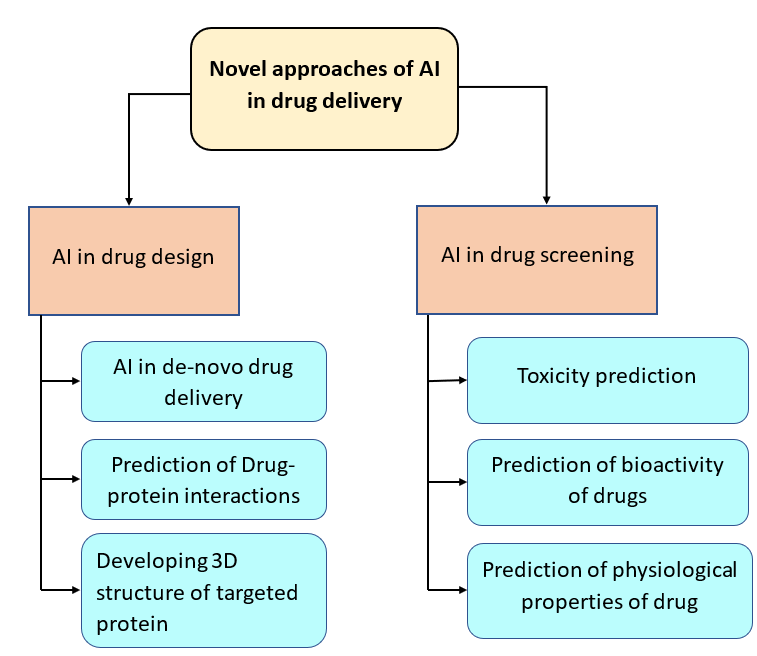
1)AI Modeling Platform in pharmaceutical
Pharmaceutical AI modelling platform integrates artificial intelligence (AI) and machine learning (ML) to advance drug delivery, development, and optimization. It is done by using AI-powered Algorithms Platforms streamlining processes like target identification, lead compound creation, efficiency predictions, toxicity studies, clinical trial optimization and process or analyze vast amount of datasets of biomedical, chemical, biological and clinical data to identify a new drug candidate, reduce costs, shorten timelines of discovery and identifications, enable personalized medicine by analyzing Individualized patient data for individualized therapy and how will drug interact with human body.
In manufacturing and distribution AI-driven robotics and automation will help by reducing human error, improving efficiency, and ensuring accuracy across the supply chain. For this system to work effectively, access to reliable, high-quality data remains a critical requirement [7]. AI applications in 4 areas of pharmaceutical innovation: drug discovery, clinical development, manufacturing and supply chain and personalized medicine. AI enhances molecular docking, de nova ligand design and cheminformatics (e.g., QSAR, RDkit) in Drug discovery [8].
AI In Novel Drug Delivery System
Artificial intelligence changing how medicine will be delivered in the body. AI can quickly analyze and predict data and behaviors. It helps to create safer smarter and more personalized treatment.
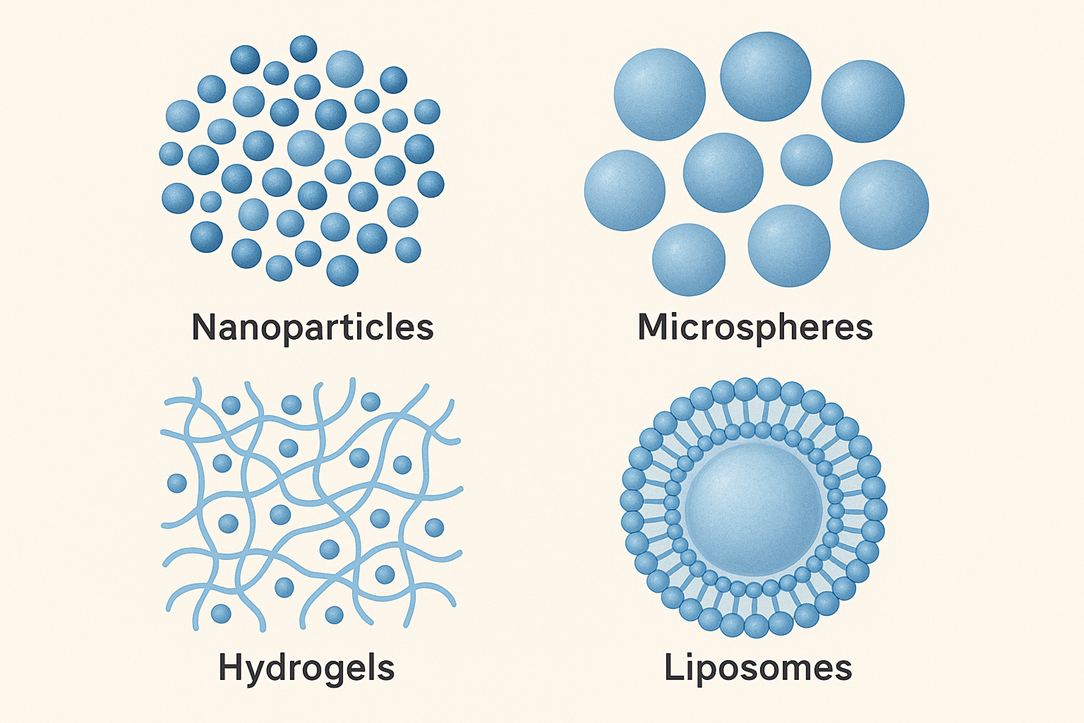
A. Nanoparticles: Small carriers that improve drug stability and target medication to infected cells. AI help to optimize their size, release of drug, predict drug-nanoparticle interaction, screen materials for toxicity and biocompatibility.
B. Liposomes: Bubble shaped lipid carrier that reduce side effects. AI predict drug release to enhance safety, predict encapsulation efficiency, and optimize lipid composition for stability.
C. Microspheres: Tiny bags biodegradable that release drug slowly. AI stimulate their breakdown and release, optimizing polymer selection for biodegradability.
D. Dendrimers: Branched molecules that delivered drug inside or outside the molecule. AI help design them for cancer treatment and other use, predict drug loading capacity and interactions, evaluate the toxicity.
E. Hydrogels: Water soluble gels that release a drug only when activate by factors like pH and temperature AI can improve their targeting, predict swelling behaviors, and drug diffusion rate, personalized hydrogel design for wound healing and implants [9].
Artificial intelligence is changing how medicines are discovered and delivered
a) Smarter Drug Discovery:
Machine learning examines millions of chemical compounds structure to identify new drugs quickly at a lower cost and to identify potential drug target, predict drug efficacy, optimized drug properties, and drug-target interaction.
b) Carriers for Nanoparticles:
AI helps to design nanoparticles that target the infected cell precisely which improves drug effectiveness, reduce side effects, maximum stability, and biocompatibility.
c) Drug Release Prediction:
AI forecast how and when drug will be released in the body this ensure maximum therapeutic benefits while minimizing risk of toxicity.
d) Smart Delivery System:
AI control sensor monitoring drug release in real time allowing treatments adjustment. This system allows to adjust drug dose and release rate in response to physiological conditions, enables by improving safety and effectiveness
e) Personalized Medicine:
By analyzing patient information like genetics or medical history, AI can create delivery systems individualized to each person genetic profile and health status. It helps in right formulation, dose, and release to individual patients’ condition, approach minimize adverse effects and ensure precision treatment [10].
There is a few highly recognized AI modelling platform in the pharmaceutical space, each used for various drug development steps
Pandaomics: Assist researcher in finding new drug targets.
Chemistry42: Employed to create brand new molecules that with possible therapeutic potential.
Atom wise (Atom Net): Tests millions of compounds to find promising candidate for small
Molecules drug.
Owkin: Predict outcomes, find biomarker, and optimize clinical trials using patient data [10].
AI applications in novel drug delivery system involves predicting drug behavior, optimizing formulation, and designing smart delivery platforms like nanoparticle and microchip implants. AI helps to speed up things by predicting protein structures, identifying drug targets, and designing new molecule. It can also rediscover existing drugs, saving time and resources. machine learning improves drug screening by predicting safety and effectiveness, while AI platform automates chemical synthesis and lead the design of better formulation like tablet, nanoparticles, or implants. beyond discovery, AI helps by smart manufacturing with real-time monitoring and ensuring strict quality control [11].
Utilization of AI in Novel Drug Delivery System
A. Drug Release Prediction:
AI can predict drug release rates from a variety of drug delivery system such as microsphere, nanoparticles and liposomes customization of drug dosage can be done by the help of AI, while monitoring that drug is released at specific rate and time to achieve maximum benefits to therapy [12].
B. Formulation Design:
AI is used in formulation optimization of liposomes nanoparticles and other carriers as it can improve drug efficacy while decreasing the potential of toxicities. AI utilizes algorithms to investigate the properties of not only drug but also the drug delivery system and all-over other parameters of drug designing. deep learning models can predict and identify properties of formulation formation and optimizing loading and release condition of the drug.
C. Personalized Drug Delivery:
AI makes it possible to develop drug delivery technique that can be specific to the patient through personalization of drug formulation and Drug Administration schedules. Genetic and clinical information and lifestyle factors can be proceed using AI.
D. Quality Control:
AI ensures that consistency and safety of drug delivery system during manufacturing. program utilizing air able to ensure to monitor sets parameter during production such as pressure, temperature or flow rate can be identified defect during the manufacturing process [13].
E. De Nova Drug Design:
AI algorithms are used to design entirely new drug molecule from scratched accelerating the process of finding treatments for disease [14].
2. Applications of AI in NDDS
2.1 Based on Technology
Nanocarriers (Liposomes, Polymeric Nanoparticles, Dendrimers):
AI aids in designing nanocarriers by predicting particle size, surface modifications, and drug release profiles. This ensures precise targeting and minimal systemic toxicity. For instance, in oncology, AI-driven models optimize tumor-targeted nanoparticles for enhanced drug loading and controlled release. Similarly, AI can predict blood–brain barrier (BBB) penetration for neurological therapies, facilitating delivery in conditions such as Parkinson’s and Alzheimer’s disease [15].
Microneedles and Transdermal Patches:
Machine learning models evaluate drug properties and skin permeability to optimize patch design. Smart insulin patches in diabetes management are a prominent example, where AI monitors glucose levels and controls insulin release in real time. Research is also exploring microneedle-based vaccines (e.g., influenza, COVID-19) and transdermal patches for neurological disorders [17].
Biosensor-Integrated Systems:
Closed-loop systems like the artificial pancreas integrate continuous glucose monitoring with AI-controlled insulin pumps. These systems predict glucose trends and adjust dosing, significantly improving glycemic control and reducing hypoglycemia risk . Future developments may include biosensors capable of detecting inflammatory or pain biomarkers to enable adaptive drug release.
Implantable Systems:
AI-powered implants can sense physiological changes or biomarker fluctuations and automatically adjust drug release. Such adaptive implants are particularly useful for chronic conditions, offering long-term, patient-specific therapy [2].
Smart Oral Delivery Platforms:
Emerging AI applications predict oral drug dissolution, absorption, and intestinal release. This technology has potential for inflammatory bowel disease treatment and for developing 3D-printed, personalized oral dosage forms [6].
2.2 Based on Therapeutic Area
Oncology: AI models improve tumor targeting with nanocarriers and optimize microneedle-based vaccines for skin cancers.
Neurology: AI predicts BBB permeability for CNS drug delivery and designs personalized transdermal patches.
Endocrinology (Diabetes): AI-driven closed-loop insulin systems are widely used for real-time glucose management.
Infectious Diseases: AI supports microneedle vaccine development and antimicrobial nanocarrier design.
Autoimmune and Inflammatory Diseases: AI designs responsive nanocarriers that release drugs at inflamed sites, reducing systemic exposure.
3. Limitations and Challenges
Despite significant progress, several obstacles hinder widespread adoption of AI in NDDS:
1. Data Quality and Availability: Limited, heterogeneous, or poorly standardized datasets reduce model reliability.
2. Regulatory and Ethical Concerns: Adaptive AI systems pose challenges for regulatory approval; privacy, bias, and accountability are key concerns.
3. Black-Box Nature of AI: Lack of interpretability makes it difficult for clinicians and regulators to fully trust AI predictions.
4. Integration Barriers: Incorporating AI into pharmaceutical manufacturing requires new infrastructure and validation processes.
5. Cost and Expertise: Developing AI-driven systems requires high-performance computing and specialized professionals, which may not be accessible to all institutions [16].
4. Future Perspectives
Explainable AI: Developing transparent models to improve interpretability and regulatory compliance.
Multi-Omics Integration: Using genomics, proteomics, and metabolomics data to develop personalized delivery systems.
Nanorobotics and Smart Implants: AI can guide targeted drug delivery at the nanoscale.
Digital Twins: Virtual patient models can simulate and optimize therapeutic delivery before clinical application [18].
5. CONCLUSION
AI-driven innovations are reshaping NDDS by enabling predictive, adaptive, and patient-specific drug delivery strategies. From nanocarriers to smart oral formulations and biosensor-integrated implants, AI facilitates precise therapeutic outcomes across multiple disease areas. Addressing challenges related to data quality, regulatory oversight, model interpretability, and integration is crucial for realizing the full potential of AI in pharmaceutical sciences. With interdisciplinary collaboration and technological advancement, AI-based NDDS are poised to become a cornerstone of personalized medicine.
REFERENCES




Priyanshu Shinde*, Prerna Shreaya, Pushkar Ahir, Priyatama Pawar, Artificial Intelligence -Driven Innovations in Novel Drug Delivery System: A Comprehensive Review, Int. J. of Pharm. Sci., 2025, Vol 3, Issue 11, 13-20 https://doi.org/10.5281/zenodo.17499000
 10.5281/zenodo.17499000