
1,2,4 Department of pharmacy, Sri Venkateswara College Of Pharmacy, Chittoor, Andhra Pradesh, India.
3Department of Pharmaceutics, JNTUA-Oil and Technological Pharmaceutical Research Institute, Anantapuramu.
The blood–brain barrier (BBB) plays a vital protective role by tightly regulating the movement of substances between the bloodstream and the brain. While this selectivity is essential for maintaining neural stability, it also restricts the entry of many therapeutic molecules, making the treatment of neurological disorders extremely challenging. Over the last decade, nanotechnology has opened new possibilities for addressing this limitation. Scientists have developed a range of brain-targeted nanocarriers capable of interacting with biological transport systems on the BBB and enhancing the passage of drugs that would otherwise be unable to reach the central nervous system.These delivery platforms—which include lipid-based carriers, polymeric nanoparticles, dendrimers, solid lipid nanoparticles, and surface-engineered hybrid systems—are designed to achieve better stability, prolonged circulation, and controlled release of therapeutic agents. Many of these nanocarriers are further improved by decorating their surfaces with peptides, antibodies, sugars, or other targeting molecules that enable them to selectively bind to receptors or transport proteins on BBB endothelial cells. Such strategies help the carriers utilize receptor-mediated, adsorptive-mediated, or carrier-mediated transport pathways to enter the brain more efficiently.
The delivery of therapeutic molecules to the brain is significantly restricted by the blood–brain barrier (BBB), a highly selective interface that maintains the biochemical stability of the central nervous system (CNS) [1]. The BBB is composed of tightly connected endothelial cells, pericytes, and astrocytic end-feet, which together regulate the passage of substances between blood and neural tissue [2]. While essential for neuroprotection, this barrier prevents almost 98% of small-molecule drugs and nearly all biologics from entering the brain in therapeutic amounts [3].
Neurological disorders such as brain tumors, Alzheimer’s disease, Parkinson’s disease, epilepsy, and neuroinfections demand effective drug delivery systems capable of overcoming this biological barrier [4]. Conventional therapeutic approaches often fail because drugs either degrade quickly or cannot cross the BBB due to unfavorable chemical properties such as poor lipophilicity, large molecular weight, or susceptibility to active efflux mechanisms [5,6] . Advances in nanotechnology have generated nanoscale drug delivery systems—commonly known as nanocarriers—that can be engineered to improve brain drug targeting [7]. Examples include liposomes, polymeric nanoparticles, dendrimers, solid lipid nanoparticles, and inorganic nanocarriers, all designed to enhance drug stability and circulation time [8,9]. Surface engineering strategies such as ligand attachment, PEGylation, and charge modulation enable these nanocarriers to exploit natural BBB transport pathways, including receptor-mediated, carrier-mediated, and adsorptive-mediated transcytosis [10,11,12].
These systems have shown promising results in preclinical models of CNS disorders, improving drug accumulation in brain tissues and demonstrating better therapeutic outcomes compared with conventional treatments [13,14] . Despite these advantages, challenges persist regarding long-term biocompatibility, potential neurotoxicity, large-scale production, and regulatory approval for clinical use [15].
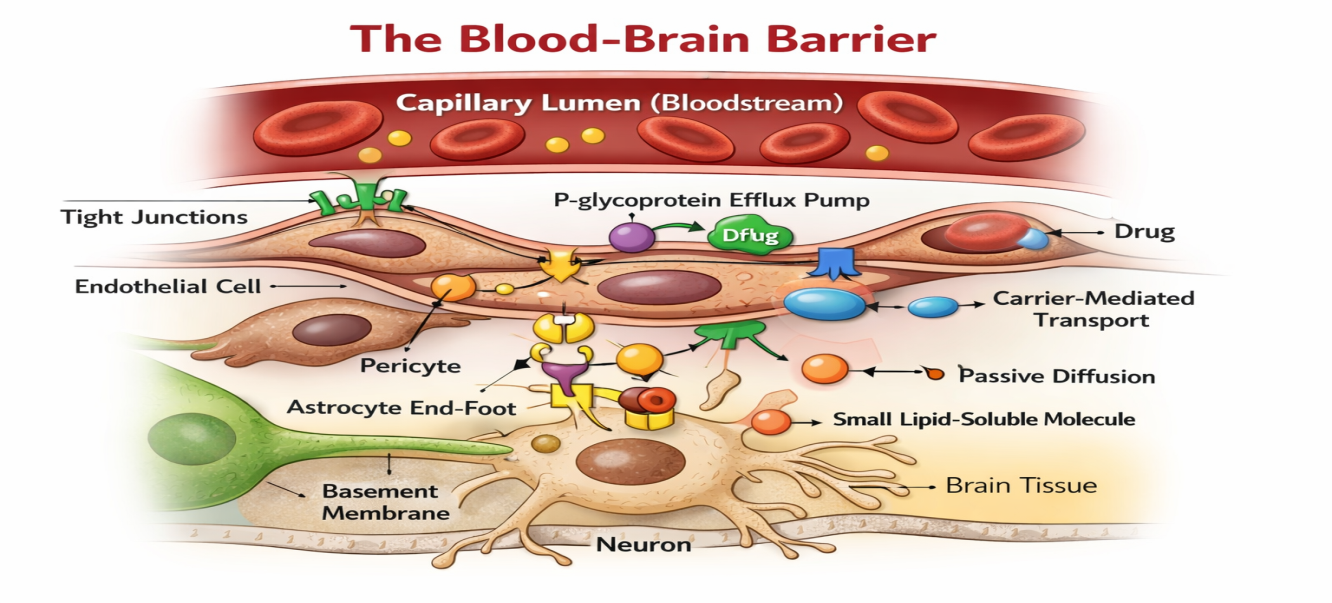
Fig 1 : BLOOD BRAIN BARRIER
CHALLENGES IB DRUG DELIVERY TO BRAIN
Delivering therapeutic agents to the brain is extremely difficult because the blood–brain barrier (BBB) acts as a highly selective protective shield. Several factors—including physicochemical restrictions, active efflux mechanisms, and metabolic activity—limit the entry of drugs into the central nervous system.
Physicochemical Barriers
The structure of the BBB allows only a narrow range of molecules to pass through.
These physicochemical restrictions are the first major limitation in brain drug delivery.
Efflux Transporters
Even when certain drug molecules manage to enter the endothelial cells, they are often pushed back into the bloodstream by powerful efflux pumps.
These efflux systems greatly reduce the effective concentration of drugs inside the brain.
Metabolic Limitations
The BBB contains several metabolic enzymes that break down or chemically modify drug molecules.
These metabolic processes decrease the therapeutic effectiveness of many CNS-targeted drugs.
TYPES OF NANOCARRIERS
|
Nanocarrier Type |
Common Examples |
Typical Size Range (nm) |
Key Advantages |
Major Limitations |
|
Lipid-Based Nanocarriers |
Liposomes, Niosomes, Nanoemulsions |
50–200 nm |
Biocompatible, good BBB penetration, suitable for hydrophilic & lipophilic drugs |
Limited stability, oxidation of lipids |
|
Polymeric Nanoparticles |
PLGA, PLA, PEGylated polymers |
100–200 nm |
Controlled release, high stability, tunable surface |
Potential polymer toxicity, complex synthesis |
|
Dendrimers |
PAMAM, PPI dendrimers |
5–20 nm |
Highly branched, high drug-loading, precise targeting |
Expensive synthesis, cytotoxic at high generation |
|
Solid Lipid Nanoparticles (SLN) |
Compritol SLN, Glyceryl monostearate SLN |
100–250 nm |
High stability, low toxicity, controlled release |
Low drug loading, potential drug expulsion |
|
Nanomicelles |
PEG-PLA micelles, Poloxamer micelles |
10–50 nm |
Improves solubility of poorly soluble drugs, good BBB transport |
Dilution instability, limited loading capacity |
|
Inorganic Nanocarriers |
Gold nanoparticles, Silica nanoparticles |
20–100 nm |
Imaging + therapy (theranostics), strong stability |
Non-biodegradable, toxicity risk |
|
Hybrid Nanocarriers |
Lipid-polymer hybrids, Lipid-silica hybrids |
80–150 nm |
Combines strengths of two systems, enhanced BBB transport |
Manufacturing complexity, cost |
TARGETING STRATEGIES FOR CROSSING THE BLOOD BRAIN BARRIER [BBB]
Receptor-Mediated Targeting
This strategy uses specific receptors expressed on BBB endothelial cells to transport nanocarriers into the brain.
Ligands such as transferrin, insulin, lactoferrin, and certain peptides are attached to the nanocarrier surface. Once these ligands bind to their respective receptors, the nanocarrier is internalized via endocytosis and transported across the BBB. This method offers high selectivity and enhances delivery of therapeutic molecules to diseased brain regions.
Carrier-Mediated Transport
Carrier-mediated targeting takes advantage of nutrient transporters naturally present on the BBB, such as those for glucose, amino acids, and vitamins.Drug molecules or nanocarriers are modified to resemble these nutrients, enabling them to be recognized and transported through these carriers.This approach is especially useful for small molecules and improves the uptake of drugs that otherwise exhibit poor BBB penetration.
Adsorptive-Mediated Transport
This strategy relies on electrostatic interactions between positively charged nanocarriers and the negatively charged endothelial cell membrane of the BBB. The attraction initiates adsorptive endocytosis, allowing the nanocarrier to cross the barrier.It is a nonspecific method but can significantly increase the transport efficiency of various nanocarrier systems.
Cell-Penetrating Peptides (CPPs)
CPPs are short amino-acid sequences capable of crossing biological membranes efficiently.When conjugated to nanocarriers, they enhance cellular uptake by promoting direct membrane translocation orndocytosis.
CPPs help deliver a wide range of molecules—including proteins, nucleic acids, and nanoparticles—into brain tissue with improved internalization.
Stimuli-Responsive Nanocarriers
These nanocarriers are engineered to release their drug payload in response to specific internal or external triggers.Triggers include pH change, temperature shifts, enzymes, magnetic fields, redox potential, or ultrasound.This strategy ensures controlled, localized drug release within the brain, minimizing systemic toxicity and maximizing therapeutic effectiveness.
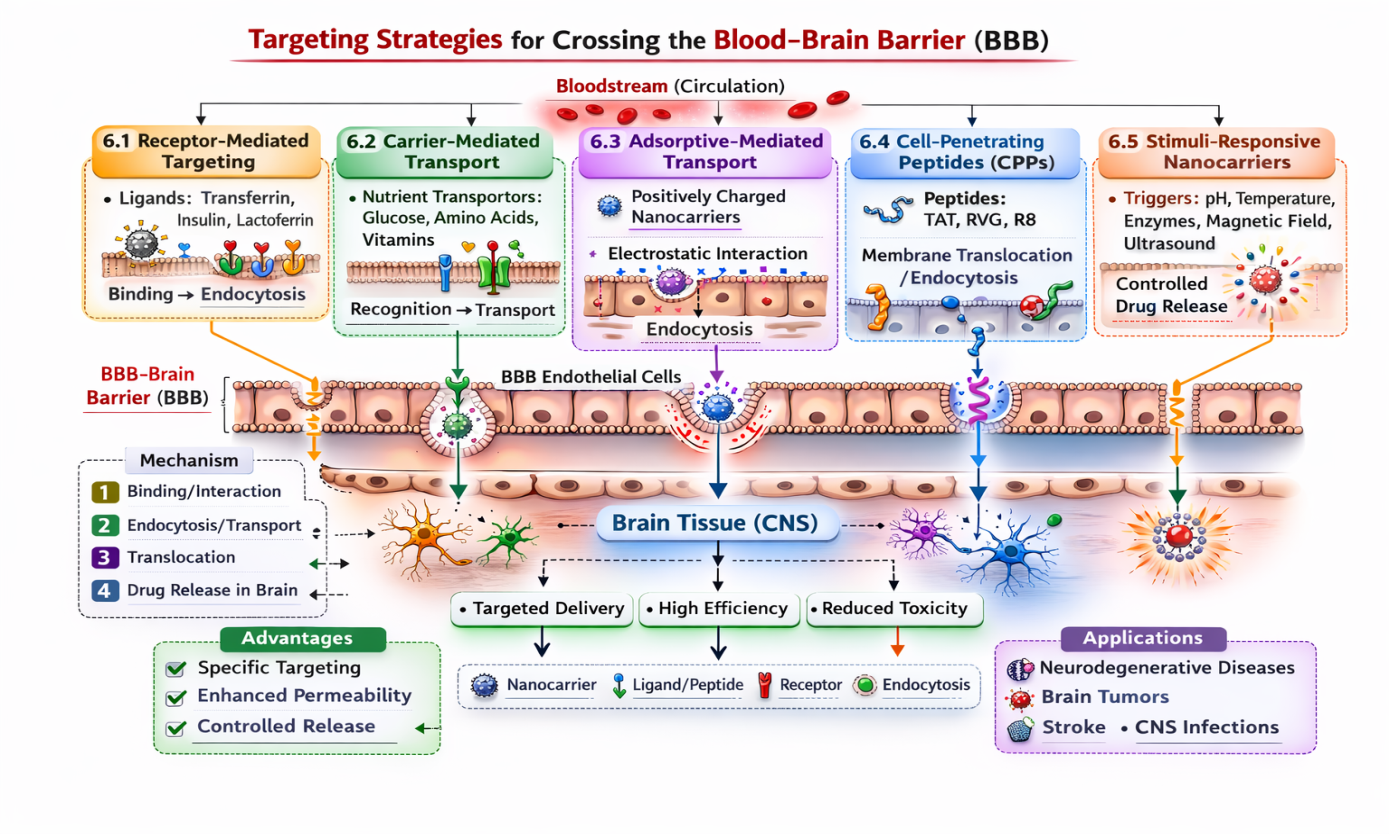
Fig 2 : TARGETING STRATEGIES FOR CROSSING THE BLOOD-BRAIN BARRIER
SURFACE ENGINEERING APPROACHES
• Ligand Functionalization
Ligand functionalization involves attaching specific biological or synthetic molecules to the surface of nanocarriers to improve their interaction with the blood–brain barrier (BBB). These ligands can recognize and bind to receptors expressed on endothelial cells, allowing the system to undergo receptor-mediated transport. By selecting ligands with high affinity and specificity, researchers can significantly improve uptake, reduce off-target distribution, and enhance therapeutic concentration within brain tissue.
• PEGylation
PEGylation refers to coating the nanocarrier surface with polyethylene glycol chains. This modification increases circulation time by reducing recognition and clearance by the immune system. The steric shielding provided by PEG also prevents aggregation and stabilizes the formulation during systemic transport. As a result, PEGylated systems maintain prolonged blood presence, which increases their chances of interacting with BBB transport pathways and reaching the brain.
• Charge and Size Optimization
The surface charge and overall size of a nanocarrier play a critical role in its ability to cross the BBB. Slightly positive or neutral charges improve contact with endothelial cell membranes without inducing toxicity. Similarly, optimizing particle size—typically within the nanoscale range—helps the system avoid rapid clearance while maintaining adequate permeability. Fine-tuning these physical properties ensures better navigation through biological barriers and supports efficient drug transport into the central nervous system.
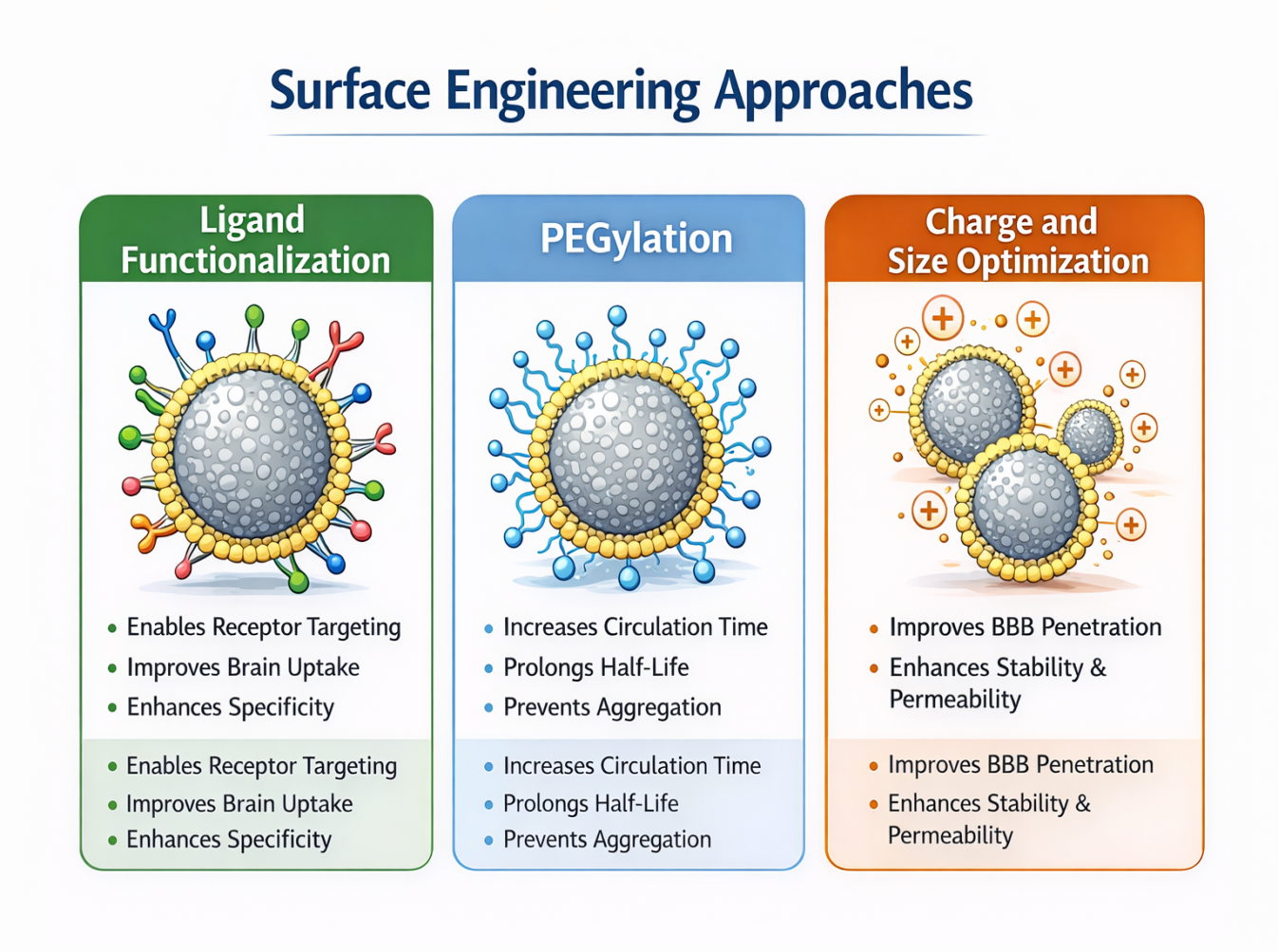
Fig 3 : SURFACE ENGINEERING APPROCHES
APPLICATIONS OF NANOCARRIERS IN NEUROLOGICAL DISORDERS
|
Neurological Disorder |
Key Challenges in Treatment |
Suitable Nanocarrier Types |
Therapeutic Advantages |
|
Brain Tumors |
Limited BBB penetration; high tumor heterogeneity; toxicity of chemotherapeutics |
Lipid nanoparticles, polymeric nanoparticles, dendrimers, inorganic nanoparticles |
Higher drug accumulation in tumors; reduced toxicity to healthy tissue; targeted drug delivery; improved therapeutic index |
|
Alzheimer’s Disease |
Poor delivery of neuroprotective agents; amyloid-β aggregation; chronic inflammation |
Nanomicelles, polymeric nanoparticles, SLNs, ligand-functionalized |
Enhanced BBB transport; targeted delivery to amyloid plaques; sustained drug release; improved cognitive outcomes |
|
Parkinson’s Disease |
Rapid degradation of dopamine; low stability of neurotrophic factors; limited brain uptake |
Polymeric nanoparticles, lipid-based carriers, nano-gels, hybrid nanosystems |
Improved stability of dopamine agonists; controlled release; targeted action in dopaminergic regions; reduced motor fluctuations |
|
Epilepsy |
Variable drug absorption; insufficient levels in brain; systemic side effects |
SLNs, polymeric nanoparticles, stimuli-responsive carriers |
Steady therapeutic concentration; enhanced BBB penetration; minimized systemic toxicity; reduction in breakthrough seizures |
|
Neuroinfections |
Difficulty achieving effective antimicrobial concentration in CNS; rapid drug metabolism |
Lipid nanoparticles, inorganic nanoparticles, polymeric carriers |
Better antimicrobial penetration; sustained levels at infection sites; targeted action on infected cells; improved treatment efficacy |
SAFETY, TOXICITY AND BIOCOMPATIBLE CONSIDERATIONS
Ensuring the safety of nanocarriers used for brain-targeted drug delivery is a critical requirement before clinical translation. These nanosystems interact with delicate neuronal structures and immune cells, making toxicological evaluation essential.
Acute vs. Chronic Toxicity
• Acute Toxicity
Short-term toxicity arises immediately after administration and is often related to burst release of the drug, rapid accumulation of nanoparticles, or sudden changes in cellular homeostasis. Acute effects may include oxidative stress, membrane disruption, mitochondrial damage, or inflammatory responses.
• Chronic Toxicity
Chronic toxicity emerges after repeated or long-term exposure. Many nanocarriers—especially inorganic or non-biodegradable particles—can persist in the brain for extended periods due to slow clearance. Long-term accumulation may lead to:
Therefore, long-duration stability and biopersistence studies are crucial to evaluate potential cumulative risks.
Nanocarrier Accumulation and Clearance Concerns
The brain has limited mechanisms to clear foreign materials. As a result, nanocarriers can accumulate in specific regions depending on size, charge, and surface chemistry.
Key concerns include:
Understanding biodistribution, organ retention, and excretion routes is essential to designing safer, biodegradable carriers.
Neuroinflammation and Immunogenic Risks
The immune response of the brain is highly sensitive. Even biocompatible particles may trigger unintended activation of:
Neuroinflammation can result in:
Surface functionalization (e.g., PEGylation, biomimetic coatings) and dose optimization can significantly reduce these risks.
Hemocompatibility and Systemic Toxicity
Before reaching the brain, most nanocarriers travel through the bloodstream. Therefore:
Systemic safety assessments—including hematology, liver enzymes, and kidney function tests—are essential to ensure clinical viability.
Genotoxicity and Oxidative Stress Considerations
Some nanomaterials can interact with DNA or generate reactive oxygen species (ROS). This may cause:
Using biodegradable, non-reactive materials and antioxidant surface modifications helps minimize these effects.
Biocompatibility Enhancement Strategies
To improve safety profiles, researchers are adopting:
Such strategies balance therapeutic performance with reduced toxicity.
Regulatory Requirements for Safety Testing
Regulatory agencies emphasize:
Only nanocarriers that demonstrate predictable behavior and acceptable safety margins can progress to clinical trials.
MANUFACTURING, SCALABILITY, AND REGULATORY ASPECTS
Challenges in Large-Scale Production
Translating nanocarrier systems from laboratory scale to industrial manufacturing is often difficult due to variability in batch composition, particle size distribution, and reproducibility. Techniques that work well at small scale may not maintain uniformity when scaled up, making consistent production a major barrier for commercialization.
Stability and Storage
Nanocarriers must remain stable during transportation and long-term storage to ensure therapeutic efficacy. Issues such as aggregation, drug leakage, and chemical degradation can compromise performance. Optimizing formulation parameters, using cryoprotectants, and developing robust storage conditions are necessary to maintain stability throughout the product's shelf life.
Regulatory Requirements
Nanomedicines must meet stringent regulatory standards that assess safety, quality, and clinical performance. Regulatory bodies require detailed characterization of particle size, surface properties, pharmacokinetics, biodistribution, and potential toxicity. The specialized nature of nanocarriers often means additional documentation and testing compared with conventional drugs, making the approval pathway more complex.
LIMITATIONS
• Limited Understanding of Long-Term Effects
Although nanocarriers show strong short-term therapeutic potential, there is still limited data on their long-term biodistribution, biodegradation pathways, and clearance from brain tissue. Persistent particles—especially inorganic or hybrid systems—may accumulate and alter neuronal function over time, raising safety concerns.
• Variability in Crossing the BBB
The ability of nanocarriers to cross the blood–brain barrier differs significantly depending on disease stage, patient genetics, pathological conditions, and carrier characteristics. This variability makes it difficult to predict therapeutic outcomes with high precision.
• Lack of Standardized Testing Protocols
Different laboratories use varying synthesis techniques, characterization tools, animal models, and dosage regimens. This inconsistency complicates comparison of results and slows down regulatory approval because reproducibility is limited.
• Poor Translation from Animal Models to Humans
Rodent models often do not fully replicate human BBB physiology or neurological disease pathways. Many nanocarriers that perform well in animals fail to show similar efficacy in human trials, highlighting the gap between preclinical success and clinical relevance.
• Scaling-Up and Manufacturing Challenges
Industrial production of nanocarriers with uniform size, charge, and composition remains technically demanding. Minor changes during scale-up can alter pharmacokinetics, targeting efficiency, and safety profiles, making commercialization difficult.
• High Cost and Resource Requirements
Development of nanomedicine requires advanced instrumentation, specialized materials, skilled personnel, and extensive safety assessments. These factors increase production costs and limit accessibility, especially for developing regions.
• Immunogenicity and Off-Target Effects
Despite surface engineering improvements, certain nanocarriers can still trigger immune activation, complement system responses, or unexpected interactions with healthy tissues. These off-target events may reduce treatment precision and increase toxicity.
• Regulatory Uncertainty
Nanocarriers do not fit neatly into traditional pharmaceutical categories. Regulatory agencies are still refining guidelines for evaluating nanomedicine quality, purity, and long-term safety. This uncertainty creates delays in approval processes.
FUTURE PROSPECTS
• Development of Biomimetic and Cell-Derived Nanocarriers
Future strategies may utilize naturally derived vesicles—such as exosomes or membrane-coated nanoparticles—to improve biocompatibility, enhance targeting precision, and reduce immune recognition. These systems mimic natural biological transport mechanisms, offering safer BBB penetration.
• Personalized Nanomedicine Approaches
Advances in genomics, proteomics, and patient profiling will allow nanocarrier formulations to be tailored to individual needs. Personalized nanomedicine can optimize drug dosing, targeting ligands, and carrier composition based on patient-specific BBB conditions and disease characteristics.
• Smart and Stimuli-Responsive Nanocarriers
Nanocarriers capable of responding to internal (pH, enzymes, redox gradients) or external (magnetic fields, ultrasound, light) stimuli will provide highly controlled drug release at precise locations in the brain. These systems reduce systemic exposure and improve therapeutic outcomes.
• Integration with AI and Computational Modelling
Machine learning can accelerate the design of nanocarriers by predicting optimal size, charge, ligand density, and pharmacokinetic behavior. Computational tools will also help identify potential toxicity risks earlier in development.
• Improved In Vitro BBB Models
The creation of dynamic microfluidic BBB models (organ-on-chip systems) will allow more accurate testing of nanocarrier behavior under physiological conditions. These tools could significantly reduce reliance on animal models and improve translational potential.
• Combination Therapies Using Nanocarriers
Future treatments may combine nanocarrier-based delivery with gene therapy, immunotherapy, or neuroregenerative strategies. Multifunctional nanoplatforms could simultaneously target inflammation, oxidative stress, and neuronal loss, offering more holistic treatment.
• Advancements in Regulatory Science
As nanomedicine grows, regulatory agencies are expected to develop clearer guidelines, standardized testing protocols, and dedicated evaluation frameworks. This will streamline the approval pathway and support faster clinical translation.
• Eco-Friendly and Low-Cost Nanocarrier Production
Emerging green synthesis techniques using natural polymers, plant extracts, and sustainable materials will reduce environmental impact and manufacturing costs, enhancing global accessibility to nanotechnology-based therapies.
CONCLUSION
Brain-targeted nanocarriers have emerged as transformative tools for delivering therapeutic agents across the blood–brain barrier, one of the most restrictive physiological barriers in the human body. Advances in nanoscale engineering have enabled the development of diverse platforms—from lipid-based systems and polymeric nanoparticles to dendrimers, micelles, and hybrid structures—that can be tailored for enhanced permeability, controlled release, and selective targeting of neurological tissues. These engineered systems have shown significant promise in the management of brain tumors, neurodegenerative diseases, epilepsy, and infectious conditions of the central nervous system. Despite these advancements, several challenges hinder clinical translation. Concerns related to long-term safety, nanomaterial accumulation, immune activation, large-scale manufacturing, and regulatory compliance remain key obstacles. Addressing these issues requires deeper understanding of nano–bio interactions, improved predictive models of toxicity, and harmonized evaluation standards. Looking ahead, emerging innovations—such as biomimetic coatings, stimuli-responsive platforms, and personalized nanomedicine—are expected to revolutionize CNS drug delivery. Continued interdisciplinary research will be essential to close existing gaps and translate laboratory breakthroughs into safe, effective, and clinically viable therapies for neurological disorders.
REFERENCES

R. B. Yasaswini, Mala Siva Kumar, Bukke Navya Sree, Mude Nathi Pooja Naik, Brain-Targeted Nanocarriers: Innovative Strategies, Therapeutic Advances, and Future Pathways Across the Blood–Brain Barrier, Int. J. of Pharm. Sci., 2026, Vol 4, Issue 2, 4493--4504. https://doi.org/10.5281/zenodo.18799307
 10.5281/zenodo.18799307
