

We use cookies to ensure our website works properly and to personalise your experience. Cookies policy
Ideal Institute of Pharmacy, Posheri, Wada, Palghar
Carica papaya L., commonly known as papaya, is a tropical fruit tree of global importance, appreciated both as a food source and for its medicinal properties. This review explores the fascinating developmental journey of the papaya plant, emphasizing the significant biochemical and morphological transformations it experiences from the germination of a tiny seed to the ripening of its nutrient-dense fruit. The journey starts with the seed—often discarded—yet rich in bioactive compounds such as benzyl glucosinolate and isothiocyanates. These substances have been widely researched for their potent antioxidant, antimicrobial, and anthelmintic activities, revealing the seed’s underappreciated therapeutic potential. As the papaya plant progresses in its growth, scientific interest increasingly centers on the development of the fruit. In its unripe, green stage, the fruit is notably rich in proteolytic enzymes—particularly papain and chymopapain—which are extensively used in the food, pharmaceutical, and cosmetic industries for their protein-digesting capabilities. As the fruit ripens, it undergoes a striking transformation, with its color shifting from green to a vibrant orange-red. This visual change reflects a profound alteration in its chemical composition: enzyme levels decline significantly, while sugars, vitamins, and health-promoting carotenoids such as lycopene and beta-carotene accumulate rapidly. These nutrients are essential for human health, offering strong antioxidant protection and playing a role in preventing chronic illnesses. Additionally, the ripe fruit provides a rich source of dietary fiber and vital minerals. This review highlights the comprehensive value of the papaya plant, establishing it as a significant horticultural and nutraceutical resource with great promise for enhancing global nutrition and health.
Carica papaya Linn. (Family: Caricaceae) is commonly known as papaya in English, Papita in Hindi, and Erandakarkati in Sanskrit. Native to tropical America, the plant was introduced to India in the 16th century.It is characterized by a weak, usually unbranched, soft stem that exudes copious white latex. The stem is typically topped with a terminal cluster of large, long-stalked leaves. Carica papaya is a rapidly growing plant and can reach up to 20 meters in height.Traditional UsesPapaya leaves have been traditionally used to treat a wide range of ailments, including: Malaria Dengue fever Jaundice Immune modulation Viral infections Phytochemical Composition The young leaves are especially rich in: Flavonoids: ,Myricetin Alkaloids: Carpaine, Pseudocarpaine, Dehydrocarpaine I and IIPhenolic compounds: Ferulic acid, Caffeic acid, Chlorogenic acid Cyanogenetic compounds: Benzylglucosinolat Both the leaves and fruit of Carica papaya Linn. contain: Carotenoids: β-carotene, Lycopene Anthraquinone glycosides These compounds confer various medicinal properties, including: Anti-inflammatory Hypoglycemic Anti-fertility Abortifacient Hepatoprotective Wound healing Antihypertensive Antitumor Standardization Parameters.
Due to their significance in traditional medicine, papaya leaves are often subject to phytochemical standardization, including evaluation of: Moisture content Extractive values Ash values Swelling index, among other parameters.
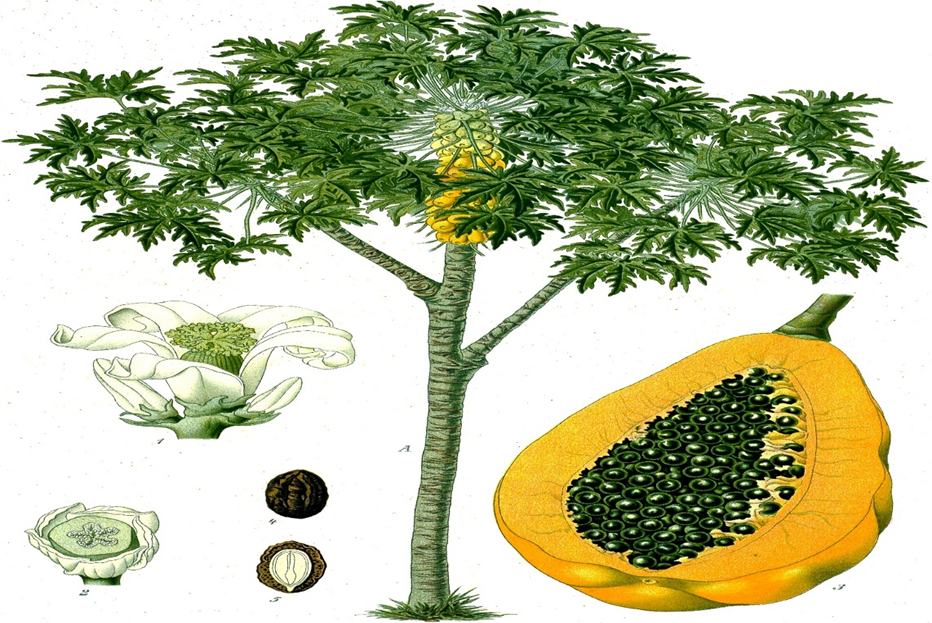
Fig no.1 showing the whole plant of Carica papaya
Taxonomy, Morphology and Distribution
|
Botanical Classification |
|
|
Domain: |
Flowering plant |
|
Kingdom: |
Plantae |
|
Sub Kingdom: |
Tracheobionta |
|
Class: |
Magnoliopsida |
|
Subclass |
Dilleniidae |
|
Superdivision: |
Spermatophyta |
|
Phyllum |
Steptophyta |
|
Order: |
Brassicales |
|
Family: |
Caricaceae |
|
Genus: |
Carica |
|
Botanical Name |
Carica papaya Linn.83 |
Carica papaya L., widely known as papaya, is a rapidly growing, short-lived perennial herb with notable economic value across the globe. Originally native to tropical regions of the Americas, it is now extensively cultivated in both tropical and subtropical climates worldwide. The fruit, which is eaten both ripe and unripe, is used in various culinary applications such as salads, stews, and beverages. In addition to its nutritional value, papaya serves as a major source of papain, a proteolytic enzyme present in its latex. This enzyme is widely employed in the food, pharmaceutical, and cosmetic industries due to its protein-digesting properties.The plant’s quick growth and early flowering—within just a few months of planting—make it highly appealing for commercial cultivation, offering growers a fast and continuous yield.
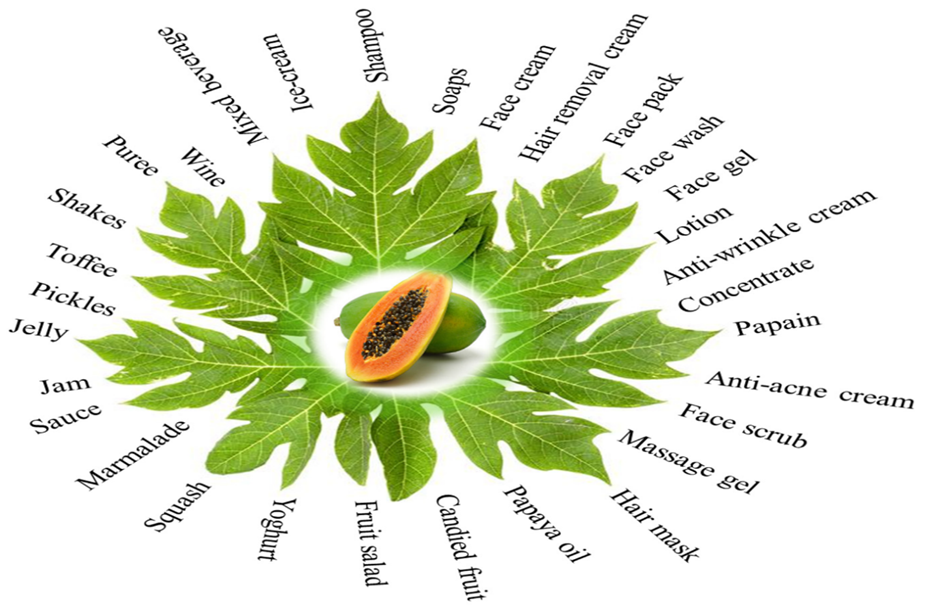
Fig no. 2 showing the economic importance and uses of Carica papaya
The anatomy of the papaya plant reveals a fascinating contradiction. Despite its ability to grow up to 10 meters (33 feet) tall and produce fruits weighing as much as 9 kilograms (20 pounds), it is botanically classified as a giant herb due to its lack of true secondary growth—meaning it does not develop woody tissue. This unusual feature sets it apart from typical trees. The stem of the papaya is cylindrical, hollow, and composed of spongy-fibrous tissue, with visible scars left by fallen leaves. In the absence of a lignified, woody trunk, the plant relies on alternative structural adaptations for support. Its mechanical strength is maintained through a combination of high turgor pressure within the parenchyma cells and a lattice of lignified fibers found in the bark.
These adaptations enable the papaya to grow quickly, especially in light-rich forest gaps where it must compete with other vegetation. However, the same non-woody nature that allows for rapid growth also renders the plant highly vulnerable to mechanical stress. Strong winds can easily damage the delicate stem and leaves, and in some cases, may cause the entire plant to fall—particularly when it is bearing heavy fruit. The plant's large, deeply palmately-lobed leaves, which can reach lengths of up to 105 cm (41 inches), are arranged in a spiral pattern at the top of the trunk. These leaves have a relatively short lifespan, typically lasting around six to eight months.
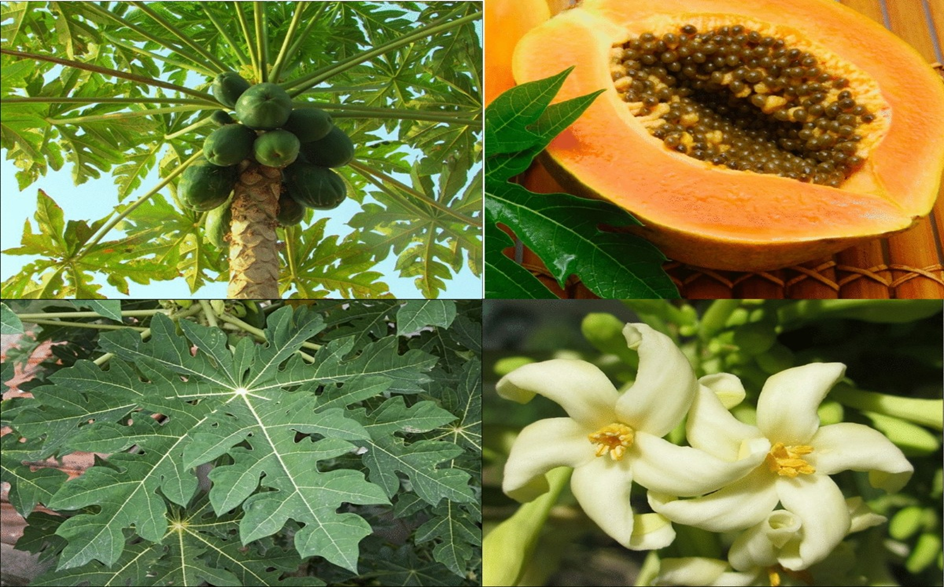
Fig no. 3 showing the plant , fruit , seed , leaf and flower of Carica papaya
2. The Seed: From Dormancy to Germination
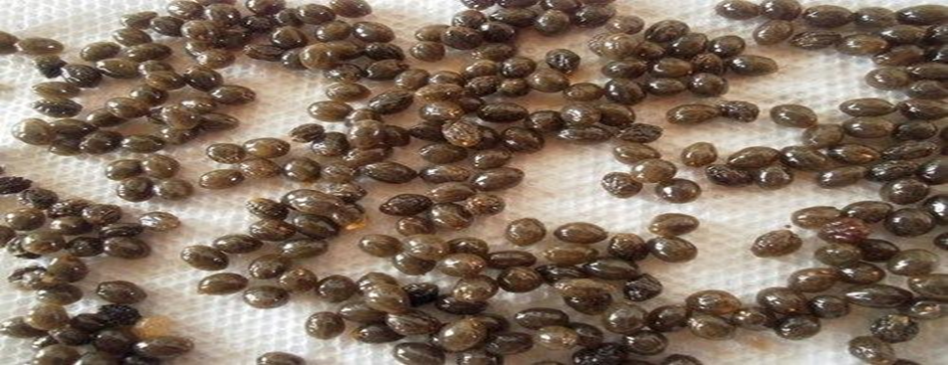
Fig no. 4 showing the seeds of Carica papaya
2.1 Seed Anatomy and Biochemical Composition
Although often discarded, the seeds of Carica papaya are packed with nutrients and bioactive compounds.14 Located in the fruit’s central cavity, these numerous small black seeds are encased in a gelatinous outer layer known as the sarcotesta or aril.2 This coating plays a significant role in the seed’s biology. Nutritionally, papaya seeds are rich in carbohydrates (48.91%) and proteins (24.33%).5 They also contain substantial levels of key minerals such as iron (70.16 mg/kg), selenium (12.50 mg/kg), and calcium (26.96 mg/kg).5 When compared to the fruit’s peel and pulp, the seeds have higher concentrations of phosphorus, calcium, magnesium, zinc, and iron.5 Additionally, they offer a broad range of vitamins—including A, B6, D, and K—and all essential amino acids.5
In terms of phytochemical composition, papaya seeds are abundant in health-promoting compounds like polyphenols, flavonoids, and beneficial monounsaturated fatty acids such as oleic, palmitic, and linoleic acids.14 One particularly notable compound is benzyl isothiocyanate, which is present in high concentrations and contributes to the seeds' antimicrobial and nutraceutical properties.5 However, the presence of prunasin, a cyanogenic compound, highlights the need for caution regarding their consumption.10
2.2 Seed Dormancy and Storage Behaviour
Papaya seeds exhibit physiological dormancy, which leads to slow and inconsistent germination, typically taking between one to four weeks.19 This dormancy is largely due to the presence of the sarcotesta—the gelatinous outer layer surrounding the seed.16 The sarcotesta contains water-soluble phenolic compounds that act as natural germination inhibitors.16 These compounds hinder oxygen absorption by the seed, preventing premature sprouting while still inside the moist fruit. To overcome this barrier and improve germination, it is essential to remove the sarcotesta mechanically—usually by rubbing the seeds in a colander followed by thorough rinsing.7 Seeds that have had this layer removed demonstrate significantly improved germination rates, faster sprouting, and more vigorous seedling development, including enhanced root and shoot growth.16
Storing papaya seeds poses a unique challenge due to their classification as having "intermediate" storage behavior—falling between orthodox and recalcitrant seed types.22 Unlike orthodox seeds, which benefit from low moisture and cold storage, papaya seeds are sensitive to chilling and can lose viability at temperatures near or below freezing.22 However, they also differ from recalcitrant seeds, which cannot tolerate drying, as papaya seeds can be safely dried to a certain extent. Research suggests that maintaining a seed moisture content between 5% and 14%, with an optimal range of 5% to 7%, supports longevity.22 Storage at 15°C with moisture levels between 7.9% and 9.4% has been shown to preserve germination capacity for up to a year. In contrast, storing seeds at lower temperatures such as 0°C or -20°C leads to a faster decline in viability.23 This intermediate nature means that while refrigeration can be used for storage, it must be carefully controlled to avoid chilling damage and ensure seed viability is retained.19
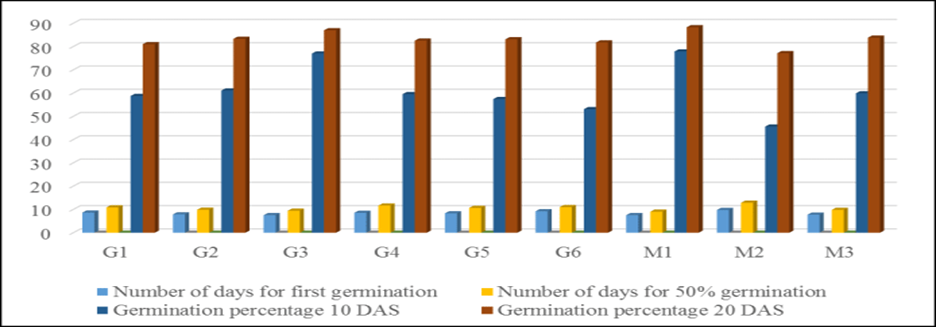
Graph 1 showing the germination of Carica papaya
2.3 Propagation and Germination Techniques
Proper seed handling and germination are critical first steps in successful papaya cultivation. The process begins by selecting seeds from a fully ripe, healthy fruit, followed by thorough rinsing and removal of the sarcotesta.1 After cleaning, the seeds can be air-dried in a cool, well-ventilated area and stored in a sealed container in the refrigerator for future use.1To overcome seed dormancy and enhance germination, various pre-treatment techniques are used. One method is cool, moist stratification, which involves placing seeds in a moist mixture of sand and peat moss and storing them in a refrigerator for 70 to 100 days.19 A quicker alternative is to soak the seeds in a potassium nitrate solution for 30 minutes before immediate planting.19
For optimal germination, seeds should be sown in a clean, sterile, and well-draining medium.1 The ideal temperature range is between 21°C and 30°C, with high humidity and a minimum of six hours of sunlight daily.1 Once seedlings appear, it is advisable to thin them out, retaining only the strongest seedling per container.7 Because young papaya plants are particularly sensitive to their environment, they require a bright location with indirect sunlight and consistently moist—though not waterlogged—conditions.24
3. The Plant: Vegetative Growth and Reproductive Biology
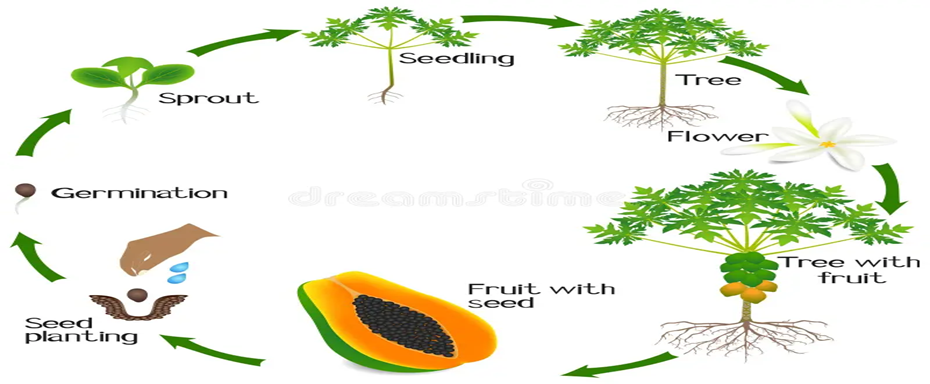
Fig no. 5 showing the life cycle of Carica papaya
3.1 Plant Morphology and Growth Stages
Papaya is celebrated for its rapid growth rate, which allows for a quick transition from seedling to fruit-bearing plant. After germination, the plant enters a phase of rapid initial growth, characterized by significant root development.2 The young plant's growth rate is initially slow but peaks as it approaches flowering, a critical developmental milestone that can occur as early as three to five months after planting, depending on the variety and cultivation conditions.2
A key characteristic of papaya cultivation is its continuous flowering pattern. Once the plant begins to bloom, it produces new flowers every few days at the growing tip, leading to a succession of fruit development stages on a single plant.2 This unique feature enables a year-round harvest in tropical climates, providing a consistent supply of fruit for commercial markets.6 Environmental factors can, however, influence this pattern, with some growers noting increased flower production during cooler months and a slight reduction during peak summer heat.6
3.2 Sex Expression and Flower Types
Papaya is a trioecious (or polygamous) species, meaning it produces three main types of plants based on their reproductive organs: male, female, and hermaphrodite. This characteristic is fundamental to papaya’s reproductive biology and plays a crucial role in its commercial cultivation.
Male (Staminate) Plants: These plants develop small, yellow, tubular flowers arranged in long, branched clusters known as cymes or panicles. While the flowers contain stamens that produce pollen, they lack a functional ovary and therefore do not produce fruit. Although male flowers play a vital role in pollinating female plants, they are generally viewed as unproductive in commercial orchards because they take up space without contributing to fruit yield.
Female (Pistillate) Plants: Female plants develop larger, more rounded flowers that range in color from yellow to whitish. These flowers usually appear alone or in small groups near the trunk. Unlike fused petals, the petals are separate, forming a cup-like structure around a prominent, superior ovary that will eventually develop into fruit. While female plants produce round to oval-shaped fruits, they need cross-pollination from a male or hermaphrodite plant in order to bear fruit
Hermaphrodite (Bisexual) Plants: These plants are especially valued by commercial growers because their flowers possess both male (stamens) and female (carpels) reproductive organs. This means they can self-pollinate, making them well-suited for dense planting systems. The flowers are typically slender and elongated, with petals that are fused together, and they usually develop into fruit that ranges from elongated to pear-shaped.
Table 1 showing the sex expression and flower type for Carica papaya.
|
Plant Sex |
Flower Appearance |
Flower Location |
Pollination Method |
Fruit Shape |
Commercial Viability |
|
Male (Staminate) |
Small, tubular, yellow; 10 stamens; fused petals |
Long, branched clusters (cymes/panicles) at leaf axils 7 |
Cross-pollination 7 |
None (rare, poor quality) 27 |
Low, non-fruiting (except for pollination) 28 |
|
Female (Pistillate) |
Large, round, yellow-to-whitish; large ovary; unfused petals |
Singly or in small clusters close to the trunk at leaf axils 7 |
Cross-pollination (requires external pollen) 27 |
Round to oval 7 |
High, requires male plants for pollination 4 |
|
Hermaphrodite (Bisexual) |
Long, narrow, yellow-to-whitish; both stamens and ovary 27 |
Long, narrow, yellow-to-whitish; both stamens and ovary 27 |
Self-pollination 29 |
Elongated to pear-shaped 7 |
High, self-pollinating and productive 6 |
3.3 The Dynamic Nature of Sex Reversal:
Papaya Plant Sex Expression: Although the sex of papaya plants is genetically controlled by a single gene with three alleles (M1m, M2m, mm) and involves XY/XYh chromosomes, it is not entirely fixed. Environmental conditions can significantly impact sex expression, often resulting in a phenomenon called sex reversal. This occurs most frequently in hermaphrodite plants, which are the most commercially valuable type. For instance, high temperatures exceeding 35°C (95°F) can trigger a temporary shift toward male characteristics, causing the plant to produce only staminate (pollen-producing) flowers. In contrast, cooler temperatures below 25°C (77°F) during flower development can promote more female-like traits, leading to the formation of carpelloid (female-like) flowers. These environmental effects are crucial in commercial papaya farming, as even the best hermaphrodite cultivars may suffer reduced yields and produce deformed fruit when exposed to heat or drought stress.
For growers, identifying a plant’s sex is essential to maximize yield. Since sex cannot be determined at the seed or early seedling stage, the standard commercial approach is to plant 2 to 4 seedlings per hole. Once the plants reach a height of 2 to 5 feet and begin to flower, their sex becomes distinguishable. At this point, the non-productive male plants are typically removed, though a few males are kept—usually one for every 8 to 25 female plants—to ensure sufficient pollination. This method helps make the most efficient use of space and resources, as male plants do not bear fruit and can otherwise lower overall orchard productivity.
3.4 Pollination and Fruit Set
Papaya pollination involves both wind and insect activity. Various insects such as bees, wasps, midges, thrips, and hawk moths contribute to this process. In commercial farming, hermaphrodite papaya plants are preferred because they can self-pollinate, ensuring consistent fruit development without relying on external pollen sources. In contrast, female plants depend on pollen from male or hermaphrodite plants, carried by wind or insects, to produce fruit. Although some papaya types can develop fruit without pollination, these are usually small and seedless, making them unsuitable for commercial markets. In orchards with separate male and female plants (dioecious types), maintaining a male-to-female ratio between 1:8 and 1:25 is recommended to ensure successful pollination and optimal fruit yield.
4. The Fruit: Development, Ripening and Compositional Changes
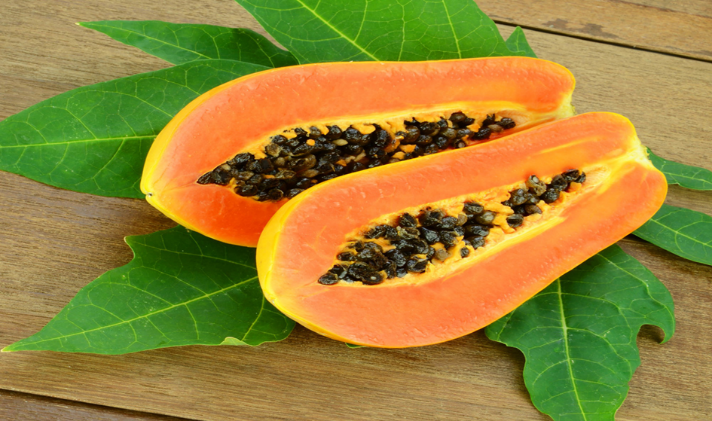
Fig no. 6 showing the ripen fruit with seeds of Carica papaya
4.1 Papaya Fruit Development: The Double Sigmoid Pattern:
The growth of papaya fruit follows a well-established and scientifically recognized "double sigmoid curve." This pattern, important for determining the optimal harvest time and fruit quality, includes three distinct stages. Flowering begins around three to five months after planting, and the fruit reaches maturity between seven and eleven months after planting.
Phase 1: Rapid Initial Growth (First 8-10 weeks) involves intense cell division, resulting in swift fruit enlargement. During this stage, the fruit grows to about 60% to 70% of its mature size. Young fruits are particularly sensitive to environmental stresses such as insufficient water or nutrient availability, which can lead to early fruit drop.
Phase 2: Maturation Plateau (Weeks 10-14) is marked by a noticeable slowdown in growth as the fruit transitions from expanding in size to focusing on internal development. During this stage, key processes such as seed formation and the beginning of sugar accumulation take place, setting the stage for the fruit’s final flavor.
Phase 3: Final Sizing and Ripening (Weeks 14-20) features a renewed phase of fruit growth, along with a quick buildup of sugars and the formation of distinctive flavor and aroma compounds. During this time, the fruit softens and changes color—from green to yellow, orange, or red—depending on the variety.
Table 2 showing the phases of growth in Carica papaya
|
Phase |
Timeframe (Weeks) |
Key Physiological Processes |
Corresponding Fruit Characteristics |
|
Phase 1 |
0-10 |
Rapid cell division; intensive growth and enlargement. 6 |
Reaches 60%-70% of final size; highly sensitive to environmental stress. 6 |
|
Phase 2 |
10-14 |
Slowed growth; focus on seed development and initial sugar accumulation. 6 |
Minimal size increase; internal changes define flavour profile. 6 |
|
Phase 3 |
14-20 |
Final enlargement; rapid sugar concentration and development of aroma/colour. 6 |
Softens and changes colour (green to yellow/orange/red); develops characteristic flavour. 6 |
4.2 Physiological and Biochemical Transformations during Ripening:
Papaya is classified as a climacteric fruit, meaning its ripening is triggered by a surge of ethylene, a natural plant hormone. The ripening process involves a carefully controlled biochemical sequence that significantly changes the fruit’s texture, color, and flavor. Central to this process is the ethylene-pectinase cascade. The production of ethylene creates a positive feedback loop that increases the activity of pectinase enzymes, especially polygalacturonases (PGs) and other hydrolases. These enzymes break down the fruit’s cell walls and middle lamella by degrading complex polysaccharides responsible for structural firmness. This breakdown softens the pulp, which contributes to the fruit’s desirable texture but also leads to higher post-harvest losses.
Additionally, ethylene production triggers several other important changes. It activates enzymes like cyclases and hydroxylases, which lead to the buildup of carotenoids, causing the skin and pulp to change color from green to shades of yellow, orange, or red. Ethylene also stimulates the production of volatile compounds such as the terpene linalool, which contributes to the fruit’s unique aroma and sensory appeal. While these changes happen in all harvested papayas, research indicates that fruit picked at earlier maturity stages (like stage 0, when the fruit is completely green) have fewer ethylene receptors. This results in a delayed start to the ripening process and a slower softening of the fruit. However, this slower ripening can come with a trade-off, as papayas harvested at more advanced stages of maturity (with some yellow coloring) generally develop better flavor.
4.3 The Nutritional and Phytochemical Profile of the Fruit
The nutritional and phytochemical makeup of papaya fruit undergoes notable changes during ripening. One important enzyme, papain, is mainly found in the latex of the unripe green fruit. As the papaya matures and ripens, the levels of papain decline, which means that ripe papaya contains much less of this enzyme and is therefore not a good source of papain.
In contrast, ripening boosts the levels of several important nutrients in papaya. As the fruit ripens, its pulp’s moisture content increases, while the overall amounts of carbohydrates and proteins decrease. The concentration of soluble solids, which contribute to the fruit’s sweetness, rises significantly. Similarly, the content of ascorbic acid (Vitamin C) increases by 20% to 30% during the ripening process. The changes in color are associated with the buildup of specific carotenoids: lycopene is the primary pigment in red-fleshed varieties, whereas lutein and beta-carotene are more abundant in yellow-fleshed types.
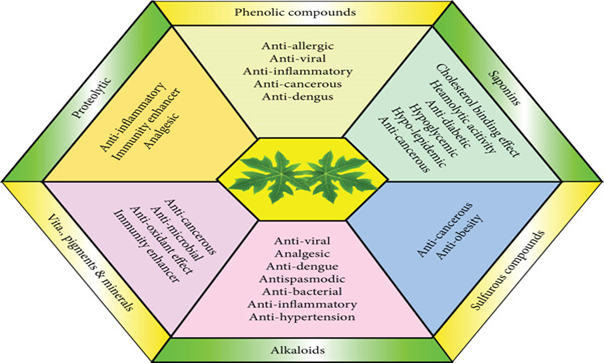
Fig no. 7 showing phytochemical compounds in Carica papaya
5. Cultivation and Commercial Management
5.1 Optimal Environmental Conditions and Soil Requirements
Papaya flourishes in warm tropical and subtropical climates, but it is highly vulnerable to unfavorable environmental conditions. The optimal temperature range for its growth and fruit production is between 21°C and 32°C (70°F to 90°F), with night temperatures ideally remaining above 10°C (50°F). The plant is extremely sensitive to cold and can be killed by temperatures below −0.6°C (31°F). Exposure to temperatures higher than 32°C (90°F) or lower than 15°C (59°F) may lead to flower drop or the development of deformed fruit.
For healthy growth, papaya plants need a minimum of six hours of direct sunlight each day and should be shielded from strong winds, which can easily damage their soft, non-woody stems. Their shallow and delicate root systems require light, well-draining soil rich in organic matter, with a preferred pH between 6.0 and 6.5. Papaya is particularly prone to waterlogging—just a short period of flooding can lead to root rot and kill the plant within 24 hours. This sensitivity to poor drainage poses a significant challenge for cultivation.
5.2 Nutrient Management and Fertilization:
Papaya plants require a constant and substantial supply of nutrients to support both vegetative growth and fruit development. Among the essential macronutrients, nitrogen (N), phosphorus (P), and particularly potassium (K) are crucial. A balanced NPK fertilizer, like a 14-14-14 formulation, is typically recommended and should be applied in small, regular amounts.
Timely identification and correction of nutrient deficiencies are vital for maintaining plant health and achieving high yields. Deficiencies in specific nutrients can cause visible symptoms on the plant and fruit, helping growers diagnose problems accurately. This enables targeted treatments that help avoid major losses in quality and productivity. For example, chelated iron (EDDHA form) used as a soil drench can address iron deficiency in alkaline soils, while magnesium sulfate foliar sprays are effective for treating magnesium deficiency. These practices highlight how closely plant health is tied to proper nutrition, as deficiencies can weaken plants and increase their susceptibility to pests and diseases.
Table 3 showing the nutrient management in Carica papaya.
|
Nutrient |
Symptoms of Deficiency |
Corrective Measure/Solution |
|
Nitrogen (N) |
Uniform yellowing of older leaves, slow vegetative growth, smaller than normal leaves and fruit.50 |
Balanced NPK fertilizer (e.g., 20:20:20) applied via soil or drip irrigation.50 |
|
Phosphorus (P) |
Older leaves turn red and purple, stunted growth, and slender stalks.50 |
Fertimax 12:61:00 or a similar high-phosphate fertilizer.50 |
|
Potassium (K) |
Yellowing between veins and along leaf margins, necrotic spots, particularly on older leaves; premature fruit ripening and softening.53 |
Balanced fertilizer with higher potassium levels; foliar application of potassium nitrate.44 |
|
Calcium (Ca) |
Yellowish leaves at the tip of the shoot that may curl upward; restricted root growth.50 |
Aquacal or Fertimax CN fertilizer.50 |
|
Magnesium (Mg) |
Leaves turn yellowish with brown spots on the leaf margin; green banding around the margin and next to the midrib.51 |
Foliar spray of magnesium sulfate (1%−2%).51 |
|
Boron (B) |
Brittle, downward-curling mature leaves; death of the growing point; deformed, lumpy fruit.56 |
Foliar application of borax or a similar boron product.56 |
|
Zinc (Zn) |
Yellowing of younger leaves; mottled leaves; poor growth with short internodes.50 |
Foliar application of zinc sulfate or a chelated zinc product.50 |
|
Iron (Fe) |
Interveinal chlorosis (yellowing between veins with green network of veins) on leaves.50 |
Chelated iron (e.g., Fe-EDDHA) applied as a soil drench. |
5.3 Pest and Disease Management:
Papaya farming encounters various problems due to pests and diseases that can greatly reduce both yield and fruit quality. One of the most damaging issues is the Papaya Ringspot Virus (PRSV), a severe disease that currently has no cure. It spreads through insect vectors, making prevention the most effective strategy. Farmers are advised to promptly remove and destroy infected plants when symptoms appear and take steps to manage the vector population.
Fungal and bacterial infections are frequently seen in papaya cultivation. One major problem is Phytophthora blight, caused by Phytophthora palmivora, which commonly occurs during wet conditions. It leads to root rot, stem decay, and premature fruit drop. This disease thrives in waterlogged soils and areas with poor drainage, highlighting the need for careful site selection and proper irrigation practices.
Anthracnose, caused by Colletotrichum gloeosporioides, is a significant problem after harvest, leading to the development of dark, sunken spots on ripe papaya fruits.
Among the common insect pests in papaya cultivation are Fruit Flies (Dacus dorsalis), which deposit their eggs inside the fruit and can be managed using insecticides. Another pest, the Papaya Spider Mite (Brevipalpus phoenicis), causes scarring on the fruit surface, lowering its market quality and value.
Nematodes can inflict serious harm on papaya plants by forming galls on the roots, which results in stunted growth and yellowing of the leaves. To effectively tackle such issues, Integrated Pest Management (IPM) is advised. This approach combines cultural methods, biological control agents, and careful pesticide use. The plant’s resistance to pests and diseases is closely linked to its growing conditions—plants suffering from nutrient shortages or water stress are more vulnerable to infections and infestations.
5.4 Harvesting and Post-Harvest Handling:
Proper harvesting and careful post-harvest handling are vital to preserve the quality and extend the storage life of papaya. The stage at which the fruit is picked depends on its market destination. For export purposes, papayas are usually harvested at the "color break" stage—when the skin transitions from deep green to light green with a slight yellow hue near the blossom end. For domestic markets, harvesting is done when about 50% to 75% of the skin has turned yellow. Since papaya does not develop better flavor once detached from the plant, harvesting at a later stage is often preferred to ensure better taste.
The harvesting process must be done gently to avoid bruising or surface damage, as this can speed up moisture loss and decay. Hand-picking is the recommended method, and tools are often used to harvest fruit from taller trees. Once harvested, the fruits should be handled with care and promptly transported to packing facilities to avoid weather exposure and further damage.
Temperature control, especially maintaining a proper cold chain, plays a crucial role in post-harvest care. Papayas are sensitive to cold and can suffer chilling injuries if stored below 12°C (54°F), resulting in poor ripening and increased risk of rot. Hence, ideal storage temperatures vary depending on the ripeness:
Mature-green to quarter-yellow stage: 13°C (55°F) Partially ripe: 10°C (50°F) Fully ripe: 7°C (45°F)
Additionally, treatments like hot water dipping (at 49°C or 120°F for 20 minutes) are used to manage fungal diseases such as Anthracnose and to reduce the chances of fruit rotting.
CONCLUSION AND FUTURE OUTLOOK
Summary of Key Findings and Integrated Insights:
The life cycle of Carica papaya highlights the intricate and ever-changing processes within plant biology. It begins with a dormant seed that exhibits “intermediate” storage behavior, develops into a soft-stemmed plant that depends on internal water pressure (turgor) for support, and eventually produces a climacteric fruit whose ripening follows a finely regulated biochemical sequence.
This journey is shaped by a complex mix of internal traits and external environmental influences.Several important themes emerge from this analysis. Firstly, unique botanical features—like the sarcotesta’s role in maintaining seed dormancy and the plant’s lack of true woody tissue—are not just interesting traits but key survival strategies. However, they also pose specific challenges for commercial cultivation. Secondly, the plant’s variable sex expression, which can shift in response to environmental factors such as heat or water stress, shows that phenotype is not solely dictated by genetics. This variability affects how growers manage their crops, requiring precise methods for identifying plant sex and organizing orchards accordingly. Lastly, the characteristic double sigmoid growth curve and the ethylene-regulated ripening process offer a scientific basis for predicting fruit development, helping producers improve both fruit quality and post-harvest procedures.
Discussion of Knowledge Gaps and Directions for Future Research
Although much has been discovered about papaya, several key areas still need further exploration. The exact genetic and epigenetic factors involved in sex reversal triggered by environmental changes remain unclear. More in-depth studies into the roles of histone modification, DNA methylation, and microRNAs could open new possibilities for creating more reliable, high-yielding varieties.In light of global climate change, it's also essential to understand how papaya's sensitivity to temperature fluctuations and water stress might influence its growth, productivity, and fruit quality across various regions. Ongoing research into how the plant manages abiotic stress—and how that stress affects both yield and quality—is vital for ensuring long-term, sustainable cultivation
Practical Recommendations for Growers and Researchers
Based on the findings of this report, the following recommendations are provided:
Seed-to-Seedling Stage: To improve germination and break seed dormancy, it is essential to remove the sarcotesta from papaya seeds before planting. When storing seeds, aim to maintain a moisture level of 5% to 7% and keep them in a cool environment—such as a refrigerator at around 4°C—rather than relying solely on drying techniques.
Vegetative and Reproductive Care: Given the risk of sex reversal in papaya, hermaphrodite varieties are the most dependable for consistent fruit yields. In the case of dioecious types, it is advisable to plant several seedlings per spot and thin them after flowering to achieve the desired ratio of male to female plants. Ensure proper wind protection and maintain well-drained soils to minimize the risk of physical injury and disease.
Nutrient Management and Disease Prevention: Follow a regular fertilization regime that addresses the plant's significant need for nitrogen, phosphorus, and potassium. Monitor the crop for micronutrient deficiencies using both soil analysis and visual indicators. Apply integrated pest management (IPM) practices that include good sanitation, pest monitoring, and timely interventions to control major diseases such as Papaya Ringspot Virus and root rot.
Harvest and Post-Harvest Practices: Fruits should be harvested at a stage of maturity that suits the target market, ensuring a good balance between flavor and shelf life. Maintain a consistent cold chain during post-harvest handling—store mature-green fruit at 13°C and lower the temperature gradually for riper fruit stages. This helps avoid chilling injury and extends the storage life of the fruit.
REFERENCES


Harshali Thakare, Rakhi Patil, Dr. Sonali Uppalwar, Carica papaya L.: A Comprehensive Review from Seed to Fruit., Int. J. of Pharm. Sci., 2025, Vol 3, Issue 10, 1042-1057. https://doi.org/10.5281/zenodo.17326420
 10.5281/zenodo.17326420