
Pune District Education Association's Shankarrao Ursal College of Pharmaceutical Sciences & Research Center
Hair growth is a complex biological process regulated by three cyclic stages: anagen, catagen, and telogen, each responsible for hair creation, cessation, and shedding. Environmental factors, genetics, food, and medical disorders can all interrupt the cycle, resulting in hair loss. Hair serums have arisen as versatile cosmetic solutions that protect, nourish, and improve hair health. They form a protective covering on the hair's surface, improving moisture retention, smoothing cuticles, reducing frizz, increasing shine, and preventing breakage. Herbal hair serums, in particular, include natural components like pomegranate peel, amla, flaxseed, fenugreek, aloe vera, coconut oil, and rose oil, all of which have antioxidant, anti-inflammatory, and hair-strengthening benefits. These herbs nourish the scalp, stimulate hair follicles, improve blood circulation, and encourage healthy hair development. Evaluation characteristics, such as organoleptic qualities, viscosity, pH, homogeneity, spreadability, and irritation tests, confirm the serum's quality and effectiveness. Herbal serums can be used as leave-in treatments, scalp stimulants, pre-wash conditioners, heat protectors, and finishing products. Overall, the composition and application of herbal hair serums provide a safe, natural method of improving hair strength, texture, shine, and growth while reducing adverse effects, in line with the growing global desire for herbal and chemical-free personal care products.
Hair growth is a complicated and controlled process that scientists are still studying. The development, lengthening, and loss of hair happen in cycles. Human hair follicles go through three main stages: anagen, catagen, and telogen. During the anagen stage, the follicles take in cytochrome and quickly make hair shafts. When a hair follicle becomes active in the anagen stage, the old telogen follicle can't create new hair shafts.1 Hair is formed when skin cells, called germinative cells, become keratinized, creating an improved epidermal structure. This structure grows from the hair follicles in the skin. Hair is made of a protein called keratin, which has elements like carbon, nitrogen, sulfur, and oxygen. How fast hair grows varies for each person, but it usually grows between 15 to 30 millimeters each month. Hair is an important part of the body made by the skin's outer layer. It acts as a protective part of the body.2 Hair serum is a type of liquid treatment. It helps protect hair from outside dirt and prevents hair from turning gray too early. That’s why hair serum is important for keeping hair healthy and strong. Serum gives hair a shiny, non-greasy look by creating a smooth layer that reflects light. The belief that hair serum can fix naturally fine hair is a common mistake. The real key is the type of serum you use and how much you apply. Some people think that using hair serum has improved their hair, while others are unsure how or when to use it. Hair serum is a thin liquid that can improve the look and health of your hair. Globally, it is a liquid hair treatment that is denser than water. Hair serum is more than simply a style product. These products can address several hair issues, including dryness, loss of hair, dullness, & difficulties maintaining hairstyle.
The rising cost of living has led to more demand for beauty products. As people look for ways to stay young and attractive, cosmetics are becoming more important. The term "cosmeceuticals" refers to both the cosmetics and healthcare sectors. Pharmaceutical firms create medications, whereas cosmetics manufacturers create beauty items. Cosmeceuticals are products that combine cosmetics and skin care medications. Scroll down to learn more about the many advantages of using hair serums. Applying hair serum has various benefits. These products not only maintain your hair healthy and lustrous, but also enhance its appearance.3
ADVANTAGE OF HAIR SERUM: 8,20,22
BENEFITS OF USING HAIR SERUM:5,10,13,22
It is essential to comprehend the benefits before finishing the product. Hair serums often offer the following benefits:
Many hair-related disorders can be treated using hair serumsSome droplets of serum for hair keep the hair glossy and silky, transforming a terrible hair day into a great one. It is one answer to a variety of hair issues.
It shields against heat, sun exposure, dust, and pollution. Applying a hair serum to the hair forms a thin layer that protects it from damage.
Hair gel creates a coating that catches the light and gives the hair a lustrous appearance. Amino acids in serums for hair help to protect colored and chemically treated hair.
Hair serum functions as a lubricant, making detangling easier. The final consequence is reduced hair loss.
Hair serum improves hair's smoothness, making styling simpler. These serums help restore brittle and damaged hair by filling follicular gaps. This saves both energy as well as time.
Hair serums enhance the natural structure and texture of the hair, resulting in smoother, more defined hair that enhances its natural appearance.
STEP BY STEP FUNCTIONS OF HAIR SERUM:6
The hair strand gets a thin layer of serum.
This coat helps protect the hair from things like pollution, sun rays, and humidity.
A protective film forms on the hair.
This film helps keep moisture in and stops the hair from getting too dry.
The serum makes the hair's outer layer, called the cuticle, feel smooth.
This helps the hair be easier to manage and look shinier by reducing frizz, tangles, and breakage.
When the hair is smooth and coated, it reflects light better, making it look shiny.
The serum also fixes small bumps and gaps on the hair's surface. It helps stop the hair from losing proteins and moisture from the inside part of the hair.
GROWTH OF HAIR CYCLE AND MECHANISM:

Hair loss is a common and troubling condition that can happen because of many reasons like the environment, what you eat, medicines you take, and genes. For men, the most common reason for hair loss is androgenic alopecia, which is also called male-pattern baldness. Other health issues, like hypothyroidism, can also cause hair loss. 11
The hair growth cycle has three stages: anagen, catagen, and telogen.
During the catagen phase, the part of the hair follicle at the bottom starts to break down and get absorbed. In the anagen phase, hair grows quickly. After the telogen phase, which is a period when the hair is resting and not growing, the hair follicle starts to grow again.
The hair growth cycle is made up of three phases: anagen, catagen, and telogen.
The anagen phase is the growing stage, and it usually lasts about 3 to 5 years. A healthy scalp has around 1,000,000 hairs, and about 90% of the hair follicles are in the anagen phase at any given time. The catagen phase begins when the growth stage ends and the follicle slows down. The telogen phase is a resting stage that lasts about three to four months. Once this phase ends, the old hair falls out. Then the hair follicle goes back to the anagen phase, and new hair starts to grow. On average, hair grows about half an inch each month, depending on age and the type of hair follicle. Normally, a person loses about 50 to 60 hairs a day, and new hairs start to grow in their place. When fewer new hairs start to grow, hair loss happens.7
MATERIALS (INGREDIENTS) USED FOR FORMULATION:
Pomegranate peel powder contains polyphenols that reduce hair loss, prevent dandruff, and deepen the hair color. It stimulates hair follicles and promotes blood flow to the scalp, thereby promoting healthy hair development.
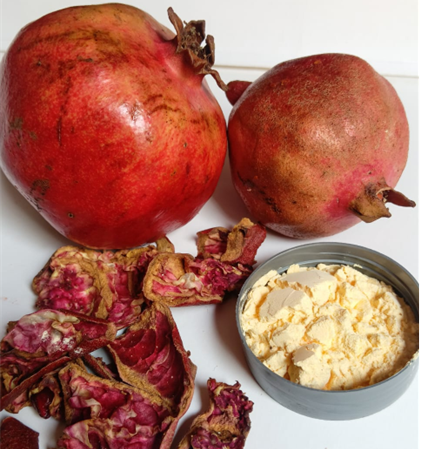
Botanical Source:
Plant- Punica granatum
Family- Lythraceae
Part Used- Dried outer peel of pomegranate fruit
Common Names- Pomegranate peel powder, Anar ke chilke ka powder.
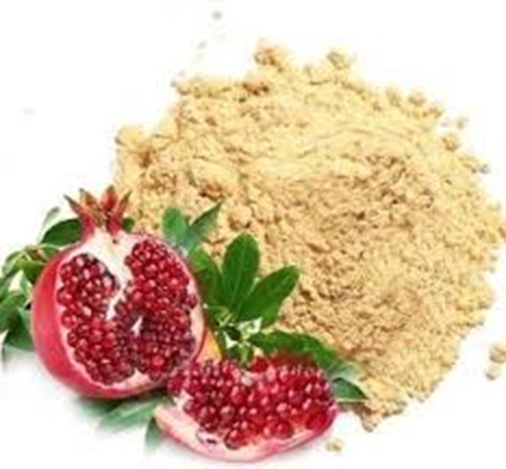
Pomegranate peels are rich in-
Ellagic acid - antioxidant, anti- cancer properties
Tannins-anti-inflammatory, astringent
Flavonoids, Gallic acid
Vitamin C, Polyphenols
Alkaloids, Saponins
Medicinal & Health Benefits-
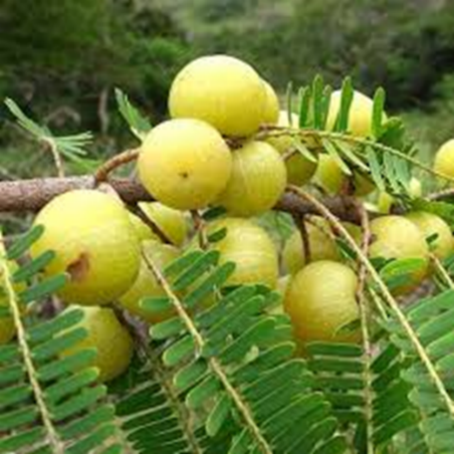
Scientific Name- Phyllanthus emblica
Synonym- amla, Indian goose berry
Biological Source- It is Dried and Fleshy Fruits of Phyllanthus emblica Linn
Kingdome- plantae
Order- malpighiales
Family- phyllanthaceae
Genus- Phyllanthus
Species- emblica
Chemical components: The antioxidant vitamins cellulose, and the emblicanin A Amla fruit also include minerals including p, ir, and ca. It includes a significant quantity of pectin. Amla fruits include elements such as phosphorus, iron, and calcium. It includes a considerable quantity of pectin.
Geographical Source: Mostly found in India and Sri Lanka
Uses-
It is a periodic plant of the family Linaceae with several natural compartments: Circulatory effects of γ-glutamyl on mediator-mediated hair growth. The application of black seed oil was effective in promoting hair growth. This shows that it is an herbal hair oil painting
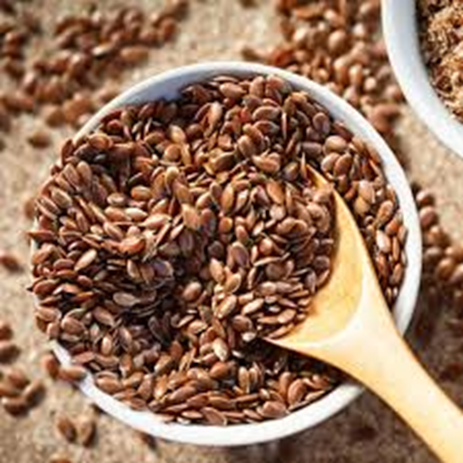
Botanical name- Linum usitatissimum
Family- Linaceae
Synonym- Linseed, flaxseed
Biological source- It consists of the dried fully ripe seeds of Linum usitatissimum Linn. omega-3 fatty acid, lignans, etc
Uses- Anti-inflammatory, anti-oxidants, hair growth Stimulator
Chemical Composition: Flax chiefly consists of pecto-cellulose.
Seeds are often used as a natural home remedy for hair loss and other related ailments such as dandruff and dry, itchy crown of the head. Beauty publications and other popular media claim there isere's a secret to this. Thick and shiny hair will grow.

Botanical name- Trigonella foenum-graceum
Family - Leguminous
Synonym-Methi, Methika, Alholva, Chandrika.
Biological Source - It obtained from the dried seeds of Trigonella foenum-graecum.
Chemical constituents- Vitamin B, alkaloids, flavonoids, saponins, etc
Uses-Hair growth stimulant, antibacterial
Aloe vera has traditionally been used to treat hair loss. It also improves scalp health and hair quality of the user. It can alleviate dandruff and clear clogged hair follicles of excess oil. Apply pure aloe vera gel on your scalp and hair a couple times weekly.21
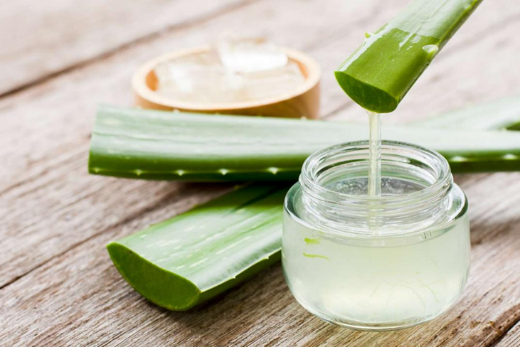
Scientific Name- Aloe barbadensis Miller
Synonyme- aloe, Musab bar, kumari
Biological Source- The biological source of aloe is the dried juice from the leaves of various species of the
Aloe plant
Kingdom- plantae
Order- asparaguses
Family- liliaceae
Genus- aloe L.- aloes
Chemical Constituents- Aloe vera is a source of anthraquinone glycosides. Aloe vera contains aloin, barbaloin, and aloe-emodin. The drug also contains aloetic acid 1, homometallic aloes one, chrysophanic acid, chryasemminic acid, galacturonic acid, cholinesaponile, glucosamine, and hexuronic acid.
Geographical Source: Mostly found in Africa and India.
Uses-
Coconut oil (also known as coconut fat) is an edible oil derived from the kernels, flesh, and milk of the coconut palm fruit. Coconut oil is a white solid fat below approximately 25 °C (77 °F) and a transparent, thin liquid oil in warmer areas. Unrefined variants have a distinct coconut fragrance. Coconut oil is used as a culinary oil and in industrial applications, such as cosmetics and detergent manufacturing. The oil contains several medium-chain fatty acids (MCFAs). Coconut oil can be extracted using either wet or dry methods. Oil can be created more simply (although potentially less successfully) by cooking meat in boiling water, the sun, or over a slow fire. Instead of dried copra, the all-wet technique uses raw coconut milk.
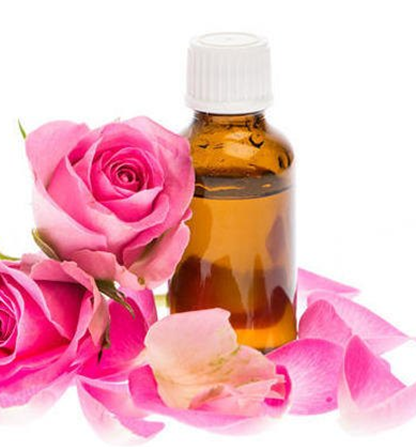
Rose oil, also known as attar of roses or rose otto, is a highly prized essential oil derived from the petals of various species of roses, particularly Rosa damascena and Rosa centifolia. Renowned for its captivating fragrance, rose oil has been used for centuries in perfumes, cosmetics, and traditional medicine. It is celebrated for its rich floral aroma and numerous therapeutic benefits, including soothing, anti-inflammatory, and mood-enhancing properties. Rose water, a moderate astringent, can help decrease oiliness and dandruff. It contains anti-inflammatory properties that may help with scalp disorders, including psoriasis and eczema. Rose water is popular among women with curly hair for its ability to reduce frizz and enhance lustre.
EVALUATION PARAMETER:
The organoleptic properties were assessed using color. An organoleptic test was used to assess the texture, color, and aroma of the preparation. The goal of this test was to improve practice standards. The face toner became yellow after turmeric kombucha was added. The more turmeric kombucha is added, the hazier the color 14.
Ostwald's viscometer was used to determine the viscosity of the formulation. The viscosity of the water and formulation was determined using centipoise units 14. The viscosity of the cream formulations was measured using a Brookfield Viscometer. 15.
When a liquid layer is allowed to travel over a surface or another layer of serum, the fluid particles tend to resist its passage. Viscosity describes this resistance. 16.
The formulation was transferred using a stalagmometer, and the surface tension was recorded14.
After a short period, a small amount of toner was sprayed over the dorsal skin of the left hand, and the skin was determined to be non-irritating 14. An irritant is described as a material that, when administered at a sufficiently high dosage for a sufficient period of time, causes irritation in practically everyone. An inflammatory reaction is caused by direct contact of the irritant with the skin rather than the immune system 17.
The degree of homogeneity was assessed if molecules in the calculation were not evenly distributed. Fermented curcumin face toners are uniform due to their mix of active components and additives. The kombucha turmeric face toner recipes did not produce any insoluble particles.
Propylene glycol's humectant and cosolvent properties can enhance the solubility of turmeric in kombucha 18. The collected components had an even distribution throughout the final formulation. The preparation was consistent, as evidenced by the lack of particle matter and tactile testing16.
The capacity of the face serum to spread throughout the skin, or spreadability, is critical for administering a standard dosage of pharmaceutical formulation to the skin. The spreadability of face serum is 5 to 6 cm 19.
Buffer solutions with pH values of 4 and 7 were used to calibrate the pH meter. The electrode was then left after being immersed in the hair serum. 22.
APPLICATION OF HERBAL SYRUM: -
An herbal hair serum is easy to use and can have a significant impact on hair and scalp health. Here's how to utilize it efficiently:
Step 1: Apply a tiny quantity of serum to your hands (1-2 pumps or few drops).
Step 2: Rub your hands together and distribute it evenly throughout your hair, emphasizing on the mid-lengths and ends, which are prone to frizz and dryness.
Step 3: To spread the serum evenly, gently comb it through your hair with your fingers or a wide-tooth comb.
Step 4: Apply your preferred style. You may apply the serum to wet or dry hair.
Benefits: It eliminates frizz, adds shine, and hydrates dry ends without leaving the hair greasy.
Step 1: Take a few drops of the serum and apply it directly to your scalp using your fingertips.
Step 2: Gently massage the serum into your scalp using circular motions for 2-3 minutes. This improves blood circulation and helps absorb the nutrients from the serum.
Step 3: Leave it on overnight or for at least 30 minutes before washing it out with a mild shampoo.
Benefits: This nourishes the scalp, prevents dandruff, and promotes healthy hair growth.
Step 1: Apply the serum generously to your hair and scalp, covering it from roots to ends.
Step 2: Leave it on for 30 minutes to an hour before washing it off with shampoo.
Step 3: Rinse thoroughly with water.
Benefits: Works as a deep conditioning treatment, repairing dry and damaged hair, and protecting it from harsh shampoos.
Step 1: Before blow-drying or using heat tools (like flat irons or curling wands), apply a small amount of the serum to damp hair.
Step 2: Distribute the serum evenly through the hair, focusing on the ends.
Step 3: Style as usual with heat tools.
Benefits: It forms a protective barrier against heat damage while keeping the hair smooth and shiny.
Step 1: After styling, apply a small amount of serum to your hands.
Step 2: Lightly smooth the serum over the surface of your hair, focusing on flyaways or frizzy areas.
Benefits: Adds shine and smoothness to styled hair without weighing it down.
CONCLUSION:
Herbal hair serums have been shown to provide essential nutrients for sebaceous gland function and natural hair production. This has resulted in a significant shift in the personal hygiene and healthcare industry towards herbal cosmetics. The demand for herbal-based cosmetics is steadily expanding, indicating a promising future for this business. Bioactive compounds used in cosmetic formulations are renowned for their positive impacts on body characteristics and ability to give critical nutrients for healthy, beautiful hair. The use of herbal hair serums is considered to boost hair growth and consistency while causing few side effects or hypersensitive reactions.
In traditional Indian medicine, herbal remedies for hair growth have a long history. Herbal extracts are known to provide microprotein supplements that effectively nourish hair, leading to healthier hair. In the personal care industry, herbal cosmetics are growing in popularity due to their lack of parabens and sulphates. The research study's findings led to the development of an herbal hair serum that offers a variety of vital nutrients necessary for preserving healthy scalp and hair conditions. Its organic compounds aid in hair development and maintenance. The antioxidant properties of herbal components, such as vitamin E, hibiscus powder, and orange peel powder, primarily function by delaying the onset of hair greying.
REFERENCES



Yashraj Khanvilkar, Sakshi Kodre, Shraddha Kamble, Formulation and Evaluation of Herbal Hair Serum, Int. J. of Pharm. Sci., 2025, Vol 3, Issue 12, 3464-3474. https://doi.org/10.5281/zenodo.18033660
 10.5281/zenodo.18033660
