
Abhinav Bahu-Uddeshiya Shikshan Sanstha's Siddhivinayak College of Pharmacy, Warora, Chandrapur, Maharashtra, India 442914
Hemorrhoids, also known as piles, are a prevalent anorectal condition characterized by inflammation, pain, bleeding, and swelling of the anal and rectal veins. Conventional treatment options, although effective, often pose risks of side effects and recurrence. This study focuses on the formulation and evaluation of a topical herbal hemorrhoid cream aimed at reducing anal inflammation with minimal side effects. The cream was developed using natural plant-based ingredients with known anti-inflammatory, analgesic, and wound-healing properties. Euphorbia milii leaf extract was selected as the primary active ingredient due to its traditional usage and documented pharmacological benefits. The formulation was prepared using an oil in-water (O/W) emulsion base and evaluated for its physical characteristics (appearance, pH, viscosity, spreadability), microbial load, and in vitro antimicrobial activity against Pseudomonas aeruginosa using Amoxyclav 625 as a standard. The results demonstrated that the formulated cream had favorable physicochemical properties and exhibited significant antimicrobial activity, suggesting its potential as an alternative treatment for hemorrhoidal inflammation. Further clinical studies are warranted to confirm its efficacy and safety in human subjects.
HAEMORRHOIDS
Haemorrhoids is a common perianal disease, which often causes haematochezia. Besides a surgical operation or minimally invasive treatment. Haemorrhoids are swelling and inflammation of veins in the rectum and anus. The anatomical term "haemorrhoids" technically refers to "cushions of tissue filled with blood vessels at the junction of the rectum and the anus”. However, the term is popularly used to refer to varicosity of the haemorrhoid tissue. Perianal hematoma are sometimes mis diagnose and mis labelled as haemorrhoids, when in fact they have different causes and treatments. Haemorrhoids may result from straining to move stool. Other contributing factors include pregnancy, aging, chronic constipation or diarrhoea, and anal intercourse[3]. Haemorrhoids are either inside the anus internal or under the skin around the anus external. Haemorrhoids develop from 2 different places. Haemorrhoids also called piles, are swollen veins in your anus and lower rectum, similar to Herbal medicines are one type of dietary Supplement. They are sold as tablets, capsules, varicose veins. Haemorrhoids can develop inside the rectum (internal Haemorrhoids) or under the skin around the anus (external Haemorrhoids) Depending on anal origin within anal canal and relation to dentate line Haemorrhoids divided in to internal haemorrhoids, external haemorrhoids, mixed haemorrhoid[1,2].
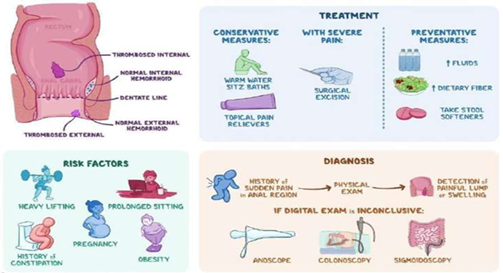
Fig.no.1: Haemorrhoids
Haemorrhoids are swollen and inflamed veins located in the rectal and anal regions, often leading to discomfort and bleeding. They typically develop due to increased pressure in these veins, which can result from straining during bowel movements, obesity, or pregnancy. External haemorrhoids appear as painful or tender lumps beneath the skin around the anus. These are essentially enlarged blood vessels that become irritated, especially during difficult or strained bowel movements. Common factors contributing to haemorrhoids include: Straining during bowel movements, often due to chronic constipation or diarrhoea. Weakening of supportive tissues with age, which reduces the structural integrity of the anal and rectal veins. Pregnancy, as the growing uterus increases pressure on the pelvic veins. Obesity, which adds extra pressure to the lower body and veins. Frequent heavy lifting, which can increase abdominal pressure. Low-fiber diets, which contribute to constipation, increasing the risk of haemorrhoids[4].
CLASSIFICATION
Depending on anal origin within anal canal and relation to dentate line haemorrhoids divided in to
TYPES OF HEMORRHOIDS
1. External Haemorrhoids- These are under the skin around your anus. Sign & symptoms might include. Itching or irritation in your anal region. Pain or discomfort Swelling around your anus Bleeding
2. Internal Haemorrhoids- Internal haemorrhoids lie inside the rectum. You usually Can’t see or feel them, they rarely cause discomfort. Painless bleeding during bowel movements A haemorrhoid to push through the anal opening resulting in pain & irritation. If blood pools in an external haemorrhoids & forms a clot (thrombus) it can result in –
CAUSES- • The vein around your anus tend to stretch under pressure of may bulge or swell. Haemorrhoids can develop from increased pressure in the lower rectum due to Straining during bowel movement • Sitting for long periods of time on the toilet. For Internal haemorrhoids
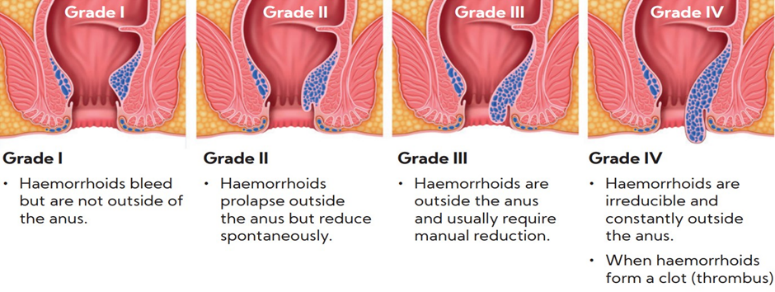
Fig.no 2: Internal Haemorrhoids grading system
CREAM:
The creams are considered an important part of the cosmetic product as a topical preparation since ancient times due to their relief on the skin and its removal. From cosmetic purposes, Medicinal creams have a variety of applications such as cleansing, beautifying, changing appearance, moisturizing etc. It also plays a vital role in treating skin conditions. These include protecting the skin from bacterial and fungal infections, and promoting the healing of minor cuts, burns, and sores. These fragile arrangements are safe for public and private use. Human skin is vulnerable to damage but has the potential to heal itself. However, a natural healing process can take time and there is also a risk of infection especially in the early stages of injury. In such cases, medicinal creams can be applied to the injured area to speed up the healing process and prevent the wound from becoming infected. This review emphasizes the use of drug delivery systems in topical formulations, specifically focusing on wound healing creams. It includes an overview of the wound healing process, formulation techniques for creams, their classification according to therapeutic action, benefits and limitations, key features, types of creams, and the various parameters used to evaluate their effectiveness[5,6].
TYPES OF CREAM
They are divided into two types:
Oil-in-Water (O/W) creams are emulsions where small oil droplets are evenly distributed within a continuous water phase. In this type of formulation, oil acts as the internal phase while water serves as the external medium, making it an oil-based emulsion suitable for non-greasy and easily washable applications.
In contrast, Water-in-Oil (W/O) creams consist of water droplets dispersed within a continuous oil phase. Here, water forms the internal phase and oil acts as the external medium, resulting in a water-based emulsion. These formulations tend to be more occlusive and are ideal for dry or dehydrated skin due to their ability to retain moisture[5,6,7].
METHODOLOGY
6.1 PLANT PROFILE
EUPHORBIA MILII –
Euphorbia milii, the crown-of-thorns, Christ plant or Christ's thorn, is a species of flowering plant in the spurge family, Euphorbiaceae, native to Madagascar. The specifies commemorates Baron Milius, once Governor of Réunion, who introduced the species to France in 1821 [9,10].
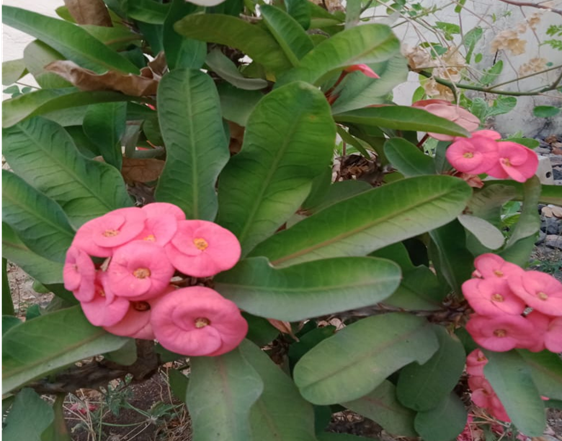
Fig.no 3: Euphorbia milii plant
About Euphorbia milii Plant:
Leaves:
Euphorbia milii, commonly known as Crown of Thorns, has fleshy, bright green, obovate leaves that are typically found on new stem growth, and are known to drop off as the stems mature, leaving a spiny appearance [8,9,10].
Morphology Features:
The "songosongo" plant, also known as Euphorbia Milii or crown of thorns, is indigenous to Madagascar. It is a woody succulent prickly shrub that reaches a height of 1.5 to 2 meters (5-7 feet). The spines become straight and narrow when they reach a length of 3 cm. The oblong, acute-shaped, fleshy green leaves can reach lengths of 3-3.5 cm and widths of 1.5 cm. These tiny, cup-shaped flowers, which range in hue from red to pink to white, are hung in two petal-like brats and measure up to 12 mm. Since euphorbia thrives in warmer temperatures, it produces flowers throughout the year but especially in the spring and summer[10,11,12].
Chemical Constituents:
Euphorbia milii contains a variety of phytochemicals, including terpenoids, flavonoids, alkaloids, phenolic compounds, and tannins. These compounds are believed to contribute to the plant's various medicinal properties. Specific examples of phytochemicals found in E. milii include beta-amyrin acetate, beta-sitosterol, cycloartenol, lupeol, euphol, and flavonoids. The medicinal values of the plants depend on the presence of certain chemical substances (secondary metabolites) that are involved in production of different kinds of effects on human body[13,14,15].
Pharmacological Activity:
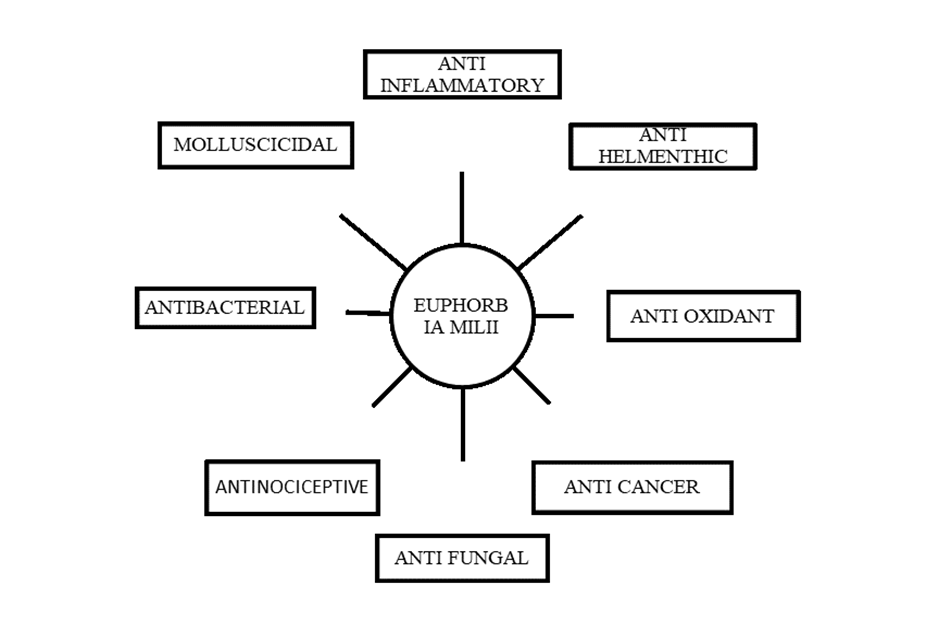
Fig.no 4: Pharmacological activity
6.2 DETERMINATION OF TOTAL ASH:
PROCEDURE
The total ash value for given sample Euphorbia milli was found to be 12 % W/W.
Formula:
Total ash = (Weight of ash/Weight of sample) x100
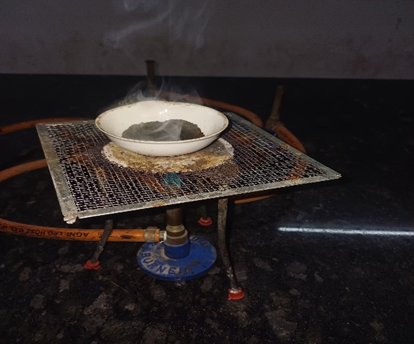
Fig.no 5: Determination of total ash
6.3 DETERMINATION OF ACID-INSOLUBLE ASH VALUE:
Procedure:
Formula:
Acid -insoluble ash value = (Weight of acid -insoluble ash/Weight of sample) x 100
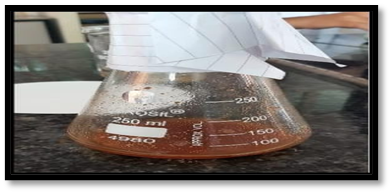
Fig no.6: Acid insoluble ash value
6.4 DETERMINATION OF WATER-SOLUBLE ASH:
Procedure:
Formula:
Water-insoluble ash value = (Weight of water-insoluble ash/Weight of sample) x100
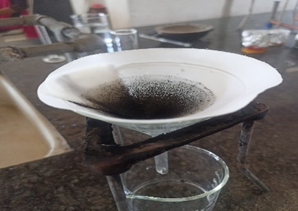
Fig.no:7: Water -insoluble ash
6.5 DETREMINATION OF LOSS ON DRYING (LOD)
Procedure:
Formula:
Loss on Drying = (Initial weight -Final weight after drying/Initial weight) x100 [16,17,18,19].

Fig no.8: Loss on Drying
6.6 METHOD OF EXTRACTION:
? Infusion:
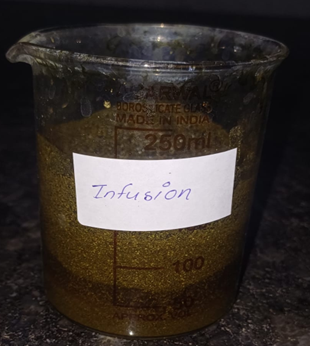
Fig.no. 9: Infusion
Maceration:
In this extraction method, coarsely powdered plant material—such as leaves, stem bark, or root bark—is placed in a container. A suitable solvent (menstruum) is then added until the material is fully submerged. The container is sealed and allowed to stand for a minimum of three days. During this period, the mixture is stirred or, if kept in a bottle, shaken occasionally to facilitate thorough extraction. After the extraction period, the liquid portion (micelle) is separated from the solid residue (marc) using filtration or decantation. The micelle is then subjected to evaporation, either in an oven or over a water bath, to remove the solvent. This method is especially appropriate for extracting compounds from thermolabile (heat-sensitive) plant materials.

Fig.no10: Maceration
Decoction:
This method involves continuous hot extraction using a measured amount of water as the solvent. The plant material, which is first dried, ground, and finely powdered, is placed in a clean container. Water is added and the mixture is stirred thoroughly. Heat is applied throughout the procedure to accelerate the extraction of active constituents. The entire process typically takes around 15 minutes. This technique is ideal for extracting compounds that are both water-soluble and stable under heat.
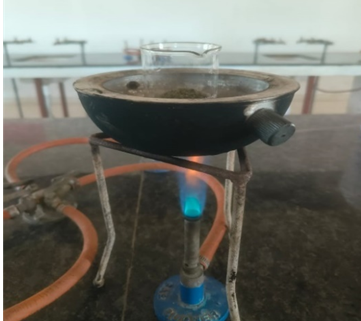
Fig no.11: Decoction
Percolation:
\This extraction method uses an apparatus known as a percolator, which is a narrow, cone-shaped glass vessel with openings at both ends. The plant material, which is dried, ground, and finely powdered, is first moistened with a suitable solvent in a clean container. After moistening, an additional amount of solvent is added, and the mixture is allowed to stand for about 4 hours. Following this, the material is transferred into the percolator with the lower opening closed and left undisturbed for 24 hours to allow saturation. Then, more solvent is poured from the top until the plant material is fully saturated. The bottom outlet is then opened, and the extract is allowed to drip slowly. During the process, more solvent is added gradually, enabling gravity to carry it through the plant material, facilitating extraction. The solvent addition is stopped once approximately 75% of the total intended volume has been used. The extract is collected, and any remaining liquid is separated through filtration and decantation. The residual plant material (marc) is pressed to recover remaining extract, and finally, enough solvent is added to make up the required volume of the preparation. [20,21].
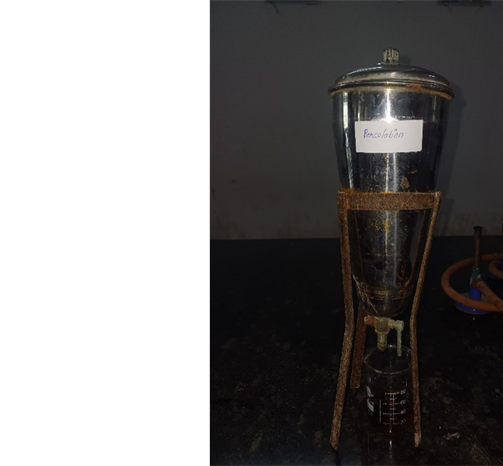
Fig no.12: Percolator
SOXHLET EXTRATION:
Soxhlet extractor was invented in 1879 by Franz von Soxhlet, a German chemist. The original use of this apparatus was the extraction of a lipid from a solid material. It is an apparatus used in the laboratory for extracting a compound with a limited solubility in a solvent and where the impurity is insoluble in that solvent. This is one of the conventional solid/liquid extraction method which consists in extracting directly from the raw material using a solvent and an extractor.
Chemical:
The chemical solvents and other products that have been used in the experiments and methods are the following:
Method of extraction:
For this operation, an approximate amount of 50 g was measured into the paper thimble placed inside the chamber. Also 240 ml of solvent was introduced in the solvent flask. three solvents with different polarities were applied: ether, chloroform and 70% ethanol. The Soxhlet apparatus was connected to a cooler and the round bottom flask containing the solvent was immersed in silicon oil. First the cooling water of condenser was turned on, then the heating element of silicon bath was switched on for the solvent is heated, and the extraction can start. The extraction run until the solvent in the Soxhlet apparatus became transparent again, which showed the end of extraction. It took around 3 days (18 hours more or less) in the case of raw material with diethyl ether, and one day extract with chloroform and 4 days (24 hours) for raw material with 96% ethanol extraction. After the Soxhlet extraction was done, the evaporation of the liquid is necessary in order to get the extract without solvent. For this, each flask had to be evaporated in the rotary evaporator using a vacuum pump and a control valve. After this step only the extract obtained as a product remains in the flask, which is collected in a sample bottle. The extracted material was dried and discarded. The solvent evaporated and condensed is collected in another flask and returned to a bottle for reuse[22].
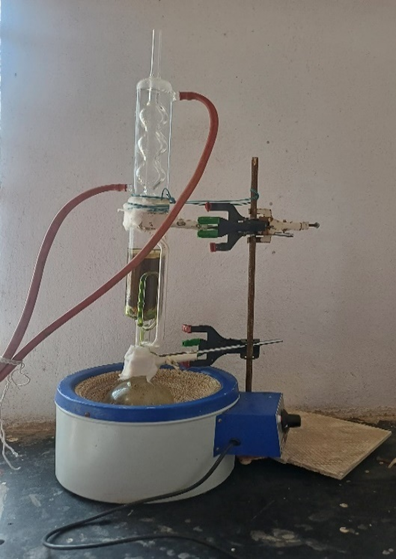
Fig no.13: Soxhlet Extraction
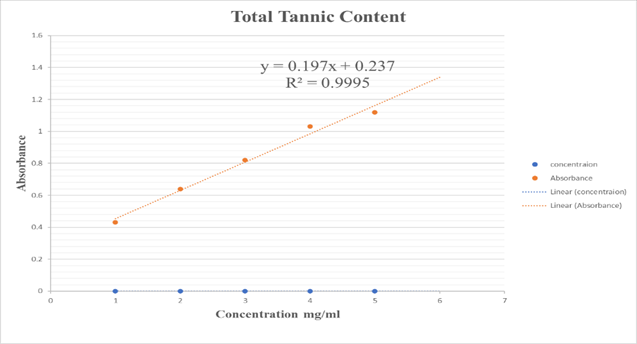
Estimation of total tannin content:
In this method, 100 mg of extract was accurately weighed and was dissolved in 100 ml of methanol to make the stock solution. This was further diluted 5 times and 1 ml of this resultant solution was transferred to a test tube. To this 7 ml. of methanol was added followed by addition of 0.5 mL. of Folin-Ciocalteau reagent and 1.5 mL. of 20% Na?CO? solution. The final volume was made up to 10 mL with methanol. Tannic acid was used as a reference standard for this estimation. The final solution was shaken vigorously to achieve a proper distribution and was kept for 15 min in dark. Further, absorbance was recorded at 775 nm against blank using UV spectrometer and the total tannin contents was expressed in terms of mg/g tannic acid equivalent[23].
Graph Calculation
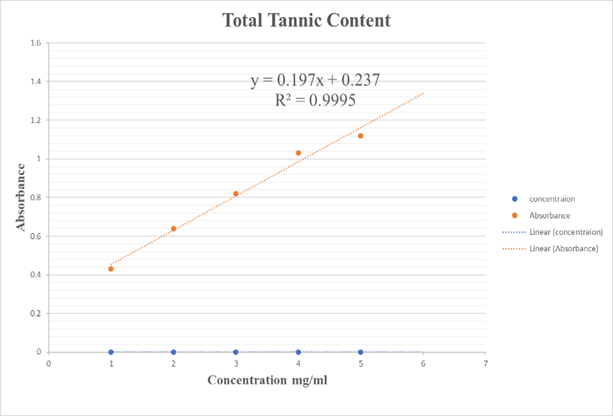
Fig no.14: Total tannic content
6.11 Thin Layer Chromatography:
Steps to Prepare TLC Plate:
1. Prepare the slurry:
2. Coat the glass plate:
3. Air dry:
Let the coated plate stand vertically for about 10–15 minutes to remove surface moisture.
4. Activate the plate:
Place the plate in an oven at 110–120°C for 30 minutes to remove all moisture and activate the adsorbent.
5. Cool and store:
Allow the plates to cool
6. Sample Preparation:
Dissolve tannic acid in a suitable solvent like methanol or ethanol to make a dilute solution (~1–2 mg/mL).
7. Spotting the Plate:
8. Prepare the Mobile Phase:
9. Develop the Plate:
10. Dry the Plate:
Air-dry or gently warm to remove solvent vapors.
11. Visualization:
12. Calcuation of Rf value:
Rf = Distance travelled by the solute/Distance travelled by the solvent front[24,25].
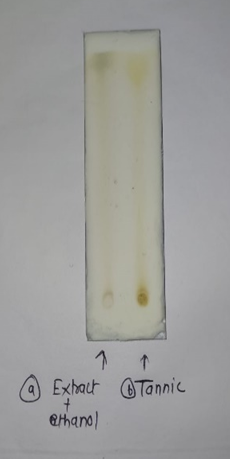
Fig no.15: TLC plate
6.12 PREPARATION OF CREAM
PROCEDURE:
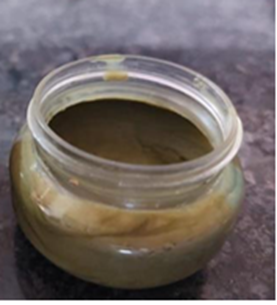
Fig.no. 16: Formulated Cream
FORMULATION COMPONENT:
Table no. 1: Formulation of cream
|
Sr. No. |
Ingredients |
Quantity Formulation F1 (20g) |
Quantity Formulation F2 (20g) |
Quantity Formulation F3 (20g) |
Roles of ingredients |
|
1. |
Beeswax |
5g |
5g |
5.5g |
Cream base |
|
2. |
Liquid Paraffin |
7g |
7.5g |
7g |
Cream base |
|
3. |
Borax |
0.2g |
0.2g |
0.2g |
Emulsifier |
|
4. |
Water |
4.5g |
4g |
4g |
vehicle |
|
5. |
Methyl paraben |
0.2g |
0.2g |
0.2g |
Preservative |
|
6. |
Aluminium Sulphate |
1g |
1g |
1g |
Astringent |
|
7. |
Starch |
0.2g |
0.2g |
0.2g |
Thickeners |
|
8. |
Mentha |
0.5g |
0.5g |
0.5g |
Colling and smoothing effects |
|
9. |
Euphorbia milli extract |
1g |
1g |
1g |
Antioxidant, Anti-microbial |
|
10. |
Prednisolone |
0.4g |
0.4g |
0.4g |
Anti-inflammatory |
|
11. |
Tartarzine |
q.s |
q.s |
q.s |
Colouring agent |
|
12. |
Vanilla |
q.s |
q.s |
q.s |
Flavouring agent |
6.13 Evaluation of cream –
1) Evaluation of cream pH of the cream:
Using normal buffer solutions, the pH meter was performed calibration. Approximately 0.5 g of the cream was balanced and dissolved in 50.0 ml of distilled water, calculating its pH. In a 100ml beaker, 5 ± 0.01g of the cream was correctly measured. 45ml of water was applied and the cream was spread therein. Using the pH meter, the pH of the suspension was estimated at 27°C. The cream pH was found to be in the range of 4.5 to 6.5 which is good for the PH of the skin. All the formulations showed pH closer to the appropriate skin.
2) Organoleptic evaluation:
The cream thus acquired was evaluated for its organoleptic properties, such as color, odor, and condition. The appearance of the cream was measured and graded by its roughness and Colour.
3) Homogeneity:
The formulations were tested for the homogeneity by visual appearance and by touch.
4) Spreadability studies:
Spreadability is expressed in terms of your time in seconds taken by two slides to slide far- away from the formulation, placed between, under the appliance of a particular load. Two glass slides of ordinary dimensions were selected. The formulation whose spreadability had to be determined was placed over one of the slides and the other slide was placed on top of the formulations was crammed between the two slides across the length of 5 cm alongside the slide. 100 g weight was placed upon the upper slide so as that the formulation between the two slides was pressed uniformly to form a thin layer. The load was removed and thus the quite formulation adhering to the slides was scrapped off and one of the slides was fixed on which the formulation was placed. The second movable slide was placed over it, with one end tied to a string to which load could be applied with the help of a simple pulley and a pan. A 30g weight was placed on the pan and thus the time taken for the upper slide to travel the space of 5.0cm and separate distant from the lower slide under the direction of the load was noted.
The Spreadability (S) are often determined using the formula.
Spreadability = m x l /t
m = weight tied to the upper slide (25g)
1=length of glass slide (5cm)
T = time taken in seconds. [29,30]
6) Antimicrobial test:
Protocol- The Nutrient agar media was used. Staphylococcus aureus microorganism culture was used. Incubation time was setup for 24hrs.
Method-Agar bore well diffusion method.
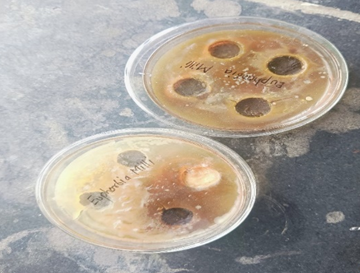
Procedure- Staphylococcus aureus (Gram +ve bacteria) suspension was introduced in each plates & 40ml of sterile nutrient agar media was poured into each sterilized plates. The plates were left on the flat solid surface & allow to harden. In each plate 1cup, 10mm in diameter was bored in the medium with cork borer. The disks of agar were removed by sterilized dissecting needle while being careful not to damage the cups. In each plate equal amount of cream formulation having same strength was placed in the cup & the plates were incubated at37°C± 2°C for 24hrs.in incubator. The entire operation was carried out under aseptic condition & zone of inhibition was calculated. The zone of inhibition obtained for prepared formulation was showed in figure no.17[31,32].

Fig.no.17: Antimicrobial test
QUALITATIVE TESTS FOR PHYTOCHEMICAL SCREENING[16,17,18]
Table no. 2: Detection of Alkaloids
|
Sr.no |
Tests |
Procedure |
Observations |
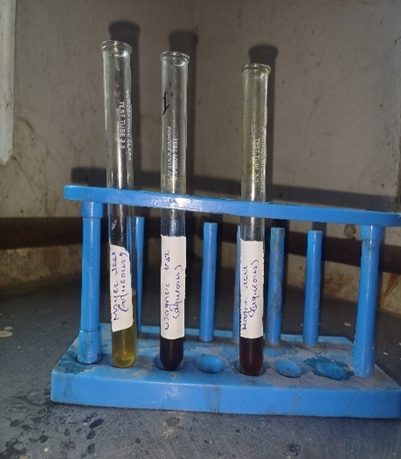
Fig no. 18 : Alkaloids |
|
1) |
Dragendorff’s/ Kraut’s test |
Few mL filtrate a + 1- 2 mL Dragendorff’s reagent |
A reddish-brown precipitate |
|
|
2) |
Mayer test |
Few ml extract +1ml mayer reagent |
A cream colour precipitate |
|
|
3) |
Wagner’s test |
Few mL filtrate + 1-2 drops of Wagner’s reagent (Along the sides of test tube) |
A brown/reddish precipitate |
|
|
4) |
Hager test |
Few mL filtrate a + 1- 2 mL Hager’s reagents |
A creamy white/yellow precipitate |
Table no. 3: Detection of Reducing sugar
|
Sr.no |
Tests |
Procedure |
Observations |
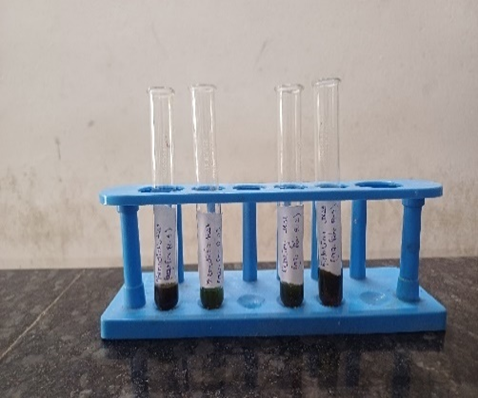
Fig. no 19: Reducing sugar |
|
1) |
Benedict’s test |
0.5mL filtrate + 0.5mL Benedict’s reagent + Boiled for 2 min. |
Green/ yellow/ red colour |
|
|
2) |
Fehling’s test |
1mL each of Fehling’s solution A & B + 1mL filtrate + boiled in water bath |
A red precipitate |
Table no. 4: Detection of Cardiac Glycoside
|
Sr.no |
Tests |
Procedure |
Observations |
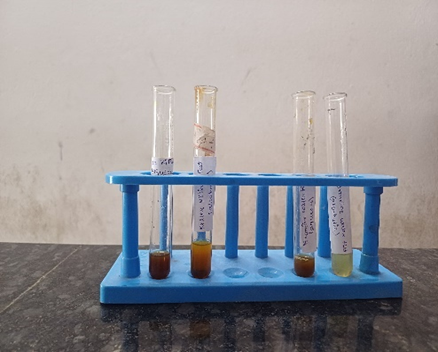
Fig. no 20: Cardiac glycoside |
|
1) |
Keller Killiani test |
1ml filtrate + 3ml glacial acetic acid + 2 drops ferric chloride sol + 3ml conc. H2SO4 added to the sides of test tube. |
A reddish brown ring layer |
|
|
2) |
Bromine water test |
Plant extract + few mL of bromine water A yellow precipitate |
A yellow precipitate |
Table no. 5: Detection of Flavonoids
|
Sr.no |
Tests |
Procedure |
Observations |
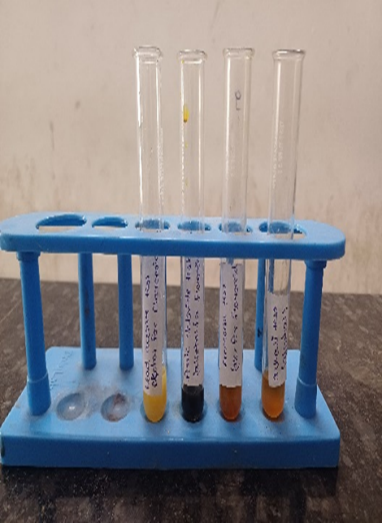
Fig. no 21: Flavonoids |
|
1) |
Lead acetate test |
1mL plant extract + few drops of 10% lead acetate solution |
A yellow precipitate |
|
|
2) |
Ferric chloride test |
Extract aqueous solution + few drops 10% ferric chloride solution |
A green precipitate |
|
|
3) |
Ammonia test |
Filtrate + 5mL dil. Ammonia solution + conc. H2SO4 |
A yellow colour |
|
|
4) |
Alkali test |
Test solution +10% aq. NaOH Solution |
A yellow orange colour |
Table no. 6: Detection of Phenolic Compound
|
Sr.no |
Tests |
Procedure |
Observations |
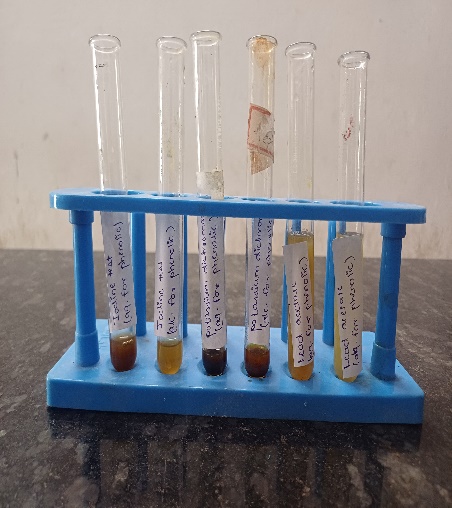
Fig. no 22: Phenolic Compound |
|
1) |
Iodine test |
1mL extract + few drops of dil. Iodine sol. |
A transient red colour |
|
|
2) |
Potassium dichromate |
Plant extract + few drops of potassium dichromate solution |
A dark colour |
|
|
3) |
Lead acetate test |
Plant extract is dissolved in 5mL distilled water + 3mL of 10% lead acetate sol. |
A white precipitate |
Table no. 7: Detection of Tannins
|
Sr.no |
Test |
Procedure |
Observation |
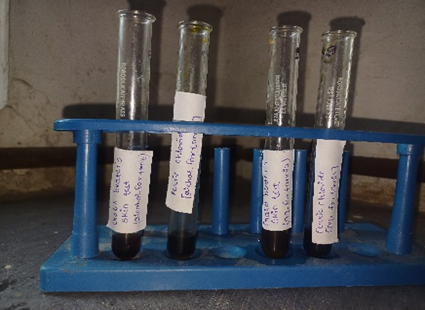
Fig. no 23: Tannins |
|
1) |
Ferric chloride Solution |
Plant Extract +few drops of ferric chloride solution. |
A bluish green or bluish black |
|
|
2) |
Gold Beater Test |
Extract +Gold beater reagent |
A brown or black colour |
RESULT AND DISCUSSION-
A] PREFORMULATION PARAMETERS
1) Morphology Characteristics of Euphorbia milii
Table no.8: Morphology Characteristics of Euphorbia milii
|
Sr.no |
Properties |
Characteristic |
|
1. |
Shape |
oblong, acute or obovate of leaves, tiny, cup-shaped flowers |
|
2. |
Size |
lengths of 3-3.5 cm and widths of 1.5 cm leaves, hung in two petal-like brats and measure up to 12 mm flowers. |
|
3. |
Colour |
freshy green leaves, red to pink to white flowers |
|
4. |
Odour |
Not fragrant |
2)Physiochemical parameters of Euphorbia milii
Table no.9: Physiochemical parameters of Euphorbia milii
|
Sr.no |
Parameters |
Result |
|
1. |
Percentage Ash value |
12% w/w |
|
2. |
Extractive value (ethanolic extract) |
5% |
|
3. |
Extractive value (water extract) |
11% |
|
4. |
Loss of drying (moisture content) |
25% |
3)To develop various extraction methods of Euphorbia milii crude drug in 100 ml of solvent
Table no.10: Extraction methods of Euphorbia milii crude drug in 100 ml of solvent
|
Sr. No. |
Methods |
Solvents |
% Total quantity |
|
1. |
Infusion |
100 ml distilled water |
90 ml |
|
2. |
Maceration |
70 ml ethanol +30 ml water |
2 g (25 ml) |
|
3. |
Decoction |
100 ml distilled water |
1 g (90 ml) |
|
4. |
Percolation |
25 ml ethanol |
1 g (15 ml) |
|
5. |
Soxhlet extraction |
70 ml ethanol +30 water |
22 g (250 ml) |
4)Phytochemical Screening parameters of Euphorbia milli
Table no.11: Phytochemical Screening Euphorbia milli
|
Sr.no |
Plant constituents |
Test reagent |
Aqueous extract |
Ethanolic extract |
|
1. |
Alkaloids |
Dragendorff’s reagent Mayer’s reagent Hager’s reagent Wagner’s reagent |
+ + + + |
- - - + |
|
2. |
Reducing sugar |
Benedict’s test Felhing’s test |
+ + |
- - |
|
3. |
Cardiac glycoside |
Keller Killiani test Bromine water test |
+ + |
- - |
|
4. |
flavonoids |
Lead acetate test Ferric chloride test Ammonia test Alkali test |
+ + - + |
+ + + - |
|
5. |
phenolic compound |
Iodine test Potassium dichromate Lead acetate test |
- + + |
+ - + |
|
6. |
tannins |
Ferric chloride Solution |
+ |
+ |
(+) sign indicate presence (-) sign indicate absence
5)Quantitative estimation of total tannin content
Table no.12: Estimation of total tannin content
|
Sr. No. |
Solvent |
Total tannin content quantity |
|
1. |
Ethanol |
0.97mg/ml |
|
2. |
Water |
0.79mg/ml |
6) Thin Layer Chromatography:
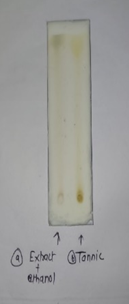
Table no.13: Thin Layer Chromatography
|
Sr. No. |
Stationary phase |
Mobile phase |
Rf |
|
1. |
Silica gel G |
n-Butanol: Acetic acid: Water (4:1:5). |
0.52 |
B] FORMULATION STUDY-
1) Organoleptic evaluation:
Organoleptic evaluation revealed that all formulations of herbal multipurpose cream have semisolid in nature, yellow and smooth in appearance and texture.
Table no.14: Organoleptic Properties of cream
|
Sr. No. |
Evaluation Parameter |
Inhouse F1(20g) |
Inhouse F2(20g) |
Inhouse F3(20g) |
|
1. |
State |
semisolid |
semisolid |
semisolid |
|
2. |
Colour |
green |
green |
green |
|
3. |
Odour |
aromatic |
aromatic |
aromatic |
|
4. |
Texture |
smooth |
smooth |
smooth |
|
5. |
Type of emulsion |
o/w |
o/w |
o/w |
2) Pharmaceutical parameters:
Evaluation related to pH are summarized in Table no.15. All the 3 batches exhibit values in acceptable criteria.
Table no.15: Formulated & Evaluation of cream
|
Sr. No. |
Evaluation parameters |
Acceptance criteria |
Inhouse F1 (20g) |
Inhouse F2 (20g) |
Inhouse F3 (20g) |
|
1. |
pH |
4.5 to 6.5 |
5.5 |
6 |
6 |
|
2. |
spreadability |
12.5 g cm/sec |
11 g cm/sec |
12 g cm/sec |
12 g cm/sec |
|
3. |
Viscosity |
Less viscous |
Less viscous |
Less viscous |
Less viscous |
|
4. |
Homogenicity |
Good |
Good |
Good |
Good |
|
5. |
Apperance |
Not change in colour |
Not change in colour |
Not change in colour |
Not change in colour |
Table no.16: Spreadability test
|
Formulation |
Time (sec) |
Spreadability (g cm/sec) |
|
Inhouse F1 |
45 sec |
11 g cm/sec |
|
Inhouse F2 |
50 sec |
12 g cm/sec |
|
Inhouse F3 |
55 sec |
12 g cm/sec |
3) Stability:
The prepared herbal face pack was evaluated for stability studies and the results are show In Table no.16 No change in colour, odour, texture, smoothness and pH was observed on room temperature and on 40°.
Table no.17: Stability of cream
|
Sr. No. |
Parameters |
Room temperature (above 40 0C) |
Inhouse F1 (20g) |
Inhouse F2 (20g) |
Inhouse F3 (20g) |
|
1 |
Colour |
No change |
No change |
No change |
No change |
|
2 |
Odour |
No change |
No change |
No change |
No change |
|
3 |
Texture |
Fine |
Fine |
Fine |
Fine |
|
4 |
Smoothness |
Smooth |
Smooth |
Smooth |
Smooth |
|
5 |
pH |
6 |
6 |
5.5 |
5.5 |
Stability tests performed at different temperatures over a period of one month revealed the inert nature of the cream in the terms of color, odor, appearance, texture and pH.
4) Antimicrobial test:
The antimicrobial study of formulation revealed that herbal cream possess good zone of inhibition. Batch F1 had high value of zone of inhibition than batch F2&F3.
Table no. 18: Antimicrobial testing
|
Sr. No. |
Parameters |
Zone of inhibition (mm) |
|
1. |
Inhouse F1 |
13mm |
|
2. |
Inhouse F2 |
9mm |
|
3. |
Marketed F3 |
15mm |
|
4. |
Standard (Amoxyclav 625mg) |
17mm |
DISCUSSION-
The formulation of an anti-haemorrhoid cream incorporating both prednisolone and Euphorbia milii extract offers a synergistic approach to effectively manage the symptoms of hemorrhoids, such as inflammation, pain, and vascular congestion effectively. This dual-approach formulation aims to harness the strengths of both agents — fast symptom control and long-term mucosal recovery — for enhanced therapeutic efficacy in hemorrhoid treatment. According to the obtained results the confirmation of Euphorbia milli leaf extract is carried out by (method of Maceration) performing Thin layer Chromatography Method. The ethanolic extract of Euphorbia milli leaves did not cause damage to the skin. This is due to the active compound of the ethanol extract of Euphorbia milli leaves which is an anti- inflammatory. The Ash value of Euphorbia milli was found to be 12%w/w. The Loss of Drying was occur 25% Extractive value found to be 5%. The Euphorbia milli leaf ethanol extract contains flavonoids, alkaloids, tannins, saponins, and steroids. The active compounds that act as anti -inflammatory are Tannins. The formulation aims to leverage the fast-acting effect of prednisolone and the safety and supportive healing potential of Euphorbia milii. Evaluation parameters like pH, viscosity, spreadability, drug content, and in vitro release should be optimized to ensure compatibility and stability between the two actives.
REFERENCES


Sujata Samant, Jija Lode, Priyanka Boratwar, Aishwary Kalbhut, Samir Pandhare, Formulation and Evaluation Anal Inflammation (Hemorrhoids) Herbal Cream of Euphorbia Milli Leaves, Int. J. of Pharm. Sci., 2025, Vol 3, Issue 7, 1796-1816. https://doi.org/10.5281/zenodo.15878779
 10.5281/zenodo.15878779
