
Department of Chemical Technology, Dr. Babasaheb Ambedkar Marathwada University, Aurangabad, Maharashtra, India 431001
Age-related macular degeneration (AMD) is a leading cause of central vision loss. Lutein and zeaxanthin, macular carotenoids, protect the retina but have poor ocular bioavailability when administered orally. This study developed a nanoemulsion-based ophthalmic formulation using castor oil, Tween?80, propylene glycol, sodium phosphate buffer, sodium chloride, and EDTA. The formulation exhibited nanosized droplets (~95?nm), low polydispersity, sustained 12?h release, isotonicity, and ocular safety. The nanoemulsion approach enhances ocular delivery of lutein and zeaxanthin, offering a potential therapy for AMD.
Age-related macular degeneration (AMD) is a progressive degenerative disorder of the retina, primarily affecting the macula and leading to central vision loss in the elderly population. It is one of the leading causes of blindness globally and significantly impacts quality of life [1,2]. Oxidative stress, chronic exposure to high-energy visible light, and accumulation of lipofuscin in the retinal pigment epithelium are considered key contributors to AMD pathogenesis.
Lutein and zeaxanthin are dietary xanthophyll carotenoids that are selectively concentrated in the macula and play a crucial role in ocular health. They function as antioxidants and natural blue-light filters, protecting retinal cells from oxidative damage and phototoxicity [1,3,4]. Clinical studies, including the Age-Related Eye Disease Study 2 (AREDS2), have demonstrated that supplementation with lutein and zeaxanthin can slow the progression of AMD, highlighting their therapeutic potential [2,5].
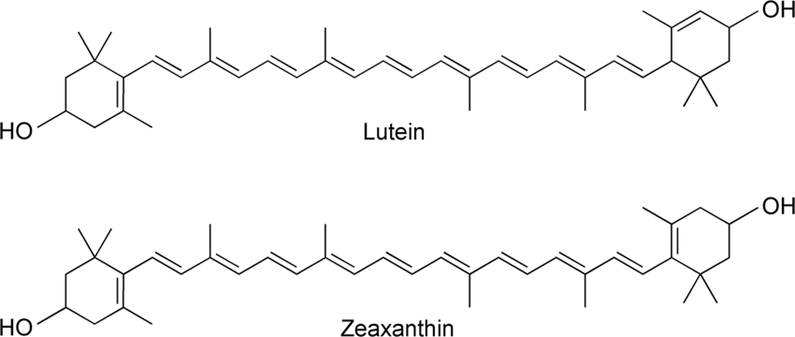
Figure 1: Chemical structures of lutein and zeaxanthin.
Lutein contains a single hydroxylated β-ionone ring, whereas zeaxanthin has two identical β-ionone rings with hydroxyl groups.
Despite their proven benefits, oral administration of lutein and zeaxanthin is limited by poor aqueous solubility, low intestinal absorption, and first-pass metabolism, resulting in insufficient retinal bioavailability [6,7]. Topical ocular delivery offers a promising alternative by providing direct drug access to the anterior segment of the eye, reducing systemic exposure, and potentially enhancing retinal accumulation.
Nanoemulsions are thermodynamically stable colloidal systems composed of oil, surfactant, co-surfactant, and aqueous phase, capable of solubilizing lipophilic drugs, improving corneal penetration, and providing sustained drug release [8–10]. The nanoscale droplet size, high surface area, and low interfacial tension of nanoemulsions make them particularly suitable for ocular drug delivery.
In the present study, a lutein–zeaxanthin-loaded nanoemulsion was formulated and characterized for physicochemical properties, ocular compatibility, drug release, and stability. This approach aims to enhance ocular bioavailability and provide a potential therapeutic strategy for the management of AMD.
MATERIALS AND METHODS
Lutein and zeaxanthin extracts were obtained from A M Nutratech Mumbai, India. Castor oil was purchased from TakPro Cosmentics, Pune, India. All the polymers received were of pharmaceutical grade and were used as received. Other materials and solvents used were of analytical grade.
2.1 Materials
2.2 Preparation of Lutein–Zeaxanthin Nanoemulsion
The nanoemulsion was prepared using high-energy ultrasonication. Lutein and zeaxanthin were dissolved in castor oil, and the surfactant/co-surfactant mixture (Tween?80 + propylene glycol) was prepared. The aqueous phase containing buffer, sodium chloride, and EDTA was added to the oil phase under stirring. The pre-emulsion was sonicated at 20?kHz for 5 minutes with intermittent cooling to form nanosized droplets. The final formulation was sterile filtered and filled into vials under aseptic conditions [3–5].
A pseudo-ternary phase diagram was used to optimize the ratios of oil, surfactant, co-surfactant, and water to achieve a stable nanoemulsion.
2.3 Characterization
RESULTS AND DISCUSSION
3.1 Nanoemulsion Optimization
The lutein–zeaxanthin nanoemulsion was successfully formulated with a mean droplet size of 95 ± 4 nm and a polydispersity index (PDI) of 0.21 ± 0.03, indicating a uniform droplet distribution. The zeta potential was measured at –28 mV, suggesting good colloidal stability. The formulation had a pH of 7.2 ± 0.1 and osmolarity of approximately 300 mOsm/kg, confirming its suitability for ophthalmic use. These parameters are consistent with previously reported lutein nanoemulsion formulations [3–5].
3.2 Drug Loading and Release
The lutein and zeaxanthin content in the nanoemulsion was consistent with the target concentrations, and encapsulation efficiency exceeded 85%, demonstrating effective drug incorporation. In vitro release studies in simulated tear fluid showed sustained drug release over 12 hours, indicating the potential for prolonged ocular therapeutic effect. The sustained release profile is advantageous for reducing dosing frequency and improving patient compliance [4,5].
3.3 Ocular Safety and Compatibility
The nanoemulsion was non-irritant in HET-CAM assays, and ex vivo corneal studies confirmed that it did not cause any observable tissue damage. The formulation was isotonic and maintained a physiological pH, which is critical to minimize ocular irritation. These findings are consistent with safety profiles reported for lutein-containing ocular nanoemulsions [5].
3.4 Stability Studies
The nanoemulsion remained physically stable over three months under ICH conditions, with no significant changes in droplet size, PDI, or drug content. This indicates that the formulation is suitable for long-term storage without compromising its therapeutic properties.
3.5 Discussion
Nanoemulsion systems offer several advantages for ocular delivery of lipophilic carotenoids such as lutein and zeaxanthin. The nanoscale droplets enhance solubility and improve corneal penetration, while the surfactant/co-surfactant combination stabilizes the system and prevents aggregation [3,4,8]. The sustained release profile may improve retinal bioavailability and therapeutic outcomes in AMD. Overall, the developed formulation demonstrates a promising approach for topical delivery of lutein and zeaxanthin to the eye, potentially providing a more effective alternative to oral supplementation.
CONCLUSION
The present study successfully developed a lutein–zeaxanthin nanoemulsion for ophthalmic delivery, demonstrating nanosized droplets, uniform distribution, high encapsulation efficiency, and sustained drug release. The formulation exhibited excellent ocular compatibility, isotonicity, and stability under ICH conditions, indicating its safety and suitability for topical use. By enhancing solubility, corneal penetration, and retinal bioavailability, this nanoemulsion represents a promising therapeutic strategy for the management of age-related macular degeneration. Further in vivo and clinical studies are warranted to confirm its efficacy and long-term benefits.
REFERENCES


Mohd Shafeuddin Farooqui, Renuka Dhakne, Pravin Wakte, Sachin Bhusari, Formulation and Evaluation of Lutein and Zeaxanthin Containing Ophthalmic Formulation for the Treatment of Age-Related Macular Degeneration (AMD), Int. J. of Pharm. Sci., 2025, Vol 3, Issue 9, 991-994. https://doi.org/10.5281/zenodo.17078314
 10.5281/zenodo.17078314
