

We use cookies to ensure our website works properly and to personalise your experience. Cookies policy
Quality Assurance, Dr. Naikwadi College of D Pharmacy, Jamgaon, Sinnar.
Gas chromatography (GC) is a versatile analytical technique primarily used for separating and analyzing volatile and semi-volatile components in complex mixtures. Since its advent in the 1950s, GC has found widespread application due to its speed, sensitivity, and ability to provide both qualitative and quantitative data, even for trace-level analytes. The method relies on distributing a vaporized sample between a mobile inert gas phase and a stationary phase, leading to analyte separation based on their volatility and interactions with the stationary phase. Key components of GC instrumentation include the carrier gas, pressure regulators, sample injection port, columns (packed or capillary), various detectors (such as mass spectrometer, flame ionization, and thermal conductivity detectors), and signal recorders. Method development in GC involves selecting appropriate columns, carrier gases, temperature programs, injection techniques, and detector parameters, and is critical when official pharmacopoeial standards for new drug compounds are unavailable. Rigorous method validation is required to ensure specificity, linearity, precision, accuracy, robustness, and system suitability. The evolving role of GC in pharmaceuticals and other industries underscores its ongoing significance and the necessity for robust method development and validation practices.
Gas chromatography is a distinctive and adaptable method. Its investigation of vapours and gases from extremely volatile components.¹ Modern gas chromatography was invented in 1952 by James and Martin.² despite the fact that this method was first used to separate amino acids in the early 1950s, GC now has a wide variety of applications due to its speed and sensitivity. GC can analyze data in both a qualitative and quantitative manner. Even trace amounts of samples can be scrutinized by GC. Gas chromatography involves dissolving a sample in a solvent in order to separate the analytes by evaporating it.³ The sample is distributed among two phases, a mobile phase and a stationary phase. The mobile phase is a chemically inert gas comparable to helium, nitrogen, and so on. Gas chromatography is one of the unique forms of chromatography in which the analyte is not required to interact with the mobile phase. The phase of inactivity is either a solid adsorbent, nominated gas solid chromatography (GSC), or a liquid on an inert support, nominated gas- liquid chromatography (GLC). The criteria for the GC analysis of the composites are volatility & thermostability. ?
Principle
In gas–solid chromatography (GSC), the stationary phase is a solid adsorbent, and separation occurs based on the adsorption of gas molecules on the solid surface. In gas–liquid chromatography (GLC), the stationary phase is a thin film of a non-volatile liquid coated onto a solid support, and separation takes place through the partition of analytes between the mobile gas phase and the liquid stationary phase.? The many different components are separated according to their affinities for the stationary phase and their vapour pressure. The likeness of components toward the stationary phase are referred to as the distribution constant (Kc), also referred to as Coefficient of partitioning.¹ The partitioning of an analyte between a mobile section (issuer fuel) and a table certain section (covered column) is the primary foundation of the GC concept. Variations in polarity, molecular interactions with the table sure section, and boiling temperatures cause separation. Substances that have interactions that are less strong with the particular section of the table and have lower boiling temperatures are eluted more quickly. Polarized more Chemical substances interact with polar table bound levels, resulting in durables with longer retention times. optimal carrier fuel flow and temperature control It has been established that rate is a crucial factor in the selection and effectiveness of the separation.?
Types Of Gas Chromatography:
The two most common methods of gas chromatography are:
Gas-Solid Chromatography : In the type, the stationary phase in solid (absorbance like alumina, silica, active carbon, for example, is used). This method provides a key column life time; however catalytic changes are observed in this technique.
Gas-liquid chromatography: In this method, the stationary phase is a solid coated with an immobile liquid. Support . In this method the liquid gradually blees off, and this is the disadvantage of this method.¹
Advantages Of GC:
The optimum qualitative and quantitative GC analysis of complicated mixtures presupposes:
Disadvantages Of GC:
Instrumentation:
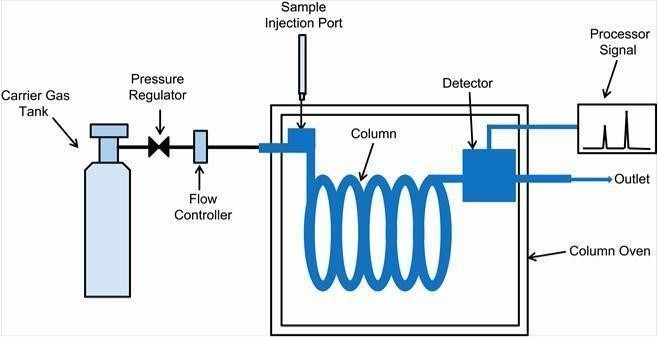
Fig. 1. Instrumentation of Gas Chromatography
A good gas chromatography instrument includes the following significant parts,
Carrier Gas:
The carrier gas is a crucial component in gas chromatography. It must be inert, completely dry, and free from oxygen. Commonly used carrier gases include helium, nitrogen, argon, and hydrogen, selected based on the required performance and the type of detector in use. The gas is stored under high pressure and supplied to the chromatographic system at a consistent and controlled flow rate.³ All carrier gases are supplied in high-pressure cylinders, and their flow is precisely managed using regulators, gauges, and flow meters. The purity of these gases generally ranges between 99.995% and 99.9995%, with oxygen and total hydrocarbon content kept below 0.5 ppm. To maintain high-quality performance, the carrier gas system often incorporates molecular sieves that eliminate water and other impurities. Additionally, traps may be used to ensure maximum sensitivity by removing residual contaminants.¹¹
Regulator Of Pressure:
In gas chromatography, even under constant pressure, the mobile phase flow can vary with temperature changes. As the column temperature rises, gas viscosity increases, reducing flow rate. This variation can affect separation efficiency, so mass flow controllers are used to maintain a constant gas flow regardless of temperature.¹
Port for sample injector :
In gas, the introduction of the sample is a crucial step. Chromatography (GC) that influences sensitivity, chromatographic performance and reproducibility.¹² In order to introduce the sample at the beginning of the column. A volume of sample is transferred using a calibrated micro syringe. Through a rubber septum and into the chamber for vaporization. Most of the separations Require only a small fraction of the initial sample volume and a sample splitter is used to Dispose of the excess sample. Commercial gas chromatographs involves the use of both split and splitless injections when packed columns and capillary are alternated columns. The vaporization chamber is typically heated 50°C above the lowest boiling point of the sample, and then mixed with the carrier gas to move the sample into the column.¹³ For packed column, test size range from 0.1 microlitrer up to 20 microlitres. Sample range: capillary column, between 10^3 microliters.
Column :
There are mainly two type of column Packed and Capillary.
Packed columns:
There is a solid, finely inert support in packed columns. Material with a liquid stationary phase coating. Most of the packet column has an internal diameter of and a length of 1.5-10 meters. 2-4mm.¹?
Capillary columns:
Capillary columns, also known as open tubular columns, There are two basic types of columns. The first is coated on the wall. Column that is open tubular (WCOT) and the second type is a open tubular (SCOT) column coated with support. WCOT Columns are thin tubes that serve as capillaries. Stationary phase that was coated all along the column’s walls. Within SCOT columns, a thin coating is first applied to the column walls. Adsorbant solid (approximately 30 micrometers in thickness), such as diatomaceous earth is a material made up of one- sea plant skeletons with cells. The solid adsorbant is then treated with the stationary phase of the liquid. However, SCOT columns can accommodate a greater volume of due to its greater stationary phase than a WCOT column WCOT columns still have more columns than the sample capacity efficiencies.¹¹
Detectors
Detectors, which may depend on the concentration or mass-dependent, look for the individual components. Arrive and broadcast a signal. The sensors ought to be close by. The column’s out flow and at a suitable temperature to prevent fragmentation. The most important characteristics of chromatographic detectors are high reliability, sensitivity, a wide temperature range, and preferably destructive, with a low peak value to prevent peak broadening, low noise, a linear range, and a brief reaction time as well as an apparent independent flow rate.¹?
A mass spectrometer is a type of analytical instrument that is used to identify the distinct charged ions. The bulk detector primarily detects the current signal that comes from the incident or passes ions, whose concentrations are either absolute or relative to one another Analyte: The mass spectrometer is an all-purpose detector for gas chromatographs because any substance that can pass through one is transformed into ions in the mass spectrometer.?
Since the introduction of the flame ionization detector (FID), has grown to be the most widely used instrument for detecting VOCs. A burner with a controlled flow of gas samples is known as an FID. Passes through a flame that is supported by controlled air and fuel gas and gas flows.¹?
All chemicals, with the exception of the carrier gas, are the TCD can detect. Gaseous inorganics and other The FID is not sensitive to the following parts: primarily identified with the TCD. Helium, a gas, is frequently used as a carrier. (N2 and Ar are used to study He and H2.)¹?
A depression with two terminals and a radiation source make up this detector. That transmits radiation (63 Ni, 3 H, for example). The interaction between the electrons and the carrier gas Electrons and positive ions are created in a plasma by the combination of methane and an inert gas. In the event that a compound with electronegative molecules is available, those electrons will be “caught” to frame negative particles and the rate of electron accumulation Will decrease. The identifier is very specific for mixes with high particle counts. Electron friendly (10-14 g/s), but it typically has a narrow straight range (102-103). This tell-tale sign is occasionally utilized in the investigation of chlorinated mixes, such as, polychlorinated biphenyls, insecticides, and other pesticides for which it is responsible demonstrates a high sensitivity. ?
The Nitrogen-Phosphorus Detector (NPD) is widely utilized for the analysis of drugs present in biological samples such as tissues and body fluids.¹?
The photoionization process, which makes use of ultraviolet light (UV), serves as the foundation for the PID’s operation. Lamp to ionize VOC molecules. The PID comprises An electrode system, an ionization chamber, and a UV lamp, and UV irradiation and ionization are carried out by each device. The PID offers excellent response Linearity, sensitivity, and speed of recovery.¹?
Compounds containing halogens, sulfur, or nitrogen are mixed with a reaction in the Hall electrolytic conductivity detector. Gas inside of a nickel-based small reactor tube. The temperature in the reaction tube is kept between 850 and 1000 degrees Celsius. After that, a liquid is used to dissolve the products, resulting in a conductive solution. The ionic species in the changed the conductivity of the After that, the conductance cell is measured.¹?
The response is recorded with a recorder. obtained following amplification from the detector. In gas, potentiometric detectors are frequently used. chromatography. The input in this kind of recorder is response receives ongoing compensation from the feedback and reaction Pans connected by this system move in proportion along the chart's width. paper and make a note of the signal. The at the same time chart paper moves at the same speed throughout its length. Before you can proceed, you must record that zero. the tape recorder. The recorder should be generally 10 mv (full scale) fitted with a fast response pen (1 sec or less). The recorder ought to be linked to a series of good quality resistances connected across the input to attenuate the large signals. A good addition might be an integrator.²
Method Development and Validation Of GC:
The number of pharmaceutical compounds entering the market is steadily increasing each year. These may include entirely new chemical entities or modified versions of existing drugs. However, there is often a considerable delay between a drug’s market launch and its official inclusion in pharmacopoeias. This delay arises due to uncertainties related to long-term use, potential emergence of toxic effects that could lead to market withdrawal, patient resistance, or the development of more effective alternatives by other manufacturers. In such circumstances, official standards and analytical methods for these new drugs are frequently unavailable in pharmacopoeias. Therefore, it becomes essential to establish new analytical methods to ensure accurate drug evaluation.²? Several steps are being considered for GC method development like stationary column selection phase and dimensions: column id, length, and film thickness), and selecting a carrier gas (Nitrogen, Helium, and flow Rate), temperature programming (the initial temperature, hold, ramp rate, temperature at the end, and hold at the end), injector temperature and the temperature of the detector.
Steps involved in Method development are.
Understanding the Physicochemical properties of Sample:
Gas chromatography is a unique and versatile technique. In during its early stages of development, it was used on the Analyses of very volatile gases and vapours components. The mixture that needs to be separated and looked at by In some cases, GC can be a gas, a liquid, or a solid. Instances. Before beginning the development of the GC method, it is important to review what is known about the sample. At this point, the objective of the analysis ought to be established, and the number of samples ought to be taken into account. Be examined.²¹ The right method selection depends on the sample’s nature (volatile or non-volatile molecule), its solubility, and molecular weight point of melting.²² As much as is necessary to gather information about the samples including aggregation state, sample composition (analytes, matrix, solvent), information on GC relevant properties like the range of the boiling point, polarity, and functional groups, solubility, reactivity, stability at room temperature within the presence of air. It ought to also be checked that the sample contains thermally or components that are chemically labile, aggressive substances (bases and acids), water, or non-volatile traces.²³
Selection of Chromatographic Conditions:
The initial selection of the column and associated instrumentation significantly impacts both the potential and the final outcome of separation optimization. By adjusting column parameters such as the stationary phase, internal diameter, length, and film thickness, chromatographers can effectively regulate the column’s efficiency, resolution, and analysis speed. In gas chromatography, the sequence in which analytes elute is influenced by factors like their vapour pressure, solubility in the stationary phase, and the extent of molecular interactions occurring within the stationary phase. Since these properties vary with temperature, their combined influence ultimately dictates the equilibrium distribution of solute molecules between the stationary and mobile phases.²¹
Selection Of Column :
The column is the central component of a chromatograph, crucial for achieving accurate and reliable separations. In gas chromatography (GC), over 10,000 compounds can be analyzed using more than 400 types of capillary columns. Effective separation depends on selecting the right column, considering four key factors: stationary phase, internal diameter, film thickness, and column length. Separation occurs due to differences in compound interactions with the stationary phase—stronger interactions lead to longer retention times. Changing the stationary phase can improve separation between compounds with similar properties.²?
Selection Of Carrier Gas :
Various inert gases can serve as the carrier gas, or mobile phase, in gas chromatography (GC). Common choices include hydrogen, helium, and nitrogen. Each of these gases offers specific advantages and is better suited for particular types of GC systems.¹?
Optimization of Column oven temperature program
In gas chromatography under isothermal conditions, the oven temperature is kept constant, which works well for analytes with comparable retention times. However, for compounds with varying volatilities, peak broadening and poor resolution can occur. To overcome this, most analyses use temperature programming, where the oven temperature gradually rises during the run, enhancing separation efficiency and minimizing peak broadening. This approach, though effective, requires additional optimization and cooling time. If satisfactory resolution is still not achieved, adjustments such as changing the stationary phase, fine tuning carrier gas flow, or employing a more efficient column can improve results.²? The column is placed inside an oven, where temperature plays a crucial role in determining the efficiency of chromatographic separation. Temperature control is, therefore, a key aspect of gas chromatography. In many situations, maintaining a constant (isothermal) temperature is not ideal for achieving effective separation of components. To overcome this, a temperature programming technique is often applied. Typically, a GC temperature program includes an initial temperature, a controlled heating rate (ramp), and a final temperature.
Optimization of Injector type, temperature & injection volume
Sample introduction is a vital step in gas chromatography to ensure accurate and reproducible separation. It can be done manually or using an auto sampler, though improper injection is a common error. The injector is heated to vaporize the liquid sample, which is then carried by the gas into the column. In capillary and micro-packed GC, the main injection methods are split, splitless, direct, and on-column, with split and splitless being most common. Split injection is preferred for high-concentration samples, where only part of the vaporized sample enters the column and the rest is vented out, maintaining adequate analyte levels for detection.²?
Optimization of detector type & detector temperature.
Detector performance is assessed via parameters like drift, noise, sensitivity, linear range, and dynamic range. Grant studied the effect of carrier gas flow rate, which depends on whether the detector is concentration- or mass-flow sensitive. For concentration-sensitive detectors (e.g., thermal conductivity, photo-ionization), lower flow rates do not change peak height but broaden peaks, increasing peak area. For mass-flow detectors (e.g., flame ionization, flame photometric, nitrogen-phosphorus), peak height decreases with lower flow rates, while peak area stays roughly constant, as response depends on retention time.²?
Developing the approach for analysis:
The right method selection depends on the sample's nature (volatile or non-volatile) molecule), its solubility, and molecular weight evaporation point.²²
Sample preparation:
Before developing a GC method, collect all sample information and define the analysis objectives, considering sample number and equipment. Sample properties
(hydrophilic/hydrophobic, functional groups) guide method strategy. Ensure representative sampling and perform any necessary pre-treatment. Set separation goals, select a detector sensitive to all target components, and validate the method for quantitative use.²?
Method optimization :
Method development and validation in analytical techniques such as gas chromatography (GC) involve several key stages. These typically include gathering background information about the samples, defining the separation objectives, and identifying any special procedural needs. The process may also require sample preparation, selecting and adjusting the detector, optimizing separation conditions, troubleshooting potential issues, isolating the purified analyte, and establishing both quantitative calibration and qualitative analytical methods.²? To obtain the desired separation and sensitivity, it is essential to carefully fine-tune the experimental conditions. This can be achieved through a systematic and well-planned evaluation of all relevant parameters, ensuring that each factor contributes effectively to the overall performance of the method.²¹ During optimization, each parameter is adjusted individually, and specific conditions are established systematically instead of relying on a trial-and-error method.
Method Validation :
Validation originates from the Latin term meaning “strength.” It refers to the robustness or reliability of a procedure, process, or equipment in performing its intended function. Validation ensures that these operations are acceptable, properly confirmed, and legally documented based on scientific evidence.²? Validation of an analytical method involves confirming through laboratory experiments that the method’s performance characteristics satisfy the necessary criteria for its intended analytical purpose. Any newly developed or modified method must undergo validation to demonstrate that it consistently produces accurate and dependable results, even when performed by different analysts using the same instruments in the same or separate laboratories. The extent and design of the validation process depend entirely on the specific method and its intended use.¹? The outcomes of method validation serve as a basis for evaluating the quality, reliability, and consistency of analytical data, making it an essential aspect of sound analytical practices. Ensuring that all equipment used is properly calibrated, functioning correctly, and meets specified standards is crucial to the validation process. Analytical methods must be validated or revalidated:
Precision which includes:
Specificity and Selectivity:
Specificity of an analytical method refers to its capability to clearly identify and measure the analyte even when other substances are present in the sample. In other words, it is the method’s ability to accurately determine the analyte without interference from components such as excipients, synthetic precursors, enantiomers, or potential degradation products that may coexist within the sample matrix.³?
Linearity and Range :
Linearity refers to an analytical method’s capacity to produce results that are directly proportional to the concentration of the analyte in a sample. When a method demonstrates linearity, the measured response corresponds either directly or through a defined mathematical relationship to the analyte concentration within a specified range. Typically, linearity is represented by the confidence interval around the slope of the regression line.³¹ Range refers to the span between the highest and lowest concentrations of an analyte in a sample over which the analytical method has been shown to maintain acceptable precision, accuracy, and linearity.²?
Precision :
Precision was assessed by examining both the repeatability within the same day (intra-day) and the reproducibility across different days (inter-day).³² Precision in an analytical method refers to how closely repeated measurements of the same homogeneous sample agree with each other when performed under defined conditions, including repeatability, intermediate precision, and reproducibility. For primary analytes, the method is considered precise if the relative standard deviation (RSD) is around 2%. In the case of low-level impurities, an RSD between 5% and 10% is generally acceptable.³³
Accuracy:
Accuracy of an analytical method refers to how closely the average test results align with the true or actual concentration of the analyte. It is evaluated by repeatedly analyzing samples that contain known quantities of the analyte. The difference between the mean obtained value and the true value represents the measure of accuracy.²?
Solution Stability:
As a part of method validation, evaluations were carried out to determine the short-term stability of both samples and working solutions, as well as the stability of the autoinjector and that of the samples following freeze–thaw cycles. The short-term and freeze–thaw stability tests were performed to ensure sample integrity under these conditions. The stability of the autoinjector was verified by comparing analytical results obtained at the start and end of the testing sequence.³?
Limit Of Detection (LOD) :
The Limit of Detection (LOD) refers to the smallest concentration of an analyte in a sample that can be detected but not precisely quantified. It is typically represented as the concentration corresponding to a signal-to-noise ratio of about 3:1. The LOD can be calculated using the formula LOD = 3.3 × (S / SD)
Limit Of Quantification (LOQ) :
The Limit of Quantification (LOQ) refers to the minimum concentration of an analyte in a sample that can be measured quantitatively with acceptable accuracy and precision. According to ICH guidelines, the signal-to-noise ratio for LOQ is typically 10:1. The LOQ can be calculated using the formula:
LOQ = 10 × S / SD ³?
Robustness :
The robustness of the developed method was evaluated by examining the system suitability standard after introducing intentional variations in the experimental conditions.³? Robustness refers to the capability of an analytical method to maintain consistent performance despite small, intentional changes in experimental conditions such as pH, mobile phase composition, temperature, or instrument settings. It indicates the method’s reliability under routine operating conditions. The assessment of robustness involves systematically altering specific parameters and observing their impact on method performance by evaluating system suitability or analyzing sample results.²²
System Suitability:
The performance of the developed GC method should be evaluated by injecting the system suitability solution six times. Key parameters, including the number of theoretical plates, tailing factor, resolution, and relative standard deviation (RSD), should be calculated to assess system suitability.²?
CONCLUSION:
Gas chromatography remains an indispensable tool in analytical science, offering robust qualitative and quantitative capabilities for a wide range of volatile and semi-volatile compounds. Its high sensitivity, resolution, and versatility have driven advancements in pharmaceutical analysis, environmental monitoring, and industrial quality control.
Rigorous method development and validation encompassing specificity, linearity, precision, accuracy, robustness, and system suitability are essential to ensure reliability and regulatory compliance of analytical results. As the number of new pharmaceutical compounds rises and official pharmacopoeial standards lag, the continued progress and adaptation of gas chromatography methodologies will be critical for accurate drug evaluation, safety assurance, and innovation in diverse scientific fields.
REFERENCES


Kanchan Vetal*, Monali Khatake, Ganesh Tupe, Method Development and Validation of Gas Chromatography, Int. J. of Pharm. Sci., 2025, Vol 3, Issue 11, 3735-3746 https://doi.org/10.5281/zenodo.17695137
 10.5281/zenodo.17695137