
Department of Botany, University of Rajshahi, Rajshahi 6205, Bangladesh
Cancer remains a leading cause of mortality globally, necessitating the development of effective therapeutic interventions. This study explores the therapeutic potential of vinblastine and vincristine, two plant-derived vinca alkaloids, through bioinformatics and protein-protein interaction (PPI) network analysis. Using data from Swiss Target Prediction, STRING, and other databases, we identified key genes associated with these compounds and their potential mechanisms of action. The PPI networks of vinblastine and vincristine revealed critical nodes, including PIK3CA, MCHR1, BDKRB1, and CHRM1, which play pivotal roles in tumor progression, angiogenesis, and immune modulation. K-means clustering and MCODE analyses highlighted significant protein clusters influencing cancer-related pathways. ADME and toxicity evaluations via SwissADME and ProTox-II confirmed drug-likeness properties and potential safety profiles, albeit with certain limitations in Lipinski's rule of five. Both compounds demonstrated activity in disrupting microtubule dynamics, inhibiting cancer cell division, and targeting mitotic pathways. These findings underline the importance of vinblastine and vincristine as promising candidates for cancer therapy, with potential implications for the development of novel, targeted therapeutics. Future studies should focus on their molecular mechanisms and clinical applicability to optimize their therapeutic efficacy.
Cancer is the second most common cause of death in the US and accounts for one in six deaths globally, making it a global health concern. An estimated 10.3 million cancer deaths and 19.3 million new cases were reported worldwide in 2020 [1]. In Bangladesh, cancer accounts for 10% of all deaths, with 200,000 new cases diagnosed each year. By 2030, that number could rise to 13% [2]. For cancer treatment, secondary metabolites from plants are well-characterized as chemo-preventive treatments and are acknowledged as bioactive chemicals for primary and secondary prevention. These plant-based bioactive chemicals also have important genoprotective properties, including protecting healthy cells from DNA damage and reducing the development of cancer [3]. Thus, customized cancer prevention strategies can be created using these bioactive compounds. The natural vinca alkaloids vinblastine and vincristine, which were first discovered in Catharanthus roseus, are utilized as chemotherapeutic agents for testicular cancer, breast cancer, Kaposi sarcoma, renal cell carcinoma, leukemia, lymphoma, and myeloma [4]. Vinblastine may affect biomolecules, including cellular respiration, nucleic acid and lipid production, and the metabolism of amino acids, cyclic AMP, and glutathione. Conversely, vincristine binds to the β-subunit of tubulin dimers that are located between the borders of two heterodimers, preventing free tubulin from attaching to the microtubule fiber [5]. In numerous cellular biological processes, including signal transduction, immunological response, and cellular architecture, protein-protein interactions (PPI) are essential. Using structural information from hot spot analysis, rational drug design has shown success in identifying PPI modulators. Therefore, PPI analysis is crucial because it may help identify pharmacological targets and guide the development of new treatments [6]. The development of cancer therapeutics can benefit from the efficient identification of tumor-specific genes and prognosis-relevant biomarkers by bioinformatics analysis [7].
This study investigates the genes linked to vinblastine and vincristine using a protein-protein interaction (PPI) network analysis. In the current investigation, ADMET (absorption, distribution, metabolism, excretion, and toxicity) is also anticipated. Small molecule chemical probes must also fulfill specific ADMET property requirements since their development is vital for understanding the importance of PPI interactions in both healthy and diseased states [8]. The purpose of this study was to discover important genes linked to vincristine and vinblastine and to determine whether the necessary ADMET property was fulfilled for the treatment of cancer by using bioinformatics analysis.
MATERIALS AND METHODS:
NETWORK CONSTRUCTIONS
Data source and description
In the present study, data from several biological databases (Swiss Target Prediction, STRING, PubChem, SwissADME, and ProTox-II) were used, including gene expression, sequence, and structural data. Below are some explanations for these databases.
Collection of Target proteins data
The Swiss Target Prediction database (http://www.swisstargetprediction.ch/) was used to derive the targets for vinblastine and vincristine by uploading the SMILES of the compounds [9]. By limiting the search to human proteins, the prediction was carried out. Each predicted target was filtered according to its probability score. Targets with probability values higher than the 0.06 cutoff are retained for additional examination [10]. [Supplementary Data File 1 and Supplementary Data File 2, respectively].
Construction of protein-protein interaction (PPI) network
A group of proteins and their connections, known as protein-protein interactions, or PPI networks, control biological processes. In order to conduct the protein-protein interaction network analysis, selected targets of vinblastine and vincristine from Swiss Target Prediction were uploaded to the STRING database (https://string-db.org/) [11] [Supplementary Data File 3 and Supplementary Data File 4, respectively]. Using default parameters, K-means clustering is carried out to the whole network in order to cluster similar proteins [12] [Supplementary Data File 5 and Supplementary Data File 6, respectively].
NETWORK ANALYSIS
Visualization of PPI network
Using Cytoscape software 3.10 and its plug-ins like Cytohubba and Mcode, the PPI networks of the selected targets that were obtained from the STRING database were evaluated and visualized with a 0.40 confidence level [13].
Determination of key genes
The key genes linked to the vinblastine and vincristine PPI network were identified using the Cytohubba plugin. To determine the top 10 nodes, we have applied the maximum clique centrality (MCC) degree method [14] [Supplementary Data File 7 and Supplementary Data File 8, respectively].
Determination of important clusters of the networks
The PPI networks were further divided into modules using MCODE, which employed cut-off values greater than 2 for the degree of connectivity of the nodes. The algorithm screened important clusters of the networks [15].
Drug Likeness, ADME, and toxicity analysis
Drug-likeness, pharmacokinetic parameters, and physicochemical properties were investigated using SwissADME (http://www.swissadme.ch). A free online tool called ProTox-II (http://tox.charite.de/protox II) was used to calculate the acute and organ toxicity of newly created prodrugs [16].
RESULT
Collected target proteins data analysis
Figure 1 and 2 depicts the top 15 targets of vinblastine and vincristine that were derived from the Swiss Target Prediction database. Findings suggest that of all the target types, the kinase and protease protein families were the most prevalent in both vinblastine and vincristine. In addition, there is a strong correlation between the targets of the enzymes and vinblastine, vincristine.
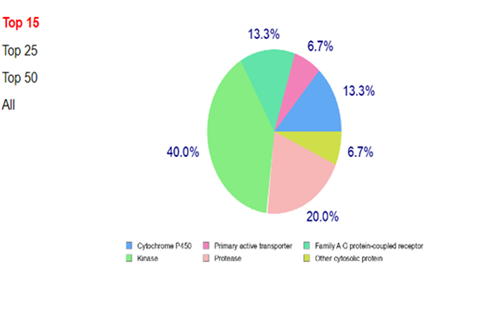
Figure 1. Top 15 targets of Vinblastine
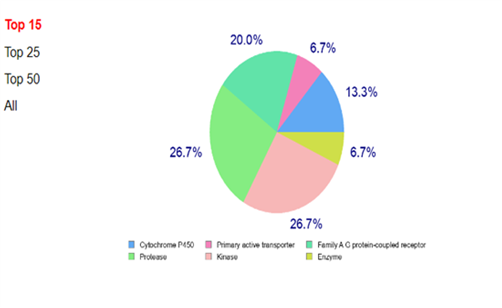
Figure 2. Top 15 targets of vincristine
Protein-protein interaction (PPI) network analysis
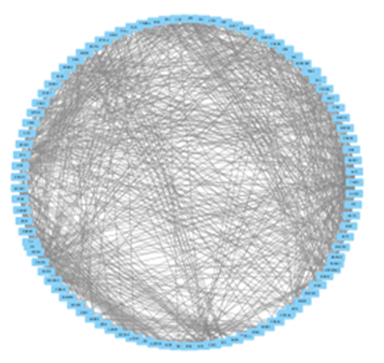
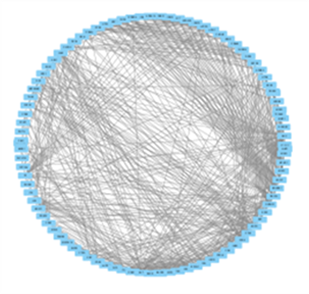
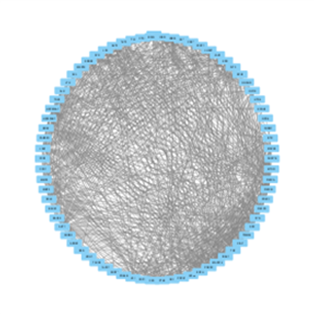
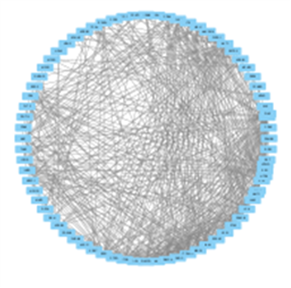
According to PPI network analysis of vinblastine, there were 796 edges and 98 nodes in the network with a clustering coefficient of 0.540. The network in Vincristine included 96 nodes and 676 edges, with a clustering coefficient of 0.576. Figure. 3 displays the nodes in a rectangular shape in the degree central arrangement of the network created from the vinblastine and vincristine-selected targets.
(A) (B)
Figure 3. Degree central layout of the PPI network of (A) vinblastine (B) vincristine targets
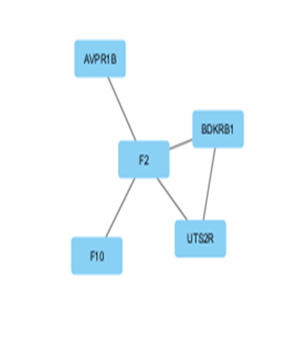
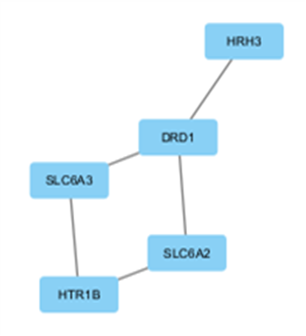
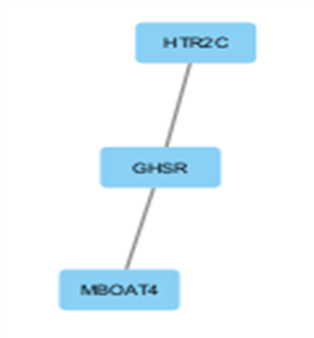
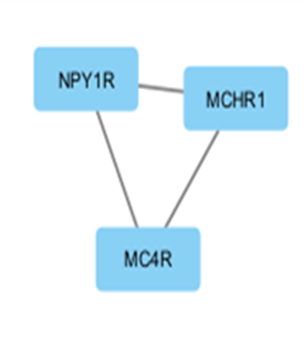
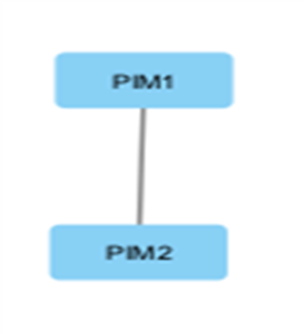
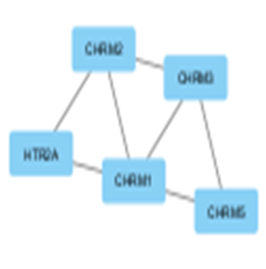
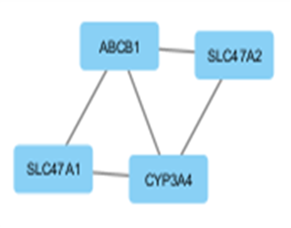
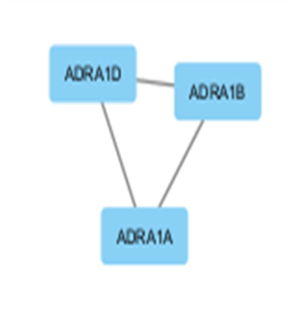
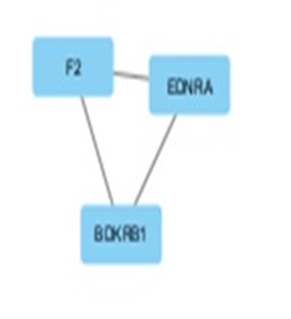
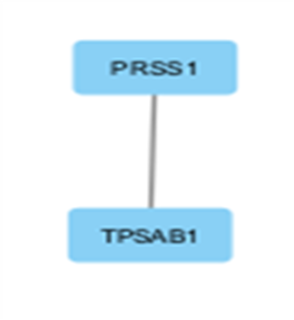
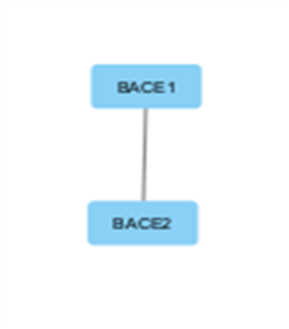
K-means clustering facilitates the grouping of protein targets of similar types. From cluster 1 to cluster 7, we have a total of seven clusters for vinblastine and vincristine. With 75 genes, Cluster 1 had the most genes, followed by Cluster 2,3,4 with 5 genes, cluster 5,6 with 3 genes each, and cluster 7 with 2 genes in vinblastine. In vincristine, Cluster 1 has the most genes with 76 genes followed by Clusters 2 and 3 with 4 and 5 genes respectively, cluster 4,5 with 2 genes each and other clusters with 2 genes individually. All of the clusters produced by the K-means clustering technique are shown in Figures 4 and 5.
(a) Cluster 1
(b) Cluster 2
(c) Cluster 3
(d) Cluster 4
(e) Cluster 5
(f) Cluster 6
(g) Cluster 7
Figure 4. K means clustering of the original PPI network of Vinblastine
(a) Cluster 1
(b) Cluster 2
(c) Cluster 3
(d) Cluster 4
(e) Cluster 5
(f) Cluster 6
(g) Cluster 7
Figure 5. K means clustering of the original PPI network of Vincristine
Key genes analysis
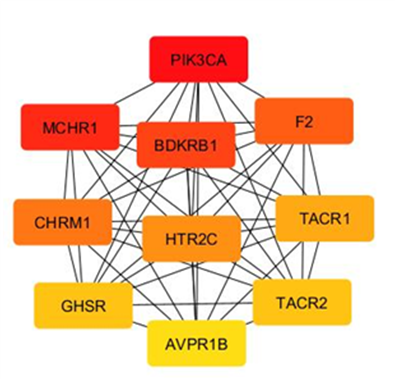
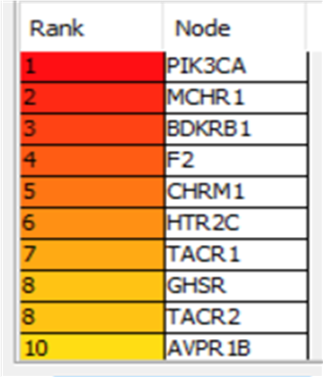
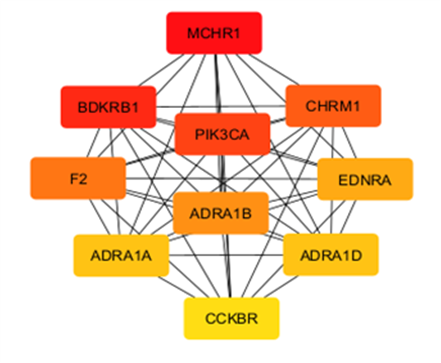
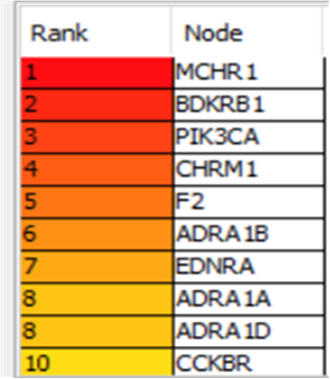
Within the network, key genes are interconnected nodes that have important functions. According to the outcome score for vinblastine, the PIK3CA was placed 1, and the AVPR1B was ranked 10. For vincristine, the CCKBR was placed 10, and the MCHR1 was ranked 1. The study also identified MCHR1, BDKRB1, F2, CHRM1, HTR2C, TACR1, GHSR, TACR2, as additional significant nodes for vinblastine. On the other hand, BDKRB1, PIK3CA, CHRM1, F2, ADRA1B, EDNRA, ADRA1A ADRA1D, were identified as additional significant nodes for vincristine. Cytohubba analysis nodes are displayed in Figure 6.
(a)
(b)
Figure 6. Cytohubba analysis of the network to identify top 10 nodes associated with (a) Viblastine, (b) Vincristine.
Important cluster of the network analysis
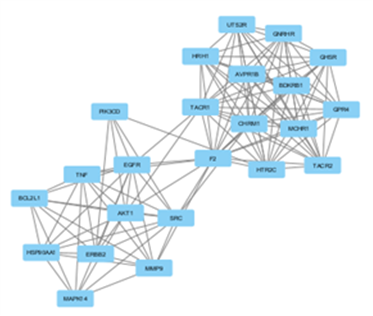
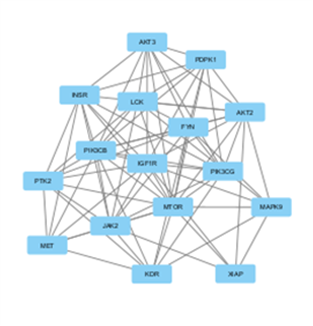
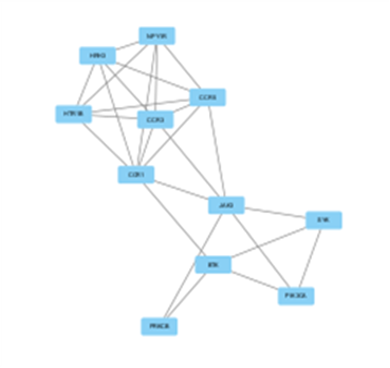
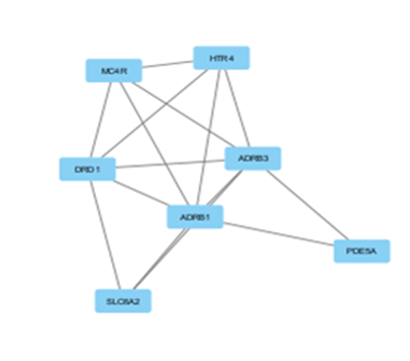
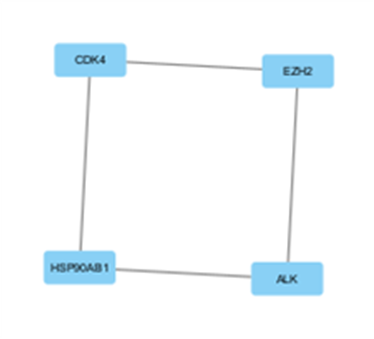
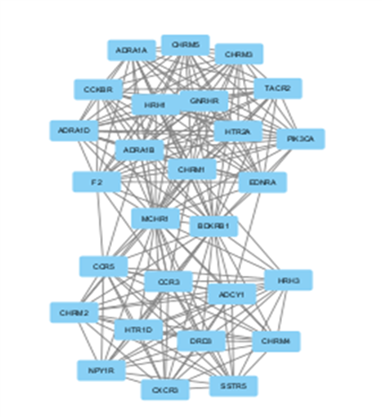
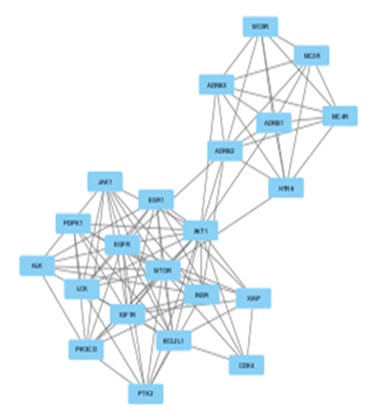
Using MCODE, the study identified 5 and 3 distinct node groups for vinblastine and vincristine, respectively. In the case of vinblastine, with 23 nodes and 126 edges, Cluster 1 achieved the highest score of 11.4. However, with 4 nodes and 4 edges, cluster 5 earned the lowest score of 2.6. Cluster 1 had the highest score of 15.8 for vincristine, which has 27 nodes and 206 edges. Meanwhile, cluster 3 had 10 nodes and 20 edges and obtained the lowest score of 4.4. PIK3CA, MCHR1, BDKRB1, F2, CHRM1, HTR2C, TACR1, GHSR, TACR2, AVPR1B are nodes that are part of cluster 1 for vinblastine. For vincristine, cluster 1 nodes include MCHR1, BDKRB1, PIK3CA, CHRM1, F2, ADRA1B, EDNRA, ADRA1A, ADRA1D, and CCKBR. All of the clusters derived from the MCODE analysis are shown in Figures 7 and 8.
(a) Cluster 1
(b) Cluster 2
(c) Cluster 3
(d) Cluster 4
(e) Cluster 5
Figure 7. MCODE analysis of the PPI network of vinblastine to find out clusters a to e
(a) Cluster 1
(b) Cluster 2
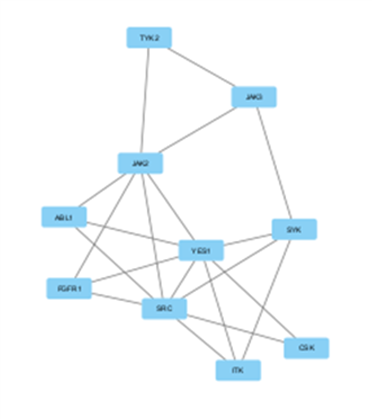
(c) Cluster 3
Figure 8. MCODE analysis of the PPI network of vincristine to find out clusters a to c
Vinblastine and Vincristine associated proteins disrupt microtubule dynamics, inhibiting cancer cell division and tumor progression by targeting mitotic pathways
The genes PIK3CA, MCHR1, BDKRB1, F2, CHRM1, HTR2C, TACR2, GHSR, and AVPR1B play pivotal roles in cancer progression by influencing key biological processes such as cell signaling, proliferation, angiogenesis, metabolism, and immune modulation. PIK3CA is a critical driver of the PI3K/AKT/mTOR pathway, promoting tumor growth and therapy resistance, while MCHR1 and HTR2C are involved in tumor metabolism and signaling. BDKRB1 and F2 contribute to angiogenesis and metastasis, aiding tumor expansion. CHRM1 and TACR2 enhance cancer cell proliferation and inflammation-driven progression. GHSR supports tumor growth through metabolic regulation, and AVPR1B facilitates stress adaptation and metastasis. These genes represent crucial targets for understanding cancer biology and developing therapeutic interventions. In this investigation, some genes are similar, but some are different cases of vincristine. So, the genes ADRA1B, EDNRA, ADRA1A, ADRA1D, and CCKBR play significant roles in cancer progression through their involvement in signaling pathways that regulate cell proliferation, angiogenesis, and tumor microenvironment dynamics. ADRA1B and ADRA1A, adrenergic receptors, are linked to tumor angiogenesis and vascular remodeling, facilitating tumor growth and immune evasion, particularly in prostate and breast cancers. Similarly, EDNRA, which mediates endothelin-1 signaling, drives angiogenesis, metastasis, and therapy resistance in cancers such as ovarian and lung. ADRA1D, though less studied, contributes to vascular regulation and cellular survival, potentially influencing metastatic potential. CCKBR, frequently overexpressed in gastrointestinal cancers like gastric and pancreatic, promotes tumor proliferation, invasion, and resistance to apoptosis through gastrin-mediated signaling. These genes collectively represent promising targets for therapies aimed at disrupting cancer-associated signaling and the tumor microenvironment.
Drug Likeness, ADME, and toxicity analysis
The ADME characteristics of vinblastine and vincristine were calculated in order to determine the drug-likeness. According to the obtained LogP value, every chemical had a LogP ≤ 5 and was, therefore, lipophilic. Vinblastine has a water solubility (ESOL) value greater than -6.5, meaning it is not soluble in water. Vincritine's water solubility (ESOL) value, however, is below -6.5. According to the Lipinski rule, both vinblastine and vincristine breach two of the five rules of the rule of five (ROF). It was discovered that neither of the substances could pass through the blood-brain barrier (BBB). A pharmacokinetic profile for vinblastine and vincristine is shown in Table 1. In silico toxicity research was carried out using the ProTox-II web server, which produced positive toxicological results.
Table 1. Pharmacokinetics and toxicity properties of Vinblastine & Vincristine
|
Phytochemical identifier |
|
(CID 13342) Vinblastine |
(CID 5978) Vincristine |
|
Pharmacokinetics properties |
MW (g/mol) |
810.97 |
824.96 |
|
Heavy atoms |
59 |
60 |
|
|
Arom. Heavy atoms |
15 |
15 |
|
|
Rotatable bonds |
10 |
11 |
|
|
H-bond acceptors |
11 |
12 |
|
|
H-bond donors |
3 |
3 |
|
|
Log Po/w (MLOGP) |
2.35 |
2.35 |
|
|
Log S (ESOL) |
-6.84 |
-6.39 |
|
|
GI absorption |
Low |
Low |
|
|
Lipinski, violation |
2 violations |
2 violations |
|
|
Synth. accessibility |
9.65 |
9.59 |
|
|
BBB permeant |
No |
No |
|
|
Log Kp (cm/s) |
-8.49 |
-9.11 |
|
|
CYP3A4 inhibitor |
Yes |
Yes |
|
|
Toxicity |
Hepatotoxicity |
Inactive |
Inactive |
|
Carcinogenicity |
Inactive |
Inactive |
|
|
Immunotoxicity |
active |
active |
|
|
Mutagenicity |
Inactive |
Inactive |
|
|
Cytotoxicity |
active |
active |
|
|
Neurotoxicity |
active |
active |
DISCUSSION:
Vinblastine and vincristine's predicted function was summarized in this study by clustering PPIN and identifying efficacy. Bioinformatics was used to predict the efficacy of vinblastine and vincristine. The data pool for the effect of vinblastine and vincristine was gathered from the National Center for Biotechnology Information, which provides chemical, chemical biology, drug chemistry, and drug discovery information [17]. As illustrated in Figure 2, the nodes represent proteins, and the edges represent relationships between the proteins [18]. Using Cytohubba and MCODE analyses, the key targets of vinblastine and vincristine that are linked to a number of essential body functions were identified. The key genes identified for vinblastine were PIK3CA, MCHR1, BDKRB1, F2, CHRM1, HTR2C, TACR1, GHSR, TACR2, and AVPR1B. The gene PIK3CA RANKED 1. Three kinds of intracellular enzymes are known to be members of the phosphatidylinositol-3-kinase (PI3K) family. Although class II and III PI3Ks are more active in membrane transport, class I PI3Ks primarily operate in signaling by reacting to the activation of cell surface receptors. The PI3K signaling network controls cell division, growth, migration, and survival in a physiologically normal environment. Cancer frequently starts when the PI3K signaling pathway is abnormally activated, which alters cellular activity and metabolism. Five class I PI3K inhibitors are now licensed for clinical use by the Food and Drug Administration (FDA) [19]. On the contrary, the key genes identified for vincristine were MCHR1, BDKRB1, PIK3CA, CHRM1, F2, ADRA1B, EDNRA, ADRA1A, ADRA1D, and CCKBR. In this case, MCHR1 ranked 1. Melanin-concentrating hormone (MCH) is a cyclic neuropeptide of 17–19 amino acids that has been conserved throughout history. In individuals with inflammatory bowel disease, the affected mucosa has increased mRNA expression of MCH and MCHR1. Different proinflammatory cytokines and chemokines were expressed more when MCHR1 was activated in the same cells [20]. This study showed that the key genes of vinblastine and vincristine are involved in cancer mechanism and inflammation, which may lead to new avenues for cancer treatment. Both leukemia and lymphoma are treated with these two substances. The new therapeutic agents from vinblastine and vincristine will be more effective and promising in novel cancer treatment as natural compounds are less dangerous than synthetic ones [21]. Therefore, to ascertain the therapeutic potential of vinblastine and vincristine without adverse effects, future research should examine their physiological activity at the molecular level. Their potential has not yet been determined. However, more studies and clinical data are required.
CONCLUSION:
This study presents a comprehensive network-based and ADMET profiling analysis of vinblastine and vincristine, shedding light on their therapeutic potential in cancer treatment. Through protein-protein interaction networks and clustering analyses, we identified key targets-such as PIK3CA and MCHR1-linked to crucial cellular processes including tumor progression, angiogenesis, immune modulation, and inflammation. The bioinformatics tools confirmed the compounds’ roles in disrupting microtubule dynamics and mitotic pathways, reinforcing their efficacy in halting cancer cell division. Additionally, ADMET profiling revealed favorable drug-like characteristics with manageable toxicity concerns, supporting their candidacy as natural anticancer agents. While the data suggest strong therapeutic promise, further molecular studies and clinical trials are essential to validate their safety, optimize dosage, and fully harness their pharmacological potential in oncology.
REFERENCES






Abdur Rahim, Jakia Sultana, Md Shakil Rahman Shoagh, Rifah Tasnia, P. M. Abida Anzum, M. Nasiruddin, Network-Based Analysis and ADMET Profiling of Vinblastine and Vincristine: Insights into Their Therapeutic Potential for Cancer Treatment, Int. J. of Pharm. Sci., 2025, Vol 3, Issue 9, 69-80. https://doi.org/10.5281/zenodo.17015921
 10.5281/zenodo.17015921
