
Malla Reddy Pharmacy College maisammaguda, Dhullapally Secunderabad Telangana, India. 500100
The vast majority of new molecular entities (NMEs) taken to full-scale development have poor physicochemical and biopharmaceutical properties, which lead to poor pharmacokinetics, poor biodistribution and higher toxicity after administration into living subjects. The critical elements of such NMEs being translated into successful therapeutic agents are therefore optimization of preformulation strategies, rational design of advanced drug delivery systems to accelerate successful translation of these NMEs into clinically useful therapies. Nanoparticulate drug delivery systems have come up to address these limitations by controlling biopharmaceutical behavior and pharmacokinetic profiles and by providing site-specific delivery and low non-specific toxicity. Other than the use of nanotechnology in pharmaceuticals, nanotechnology has transformed various industries around the globe, including agriculture, food and medicine, automobiles, civil engineering and environmental control. Its application in the industry has increased efficiency, productivity, material performance, and sustainability, which reflect its wide spectrum effects, not only in research on the laboratory scale. Nanotechnology in the biomedical field has been particularly promising in the oncology field, in particular in the diagnosis and treatment of oral cancer, which is a highly aggressive malignancy with high morbidity, mortality, and recurrence rates. The traditional diagnostic and treatment modalities lack specificity and have many negative effects. Due to the special physicochemical characteristics and surface modification, nanoparticles provide better diagnostic sensitivity, targeted delivery of specific drugs, and lowered systemic toxicity. This review identifies important parameters and assessment strategies to be used in nanoparticulate drug delivery systems at the early stages of formulation development with a sharp concentration on the application of the systems to the diagnosis and treatment of oral cancer. In addition, it talks about the existing issues, clinical opportunities and future trends of nanotechnology-based interventions with the focus on their role in changing the way cancer is managed, so as to achieve safer, more effective and patient-friendly methods of managing the disease
Nanotechnology is a speedily promoting field of science that deals with materials at the nanoscale, frequently between 1 and 100 nanometers. At this very small size, materials show remarkable properties that are not observed in their bulk form. One of the most notable and innovative developments in nanotechnology is the use of silver nanoparticles (AgNPs). [1]Silver nanoparticles are tiny particles of silver that show enhanced chemical reactivity, electrical conductivity, and strong antimicrobial activity. Due to these remarkable characteristics, AgNPs have gained wide attention in fields such as medicine, electronics, environmental protection, and consumer products. Their ability to inhibit the growth of bacteria, fungi, and viruses makes them especially valuable in healthcare and sanitation applications. [2]
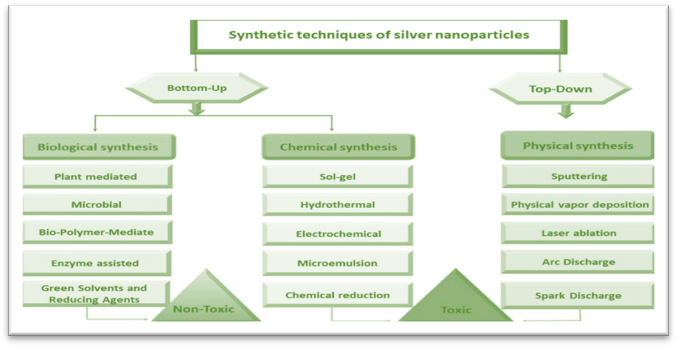
Figure:1 Methods for The Preparation of Silver Nano Particles
Biological Methods
Traditional techniques for producing AgNPs are expensive, hazardous, and environmentally unfriendly. To circumvent these issues, researchers have explored green routes—naturally occurring sources and their products that can be used to synthesize AgNPs. Biological synthesis can be classified into several methods, including the use of microorganisms such as fungi, yeasts (eukaryotes), bacteria, and actinomycetes (prokaryotes). Another approach involves utilizing plants and plant extracts, as well as templates such as viruses, membranes, and diatoms. Natural biologically active substances can be found in plenty in shells and peels of food waste. Synthesis of AgNPs using food wastes is beneficial as compared to chemical synthesis. [3] The green synthesis of AgNPs utilizes agricultural waste and by-products from the food industry as eco-friendly reducing and stabilizing agents. Examples include banana peels, orange peels, and potato skins, which are rich in natural compounds such as polyphenols and flavonoids. These compounds reduce silver ions to form AgNPs and help stabilize them, reducing the need for harmful chemicals. This method not only offers a sustainable approach to nanoparticle synthesis but also adds value to agricultural and industrial waste, supporting waste management and environmental protection. [4]The following sections provide descriptions of biological synthesis techniques using fungi, bacteria, and plant extracts as shown Figure.
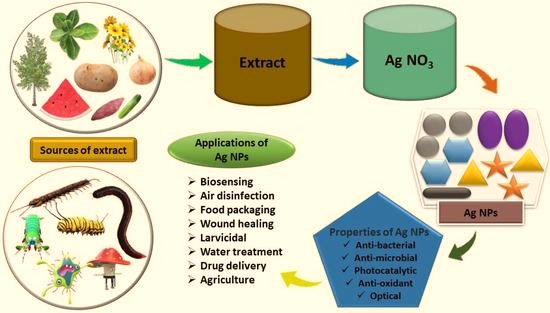
Figure:2 Schematic diagram for biological synthesis of AgNPs.
Biological methods involve two processes: biosorption and bio-reduction. The biological synthesis of AgNPs requires a reducing biological agent and a silver metal ion solution as the main ingredients. Typically, there is no need to add external capping and stabilizing agents because the reducing agents or other components already present in the cells act as these substances stabilizing and capping agents. [5]
Plant-Mediated Synthesis
The process of producing AgNPs involves the following steps: the plant of interest is harvested from its natural habitat, thoroughly washed with tap water two or three times to remove necrotic plants and epiphytes, and then rinsed with deionized water to eliminate any remaining debris. After cleaning, the plant parts are dried in the shade for ten to fifteen days before being ground into powder. To prepare the plant extract, approximately 10 g of the dried powder is soaked in 100 mL of deionized distilled water and heated using the hot percolation method. The resulting infusion is filtered to remove any insoluble material. A few millilitres of the plant extract are added to a 10−3 M AgNO3 solution, causing pure Ag+ ions to be reduced to Ag0, which can be monitored by periodically measuring the solution’s UV-visible spectra.
Microbial Synthesis
(S.V. Otari et al.) reported the synthesis process of Ag NPs using the actinobacteria Rhodococcus sp which is a green biosynthesis process. Rhodococcus sp. is used to reduce aqueous silver nitrate. This synthesis process leads to the formation of AgNPs with a uniform size of 10 nm, providing various applications in fields such as biological labeling, antibacterial activity, and catalysis. Lihong Liu et al. demonstrated a revolutionary method for synthesizing AgNPs using microorganism culture broth without necessitating any specific living microbe. This study highlights the significance of pH levels, light, and broth composition for the production of pure AgNPs. It investigated the formation of AgNPs without living microbes under suitable light and pH conditions, which has great significance in nanomaterial synthesis. Mohd Yusof et al. used Lactobacillus plantarum TA4 to synthesize AgNPs while tolerating Ag+. They found that the cell biomass of L. plantarum TA4 has the ability to tolerate Ag+ at a concentration of 2 mm. The presence of maximum UV– absorption centered at 429 nm and the observation of colour changes confirmed the formation of AgNPs.
Enzyme Assisted Synthesis:
Biosynthesis has gained more interest due to its economically viable and sustainable techniques. A recent study reported the synthesis of AgNPs with a size of 5–10 nm using Rhizoctonia solani fungi, which demonstrated strong antibacterial properties again S. aureus.
Chemical Methods: The chemical method is the most widely used approach for synthesizing AgNPs due to its high effectiveness and low cost. [6] There are several approaches to synthesizing AgNPs using the chemical method, such as electrochemical methods, chemical vapor deposition, chemical reduction, and reverse micelle techniques. Among these, chemical reduction is the most commonly employed. The chemical synthesis process typically requires three main components: a reducing agent, capping/stabilizing agents, and a precursor.
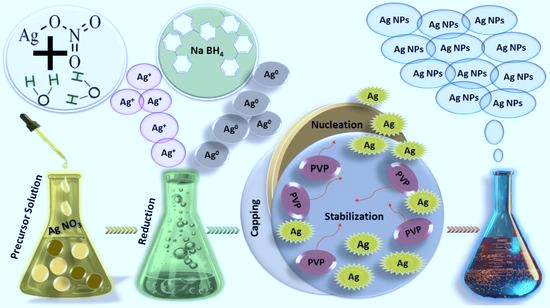
Figure:3 Schematic diagram for chemical synthesis of Ag NPs.
Sodium borohydride (NaBH4) is commonly used as a reducing agent in borohydride reduction, and precise control over its use allows for the production of various sizes and shapes of AgNPs such as spheres, triangles, and rods using the same set of chemicals. [7]
Sol–Gel Method
The sol–gel method is an efficient chemical approach for producing sophisticated materials in a variety of research fields. When combined with techniques such as phase separation, hybridization, and templating induction, this method provides greater control over size and shape, which is highly innovative for various applications.
Hydrothermal Method
Ag NPs were first synthesized by the hydrothermal method using bacterial cellulose (BC) as both a stabilizing and reducing agent. Narrow distribution of AgNPs from 17.1 ± 5.9 nm. Hydrothermal green synthesis of AgNPs was performed using Pelargonium/Geranium leaf extract without the use of toxic chemicals. Response surface methodology (RSM) was used to generate experimental models for the λ max coloration of the synthesized AgNPs solution, with the amount of 1 mM AgNO3 solution and Pelargonium/Geranium leaf extract concentration (PLEC) as dependent. [8]
Chemical Vapor Deposition (CVD)
For the first time, similar bacterial strains were distinguished based on their lipidomic patterns, showing strong potential for investigating antibiotic resistance using AgNPs substrates generated using CVD.This study reported the single-step manufacturing of a heterostructure formed by concentrated AgNPs (size 2–10 nm) and chemical vapor deposited graphene as a surface-enhanced Raman scattering (SERS) substrate. The CVD graphene surface was coated with AgNPs in a single step, where pure (99.98%) Ag foil was dissolved in diluted nitric acid, reducing the need for additional toxic chemicals and providing an eco-friendly technique for device construction.
Electrochemical Synthesis
This study reported the synthesis of AgNPs using an electrochemical approach, with Poly (Nvinyl-2 pyrrolidone) (PVP) and sodium lauryl sulfate (Na-LS) employed as stabilizing and costabilizing agents. The novelty lies in the purportedly “sacrificial anode” process. Stable Ag NPs were synthesized by an electrochemical method. [9] By changing the current polarity within sodium polyacrylate (Na PA) solutions, AgNPs were produced using electrolysis with silver electrodes. It was reported that the polydispersity of AgNPs increases with a decrease in the observed proportion of growth and nucleation, while the average size of AgNPs clusters decreases due to an increase in the observed nucleation rate.
Microemulsion Method
The dispersity and size of the created AgNPs strongly depend on the soluble capacity of the reducing reagents. Several pieces of literature reported the use of chemicals to synthesize AgNPs by micro emulsion technique. This study reported the production of stable and monodisperse spherical AgNPs with a size of about 3–10 nm using reverse microemulsion polymerization and the reverse microemulsion technique. Reverse microemulsion polymerization is a quick and effortless technique and can also be used to generate other kinds of MNPs.
Chemical Reduction Method
The pH value of solution affects the size, shape, and colour of AgNPs in the chemical reduction method. Trisodium citrate is used as a reducing agent to synthesize AgNPs by the chemical reduction method. Various reducing agents can be utilized in the procedure to generate AgNPs of different sizes, each with distinct antibacterial properties
Polyol Process
Xia and colleagues reported the polyol synthesis of AgNPs, which is the simplest and most ecofriendly technique. In this method, polyols are used as reductants for metal salts. Constant synthesis of AgNPs investigated using polyol process[10].In polyol processes, solvents have the greatest control over the size of AgNPs. Green synthesis approach for polyol method performed to generate Ag NWs.
Photochemical Reduction
The photoreduction approach was used to produce AgNPs in films of polymeric material. A green approach was performed using tyrosine as a photo-reductant and water as a solvent, resulting in large hydrodynamic diameter and small particle dimensions. A green photochemical reduction approach was used to produce AgNPs in κ-Carrageenan under ultraviolet (UV) light interference. This technique reports the synthesis of icosahedral AgNPs using UV irradiation assisted by tartrate as a reducing agent, achieving a production rate of over 90%. Monodispersed AgNPs were produced using a ferritin photochemical approach.
Physical Methods
This is a top-down approach for the production of AgNPs, utilizing physical factors such as electromagnetic radiation, plasma, and heat. These synthesis techniques include approaches like laser ablation, evaporation–condensation using a gas tube, and arc discharge, considered the fastest physical method for AgNPs formation. A plasmonic technique known as lithography provides high control over the size of the generated AgNPs, but it is costly and laborious. Physical methods used for large scale production are mostly in the form of ashes with a uniform size of Ag NPs. We are going to discuss physical methods for synthesis of AgNPs as demonstrated in Figure
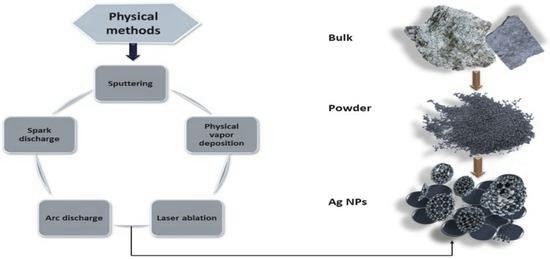
Figure:4 Schematic diagram for physical synthesis of Ag NPs.
Sputtering
For the formation of nanocrystalline thin sheets and powders at high pressure, magnetron sputtering is considered a potential technique because it provides high control over the production rate of AgNPs. Oxidized AgNPs were generated by involving two steps: thermal evaporation of Ag NPs and sputtering of oxidization clumps by plasma. Photosensitive. AgNPs were generated by direct current (DC) sputtering in a titanium dioxide (TiO2) matrix. AgNPs thin sheets synthesized by sputtering using discharge voltage upon canola and castor [11].
Physical Vapor Deposition (PVD)
Physical vapor deposition (PVD) is composed of three steps: sublimation, transportation of material, and nucleation/formation of AgNPs. Use of electron beam PVD technique reported for the production of AgNPs (15–20 nm) in a salt-based mixture. Investigated that antibacterial properties are strongly dependent on annealing temperature [12].
Laser Ablation
Pure N,N-dimethylformamide, acetonitrile, dimethyl sulfoxide, and tetrahydrofuran are used to synthesize AgNPs without the use of any reductant or stabilizer. In contrast to chemical methods, laser ablation provides high purity of generated AgNPs. There is no need for any capping and stabilizing agents, and it is considered an eco-friendly approach. Due to this reason, it provided higher capabilities in microbial activities than the chemical method. This approach provides strong situ coupling with biomolecules as compared to ex situ coupling for chemical methods]. AgNPs were generated by a femtosecond laser ablation process with various agents like deionized water (DIW), double distilled water (DDW), dimethylformamide (DMF), and tetrahydrofuran (THF). Analyzed that formatted AgNPs in DIW are more stable and have potential capability in microbial activities as compared to other agents [13].
Arc Discharge
This is one of the physical approaches for the production of AgNPs. This process involves the elimination of arc in the mixture. However, it does not provide high control on shape. Titanium electrodes are used to synthesize AgNPs using the arc discharge approach. AgNO3 reduces due to arc discharge by applying 15 A current while keeping electrodes in the AgNO3 mixture for six minutes.
Spark Discharge
Spark discharge, with the involvement of silver electrodes, DC, and deionized water, ensures the production of stable colloidal AgNPs. The benefit of this technique is that it provides stable suspension. This study investigated the toxicity of pure AgNPs on the hydrophytic plant Lemna minor produced by spark ablation at a quantity less than 5 μgL−1.
Photochemical Synthesis
The sources of light for this process include laser light, sunlight, and UV light. In this technique, at the very beginning of this process, metal precursors reduce from n+ valence state (Mn+) to zero-valence state (M0) due to their photocatalytic properties. The study reported the formation of AgNPs using chitosan/clay in the presence of ultraviolet radiation. [14] The modified chitosan film, which contains dodecyl and DEAE groups, displayed smaller and more uniform nanoparticle sizes, along with a mixture of exfoliated and integrated structures. This amphiphilic chitosan modification is effective in regulating the size and shape of the AgNPs.
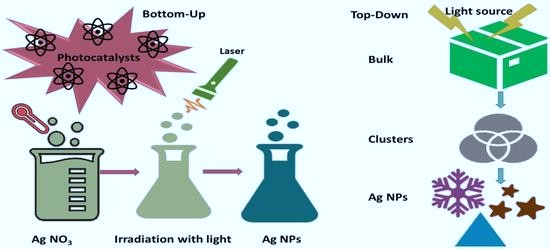
Figure:5 Photochemical synthesis of Ag NPs
Drugs Used:
Meloxicam, Ibuprofen, Naproxen, Celecoxib, Diclofenac, Etodolac is a non?steroidal anti?inflammatory drug (NSAID) that’s used to ease pain and swelling from osteoarthritis, rheumatoid arthritis, and acute musculoskeletal pain. It works by blocking the cyclooxygenase (COX) enzymes—especially COX2—so few prostaglandins are made which reduces inflammation and pain.
ADVANTAGES OF SILVER NANOPARTICLES:
Strong antimicrobial power – kill bacteria, fungi, and viruses even at low concentrations
Broad?spectrum activity – effective against drug resistant strains Low toxicity to humans when used at proper doses, especially in topical forms
High surface?area to volume ratio → more reactive sites for catalysis and sensing
Tunable optical properties (surface plasmon resonance) → useful in colorimetric sensors and imaging.
Easy functionalization – can attach ligands, drugs, or biomolecules for targeted delivery
Stable in various media when capped with polymers or biomolecules.
Cost effective for large scale production via green synthesis routes.
Versatile applications – wound dressings, water purification, electronics, cosmetics,
and drug carriers.
LIMITATIONS:
Environmental impact: accumulation in soil and water may affect aquatic organisms and
disrupt ecosystems.
Regulatory hurdles: unclear guidelines and safety assessments slow commercialization
Stability issues: tendency to aggregate or oxidize, which reduces effectiveness over time.
Cost of scalable production: high?purity methods (e.g., physical routes) can be expensive;
greener methods sometimes insufficient reproducibility.
Limited targeting: without surface modification, they can’t differentiate between pathogens and host cells, leading to off target effects.
Resistance development: microbes may develop tolerance under sublethal exposure, decreasing long-term antimicrobial strength and drug carriers.
Applications of Silver Nanoparticles:
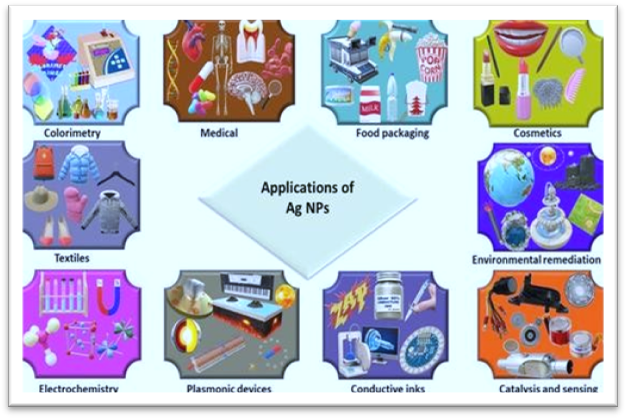
Figure:6 Application of Ag NPs
Antimicrobial coatings: hospital surfaces, wound dressings, and water filters that keep bacteria, fungi, and viruses at inlet medical devices – catheters, implants, and surgical tools with built infection resistance
Wound healing: hydrogels or fibers that release silver slowly, hasteing tissue repair while preventing infection
Drug delivery: carriers for antibiotics, anticancer agents, or NSAIDs like ibuprofen enabling targeted release and reduced side effects.
Diagnostics: colorimetric sensors and lateral flow assays that manipulate the surface Plasmon resonance of AgNPs for rapid pathogen or metabolite detection.
Cosmetics & textiles: antibacterial creams, deodorants, and sportswear that stay fresh longer.
Environmental remediation: filters and membranes that degrade pollutants or disinfect wastewater.
Electronics: conductive inks, flexible displays, and biosensors thanks to the high
electrical conductivity of Nano silver.
CONCLUSION
Silver nanoparticles (AgNPs) have anti?inflammatory drug (NSAID) that show promise enhancing therapeutic outcomes. The unique properties of AgNPs, such as their strong antimicrobial activity, tunable surface chemistry, and optical characteristics, complement anti?inflammatory effects, potentially allowing. Targeted delivery to infection or inflammation sites, reducing systemic side effects and synergistic effects against bacterial Infections and inflammation.
REFERENCES:

Rashmi Bagri*, G. Tulja Rani, Nagaraja, C. H. Keerthana, K. Shravani, Review on Role of Nanotechnology in Development of Silver Nanoparticle, Int. J. of Pharm. Sci., 2026, Vol 4, Issue 1, 3332-3341. https://doi.org/10.5281/zenodo.18404560
 10.5281/zenodo.18404560
