
1Assistant Professor, PG & Research Department of Biotechnology, Kongunadu arts and science college, Coimbatore, Tamilnadu, India.
2Assistant Professor, School of Allied Health Sciences, Takshashila University, Ongur, Tamil Nadu, India.
Products so-called herbal cosmetics are used to improve a person's look. Making an herbal cream to nourish, moisturize, and cure a variety of skin conditions that was the aim of this study. Anacardium occidentale has long been utilized as a treatment for several types of illnesses, and natural products containing bioactive lead compounds are the source of natural medicines for complementary and alternative therapy. The cream is made from a collection of crude substances, including shea butter, honey, Anacardium occidentale (cashew leaves), and Aloe barbadensis (aloe vera leaves). The selection of components depends on the different phytochemical activities and medicinal properties of these substances. A variety of assessment parameters are used to test the cream.
Studies on plants is done to find new drugs or templates for the creation of new therapeutic agents. Plants are thought of as more than just dietary supplements for living things; they have also historically been used to treat a variety of health issues, and their medicinal potential is still unknown1. The finding mechanism was frequently so chaotic that it resulted in some important flaws. The best part of herbal cosmetics is that they are entirely composed of herbs and shrubs. The natural ingredients in the herbs provide the body with nutrients and other beneficial minerals without causing any adverse effects2. In order to enhance beauty and attractiveness, plant extracts are employed in cosmetic preparations worldwide3. The classification of herbal cosmetics is based on the dosage form (cream, powder, soaps, solutions, etc.) and the body part or organ for which it is intended, such as cosmetics for the skin, hair, nails, teeth, and mouth. Semisolid emulsions called creams are applied to the skin or mucous membranes4. Herbal creams are low-fat moisturizers that blend with in the skin. Nothing is left behind as it softens the skin. Aqueous and oil phases are present in o/w emulsion-based preparations known as "vanishing creams." Cream may be water miscible and readily removed, or it may be thick and sticky, depending on the ratio of water to grease5. The body's first line of protection against exposure to the external atmosphere is the skin. The skin exhibits the most obvious indications of aging6. While aging skin does not pose a hazard to an individual, it might negatively impact their psychological well-being. The interaction of the skin with the environment is mostly responsible for premature aging, either directly or indirectly. One of the main causes of the gradual, undesirable changes in the look of the skin is acknowledged to be exposure to sunshine7. The harmful effects of UV radiation on the skin, which are brought on by an excess of reactive oxygen species, can be avoided by photochemoprotective chemicals8. An essential balance between the stratified corneum's water content and the lipids on the skin's surface preserves the skin's look and functionality9,10. Being the outermost layer of the organism, the skin is always in contact with many external stimuli11. This equilibrium may be upset by both endogenous and external influences. The lipids on the skin's surface can also be eliminated by using cleansers, detergents, and topical irritants like alcohol and warm water constantly12-15. Many types of skin disorders resulted from disruption of the skin barrier. The most prevalent ailment is a loss of water content, which causes dry skin to feel rough, scaled, cracked, red, and tight, occasionally aching and stinging. The goal of moisturizer treatment is to preserve the integrity and health of the skin by giving the patient a healthy appearance. The terms "natural," "safe," "organic," and "herbal" refer to a variety of moisturizers, while the terms "humectancy," "occlusivity," and "emolliency" are universal16. Several natural chemicals have been investigated in order to discover novel drugs. Natural substances from prebiotic, microbial, plant and animal sources have always captivated humanity. Bioactive substances that combat disease, including alkaloids, steroids, tannins, glycosides, volatile and fixed oils, resins, phenols, terpenoids, and flavonoids, are found in extracts of many plant sections. Plant-based phenolic phytochemicals are important antibacterial agents. Antimicrobial drugs break down the cell wall's protein components, interfering with enzyme activity as well as the replication of DNA and RNA17-21. This herbal cream consists of various crude drug including Cashew leaves (Anacardium occidentale), Shea butter, Aloe vera and Honey. The objective of this study endeavor was to create an herbal cream that doesn't have any negative effects or reactions. In day-to-day life, the cream also serves as a fairness expert by eliminating symptoms of age. Additionally, its nutritional value supplied the skin with the nourishment it needed.
MATERIALS AND METHODS
Sample collection:
For cream product analysis, three composite samples (leaves) of cashew plant were collected from Panruti, Cuddalore District. The leaves of Anacardium occidentale, shea butter, aloe vera leaves. Plant materials were rinsed in tap and distilled water, then air-dried at room temperature in the shade before being homogenized.
Sample preparation:
The process begins by collecting the leaves of Anacardium occidentale, which are then washed thoroughly with running tap water. After washing, the leaves are air-dried to remove excess moisture. Once dried, the leaves are blended into a fine powder. To extract the bioactive compounds, 15g of the powdered plant material is combined with 100 ml of distilled water and the mixture is placed in an orbital shaker for 24 hours. After shaking, the extract is filtered using Whatman filter paper to remove any solid particles. Finally, the filtered extract is stored in a screw-cap bottle for future use.
Phytochemical Analysis:
Phytochemical analysis of the leaf extracts from M. dubia was conducted in accordance with standard methodologies22,23.
Alkaloids – Wagners test
2 ml of extract sample added with few drops of 1% Hcl. 1ml of Wagners Reagent (Iodine + Potassium Iodide). Reddish brown colour solution indicates the presence of alkaloids.
Flavonoids – Alkaline Reagent Test
1 ml of extract sample added with few drops of 2N NaOH. Yellow colour solution indicates presence of flavonoids.
Saponins – Foam Test
1 ml of extract sample added with few drops of distilled water. The tube gets vigorously shaked and foam is formed. The persistence of foam indicates presence of saponins.
Phytosterols – Libermann Burchard Test
1 ml of extract sample added with few drops of Chloroform. Add few drops (2-3 ml) Acetic anhydride. Add 1-2 ml of concentrated Sulphuric acid. The result of dark green or brown ring results in the presence of phytosterols.
Quinones – Sulphuric Acid Test
1 ml of extract sample added with 1 ml of concentrated Sulphuric Acid. Red colour changes results in the presence of quinones.
Phenol – Ferric Chloride Test
1 ml of extract sample is added with 2 ml of distilled water. Add 3-4 drops of 1% ferric chloride solution. Blue green colour or bluish black colour results in presence of phenol.
Tannins – gelatin Test
1g of gelatin in 100ml distilled water added to 5ml of plant extract.it will appear yellow/brownish precipitate.
Glycosides – Keller Killani Test
1 ml of extract sample is added with 3 ml of chloroform. Add few drops of concentrated sulphuric acid. The result of brown ring formation states the presence of glycosides.
Formulation of cream:
Shea butter (2.5 g) was weighed and placed in a beaker. The beaker was immersed in a water bath, and honey was added, allowing it to dissolve completely. After the shea butter and a few drops of coconut oil were added, the mixture was heated until it was fully melted. Next, aqueous leaf extract (Anacardium occidentale) was added. Once the leaf extract was incorporated, the beaker was removed from the water bath, and aloe vera gel was added. The mixture was stirred vigorously until everything dissolved completely, forming a smooth cream. The cream was then placed on a slab, and a few drops of distilled water were added if necessary. The cream was mixed in a geometric manner on the slab to achieve a smooth texture and ensure proper mixing of all the ingredients. This method is known as the slab technique or the extemporaneous method of cream preparation. Finally, to allow the mixture to solidify, it was poured into a container and placed in the refrigerator for 30 minutes.
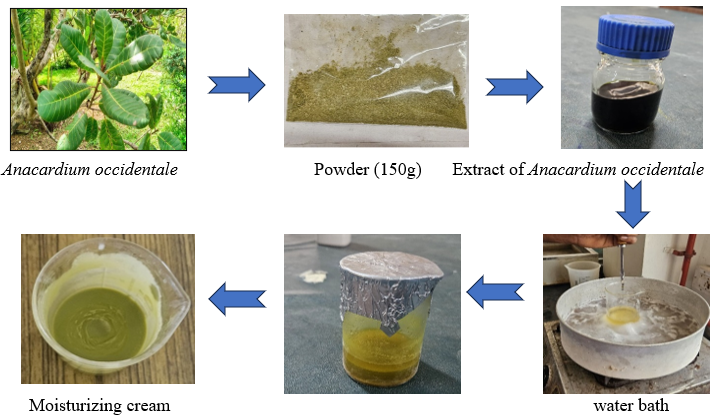
Figure 1: Preparation and formulation of cream
Antimicrobial Activity:
The bacterial cultures E. coli, S. aureus, Candida albicans were used for antimicrobial activity for the extract and nanoparticle synthesized sample. The Muller-Hinton Agar plates were swabbed with respective cultures and wells were made for control, nanoparticle, extract and nanoparticle synthesized extract. The plates were filled and incubated for 24 hrs at 37°c. The zone of inhibition is calculated to state the effectiveness in action against the bacterial cultures.
Evaluation of cream:
pH of the Cream:
Standard buffer solution was used for pH metre calibration. The cream was weighed out to be about 0.5 g, dissolved in 50.0 ml of pure water, and the pH was recorded.
Viscosity:
According to Brookfield, the formulation's viscosity Viscometer with spindle number 7 operating at 100 rpm.
Homogeneity:
The uniformity of the formulations was assessed by both tactile and visual inspection.
Appearance:
The appearance of the cream was judged by its dark green color and smoothness.
After feel:
After the cream was examined, it was applied to the face. The cream felt nice and was easily moisturising, similar to cold fresheners.
Type of smear:
The type of film or smear that formed on the skin after applying the cream was assessed.
Removal:
The ease of removal of the cream was evaluated by washing the area where it was administered with tap water.
Irritancy test:
On the dorsal left-hand surface, a 1 cm2 region was designated. After applying the cream to the designated area, the time was recorded. For a full day, irritability, erythema, and oedema were observed at regular intervals and recorded.
RESULTS AND DISCUSSION
Phytochemical Analysis
The plant material's extracts were subjected to a qualitative phytochemical analysis using standard procedures to determine whether tannins, saponins, flavonoids, alkaloids, and phenol were present. Many secondary metabolites, which are typically produced by plants, are a significant source of pesticides, microbicides, and numerous pharmaceutical medications.
Table 1: Phytochemical analysis of Anacardium occidentale extract
|
S. No |
Tests |
To detect |
Appearance |
Result |
|
1 |
Wangers test |
Alkaloids |
Reddish brown |
+ |
|
2 |
Molisch test |
Carbohydrates |
Purple ring |
+ |
|
3 |
Alkaline reagent |
Flavonoids |
yellow |
+ |
|
4 |
Foam test |
Saponins |
Foam persistence |
+ |
|
5 |
Libermann burchard |
Phyto steroids |
Dark brown ring |
+ |
|
6 |
H2SO4 |
Quiniones |
Red colour |
+ |
|
7 |
Gelatin test |
Tannins |
White ppt |
+ |
|
8 |
Acetic acid test |
Glycosidic |
Colourless |
+ |
|
9 |
Ferric chloride test |
Phenols |
Blue/green |
+ |
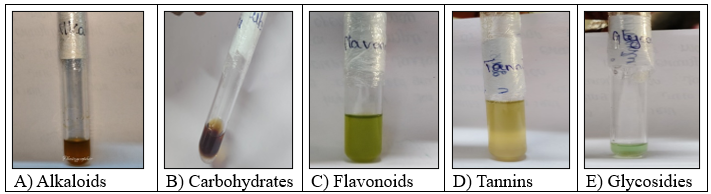
Figure 2: Phytochemical analysis of Anacardium occidentale extract
Antimicrobial analysis
The disc diffusion test was used to determine the diameters of the zones that inhibited bacterial growth and to determine the minimum bactericidal concentrations (MBCs) and minimum inhibitory concentrations (MICs) using the liquid microdilution assay. The results of the agar diffusion assay indicate that the target bacterium is required for the extracts to have antibacterial activity. A circular area formed around each disc impregnated with the extract to be tested as a result of the inhibition of microbial growth (bacteria and fungi).
Table 2: Antimicrobial analysis of herbal moisturizing cream
|
Components |
Control (Streptomycin) |
Control (Acetone) |
Control (Tetracycline) |
Plant extract (10μl) |
Plant extract (20μl) |
|
E. coli |
4 |
3.7 |
4.1 |
1.5 |
2 |
|
Streptococcus aureus |
3.8 |
3.9 |
4 |
2 |
2.5 |
|
Candida albicans |
4 |
4.0 |
- |
3.0 |
5.0 |
Table 3: Formulation of herbal cream
|
Ingredients |
Formulation F1H |
Formulation F2H |
Formulation F3H |
|
Shea butter |
2.0 gm |
2.5 gm |
3.0 gm |
|
Honey |
0.5 ml |
1.0 ml |
1.5 ml |
|
Anacardium occidentale |
1.0 ml |
2.0 ml |
3.0 ml |
|
Aloe vera |
1.0 ml |
1.0 ml |
1.0 ml |
|
Distilled water |
Q. S |
Q. S |
Q. |
Physical evaluation of cream
In this test, the cream was observed for color, odor, texture, state.
Irritancy: Mark the area (1 cm2) on the left-hand dorsal surface. Then the cream was applied to that area and the time was noted. Then it is checked for irritancy, rashes and itching if any for an interval up to 24 h and reported.
Wash ability: A small amount of cream was applied on the hand and it is then washed with tap water.
pH of the Cream:
Standard buffer solution was used for pH metre calibration. The cream was weighed out to be about 0.5 g, dissolved in 50.0 ml of pure water, and the pH was recorded.
Table 4: Type of Adverse Effect of Cream Base
|
Formulation |
Irritancy |
Itches |
Rashes |
|
F1 |
NIL |
NIL |
NIL |
|
F2 |
NIL |
NIL |
NIL |
|
F3 |
NIL |
NIL |
NIL |
Viscosity:
According to Brookfield, the formulation's viscosity Viscometer with spindle number 7 operating at 100 rpm.
Homogeneity:
The uniformity of the formulations was assessed by both tactile and visual inspection.
Appearance:
The appearance of the cream was judged by its dark green color and smoothness.
After feel:
After the cream was examined, it was applied to the face. The cream felt nice and was easily moisturizing, similar to cold fresheners.
Spread ability
Two slides were stacked with 500 mg of the cream between them. 100 grams of weight was put on the upper slide. The excess formulation was scraped off and the weight was removed. The apparatus's lower slide was fixed to the board, and the upper slide was secured with a non-flexible string that was subjected to a 20 g load. The amount of time the upper slide took to slip off was recorded.
Greasiness:
The cream was applied in the shape of a smear on the skin's surface, and its oiliness or grease-likeness was assessed.
|
Formulations |
Greasiness |
|
F1 |
Greasy |
|
F2 |
Non-greasy |
|
F3 |
Non-greasy |
From the above study F2 base was selected for the preparation of herbal moisturizing cream. The three different cream formulation had three different concentrations of plant extract and other ingredients.
Evaluation of cream
pH of the Cream:
pH of all formulation was found between 7 to 7.2 within this range. The pH of all formulation lies in the normal pH range of the skin.
Viscosity:
All formulations were show pseudoplastic flow.
Type of smear:
Following cream application, the kind of film or smear that developed on the skin was examined.
Removal:
By using tap water to wash the area where the cream was applied, the cream's ease of removal was assessed.
Patch test
The skin behind the ears is one of the sensitive areas of the body, and 1-3 grams of the material to be tested was applied there using a funnel or piece of cloth. One square meter of skin was covered with the cosmetic that was going to be tested. Additionally, control patches—of a comparable cosmetic brand—were used. After a day, the patch site is examined. The test was conducted three times because there was no response. Since there was no reaction after the third application, the person might not be considered hypersensitive.
Table 5: Evaluation Parameter of Moisturizer Cream
|
S. No |
Parameter |
Observation |
|
1 |
Colour |
Light greenish |
|
2 |
pH |
5 |
|
3 |
Spread ability |
Uniform spread ability |
|
4 |
Washability |
Washable |
|
5 |
Homogeneity |
Homogenous |
|
6 |
Irritancy test |
No redness and oedema |
|
7 |
Patch test |
No hypersensitive |
|
8 |
Smear |
No-greasy |
|
9 |
Consistency |
Good |
Physical qualities such as viscosity, homogeneity, and grittiness were assessed for cream formulation. A small amount of product was used for the tests. The sample was physically observed and pressed between the thumb and index finger. We observed the cream's texture and consistency. To assess homogeneity and spread ability, a tiny amount of the sample was applied to the back of the hand. The formulation's (cream) pH was measured using a digital pH meter by rinsing the electrode in the samples and recording the reading.
CONCLUSION
The current study focuses on the potential of plant extracts for use in cream formulations. Cream's use in both cosmetic and therapeutic settings have grown significantly. The use of bioactive ingredients in topical formulations affects the biological processes of the skin and supplies the nutrients required for healthy skin. Many herbs are found in nature and may be used in different ways to make creams. The current investigation found that, in contrast to commercially available semisolid solutions, herbal cream is extremely safe and does not cause any harmful or unfavorable effects.
REFERENCES

Dr. S. Shanmugapriya Sakaravarthy*, Bhuvaneswari Mani, The Phytochemical Screening and Topical Formulation of Anacardium Occidentale (Cashew Leaf) Extract in a Moisturizing Cream, Int. J. of Pharm. Sci., 2025, Vol 3, Issue 7, 1341-1348. https://doi.org/10.5281/zenodo.15853754
 10.5281/zenodo.15853754
