

We use cookies to ensure our website works properly and to personalise your experience. Cookies policy
1,2,3Department of Pharmacy, Shri Swami Samarth Institute of Pharmacy, Malwadi, Bota.
4Assistant Professor of Shri Swami Samarth Institute of Pharmacy, Malwadi, Bota.
Chronic pain is a persistent and multifactorial condition that can impair mobility, sleep, mood, and quality of life. Transdermal and topical patch systems offer an alternative or adjunct to conventional oral and parenteral dosage forms by delivering analgesic agents through or into the skin. Their potential benefits include convenient administration, controlled delivery, reduced dosing frequency, avoidance of gastrointestinal exposure, and—depending on the product—local or systemic action. This narrative review describes skin-barrier physiology, patch architecture, formulation materials, candidate analgesics, manufacturing approaches, evaluation methods, quality attributes, safety considerations, and emerging technologies. Particular attention is given to distinguishing locally acting topical analgesic patches from systemic transdermal products. Critical tests include drug content and uniformity, in-vitro release, skin permeation, adhesion, mechanical properties, irritation/sensitization, and stability. The review also discusses limitations such as the stratum corneum barrier, variability in skin condition, adhesion failure, dose constraints, and risks associated with potent drugs. Microneedles, iontophoresis, and other enhancement strategies may broaden the range of molecules delivered, but require rigorous safety and translation studies. The review concludes that successful patch development depends on matching the drug, target pain mechanism, delivery objective, polymer–adhesive system, and quality strategy.
Chronic pain is commonly described as pain that persists or recurs for longer than the expected period of healing; clinical definitions often use a duration of three months. It may arise from musculoskeletal, neuropathic, inflammatory, cancer-related, or mixed mechanisms. Treatment is individualized and may combine pharmacotherapy with physical, psychological, and interventional approaches.
Drug delivery design influences not only the amount of drug reaching its target but also treatment convenience, adherence, safety, and variability. Transdermal systems place a formulated drug product on the skin and enable drug transport across the cutaneous barrier. A patch can be designed for local action in skin and nearby tissues or for systemic absorption into the circulation. These objectives should not be conflated: topical lidocaine or capsaicin products are generally intended for local effects, whereas fentanyl and buprenorphine transdermal systems deliver potent opioids systemically.
An analgesic patch is a drug–device-like combination in which the active pharmaceutical ingredient (API), polymer matrix or reservoir, adhesive, backing, liner, and package collectively determine performance. Product design must balance drug loading, release, permeation, adhesion, skin tolerability, and stability. A patch that releases drug well in a laboratory test may still fail if it detaches, irritates skin, or delivers an inconsistent dose.
A patch is an integrated formulation containing drug, polymer or adhesive, permeation enhancer when needed, backing, release liner, and potentially stabilizers or plasticizers. Compatibility and proportions influence drug release, skin uptake, adhesion, mechanical properties, and shelf-life. Preformulation evaluates identity, purity, solubility, pKa, partitioning, melting point, stability, and excipient compatibility. A target product profile defines indication, dose, patch area, delivery duration, wear time, and adhesion expectations. Critical quality attributes should be established early.
Evaluation includes appearance, dimensions, thickness, weight, drug content and uniformity, folding endurance, tensile properties, moisture behavior, adhesive performance, in-vitro release, and in-vitro skin permeation. Franz diffusion cells are commonly used with controlled receptor medium, temperature, sampling, and validated analysis.
Quality assessment also considers residual solvents, impurities, packaging compatibility, stability, irritation, and sensitization. Test procedures should be justified and appropriate to the product. In-vitro release or permeation alone does not demonstrate clinical pain relief.
Clinical translation may require pharmacokinetic, adhesion/wear, tolerability, and efficacy studies. Development must balance adequate delivery with patient comfort, safety, reproducibility, manufacturability, and regulatory expectations.
Transdermal delivery is an alternative for selected potent drugs that can permeate skin at a clinically useful rate. A patch provides a defined area of contact and can deliver medication over a prolonged period. Its value depends on drug properties, formulation design, dose, skin condition, and safety—not simply on the dosage form.
1.1. IMPORTANCE:
i. This review is based on to transdermal patches for chronic pain relief.
ii. It focuses on formulation development, polymer selection, drug release mechanisms, skin permeation enhancement, evaluation parameters, therapeutic applications, safety, stability, and recent advancements in transdermal drug delivery systems.
iii. The challenges and future prospects of transdermal patches in chronic pain management.
1.2. SCOPES:
1.Development of Novel Transdermal Patches
2.Chronic Pain Management
3.Controlled Drug Release
4.Sustained Drug Delivery
5.Enhancement of Skin Permeation
6.Improvement in Patient Compliance
7.Reduction of Side Effects
8.Formulation Optimization
9.Quality Control and Evaluation
10.Future Research Prospects
11.Nanotechnology-Based Drug Delivery
12.Challenges in Transdermal Drug Delivery
1.3. CHRONIC PAIN: THERAPEUTIC CONTEXT
Pain may be broadly categorized as nociceptive, neuropathic, or nociplastic, although individual patients may experience overlapping features. Nociceptive pain reflects activation of pain pathways by tissue injury or inflammation; neuropathic pain follows a lesion or disease of the somatosensory system; nociplastic pain involves altered nociception without clear evidence of tissue damage or a lesion explaining the symptoms. Drug selection depends on diagnosis, comorbidities, treatment goals, prior response, and risk.
Patch systems can be useful when a suitable drug is available in a dose compatible with skin delivery. Local products may be considered for circumscribed painful areas, while systemic products may support sustained exposure in carefully selected patients. Patch delivery is not automatically superior to oral therapy; onset may be slower, dose flexibility can be limited, and absorption can be affected by temperature, skin condition, and adhesion.
Potent opioid patches require clinician oversight. Heat exposure can increase absorption for some products; accidental exposure, improper disposal, or use in opioid-naïve individuals can cause severe harm. This review does not provide dosing recommendations.
Transdermal patches provide an alternative route of drug administration for patients suffering from chronic pain. They deliver the drug through the skin into the systemic circulation or to the localized area of pain.
Commonly used drugs include fentanyl, buprenorphine, and diclofenac, depending on the type of patch and its therapeutic purpose. These systems may provide prolonged drug delivery, improved patient convenience, and reduced frequency of administration.
The therapeutic effectiveness of transdermal patches depends on several factors, including drug physicochemical properties, skin permeability, polymer composition, patch adhesion, and formulation design. Patient-related factors such as age, skin condition, and site of application may also influence drug absorption.
Proper formulation development and evaluation are essential to ensure safety, efficacy, and consistent drug release. Transdermal patches represent a promising approach in chronic pain management, particularly for patients requiring prolonged pain control.
1.3.1. Therapeutic Role and Patient Benefits
Transdermal patches play an important role in the long-term management of persistent pain conditions. They may be beneficial in patients who experience difficulty swallowing oral medications or require continuous analgesic therapy. These systems can support better treatment adherence and provide greater flexibility in daily activities. The therapeutic approach should be individualized according to the patient's pain severity, medical history, and response to treatment.
Transdermal therapy may be incorporated into a multimodal pain management strategy involving physical therapy, psychological support, and other appropriate pharmacological interventions. This integrated approach may help improve functional ability and overall quality of life in patients with chronic pain.
1.4. SKIN STRUCTURE AND PERMEATION PATHWAY
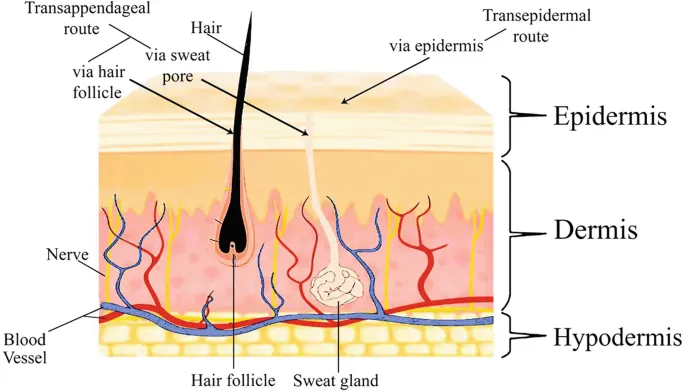
The skin is a multilayered barrier. The stratum corneum consists of corneocytes embedded in a lipid-rich matrix and is the principal barrier to most molecules. Beneath it lie the viable epidermis and dermis; the dermis contains blood vessels and sensory structures. Drug molecules may traverse intercellular lipid pathways, pass through cells, or use appendageal routes such as hair follicles and sweat ducts. For systemic delivery, molecules reaching dermal microcirculation can enter blood flow.
Permeation is influenced by molecular size, lipophilicity, ionization, concentration gradient, thermodynamic activity, skin hydration, formulation vehicle, and barrier integrity. The classic steady-state flux relation is often expressed as J = (dQ/dt)/A, where J is flux, Q is the cumulative amount permeated, t is time, and A is the exposed area. Under simplified conditions, flux can be related to permeability coefficient and concentration gradient; real skin and formulations are more complex.
Enhancers may alter stratum-corneum lipid organization, increase drug partitioning, or improve hydration.
However, stronger enhancement may also increase irritation or variability. Selection therefore requires a balance between permeation performance and skin safety
1.4.1. Barrier Variability and Drug Absorption
The permeability of human skin varies according to anatomical location, age, hydration level, and skin condition. Areas with a thinner stratum corneum generally exhibit different drug permeation characteristics compared with regions having a thicker skin barrier. Damaged, inflamed, or excessively hydrated skin may also alter the absorption of drugs from transdermal patches. Furthermore, the lipid composition and structural organization of the stratum corneum influence the partitioning of drug molecules into the skin.
Therefore, understanding skin barrier variability is essential for selecting an appropriate application site and designing transdermal formulations with predictable drug delivery performance. These considerations are particularly important in the development of transdermal patches intended for prolonged chronic pain management.
1.5. PATCH DESIGN AND CLASSIFICATION
Common architectures include reservoir systems, matrix systems, drug-in-adhesive systems, and micro-reservoir designs. Reservoir systems hold drug in a separate compartment and use a rate-controlling membrane; matrix systems disperse drug in a polymeric layer; drug-in-adhesive systems incorporate drug into the adhesive itself. Each architecture creates different manufacturing, release, dose-uniformity, and failure considerations.
Backing layers protect the formulation and may control moisture loss or provide occlusion. The drug-containing layer supplies the API and excipients. Pressure-sensitive adhesive maintains contact with skin during wear. A removable release liner protects the adhesive before application. Layer selection must be compatible with the drug and avoid migration, interaction, or loss of performance during storage.
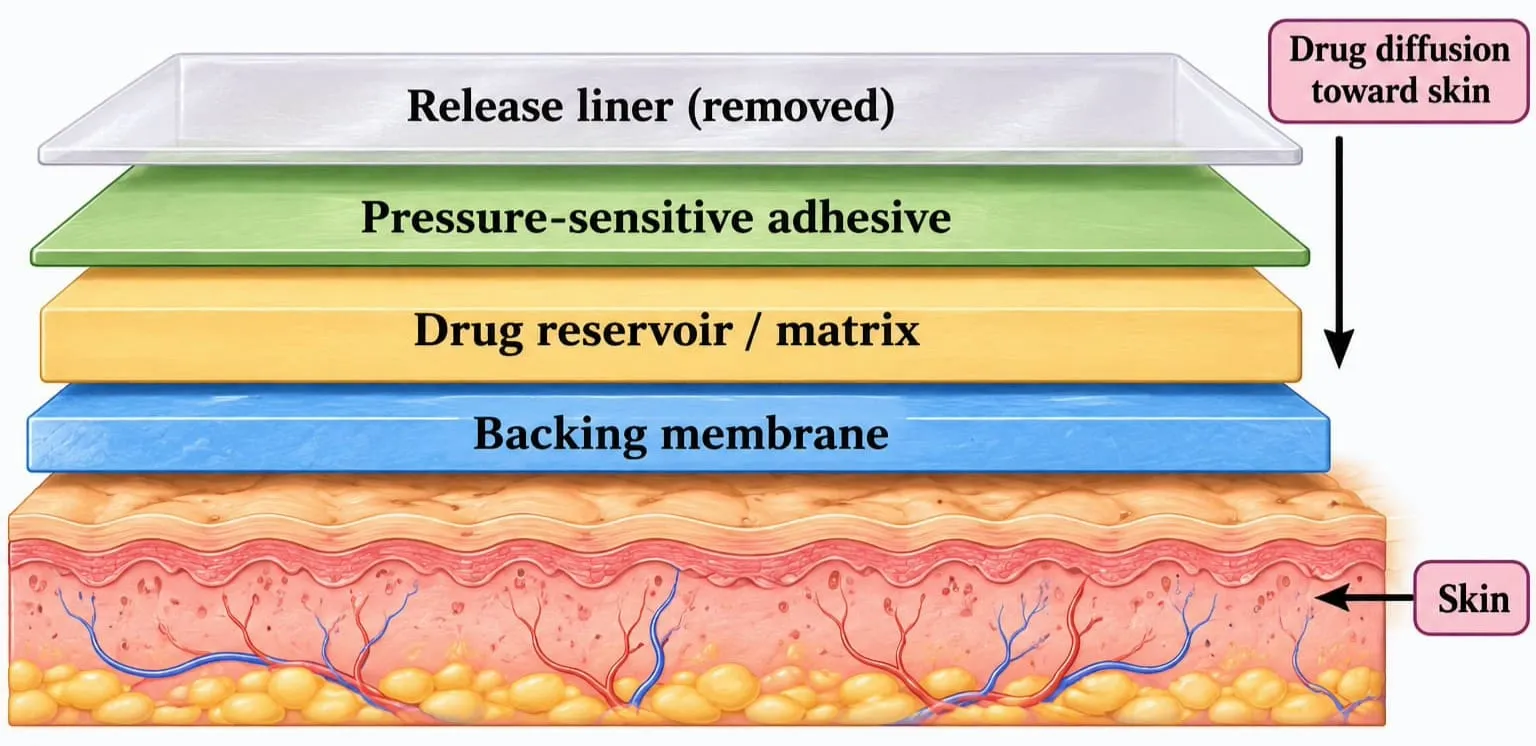
Figure None: 2: Simplified Layered Architecture of a Patch
Advanced Patch Design Considerations
1. Patch Thickness and Flexibility:
The thickness and flexibility of a transdermal patch influence patient comfort and drug delivery. An optimized patch should be thin, flexible, and capable of maintaining contact with the skin during daily activities.
2.Drug Release Kinetics:
Drug release kinetics determine the rate of drug delivery through the patch. Zero-order and Higuchi models are commonly used to study drug release behavior and optimize formulation performance.
3. Prevention of Drug Crystallization:
Drug crystallization may reduce drug solubility and skin permeation. Suitable polymers and crystallization inhibitors can help maintain drug stability and uniform distribution.
1.6. CANDIDATE ANALGESICS AND THERAPEUTIC POSITIONING
Examples of analgesic patch ingredients encountered in clinical practice or literature include lidocaine for localized neuropathic pain, capsaicin for selected localized pain conditions, and systemic transdermal opioids such as fentanyl or buprenorphine for specific indications. Other topical patch products may contain non-opioid agents, including certain NSAIDs, depending on jurisdiction and product approval.
Candidate selection for development requires consideration of potency, therapeutic index, required daily dose, molecular properties, skin permeability, stability, and clinical indication. A high daily dose or low skin permeability may make passive transdermal delivery impractical without specialized technologies. Drug availability in a patch does not establish that a new formulation of the same drug is safe or effective.
The selection of suitable analgesic agents is a fundamental consideration in the development of advanced topical and transdermal drug delivery systems. Different classes of analgesics exhibit distinct pharmacological mechanisms, physicochemical characteristics, therapeutic applications, and drug-release requirements.
Therefore, identifying an appropriate drug candidate requires an integrated understanding of pain physiology, drug permeability, molecular characteristics, therapeutic effectiveness, and formulation compatibility.
Non-steroidal anti-inflammatory drugs (NSAIDs), including diclofenac, ibuprofen, ketoprofen, and naproxen, are widely investigated for localized inflammatory and musculoskeletal pain. Their therapeutic activity is primarily associated with cyclooxygenase inhibition and subsequent reduction in prostaglandin synthesis.
Topical administration of NSAIDs has attracted considerable research interest because it can provide localized drug delivery while reducing systemic exposure compared with oral administration.
Local anaesthetics represent another important category of analgesic candidates. Lidocaine is particularly relevant in topical drug delivery research because of its ability to inhibit voltage-gated sodium channels and reduce abnormal neuronal excitability. Its application in localized neuropathic pain management demonstrates the therapeutic potential of formulations designed for site-specific drug delivery.
Capsaicin, a naturally derived compound, has also received significant attention in topical analgesic research. It interacts with transient receptor potential vanilloid 1 (TRPV1) receptors present on sensory neurons.
Sustained receptor activation can produce functional desensitization of sensory nerve endings, resulting in reduced pain transmission. Research involving capsaicin-based preparations highlights the importance of receptor-specific mechanisms in developing localized pain management systems.
Apart from locally acting analgesics, fentanyl and buprenorphine represent important examples of drugs incorporated into systemic transdermal delivery systems. These formulations are designed to deliver drugs into systemic circulation and have distinct clinical applications and safety requirements.
Their therapeutic positioning must therefore be differentiated from topical analgesics intended primarily for local action.
1.7. FORMULATION COMPONENTS
1. Active Pharmaceutical Ingredient (API): The drug substance responsible for producing the desired therapeutic effect. Its solubility, molecular weight, and permeability influence formulation development.
2. Polymer Matrix: Polymers provide structural support, incorporate the drug, and influence its release rate. Examples include HPMC, PVA, PVP, and chitosan.
3. Backing Layer: A protective layer that prevents drug loss and protects the formulation from external environmental factors.
4. Release Liner: A removable protective covering that maintains the cleanliness and adhesive properties of the patch before application.
5. Pressure-Sensitive Adhesive: Maintains proper attachment of the formulation to the skin during the application period.
6. Plasticizers: Improve the flexibility and elasticity of polymeric films and prevent brittleness. Examples include glycerol and PEG.
7. Solubilizers: Improve drug solubility and help maintain uniform drug distribution within the formulation.
8. Stabilizing Agents: Help maintain the chemical and physical stability of the formulation during storage.
9. Rate-Controlling Membrane: Regulates drug diffusion from the reservoir and helps control the drug-release rate.
10. Solvents: Facilitate the dissolution of ingredients and support uniform mixing and film formation.
1.8. FUNCTIONS
1. Active Pharmaceutical Ingredient: Produces the desired therapeutic effect.
2. Polymer Matrix: Controls drug release and provides structural support.
3. Backing Layer: Protects the formulation from external factors.
4. Release Liner: Prevents contamination before application.
5. Pressure-Sensitive Adhesive: Ensures proper attachment to the skin.
6. Drug Solubilizers: Improve drug solubility and dispersion.
7. Plasticizers: Increase flexibility and prevent film cracking.
8. Stabilizing Agents: Maintain formulation stability during storage.
9. Rate-Controlling Membrane: Regulates the rate of drug release.
10. Solvent System: Helps dissolve ingredients and prepare the formulation.
11. pH-Adjusting Agents: Maintain suitable formulation pH.
12. Chelating Agents: Bind metal ions and reduce degradation.
1.9. FORMULATION DEVELOPMENT STRATEGY
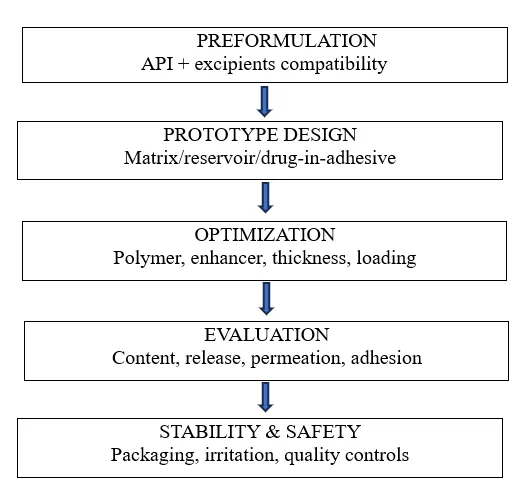
Development begins with preformulation: API identity, assay, solubility, melting behavior, partitioning, pKa, stability, and compatibility with candidate excipients. Drug–polymer interactions may be explored by thermal analysis, spectroscopy, and chromatographic methods. These results guide whether the API can be dissolved or dispersed uniformly in the selected matrix.
Prototype preparation can use solvent casting, hot-melt processing, coating, or lamination, depending on material properties and equipment. In solvent casting, ingredients are mixed to a controlled composition, cast to a defined wet thickness, dried under controlled conditions, laminated with backing and liner, and cut to units. Process controls include mixing time, temperature, viscosity, coating weight, drying conditions, residual solvent, and thickness.
Optimization should use a planned design of experiments where appropriate. Variables may include polymer ratio, drug loading, enhancer concentration, plasticizer level, film thickness, and drying conditions. Responses can include assay, release profile, permeation flux, adhesion, tensile properties, and irritation indicators. The objective is a robust design space, not merely a single favorable batch.
1.10. MANUFACTURING APPROACHES
Solvent casting is widely described in patch research because it can produce thin films with relatively simple equipment. Its limitations include solvent handling, drying uniformity, residual solvent, and scale-up sensitivity. Hot-melt processing can reduce solvent use but may expose heat-sensitive APIs or polymers to elevated temperatures. Coating and lamination approaches are common for commercial systems and require control of web tension, coat weight, drying, and layer registration. Scale-up requires process understanding and reproducibility. Critical process parameters should be linked to critical quality attributes. In-process controls may include appearance, coating uniformity, thickness, weight per area, residual solvent, and adhesive performance. Contamination prevention and controlled handling are especially important for potent APIs.
Advanced manufacturing techniques are used to improve the performance and quality of transdermal patches for chronic pain relief.
1. Matrix System Manufacturing: In this method, the drug is uniformly dispersed in a polymer matrix. It provides controlled drug release and helps maintain therapeutic drug levels for a longer duration.
2. Reservoir System Manufacturing: The drug is stored in a separate reservoir between the backing layer and the rate-controlling membrane. This system provides sustained drug delivery and improves treatment efficiency.
3. Microneedle-Based Manufacturing: Microneedles are fabricated using biodegradable polymers or other suitable materials. They enhance drug penetration through the skin and may improve delivery of drugs with poor skin permeability.
4. 3D Printing Technology: 3D printing is an emerging technique that allows precise control over patch thickness, drug distribution, and drug release characteristics. It also supports the development of personalized transdermal drug delivery systems.
5. Quality Optimization: Manufacturing processes are optimized to ensure uniform drug distribution, proper adhesion, mechanical strength, and consistent drug release. These factors are important for the safe and effective delivery of chronic pain medications.
Electrospinning Technique:
1.11. EVALUATION AND CHARACTERIZATION
Appearance, dimensions, thickness, mass variation, folding endurance, tensile strength, elongation, and surface uniformity describe physical quality. These tests help detect brittle films, uneven coating, or inconsistent unit size. Folding endurance is a comparative mechanical test and should not be interpreted alone as proof of product suitability.
Drug content and content uniformity establish the amount of API in a patch and the variability among units. A validated analytical method—often HPLC or another suitable assay—should be selective, accurate, precise, and robust. Extraction recovery from the patch matrix must be demonstrated. Sampling plans should be justified for the product and process.
In-vitro release testing (IVRT) examines drug liberation from the formulation into a defined medium under controlled conditions. Apparatus, membrane, medium, temperature, agitation, sampling, and sink conditions can affect results. IVRT is not equivalent to skin permeation: it measures release into the test system, not necessarily passage through skin.
Ex-vivo permeation studies commonly use diffusion cells with suitable skin, often human skin when scientifically and ethically available. The receptor medium, skin integrity, temperature, dose, sampling schedule, and analytical method must be controlled. Cumulative permeated amount per area can be plotted over time; steady-state flux may be estimated from the linear region only when justified. Skin retention may also be measured where relevant.
Adhesion characterization may include tack, peel adhesion, shear resistance, and in-use adhesion. Adhesion is a safety and effectiveness attribute: detachment can reduce delivery or expose others to residual drug. Regulatory guidance emphasizes assessing product adhesion over its labelled wear duration. Irritation and sensitization assessment should use appropriate validated approaches and ethics oversight.
Physicochemical Compatibility: FTIR and DSC techniques are used to study the compatibility between the drug and polymer. These methods help identify possible chemical interactions that may affect the stability and performance of the transdermal patch.
Moisture Absorption and Moisture Loss: Moisture absorption indicates the ability of a patch to absorb water from the environment, whereas moisture loss determines its ability to retain moisture. These parameters are important for maintaining the flexibility and stability of the patch during storage.
Surface pH: The surface pH of the transdermal patch is measured to ensure compatibility with the skin. A suitable pH helps minimize skin irritation and improves patient comfort during prolonged application.
Water Vapour Transmission Rate (WVTR): WVTR measures the amount of water vapour passing through the patch per unit area over a specific period. It helps determine the moisture permeability and protective properties of the patch.
Crystallinity Study: X-ray diffraction (XRD) is used to identify the crystalline or amorphous nature of the drug in the patch. The amorphous state may improve drug dissolution and enhance drug release from the formulation.
Stability Studies: Stability testing is performed under controlled temperature and humidity conditions to evaluate changes in drug content, physical appearance, adhesion, and drug release. These studies help establish the suitable storage conditions and shelf life of the transdermal patch.
1.12. QUALITY, STABILITY AND PACKAGING
Critical quality attributes (CQAs) may include identity, assay, content uniformity, impurities, release/permeation profile, adhesion, dimensions, residual solvents, microbial quality where applicable, and package integrity. The specific set is determined by formulation, route, risk, and regulatory expectations.
Stability studies evaluate changes under defined storage conditions and may monitor assay, degradants, appearance, adhesion, release, and package performance. The pouch or sachet must protect the patch from moisture, oxygen, light, and volatile loss as relevant. In-use stability and liner removal behaviour should also be considered.
Quality-by-design principles encourage linking material attributes and process parameters to CQAs, using risk assessment and structured experimentation. The EMA guideline on transdermal patches and FDA product-development guidance provide useful regulatory context; applicable current requirements should be confirmed for the intended market.
1. Packaging Material Selection:
Suitable packaging materials such as aluminium foil, laminated films, and moisture-resistant pouches are selected to protect transdermal patches from environmental factors. Proper packaging helps maintain drug stability and product quality.
2. Container Closure Integrity:
The integrity of the packaging system is evaluated to prevent leakage and contamination. Proper sealing ensures that the patch remains protected during storage and transportation.
3. Protection from Light and Moisture:
Transdermal patches should be protected from excessive light, humidity, and temperature variations. These factors may affect drug potency, polymer properties, and adhesive performance.
4. Labelling Requirements:
The packaging label should include the drug name, strength, dosage instructions, storage conditions, expiry date, and precautions. Clear labelling supports safe and proper use by patients.
5. Compatibility of Packaging Materials:
Packaging materials should be compatible with the patch formulation. Interaction between packaging components and the drug should be avoided to maintain the safety and effectiveness of the product.
6. Transportation and Storage:
Proper storage and transportation conditions are essential to maintain the quality of transdermal patches. Temperature-controlled handling may be required for sensitive formulations.
1.13. SAFETY AND RISK MANAGEMENT
1. Controlled Drug Delivery:
Transdermal patches are designed to deliver analgesic drugs at a controlled rate for prolonged pain relief. Proper formulation design helps maintain therapeutic drug concentration and reduces the risk of excessive drug absorption.
2. Patch Adhesion Failure:
Poor adhesion of the patch to the skin may result in incomplete drug delivery and reduced therapeutic effectiveness. Suitable adhesive polymers should be selected to ensure proper attachment during the application period.
3. Risk of Opioid Toxicity:
Opioid-containing patches, such as fentanyl patches, may cause respiratory depression and other serious adverse effects if excessive drug absorption occurs. Proper dose selection and medical supervision are essential.
4. Skin Irritation and Sensitivity:
Repeated application of patches may cause redness, itching, inflammation, or allergic reactions. The use of biocompatible polymers and suitable adhesive materials helps minimize skin-related problems.
5. Effect of External Temperature:
Increased body temperature or exposure to external heat may enhance drug absorption from certain analgesic patches. Patients should avoid heating pads and excessive heat exposure at the application site.
6. Residual Drug Content:
Used patches may retain a significant amount of active pharmaceutical ingredient (API). Proper disposal procedures are necessary to prevent accidental exposure and maintain safety.
7. Dose Uniformity and Drug Release:
Uniform distribution of the drug within the patch matrix is important for consistent therapeutic performance. Variations in drug loading or release characteristics may lead to inadequate pain relief or unwanted adverse effects.
8. Patient Compliance and Application Errors:
Incorrect application, failure to remove an old patch, or improper replacement intervals may affect treatment outcomes. Clear instructions regarding patch use improve patient safety and treatment adherence.
9. Long-Term Skin Compatibility:
Chronic pain management may require prolonged patch application. Evaluation of skin irritation, sensitization, and repeated application effects is important for long-term patient safety.
10. Therapeutic Monitoring:
Regular assessment of pain intensity, drug effectiveness, and adverse reactions is necessary during treatment. Monitoring helps healthcare professionals optimize therapy and reduce potential risks.
1.14. EMERGING TECHNOLOGIES
1. Nanotechnology-Based Patches:
Nanocarriers such as nanoparticles and nano emulsions are incorporated into transdermal patches to improve drug penetration through the skin. These systems may enhance the delivery of analgesic drugs used in chronic pain management.
2. Nanostructured Lipid Carriers (NLCs):
NLCs are advanced lipid-based drug delivery systems that improve drug solubility and skin permeation. They may provide sustained release of pain-relieving drugs and improve formulation stability.
3. Hydrogel-Based Transdermal Patches:
Hydrogel patches contain hydrophilic polymer networks that provide flexibility and moisture retention. They may improve skin contact and provide controlled drug release for localized pain relief.
4. 3D-Printed Transdermal Patches:
Three-dimensional printing technology enables the preparation of patches with customized shapes, drug loading, and release characteristics. It offers potential for personalized chronic pain treatment.
5. Stimuli-Responsive Patches:
These patches respond to specific stimuli such as temperature, pH, or light to regulate drug release. Such systems may provide improved control over analgesic delivery.
6. Biodegradable Polymer-Based Patches:
Biodegradable polymers are being explored for advanced transdermal formulations. They may reduce environmental impact and support the development of innovative drug delivery systems.
7. Personalized Transdermal Drug Delivery:
Advanced formulation technologies may allow customization of drug concentration, patch size, and release rate according to individual patient requirements. This approach may improve therapeutic outcomes in chronic pain management.
Microneedles create microscopic pathways through the stratum corneum. They may be solid, coated, dissolving, or hollow, and can support delivery of molecules that are difficult to transport passively. Design variables include needle geometry, insertion depth, mechanical strength, material biocompatibility, drug loading, and dissolution behaviour.
Iontophoresis uses a low electrical current to enhance transport of charged or polar molecules. Sonophoresis uses ultrasound; electroporation applies brief electrical pulses to alter barrier permeability. These approaches can improve delivery but add device complexity, user training, safety controls, and regulatory considerations.
Smart or responsive systems, wearable sensors, and individualized delivery are active research areas. Translation requires evidence of consistent dose delivery, usability, durability, and clinical benefit. Novel technology should be evaluated against the added cost and complexity compared with conventional patches.
New Research Opportunities
1. Development of Novel Analgesic Formulations:
Future research can focus on developing new formulations of analgesic drugs with improved skin permeability and prolonged drug release. This may enhance the effectiveness of transdermal patches in chronic pain management.
2. Combination Drug Delivery Systems:
The development of patches containing two compatible analgesic agents may provide improved pain relief through different mechanisms of action. Research is required to optimize drug compatibility and release profiles.
3. Artificial Intelligence in Patch Development:
Artificial intelligence and machine learning can be used to predict drug permeation, optimize polymer selection, and improve formulation development. These technologies may reduce experimental time and development costs.
4. Long-Term Therapeutic Performance:
Further studies are needed to evaluate the effectiveness and safety of transdermal patches during prolonged use. Research should focus on maintaining consistent drug delivery and minimizing skin-related adverse effects.
5. Eco-Friendly Patch Development:
Research can explore biodegradable polymers and environmentally sustainable packaging materials. This approach may reduce pharmaceutical waste generated by used transdermal patches.
6. Personalized Pain Management:
Future transdermal systems may be designed according to individual patient requirements, including drug dose, patch size, and duration of drug release. Personalized formulations may improve treatment outcomes.
7. Advanced Clinical Research:
More clinical studies are required to compare transdermal patches with conventional oral analgesics. Such studies can evaluate pain reduction, patient compliance, safety, and quality of life.
8. Cost-Effective Manufacturing:
Research should focus on developing economical manufacturing techniques that maintain product quality and drug release consistency. This may improve the accessibility of transdermal pain relief therapies.
9. Smart Drug Delivery Systems:
The development of intelligent patches with integrated sensors may help monitor drug delivery and patient response. These systems may support more effective and controlled chronic pain treatment.
10. Improved Drug Permeation Techniques:
Novel permeation-enhancing approaches can be investigated to improve the transport of analgesic drugs through the skin. Research should ensure that enhanced permeation does not compromise skin integrity or patient safety.
CONCLUSION
Transdermal and topical patch systems are valuable dosage-form platforms for selected chronic pain therapies. Their success depends on the intended local or systemic action, the drug’s physicochemical suitability, the barrier properties of skin, formulation architecture, adhesive performance, and quality controls. Development requires a coordinated program of preformulating, prototype optimization, release and permeation testing, mechanical and adhesion assessment, stability studies, and safety evaluation.
Emerging enhancement technologies may extend the range of deliverable molecules, but their benefits must be balanced against safety, complexity, and clinical evidence. A rational, evidence-led formulation strategy is essential for producing patches that are reproducible, tolerable, and fit for their intended therapeutic use.
Transdermal patches represent a promising approach for the management of chronic pain due to their ability to provide sustained and controlled drug delivery. They may improve patient compliance by reducing the frequency of drug administration and avoiding gastrointestinal complications associated with oral medications.
The development of novel polymeric materials, advanced permeation enhancers, and nanotechnology-based formulations offers new opportunities for improving drug delivery through the skin. However, challenges such as limited drug permeability, skin irritation, adhesion problems, and formulation stability require further investigation.
Future research should focus on developing safe, effective, patient-friendly, and cost-effective transdermal systems. Comprehensive evaluation and clinical studies are essential to establish their therapeutic benefits and long-term safety in chronic pain management.
REFERENCES




Bhavana Tonde, Snehal Fand, Jay Thorat, Shital Thorat, A Review on Formulation and Evaluation Transdermal Patches for Chronic Pain Relife, Int. J. of Pharm. Sci., 2026, Vol 4, Issue 11, 2224-2236. https://doi.org/10.5281/zenodo.24218312
 10.5281/zenodo.24218312