

We use cookies to ensure our website works properly and to personalise your experience. Cookies policy
Shree Sainath College of Pharmacy, Dawalameti, Nagpur, 440023.
Biosimilars are biologic medications that offer similar quality, safety, and efficacy to a reference biologic that has already received approval. These comparable biologic products are created using the same or closely related biotechnological techniques as the original medications, according to the Central Drugs Standard Control Organization (CDSCO). Utilizing cutting-edge methods like recombinant DNA technology, controlled gene expression, and antibody engineering, biologicswhich come from natural sources like human, animal, or microbial cellsare created. By reducing symptoms, enhancing quality of life, and slowing the progression of many chronic and life-threatening diseases, they have completely changed the way that many diseases are treated. Because biosimilars have lower development costs and prices, they have the potential to significantly increase healthcare accessibility by lowering the cost of necessary biologic therapies for both patients and health systems.Because biosimilars have lower development costs and prices, they have the potential to significantly increase healthcare accessibility by lowering the cost of necessary biologic therapies for both patients and health systems. Biosimilars benefit from a shorter development timeline, usually less than eight years, by avoiding early discovery and specific clinical phases like Phase II trials, in contrast to the intricate and drawn-out process of developing new biologics, which can take up to 12 years. Rather than establishing independent safety and efficacy, the regulatory focus is on performing a thorough comparability assessment to show similarity with the reference product. However, patients and healthcare professionals must comprehend and have faith in biosimilars if they are to reach their full potential in enhancing healthcare affordability and accessibility.
A biosimilar, also referred to as a similar biologic medicinal product, is a clone of an authorized original biologic medication. A biosimilar is required when the original biologic medication's data protection expires. Like chemical generics, biosimilars are generics manufactured from living cells or organisms. Biosimilars may be difficult to accurately identify due to their enormous molecular size and complexity[1]. The biologic system and the manufacturing process are likely to cause some degree of micro heterogeneity (variability), even within the same batch of the same product. A biosimilar and its equivalent original medication (the reference product) will differ in some ways. In contrast, the amino acid sequence should be same.
A detailed comparison of the structural and functional features of the biosimilar and the reference product, as well as product and process-related contaminants, will be necessary[2]. Differences in the biosimilar's performance must be explained and justified considering their possible impact. The active pharmaceutical ingredient, dosage, strength, mode of administration, safety, efficacy, and intended application of a generic medicine are the same as those of its originator[3]. A generic identification requires only the physical and bioequivalence of the originator product to infer that the two products are therapeutically equivalent whereas it is necessary to conduct more extensive head-to-head comparison with the reference product to assure a close match in physical and biological properties as well as in safety and efficacy of a biosimilar product[4]. Because of this, there are primarily following factors that influence whether or not a biosimilar product is approved: First and foremost, it must be a biological product and it is also important to demonstrate high resemblance in terms of safety, quality, and efficacy to the reference product an already approved biologic product.
Development and Regulatory Approval of Biosimilars:
Getting approval for a new biological medicine is a long and complex process, often taking around twelve years. It begins with extensive research and development to create a suitable molecule, followed by detailed testing during the preclinical stage—one of the most important parts of drug development[5].
Bringing a drug to market typically goes through several clinical trial phases: Phase I, II, III, and finally Phase IV, which begins after the drug is approved and made available to the public. For generic drugs, the process is much simpler because the active molecule is already known and studied. In these cases, companies mainly focus on manufacturing the final product and proving it’s bioequivalent to the original.
Biosimilars—essentially close copies of already approved biologics—also benefit from a streamlined process. Since the original molecule and its characteristics are already known, there's no need for the early discovery or Phase II efficacy trials. This can cut development time down to eight years or less and reduce costs by 10–20%[6].
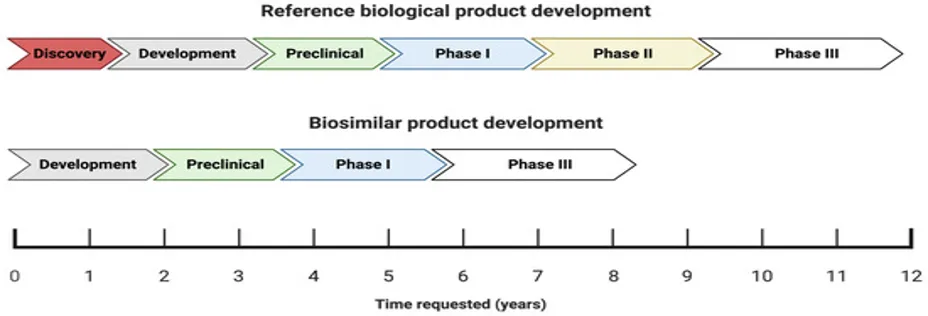
Figure 1: Development of Biosimilars
Production procedure:
The manufacturer of similar biologics should design the production process to produce a product of comparable quality to the reference biologic in terms of immunogenicity, identity, potency, and purity. The ICH's Q5A, Q5B, and Q5D guidelines should be consulted for guidance when establishing and characterizing cell banks (EMA guideline, Feb 2006; EMA guideline, Dec 2007; ICH guideline, June 2011)[7]. The data requirements for review of manufacturing process at preclinical submission stage include a complete description of the manufacturing process from development and characterization of cell banks, stability of clone, cell culture/fermentation, harvest, excipients, formulation, purification, primary packaging interactions (if different from Reference Biologic), etc. and the consequences on product characteristics.
Indian government policies and guidelines regarding biosimilar medications:
The Department of Biotechnology (DBT) and the Central Drugs Standard Control Organization (CDSCO) developed “Guidelines on Similar Biologics,” which establish the regulatory process for Similar Biologics that assert that they are similar to an approved Reference Biologic. According to comparability, a similar biologic product is one that is comparable to an authorized Reference biological product in terms of quality, safety, and efficacy[8].
The national regulatory body in India that assesses the quality, safety, and effectiveness of medications is called CDSCO. DBT is in charge of directing the preclinical evaluation and development of recombinant DNA-derived products through the Review Committee on Genetic Manipulation (RCGM).
Characterization of the product
The following characteristics are included in characterization studies for similar biologics: physicochemical properties, biological activity, immunological properties, functional assays, purity (including impurities related to processes and products), contamination, strength, and content. The ICH Q6B guideline’s principles ought to be adhered to. The Indian Pharmacopoeia monograph is available; it should be also used[9].
Physicochemical Properties
Along with other important physicochemical characteristics, the primary and higher order structures of the drug’s substance and product should be determined as part of the physicochemical characteristic analysis. It should be verified that the Similar Biologic’s target amino acid sequence matches that of the Reference Biologic. The precision and accuracy of analytical techniques, such as biological and functional assays, should be deemed acceptable. When post-translational changes occur, they must be recognized and measured. Any notable discrepancies should be supported by science and thoroughly investigated in preclinical research and clinical trials[10].
Biological activity
Biological products can exhibit various biological activities. In these instances, suitable biological assays are necessary to delineate the activity and elucidate the mechanisms of action and clinical effects of the products (measured in units of activity). The information from biological assays will add to the physicochemical characterization of the product. It is important to check that biological assays are accurate by comparing them to an international or national reference standard, if one is available and appropriate[11]. If there are no external standards, the ICH guidelines say that an internal Reference standard must be set up. If the specification includes the methods for the bioassays, the tests can be done in that way.
Immunological characteristics
It is known that the way Similar Biologics are made affects the number of impurities and changes that happen to the product after translation. These traits could change how immunogenic the product is. Consequently, assessment through characterization (antibody or antibody-derived product); comparison to Reference Biologic regarding specificity, affinity, binding strength, and Fc function; and evaluation via animal studies should be conducted[12].
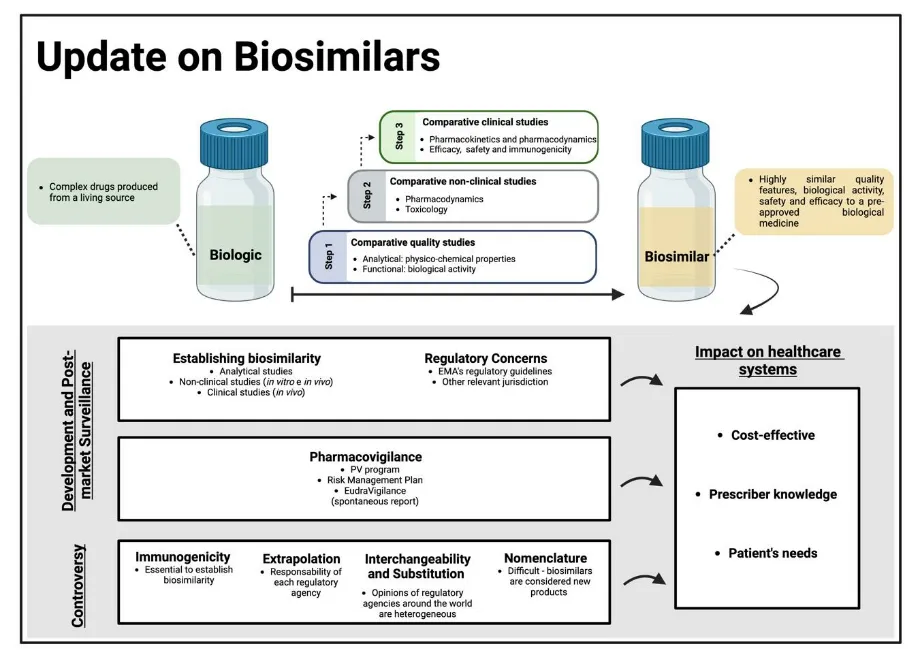
Figure 2: Update on Biosimilars
LIMITATIONS:
One of the main concerns people have about biosimilars is their safety and effectiveness compared to the original biologic drugs. Specifically, questions often arise about how the body’s immune system might react to them (immunogenicity), whether they work as well, what side effects might occur when switching from a biologic to a biosimilar, and what the possible long-term effects could be[13]. These concerns were explored in two major studies published in 2017, which looked at patients with inflammatory bowel disease (IBD) who switched from the original infliximab to a biosimilar over the course of a year. The studies found that patients maintained good disease control and did not experience new or worse side effects[14].
The U.S. Food and Drug Administration (FDA) also carefully evaluate biosimilars before approving them. Even though the approval process is faster than that for brand-new drugs, biosimilars still have to demonstrate that they work just as well as the original and don’t cause extra immune reactions or new side effects.
Research also shows that switching between different drugs that act in similar ways—but have different structures—does not usually lead to more side effects[15]. So, switching between a biologic and its nearly identical biosimilar should not increase risk either.The only area where uncertainty remains is in the long-term effects. Since biosimilars are almost identical to biologics, major differences in long-term safety are unlikely, but more time and data are needed to be completely sure.Right now, the biggest barrier to wider use of biosimilars is acceptance. Many patients feel more comfortable staying on their original biologic treatment, and some doctors prefer prescribing what they already know and trust[16].
PRESENT AND FUTURE SCENARIO
Europe was the first region in the world to create a policy framework for approving biological medicines. The first biosimilar, Omnitrope (a recombinant human growth hormone), was approved there in 2006 by the European Medicines Agency (EMA). The United States joined this field much later — its first biosimilar, Filgrastim-sndz (a version of Filgrastim, originally approved in 1991), was approved by the USFDA in 2015. Since then, the FDA has approved several biosimilars for cancer and other diseases[17]. One of the more recent approvals was Pegfilgrastim-jmbd in June 2018, which helps reduce the risk of infections in patients receiving chemotherapy.
Today, many biopharmaceutical companies around the world are developing biosimilars for a wide range of medical conditions — from diabetes, eye and respiratory diseases, to cancer and autoimmune disorders. Among these, India has built one of the strongest biosimilar industries globally[18]. In fact, India approved its first biosimilar in 2000 for Hepatitis B, even before specific regulatory guidelines existed, and well before approvals in Europe or the United States. Since then, numerous Indian pharmaceutical companies have launched biosimilars in the domestic and global markets.A major milestone came when an Indian biopharmaceutical company received USFDA approval to market a version of Herceptin (trastuzumab), a biologic used to treat certain types of breast and stomach cancers[19]. This marked the first time an Indian-made biosimilar gained approval for sale in the United States.
Currently, over 100 Indian biopharmaceutical companies are involved in the production and marketing of biosimilars, which are referred to as “similar biologics” by Indian regulatory authorities. Although India was one of the first countries to use these products, there were initially no formal guidelines for their approval. Because biosimilars are more complex than generic drugs, their approval process requires far more data and testing[20].
To improve regulation, the Central Drugs Standard Control Organization (CDSCO) and the Department of Biotechnology (DBT) jointly released the “Guidelines on Similar Biologics: Regulatory Requirements for Marketing Authorization in India” in 2012, and updated them in 2016.While the biosimilar industry is still expanding in the United States, India has already become a major global player in this field[21].
The Indian biosimilar market was valued at around US$300 million in 2015, with domestic sales close to US$51 million. According to a 2016 ASSOCHAM–Sathguru report, the global biosimilar market represents a US$240-billion opportunity for India’s biopharmaceutical sector, and the domestic market could grow to US$40 billion by 2030. Similarly, a report by the Institute of Medical Sciences (IMS) also predicts strong growth for Indian companies involved in the manufacturing and marketing of biosimilars[22].
Indian Biosimilar Market :
Biosimilar products are designed to be highly similar to their original reference drugs in every important aspect — such as quality, safety, stability, effectiveness, and how they act in the body. India officially recognized the idea of “similar biologics” back in 2000, when it approved its first biosimilar: a hepatitis B vaccine[23].
Developing a biosimilar in India usually costs between 10 and 20 million USD because of the strict regulatory steps involved in approval. Manufacturers also face many challenges in development, clinical trials, manufacturing, registration, and marketing compared to generic drug producers.India, however, has a strong presence in the biosimilar market and continues to grow rapidly in this area. More than 20 biopharmaceutical companies in the country are currently working on biosimilar products. So far, over 70 biosimilars have received approval in India, and this number keeps increasing[24].
Out of these, more than 50 are already being sold in the market — including products like monoclonal antibodies, etanercept, filgrastim, growth hormones, insulin, interferons, and streptokinase.With over 60 more biosimilars still in development, Indian companies are focusing on therapeutic areas such as cancer, immune system disorders, and diabetes[25]. Many are targeting major biologic drugs like Avastin, Humira, and Levemir, whose patents have recently expired. As more biologics lose patent protection in the coming years, Indian manufacturers are expected to increase production and expand their global market share[26].
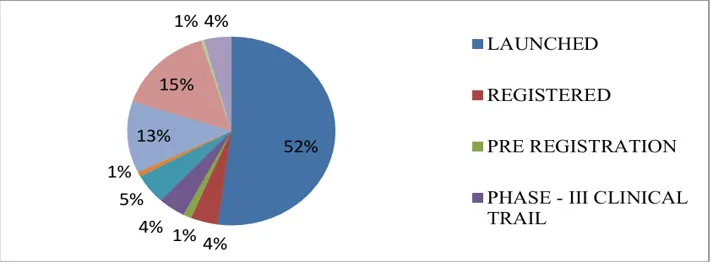
Figure 3: Biosimilars Pipeline for Indian Pharmaceutical Companies
India holds several advantages in the biosimilar industry. It has the highest number of USFDA-approved manufacturing plants outside the United States and a strong base for clinical research and trials. The country also benefits from low-cost infrastructure, a large pool of educated professionals, and a rapidly growing skilled workforce — all of which make India an attractive hub for biosimilar production[27]. However, one major challenge remains — the lack of well-defined and specific regulations for biosimilar approvals. To strengthen India’s position as a global leader in this field, there is an urgent need to develop and implement clear regulatory guidelines for biosimilars
CHALLENGES AND OPPORTUNITIES IN BIOSIMILAR DEVELOPMENT AND COMMERCIALIZATION
The development and marketing of biosimilars are fraught with numerous scientific, regulatory, manufacturing, and marketing difficulties, although there is great promise of enhancing accessibility to biologics. Biosimilars are developed from living systems, unlike generic drugs, which makes them complex molecules, thus requiring detailed characterization and comparison. As a result, considerable amounts of money will be required in conducting various tests, clinical trials, and post-market surveillance in order to establish biosimilarity with the original drug [28,29].
Scientific and Manufacturing Challenges
However, one of the biggest difficulties in developing a biosimilar is creating a similar product that closely resembles the original. This is due to the fact that biologics are manufactured by using living cells; even slight differences in the cell line used, cell culture methods, and formulation will affect important parameters, such as glycosylation, protein structure, aggregation, and biological function[30].
Thus, sophisticated technologies like mass spectrometry, chromatography, capillary electrophoresis, and bioassays have to be used in order to measure those properties. It is important for the manufacturing process to be highly consistent and standardized in order to preserve batch-to-batch reproducibility. This imposes strict quality control requirements on the process, increasing costs and technology requirements[31].
Regulatory Challenges
Regulatory bodies like the European Medicines Agency (EMA), the United States Food and Drug Administration (USFDA), and the Central Drugs Standard Control Organization (CDSCO) have developed regulatory pathways for biosimilar products. Nonetheless, the different nature of regulatory procedures between countries might create challenges in formulating strategies for global biosimilar products[30,31].
Interchangeability and substitution represent another critical issue that requires attention. Where in certain regions biosimilars are automatically substitutable, in other places, doctors' consent will be necessary to allow for switching of patients from originators to biosimilars. The harmonization of international standards of regulation will prove significant[32].
Finally, pharmacovigilance is a vital element in regulating biosimilars because very rare adverse events or immunogenicity can only show up after their extensive use on patients. [33].
Immunogenicity Concerns
Immunogenicity still constitutes one of the highly scrutinized areas within biosimilar development. Even the smallest differences in the structure of a biosimilar compared to its original counterpart could result in immune system response in some individuals. This is bound to cause either decreased efficacy or even the formation of neutralizing antibodies.
To reduce such problems, the sponsors perform immunogenicity comparative trials. Post-marketing surveillance trials are mandatory for assessing immunogenicity results after the product has entered the market environment.
Market Access and Physician Acceptance
Despite the cost effectiveness of biosimilars, their uptake is sometimes hindered by the doubts held by healthcare providers and patients about the efficacy, safety, and interchangeability of such treatments. Healthcare providers have been reluctant to prescribe biosimilars in cases where patients have achieved stability on an originator biologic product[34].
However, there has been increasing evidence from real-world settings that biosimilars approved by regulatory agencies have a similar clinical profile to the originators. Therefore, it is vital to educate healthcare providers and patients about biosimilars. [35].
Economic Benefits and Healthcare Accessibility
The biosimilars present great economic benefits by adding competition in the biologics market. Competition leads to cheaper drug costs and increased efficiency in health spending. Several studies have shown considerable cost savings after the use of biosimilars in many cases. Savings created because of biosimilar production can be used to further develop the health sector. Developing nations may benefit greatly from biosimilars, which could help overcome access issues in obtaining expensive biological drugs[36].
Future Opportunities
The future looks very bright for biosimilars owing to the expiry of the patents of many blockbuster biologics. Biotechnological progress along with developments in process analytical technologies, process optimization using artificial intelligence, and continuous manufacturing will help in improving the effectiveness of development process and lowering the manufacturing cost.
Newly emerging fields like oncology, autoimmune diseases, endocrinology, ophthalmology, and rare diseases will contribute greatly to the growth of biosimilars market. Moreover, increased regulatory experience and accumulation of evidences showing that biosimilars are safe and efficacious would lead to rapid worldwide acceptance of biosimilars.
India has great potential for capitalizing on these trends considering its strong biopharmaceutical industry, low-cost manufacturing, competent labor force, and good generic pharmaceutical industry infrastructure[37].
In conclusion, biosimilars have been revolutionary developments within modern medicine because they ensure that the treatment is both cost-effective and efficacious. It is important to tackle any scientific, regulatory, and even perceptual barriers to ensure optimal performance of biosimilars.
Table 1: Various Biosimilar Product Examples Their Active Substance and Their Producing Companies
| Product Name | Active Substance | Therapeutic area | Approval/Launch date in India |
Company |
|---|---|---|---|---|
| Abcixi Rel | abciximab | Angina, Cardiac ischemia | 23 Apr 2013 | Reliance Life sciences |
| Actorise | darbepoetin alfa | Anaemia, Cancer, Chronic kidney failure | 6 Jan 2014 | Cipla/Hetero |
| Adfrar | adalimumab | Ankylosing spondylitis, Plaque Psoriasis, Psoriatic arthiritis, Rheumatoid arthritis, Ulcerative colitis | 11 Jan 2016 | Torrent Pharmaceuticals |
| Basalog | insulin glargine | Diabetes | 2009 | Biocon |
| Bevacirel | Bevacirel | Colorectal cancer | 10 Jun 2016 | Reliance Life Sciences (Lupin) |
CONCLUSION
Biosimilars have opened a new chapter in modern medicine by offering patients reliable and affordable options to some of the most expensive biologic treatments. Built on careful scientific comparison and strict regulatory standards, these medicines are helping make advanced therapies accessible to more people around the world. In India, the combination of scientific expertise, lower production costs, and supportive policies has helped the country emerge as a key player in this growing field. Still, for biosimilars to reach their full potential, it’s important that doctors, patients, and policymakers continue to build trust and understanding around their use. As more biologic drugs lose patent protection, biosimilars will increasingly shape the future of healthcare—making vital treatments more affordable while driving progress in biotechnology.
ACKNOWLEDGEMENT
I would like to express my sincere gratitude to all those who contributed to the completion of this review paper. I am deeply thankful to my guide Dr. Yogita Charade Mam, for their valuable insights, encouragement, and constructive feedback throughout the preparation of this work. Their guidance helped me refine my ideas and present them with clarity. I also wish to acknowledge my friends Sahil Dhabale, Harshal Usendi, and Sameer sheikh for their dedication and contributions have been instrumental in shaping my understanding of the subject. I would also like to extend my gratitude towards Mr. Dhananjay R. Tidke Sir for helping me in referencing portion. I am equally grateful to Staff of Shree Sainath College Of Pharmacy, Nagpur for their helpful discussions and moral support during this research process.
REFERENCES

P. Khedkar, S. Dhabale, S. Sheikh, H. Usendi, Y. M. Charade, S. D. Mhaske, Biosimilars: Development, Regulatory Landscape, Challenges, and Future Perspectives in Global Healthcare, Int. J. of Pharm. Sci., 2026, Vol 4, Issue 10, 3132-3141. https://doi.org/10.5281/zenodo.23525433
 10.5281/zenodo.23525433