

We use cookies to ensure our website works properly and to personalise your experience. Cookies policy
KG College of Pharmacy and Research Institute, Villupuram, Tamil Nadu 605203
Background: Dandruff, seborrheic dermatitis, tinea capitis, folliculitis and hair loss are among the most frequent scalp and hair complaints seen in daermatology. Most commercial shampoos depend on synthetic surfactants for cleansing. Plant-based alternatives draw on naturally occurring saponins and other phytoconstituents, and a dry powder format allows powdered botanicals to be delivered without an aqueous vehicle. Objective: To formulate a polyherbal powder shampoo from ten medicinal plants and to establish its organoleptic, physicochemical and powder-flow profile as a baseline for later biological testing. Materials and Methods: The blend contained Sapindus mukorossi [20%], Acacia concinna [20%], Azadirachta indica [15%], Phyllanthus emblica [10%], Ocimum tenuiflorum [10%], Trigonella foenum-graecum [10%], Eclipta prostrata [5%], Hibiscus rosa-sinensis [5%], Aloe barbadensis [3%] and Rosa spp. [2%]. A botanist authenticated the materials, which were shade-dried for four days, ground, blended and passed through sieve No. 80. The powder was assessed for colour, odour, texture, angle of repose, bulk and tapped density, foaming capacity, pH, moisture content, total ash, Carr's compressibility index and Hausner ratio. Results: The powder was greenish-brown with a pleasant herbal odour and a fine soft texture. The angle of repose was 31.24°. Bulk and tapped densities were 0.382 and 0.448 g/cm³. Foaming was moderate and the pH of a 10% w/v dispersion was 6.70. Moisture content was 4.9% and total ash was 6.25%. Carr's index was 14.73% and the Hausner ratio was 1.17. Conclusion: The formulation met the preliminary acceptance targets for appearance, flow, pH and moisture. The ingredients have literature support for cleansing, antimicrobial, antioxidant and hair-growth-related activity, which justifies further work. This study measured none of those activities and does not show efficacy against any scalp or hair disorder. Phytochemical standardization, microbial quality testing, antifungal and antibacterial assays, stability studies, scalp-compatibility testing and hair-growth models are the necessary next steps.
1.1 Cleansing Function and Formulation Demands
A shampoo removes sebum, sweat, dirt, particulate matter, microorganisms and cosmetic residue from the scalp and hair. Surfactants carry out most of this work. Conditioning agents, preservatives, fragrances and viscosity modifiers are added around them. Performance depends on how well soil is removed without damaging the hair fibre or irritating the scalp, so the choice and concentration of cleansing agent largely determine the product [1]. Newer hair-care products also try to add conditioning, antioxidant, soothing or antimicrobial effects to this basic function [2].
1.2 Botanical Ingredients: Promise and Interpretive Limits
Medicinal plants contain saponins, polyphenols, flavonoids, tannins, terpenoids and many other secondary metabolites, and several of these have shown biological activity in experimental work [3,4]. That evidence has drawn cosmetic developers toward botanical ingredients. It carries a limit that is often overlooked. Activity reported for a single extract does not transfer automatically to a finished blend, because the result depends on plant identity, plant part, processing, dose, phytochemical profile and the formulation matrix. A polyherbal product therefore needs its own physicochemical, microbiological and biological evaluation before any functional claim is made [5].
1.3 The Dry Powder Format
A powder shampoo is made from dried botanical material and other dry ingredients with little or no water. The format is a practical way to deliver traditional cleansing plants [6]. Reetha and shikakai suit it well because their saponins give cleansing and foam when the powder meets water at the time of use [7,8]. Earlier open-access work has already prepared and characterized herbal shampoo powders by organoleptic properties, powder behaviour and foam, so the format has precedent [9]. Powders bring their own quality concerns, namely particle size, moisture, density, flow, packaging and storage stability, and these were the focus of the present evaluation [10].
1.4 Scalp and Hair Disorders as Future Research Targets
The formulation was designed with several common conditions in mind as later research targets. None of them was tested here.
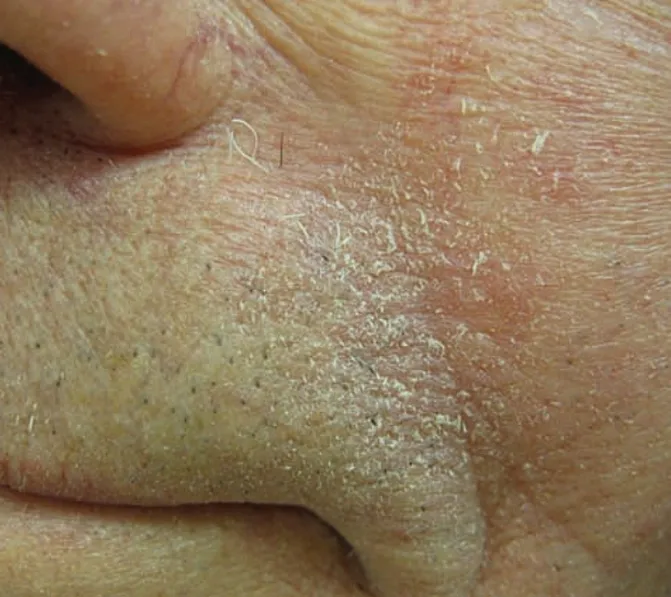
Figure 1. Clinical Photograph of Seborrheic dermatitis adapted from [11]
Dandruff and Seborrheic dermatitis.
Dandruff presents mainly as flaking. Seborrheic dermatitis adds inflammation, redness and itching, and the two are usually treated as parts of one clinical spectrum [12]. A 2024 systematic review and meta-analysis of 121 studies and 1,260,163 individuals estimated global prevalence at 4.38% and prevalence in the Indian studies at 2.62%, with considerable heterogeneity between populations. Pathogenesis involves Malassezia yeasts, sebaceous activity, epidermal barrier function, host susceptibility and the inflammatory response [13]. Cleansing by reetha and shikakai, antimicrobial candidates such as neem and tulsi, and soothing aloe would all be relevant here [14–16]. Activity against Malassezia species remains to be tested.
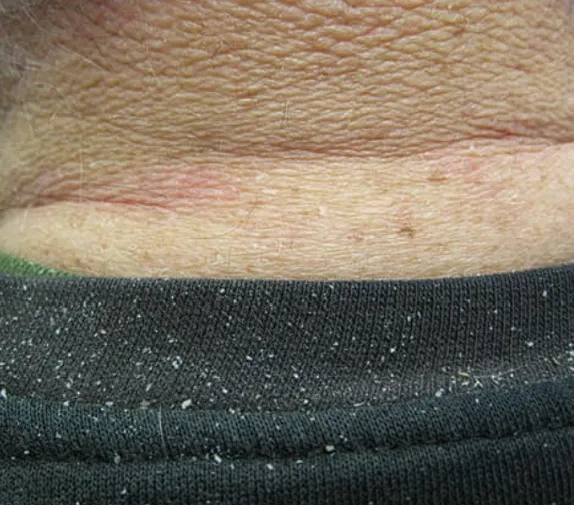
Figure 2. Clinical Photograph of Dandruff adapted from [11]
Tinea capitis.
This dermatophyte infection of the scalp and hair mainly affects children and is caused chiefly by Trichophyton and Microsporum species. Signs range from scaling and itching to inflamed lesions and hair loss. An open-access in-vitro study reported that an ethanolic neem leaf extract inhibited Microsporum canis and Trichophyton tonsurans [17]. That study used an extract rather than a powder blend. Established tinea capitis also needs systemic antifungal therapy, as current consensus guidance states, and a topical product alone is inadequate [18]. The present powder can at most be a candidate for antifungal screening.
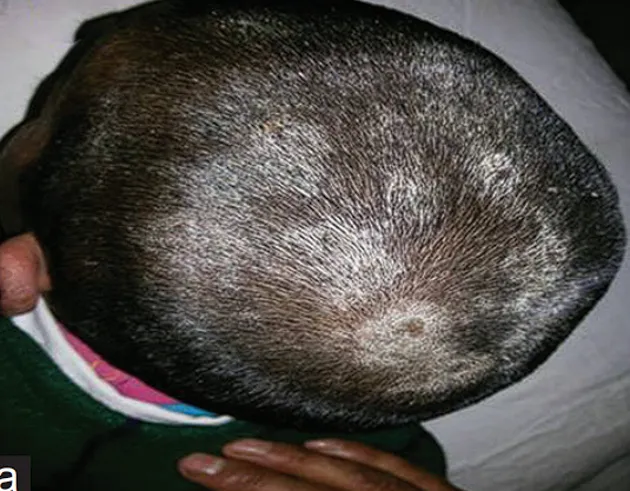
Figure 3. Clinical Photograph of Tinea capitis adapted from [19]
Alopecia.
Hair loss covers several clinically distinct disorders [20]. Eclipta prostrata has the strongest experimental link to hair growth among the ten plants. One open-access study found that it enhanced anagen induction in mice and raised FGF-7 expression while lowering FGF-5, with effects also seen in human dermal papilla cells [21]. Amla, hibiscus and fenugreek were included on traditional use and reported bioactivity. No hair-growth assay was done here [22–24].
Scalp folliculitis.
Follicular inflammation can be infectious or non-infectious. Neem and tulsi are candidates for antibacterial testing and aloe is a candidate for soothing activity, but no antibacterial testing was performed [17,25,26].
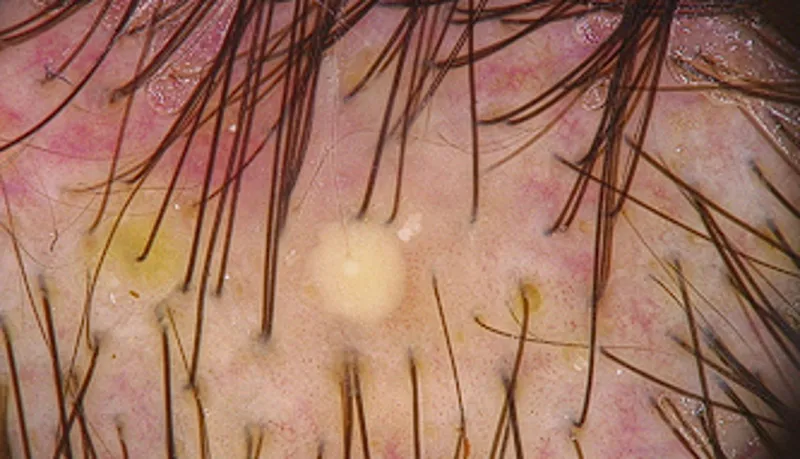
Figure 4. Clinical Photograph of Scalp folliculitis adapted from [20]
1.5 Botanical Rationale of the Ten Ingredients
Each plant was assigned a main role according to its traditional use and published pharmacological or cosmetic relevance.
Saponin-based cleansers. Sapindus mukorossi [reetha] is rich in surface-active saponins and has long been used as a natural soap [6]. Acacia concinna [shikakai] is a traditional hair cleanser that also contains saponins. It was paired with reetha to complement its cleansing and foaming.
Antimicrobial candidates. Azadirachta indica [neem] has shown antimicrobial, antifungal and anti-inflammatory activity in experimental studies [3,17], including activity against several dermatophytes. Ocimum tenuiflorum [tulsi] has been investigated for antimicrobial and anti-inflammatory effects [14]. Both enter this formulation as candidates for later scalp-microbiome and inflammation studies.
Hair-growth candidate. Eclipta prostrata [bhringraj] was included for the anagen-related findings described above [21].
Antioxidant and conditioning components. Phyllanthus emblica [amla] is a traditional hair-care ingredient with polyphenolic constituents [4,22]. Trigonella foenum-graecum [fenugreek] contains proteins, mucilage and polyphenols and has been used to condition hair [27,28]. Hibiscus rosa-sinensis [hibiscus] has a long record in hair preparations and contains antioxidant-associated phytochemicals [23,24]. Rose petals add phenolic constituents and improve the sensory quality of the powder [29,30].
Soothing component. Aloe barbadensis [aloe vera] contains polysaccharides linked to skin-soothing and anti-inflammatory effects and was added as a supportive scalp-care ingredient [5,26].
1.6 Aim of the Study
Each of these plants has been studied individually, but the specific ten-herb combination has not been characterized. The design assumes that botanicals with complementary properties can be combined in one multifunctional dry preparation [15,31,32]. This study therefore aimed to formulate the polyherbal powder shampoo and to measure its organoleptic, physicochemical and powder-flow properties as the first stage of development.
2. MATERIALS AND METHODS
2.1 Plant Materials and Authentication
Plant materials were sourced and authenticated before formulation. Dr. D. Thamayanthi [Head-cum-Assistant Professor, M.Sc., M.Phil., Ph.D., Department of Botany, Bharathiyar Arts and Science College for Women, Salem 636112, Tamil Nadu, India] confirmed botanical identity so that substitution and adulteration could be excluded.
2.2 Formulation Composition
The batch size was 250 g. The composition is given in Table 1.
Table 1. Composition of the polyherbal powder shampoo
|
No. |
Common name |
Botanical name |
Intended role |
Concentration [% w/w] |
Quantity per 250 g |
|
1 |
Reetha |
Sapindus mukorossi |
Cleansing and foaming |
20 |
50 g |
|
2 |
Shikakai |
Acacia concinna |
Cleansing |
20 |
50 g |
|
3 |
Neem |
Azadirachta indica |
Antimicrobial candidate |
15 |
37.5 g |
|
4 |
Amla |
Phyllanthus emblica |
Antioxidant and hair care |
10 |
25 g |
|
5 |
Tulsi |
Ocimum tenuiflorum |
Antimicrobial and soothing candidate |
10 |
25 g |
|
6 |
Fenugreek |
Trigonella foenum-graecum |
Conditioning and antioxidant |
10 |
25 g |
|
7 |
Bhringraj |
Eclipta prostrata |
Hair-growth research candidate |
5 |
12.5 g |
|
8 |
Hibiscus |
Hibiscus rosa-sinensis |
Hair care and antioxidant |
5 |
12.5 g |
|
9 |
Aloe vera |
Aloe barbadensis |
Scalp soothing |
3 |
7.5 g |
|
10 |
Rose petals |
Rosa spp. |
Antioxidant and sensory |
2 |
5 g |
|
|
Total |
|
|
100 |
250 g |
2.3 Preparation
The materials were cleaned and dried in shade for four days. Shade drying limits exposure to direct sunlight and heat, which can degrade some phytoconstituents. Each dried material was weighed to the quantity in Table 1 and ground separately in a mixer grinder to a fine powder. The powders were combined and blended until uniform. The blend was passed through sieve No. 80 to give a consistent particle-size fraction. The sieved powder was stored in a clean dry closed container until testing. The general approach follows earlier herbal powder shampoo preparations [2,9,10].
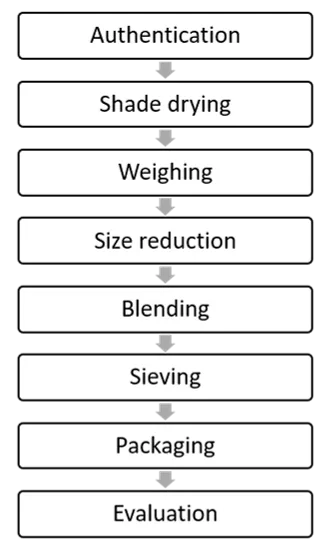
Figure 5. Schematic representation of the formulation-development process
2.4 Evaluation Methods
Organoleptic properties. Colour, odour, texture, general appearance, uniformity and visible foreign matter were assessed by inspection [1,2,9,10,31,32].
Angle of repose. Powder was allowed to flow through a funnel into a conical heap. Heap height [h] and radius [r] were measured and the angle [θ] was calculated from tan θ = h/r. Lower angles indicate better flow.
Bulk and tapped density. A known mass of powder was placed in a graduated cylinder without tapping and the volume was recorded. Bulk density was mass divided by bulk volume. The cylinder was then tapped mechanically until the volume was constant, and tapped density was mass divided by tapped volume.
Carr's index and Hausner ratio. Both were derived from the two densities. Carr's index [%] = [ [tapped density − bulk density] / tapped density] × 100. Hausner ratio = tapped density / bulk density. Carr's values of about 11–15% and Hausner ratios of about 1.12–1.18 were taken to indicate good flow.
Foaming capacity. A defined quantity of powder was dispersed in a set volume of water and shaken under standard conditions. The foam produced was observed and graded. Foaming was expected to come mainly from the saponins of reetha and shikakai.
pH. A 10% w/v dispersion in distilled water was mixed thoroughly and measured with a calibrated digital pH meter. A preliminary target of about 5.5–7.0 was set for scalp application.
Moisture content. A weighed sample was dried to constant weight. Loss on drying [%] = [ [initial weight − final weight] / initial weight] × 100. A preliminary limit of about 5% or less was used.
Total ash. A weighed sample was incinerated in a crucible until a stable ash residue remained. Total ash [%] = [weight of ash / weight of sample] × 100. This value reflects total inorganic residue.
3. RESULTS
The powder was greenish-brown with a pleasant herbal odour and a fine soft texture. No undesirable sensory features were noted. The remaining results are in Table 2.
Table 2. Evaluation of the polyherbal powder shampoo
|
Sr. No. |
Parameter |
Result |
Interpretation |
|
1 |
Organoleptic properties |
Greenish-brown; herbal odour; fine soft powder |
Acceptable |
|
2 |
Angle of repose |
31.24° |
Satisfactory flow |
|
3 |
Bulk density |
0.382 g/cm³ |
Loose packing |
|
4 |
Tapped density |
0.448 g/cm³ |
Consolidated packing |
|
5 |
Foaming capacity |
Moderate |
Foaming potential present |
|
6 |
pH [10% w/v] |
6.70 |
Near neutral |
|
7 |
Moisture content |
4.9% |
Within preliminary limit |
|
8 |
Total ash |
6.25% |
Inorganic residue baseline |
|
9 |
Carr's index |
14.73% |
Good flow |
|
10 |
Hausner ratio |
1.17 |
Good flow |
4. DISCUSSION
4.1 Appearance and Particle Characteristics
The greenish-brown colour and herbal odour come from the combined powders of ten plants. Grinding followed by sieving through No. 80 gave a fine and reasonably uniform texture, which is a basic requirement for a blend of materials with different particle behaviour. Similar organoleptic descriptions have been reported for other herbal powder shampoos [2,9,10].
4.2 Flow Behaviour
Three independent measures agreed. The angle of repose of 31.24°, Carr's index of 14.73% and Hausner ratio of 1.17 all fall in ranges generally read as good flow. This agreement supports the conclusion that the powder can be handled and filled without difficulty [9,10]. Flow depends on particle size, shape, surface texture, moisture and interparticle forces, and a ten-plant blend contains a mixture of all of these. Particle-size distribution was not measured, so the contribution of each factor remains unquantified.
4.3 Density and Packaging
Density rose from 0.382 to 0.448 g/cm³ on tapping, which means that voids between particles closed as the powder settled. Bulk density sets the container volume needed for a given dose. Tapped density indicates how much the powder may settle during transport and storage, which matters for fill-volume decisions [2,10].
4.4 Foaming
The moderate foam fits the saponin content of reetha and shikakai and supports the formulation as a cleansing preparation [6,7]. Foam volume is only a rough proxy, because it does not measure soil removal or any therapeutic effect. Foam stability and cleansing efficiency tests would address this gap [1,32].
4.5 pH
A pH of 6.70 lies inside the preliminary target of 5.5–7.0 and avoids the strongly acidic or alkaline values that can irritate skin or damage hair [1,31]. A suitable pH is not evidence of safety. Irritation and sensitization require separate assessment.
4.6 Moisture and Ash
Moisture of 4.9% is just under the 5% limit. Low moisture limits caking, microbial growth and chemical degradation in dry botanical products [9]. The margin is narrow and the value is a single time point, so stability studies under controlled temperature and humidity are needed to show that it holds in storage. The total ash of 6.25% is a baseline for later batches. It is not a measure of purity. Acid-insoluble ash and screening for elemental contaminants and adulterants would give a fuller quality picture.
4.7 Research Potential of the Formulation
The ten botanicals complement one another on paper. Reetha and shikakai supply cleansing [6–8]. Neem and tulsi are candidates for antimicrobial and antifungal work [3,14,17,25]. Amla, fenugreek, hibiscus and rose contribute antioxidant and traditional hair-care value [4,22,23,27,29,30]. Bhringraj gives a specific experimental basis for hair-growth studies, and aloe adds a soothing component [5,26]. Some of the individual evidence is direct, such as neem activity against dermatophytes in vitro and the anagen effects of E. prostrata in animal models. These results came from extracts and isolated plants and cannot be carried over to this blend, where processing, ingredient interactions and dilution may change activity. The present work provides a formulation platform and a quality baseline and does not provide evidence of therapeutic effect.
5. LIMITATIONS
Direct antimicrobial, antifungal, anti-inflammatory and hair-growth assays were not performed. The finished powder was not characterized phytochemically, so marker-compound levels are unknown. Because all ten ingredients were tested together, the contribution of each plant cannot be separated. Microbial limit testing, accelerated and long-term stability testing, and scalp irritation and sensitization testing were not done. No clinical study was undertaken. The formulation therefore cannot be claimed to treat dandruff, seborrheic dermatitis, tinea capitis, folliculitis or alopecia.
6. CONCLUSION
A ten-botanical polyherbal powder shampoo was prepared by shade drying, grinding, blending and sieving. It showed acceptable appearance, moderate foaming, near-neutral pH and low moisture. Angle of repose, Carr's index and Hausner ratio all indicated good powder flow, and the density values describe its packing behaviour. The selected plants give a literature-based reason to test cleansing, antioxidant, antimicrobial, antifungal, anti-inflammatory and hair-growth-related properties, with neem and bhringraj offering the clearest antifungal and hair-growth leads. Efficacy, safety and reproducibility remain unproven. Phytochemical, microbiological, antifungal, stability and biological studies come next.
CONFLICT OF INTEREST
The authors declare no conflict of interest.
REFERENCES






Eswar A, Kalaivani M, Viknesh S, Thamizhmathi V, Rajesh R, Dr. Gnanasekaran D, Development and Preliminary Quality Profiling of a Polyherbal Shampoo Powder with Saponin-Based Cleansing and Candidate Actives for Potential Scalp and Hair-Care Applications, Int. J. of Pharm. Sci., 2026, Vol 4, Issue 10, 3021-3030. https://doi.org/10.5281/zenodo.23476000
 10.5281/zenodo.23476000