

We use cookies to ensure our website works properly and to personalise your experience. Cookies policy
JES’s S.N.D college of pharmacy , yeola
Exosomes are extracellular vesicles on the nanoscale that have been suggested as promising vehicles for delivering cancer drugs in a targeted manner. These vesicles offer natural biocompatibility, low immunogenicity, and the capacity to transport a range of bioactive molecules, opening up possibilities for the creation of novel anti-cancer treatments. This paper seeks to provide an overview of existing literature on engineered exosomes used as carriers of bioactive compounds in cancer therapy, examine their primary biological properties, and emphasize their clinical uses and associated challenges. The main focus of this study covers exosome surface engineering, biological and chemical modifications, and various loading approaches aimed at building the most effective drug delivery system. Engineered exosomes seem to represent a new generation of targeted, versatile drug-delivery vehicles capable of helping to treat malignancies effectively, resulting in decreased tumorigenesis and general improvement of tumor-bearing organisms. In this way, such vesicles could act as effective and safe delivery systems for small molecule chemotherapy agents, nucleic acids, proteins, and natural products employed in cancer treatment. Exosomes might be successfully employed in cancer immunotherapy, chemotherapy, and photodynamic therapy. Even with the encouraging preclinical findings, certain challenges n need to be resolved before exosomes can be applied in clinical practice. Such challenges involve creating new approaches for isolating and purifying exosomes, refining the most efficient loading method, and producing exosomes at a large scale with consistent quality and suitable storage conditions. Moreover, further studies are required to establish the optimal dose, distribution, safety profile, and therapeutic efficacy of exosomes in vivo and in clinical trials involving cancer patients. Overall, exosome technology offers a strong opportunity to create site-specific and highly effective anti-cancer therapy. Nevertheless, additional high-quality preclinical and clinical research is needed to confirm the safety and effectiveness of these vesicles and to identify their most beneficial clinical applications in cancer therapy.
Cancer is one of the most dreadful diseases in the world. In 2022, it is estimated that 1.9 million new cancer cases will be diagnosed and 609,360 cancer deaths will occur in the United States [1] The advances in scientific discovery have led to a dizzying array of tools in our arsenal to combat it. Cancer treatment can reach into the molecular level, tailored treatment for the unique characteristics of a disease in a person, targeted toward specific molecular targets for a particular tumor type [2-4]. Exosomes are, in turn, promising new avenues in the long line of scientific advances [5-7]. They are nothing but extracellular vesicles of endosomal origin that assist in intercellular communication [8]. Different types of EVs have been classified on the basis of generation way and size distribution know apoptotic bodies (1000-6000 nm), micro vesicles (100–1000 nm) and exosomes (30–150 nm) [ 9,10]. EVs are phospholipid-bound vesicles that are heterogeneously derived from cells that regulate many biological processes [11]. They carry many types of biomolecules including non-coding RNAs, proteins, signal molecules, lipids, and DNA strands between cells, therefore trafficking to several tissues and organs and contributing to cell communication [12,13]. Functionalization of exosomes surface is a very promising strategy to enhance exosomes efficacy for delivering cargo into the targeted site especially in tumor studies [14]. Exosomes modification could be beneficial for cancer detection and imaging studies [15]. In cancer, the signals from exosomes can modulate the immune response by suppressing the function and proliferation antigen-presenting cells, T cells, and natural killer cells and increasing the production of immune suppressor cells, which gives a fertile ground for the development of neoplastic lesions[16,17]. Exosomes are formed in the late endosomal compartment called multivesicular bodies, which can fuse with the plasma membrane and release exosomes into the extracellular matrix [18] (Figure 1)
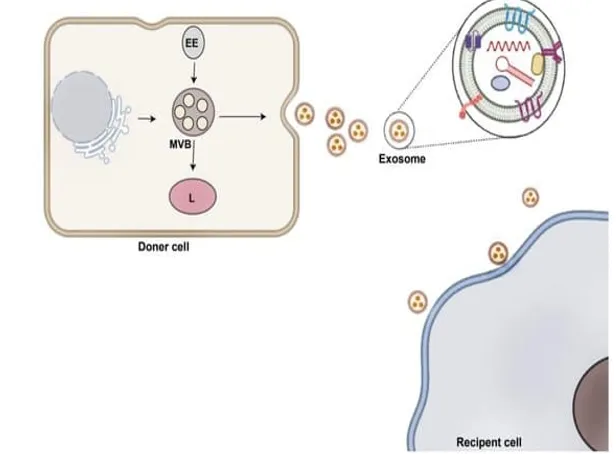
Figure 1. Biogenesis And Secretion Of Exosomes.
Most cells can generate exosomes in the form of multivesicular bodies (MVBs) through a complicated pathway. MVBs (one type of late endosomes) can fuse with the plasma membrane, and then it can secrete exosomes into the extracellular matrix. After that, exosomes can arrive at the recipient cell, which is nearby distant,and cause changes in cell signaling. EE: early endosomes, L: lysosome [19]
Exosomes : Biology and Therapeutic Potential
Exosomes are endosome derived extracellular vesicles of 30-120 nm size ranges. Exosomes have been identified as mediators of cell to cell communication by transferring bioactive molecules such as nucleic acids, proteins and lipids into recipient cells. While exosomes are secreted by multiple cell types, cancer derived exosomes not only influence the invasive potentials of proximally located cells but also affect distantly located tissue. [19].
The exosome development contains four phases as follows: initiation, endocytosis, multi vesicular body development, and release. The formation of exosomes begins with endocytic vesicles through invagination of the cell membrane toward forming early sorting endosomes (ESEs) that later develop into late sorting endosomes (LSEs) [20]. LSEs then undergo inward budding leading to the formation of multi vesicular bodies ( MVBs ) which then fuse with the plasma membrane and release their contents into the extracellular environment which are now called exosomes. Next, released exosomes are directed to other cells possibly through some cell surface proteins such as tetraspanins [21,22,23] (Figure 1).
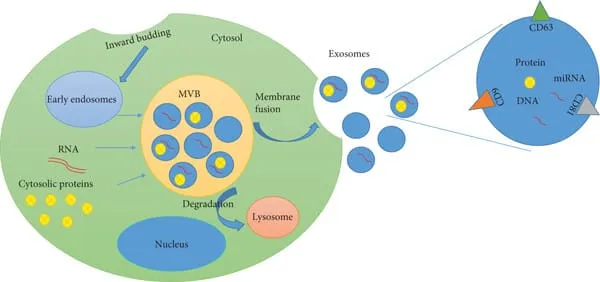
Figure 2 : Exosome Biogenesis And Release.
First, the cell membrane is inserted into the formation of early endosomes. Then, endosomes containing RNA and cytosolic proteins are transformed into MVB structures with dynamic subcellular configurations. Then, MVBs can fuse with lysosomes and be degraded or secreted by plasma membranes and form exosomes. Finally, exosomes release their cargo, including DNA, microRNA, and proteins, into the recipient cell using a variety of mechanisms. MVBs: multi vesicular vesicles.
Exosomes are found naturally within the body and show minimal immunogenicity and toxicity. They are able to evade the endosomal pathway and escape lysosomal degradation, which allows cargo to be delivered directly into the cytoplasm [24]. In addition, exosomes readily traverse biological barriers like the blood–brain barrier, which represents one of the main obstacles for conventional drug delivery systems [25]. Since they originate naturally from cells, they have built-in targeting abilities that let them transport therapeutic cargo to particular tissues or cells, thus lowering systemic toxicity. Furthermore, exosomes can be modified to target specific cells through ligands, magnetic materials, and pH-responsive motifs, which may improve the specificity and efficacy of drug delivery
even though exosome-based drug delivery holds promise, its use in the clinic is still difficult because of the constraints of exosome isolation and purification, the low efficiency of loading therapeutic cargoes, inadequate targeted delivery, and removal by reticuloendothelial systems [26-27]]
Role of exosomes in cancer
Cells emit different types of vesicular vehicles containing membrane and cytosolic constituents to the outside. These vehicles arise within the endosomal pathway or at the level of the plasma membrane. Regarding the known released vesicular structures, exosomes are those that possess a size of 40-100nm and are expelled by the fusion of multivesicular endosomes with the plasma membrane. By transferring both membrane components and nucleic acids, exosomes play an important role in intercellular communication.[28]
Exosomes are vital for angiogenesis in tumors, which is the generation of blood vessels for the supply of nutrients and oxygen to tumors. They are secreted by tumor cells and consist of pro-angiogenesis proteins together with messenger RNA (mRNA) and microRNAs (miRNA). After the uptake of these exosomes by endothelial cells, they can promote proliferation, migration and blood-vessel formation. Their contents can facilitate pathways like VEGF, PI3K/AKT and MAPK leading to blood vessel formation. Hence, exosomes enable tumors to receive nutrients and oxygen for growth and metastasis [29 , 30 ]
Exosomes are involved in cancer invasion and metastasis by shuttling proteins, lipids, mRNA, and microRNAs between tumor cells and cells of the tumor microenvironment. They can promote epithelial–mesenchymal transition (EMT), extracellular-matrix (ECM) remodeling and cancer-cell migration, thereby facilitating local invasion. They can also modify stromal and immune cells and prepare distant tissues to form a pre-metastatic niche, which supports the survival and colonization of disseminated tumor cells. Exosomal integrins can also promote organ-specific metastasis.[31]
. It is Cancer immunotherapy is anticipated to have a significant role in preventing cancer. Exosome-based immunotherapy advancements are quite remarkable. Within the immune system, multiple cell types secrete exosomes, including T cells, B cells, dendritic cells, NK cells, macrophages, mast cells, and neutrophils. Mast cells form part of innate immunity. Exosomes derived from mast cells are linked to miRNA and aid cellular communication and cell maturation. Exosomes originating from these cell populations foster cancer development and boost EMT events in cancer. [32, 33].
Tumor-derived exosomes (TDEs) are produced by tumor cells (cancer cells) and are crucial for tumor development and future metastasis. The tumor-derived exosomes produced by tumor cells are often correlated with an anti-cancer protein that is reduced or an oncogenic protein that is increased. In other words, TDEs are viewed as such, and greater production of TDEs may be associated with a greater output of TDEs. Compared to exosomes in general, TDEs differ in the content that they carry. TDEs can carry oncogenic proteins, modified lipids, and nucleic acids. The protein and/or nucleic acid cargo in TDEs can mediate tumor invasion, immune protection of cancer cells (i.e., avoidance), and initiate pro-angiogenic pathways (i.e., premetastatic niches). TDEs can also influence the tumor microenvironment through oncogenic communication with the neighboring cells and facilitate the hydration and spread of the tumor. TDEs can cause immune suppression through this capability, allowing cancer cells to avoid detection and destruction. Shen et al. reported that tumor-derived exosomes are involved in the transfer of exosomal miR-7641 cargo. miR-7641 is a highly prevalent cancer killer, and its presence in highly metastatic cells was identified through exosome isolation and characterization.[34]
Engineering exosomes to achieve precise targeting addresses key limitations of their natural counterparts in tumor therapy, such as low targeting efficiency and source dependency. To date, various engineering strategies have been developed . The exosome natural characteristics underpin the potential of exosomes for tumor targeting and drug delivery. However, natural exosomes face limitations in quality control: even when derived from the same cell type, variations exist in their size, protein expression, and cargo composition (e.g., targeting proteins). Typically, natural exosomes exhibit low expression levels of specific targeting proteins and carry a variety of non-targeting proteins, which may lead to off-target effects or immune clearance .[35]
Table -1
|
Source of exosomes
|
Exosomal cargos |
Donor cell |
Cancer type |
Therapeutic effect |
Refrence |
|
Tumor derived exosomes |
miR-134 |
Hs578Ts(i)8 |
Breast cancer |
Inhibited migration and invasion of parent cells, enhanced sensitivity to anti-Hsp90 drugs |
[36] |
|
|
TRAIL |
K562 (myelogenous leukemia) |
B-cell lymphoma |
Induced apoptosis in cancer cells and inhibited tumor progressioN |
[37] |
|
Mesenchymal stem cell – derived exosomes [MSCs] |
siKrasG12D-1 |
BM-MSC |
Pancreatic cancer |
Induced apoptosis, prolonged the survival, reduced metastasis |
[38] |
|
Dendritic cells – derived exosomes |
AFP |
Dendritic Cell |
Hepatocellular carcinoma |
Triggered antigen-specific antitumor immune responses, inhibited tumor growth and prolonged survival |
[39] |
|
HEK293T cell derived exosomes |
SIRPα variants |
HEK293T |
Colon adenocarcinoma |
Enhanced phagocytosis of tumor cells by macrophages, inhibited cancer growth |
[40] |
|
Milk derived exosomes |
Paclitaxel |
Milk cell |
Lung cancer |
Higher tumor growth inhibition and lower systemic and immunologic toxicities than free paclitaxel |
[41] |
Cargo-loading strategies
One of the simplest methods for loading drugs into exosomes is passive loading, specifically, the incubation method. This is especially good for hydrophobic drugs that interact with the lipid surfaces of exosomes. Consequently, the loading capacity depends on the hydrophobic properties of the cargo and incubation time. For example, the hydrophobic polyphenol compound curcumin and hydrophobic anticancer drug paclitaxel can be loaded into exosomes by simple incubation. [42]
To overcome the limitations of passive loading, researchers have made significant advancements in the development of active cargo-loading techniques. Physical induction is the application of external stimuli to facilitate the incorporation of specific cargo into exosomes .
This technique uses various techniques like :
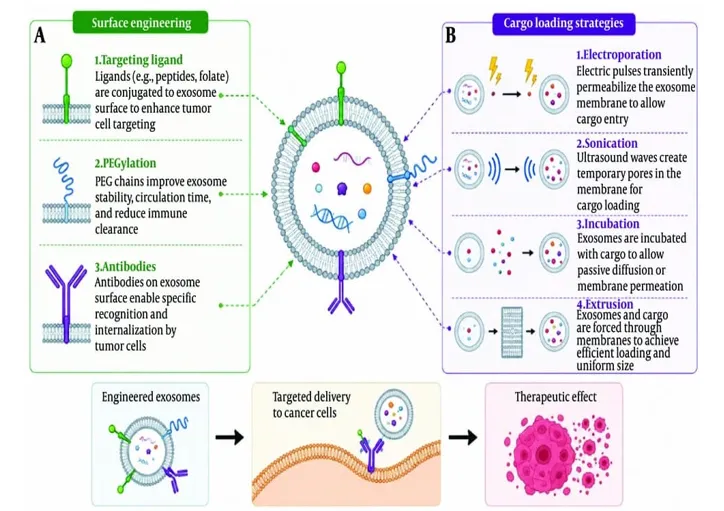
Figure 3.
Schematic illustration of surface engineering strategies, including targeting ligands, PEGylation, and antibodies, and cargo-loading strategies, including electroporation, sonication, incubation, and extrusion, for engineered exosomes in targeted cancer therapy.These methods cause transient pores or mechanical stress on the exosome membrane resulting in the efficient loading of a cargo [43].
The biological significance of exosomes is determined both by their structure and content. Recent studies have shown that these particles may participate in the regulation of various cellular processes and pathological conditions by transferring DNA, RNA, proteins and metabolites from the parent cell to the target cell. Table 1 [44, 45]
Table -2
|
Type
|
Cargo |
Target Cancer |
Biological Effect |
|
RNA |
CircABCB10
Cas9 mRNA
miR-183-5p
miR-1827
miR-145-5p |
Colon cancer
Breast cancer
Pancreatic ductal adenocarcinoma
Breast cancer
Colon cancer |
Tumor growth inhibition Tumor growth inhibition Tumor cell proliferation and invasion inhibition Tumor growth inhibition Tumor growth inhibition
|
|
Proteins |
NF-KB
CIITA |
Prostate cance r
Lymphoma |
Tumor growth inhibition Promote cell response
|
|
Compounds |
Doxorubicin
Paclitaxel
Curcumin |
Breast cancer
Breast cancer
Glioblastoma
|
Tumor growth inhibition Tumor growth inhibition Tumor growth inhibition
|
Engineered exosomes , an emerging executor for clinical therapeutic strategies
Systemic administration of chemotherapeutic drugs usually results in various toxicities-related adverse effects (TRAEs), including peripheral sensory neuropathy 97, 98 myelosuppression 98, 99 and cardiac toxicity. 100 In addition to these TRAEs, the reduced antitumor efficacy is the other barrier to further elongate the survival periods because of the lacking targeting ability of chemotherapeutic drugs. Based on the limitations above, it is time for engineered exosomes to make their way into history on account of its tumor-targeting competence (Table 2). In this case, DOX, a kind of broad-spectrum chemotherapeutic drug could be encapsulated into various exosomes from different cells.[46]
Radiotherapy plays a pivotal role in the disease spectrum of almost all solid cancers, including glioblastoma, cervical carcinoma, lung cancer, and breast cancer 113 (Table 2). Radiotherapy has been proven to show satisfying outcomes, with or without combined with other therapies, such as surgery, targeted therapy, chemotherapy, and immunotherapy. Despite the extensive clinical applications and satisfactory therapeutic outcomes, there are still some intrinsic barriers restricting its efficacy. For example, radio-resistance inherent in various cancers (e.g., CRC and lung cancer) leads to poor response of multiple malignant patients initially.[48]
Photodynamic therapy (PDT) is a non/minimally invasive cancer treatment approach, using the photosensitizer (PS)-generated ROS to treat cancers131 . Engineered exosome-based PDT is mainly classified into three categories:
Exosomes produced by specific immune cells or by engineered donor cells could possess antitumor properties. For instance, extracellular vesicles from NK cells may carry cytotoxic molecules such as perforin and granzymes, which can trigger apoptosis.In addition, engineered exosomes could be used to transport therapeutic proteins or molecules that might disrupt pathways linked to cancer.
Such strategies could lead to:
Applications of Surface-Engineered Exosomes in Targeted Anticancer Drug Delivery
Exosomes are nanoscale vesicles surrounded by a lipid bilayer membrane, and because of their distinctive biological properties, they can serve as biological carriers. Among these properties are their comparatively strong capacity to avoid phagocytosis by mononuclear macrophages and their extended circulation time in the bloodstream, along with their ability to traverse vascular walls and the extracellular matrix. Their weak immunogenicity, strong biocompatibility, suitable systemic distribution, stability, and functional efficiency render these nanovesicles well suited to the biological environment [49]
Numerous chemotherapeutic drugs act on targets within cells, so their therapeutic effectiveness hinges on their ability to cross the cell membrane successfully. Nevertheless, limited solubility, rapid clearance, and toxicity throughout the body restrict the clinical use of these medications. The lipid bilayer membrane of exosomes is able to shield the drugs they carry and, via interactions involving surface proteins, promote efficient uptake by target cells. Relative to synthetic carriers, exosomes show weaker immunogenicity and less toxicity, thus lowering immune clearance and tissue damage
RNA interference technology offers a potent means of silencing the expression of oncogenes and key pathways involved in tumorigenesis, yet its short serum half-life, poor bioavailability, and off-target effects have largely hindered its use in clinical settings. Exosomes serve as an appealing vehicle for delivering siRNA, miRNA, and other nucleic acid therapeutics, owing to their high biocompatibility and reduced immunogenicity. Numerous studies have shown that RNA interference mediated by exosomes can effectively target genes implicated in the proliferation, migration, and metastasis of cancer cells. In the same way, the exosome-mediated transfer of miRNAs such as miRNA-497 has been demonstrated to suppress the migration and invasion of tumor cells in both two- and three-dimensional culture systems.
Exosomes serve as a promising carrier for the delivery of diverse natural compounds in cancer treatment. Compounds such as celastrol, triptolide and curcumin are reported to be effective and powerful anticancer molecules, yet their broad clinical use has been greatly limited by poor solubility, stability and bioavailability . Nevertheless, recent research has shown that exosomes are able to markedly improve the stability and cellular uptake of these compounds, leading to enhanced antitumor effects with lower toxicity . As an example, a celastrol formulation based on exosomes has been found to suppress tumor growth in preclinical models while avoiding unwanted side effects .[50]
The engeneering strategy of exosomes that were Used as a drug delivery platform
The isolation of exosomes plays an important role in investigating their mechanisms of biological activity and application in cancer therapy. Conventional isolation methods of exosomes include ultracentrifugation, size-based filtration, size-exclusion chromatography, and polymer precipitation.30 Immunoaffinity methods exploit the interactions between proteins (antigens) and their antibodies, such as CD9, CD81, CD63 or cancer-specific proteins, which outweigh many other approaches in purity and yield.31 To improve this method, researchers used submicron-sized magnetic particles for immunoaffinity capture-magneto-immunocapture, which yields 10 to 15 times higher quantities of exosomes than ultracentrifugation.[51]
At present, biological modification is the strategy most frequently employed for modifying membranes, encompassing targeted peptide modification and biomimetic exosome modification (Table 1). For instance, cyclo(Arg-Gly-Asp-D-Tyr-Lys) peptide is a type of cRGD that can confer on natural exosomes a targeting capability toward tumors, and it exhibits an exceptional affinity for αvβ3 integrin receptors that are overexpressed on the surface of tumor vascular endothelial cells or tumor cells in osteosarcoma (OS). 52]
Exosomes engineered through immunological means were capable of triggering potent antitumor immune responses. As an illustration, exosomes expressing fibroblast activation protein-α (FAP), used as a tumor vaccine, were able to provoke strong and specific cytotoxic T lymphocyte (CTL) immune responses targeting tumor cells as well as FAP+ cancer-associated fibroblasts (CAFs).51 As a result, these exosome-based tumor vaccines remodeled the immunosuppressive TME in colorectal cancer (CRC), melanoma, lung cancer, and breast cancer. In line with the aforementioned tumor vaccine, α-lactalbumin (α-LA)-decorated exosomes loaded with immunogenic cell death (ICD) inducers demonstrated a notable capacity to trigger ICD in a poorly immunogenic TNBC mouse xenograft model and in patient-derived tumor organoids.[53]
TMEs (tumor microenvironments) are characteristically acidic, probably through enhanced glycolysis and lactate production70 that presumably facilitate tumor-targeting modification of engineered exosomes. For instance, i-motif (a cytosine-rich, pH-responsive DNA strand71,72,73), which can be displayed on the surface of exosomes, could carry DOX (doxorubicin) to breast cancer and release it in acidic conditions.74 In addition, loading NaHCO3 (sodium bicarbonate, SBC) into exosomes could rapidly generate CO2 bubbles after exosome internalization into cancer cells to effectively deliver PTX (paclitaxel)[54]
To capture the dynamics of physiological and pathophysiological activities exosomes, suitable imaging strategies are essential for monitoring engineered exosomes in vivo, such as exosome labeling strategies, reporter systems, and microscopy techniques. Labeling strategies are required for imaging engineered exosomes in vivo. Lipid dyes, luminal dyes, and genetic labeling are the primary strategies for labeling engineered exosomes. For instance, PKH67, DiR/DiD, and MemGlow, as lipid dyes, have been used to label engineered exosomes. However, since the half-life of lipid dyes greatly exceeds that of engineeredexosomes,78,79 exosome degradation after cellular uptake is masked by recycling and redistribution of fluorescent dye.Moreover, investigations of the therapeutic effects of engineered exosomes on tumors are long-term studies. Therefore, lipophilic dye labeling may not be best sstudies. Besides lipophilic dye, several genetically engineered reporters have been created to tag modified exosomes through fluorescence or bioluminescence. Tagged proteins within the cytosol can be packed into the lumen of engineered exosomes designed for cancer.[55]
Large-Scale Production, Storage, and Quality Control of Engineered
Exosomes For clinical applications, it is critical to develop a reliable method to produce engineered exosomes and establish appropriate storage conditions while maintaining their quality. Although there are clear advantages in using exosomes as drug delivery vehicles for cancer therapy, there is a challenge to obtain a sufficient amount of heterologous vesicles with consistently high quality. The isolation procedure, culture conditions, engineering approaches, and parent cell types can affect a yield and cargo packaging that are critical for targeted delivery and tumor therapy. Thus, there is an urgent need to optimize large-scale production of modified exosomes and standardize protocols for their isolation, characterization, and quality control at the preclinical and clinical levels [56]
Quality Control and Product Characterization
Quality control (QC) is critical for ensuring the reliability, reproducibility, and fitness for purpose of engineered exosome preparations. According to the International Society for Extracellular Vesicles MISEV2023 recommendations, reporting should include information about the source of the sample, type of isolation/procedures used, approaches to characterize the purified vesicles, and storage conditions. The MISEV2023 guidelines also recommend distinguishing between effects caused by vesicles and those resulting from contaminating non-vesicular RNPs . For therapeutic development, it is necessary to establish QC based on the identity, purity, amount, integrity, cargo, potency, and safety of the production.[57]
Future perspectives of engineered exosomes
Recent progress in exosome biology, genetic engineering, and nanobiotechnology creates the opportunity to broaden even further the use of these biological nano-carriers in personalized medicine. Yet the central challenge ahead involves drawing lessons from both past failures and successes regarding the establishment of proper quality control measures and reproducibility of the manufacturing process, aspects that were frequently overlooked in early studies. Engineered exosomes could act as multi-functional tools in personalized medicine for delivering anti-cancer therapeutics and various types of RNA, including genome editing machinery like CRISPR/Cas9. Nevertheless, robust manufacturing infrastructure, global standardization, and regulatory frameworks are needed for the field to advance further and to guarantee reproducibility of research results.
Clinical challenges
Although there has been considerable progress in laboratory research on exosomes, their clinical use is still in its infancy. Only a few clinical trials are currently investigating the efficacy and safety of exosome-based treatments. Additionally, the lack of large-scale randomized controlled trials (RCTs) is a significant barrier to the widespread adoption of exosome therapies. For instance, in the case of prostate and lung cancers, the ongoing clinical trials are still in their early stages, and the efficacy, safety, and overall applicability of these therapies need to be further validated. The key challenges in clinical translation include determining the optimal dosage and route of administration, as well as the biomarkers that can predict a patient’s response to exosome therapy. Furthermore, the long-term efficacy and potential side effects of exosome-based therapies are still not well understood, which is critical for the development of standardized treatment protocols. These challenges in clinical translation of exosome- based therapies for cancer treatment must be addressed through comprehensive and well-designed clinical studies that would evaluate not only the immediate therapeutic benefits but also the potential risks associated with long-term use. Clinical research is essential to establish a robust foundation for the integration of exosome-based therapies into standard cancer treatment paradigms.[59]
CONCLUSION
Engineered exosomes can be a promising tool for oncology due to their biocompatibility, reduced immunogenicity, and ability to carry various types of cargo. This quality, along with the opportunities for surface engineering, biological and chemical modifications, and different methods of loading, makes them highly perspective carriers for chemotherapeutic, photochemotherapy, and immunomodulatory agents .
However, there are several issues concerning the use of exosomes that need further investigation. First of all, their isolation and purification, as well as large-scale production, storage, and characterization, are complicated processes. In addition, optimization of the doses and routes of administration, assessment of biodistribution, safety, and therapeutic efficacy, and the study of targeting mechanisms are required . Moreover, there is a lack of reliable preclinical and clinical data, which restricts their use benefit from the unique advantages of engineered exosomes.The future of research should be focused on standardization of production, achieving high therapeutic efficacy, and proper targeting of exosomes.[60].
REFERENCES

Sanskruti Baviskar* , Akanksha Punekar, Engineered Exosomes For Targeted Cancer Drug Delivery: Advances, Therapeutic Applications, And Clinical Challenges, Int. J. of Pharm. Sci., 2026, Vol 4, Issue 10, 3193-3208. https://doi.org/10.5281/zenodo.23531029
 10.5281/zenodo.23531029