

We use cookies to ensure our website works properly and to personalise your experience. Cookies policy
KYDSCT College of Pharmacy, Sakegaon, Bhusawal, MH. 425201.
Solid crystals are single-phase crystals. materials that are not solvates, hydrates, or simple salts and are made up of two or more distinct molecular and ionic compounds, usually in a stoichiometric ratio. API cannot be correctly formulated due to a variety of stability issues; as a result, they are transformed into solid forms like polymorphs, salts, solvates, hydrates, amorphous, and co-crystals. Etter was the first to report the term "co-crystal" and the design guidelines for hydrogen bonding in organic co-crystals. Co-crystallization is thought to be a better option for optimizing therapeutic characteristics since it modifies the molecular interactions and composition of pharmaceutical materials. Solvates, hydrates, co-crystals, and salts are examples of multicomponent crystals that are crucial in the creation of novel solids, especially in the pharmaceutical industry. Drug-drug co-crystals are distinct, solid, single-entity forms and as Drug-Drug co-crystals are distinct from open combinations or FDCs since they are solid, single-entity forms. A cocrystal may be referred to as DDC as both of its constituent parts are APIs. In order to improve curcumin's solubility, stability, and complementing biological activity, the current study attempts to create a unique curcumin-ascorbic acid cocrystal. The development of cocrystal, eutectic, and binary mixtures with an excess of coformer was confirmed by the DSC and XRD data of the solvent-evaporated curcumin-ascorbic acid mixture.
Crystals are solid that are crystalline single-phase Materials composed of two or more different molecular and ionic compounds generally in a stoichiometric ratio which are neither solvates /hydrates nor simple salts. It is multicomponent system in which one component is API and another is called Co-former. Approaches to enhance the solubility of drugs, are size reduction, solid dispersion, complexation, salt formation, nanoparticles, self – emulsifying drug delivery system (SEDDS), addition of co-solvents, Nano-suspension and emulsion and co-crystal formation. Due to various stability issue, API cannot be properly formulated and hence they are converted into solid forms such as polymorphs, salts, solvates, hydrates, amorphous, and Cocrystal. Each of them imparts a different physicochemical properties and affects other performance.
Currently the most challenging situation is to enhance solubility of certain drugs. It’s easy to solve solubility problem of amorphous form, but different for crystalline drug so the concept of Cocrystal came into existence. The term Cocrystal and design rules of hydrogen bonding of an organic Cocrystal were first reported by Etter.
Co-crystal form of solid has greater solubility and stability in context with other form of solid such as solvate and hydrate.
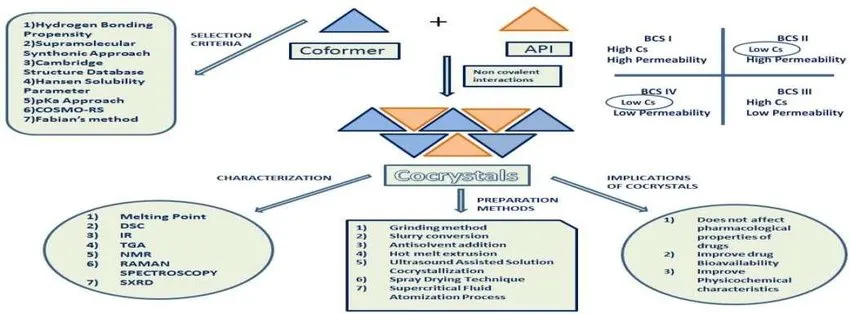
Figure 1: Cocrystal Synthesis and Their Characterization
Co-crystallization alters the molecular interactions and composition of pharmaceutical materials, and is considered better alternative to optimize drug properties. Multicomponent crystals e.g. solvates hydrates, co-crystals, salts play important role in the design of new solids particularly in the pharmaceutical area [Fig:1].
Drug-Drug cocrystal (API-API cocrystal) –
Drug-Drug co-crystals are unique, single-entity, solid forms and as such they differ from open combinations or FDCs. Both components of a Cocrystal are APIs, the Cocrystal could be called DDC.
DDC represents a viable approach to overcome the problems associated with traditional combination drugs and also modulate physicochemical properties of parent drugs and can be used as potential solid forms for the delivery of dual drugs therapy.
It improve the physicochemical properties of relevant APIs, such as improved dissolution property of at least one component, increased bioavailability, enhanced stability of unstable components and assistance in lifecycle management .
Physicochemical properties and characterization:-
Method Of Preparation –
Advantages Of Cocrystal –
1. Co-crystallization approach modifies the properties of pharmaceutical solid such as dissolution rate of poorly soluble drug, physical stability of moisture labile drug.
1. Co-crystal formation may offer for the pharmaceutical industry are the opportunity of intellectual property protection and extending of the life cycles of active pharmaceutical ingredient.
2. It also enhances the other essential properties of the active pharmaceutical ingredient such as flow ability, chemical stability, compressibility and hygroscopisity.
3. Co-crystal form of solid has greater solubility and stability in context with other form of solid such as solvate and hydrate.
Disadvantages Of Co-Crystal –
1. A large number of Experiments are necessary to measure the ternary phase diagram.
2. Possible significant difference in the solubility of the API and the co-former.
3. Environmental Pollution.
4. Risk of Producing Solvates during Solvent removing.
5. Difficult to Scale – up.
DRUG PROFILE & COFORMER PROFILE
• Chemical structure :
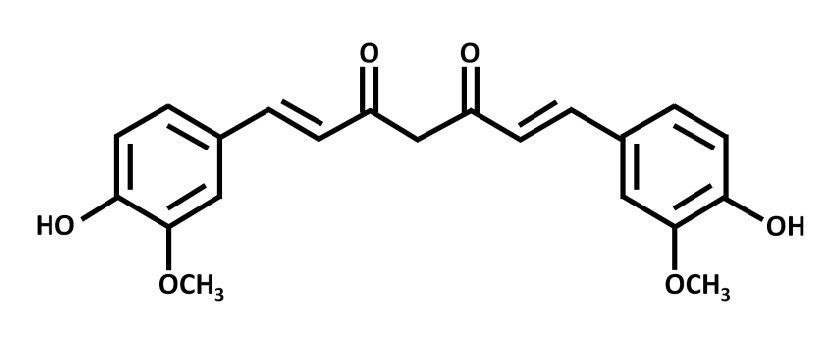
Figure 2: Structure of Curcumin
• Mechanism of action:
Curcumin Acts as a scavenger of oxygen species, such as hydroxyl radical, superoxide anion, singlet oxygen and inhibit lipid peroxidation as well as peroxide induced DNA damage. Curcumin mediates potent anti-inflammatory agent and anti-carcinogenic actions via modulating various signaling molecules. It suppresses a number of key elements in cellular signal transduction pathways pertinent to growth, differentiation & malignant transformation.
• Use & Dose:
It has been shown to benefit inflammatory conditions, metabolic syndrome, and pain & to help in the management of inflammatory & degenerative eye conditions.
Dose: The dosage of Curcumin is 500 mg 4 Times a Day
Coformer Profile :Ascorbic Acid
• Chemical structure
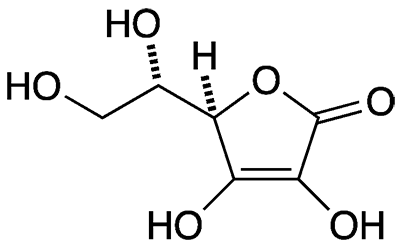
Figure 3: Structure of Ascorbic Acid
Mechanism of Action: In humans , an exogenous source of ascorbic acid is required for collagen formation and tissue repair by acting as a cofactor in the Post translational formation of 4 – hydroxyproline in-Xaa-Pro-Gly-sequences in collagens and other proteins. Ascorbic acid is reversibly oxidized to dehydro ascorbic acid in the body.
These two forms of the vitamin are believed to be important in oxidation – reduction reaction. The vitamin is involved in tyrosine metabolism, conversion of folic acid to folinic acid, Carbohydrate metabolism, synthesis of lipids and proteins, iron metabolism, resistance to infections & cellular respiration.
Use & Dose:
It helps the body make collagen, an important protein used to make skin, cartilage, tendons, ligaments & blood vessels. Vitamin C needed for healing wounds & for repairing and maintaining bones and teeth. It also helps the body absorbs iron from source.
MATERIALS AND METHOD:
Table 1: Drug / Chemicals
| Sr.no | Name of Drug / Coformer | Sources |
|---|---|---|
| 1 | Curcumin | Sunpure Extracts, Delhi, India |
| 2 | Ascorbic Acid | Lobachemie Pvt. Ltd, Mumbai, Maharashtra |
Table 2: Equipments / Instruments
| Sr. No | Instruments/ Equipment | Manufacturer/Supplier |
|---|---|---|
| 1 | UV Spectrophotometer | Shimadzu UV 180 |
| 2 | Attenuated Total Reflectance Fourier Transform Infra-Red Spectrophotometer (ATR-FTIR) |
Thermo Scientic Nicolet |
| 3 | Differential Scanning Calorimeter | METTLER ,TOLEDO |
| 4 | Optical Microscope | Light optical microscope |
RESULTS AND DISCUSSION
Organoleptic characteristics:
Table 3: Organoleptic Characteristics
| Sr.No | Test | Specification | Observation |
|---|---|---|---|
| 1 | Colour | Orange-yellow needles | Pale yellow |
| 2 | Odour | Characteristic | Characteristic |
| 3 | Taste | Bitter | Bitter |
| 4 | Melting Point | 183oc | 181oc-185oc |
Table 4: Solubility of Curcumin
| Sr.No | Solvent | Solubility |
|---|---|---|
| 1 | Water | Insoluble |
| 2 | Methanol | Soluble |
| 3 | Ethanol | Freely Soluble |
Calibration curve of curcumin:
The calibration curve of curcumin was prepared in methanol using UV-Visible spectrophotometer at 421 nm by plotting the absorbance was found to be Absorbance y) = 0.029 concentration (x) with a regression coefficient value of 0.999 (R2). This equation was used to calculate the concentration of curcumin in various stages of the study.
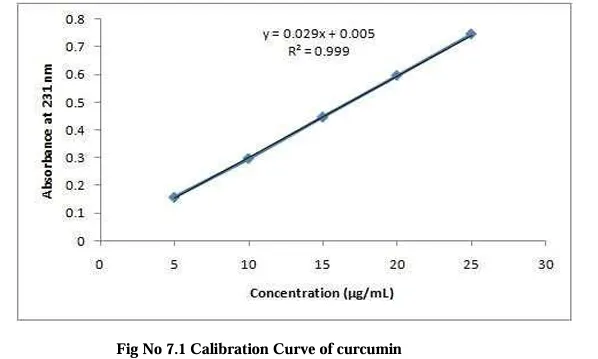
Figure 4: Calibration Curve of Curcumin
Fourier Transform Infrared Spectroscopy (FTIR): The FT-IR spectrum of curcumin (figure 7.1), were obtained and observed for any deletion of the peaks of the pure drug. The spectrum of curcumin exhibited peaks at 3341 cm-1 (OH stretching), 3056 cm-1 (CH aromatic stretching), 2923 cm-1 (CH2 stretching), 1647 cm-1 (C=O stretching), 1574 cm-1 (C=C aromatic stretching), 1441 cm-1 (CH2 bending), 1146 cm-1 (C-O stretching).
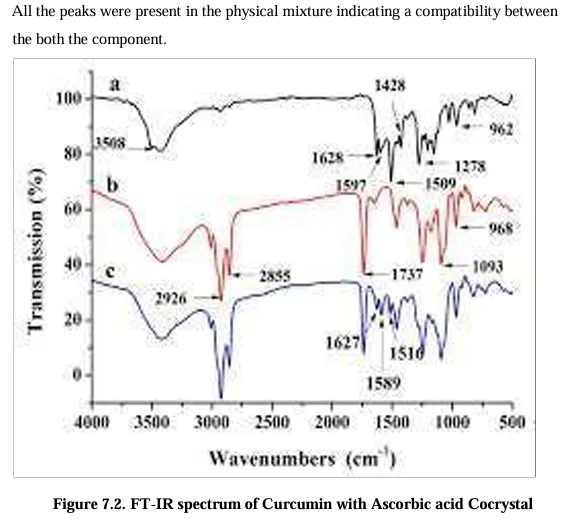
Figure 5: FT-IR Spectrum of Curcumin
Differential scanning calorimetry: The DSC thermogram of curcumin having mole fractions ranging from 0.3 to 0.5, could demonstrate two endothermic transitions. The melting of cocrystal has been denoted by the presence of a third endothermic peak having onset at 183.03 ◦C and peak at 187.10 ◦C.
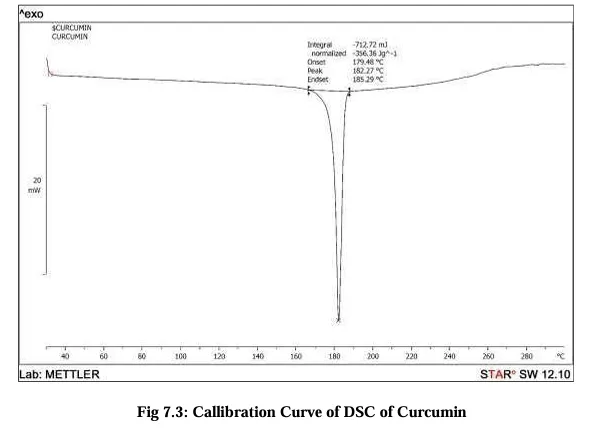
Figure 6: DSC Thermogram of Curcumin
X-Ray Diffraction (XRD):
The appearance of new reflections and total disappearance of XRD peaks due to precursors used indicates the successful formation of co-crystal of curcumin and ascorbic acid. The characteristic feature in the background of the XRD pattern of cocrystal also indicates the existence of the amorphous content or ill ordered crystallization of the cocrystal.
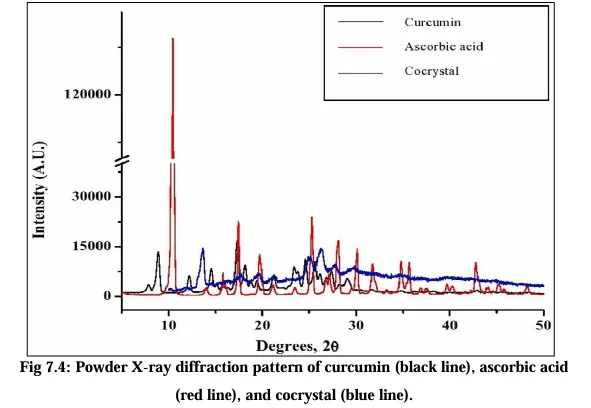
Figure 6: Powder X-Ray Diffraction of Curcumin (Black Line), Ascorbic Acid (Red Line),Cocrystal (Blue Line)
In vitro dissolution study:
The in-vitro dissolution study demonstrated that curcumin was dissolved from the sample of neat curcumin in distilled water, buffer pH 1.2 and buffer pH 6.8 respectively at the end of 1 hr. Drug dissolution from the physical mixture was found to be 33.05%, 64.86%, 78.2%, 81.33%, 86.79% and 89.45% in distilled water, buffer pH 1.2 and buffer pH 6.8 respectively. This revealed that the curcumin-ascorbic acid cocrystal system exhibited enhanced dissolution compared to pure curcumin and curcumin-ascorbic acid physical mixture which clearly portrays enhanced dissolution of the cocrystal system.
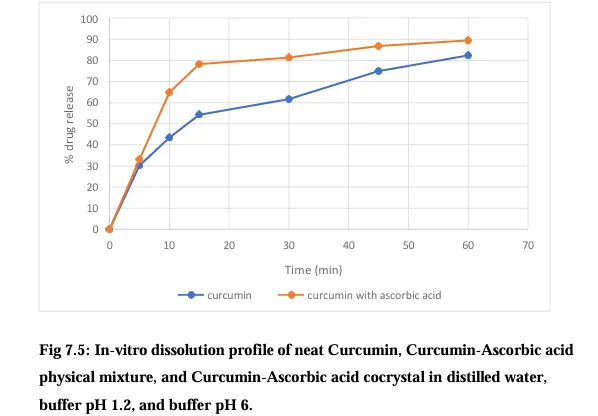
Figure 7: In Vitro Dissolution Profile of Neat curcumin-Ascorbic Acid Physical Mixture,curcumin-Ascorbic Acid Cocrystal in Distilled Water Buffer pH 1.2 & Buffer pH 6.
SUMMARY AND CONCLUSION:
The present investigation aims to develop novel curcumin-ascorbic acid cocrystal for enhancing the solubility, stability, and complementary biological activities for curcumin. Based on in silico approach to screen ascorbic acid as a coformer for curcumin, cocrystals were prepared by the solvent evaporation method, and further evaluated for saturation solubility, cocrystal propensity, physicochemical interactions (FTIR and DSC), XRD, drug dissolution, etc.
The DSC and XRD data of the solvent evaporated curcumin-ascorbic acid mixture confirmed the formation of cocrystal, eutectic, and binary mixture with an excess of coformer. The curcumin- ascorbic acid cocrystal system exhibited a superior dissolution profile compared to neat curcumin. Thus, ascorbic acid has enunciated its role as a coformer for curcumin in cocrystal formation, which has been complemented by predicted complementary biological activities, and stability.
REFERENCES

Sandhya Ahire, Dr. Sujeetkumar Ahire, Toral Patil, Saurabh Patil, Shitanshi Bhalerao, Darshan Mali, Chinamay Chaudhari, Enhancing the Pharmaceutical Performance of Herbal Drugs Through Cocrystal Engineering, Int. J. of Pharm. Sci., 2026, Vol 4, Issue 11, 1712-1719. https://doi.org/10.5281/zenodo.24143803
 10.5281/zenodo.24143803