

We use cookies to ensure our website works properly and to personalise your experience. Cookies policy
1,3M.pharm Dept. Industrial Pharmacy, School of Pharmaceutical Sciences, Sandip University Nashik.
2Professor and Dean, School of Pharmaceutical Sciences, Sandip University Nashik, Maharashtra, India. Pin-422213.
Amorphous solid dispersion (ASD) is among several methods that have been used in order to improve dissolution and bioavailability of poorly water-soluble drugs. The efficiency of ASD depends on the creation of amorphous drug form and its physical stability during the storage period as well as the super saturation created during the interaction with gastrointestinal fluids. The polysaccharide that is isolated from the seeds of Tamarind tree (TSP), namely xyloglucan, has gained wide recognition in the pharmaceutical field due to its hydrophilic and film forming properties. These traits give us a reason to test Tamarind Seed Polysaccharide as an ASD excipient, but they do not show that it can serve as a primary ASD carrier. This mini-review looks at the physicochemical features of Tamarind Seed Polysaccharide, the ways polymers can influence drug–polymer miscibility and supersaturation, and the evidence needed to tell whether those mechanisms apply to Tamarind Seed Polysaccharide. There are many advantages of using TSP, such as the use of natural materials and the effect of viscosity on molecular diffusion; however, there are concerns about miscibility, high molecular weight, and processing difficulties. We suggest a multi-stage research programme beginning from material standardisation and compatibilisation studies up to solid state analysis, non-sink dissolution, precipitation kinetics and stability. At this time, TSP can be considered as a potential research candidate for the ASD application rather than an ASD polymer.
Insolubility in aqueous medium is one of the key challenges in drug formulation through the oral route. Often, the dissolution of a drug in the GI tract limits the amount of the drug absorbed. The transformation of a drug into an amorphous state could lead to an increase in chemical potential and solubility due to the lack of long-range order in amorphous states compared to the crystalline state. Nonetheless, the amorphous state is thermodynamically unstable and hence there would be a tendency for the drug to crystallize again[1].
Amorphous solid dispersion means a system in which the drug is dispersed within a polymer matrix. Careful choice of the polymer can help in improving the wetting properties, in reducing phase separation of the drug, in restraining the mobility of the molecules and preventing crystallization[2]. The dissolution of such a system may result in a supersaturated solution where the concentration of the drug would exceed its equilibrium solubility. However, this short-term benefit has to be sustained long enough to prevent precipitation and crystallization[3].
Tamarind seed polysaccharide (TSP) or tamarind seed xyloglucan/tamarind kernel gum is extracted from the endosperm of seeds of Tamarindus indica. Current reviews indicate various applications of TSP in controlled drug delivery systems, mucoadhesive preparations, hydrogels, etc., and these applications provide reason to consider this polymer as a pharmaceutical excipient[4]. However, good characteristics of drug release control cannot be regarded as good characteristics for an ASD matrix. In particular, the ability of a matrix to provide controlled release of a drug is not necessarily a good characteristic for a system providing rapid supersaturation[5].
2. Review approach and scope.
Tamarind Seed Polysaccharide has been covered in several broad reviews in recent years, including one devoted to tamarind seed xyloglucan, and general ASD reviews discuss polymer selection and supersaturation at length. None of the sources found here showed direct evidence that native TSP works as a conventional ASD carrier with a proven ability to preserve supersaturation[6].
3. TSP: source and material characteristics
Tamarind Seed Polysaccharide is non-ionic and soluble in water and is a hemicellulose, known as galactoxyloglucan. The backbone of Tamarind Seed Polysaccharide consists of β-(1→4) glucose whereas side chains are composed of xylose and galactose. Hydration and modification can be facilitated by hydroxyl groups. The characteristics of Tamarind Seed Polysaccharide depend upon the process of extraction and purification, molecular weight, branching, moisture, and proteins of seed origin[7].
Tamarind Seed Polysaccharide is soluble in water, and its solubility varies with temperature and processing. There has been one study in 2024 investigating the effects of temperature on the physicochemical characteristics and structure of Tamarind Seed Polysaccharide, and also indicating the presence of impurities such as proteins, which require purification. This is important for the formulation process. The excipient must be characterized as a reproducible substance; knowing where it comes from is not sufficient[6],[8].
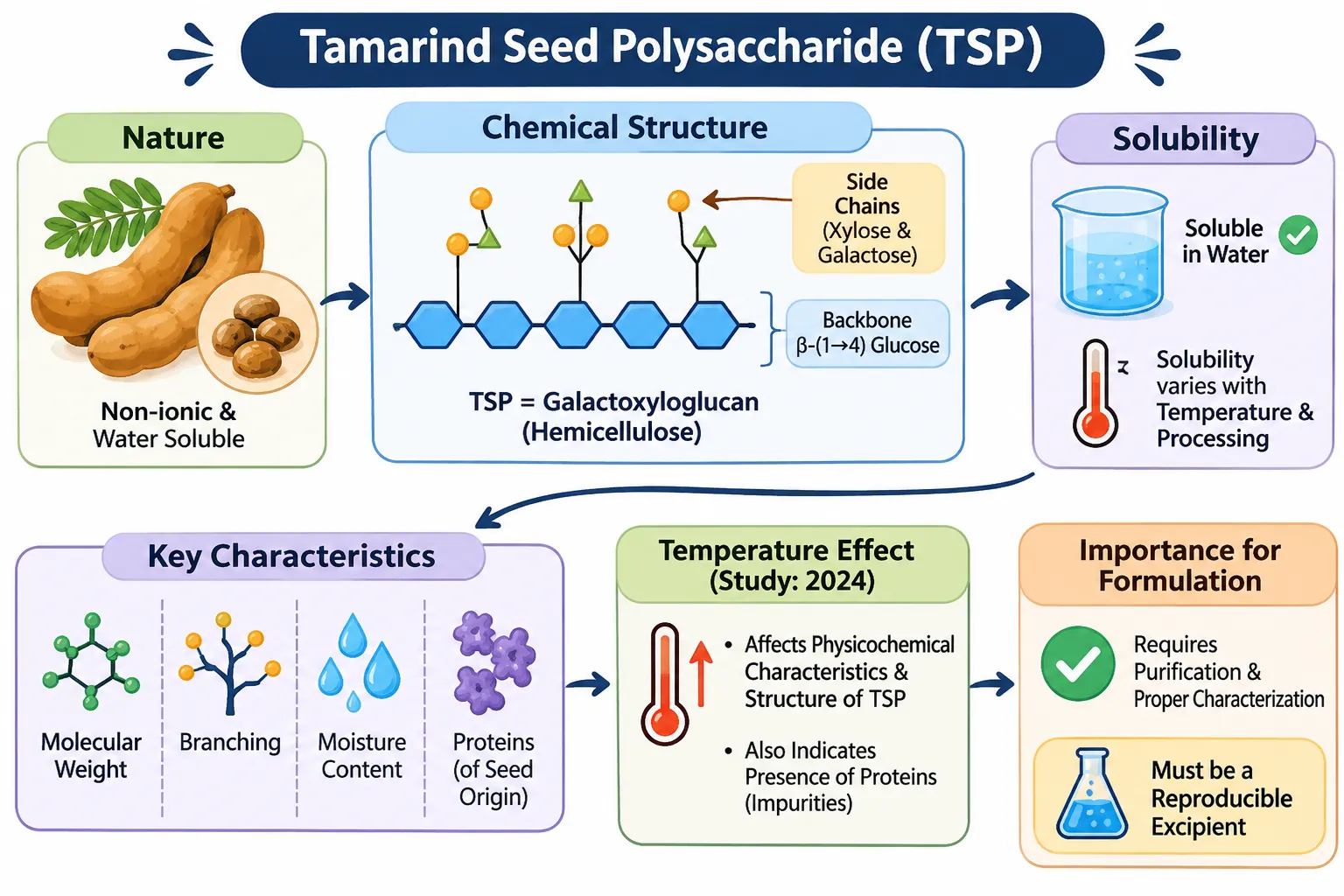
Figure 1: Chemical Structure, Physicochemical Properties, and Formulation Significance of Tamarind Seed Polysaccharide (TSP).
4. How polymers support amorphous solid dispersions
The success of ASDs depends on the miscibility in the solid state and in solution. The miscibility of the drug and polymer determines if the drug will remain well-dispersed or form drug-rich domains. The existence of a single glass transition temperature is suggestive of miscibility but does not confirm it. DSC, PXRD, spectroscopy, and microscopy have to be combined to assess phase separation[9].
The effect of drug-polymer interaction may include hydrogen bonding, dipole interactions, and non-covalent bonding. These are helpful in reducing molecular mobility and hinder the drug molecules from forming a crystal network. The importance of these interactions will be determined by the functional groups in the drugs, the chemistry of the polymer, water content, and the manufacturing process. The functional group of hydroxyl in Tamarind Seed Polysaccharide helps explain the effect of hydrogen bonding between drugs and the polymer, but this doesn’t necessarily imply miscibility and stability[10].
Once dissolution occurs, things become even more complex. A polymer may affect the processes of wetting and dispersing, the nucleation or crystal growth, or how colloidal/drug-rich phase formation occurs. Some drug formulations may dissolve to a high level of concentration and then precipitate fast, while other formulations may maintain a metastable supersaturation condition for a longer period of time. The latter behavior is referred to as the "parachute" effect when the decrease in the concentration of the polymer occurs after the increase due to the dissolution process[11].
The polymer may increase viscosity and decrease diffusion, which under certain conditions would lead to a decrease in molecular collision and formation of crystals. However, high viscosity will slow down the release of drugs and may create problems with processing and dispersing in the intestine. The increase in viscosity does not necessarily mean an advantage. What is important for TSP is that its behavior in the solution is able to maintain concentration of the drug[12].
5. Why investigate TSP as an ASD excipient?
Several factors make the screening of Tamarind Seed Polysaccharide worthwhile. It is a renewable product that can be sourced from a common plant. Its hydroxyl-containing xyloglucan structure may play a role in the interaction of specific drug molecules. Its hydration and viscosity will affect wetting, diffusion, crystallization, and precipitation. Lastly, Tamarind Seed Polysaccharide has a known use in pharmaceutical products, and hence the existing pharmaceutical research can be applied to the system[13].
They continue to be hypotheses, and none is proof of efficacy. The high molecular weight and good hydration could hinder processing using organic solvents or hot melt extrusion due to thermal instability and glass transition characteristics. The thermal stability, glass transition characteristics, moisture uptake, and drug compatibility have to be determined. Native Tamarind Seed Polysaccharide may also lack the known functional chemistry possessed by some ASD polymers such as PVP, HPMC, or HPMCAS[14].
Ultimately, Tamarind Seed Polysaccharide might find greater utility as an adjunctive precipitant, as a co-polymer component in a mixture or even in a hybrid system rather than as a sole vehicle. The usefulness of Tamarind Seed Polysaccharide in such applications needs to be verified instead of presumed. Comparison with a standard ASD polymer is crucial in this regard[15].
6. Drug–polymer interactions: hypotheses to test
The first hypothesis is that Tamarind Seed Polysaccharide can be dispersed into relatively homogeneous systems with certain drugs. For compatibility testing, thermal analysis and spectroscopy must be combined with visible inspection and microscopic evaluation. Shifts seen by FTIR can reflect changes due to a modified hydrogen bonding state, but the mere spectral changes cannot confirm molecular homogeneity. Glass-transition properties can be estimated by DSC, and residual crystalline drug can be detected with PXRD. Raman mapping or solid-state NMR can provide additional proof, if available[16,17].
The second hypothesis is that drug- Tamarind Seed Polysaccharide interactions retard the recrystallization process during storage. This requires controlled tests of temperature and relative humidity with the measurement of crystallinity, solubility and chemical stability. The third hypothesis is that the dissolved Tamarind Seed Polysaccharide prevents precipitations upon drug release. To test this hypothesis, solution studies are required, since stabilization of solids and inhibition of precipitation are distinct processes. The use of a few drugs with various abilities of hydrogen bonding and lipophilicity will indicate if there is an effect for certain drugs only[18,19].
7. Supersaturation and precipitation inhibition
Supersaturation is defined as the ratio of the drug concentration to the drug's equilibrium solubility. If the ratio is greater than one, this means that the concentration is metastable. It has both pros and cons – it may enhance drug absorption, but it makes the drug thermodynamically favorable for nucleation and precipitation. The duration of supersaturation is individual for each drug, depends on the medium, concentration of the polymer, hydrodynamics, and seed or impurities content[20–22].
For the mechanistic investigation of Tamarind Seed Polysaccharide, there should be separate quantification of the following parameters: initial dissolution rate, maximal achieved concentration, decline of the concentration with time, and amount of precipitated drug. The presence of a polymer may increase concentration through formation of colloidal assemblies enriched with the drug molecules, thus, if possible, molecular concentration should be separated from colloidal or particulate forms of the drug. Filter itself can either precipitate drug molecules or bind them.
The non-sink study should include the crystalline drug, the amorphous drug only, the traditional polymer ASD, the TSP-based ASD and the physical mixture. The concentration of the drug should be monitored as a function of time using a validated chromatographic technique, while microscopy, PXRD or Raman can be used to detect crystals formed. pH, temperature, ionic strength, agitation and dose should be kept constant throughout[23,24].
It remains uncertain whether the high viscosity of Tamarind Seed Polysaccharide will affect the precipitation of crystals sufficiently to benefit the concentration-time curve, or whether it would mostly influence the dissolution rate and result in low concentrations being achieved. This question can only be answered by experimentation. It must also be determined whether Tamarind Seed Polysaccharide will remain hydrated in media containing bile salts and phospholipids[25].
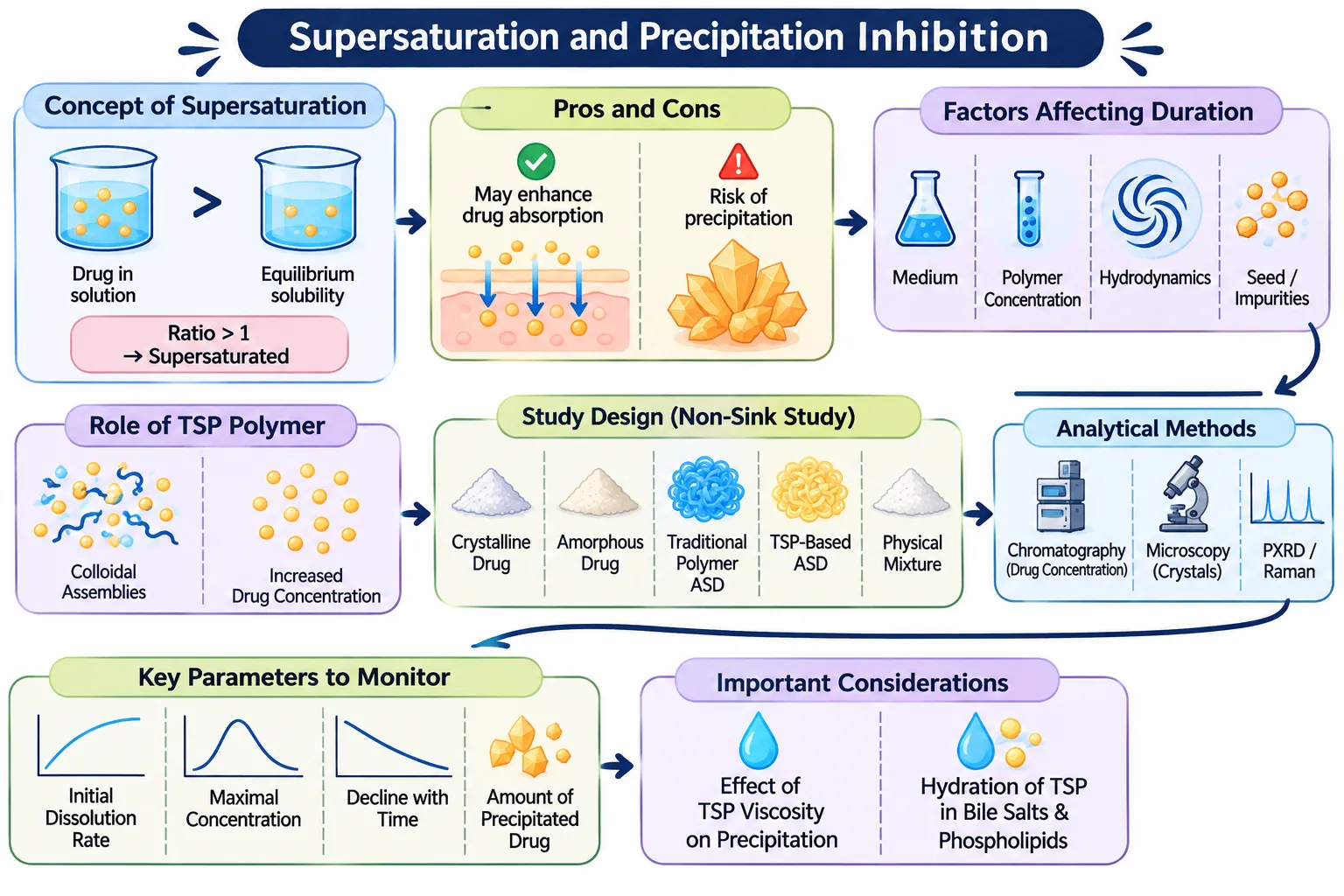
Figure 2: Mechanistic Investigation of Supersaturation and Precipitation Inhibition Using Tamarind Seed Polysaccharide (TSP)-Based Amorphous Solid Dispersions (ASD).
8. Formulation and manufacturing considerations
ASDs may be manufactured through methods such as spray drying, hot-melt extrusion, and solvent evaporation, depending upon the nature of the drug, solubility, stability, rheological properties of the polymer used, and desirable properties of the product. The hydration and viscosity of the TSP may have effects on the spray feed atomization process, whereas, for hot-melt extrusion, there needs to be evidence for thermal processing of Tamarind Seed Polysaccharide into a good ASD[26,27].
Solvent casting or solvent evaporation can, however, be useful in the preliminary screening process because a successful bench-scale study does not mean that a commercial product would result from it. Control factors include the residual solvent, drying time, film thickness, phase separation, scale dependent heat, and mass transfer. If the Tamarind Seed Polysaccharide is one of the blended polymers, then the choice of the other polymer should be made on the basis of complementarity and compatibility[28].
The development pathway begins with a fully characterised Tamarind Seed Polysaccharide batch and a reference drug that is scientifically selected. The drug needs to show poor aqueous solubility, a known analytical method and solid-state characteristics. Preliminary screening of various ratios between drug and polymer can follow by which few candidates could undergo solid-state studies and dissolution. Process development and stability studies could start only after the reproducible candidate is found[29,30].
For scale-up manufacturing, the critical quality attributes could include drug content, solvent or moisture level, particle size, bulk density, flow properties, crystallinity, dissolution properties and stability. The critical process parameters would depend upon the specific process used but need to be linked to the attributes above. Tamarind Seed Polysaccharide batch itself needs to be tested for lot-to-lot variability, microbial limit, protein level, ash and any pesticides.
9. Proposed evaluation framework
In the following structure, the qualification of the material is distinguished from the demonstration that it functions in an ASD. The selected tests should be rationally selected in relation to the particular drug, its dosage form and method of production.
A relevant comparator series should comprise the drug alone, a physical blend, TSP-containing suspension and at least one proven ASD polymer. Comparisons should be conducted at equivalent doses of the drug under the same conditions of dissolution. Replicate testing, pre-defined criteria for acceptance and clear presentation are important to prevent over interpretation of minor differences[31,32].
10. Limitations and translational challenges
One of the main limitations in this context is the lack of any direct proof for native TSP’s ability to serve as an appropriate ASD delivery vehicle. Data on the biocompatibility, mucoadhesion and controlled release of a compound cannot be regarded as the proof of its potential in carrying out a particular drug as ASD.
Another limitation lies in material variability. The source of a plant, cultivation process, seed processing, extraction temperature, purification procedure and drying will have an effect on molecular weight, branching, protein content and viscosity which might influence processing and ASD release. The specification of pharmaceutical grade should include these parameters and corresponding analytical methods.
Hydration is significant in terms of the behavior of hydrophilic polymers. Water could plasticize the amorphous phase, decrease the glass transition temperature, and increase molecular mobility leading to either phase separation or crystallization. There is need for determination of the influence of the hygroscopicity and water holding capacity of TSP on the stability of the ASD, and that should not be based on general principles of the behavior of polysaccharides.
Approval should not be presumed merely because of being natural or currently employed in food applications. The route of administration, chemical form, impurities, daily dosage, toxicology, and pharmacopeia status are all factors that have to be taken into account. Modification of the polymer through chemistry could enhance certain characteristics, however, the additional factors of degree of substitution, residual reactants, and products of degradation should be considered. The cost of production should include extraction, purification, drying, quality control, disposal, and scale-up costs, and not just the low cost of the raw seed material[33,34].
11. Future research priorities
First of all, it is important to ascertain whether stable drug-containing amorphous dispersions with acceptable amounts of the drug can be obtained with TSP. This might be achieved by selecting a panel of drugs whose molecular properties are known. Then, a solution-based approach may be applied to test if TSP consistently improves supersaturation, independently of viscosity. Further, studies of mixtures of TSP with known polymers can reveal how TSP can offer some improvement in precipitation inhibition, processability or economics without hindering the release.
Mechanistic investigations should include the analysis of concentration–time profiles in conjunction with solid- and solution-state characterization. Long-term and accelerated stability studies must be conducted after a prototype formulation has been identified. Then, process investigation should be used to investigate different processing approaches and to evaluate batch-to-batch variability for several batches of TSP. Failure studies would also be useful to prevent unsupported assumptions from circulating among reviews[35,36].
DISCUSSION
All the available data support TSP as a universal polysaccharide that gained pharmaceutical interest but was not yet validated as a solution to specific challenges faced during ASD formation. The composition of TSP, along with its hydration behavior, makes it logical to research the interactions between drugs and this polymer, as well as the effect of the compound on preventing precipitation. However, the viscosity and hydrophilic properties of the substance that allow using it successfully in certain delivery systems may hinder rapid dissolution or processing. Therefore, an effective review must maintain the distinction between the justification and the performance of TSP[37–39].
The most significant contribution in this case is not in suggesting that TSP provides better solubility of drug substances. Instead, it should include the necessary evidence that will help researchers determine whether this polysaccharide can be considered an ASD carrier or co-excipient. It is critical to compare TSP with conventional polymers. The absence of any improvements in terms of miscibility, physical stability, and supersaturation provided by TSP cannot serve as a reason for its usage only because of its natural origin[40–42].
It is essential to correctly frame the literature gap too. TSP has received attention through a general review, while a review has been published recently regarding tamarind seed xyloglucan and its derivatives. This article will remain unique only when it focuses on the intersection between the properties of TSP material, ASD mechanism, supersaturation, and manufacturing translation. A literature database search would be required to ensure that this unique niche area has not been explored before[43–45].
CONCLUSION
The tamarind seed polysaccharide, due to its xyloglucan structure, hydration properties and current use in drug delivery systems, represents a candidate excipient with promising properties that deserve further investigation in the context of amorphous solid dispersion development. However, none of these properties demonstrate the ability of TSP to stabilise amorphous drugs and sustain their supersaturation state. This information will have to be provided by drug-dependent compatibility studies, characterisation of solid state, non-sink dissolution, precipitation kinetics, stability investigations and manufacturing assessment. Until all the relevant data are available, the TSP must be referred to as a candidate excipient rather than a proven ASD carrier. Evidence-based review might help in identifying required experiments[46–49].
Conflict of Interest
The authors declare no conflict of interest.
Referane
REFERENCES


Sainath Kadam, Abhijeet Kulkarni, Varsha Pillai, Evaluating Tamarind Seed Polysaccharide as a Candidate Excipient for Amorphous Solid Dispersions: Drug–Polymer Interactions, Supersaturation Maintenance and Translational Challenges., Int. J. of Pharm. Sci., 2026, Vol 4, Issue 11, 2199-2208. https://doi.org/10.5281/zenodo.24218148
 10.5281/zenodo.24218148