

We use cookies to ensure our website works properly and to personalise your experience. Cookies policy
1Project Guide, Anuradha College of Pharmacy, Chikhli, Maharashtra, India.
2–6UG Students, Anuradha College of Pharmacy, Chikhli, Maharashtra, India.
7Principal, Anuradha College of Pharmacy, Chikhli, Maharashtra, India.
Fast dissolving tablets (FDTs) disintegrate in the mouth within seconds without water, and are useful for children, the elderly, bedridden patients and patients with nausea or vomiting, who find it difficult to swallow conventional tablets. The performance of an FDT depends mainly on the superdisintegrant. Synthetic superdisintegrants are effective but costly and are not always available locally, whereas plant mucilages from Isapgol (Plantago ovata), Linseed (Linum usitatissimum), Aliv (Lepidium sativum) and Fenugreek (Trigonella foenum-graecum) are cheap, biodegradable and easily available, and have been reported to act as disintegrants and binders. The present review discusses the need for FDTs, their advantages and limitations, the technologies used for their preparation, the mechanisms of superdisintegrants, a comparison of synthetic superdisintegrants and natural mucilages, the isolation and characterisation of mucilage, the method of preparation of FDTs by direct compression, the tests used for evaluation, and the important reports on the subject. The review shows that natural mucilages are promising low-cost superdisintegrants, while comparative studies in the same formulation are still needed.
The oral route is the most widely used route of drug administration because it is convenient, non-invasive, economical and well accepted by patients. However, swallowing a conventional tablet or capsule is difficult for many people, including children, the elderly, bedridden patients, patients with nausea or persistent vomiting, and those who have no ready access to water. Difficulty in swallowing (dysphagia) often leads to missed doses and poor therapeutic outcomes.[1,2,3]
Fast dissolving tablets (FDTs), also called orally disintegrating or mouth dissolving tablets, are placed on the tongue, where they disintegrate or dissolve in the saliva within seconds, without water and with little or no chewing; the resulting dispersion is then swallowed. The US FDA guidance describes an orally disintegrating tablet as one that disintegrates rapidly in the mouth, with a disintegration time of about 30 seconds or less.[4] An ideal FDT needs no water, disintegrates within seconds, leaves little or no residue, has a pleasant taste and mouthfeel, is strong enough to withstand handling and can be made by a simple and economical method.[1,3,5]
The performance of an FDT depends mainly on the superdisintegrant. Synthetic superdisintegrants such as croscarmellose sodium, crospovidone and sodium starch glycolate are effective, but plant mucilages and gums are cheap, biodegradable, generally safe and easily available, and they have been studied as natural superdisintegrants and binders.[6,7,8]
Advantages and Limitations
Table: Advantages and Limitations of Fast Dissolving Tablets[1,3,5]
| Sr. No. | Advantages | Limitations |
|---|---|---|
| 1 | No water needed; easy for children, elderly and bedridden patients | Mechanical strength is lower than that of conventional tablets; careful handling is needed |
| 2 | Rapid disintegration and possible quick onset of action | Many FDTs are hygroscopic and need moisture-protective packaging |
| 3 | Accurate dose compared with liquid dosage forms | Taste masking is needed for bitter drugs |
| 4 | Pleasant mouthfeel improves acceptance and compliance | High doses are difficult to accommodate |
| 5 | Can be made with conventional equipment by direct compression; reduced risk of choking | Excess disintegrant may cause grittiness or a sticky feel |
Technologies for Fast Dissolving Tablets
Several technologies are used to prepare FDTs, and they differ in cost, tablet strength and the equipment needed.[1,2,3] Freeze drying gives very fast dissolution but is costly and the product is fragile.[9] Direct compression is the simplest and most economical method.[3]
Table: Technologies Used for Fast Dissolving Tablets[2,3,9]
| Sr. No. | Technology | Principle | Remarks |
|---|---|---|---|
| 1 | Freeze drying | Drug suspension in a matrix is frozen in blisters and the water is sublimed | Very fast dissolution; costly and fragile |
| 2 | Direct compression | Drug and excipients including a superdisintegrant are blended and compressed | Simplest and most economical |
| 3 | Tablet moulding | Moistened powder is moulded under low pressure and dried | Porous but weaker tablets |
| 4 | Sublimation | A volatile substance is compressed with the blend and then removed | Extra step; risk of residue |
| 5 | Spray drying | Porous powder is produced by spray drying and compressed | Needs special equipment |
Superdisintegrants
A superdisintegrant acts by one or more mechanisms: swelling (particles absorb water and enlarge, breaking the tablet structure), wicking or capillary action (water is drawn rapidly into the tablet through pores) and deformation recovery (particles deformed during compression return to their shape when wetted).[5,10,11]
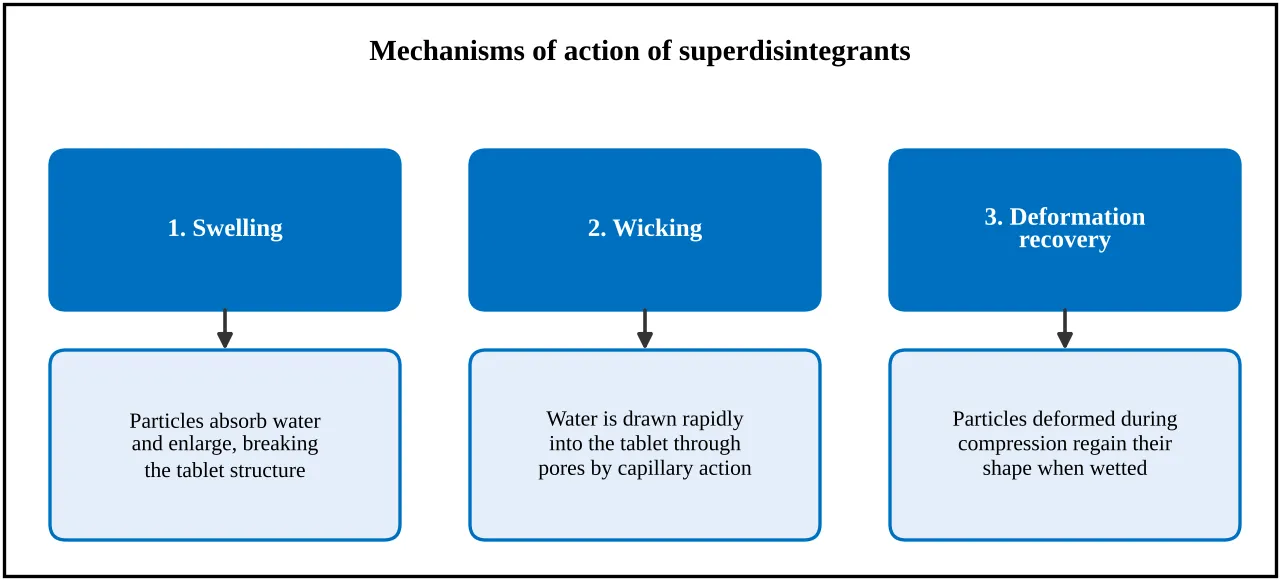
Figure 1: Mechanisms of Action of Superdisintegrants
Table: Comparison of Synthetic Superdisintegrants and Natural Mucilages[5,6,12]
| Sr. No. | Feature | Synthetic superdisintegrants | Natural mucilages |
|---|---|---|---|
| 1 | Source | Chemically modified polymers | Seeds or husk of plants |
| 2 | Cost and availability | Higher cost; supplied by manufacturers | Low cost; locally available |
| 3 | Safety | Well established | Generally regarded as safe; need quality control |
| 4 | Biodegradability | Variable | Biodegradable |
| 5 | Consistency | High batch-to-batch consistency | May vary with source and extraction |
| 6 | Regulatory status | Pharmacopoeial excipients | Often non-official; need characterisation |
Natural Mucilages as Superdisintegrants
Plant mucilages are hydrophilic polysaccharides, which hydrate and swell rapidly in water. Mucilages from the seeds or husk of Isapgol (Plantago ovata), Linseed (Linum usitatissimum), Aliv or garden cress (Lepidium sativum) and Fenugreek (Trigonella foenum-graecum) have been reported as disintegrants and binders in tablets, and all four plants are easily available in Maharashtra.[7,8,13,14,15,16,17]
Table: Natural Sources of Mucilage Used in Fast Dissolving Tablets[6,7,8]
| Sr. No. | Plant | Family | Part used | Main feature |
|---|---|---|---|---|
| 1 | Isapgol (Plantago ovata) | Plantaginaceae | Seed husk | Highly swelling polysaccharide mucilage |
| 2 | Linseed (Linum usitatissimum) | Linaceae | Seeds | Mucilage rich in polysaccharides; good swelling |
| 3 | Aliv, garden cress (Lepidium sativum) | Brassicaceae | Seeds | Mucilage swells rapidly in water |
| 4 | Fenugreek (Trigonella foenum-graecum) | Fabaceae | Seeds | Galactomannan-rich mucilage |
Method of Isolation of Mucilage
The mucilage is generally isolated by extraction with water followed by precipitation with a non-solvent.[7,8,17] The steps are described below.
Step 1: Collection and Cleaning
The seeds or husk are purchased from a reliable source, authenticated and cleaned to remove foreign matter.
Step 2: Soaking and Heating
About 10 g of the material is soaked in 200 mL of distilled water for 12 to 24 hours and then heated gently on a water bath for about 30 minutes, so that the mucilage is released into the water.
Step 3: Separation of the Mucilage
The mass is squeezed through muslin cloth to separate the seeds or husk from the mucilage.
Step 4: Precipitation
The filtered mucilage is precipitated by adding about twice its volume of ethanol (or acetone), and the precipitate is separated and washed.
Step 5: Drying, Powdering and Storage
The precipitate is dried in a hot air oven at 45 to 50 °C, powdered, passed through sieve no. 80 and stored in a desiccator.
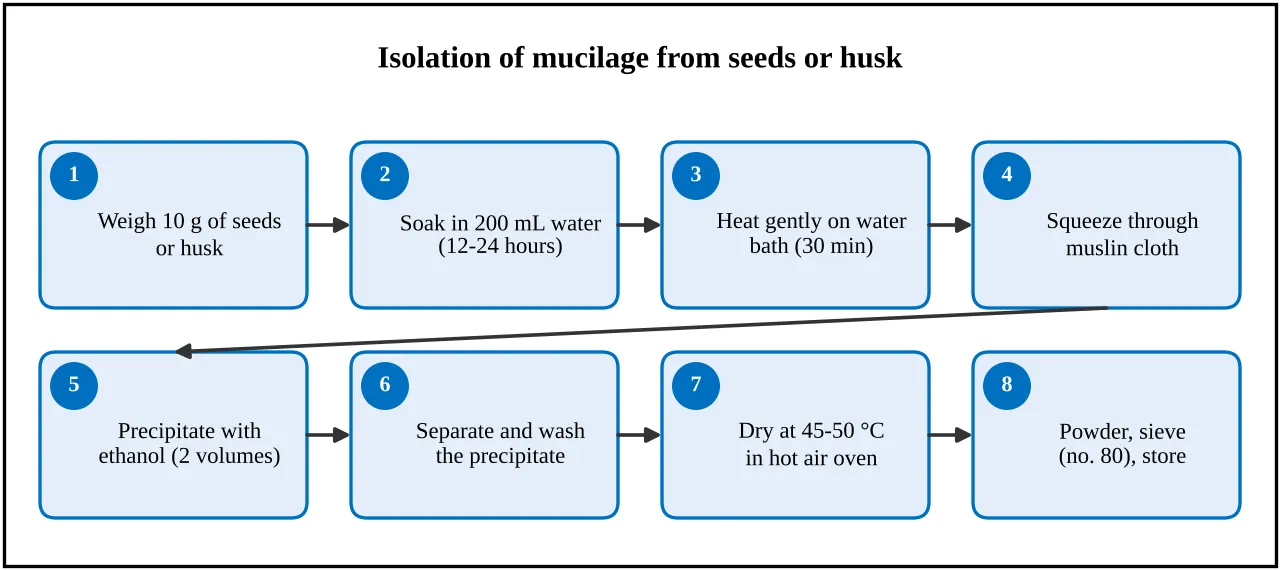
Figure 2: Isolation of Mucilage from Seeds or Husk
Characterisation of the Mucilage
Table: Tests for Characterisation of Isolated Mucilage[6,8,17]
| Sr. No. | Test | Method |
|---|---|---|
| 1 | Percentage yield | Weight of dried mucilage divided by weight of starting material × 100 |
| 2 | Organoleptic properties and solubility | Colour, odour, taste; behaviour in water, ethanol, acetone and chloroform |
| 3 | pH | 1% w/v dispersion measured with a pH meter |
| 4 | Loss on drying | Dried at 105 °C to constant weight |
| 5 | Swelling index | 1 g powder in 100 mL water for 24 hours; volume of swollen mass noted |
| 6 | Micromeritic properties | Angle of repose, bulk and tapped density, Carr's index, Hausner's ratio |
| 7 | Chemical tests | Molisch test (carbohydrates), ruthenium red test (mucilage), tests for tannins, protein and starch |
Method of Preparation of Fast Dissolving Tablets by Direct Compression
Direct compression is the simplest and most economical method, as it uses ordinary tablet-making equipment and needs no heat or solvent.[3,10] It also allows the effect of the superdisintegrant to be studied without interference from other process variables.
Step 1: Weighing and Sieving
The drug, superdisintegrant, diluents (mannitol, microcrystalline cellulose) and sweetener are weighed accurately and passed through sieve no. 60.
Step 2: Blending
The ingredients are blended thoroughly in a polybag or a blender, so that the drug and the disintegrant are distributed uniformly.
Step 3: Addition of Lubricant and Glidant
Magnesium stearate and talc are added last and mixed for 3 to 5 minutes, since longer mixing of the lubricant can weaken the tablet and slow its disintegration.[11]
Step 4: Compression
The blend is compressed on a single-punch or rotary tablet machine to the target weight, keeping the hardness the same in all batches, so that differences in disintegration can be attributed to the type and level of the disintegrant.
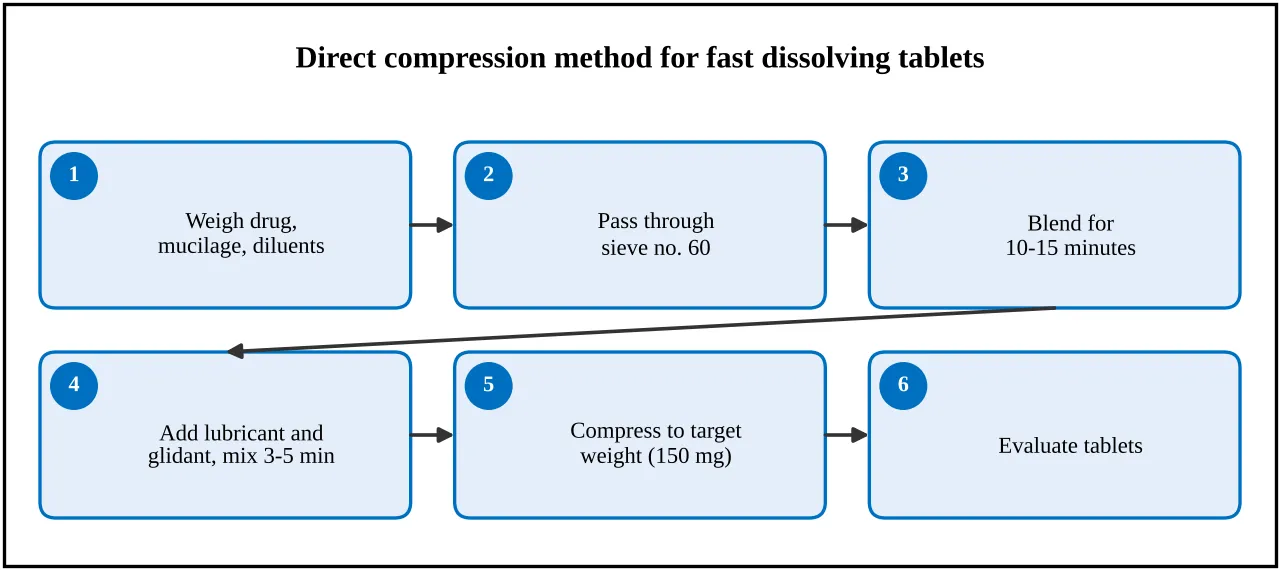
Figure 3: Direct Compression Method for Fast Dissolving Tablets
Table: Typical Composition of a Fast Dissolving Tablet[5,10,12]
| Sr. No. | Component | Examples | Function |
|---|---|---|---|
| 1 | Active drug | Low-dose drug with suitable taste | Therapeutic action |
| 2 | Superdisintegrant | Natural mucilages; croscarmellose sodium, crospovidone, sodium starch glycolate | Rapid disintegration |
| 3 | Diluent | Mannitol, microcrystalline cellulose | Bulk, sweetness, binding |
| 4 | Sweetener and flavour | Aspartame, saccharin sodium; flavours | Taste masking |
| 5 | Lubricant and glidant | Magnesium stearate, talc | Flow and release from the die |
Selection of the Drug
A drug for an FDT should be of low dose, stable, and have an acceptable taste or one that can be masked. Anti-emetic drugs such as ondansetron are often chosen as model drugs, since patients with nausea and vomiting cannot easily swallow tablets with water and need a rapid onset.[1,2]
Evaluation of Fast Dissolving Tablets
The blend is evaluated before compression and the tablets after compression. The tests, methods and expected results are given below.[4,5,10]
Table: Evaluation of Fast Dissolving Tablets[4,5,10,11]
| Sr. No. | Test | Method | Expected Result |
|---|---|---|---|
| 1 | Pre-compression properties | Angle of repose, bulk and tapped density, Carr's index, Hausner's ratio | Good flow and compressibility |
| 2 | Weight variation | Weigh 20 tablets individually | Within the pharmacopoeial limit |
| 3 | Thickness | Vernier calliper | Uniform |
| 4 | Hardness | Hardness tester | Enough for handling, but soft enough to disintegrate |
| 5 | Friability | Friabilator, 100 revolutions | Less than 1% |
| 6 | Drug content | UV spectrophotometric assay | 90 to 110% of label claim |
| 7 | Wetting time and water absorption ratio | Tablet on dye-wetted tissue paper; weight gain | Short wetting time; high water uptake |
| 8 | In vitro disintegration time | Disintegration apparatus at 37 ± 0.5 °C | About 30 seconds or less |
| 9 | In vitro dissolution | USP II paddle, 50 rpm, 900 mL medium at 37 ± 0.5 °C | Rapid release, comparable to the synthetic control |
| 10 | Stability | 40 ± 2 °C and 75 ± 5% RH as per ICH Q1A(R2)[18] | No change in appearance, disintegration time and content |
Review of Literature
Seager (1998) described the development of the Zydis fast-dissolving dosage form, one of the first commercial fast-dissolving products, which is prepared by freeze drying and dissolves almost instantly in the mouth.[9] Habib et al. (2000) reviewed fast-dissolve drug delivery systems and the technologies used to make them, their advantages and their limitations, such as taste, mechanical strength and moisture sensitivity.[1]
Fu et al. (2004) reviewed orally fast disintegrating tablets, covering the manufacturing technologies, taste masking and clinical studies, and pointed out that the choice of disintegrant strongly influences the disintegration time and mouthfeel.[2] Bandari et al. (2008) gave an overview of orodispersible tablets and highlighted direct compression as the simplest and most economical method, and Bhowmik et al. (2009) discussed the mechanisms of superdisintegrants and the quality-control tests.[3,5] The US FDA guidance (2008) describes the characteristics expected of an orally disintegrating tablet, including a disintegration time of about 30 seconds or less.[4]
Kulkarni et al. (2002) evaluated the binding property of mucilages of Plantago ovata and Trigonella foenum-graecum in tablets, and Kumar et al. (2009) isolated mucilage from fenugreek seeds and evaluated its disintegrant properties.[7,8] Shirsand et al. (2009) used Plantago ovata mucilage as a superdisintegrant in fast disintegrating tablets of prochlorperazine maleate, and reported that the batch with 8% mucilage dispersed in about 8 seconds and released the drug faster than the conventional tablet.[13]
Shrotriya et al. (2010) studied the disintegration properties of Linum usitatissimum mucilage in dispersible tablets of diltiazem hydrochloride, and reported that it was more efficient than starch.[14] Inamdar et al. (2012) described the isolation and evaluation of fenugreek and flaxseed mucilages as pharmaceutical binders.[17] Goyal et al. (2013) developed fast dissolving tablets of losartan potassium using mucilages of Plantago ovata and Lepidium sativum, and Prajapati et al. (2014) made fast-dissolving tablets of aceclofenac with natural superdisintegrants, including Lepidium sativum seed mucilage.[15,16]
Table: Summary of Studies on Natural Mucilages in Tablets[7,8,13,14,15,16,17]
| Sr. No. | Source of mucilage | Study | Drug / system | Main point examined |
|---|---|---|---|---|
| 1 | Isapgol and Fenugreek | Kulkarni 2002 | Tablet formulations | Binding property |
| 2 | Isapgol | Shirsand 2009 | Prochlorperazine maleate FDT | Mucilage level, dispersion time, wetting time |
| 3 | Linseed | Shrotriya 2010 | Diltiazem HCl dispersible tablet | Disintegration compared with starch |
| 4 | Fenugreek | Kumar 2009 | Tablets | Disintegrant properties |
| 5 | Aliv and others | Prajapati 2014 | Aceclofenac FDT | Natural superdisintegrants |
| 6 | Isapgol and Aliv | Goyal 2013 | Losartan potassium FDT | Mucilage type and level (factorial design) |
| 7 | Fenugreek and Linseed | Inamdar 2012 | Mucilages as binders | Isolation and properties |
Research gap
Most studies examined one mucilage at a time, in different model drugs, at different concentrations and by different methods, so the natural agents cannot be compared directly. Few studies compare several seed mucilages with a synthetic superdisintegrant in the same formulation and under the same conditions.[13,14,15,16]
CONCLUSION
Fast dissolving tablets help patients who cannot swallow conventional tablets, and direct compression is a simple and economical way of making them. The superdisintegrant decides the disintegration time, and natural mucilages of Isapgol, Linseed, Aliv and Fenugreek are cheap, biodegradable, locally available alternatives to synthetic superdisintegrants, which have been reported to give rapid disintegration and quick drug release.
However, natural mucilages vary with their source and method of extraction, and are mostly non-official, so they need proper characterisation and quality control. Further work is required to compare the mucilages in the same formulation with a synthetic control, to study taste masking, toxicity and stability, and to confirm the performance in more model drugs and in vivo.
REFERENCES

Arati A. Patil, Pranjal P. Bande, Divya R. Arbat, Dnyaneshwari A. Darade, Rupali S. Gavande, Tejal V. Gophane, R. H. Kale, Fast Dissolving Tablets Using Natural Superdisintegrating Agents: A Review, Int. J. of Pharm. Sci., 2026, Vol 4, Issue 10, 3421-3428. https://doi.org/10.5281/zenodo.23623467
 10.5281/zenodo.23623467