
View Article

Abstract

Chronic Kidney Disease (CKD) is a non-curable disease associated with a progressive loss of kidney function, which is one of the major burdens of modern medicine. Despite the great advances made in terms of CKD diagnosis and treatment, there are no personalized approaches, as current methods take into consideration only general characteristics, but ignore individual genetic differences between patients. The development of such genomics technologies as GWAS, NGS, WES, and WGS has allowed increasing the knowledge about the genetics of CKD and disease-related genes and pathways. The integration of genomics and multi-omics, as well as pharmacogenomics, has played an essential role in diagnosis and treatment of CKD. Moreover, AI and ML techniques have turned out to be very helpful in the interpretation of complex genomics data and making decisions in the clinical setting. However, such barriers as high costs, lack of accessibility, ethical questions, data privacy concerns, and inadequate usage in a clinical setting have continued to limit the usage of genomics in nephrology. This paper brings to light the progress made in the field of personalized medicine with the help of genomics in CKD and its future potential

Keywords

CKD, Precision medicine, Genomics, Pharmacogenomics, Multi-omics, Artificial Intelligence, Precision neph

Introduction

× Popup Image

Chronic Kidney Disease is defined as the disease which entails damage to the structure and function of the kidneys for a period greater than three months. It is worth noting that this disease is known to afflict about 10% of the global population. Chronic Kidney Disease is becoming an important health issue because of the connection to cardiac disease, kidney failure, and even mortality. Diabetes Mellitus and Hypertension have been known to be the major risk factors for this disease[1].

Presently, current approaches toward managing CKD patients are geared towards the control of blood pressure, glycemia, proteinuria, and other modifiable risk factors to prevent progression of the disease. There is significant variation in the rate of progression and response to treatments between patients who have comparable clinical presentations, thus the need to understand the importance of genetic and molecular factors.

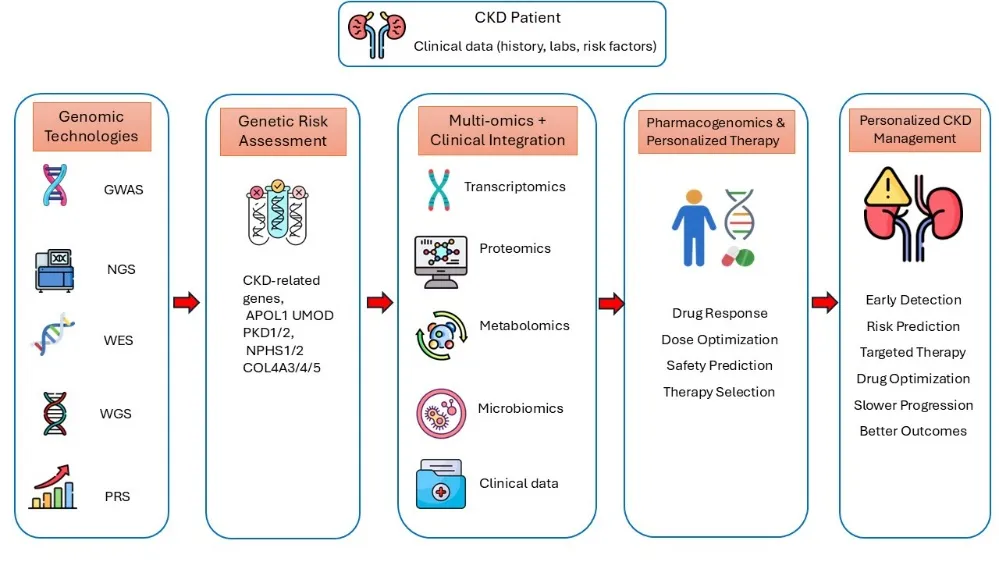
Thanks to recent advancements in the field of genomic technology, including GWAS, NGS, WES, and WGS, the specialty of nephrology has reaped great benefits from identification of genetic variations in both inherited and complex renal diseases. These include the major genes that are believed to be playing a key role in development of CKD; these genes are APOL1, UMOD, PKD1, PKD2, NPHS1, and COL4A5. In addition to this, genomics combined with the use of other omics, including transcriptomics, proteomics, metabolomics, and epigenomics, have provided an insight into the pathogenesis of CKD[2].

Personalized medicine using genomics approaches involves the integration of genetic, molecular, and clinical data to facilitate individual diagnosis, risk prediction, and management of chronic kidney disease. Pharmacogenomics and the development of artificial intelligence are making significant strides in facilitating precise medicine for nephrology through better drug choice, risk prediction, and decision making[3].

2. Overview of Chronic Kidney Disease

The term chronic kidney disease means that there is an anomaly with the structure and functioning of the kidneys that has continued for more than three months. The diagnosis of chronic kidney disease includes an individual’s eGFR that is lower than 60 mL/min/1.73 m2 accompanied by other evidence of kidney impairment such as albuminuria. There is progressive loss of renal functioning resulting in fluid and electrolyte imbalance[4].

The figure demonstrates how genomic technologies, risk assessments for genetic susceptibility, multiple omics data, and clinical information can be integrated for personalized diagnostics, risk predictions, treatment choices, and management of CKD.
figure

Figure 1: Framework of Precision Nephrology for CKD Management.

2.1 Epidemiology

Chronic kidney disease has become one of the major problems in world public health and it affects about 10 percent of the world’s population. The prevalence rate of the patients affected by the condition is on the increase due to increasing incidences of factors like diabetes, hypertension, obesity, and aging. One of the main reasons for the delay in diagnosis of CKD is because the condition does not exhibit any symptoms[5].

2.2 Classification of CKD

The stages of CKD are defined based on the Glomerular Filtration Rate (GFR) in terms of eGFR and further categorized in terms of its severity using albuminuria staging. The first two stages involve slightly dysfunctional kidneys that have good functioning whereas the other three stages show progressively worsening functionality of the kidneys. Stage 5 or ESKD is the stage where there has been severe malfunctioning of the kidney and requires renal replacement therapy such as dialysis or transplantation of the kidney[6].

2.3 Pathophysiology

The chronic kidney disease is a consequence of a complicated interrelationship of multiple factors including genetics, metabolism, inflammation, and environment. The persistent injury of the kidneys triggers an enhancement of the inflammatory processes, development of the fibrosis, glomerulosclerosis, and tubular atrophy which results in the reduction of the number of nephrons. The compensatory mechanism of hyperfiltration promotes the progression of the disease[7].

2.4 Risk Factors

Chronic kidney disease (CKD) development may rely on various risk factors which are not all modifiable and non-modifiable. The major cause of CKD is either diabetes or hypertension followed by obesity, smoking, cardiovascular disease, medications with harmful effect to kidneys, repeated infections of the kidney, and unhealthy lifestyle. Age, genetic predisposition and congenital abnormalities of kidneys can also have influence on development of CKD[8].

3. Genetics of Chronic Kidney Disease

3.1 Genetic Basis of CKD

Chronic Kidney Disease is an ailment whose causation occurs as a result of a mixture of different components such as environmental and genetic elements. In addition to the factors of diabetes and hypertension, genetics play a major role in the assessment of risk, progression of the disease and its response to treatment. The findings of recent researches in genomics have identified many genes associated with CKD, thereby providing a clearer picture of the disease mechanism[9].

3.2 Monogenic and Polygenic Kidney Diseases

The disease can result from the monogenic and polygenic nature of genetics. Monogenic diseases such as autosomal dominant polycystic kidney disease and Alport syndrome are a result of genetic mutation due to an inheritable gene. Nevertheless, CKD is a polygenic disorder since its development involves interaction with environmental and lifestyle factors[10].

3.3 Major Genes Associated with CKD

Gene Associated Disease Role in CKD
APOL1 CKD, FSGS Risk factor for CKD, particularly among people of African descent
PKD1 ADPKD Cause renal cysts and progressive kidney dysfunction
PKD2 ADPKD The cause of cyst formation and decline in kidney function
Uromodulin. ADTKD Causes tubular dysfunction and progressive CKD
Nephrin. Genetic Nephrotic Syndrome Impairs glomerular filtration, leading to proteinuria
Podocin. SRNS Causes podocyte injury and progressive kidney damage
Collagen Type IV Alpha 3/4/5. Alport Syndrome Disrupt glomerular basement membrane, causing hereditary nephropathy

3.4 Clinical Importance of Genetic Testing

It should be noted that genetic testing has now become an essential part of the management of chronic kidney disease patients (CKD). Genetic testing enables the identification of genetic kidney diseases, individuals who are genetically at risk of developing such diseases, genetic counseling, and screening, along with development of personalized treatment plans. An early diagnosis will aid in the prediction of disease prognosis[11].

3.5 Role of Genetics in Personalized Medicine

Clinical utilization of genetic data has promoted the concept of precision nephrology, leading to the ability to make a more precise diagnosis, stratify patients’ risks, provide prognoses, and offer tailored treatment for patients with chronic kidney diseases (CKD). The discovery of genetic variants responsible for the disease helps develop therapies, monitor patients, and implement interventions that can slow down the progression of the CKD[12].

4. Genomic Technologies in Chronic Kidney Disease

4.1 Next-Generation Sequencing

The emergence of NGS technology has changed the way chronic kidney diseases can be diagnosed, owing to its fast and economical means for identifying genetic mutations associated with CKDs. It makes it easier to diagnose hereditary kidney conditions and identify rare mutations that help in precision medicine[13].

4.2 Whole-Exome Sequencing

WES analyzes only the coding region of the genome. It is effective in finding out the causative gene mutation in CKDs. This method is commonly used to find out the cause of rare and inherited kidney disease. The mutation causing nephrotic syndrome and polycystic kidney disease can be found out using this technique[14,15].

4.3 Whole-Genome Sequencing

Whole genome sequencing allows for a thorough analysis of coding and non-coding regions of the genome and discovery of various types of mutations that could cause CKD. This method provides more comprehensive data about the genome than whole-exome sequencing and is currently widely used in practice and research[16].

4.4 Genome-Wide Association Studies

Genome wide association studies have detected many genes that are related to CKD, such as genes affecting kidney function, eGFR levels, proteinuria and disease progression. The findings have helped in improving the knowledge about CKD pathogenesis and helped to find biomarkers and therapeutic targets for the treatment of the disease[17].

4.5 Polygenic Risk Score

The polygenic risk score is used for assessing an individual’s genetic predisposition for developing chronic kidney disease through the contribution of multiple genetic variants. With the use of PRS in combination with the clinical and environmental risk factors, it will be possible to enhance the process of risk prediction and stratification of patients[18].

4.6 Single-Cell Sequencing

With the advent of single-cell sequencing, it is now possible to perform gene expression studies on a single cell basis that provide an understanding of heterogeneity in kidney cells and the underlying biological mechanisms that cause chronic kidney disease. This technique has contributed towards elucidating disease-specific pathways related to inflammation, fibrosis, and immune response and the discovery of novel biomarkers[19].

4.7 CRISPR-Cas9 Technology

The CRISPR-Cas9 system is an advanced technology used to edit genes and has found great utility in CKD studies. It helps in studying the role of genes, developing CKD models, and discovering new drug targets. Even though this system is yet to find its place in clinical practice, CRISPR therapeutics have huge potential for mutation correction and precision medicine[20].

5. Multi-Omics Approaches in Chronic Kidney Disease

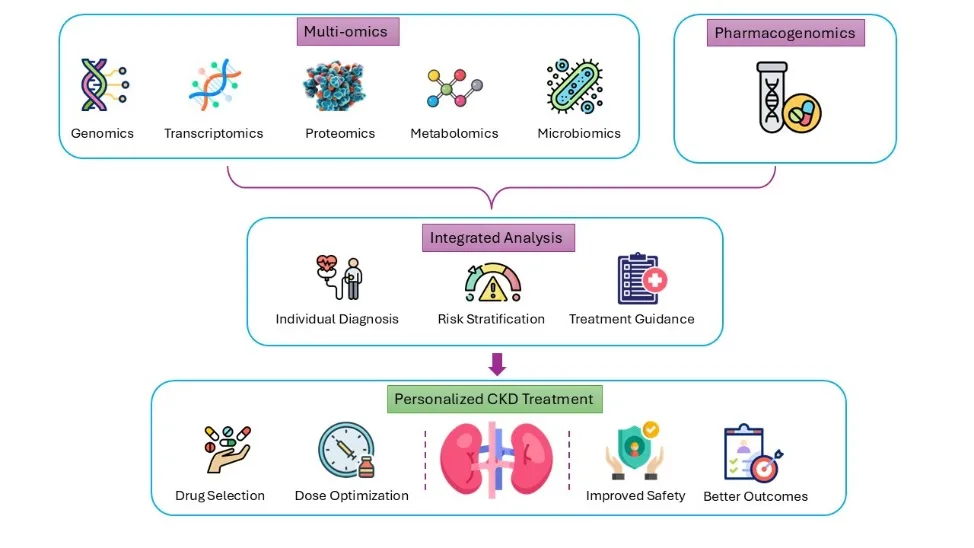
Multi-Omics encompasses the genomic, transcriptomic, epigenomic, proteomic, metabolomics, and microbiomic information to provide an insight into CKD. The multi-omics approach can be applied to determine the pathways and biomarkers that are unique to the diseases and hence can be used in predicting, diagnosing, and treating CKD[21].

The diagram shows the use of multi-omics and pharmacogenomics in personalized treatment of CKD.
figure

Figure 2: Integration of Multi-Omics and Pharmacogenomics in Personalized CKD Treatment.

5.1 Genomics

Genomics focuses on studying the entire genome of an individual for detecting variants that contribute to CKD. Genomics has helped in improving our knowledge about CKD predisposition, disease progression, and therapy outcomes through gene detection and early disease detection and risk prediction[22].

5.2 Transcriptomics

The science of transcriptomics studies the patterns of RNA expression in order to learn about the workings of genes both under healthy and diseased states. In the case of chronic kidney disease (CKD), the study of the patterns of genes can identify alterations in the functions of inflammation, fibrosis, oxidative stress, and immune regulation[23].

5.3 Epigenomics

Epigenomics is the term used for studying the heritable changes in gene expression, which do not occur owing to any genetic sequence changes. The epigenetic changes like DNA methylation, histone modifications, and noncoding RNA play a major role in regulation of inflammatory, fibrotic and senescent genes in relation to CKD. The epigenomic changes play a very crucial role in CKD and can be used as biomarkers as well as drug targets[24].

5.4 Proteomics

The term proteomics is used to define the comprehensive study of proteins along with their physiological roles. Proteomics-based analysis of chronic kidney disease (CKD) patients provides clues regarding protein markers associated with kidney injury, inflammation, fibrosis, and CKD development[25].

5.5 Metabolomics

Metabolomics is the study of small molecules and metabolites to determine the biochemical variations that occur as a result of disease conditions. In CKD, the metabolomics approach helps to identify biochemical variations in amino acid, lipid, energy metabolism, and accumulation of uremic toxins[26].

5.6 Microbiomics

Microbiomics is a branch of science that studies the gut microbial composition and its interplay with the host. The development of CKD is facilitated by microbiome dysbiosis and its impact on the gut-kidney axis through increased inflammatory response, uremic toxins accumulation and inflammation. Microbiome profiling has become a new way of searching for biomarkers and therapeutic approaches in nephrology[27].

5.7 Integration of Multi-Omics

The incorporation of many omics techniques offers an integrated understanding of CKD through the use of genomics, transcriptomics, proteomics, metabolomics, epigenomics, and microbiomes. The integration of omics approaches helps improve CKD classification, biomarker identification, risk prediction, and personalized therapies, whereas the integration of AI and bioinformatics is improving the practice of precision nephrology[28].

6. Pharmacogenomics in CKD

Pharmacogenomics is concerned with the impact of genetic differences on the way people react to drugs. In CKD patients, pharmacogenomics is useful in optimizing the choice of drug and dosage based on drug effectiveness, metabolism, and potential for adverse drug reaction[29].

6.1 ACE Inhibitors

ACE inhibitors are the backbone of treating patients with CKD, especially with hypertension and proteinuria. Genetic variation in RAAS and specifically the I/D genotype of the ACE gene can impact the outcome of using ACE inhibitors. The pharmacogenomic approach can be used to maximize the benefit of ACE inhibitors while decreasing the risks associated with their use[30].

6.2 Angiotensin Receptor Blockers

ARBs (angiotensin II receptor blockers) have been commonly employed for the treatment of CKD in those patients where ACE inhibitors cannot be taken by them. Different genetic differences in renin-angiotensin-aldosterone system, including AGTR1, AGT, etc., could affect the effectiveness of ARBs. The pharmacogenomic approach could assist in improving the use of ARBs and their efficiency[31].

6.3 SGLT2 inhibitors

Sodium-glucose co-transporter 2 inhibitors have proven to be important drugs in the treatment of CKD by delaying the disease course and lowering the risk of complications in the heart and cardiovascular system. There are studies proving that there might be genetic differences affecting the glucose metabolism, renal function, and pharmacological response to these inhibitors[32].

6.4 Immunosuppression

Immunosuppressive medications such as tacrolimus, cyclosporine, and mycophenolate mofetil are of extreme importance for the area of kidney transplant surgery and kidney disorders associated with immunity [33].

6.5 Erythropoiesis-Stimulating Agents

Anemia is a frequent complication associated with CKD and anemia can be managed using erythropoiesis stimulating agents. There is significant variation in the way patients respond to ESA therapy, with some of the variation being genetically determined in the way red blood cells are formed and iron is metabolized[34].

6.6 Vitamin D Therapy

Vitamin D deficiency has been found commonly in patients with CKD, causing mineral and bone disease. Genetic variations associated with vitamin D metabolism and action at receptors may affect the effectiveness of the therapy. Genetic-based personalized supplementations may help in improving the results of therapy in particular patients[35].

6.7 Clinical Significance of Pharmacogenomics

With pharmacogenomics included in CKD treatment, there will be better chances for doctors to identify the best drugs for use, their right dosages, and also possible reactions to them, thus ensuring that all patients get the best from their medication. With genomic testing becoming easier, pharmacogenomics will play a major role in nephrology in future[36].

Personalized management of CKD is significantly enhanced by pharmacogenomics because of its ability to explain the differences in how patients respond to the same drugs. The use of genetic data to guide drug therapy can help achieve better outcomes for patients.

7. Clinical Applications of Personalized Medicine Using Genomics Approach in Chronic Kidney Disease

Personalized medicine using genomics approach has revolutionized the treatment of CKD by facilitating early detection, risk stratification, customized treatment, and better disease monitoring. The use of genomic data in clinical practice promotes precision nephrology[37].

7.1 Early Diagnosis

Through genetic testing, it is possible to detect the occurrence of hereditary kidney diseases prior to any damage to the kidney. Early detection helps in the prompt management of the disease and its prevention[38].

7.2 Risk Prediction and Stratification

Genomic data can be used to determine the susceptibility of an individual to CKD and determine the probability of progression of the condition. A combination of genetics and clinical indicators enables health practitioners to categorize patients based on their risk and monitor them accordingly[39].

7.3 Biomarker Discovery

There exist different biomarkers that have been identified using genomic and multi-omics research and which are linked to kidney damage, inflammation, fibrosis, and progression of the disease. Such biomarkers enhance diagnosis and help in early detection of CKD[40].

7.4 Personalized Drug Therapy

The genetic variations affect the response of the patient towards the medications that are utilized in treating chronic kidney disease. The use of pharmacogenomic data helps to select the right medication and dose for better treatment[41].

7.5 Disease Monitoring, Kidney Transplantation, Precision Nephrology, Genetic Counseling

The use of genomics in a clinical setting has immensely contributed to the management of chronic kidney disease (CKD) through molecular monitoring of diseases, genetic counseling, kidney transplantation, and nephrology tailored to an individual patient. Molecular markers assist in the early detection of disease progression and treatment efficacy. Genetic counseling aids patients in making proper decisions and analyzing their risks within the family[42]. In kidney transplantations, genomics and pharmacogenomics help with donor and recipient compatibility and also optimize the administration of drugs that suppress immunity. Precision nephrology makes use of genomics, molecules, clinical and environmental data[43].

8. Artificial Intelligence and Machine Learning in CKD

The use of genomics in a clinical setting has immensely contributed to the management of chronic kidney disease through molecular monitoring of diseases, genetic counseling, kidney transplantation, and nephrology tailored to an individual patient. Molecular markers assist in the early detection of disease progression and treatment efficacy. Genetic counseling aids patients in making proper decisions and analyzing their risks within the family. In kidney transplantations, genomics and pharmacogenomics help with donor and recipient compatibility and also optimize the administration of drugs that suppress immunity. Precision nephrology makes use of genomics, molecules, clinical and environmental data[44,45].

9. Challenges and Limitations of Genomics-Based Personalized Medicine in Chronic Kidney Disease

In spite of the vast opportunities that genomics-based personalized medicine holds for treatment, a number of factors hinder the practical application of this method in a regular medical practice. These include the high cost of genomics technologies, lack of availability of genetic testing, difficulties in interpreting variants of uncertain significance (VUS), ethics and legal issues, security problems, absence of representation of various groups in genomics research, and lack of integration into clinical practice. Overcoming these difficulties will play a key role in the successful implementation of precision nephrology[46,47].

10. Future Perspectives

Revolution in the treatment of CKD can be seen in the future, as a result of genomics, multi-omics, artificial intelligence (AI), gene editing, and digital health. Methods like long read sequencing, single cell genomics, spatial transcriptomics, and CRISPR Cas9 would be instrumental in the diagnosis, biomarker discovery, and personalized treatment, along with the analysis of genomics and clinical data through the use of AI in order to predict the risk of the disease, select treatment, and monitor the progression of the disease. Genomics with electronic health records, wearables, and telemedicine would provide further assistance in the prevention and continuous healthcare of the patient[48–50].

CONCLUSION

Despite being one of the most common health problems across the globe, chronic kidney disease (CKD) is being addressed effectively by using personalized medicine based on genomics for better diagnostics, risk stratification, and treatment. Various scientific breakthroughs in the field of genomics, such as development of genomic technologies, integration of multiple omics, pharmacogenomics, and artificial intelligence, contribute towards precision nephrology and individualization of patient care in relation to chronic kidney disease. Despite various obstacles in the process, such as cost, accessibility, interpretation of results, ethical concerns, and integration of these changes into clinics, further research can help to use genomics routinely in CKD practice[51–55].

REFERENCES

  1. Heerspink HJL, Stefánsson BV, Correa-Rotter R, et al. Dapagliflozin in Patients with Chronic Kidney Disease. N Engl J Med 2020;383:1436–46. https://doi.org/10.1056/NEJMoa2024816.
  2. Stevens PE, Ahmed SB, Carrero JJ, et al. KDIGO 2024 Clinical Practice Guideline for the Evaluation and Management of Chronic Kidney Disease. Kidney Int 2024;105:S117–314. https://doi.org/10.1016/j.kint.2023.10.018.
  3. Elliott MD, Rasouly HM, Gharavi AG. Genetics of Kidney Disease: The Unexpected Role of Rare Disorders. Annu Rev Med 2023;74:353–67. https://doi.org/10.1146/annurev-med-042921-101813.
  4. Levin A, Ahmed SB, Carrero JJ, et al. Executive summary of the KDIGO 2024 Clinical Practice Guideline for the Evaluation and Management of Chronic Kidney Disease: known knowns and known unknowns. Kidney Int 2024;105:684–701. https://doi.org/10.1016/j.kint.2023.10.016.
  5. Khatib R, McKee M, Yusuf S. Counting the dead in Gaza: difficult but essential. The Lancet 2024;404:237–8. https://doi.org/10.1016/S0140-6736 (24)01169-3.
  6. Levin A, Ahmed SB, Carrero JJ, et al. Executive summary of the KDIGO 2024 Clinical Practice Guideline for the Evaluation and Management of Chronic Kidney Disease: known knowns and known unknowns. Kidney Int 2024;105:684–701. https://doi.org/10.1016/j.kint.2023.10.016.
  7. Stevens PE, Ahmed SB, Carrero JJ, et al. KDIGO 2024 Clinical Practice Guideline for the Evaluation and Management of Chronic Kidney Disease. Kidney Int 2024;105:S117–314. https://doi.org/10.1016/j.kint.2023.10.018.
  8. Francis A, Harhay MN, Ong ACM, et al. Chronic kidney disease and the global public health agenda: an international consensus. Nat Rev Nephrol 2024;20:473–85. https://doi.org/10.1038/s41581-024-00820-6.
  9. Francis A, Harhay MN, Ong ACM, et al. Chronic kidney disease and the global public health agenda: an international consensus. Nat Rev Nephrol 2024;20:473–85. https://doi.org/10.1038/s41581-024-00820-6.
  10. Romagnani P, Agarwal R, Chan JCN, et al. Chronic kidney disease. Nat Rev Dis Primer 2025;11:8. https://doi.org/10.1038/s41572-024-00589-9.
  11. Schott C, Lebedeva V, Taylor C, et al. Utility of Genetic Testing in Adults with CKD: A Systematic Review and Meta-Analysis. Clin J Am Soc Nephrol 2025;20:101–15. https://doi.org/10.2215/CJN.0000000000000564.
  12. Franceschini N, Feldman DL, Berg JS, et al. Advancing Genetic Testing in Kidney Diseases: Report From a National Kidney Foundation Working Group. Am J Kidney Dis 2024;84:751–66. https://doi.org/10.1053/j.ajkd.2024.05.010.
  13. Gaudino R, Tosolini C, Picassi S, et al. Hereditary kidney diseases: New perspectives through next-generation sequencing analysis. Acta Biomed Atenei Parm 2024;95:e2024029. https://doi.org/10.23750/abm.v95i2.14907.
  14. Stark Z, Byrne AB, Sampson MG, et al. A guide to gene–disease relationships in nephrology. Nat Rev Nephrol 2025;21:115–26. https://doi.org/10.1038/s41581-024-00900-7.
  15. Vivante A. Genetics of Chronic Kidney Disease. N Engl J Med 2024;391:627–39. https://doi.org/10.1056/NEJMra2308577.
  16. Stark Z, Byrne AB, Sampson MG, et al. A guide to gene–disease relationships in nephrology. Nat Rev Nephrol 2025;21:115–26. https://doi.org/10.1038/s41581-024-00900-7.
  17. Jefferis J, Mallett AJ. Exploring the impact and utility of genomic sequencing in established CKD. Clin Kidney J 2024;17:sfae043. https://doi.org/10.1093/ckj/sfae043.
  18. Vivante A. Genetics of Chronic Kidney Disease. N Engl J Med 2024;391:627–39. https://doi.org/10.1056/NEJMra2308577.
  19. Vanholder R, Annemans L, Braks M, et al. Inequities in kidney health and kidney care. Nat Rev Nephrol 2023;19:694–708. https://doi.org/10.1038/s41581-023-00745-6.
  20. Vivante A. Genetics of Chronic Kidney Disease. N Engl J Med 2024;391:627–39. https://doi.org/10.1056/NEJMra2308577.
  21. Vivante A. Genetics of Chronic Kidney Disease. N Engl J Med 2024;391:627–39. https://doi.org/10.1056/NEJMra2308577.
  22. Jefferis J, Mallett AJ. Exploring the impact and utility of genomic sequencing in established CKD. Clin Kidney J 2024;17:sfae043. https://doi.org/10.1093/ckj/sfae043.
  23. Stark Z, Byrne AB, Sampson MG, et al. A guide to gene–disease relationships in nephrology. Nat Rev Nephrol 2025;21:115–26. https://doi.org/10.1038/s41581-024-00900-7.
  24. Nanamatsu A, De Araújo L, LaFavers KA, et al. Advances in uromodulin biology and potential clinical applications. Nat Rev Nephrol 2024;20:806–21. https://doi.org/10.1038/s41581-024-00881-7.
  25. Cheng FWT, Chau M, Li X, et al. Risk of first peritonitis episode in continuous ambulatory peritoneal dialysis and automated peritoneal dialysis: a population-based study. Clin Kidney J 2024;17:sfae118. https://doi.org/10.1093/ckj/sfae118.
  26. Granal M, Brokhes-Le Calvez S, Dimitrov Y, et al. External validation of the 2-year mortality prediction tool in hemodialysis patients developed using a Bayesian network. Clin Kidney J 2024;17:sfae095. https://doi.org/10.1093/ckj/sfae095.
  27. Li J, Shen Y, Yan K, et al. The compositional and functional imbalance of the gut microbiota in CKD linked to disease patterns. J Transl Med 2024;22:773. https://doi.org/10.1186/s12967-024-05578-w.
  28. Li J, Shen Y, Yan K, et al. The compositional and functional imbalance of the gut microbiota in CKD linked to disease patterns. J Transl Med 2024;22:773. https://doi.org/10.1186/s12967-024-05578-w.
  29. Groopman E, Milo Rasouly H. Navigating Genetic Testing in Nephrology: Options and Decision-Making Strategies. Kidney Int Rep 2025;10:673–95. https://doi.org/10.1016/j.ekir.2024.12.020.
  30. Groopman E, Milo Rasouly H. Navigating Genetic Testing in Nephrology: Options and Decision-Making Strategies. Kidney Int Rep 2025;10:673–95. https://doi.org/10.1016/j.ekir.2024.12.020.
  31. Stevens PE, Ahmed SB, Carrero JJ, et al. KDIGO 2024 Clinical Practice Guideline for the Evaluation and Management of Chronic Kidney Disease. Kidney Int 2024;105:S117–314. https://doi.org/10.1016/j.kint.2023.10.018.
  32. Yang C, Qin X, Qiu J, et al. Interaction of general obesity and abdominal obesity with frailty in patients with chronic kidney disease: a nationally representative analysis. Clin Kidney J 2024;17:sfae142. https://doi.org/10.1093/ckj/sfae142.
  33. Sanders J-SF, De Boer SE, Jonker J, et al. Immunosuppression in Older Kidney Transplant Recipients: A Randomized Controlled Trial. J Am Soc Nephrol 2026;37:814–24. https://doi.org/10.1681/ASN.0000000924.
  34. Cui C, Nguyen T, Rattu M. Appropriate Use of Inpatient Erythropoiesis Stimulating Agents. Innov Pharm 2024;15:4. https://doi.org/10.24926/iip.v15i4.6284.
  35. Yeung W-CG, Palmer SC, Strippoli GFM, et al. Vitamin D Therapy in Adults With CKD: A Systematic Review and Meta-analysis. Am J Kidney Dis 2023;82:543–58. https://doi.org/10.1053/j.ajkd.2023.04.003.
  36. Ha X, Gao X, Teng W, et al. Pharmacogenomics-Guided Precision Therapy for Chronic Kidney Disease with Resistant Hypertension: A Prospective Cohort Study. Kidney Blood Press Res 2025;51:36–49. https://doi.org/10.1159/000549936.
  37. Nageeta F, Waqar F, Allahi I, et al. Precision Medicine Approaches to Diabetic Kidney Disease: Personalized Interventions on the Horizon. Cureus 2023. https://doi.org/10.7759/cureus.45575.
  38. Gembillo G, Siligato R, Santoro D. Personalized Medicine in Kidney Disease. J Pers Med 2023;13:1501. https://doi.org/10.3390/jpm13101501.
  39. Major RW, Cockwell P, Nitsch D, et al. The next step in chronic kidney disease staging: individualized risk prediction. Kidney Int 2022;102:456–9. https://doi.org/10.1016/j.kint.2022.06.012.
  40. Mizdrak M, Kumrić M, Kurir TT, et al. Emerging Biomarkers for Early Detection of Chronic Kidney Disease. J Pers Med 2022;12:548. https://doi.org/10.3390/jpm12040548.
  41. Xiang M. Guideline-Directed Medical Therapy in Heart Failure. JACC Asia 2025;5:796–8. https://doi.org/10.1016/j.jacasi.2025.03.004.
  42. Caliskan Y, Lee B, Whelan AM, et al. Evaluation of Genetic Kidney Diseases in Living Donor Kidney Transplantation: Towards Precision Genomic Medicine in Donor Risk Assessment. Curr Transplant Rep 2022;9:127–42. https://doi.org/10.1007/s40472-021-00340-3.
  43. Feng Y, Xu S, Feng Y, et al. Genetic testing in pediatric kidney transplant recipients to promote informed choice and improve individualized monitoring. Orphanet J Rare Dis 2024;19:366. https://doi.org/10.1186/s13023-024-03379-4.
  44. Sawhney R, Malik A, Sharma S, et al. A comparative assessment of artificial intelligence models used for early prediction and evaluation of chronic kidney disease. Decis Anal J 2023;6:100169. https://doi.org/10.1016/j.dajour.2023.100169.
  45. Dharmarathne G, Bogahawaththa M, McAfee M, et al. On the diagnosis of chronic kidney disease using a machine learning-based interface with explainable artificial intelligence. Intell Syst Appl 2024;22:200397. https://doi.org/10.1016/j.iswa.2024.200397.
  46. Lee H, Sajid K, Lee D. Bridging Ancestry-Stratified Bias in Pharmacogenomics AI: Toward Metabolomics-Inclusive Multi-Omics Precision Medicine. J Pers Med 2026;16:332. https://doi.org/10.3390/jpm16060332.
  47. Secondulfo F, Del Vecchio Blanco F, Capolongo G, et al. Genome-Based Advances in Modeling Renal Ciliopathies and Enhancing Patient Care. Kidney Blood Press Res 2025;50:545–63. https://doi.org/10.1159/000547131.
  48. Stark Z, Byrne AB, Sampson MG, et al. A guide to gene–disease relationships in nephrology. Nat Rev Nephrol 2025;21:115–26. https://doi.org/10.1038/s41581-024-00900-7.
  49. Rabelink TJ, De Vries APJ. CD38 — a new target in renal immune disease. Nat Rev Nephrol 2024;20:641–2. https://doi.org/10.1038/s41581-024-00874-6.
  50. Wang M. Obesity promotes tumour growth by boosting PD1 levels on macrophages. Nat Rev Nephrol 2024;20:567–567. https://doi.org/10.1038/s41581-024-00878-2.
  51. Stark Z, Byrne AB, Sampson MG, et al. A guide to gene–disease relationships in nephrology. Nat Rev Nephrol 2025;21:115–26. https://doi.org/10.1038/s41581-024-00900-7.
  52. Rabelink TJ, De Vries APJ. CD38 — a new target in renal immune disease. Nat Rev Nephrol 2024;20:641–2. https://doi.org/10.1038/s41581-024-00874-6.
  53. Vivante A. Genetics of Chronic Kidney Disease. N Engl J Med 2024;391:627–39. https://doi.org/10.1056/NEJMra2308577.
  54. Stevens PE, Ahmed SB, Carrero JJ, et al. KDIGO 2024 Clinical Practice Guideline for the Evaluation and Management of Chronic Kidney Disease. Kidney Int 2024;105:S117–314. https://doi.org/10.1016/j.kint.2023.10.018.
  55. Groopman E, Milo Rasouly H. Navigating Genetic Testing in Nephrology: Options and Decision-Making Strategies. Kidney Int Rep 2025;10:673–95. https://doi.org/10.1016/j.ekir.2024.12.020.

Reference

  1. Heerspink HJL, Stefánsson BV, Correa-Rotter R, et al. Dapagliflozin in Patients with Chronic Kidney Disease. N Engl J Med 2020;383:1436–46. https://doi.org/10.1056/NEJMoa2024816.
  2. Stevens PE, Ahmed SB, Carrero JJ, et al. KDIGO 2024 Clinical Practice Guideline for the Evaluation and Management of Chronic Kidney Disease. Kidney Int 2024;105:S117–314. https://doi.org/10.1016/j.kint.2023.10.018.
  3. Elliott MD, Rasouly HM, Gharavi AG. Genetics of Kidney Disease: The Unexpected Role of Rare Disorders. Annu Rev Med 2023;74:353–67. https://doi.org/10.1146/annurev-med-042921-101813.
  4. Levin A, Ahmed SB, Carrero JJ, et al. Executive summary of the KDIGO 2024 Clinical Practice Guideline for the Evaluation and Management of Chronic Kidney Disease: known knowns and known unknowns. Kidney Int 2024;105:684–701. https://doi.org/10.1016/j.kint.2023.10.016.
  5. Khatib R, McKee M, Yusuf S. Counting the dead in Gaza: difficult but essential. The Lancet 2024;404:237–8. https://doi.org/10.1016/S0140-6736 (24)01169-3.
  6. Levin A, Ahmed SB, Carrero JJ, et al. Executive summary of the KDIGO 2024 Clinical Practice Guideline for the Evaluation and Management of Chronic Kidney Disease: known knowns and known unknowns. Kidney Int 2024;105:684–701. https://doi.org/10.1016/j.kint.2023.10.016.
  7. Stevens PE, Ahmed SB, Carrero JJ, et al. KDIGO 2024 Clinical Practice Guideline for the Evaluation and Management of Chronic Kidney Disease. Kidney Int 2024;105:S117–314. https://doi.org/10.1016/j.kint.2023.10.018.
  8. Francis A, Harhay MN, Ong ACM, et al. Chronic kidney disease and the global public health agenda: an international consensus. Nat Rev Nephrol 2024;20:473–85. https://doi.org/10.1038/s41581-024-00820-6.
  9. Francis A, Harhay MN, Ong ACM, et al. Chronic kidney disease and the global public health agenda: an international consensus. Nat Rev Nephrol 2024;20:473–85. https://doi.org/10.1038/s41581-024-00820-6.
  10. Romagnani P, Agarwal R, Chan JCN, et al. Chronic kidney disease. Nat Rev Dis Primer 2025;11:8. https://doi.org/10.1038/s41572-024-00589-9.
  11. Schott C, Lebedeva V, Taylor C, et al. Utility of Genetic Testing in Adults with CKD: A Systematic Review and Meta-Analysis. Clin J Am Soc Nephrol 2025;20:101–15. https://doi.org/10.2215/CJN.0000000000000564.
  12. Franceschini N, Feldman DL, Berg JS, et al. Advancing Genetic Testing in Kidney Diseases: Report From a National Kidney Foundation Working Group. Am J Kidney Dis 2024;84:751–66. https://doi.org/10.1053/j.ajkd.2024.05.010.
  13. Gaudino R, Tosolini C, Picassi S, et al. Hereditary kidney diseases: New perspectives through next-generation sequencing analysis. Acta Biomed Atenei Parm 2024;95:e2024029. https://doi.org/10.23750/abm.v95i2.14907.
  14. Stark Z, Byrne AB, Sampson MG, et al. A guide to gene–disease relationships in nephrology. Nat Rev Nephrol 2025;21:115–26. https://doi.org/10.1038/s41581-024-00900-7.
  15. Vivante A. Genetics of Chronic Kidney Disease. N Engl J Med 2024;391:627–39. https://doi.org/10.1056/NEJMra2308577.
  16. Stark Z, Byrne AB, Sampson MG, et al. A guide to gene–disease relationships in nephrology. Nat Rev Nephrol 2025;21:115–26. https://doi.org/10.1038/s41581-024-00900-7.
  17. Jefferis J, Mallett AJ. Exploring the impact and utility of genomic sequencing in established CKD. Clin Kidney J 2024;17:sfae043. https://doi.org/10.1093/ckj/sfae043.
  18. Vivante A. Genetics of Chronic Kidney Disease. N Engl J Med 2024;391:627–39. https://doi.org/10.1056/NEJMra2308577.
  19. Vanholder R, Annemans L, Braks M, et al. Inequities in kidney health and kidney care. Nat Rev Nephrol 2023;19:694–708. https://doi.org/10.1038/s41581-023-00745-6.
  20. Vivante A. Genetics of Chronic Kidney Disease. N Engl J Med 2024;391:627–39. https://doi.org/10.1056/NEJMra2308577.
  21. Vivante A. Genetics of Chronic Kidney Disease. N Engl J Med 2024;391:627–39. https://doi.org/10.1056/NEJMra2308577.
  22. Jefferis J, Mallett AJ. Exploring the impact and utility of genomic sequencing in established CKD. Clin Kidney J 2024;17:sfae043. https://doi.org/10.1093/ckj/sfae043.
  23. Stark Z, Byrne AB, Sampson MG, et al. A guide to gene–disease relationships in nephrology. Nat Rev Nephrol 2025;21:115–26. https://doi.org/10.1038/s41581-024-00900-7.
  24. Nanamatsu A, De Araújo L, LaFavers KA, et al. Advances in uromodulin biology and potential clinical applications. Nat Rev Nephrol 2024;20:806–21. https://doi.org/10.1038/s41581-024-00881-7.
  25. Cheng FWT, Chau M, Li X, et al. Risk of first peritonitis episode in continuous ambulatory peritoneal dialysis and automated peritoneal dialysis: a population-based study. Clin Kidney J 2024;17:sfae118. https://doi.org/10.1093/ckj/sfae118.
  26. Granal M, Brokhes-Le Calvez S, Dimitrov Y, et al. External validation of the 2-year mortality prediction tool in hemodialysis patients developed using a Bayesian network. Clin Kidney J 2024;17:sfae095. https://doi.org/10.1093/ckj/sfae095.
  27. Li J, Shen Y, Yan K, et al. The compositional and functional imbalance of the gut microbiota in CKD linked to disease patterns. J Transl Med 2024;22:773. https://doi.org/10.1186/s12967-024-05578-w.
  28. Li J, Shen Y, Yan K, et al. The compositional and functional imbalance of the gut microbiota in CKD linked to disease patterns. J Transl Med 2024;22:773. https://doi.org/10.1186/s12967-024-05578-w.
  29. Groopman E, Milo Rasouly H. Navigating Genetic Testing in Nephrology: Options and Decision-Making Strategies. Kidney Int Rep 2025;10:673–95. https://doi.org/10.1016/j.ekir.2024.12.020.
  30. Groopman E, Milo Rasouly H. Navigating Genetic Testing in Nephrology: Options and Decision-Making Strategies. Kidney Int Rep 2025;10:673–95. https://doi.org/10.1016/j.ekir.2024.12.020.
  31. Stevens PE, Ahmed SB, Carrero JJ, et al. KDIGO 2024 Clinical Practice Guideline for the Evaluation and Management of Chronic Kidney Disease. Kidney Int 2024;105:S117–314. https://doi.org/10.1016/j.kint.2023.10.018.
  32. Yang C, Qin X, Qiu J, et al. Interaction of general obesity and abdominal obesity with frailty in patients with chronic kidney disease: a nationally representative analysis. Clin Kidney J 2024;17:sfae142. https://doi.org/10.1093/ckj/sfae142.
  33. Sanders J-SF, De Boer SE, Jonker J, et al. Immunosuppression in Older Kidney Transplant Recipients: A Randomized Controlled Trial. J Am Soc Nephrol 2026;37:814–24. https://doi.org/10.1681/ASN.0000000924.
  34. Cui C, Nguyen T, Rattu M. Appropriate Use of Inpatient Erythropoiesis Stimulating Agents. Innov Pharm 2024;15:4. https://doi.org/10.24926/iip.v15i4.6284.
  35. Yeung W-CG, Palmer SC, Strippoli GFM, et al. Vitamin D Therapy in Adults With CKD: A Systematic Review and Meta-analysis. Am J Kidney Dis 2023;82:543–58. https://doi.org/10.1053/j.ajkd.2023.04.003.
  36. Ha X, Gao X, Teng W, et al. Pharmacogenomics-Guided Precision Therapy for Chronic Kidney Disease with Resistant Hypertension: A Prospective Cohort Study. Kidney Blood Press Res 2025;51:36–49. https://doi.org/10.1159/000549936.
  37. Nageeta F, Waqar F, Allahi I, et al. Precision Medicine Approaches to Diabetic Kidney Disease: Personalized Interventions on the Horizon. Cureus 2023. https://doi.org/10.7759/cureus.45575.
  38. Gembillo G, Siligato R, Santoro D. Personalized Medicine in Kidney Disease. J Pers Med 2023;13:1501. https://doi.org/10.3390/jpm13101501.
  39. Major RW, Cockwell P, Nitsch D, et al. The next step in chronic kidney disease staging: individualized risk prediction. Kidney Int 2022;102:456–9. https://doi.org/10.1016/j.kint.2022.06.012.
  40. Mizdrak M, Kumri? M, Kurir TT, et al. Emerging Biomarkers for Early Detection of Chronic Kidney Disease. J Pers Med 2022;12:548. https://doi.org/10.3390/jpm12040548.
  41. Xiang M. Guideline-Directed Medical Therapy in Heart Failure. JACC Asia 2025;5:796–8. https://doi.org/10.1016/j.jacasi.2025.03.004.
  42. Caliskan Y, Lee B, Whelan AM, et al. Evaluation of Genetic Kidney Diseases in Living Donor Kidney Transplantation: Towards Precision Genomic Medicine in Donor Risk Assessment. Curr Transplant Rep 2022;9:127–42. https://doi.org/10.1007/s40472-021-00340-3.
  43. Feng Y, Xu S, Feng Y, et al. Genetic testing in pediatric kidney transplant recipients to promote informed choice and improve individualized monitoring. Orphanet J Rare Dis 2024;19:366. https://doi.org/10.1186/s13023-024-03379-4.
  44. Sawhney R, Malik A, Sharma S, et al. A comparative assessment of artificial intelligence models used for early prediction and evaluation of chronic kidney disease. Decis Anal J 2023;6:100169. https://doi.org/10.1016/j.dajour.2023.100169.
  45. Dharmarathne G, Bogahawaththa M, McAfee M, et al. On the diagnosis of chronic kidney disease using a machine learning-based interface with explainable artificial intelligence. Intell Syst Appl 2024;22:200397. https://doi.org/10.1016/j.iswa.2024.200397.
  46. Lee H, Sajid K, Lee D. Bridging Ancestry-Stratified Bias in Pharmacogenomics AI: Toward Metabolomics-Inclusive Multi-Omics Precision Medicine. J Pers Med 2026;16:332. https://doi.org/10.3390/jpm16060332.
  47. Secondulfo F, Del Vecchio Blanco F, Capolongo G, et al. Genome-Based Advances in Modeling Renal Ciliopathies and Enhancing Patient Care. Kidney Blood Press Res 2025;50:545–63. https://doi.org/10.1159/000547131.
  48. Stark Z, Byrne AB, Sampson MG, et al. A guide to gene–disease relationships in nephrology. Nat Rev Nephrol 2025;21:115–26. https://doi.org/10.1038/s41581-024-00900-7.
  49. Rabelink TJ, De Vries APJ. CD38 — a new target in renal immune disease. Nat Rev Nephrol 2024;20:641–2. https://doi.org/10.1038/s41581-024-00874-6.
  50. Wang M. Obesity promotes tumour growth by boosting PD1 levels on macrophages. Nat Rev Nephrol 2024;20:567–567. https://doi.org/10.1038/s41581-024-00878-2.
  51. Stark Z, Byrne AB, Sampson MG, et al. A guide to gene–disease relationships in nephrology. Nat Rev Nephrol 2025;21:115–26. https://doi.org/10.1038/s41581-024-00900-7.
  52. Rabelink TJ, De Vries APJ. CD38 — a new target in renal immune disease. Nat Rev Nephrol 2024;20:641–2. https://doi.org/10.1038/s41581-024-00874-6.
  53. Vivante A. Genetics of Chronic Kidney Disease. N Engl J Med 2024;391:627–39. https://doi.org/10.1056/NEJMra2308577.
  54. Stevens PE, Ahmed SB, Carrero JJ, et al. KDIGO 2024 Clinical Practice Guideline for the Evaluation and Management of Chronic Kidney Disease. Kidney Int 2024;105:S117–314. https://doi.org/10.1016/j.kint.2023.10.018.
  55. Groopman E, Milo Rasouly H. Navigating Genetic Testing in Nephrology: Options and Decision-Making Strategies. Kidney Int Rep 2025;10:673–95. https://doi.org/10.1016/j.ekir.2024.12.020.

Photo
Kiran Dhage
Corresponding author

Pravara college of pharmacy (for women) Chincholi Nashik Maharashtra.

Photo
Sangita Bhandare
Co-author

Pravara college of pharmacy (for women) Chincholi Nashik Maharashtra.

Photo
Sanyukta Sawant
Co-author

Pravara college of pharmacy (for women) Chincholi Nashik Maharashtra.

Photo
Kanchan Sangale
Co-author

Pravara college of pharmacy (for women) Chincholi Nashik Maharashtra.

Photo
Anuja Kedar
Co-author

Pravara college of pharmacy (for women) Chincholi Nashik Maharashtra.

Kiran Dhage, Sangita Bhandare, Sanyukta Sawant, Kanchan Sangale, Anuja Kedar, Genomics-Based Personalized Medicine in Chronic Kidney Disease Management., Int. J. of Pharm. Sci., 2026, Vol 4, Issue 10, 3091-3101. https://doi.org/10.5281/zenodo.23524986

More related articles
Pharmaceutico Analytical and Experimental Study of...
Dr. Shantala Patil, Dr. C . Shristy Shetty, Dr. Rachana C....
A Pharmaceutico-Experimental Evaluation of Mridwik...
Aptha S. M., Shantala, C. Shristy Shetty, Rachana C....
Assessment of Acute Adverse Reactions Following Bl...
K. C. Nishmitha, H. S. Shekar, K. S. Prasanna Babu...
QbD and Green Analytical Chemistry for Sustainable Pharmaceutical Analytical Dev...
Ramya Nagabathula, Korukonda Sravanthi, Savarapu Srivalli, Yemmili Sirisha, Kambala Sri Lakshmi, Kam...
Film-Forming Drug Delivery Systems: Formulation, Mechanism, Evaluation and Recen...
Kavin M, Perumal T, Vijay N, Poornamirtha P, Agalya A...
Related Articles
Enhancing Chemotherapy Response in Brain Cancer Through Combination of Morinda C...
Ananthi Saravanan, Dhanush I., Yokesh P., Kesavan N., Uma Shankar M., S. Dinesh D....
Biosimilars: Development, Regulatory Landscape, Challenges, and Future Perspecti...
P. Khedkar, S. D. Mhaske, Y. M. Charade, H. Usendi, S. Sheikh, S. Dhabale...
Formulation and Evaluation of Microemulsion Based Gel of Alverine Citrate...
Tamilarasan S., Perumal P., Krishnamoorthy B., Elangovan S....
Intraoperative Lactate as a Predictor of Complications in Major Surgery...
Esteban Diaz Rivadeneira, Alder Gomez Angulo, Jhon Alvarez Molina, Julian Amaya Perez, Ana Carranza ...
Pharmaceutico Analytical and Experimental Study of Amalakyadi Churna in Jwara wi...
Dr. Shantala Patil, Dr. C . Shristy Shetty, Dr. Rachana C....
More related articles
Pharmaceutico Analytical and Experimental Study of Amalakyadi Churna in Jwara wi...
Dr. Shantala Patil, Dr. C . Shristy Shetty, Dr. Rachana C....
