

We use cookies to ensure our website works properly and to personalise your experience. Cookies policy
JES's S.N.D college of pharmacy babhulgaon,(yeola)
Nanorobotics is an interdisciplinary field of research that combines nanotechnology, robotics, materials science, biomedical engineering and pharmaceutical sciences. The general idea is to build very small systems that can do useful things inside the body. In drug delivery, the goal is to get the medicine closer to the disease site and release it in a more controlled way. Conventional drug delivery can impact both healthy and diseased tissues. Nanoparticles have improved solubility, stability, distribution and cellular uptake of drugs, but many of them still mainly rely on blood circulation and passive transport. Nanorobotics systems seek to provide active motility, navigation, sensing, target recognition and controlled drug release. Various Nanorobotics systems are under study including magnetic, acoustic, optical, electrical, chemical, DNA based, biological and biohybrid systems. Potential applications include cancer therapy, antimicrobial therapy, brain drug delivery, cardiovascular applications, gene and cell delivery, biosensing and regenerative medicine.= But most Nanorobotics systems are still at the research or preclinical stage. Safe materials, immune reactions, accurate navigation, deep tissue control, manufacturing, drug dose control, long term safety and regulatory approval are some of the important problems. Future work may integrate biodegradable materials, advanced imaging, artificial intelligence, stimulus-responsive release and coordinated swarm systems.
The ability to deliver drug therapy with precision and accuracy is a significant challenge in pharmaceutical research. The idea of being able to get a drug to the specific organs, tissues, and cells where it is needed to produce the desired effect is ideal, but current drugs and methods are unable to do that. The rapid development of materials science, molecular biology, mechanical dynamics, artificial Intelligence, and other fields promotes the birth of new industries faster than expected. Micro/nanorobots gradually entered The scientists’ horizons. In 1959, the idea of applying microrobots to medical treatment was first Proposed by Richard Feynman. [1] The development of nanorobots/microrobots was motivated by rapid progress in robotics application in health care and medical science. Nanorobots are programmed nanoscale machines that perform bodily function. They have high accuracy, functionality, and versatility. Sensors and motors are used to construct nanorobots. The development of nanorobots/microrobots was driven by the rapid increase in the number of robot applications in biology and medicine Nanorobots are tiny machines that perform specific tasks in the body. They are programmable are very flexible and precise, and consist of various types of sensors and motors.This rapidly expanding area of research holds considerable promise for a wide range of sectors, including electronics, construction, healthcare, and other technological fields.[2] Malignant brain tumours may lead to devastating effects on the health status and functioning of the brain. The consequences of brain tumour’s can include intellectual disabilities, seizures, sensory processing problems, paralysis, speech disorders, personality changes, and vision problems.Primary brain tumour’s, especially glioblastoma (GBM), are the most common and lethal brain diseases that originate in the brain or the spine.[3] Therapeutic interventions have progressed beyond conventional small-molecule drugs toward advanced biologic therapies, including proteins, monoclonal antibodies, nucleic-acid-based therapeutics, and stem-cell-based treatments. Nanoparticles have attracted considerable attention in drug delivery and diagnostic applications because their size, structure, and physicochemical characteristics can be carefully modified according to the intended purpose. Their flexible design makes them useful as carriers for transporting therapeutic and diagnostic agents to specific sites in the body. [4] Nanorobotics is an interdisciplinary field, which combines nanotechnology and robotics, primarily focusing on developing remote or autonomous control mechanisms for robotic devices at a significantly small scale, enabling the realization of unique applications inaccessible to conventional robotics.[5]
Nanotechnology has been studied as a basic platform of nanomedicine development since 1999. However, the term “nanotechnology” was first coined in 1990.[9]
Nanorobotics is an emerging field of nanotechnology that focuses on the development and application of robotic systems at the nanoscale. Nanorobots are generally considered to have dimensions within the nanometres range, typically around 1–100 nm. These highly specialized devices are engineered to perform specific tasks with a high degree of precision. Owing to their extremely small size, nanorobots can interact with biological environments and move through biological fluids while carrying and transporting therapeutic cargo. They may also be designed with the ability to penetrate specific biological barriers or target sites. Depending on their design, nanorobots can be powered by self-propulsion mechanisms or controlled using external stimuli, enabling their movement and operation for various biomedical applications.[6]
Table: Representative Nanorobotic Systems and Their Navigation/Propulsion Strategies
|
Sr. NO |
Nanorobotic system / platform |
Major propulsion or navigation strategy |
Typical feature / role |
|
1 |
Magnetic helical nanomotor |
External magnetic field |
Controlled rotational and forward movement |
|
2 |
Janus nanoparticle motor |
Chemical reaction / catalytic propulsion |
Autonomous motion in suitable chemical environments |
|
3 |
DNA nanorobot |
Molecular recognition and programmed movement |
Target-specific interaction and cargo delivery
|
|
4 |
Bacteria-assisted nanorobot |
Biological propulsion |
Utilizes bacterial motility for movement toward biological sites |
|
5 |
Ultrasound-driven nanomotor |
Acoustic energy |
Remote actuation and movement in biological fluids |
|
6 |
Light-responsive nanometer |
External light stimulus |
Remote control of motion using optical energy |
|
7 |
Enzyme-powered nanomotor |
Molecular motor mechanism |
Converts biochemical substrates into propulsion |
|
8 |
DNA walker |
Magnetic field gradient |
Stepwise movement along a predefined molecular track |
|
9 |
Magnetic nanoparticle-based carrier |
Fuel-dependent chemical propulsion |
Guidance and accumulation at selected target regions |
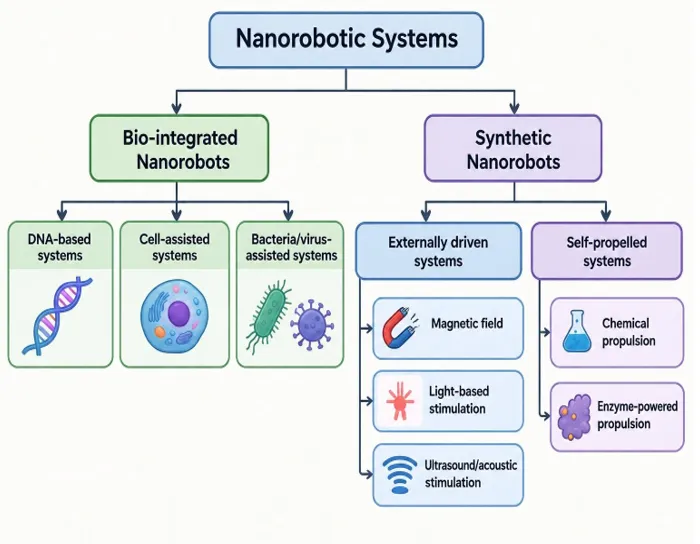
The structure of nanorobots can vary considerably depending on the materials used to fabricate them and whether biological components are incorporated into their design.
An emerging approach is biohybrid nanorobotic systems which combine synthetic structural components, such as inorganic polymers and metallic nanoparticles, with biological elements such as DNA, enzymes and living cells . This mixture provides the functional benefits of the artificial materials and biological systems in a single nanorobotic platform.
3.2.Bio-integrated Nanorobots-
By combining these components, nanorobotic systems can support various biomedical applications, including microsurgery, targeted single-cell manipulation, and more effective penetration through biological tissues.
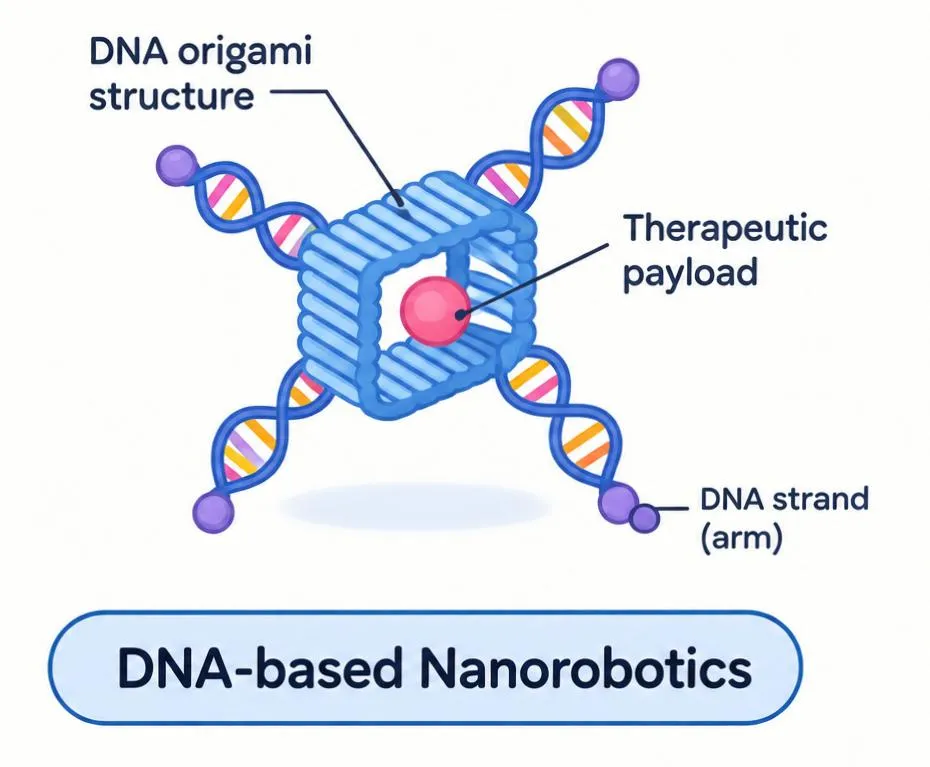
Fig. 1.DNA-Based Nanorobotics
DNA nanotechnology, especially the DNA origami approach, has opened new possibilities for designing programmable nanorobotic systems. In this technique, long single-stranded DNA molecules are folded into predetermined shapes with the help of short complementary oligonucleotide strands, allowing the fabrication of well-defined two- and three-dimensional nanostructures. These DNA-based structures can be further modified to carry therapeutic cargos and incorporate molecular logic elements that respond to specific environmental signals. As an example, biohybrid magnetic microrobots have been developed by attaching DNA-based flagellar structures to magnetic iron oxide nanoparticles, enabling their controlled movement and potential biomedical use.[6]
3.3.Synthetic Nanorobotic
Effective movement of nanorobots through biological fluids is challenging because these environments are highly viscous and characterized by low Reynolds numbers. Therefore, specialized propulsion strategies are essential to achieve efficient and controlled locomotion.
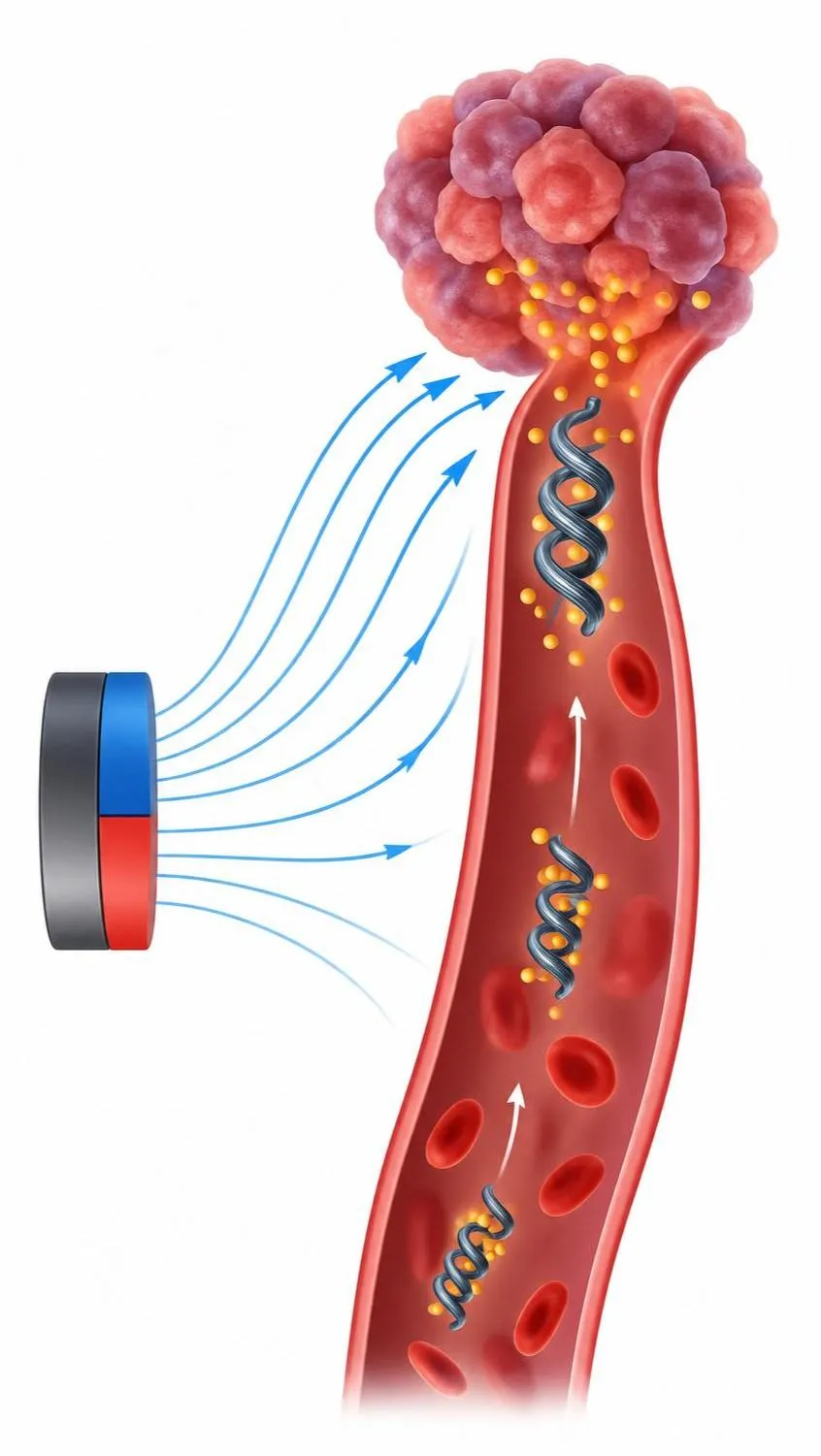
Fig. 2.Magnetic field actuation diagrammatication
One of the most promising techniques is magnetic propulsion due to the deep tissue penetration and safety of low frequency magnetic fields .[6]
3.4.Light Energy-Propelled Nanorobots
Light-powered nanorobots move by using energy from light. When light falls on the nanorobot, a photocatalytic reaction can occur and convert the light energy into mechanical movement. This helps the nanorobot travel through biological fluids and reach the desired target.[7]
Subsequent in vivo studies have also supported in vitro investigations of targeted chemotherapy. Animal models, especially tumor-bearing mice, are commonly used to study the targeting mechanism and therapeutic effect of these strategies. For example, the therapeutic use of acetylsalicylic acid and doxorubicin enabled a microrobot to deliver multiple drugs to induce apoptosis of HeLa cells and inhibit the metastatic activity in vitro.In vitro evaluation is an important first step in developing targeted therapy. At this stage, the majority of the motile micro- and nanodevices are subjected to a two-step validation process to evaluate their efficacy and therapeutic possibilities.In vivo evaluation focuses on studying targeted therapies within living systems, with animal models generally being used to examine their therapeutic effects and biological performance. [4,8]
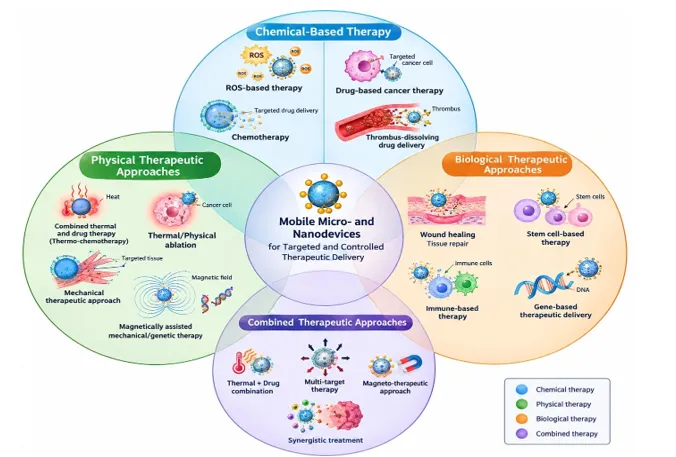
Figure 3. Therapeutic Applications of Mobile Micro- and Nanodevices in Chemical, Physical, Biological, and Integrated Treatment Strategies.[8]
In recent years, significant advancements have been made in drug delivery systems to effectively transport therapeutic agents and naturally derived bioactive compounds to specific target sites, improving their potential for the treatment of various diseases.[10] Nanorobots could be used to enhance the delivery of drugs, improving the speed, accuracy and effectiveness of therapeutic treatment. Integrated sensing systems can help these nanoscale devices to sense and navigate to specific diseased or infected sites in the body, enabling therapeutic agents to be delivered more precisely to the desired location.[11]
5.1.Fundamental Nanotechnology-Based Approaches for Drug Design and Development Engineered drug delivery mechanisms are designed to deliver therapeutic agents to specific target sites or to provide controlled release at the desired location. Often these systems are produced by self-assembly, where the individual building blocks spontaneously arrange themselves into predictable structures or patterns.
5.2.Biopolymeric Nanoparticles for Sensing, Diagnosis and Imaging
Biopolymeric nanoparticles have attracted considerable attention for diagnostic applications, disease detection and medical imaging. The word "theranostics" is a combination of therapeutic and diagnostic properties in one system. Such an approach is being increasingly investigated in cancer management as it can enable both the detection of tumors and the delivery of therapeutic agents .
5.3.Drug Loading and Release Characteristics
Drug encapsulation efficiency (EE) and controlled drug release are important parameters for assessing the therapeutic performance of nanobots. DNA origami-based nanobots showed a high encapsulation efficiency of approximately 85% and exhibited pH-responsive drug release, enabling the therapeutic agent to be preferentially released under the acidic conditions commonly found in tumor microenvironments[12]
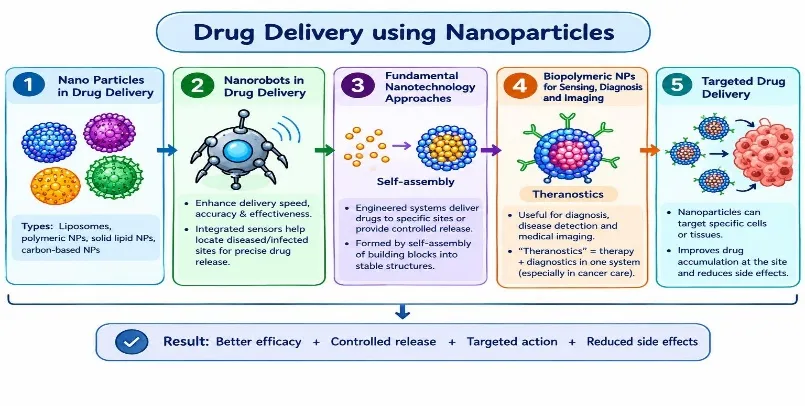
Fig. 3.Drug delivery using Nanoparticles
Both aspects are equally important. Nanobots can be modified with targeting molecules such as ligands, antibodies, or aptamers, enabling them to specifically recognize and attach to cellular receptors or disease-associated markers.[12] The effectiveness of nanovectors used for drug delivery can be assessed through four key parameters: safety, therapeutic efficacy, stability, and targeting ability. Among these, safety is mainly determined by the nanovector’s biocompatibility, which includes factors such as potential toxicity and its distribution within the body. Various targeting strategies have been developed to enable nanobots to deliver therapeutic drugs selectively to specific tissues or disease sites.[9]During formulation, it is essential to consider the drug’s properties, the desired therapeutic site, and the required drug-release pattern to ensure effective treatment.[13]Demonstrated that, the release profile Of neem bark extract-grafted biogenic silica nanoparticles- (chemical interactions) was lower than neem bark Extract-loaded biogenic silica nanoparticles. In certain situations, drugs may have limited affinity for their intended targets or may be unable to penetrate physiological barriers, such as the blood–brain barrier (BBB), which can restrict their therapeutic effectiveness.[10]For effective targeted drug delivery, a nanorobot should possess specific functional capabilities. Positional control is one of the key requirements, allowing the nanorobot to move precisely toward the desired location and deliver therapeutic payloads such as drugs, imaging agents, siRNA, cells, or vaccines.[14]
Controlled release system:-
These delivery systems can be engineered to provide either continuous (sustained) drug release or intermittent (pulsatile) release, according to the specific therapeutic requirements.
Scalability and Manufacturing:-
Achieving uniform nanoparticle size, shape, and drug-loading capacity during large-scale production remains a major challenge in the development of nanocarrier-based drug delivery systems.
A)Passive Targeting
In passive targeting, the use of enhanced permeability and retention (EPR) effects helps in accumulating the nanoparticles in tumor tissues because of the poor lymphatic drainage and abnormal vasculature.
Active targeting involves the decoration of nanoparticle surfaces with specific functional groups such as peptides, antibodies, aptamers, or sugars, which specifically recognize receptors on the surface of the targeted cell and facilitate binding.
Stimuli-responsive delivery of nanomaterial-based formulations can be carried out for triggering the delivery of drugs in response to a specific biological or external stimulus. This includes the use of pH-sensitive drug delivery formulations.
As per Hu et al. (2020), movement in micro/nanorobots usually depends on the use of external sources of energy that enable precision and coordination in movement. External sources of energy include magnetic and electric fields, light, acoustic waves, and heat energy.
The micro/nanorobots are usually asymmetrical and can have catalytic coatings. Catalysts are used to facilitate the utilization of chemical energy in the environment of the micro/nanorobot.
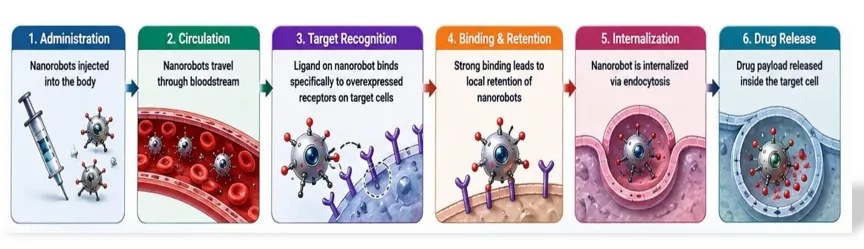
Fig. 4.machanisms of drugs delivery system of Nanorobotics
Micro- and nanorobots have become in the past decade innovative and versatile platforms combining the capabilities of robotics and the advanced applications of nanotechnology. One of the great challenges is the development of new sources of energy able to sustain biocompatible, long term and autonomous operation inside the body.The motion and collective behavior of single nanorobots have been extensively investigated, but communication and synchronized coordination of large groups of nanorobots remain major challenges. This becomes particularly difficult when trying to mimic the efficient group behavior found in natural biological systems.
7.1.Biocompatibility: -
The interaction between nanorobots and biological systems is complicated and can depend on the materials used to build the robots and their environment. Different biological conditions can modulate the behavior and compatibility of their surface properties. Thus, the mechanisms of interaction of nanorobots with living systems are not yet fully understood.[2]
7.2.Nanorobotics and Drug Delivery Systems (DDS)
Nanorobotics has shown potential for various medical applications, including targeted drug delivery, treatment of cancer, applications involving the central nervous system (CNS), minimally invasive procedures, endoscopy, and internal monitoring. However, the development of nanorobotic systems still faces several challenges. These include limitations in current nanotechnology, limited understanding of nanoscale behavior, and difficulties associated with the design, fabrication, and precise control of these extremely small machines.[17]
7.3. Challenges for the Large Scale Use of Nanobots and Nanocarriers in Cancer Treatment
Nanobots and nanocarriers have shown promising potential for improving cancer treatment. However, translation from laboratory research to routine clinical use still involves several important challenges. These limitations need to be resolved before these advanced systems can be safely and effectively utilized on a large scale in cancer therapy.[18] Despite their considerable therapeutic promise, these advanced approaches still face several important challenges that need to be addressed before their widespread clinical application.[6]
Concerns Over Toxicity
One of the major challenges of nanotechnology-based systems for drug delivery is the potential for toxicity. Nanoparticles are small in size and have unique properties al effects.[19]
8.1 Magnetic fields-
oft-magnetic CoNi nanowires, in contrast, tend to align in the field direction (red). The figure has been reproduced with permission from Copyright 2019 American Chemical Society. Proof of traveling-wave-driven motion under oscillating magnetic field.A bimetallic nanorod-based motor has been investigated as a model system for controlled micro/nanorobot movement. By applying a combination of alternating current (AC) and direct current (DC) electric fields, the nanorod could be guided in different directions in a three-dimensional (3D) environment, with its speed and movement controlled by changing the applied electrical conditions.[1]
8.2 light fields-
The locomotion and functional behavior of micro/nanorobots can be regulated through light-induced actuation based on various operating principles. DNA signaling molecules can also be employed to control and modulate the movement of these robots.[2]
Intelligent nanosubmarine for targeted obstruction of tumor blood vessels.”
“Considering the heterogeneity of different cancers, personalized and multifunctional intelligent nanocarriers can be developed to enable precise fabrication and controlled drug release. Such systems can facilitate targeted modulation of the tumor microenvironment and represent an important direction for the advancement of nanomedicine in cancer therapy[20]
Drug Delivery and Nanorobots in Cancer Treatment
Nanorobots have potential applications in cancer treatment, including diagnosis, drug delivery, and surgical procedures. One possible route for introducing these tiny devices into the body is intravenous injection, which enables them to travel through the bloodstream toward the desired target site.[17]
Active Drug Delivery Through Nanobots
Recent research has increasingly focused on shape-adaptive nanobots that can alter their structure to overcome some of the limitations of conventional nanorobotic systems. Taking inspiration from the flexible shape-changing behavior of amoebas, researchers have designed a magnetically driven nanobot known as amNR, which can dynamically adapt its form during movement and drug-delivery applications.[18]
Nanotechnology based drug delivery system
Nanotechnology-based drug delivery systems have emerged as promising platforms for delivering therapeutic agents. A major area of their application is the treatment of cancer, particularly for transporting anticancer drugs to tumor tissues. Unlike conventional delivery approaches, nanomaterials can improve drug accumulation at tumor sites by utilizing the enhanced permeability and retention (EPR) effect, which may help limit drug exposure to surrounding healthy tissues.[21]
Targeted drug delivery system
Delivering active proteins into mammalian cells is challenging because they must escape from endosomes and reach their intended intracellular targets. Hence, effective delivery vehicles are important for the development of protein-based genome-editing approaches. Another study explored targeted epirubicin liposomes as a carrier for crossing the BBB and delivering the drug for potential treatment of glioblastoma.[22]
Endogenous power driven nanorobotics
Endogenous power-driven nanorobots use energy naturally available inside the body or surrounding biological environment to produce their own movement and propulsion.[16]
Material used for nanorobotics fabrication
The material used to make nanorobots should ideally provide mechanical stability, biocompatibility, mean for propulsion, and loading of drugs. Many materials have been considered for the construction of nanorobots, including magnetic nanoparticles, polymers, metals, silica, and composites of these materials. Of these materials, magnetic are most widely used since they can be controlled by an external magnetic field and thus can be guided or navigated within the body.[27]
Template-assisted fabrication
Template-assisted fabrication is a common method for engineering magnetic micro/nanorobots. In this approach, a certain type of template is used as a basis for building a robot structure. The template serves as a mold, and the resulting material determines the shape and design of a nanorobot. Then, magnetic nanoparticles are introduced to the obtained structure or placed on it, giving the robot magnetism and allowing it to be manipulated.[28]
Incorporation of Therapeutic Agents
After constructing the nanorobot, it is possible to introduce therapeutic drugs into its structure or simultaneously launch it to deliver the desired doses to the target cells. Moreover, it is possible to use micro- and nanorobots to bring the loads directly to the site of disease manifestation and control their movement due to the ability to propel them precisely.[29]
The unique surface chemistry of nanoparticles has allowed for their application in a variety of nanotechnology areas, such as tissue regeneration, immunoassays, toxin removal, drug delivery, hyperthermia-based treatments, and cell sorting.[30]Similarly, magnetic nanoparticles that are used in theranostic applications may experience stability issues due to the fact that strong dipole-dipole interactions can cause particle aggregation; therefore, the development of magnetite nanoring structures was found to be a promising solution. [31]The pharmacokinetics of these nanomedicine formulations have been extensively studied in patients with NSCLC; however, their therapeutic and diagnostic applications remain less understood. These formulations can be modified to specifically target cancer cells by conjugating them with cancer cell-specific or surface receptor-specific ligands.[32]Compared to conventional approaches, these sophisticated systems represent an improvement because they address the shortcomings of the existing therapy, such as low efficacy, insufficient targeting of the drug and the emergence of resistance.[33]Future studies could investigate the possibility of developing hybrid nanocarriers and the co-delivery of multiple therapeutic agents to elicit synergistic therapeutic effects while minimizing the systemic toxicity of them this system. [34]
CONCLUSION
Nanorobotics is one such promising method that can be used in developing targeted drug delivery technology through the fusion of nanotechnology with robotic control. As opposed to traditional drug delivery methods, nanorobotics can facilitate the inclusion of movement, targeted delivery, recognition and release of drugs. Various techniques like magnetic, photoactuation, ultrasound, chemical, DNA, biological, and hybrid biological-nanorobotic techniques have been found to be promising in enhancing drug delivery accuracy.The incorporation of nanotechnology through the use of nanoparticles, recognition systems, and stimulus responsive techniques adds more scope to the field of nanorobotics for targeted drug delivery, cancer therapies, brain drug delivery, diagnostics, and theranostics. Moreover, while external control systems can provide improved positional control, biological and DNA based systems open up possibilities for specific interactions with biological targets. These examples suggest that nanorobotics could play an important role in precision medicine in the future.Nonetheless, the shift from the lab to clinic for nanorobot-based drug delivery still poses challenges. There are many problems associated with biocompatibility, toxicity, propulsion mechanism, navigation through biological fluid, power supply, drug delivery, mass production, safety, and regulatory approval that need more research. There is also need for research on how to coordinate the motions of many nanorobots and control them.
REFERENCES

Vivek Borse*,Ramdas Darade, Vikram Sarukh, Manoj Garad,Tejas Dabhade, Nanorobotics For Targeted Drug Delivery Systems Current Trends, Mechanisms, Applications And Future Perspective, Int. J. of Pharm. Sci., 2026, Vol 4, Issue 10, 3178-3192. https://doi.org/ 10.5281/zenodo.23529382
 10.5281/zenodo.23529382