

We use cookies to ensure our website works properly and to personalise your experience. Cookies policy
Dept. Of P.G Studies In Kayachikitsa Karnataka Ayurvedic Medical College, Mangalore
Vallipanchamoola Kwatha Churna is a classical Ayurvedic formulation indicated in the management of Pittaja Mutrakrichra (LUTI)due to its Mutrala, Pittashamaka, and Shothahara properties. The present study was undertaken to evaluate the analytical and physicochemical parameters of Vallipanchamoola Kwatha Churna, for standardization and quality assessment. The formulation consists of five medicinal creepers namely Vidari (Pueraria tuberosa), Sariva (Hemidesmus indicus), Guduchi (Tinospora cordifolia), Manjishta (Rubia cordifolia), and Meshashringi (Gymnema sylvestre). The raw drugs were procured from Authenticated Pharmacy drugs authenticated, and prepared according to the classical method described in Bhavaprakasha.Organoleptic evaluation showed that the formulation was reddish yellow in colour, odourless, and in coarse powder form. Physicochemical analysis revealed moisture content of 7.054%, ash value of 8.896%, acid insoluble ash of 1.531%, water soluble extractive value of 7.767%, and alcohol soluble extractive value of 6.780%. The low moisture content indicates better shelf life and reduced microbial contamination, while ash values confirmed minimal inorganic and earthy matter contamination. Higher water soluble extractive value suggests the presence of more water-soluble active constituents, supporting the therapeutic relevance of Kwatha preparations.The study establishes preliminary analytical standards for Vallipanchamoola Kwatha Churna and confirms its quality, purity, and stability as a standardized Ayurvedic formulation for the management of Pittaja Mutrakrichra.
Traditional herbal medicine continues to play a vital role in global healthcare, with the World Health Organization reporting that approximately 85–90% of the global population relies on herbal and traditional remedies for their primary healthcare needs [1] The WHO has consistently supported the use of herbal remedies and promotes their integration into healthcare systems, particularly in developing nations such as India [²]. Kwatha Churna is a coarse herbal powder used to prepare Kashaya (decoction) in Ayurveda. Its importance lies in helping proper extraction of medicinal properties during boiling. maintaining the strength and effectiveness of the medicine preventing filtration and sediment problems Ensuring uniform and standard preparation of Kashaya [3].
Vallipancamula is the Sanskrit name for a group of five plants (medicinal creepers). It was originally composed by Sushruta in his Susrutasaṃhita sutrasthana a classic work on Ayurveda. The name is derived from the words valli(Creeper) and pancamula, translating to “five roots”. Vallipanchamoola is the group of roots of five creepers [4]. It’s classical ayurvedic formulation possessing Mutrala (diuretic) Pittashamaka, & shothahara properties Making it beneficial in the management of mutrakrichra.
Aim
To evaluate the analytical & physiochemical parameters of Vallipanchamoola kwatha churna used in the treatment of Pittaja mutrakrichra.
MATERIALS & METHODS
PROCRUREMENTS OF RAW MATERIAL
For preparation of Vallipanchamoola kwatha churna raw material was collected from KLE Pharmacy Belagavi. Each raw drug was packed separately and labelled with name & part.
AUTHENTICATION OF VALLIPANCHAMOOLA KWATHA CHURNA
The sample of Vallipanchamoola kwatha churna was analyzed in the KLE Shri BMK ayurveda Mahavidyalaya central research facility laboratory using standard physiochemical parameters.
PREPARATION OF VALLIPAMCHAMOOLA KWATHA CHURNA
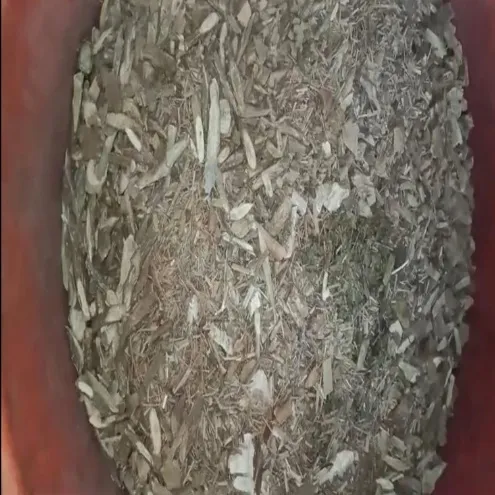
Vallipanchamoola kwatha churna was prepared as per Bhavprakasha [5]. The dried drugs were combined coarsely powdered in pulverizer. the ingredients used are mentioned below.

Table no-1
|
DRUG NAME |
BOTANICAL NAME |
PART USED |
QUANTITY |
|
1) Vidari |
Pureria tuberosa Roxb ex Willd |
Moola |
100grams |
|
2) Sariva |
Hemidesmus indicus R. Br |
Moola |
100grams |
|
3)Guduchi |
Tinospora cardifolia Willd |
Moola |
100grams |
|
4)Manjistha |
Rubia cardifolia Linn |
Moola |
100grams |
|
5)Meshashringi |
Gymnema sylvestre Retz |
Moola |
100grams |
Image 1) Image 2)
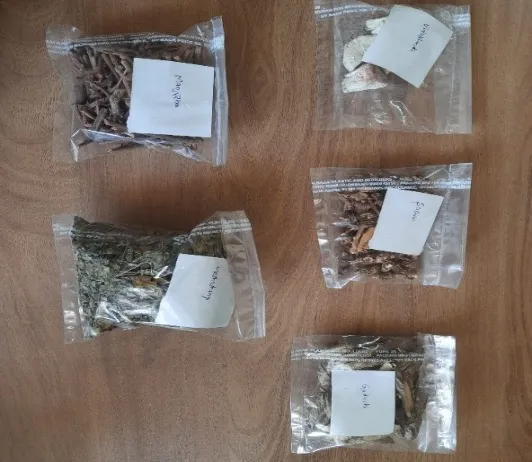
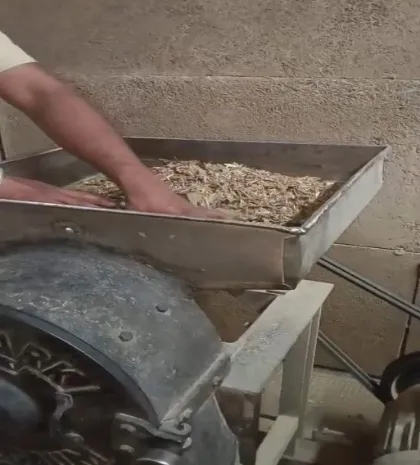
Image 3)
Observation & result
Organoleptic Evaluation
Table no-2
|
TESTS |
RESULTS |
|
FORM |
Kwatha churna |
|
COLOUR |
Reddish yellow |
|
ODOUR |
Odourless |
Physiochemical evaluation
Table no-3
|
TESTS |
RESULTS |
|
Moisture content |
7.054% |
|
Ash value |
8.896% |
|
Acid insoluble Ash |
1.531% |
|
Water soluble extractive |
7.767% |
|
Alcohol soluble extractive |
6.780% |
DISCUSSION
The physicochemical parameters would serve as preliminary test for the standardization of the formulation. Tests such as loss on drying, acid insoluble ash, total ash, water soluble ash, alcohol soluble extractive, water soluble extractive.
The organoleptic evaluation revealed that the sample was in kwatha churna form with reddish yellow colour & odourless in nature. The moisture content was found to be 7.054% there by reducing the chances of microbial contamination & deterioration during storage. The ash value 8.896% indicates the total inorganic content was present in the formulation. Acid soluble ash value was 1.531%showing minimum silica & earthy mater contamination. Water soluble extractive value 7.767% was higher than the alcohol soluble extractive value 6.780%indicating the presence of more watersoluble active constituents in the formulation. This supports the therapeutic utility of kwatha preparations where aqueous extraction plays a major role. Since Kwatha preparations are administered as aqueous decoctions, the higher watersoluble extractive value supports the therapeutic relevance of the formulation and suggests efficient extraction of active constituents in water. These analytical parameters help in establishing the identity, purity, quality control standards of vallipanchamoola kwatha churna.
CONCLUSION
REFERENCES

Dr. Sangeeta S. H, Dr. Sahana. M, Dr. Waheeda Banu, Pharmacognostical and Analytical Study of Vallipanchamoola Kwatha Churna for Pittaja Mutrakrichra (Lower Urinary Tract Infection), Int. J. of Pharm. Sci., 2026, Vol 4, Issue 6, 5917-5920, https://doi.org/10.5281/zenodo.20812947
 10.5281/zenodo.20812947