

We use cookies to ensure our website works properly and to personalise your experience. Cookies policy
Department of Pharmaceutical Analysis, Koringa College of Pharmacy, Korangi, Pin-533461, Andhra pradesh, India.
Quality by Design (QbD) is a structured and science-based approach that incorporates quality considerations from the earliest stages of pharmaceutical development. In analytical method development, the approach begins with a predefined Analytical Target Profile (ATP), followed by risk assessment, identification of critical method factors, experimental design, statistical evaluation and establishment of a Method Operable Design Region (MODR). This systematic strategy reduces dependence on trial-and-error experimentation and supports robust, accurate, precise and reproducible analytical procedures. The integration of QbD with Green Analytical Chemistry (GAC) adds sustainability to analytical development. The combined approach seeks to maintain analytical performance while reducing hazardous chemicals, solvent consumption, waste generation, energy demand and unnecessary analytical operations. Green chemistry principles provide a foundation for safer and more resource-efficient pharmaceutical development, while tools such as NEMI, GAPI, AGREE and AMGS provide complementary approaches for assessing environmental performance. This review summarizes the principles, regulatory background and practical application of QbD and GAC in pharmaceutical analytical method development. It discusses critical method parameters, Design of Experiments (DoE), response modelling, response surface methodology and green assessment metrics. The integration of these concepts can support analytical methods that are reliable, robust, efficient and environmentally responsible.
Pharmaceutical analytical methods are essential for identity, assay, purity, stability and quality evaluation. Conventional method development commonly relies on sequential trial-and-error experimentation. Although such methods can produce acceptable results, repeated experiments may require considerable time, solvent, reagents and energy. A systematic approach is therefore desirable when analytical performance and sustainability must be considered together.
QbD provides a scientific framework in which quality is designed into a product, process or analytical procedure rather than being established mainly through final testing. In pharmaceutical development, the approach considers relationships among material attributes, process variables and quality characteristics. In analytical development, the same philosophy is extended to method variables and analytical performance.
Quality by Design (QbD)
QbD is a systematic and science-based approach to pharmaceutical development in which quality is built into the product and manufacturing process. The concept emphasizes understanding the relationship between formulation, materials, manufacturing variables and final quality. The QbD workflow generally begins with defining the intended quality profile, followed by identification of critical quality attributes (CQAs), critical material attributes (CMAs) and critical process parameters (CPPs). Risk assessment and DoE are used to understand significant factors and their interactions, followed by development of a control strategy and continual improvement.[1]
The same philosophy is particularly useful for analytical methods. Instead of optimizing one factor at a time, analytical QbD defines the intended analytical performance and systematically investigates factors that may affect it. This can provide greater knowledge of method variability and support a robust operating region.
Analytical Target Profile (ATP)
The ATP describes the intended purpose and performance requirements of an analytical procedure. It provides a clear starting point for method development and links the analytical method to its intended use. Relevant performance characteristics may include accuracy, precision, specificity, linearity, range, detection capability and robustness, depending on the purpose of the procedure.
Critical Method Parameters and Attributes
Critical method parameters (CMPs) are method conditions that can influence analytical performance. Depending on the analytical technique, examples may include mobile-phase composition, pH, flow rate, column temperature, extraction time and solvent volume. Critical method attributes relate to the performance characteristics that must be maintained within predefined acceptance criteria. Identifying these relationships allows development experiments to focus on factors with the greatest potential impact.
Risk Assessment, DoE and Design Space
Risk assessment is used to prioritize factors according to their potential effect on method performance. DoE then enables several factors to be investigated simultaneously, including their interaction effects. Statistical modelling and response-surface analysis can be used to identify operating conditions that satisfy the desired analytical responses. The resulting acceptable region is commonly expressed as a MODR for analytical methods.[2]
Green Analytical Chemistry (GAC)
Green Analytical Chemistry applies sustainability principles to analytical activities. It aims to reduce environmental and health impacts while retaining reliable analytical performance. Important approaches involve substituting harmful chemicals with safer alternatives, using smaller amounts of samples and reagents, limiting waste generation, simplifying sample preparation procedures, conserving energy, and eliminating unnecessary steps in analytical methods.[3]
Historical Development and Regulatory Context
Green chemistry developed as a preventive approach to reducing hazardous substances and waste at the source. Its principles were articulated by Paul Anastas and Warner, while Green Analytical Chemistry subsequently developed as an application of sustainability concepts to analytical science. Analytical greenness has become increasingly important because analytical laboratories consume chemicals, solvents, and energy and disposable materials even when the scale of individual experiments is small.[4]
QbD in pharmaceutical science is associated with quality-management concepts emphasizing that quality should be incorporated during design and development. The FDA Process Analytical Technology initiative in the early 2000s encouraged scientific process understanding and real-time monitoring. ICH Q8 introduced key pharmaceutical-development concepts including QTPP and design space, while ICH Q9 and Q10 provided risk-management and pharmaceutical-quality-system frameworks. For analytical procedures, ICH Q14 extends QbD concepts to analytical method development. The ATP provides an analytical counterpart to the QTPP, while the MODR represents an acceptable operating region established from method understanding and experimental evidence. ICH Q2 (R2) provides the modern framework for analytical procedure validation and is aligned with the science- and risk-based development approach.[5]
Green chemistry developed as a preventive approach to chemistry in response to increasing concerns regarding hazardous substances, environmental pollution, waste generation and resource consumption. Earlier chemical and pharmaceutical processes mainly concentrated on product yield, efficiency and analytical performance, while environmental and safety considerations were often addressed after waste or hazardous substances had already been generated.[6] The concept of green chemistry introduced a preventive philosophy in which chemical processes are designed from the beginning to minimize hazards, waste and environmental impact. The development of green chemistry was strongly influenced by pollution-prevention approaches during the 1980s and 1990s, followed by the formalization of its principles by Paul Anastas and John Warner in 1998. Their twelve principles provided a systematic framework for preventing waste, improving atom economy, reducing hazardous substances, selecting safer solvents, improving energy efficiency and designing safer chemical processes.[7]
The pharmaceutical industry became an important area for the application of green chemistry because pharmaceutical development and manufacturing involve multiple synthetic steps, solvents, reagents, purification operations and energy-intensive processes. Consequently, sustainable approaches increasingly focused on reducing solvent consumption, minimizing hazardous reagents, improving reaction efficiency and reducing waste generation. The concept of green chemistry gradually expanded from synthetic chemistry to analytical laboratories, where considerable quantities of solvents, reagents, disposable materials and energy may be consumed even when only small quantities of samples are analysed.[8]
Green Analytical Chemistry (GAC) emerged as an important extension of green chemistry around the beginning of the 2000s. Its primary objective is to maintain the required analytical quality while reducing the environmental, health and safety impacts associated with analytical procedures. The development of GAC encouraged analytical scientists to consider solvent selection, reagent toxicity, sample size, energy consumption, waste generation, miniaturization and automation during method development. In 2013, Galuszka, Migaszewski and Namiesnik proposed twelve principles of GAC specifically addressing analytical activities. These principles emphasized direct analytical techniques, minimal sample size, in-situ measurements, automation, miniaturization, avoidance of derivatization, reduction of analytical waste, multi-analyse approaches and reduced energy consumption.[9]
Parallel to the development of green chemistry, Quality by Design (QbD) evolved within pharmaceutical development as a science- and risk-based approach to achieving consistent product and process quality. The QbD philosophy emphasizes that quality should be built into a product and its manufacturing process during development rather than relying only on final-product testing. The FDA's Process Analytical Technology (PAT) framework, issued in 2004, further encouraged scientific process understanding, enhanced process control and real-time monitoring of pharmaceutical manufacturing processes.[10]
The International Council for Harmonisation (ICH) subsequently established important regulatory foundations for QbD [11]. ICH Q8 introduced concepts associated with pharmaceutical development and design space, while ICH Q9 provided a structured framework for quality risk management and ICH Q10 established a pharmaceutical quality-system approach throughout the product lifecycle.[12] These guidelines strengthened the movement from traditional trial-and-error development toward systematic, knowledge-based and risk-based pharmaceutical development. [13]
The application of QbD to analytical method development has further evolved through the Analytical Target Profile (ATP), critical method parameters, risk assessment, experimental design, statistical evaluation and establishment of an appropriate method operable region. ICH Q14, together with the revised ICH Q2 (R2), represents an important modern development in analytical procedure development and validation.[14] ICH Q14 provides a science- and risk-based framework for developing and maintaining analytical procedures, including consideration of robustness, parameter ranges analytical procedure control strategy and lifecycle management. The guideline reached ICH Step 4 in November 2023 and became effective in Europe in June 2024.[15]
The integration of QbD with Green Analytical Chemistry therefore represents a further development in pharmaceutical analytical science. QbD provides a structured framework for understanding and controlling analytical performance, whereas GAC introduces environmental and sustainability considerations into the method-development process. Combining these approaches allows analytical methods to be designed not only for accuracy, precision, robustness and reliability, but also for reduced solvent and reagent consumption, lower energy requirements, reduced waste generation and improved laboratory safety.[16] Thus, the historical development of green chemistry, GAC, QbD and modern ICH guidance has progressively shifted pharmaceutical analytical development toward methods that are scientifically robust, risk-based and environmentally sustainable.[17]
Principle of Green Chemistry Relevant to Pharmaceutical Development
The twelve principles of green chemistry provide a broad foundation for sustainable chemical development. The principles listed below are especially important in the development of pharmaceutical processes and analytical methods.[18]
The twelve principles of green chemistry provide a scientific framework for designing chemical processes and analytical methods that minimize environmental impact while maintaining efficiency, safety and product quality. In pharmaceutical development, these principles are particularly important because drug synthesis, formulation and quality-control analysis may involve hazardous reagents, organic solvents, energy-intensive operations and generation of chemical waste. Integration of green chemistry with Quality by Design (QbD) allows environmental considerations to be incorporated systematically during method and process development rather than being considered only after development.[19]
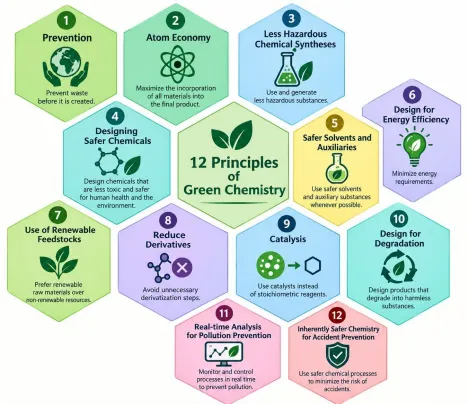
Figure 1: Schematic Representation of the Twelve Principles of Green Chemistry for Sustainable Pharmaceutical Development
Prevention
Preventing waste during the initial stages of a process is more effective and environmentally sustainable than treating or managing it after it has been produced. Waste prevention is a fundamental concept of green chemistry, as it helps reduce environmental pollution, safeguards human health, and lowers the expenses associated with waste collection, treatment, and disposal.[20]
Hazardous organic waste can negatively affect human health and ecological systems. A considerable amount of this waste originates from certain stages of chemical synthesis, often described as environmentally unfavourable reactions. These processes may involve toxic raw materials, hazardous solvents, and demanding reaction conditions, which can result in the formation of several harmful by-products. Common examples include halogenation, oxidation, alkylation, and nitration reactions, which are widely applied in different industrial processes.[21] A major portion consists of toxic organic waste, especially methanol and xylenes. Waste management expenses make up 2.2% of the U.S. GDP and continue to rise. [22]
Atomic Economy
Atom economy is the second principle of Green Chemistry and refers to the efficient incorporation of the atoms present in the starting materials into the desired final product. A chemical reaction with high atom economy produces less unwanted by-product and therefore minimizes material waste. In contrast to percentage yield, which indicates the actual amount of product obtained, atom economy is determined by the theoretical distribution of atoms in a chemical reaction and can be calculated before the reaction is carried out.[23] Atom economy is particularly important in pharmaceutical research and manufacturing because synthesis of active pharmaceutical ingredients (APIs) may involve several reaction steps and large quantities of raw materials, reagents and solvents. Selection of synthetic routes that maximize incorporation of reactant atoms into the desired API can reduce waste generation, raw-material consumption and environmental burden. Reactions such as addition, rearrangement and catalytic processes can often provide better atom economy than reactions that generate substantial leaving-group or product by waste.[24]
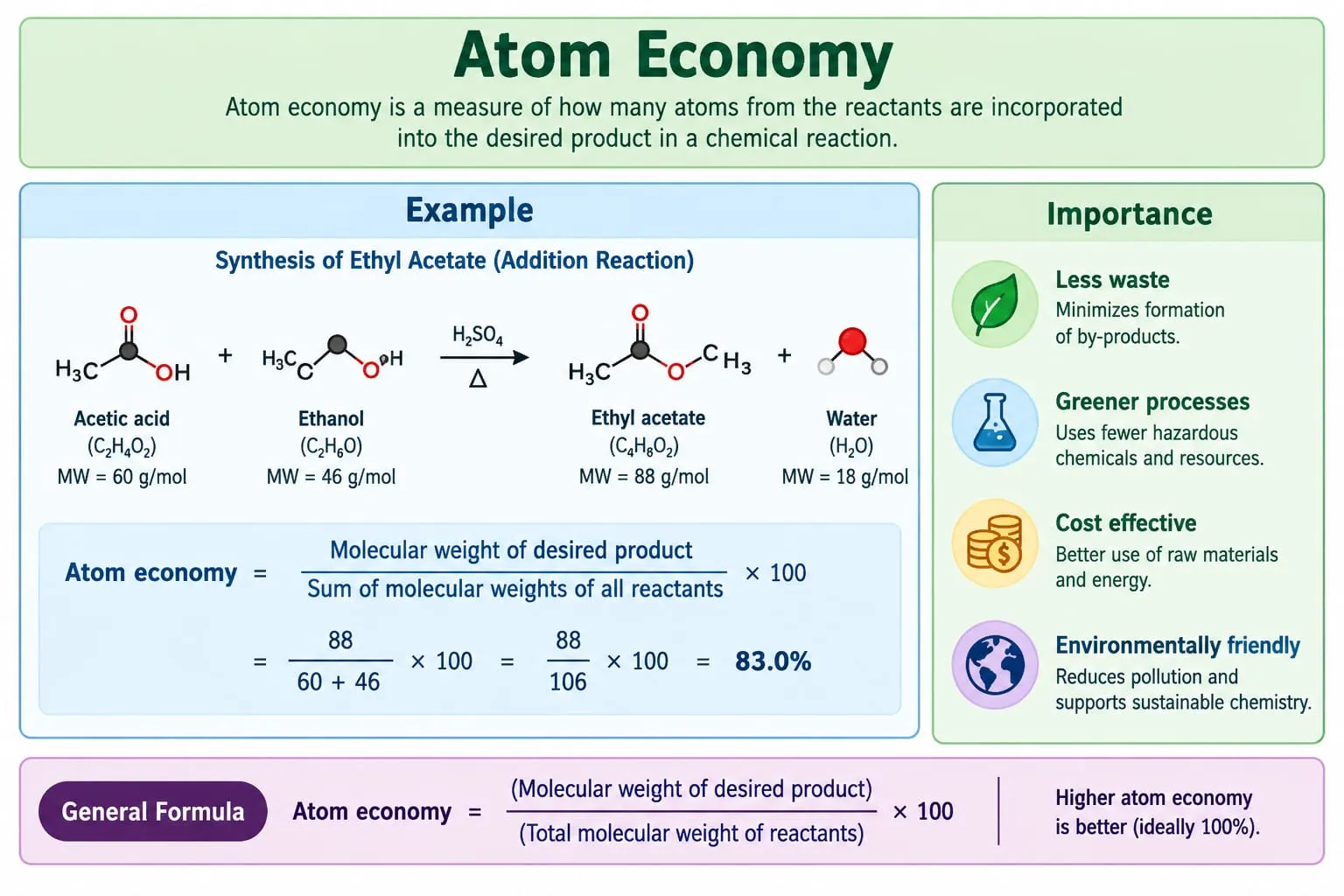
Figure 2: Schematic Representation of Atom Economy and Its Importance in Green Chemistry.
Less Hazardous Synthesis
The third principle of Green Chemistry recommends designing chemical processes in which the substances used and produced have little or no harmful effect on human health and the environment. The principle primarily aims to prevent hazards at their source rather than dealing with hazardous waste after it has been generated.[25] Pharmaceutical manufacturing may involve several materials, including starting materials, reagents, catalysts, solvents, intermediates and reaction products, some of which may exhibit toxic, corrosive, flammable or environmentally damaging properties. Therefore, selecting safer substances and appropriately optimizing reaction conditions are essential for developing sustainable pharmaceutical processes. The main aim is to produce the required pharmaceutical compound efficiently while minimizing potential risks to human health, workplace safety, and the environment during its synthesis and processing.[26]
Designing Safer Chemistry
The fourth principle of Green Chemistry focuses on developing chemical products that perform their intended functions while minimizing harmful effects on human health and the environment. Safety aspects should be considered from the initial stages of molecular design and product development instead of being assessed only after the chemical product has been prepared.[27] In pharmaceutical research, this approach involves designing drug molecules that achieve the desired therapeutic effects while reducing the possibility of unwanted toxic reactions. The safety profile of a chemical substance depends on several factors, including its molecular structure, physicochemical characteristics, metabolic behaviour, persistence in the environment, and potential toxicity to non-target organisms. Therefore, therapeutic performance, human safety, and environmental impact should be considered collectively throughout the drug-development process.[28]
Safer Solvents and Auxiliaries
The fifth principle of Green Chemistry emphasizes reducing or eliminating the use of auxiliary substances, especially solvents and separation agents, whenever they are not necessary for the successful completion of a chemical process. When these materials are required, preference should be given to alternatives that present lower risks to human health and the environment.[29] Solvents are widely used in pharmaceutical manufacturing for activities such as synthesis, extraction, purification, formulation and analytical testing. However, certain conventional solvents may contribute substantially to waste generation and may have toxic, volatile, flammable or environmentally persistent characteristics. Because solvents can represent a significant proportion of the materials used in pharmaceutical manufacturing, decreasing their consumption or replacing hazardous solvents with safer alternatives can improve process sustainability. Solvent selection should take into account parameters such as toxicity, flammability, environmental effects, biodegradability, recyclability and suitability for the intended pharmaceutical process.[30]
Design for Energy Efficiency
The sixth principle of Green Chemistry emphasizes the reduction of energy requirements during chemical processing because excessive energy consumption can contribute to both environmental burden and increased manufacturing costs. Wherever technically possible, chemical processes should be conducted under relatively mild conditions, such as temperatures and pressures close to ambient conditions, to limit unnecessary energy demand.[31] Pharmaceutical manufacturing includes several operations that may require considerable energy, including reaction heating, cooling, drying, evaporation, distillation and purification. Improving the energy efficiency of these operations can decrease total energy consumption, reduce production costs and lower the environmental effects associated with energy generation. Consequently, energy requirements should be considered during process development and optimization to achieve efficient, economical and more sustainable pharmaceutical manufacturing.[32]
Uses Renewable Feedstock
The seventh principle of Green Chemistry recommends using renewable raw materials and feedstocks instead of depletable resources whenever it is technically feasible and economically viable. Renewable feedstock’s are materials that can be replenished naturally within a relatively short period, such as plant-derived materials, agricultural biomass, carbohydrates, vegetable oils and other biological resources. In contrast, conventional petroleum-based feedstock’s are finite and their extraction and processing can have significant environmental impacts.[33]
In pharmaceutical manufacturing, renewable resources can be used as starting materials for the production of active pharmaceutical ingredients (APIs), intermediates, solvents and other chemical products. Biomass-derived compounds such as sugars, starches, cellulose, glycerol and vegetable oils can serve as useful starting materials for chemical and biotechnological processes.[34] The use of renewable feedstock’s can help reduce dependence on fossil resources and may decrease the overall environmental impact of pharmaceutical production. However, the selection of a renewable feedstock should consider its availability, sustainability, land and water requirements, energy consumption, processing requirements and potential competition with food resources. Therefore, renewable does not automatically mean environmentally preferable; the complete life cycle of the feedstock should be considered.[35]
Reduce Derivatives
The eighth principle of Green Chemistry emphasizes minimizing or eliminating unnecessary additional steps, such as the temporary modification of functional groups through protection and deportation reactions, whenever possible. Dramatization is sometimes required in chemical synthesis to achieve selectivity or compatibility between reaction steps, but unnecessary dramatization can increase the number of processing steps and generate additional waste.[36]
In pharmaceutical synthesis, protecting groups are commonly used when a functional group needs to be temporarily protected during a reaction. After the desired transformation, the protecting group must be removed. This can require additional reagents, solvents, and energy and purification steps, while producing unwanted by-products. Therefore, synthetic routes that avoid unnecessary protection and DE protection steps are generally more consistent with green chemistry. [37]
Catalyst
The ninth principle of Green Chemistry promotes the use of catalytic reagents instead of stoichiometric reagents whenever technically possible. A catalyst facilitates a chemical reaction by increasing its rate or allowing it to proceed under more favourable conditions, while remaining largely unchanged at the end of the reaction. The application of catalysts can enhance reaction efficiency and selectivity and may reduce the amount of waste generated.[38] In pharmaceutical manufacturing, catalytic reactions can provide improved selectivity, higher product yields and shorter reaction times. They can also reduce the requirement for large quantities of stoichiometric reagents and allow reactions to be carried out under relatively mild temperature and pressure conditions. As a result, catalytic processes can help decrease the consumption of raw materials and energy.[39]
Within a Quality by Design (QbD) framework, catalyst-related factors can be systematically examined during pharmaceutical process development. Variables such as catalyst concentration, reaction temperature, reaction time and other critical conditions can be assessed using experimental design and optimization techniques. Combining catalytic techniques with QbD and Green Chemistry principles can help establish pharmaceutical manufacturing processes that are more efficient, reliable, robust, and environmentally sustainable.[40]
Design for Degradation
The tenth principle of Green Chemistry recommends designing chemical products so that they can undergo appropriate degradation into substances with minimal adverse effects on the environment after fulfilling their intended purpose. This principle takes into account the environmental behaviour of a chemical throughout its life cycle, including its fate and transformation after use.[41]
In pharmaceutical research, this principle is especially relevant because drug substances and their residues can be released into the environment, where they may remain for extended periods or undergo different chemical and biological transformation processes. Consequently, pharmaceutical development should consider not only therapeutic performance and biological activity but also environmental persistence, degradation mechanisms, and the potential effects of degradation products. The primary aim is to develop pharmaceutical products that maintain the necessary stability and therapeutic effectiveness throughout their intended use while ensuring that they can undergo suitable degradation when their intended purpose has been completed.[42]
Real Time Pollution Prevention
The eleventh principle of Green Chemistry focuses on using real-time analytical techniques to identify and prevent pollution during chemical processing. This approach involves monitoring chemical reactions and process conditions to identify undesirable changes and take corrective action before significant problems arise. Analytical measurements can be performed continuously or at predetermined intervals to assess critical process variables and minimize the formation of unwanted substances. Important parameters, including temperature, pressure, pH, concentration, and reaction conditions, can be monitored during processing. Techniques such as Process Analytical Technology (PAT), infrared spectroscopy, Raman spectroscopy, Nuclear Magnetic Resonance (NMR), and UV–Visible spectroscopy can support continuous or near-real-time process evaluation. In pharmaceutical manufacturing, these monitoring approaches can help control unwanted by-product formation, reduce material wastage, prevent excessive consumption of raw materials, and decrease the risk of batch failure. Furthermore, they can improve process safety, promote efficient energy utilization, and maintain consistent product quality. Thus, real-time analytical monitoring supports pollution prevention by enabling potential problems to be identified and managed during manufacturing rather than relying mainly on corrective actions after waste generation. [43]
Green Analytical Chemistry Objective
Green Analytical Chemistry (GAC) focuses on developing analytical procedures that are environmentally responsible, safer and resource-efficient while maintaining reliable analytical effectiveness. Its primary objective is to minimize the environmental and health-related impacts associated with analytical activities. Green Analytical Chemistry (GAC) also emphasizes streamlining sample preparation and establishing analytical methods that deliver results quickly, efficiently, and reliably. GAC encourages the reduction or replacement of hazardous substances, toxic reagents and harmful organic solvents and promotes strategies that reduce waste generation. It also supports the use of smaller quantities of samples and reagents, safer solvents, energy-efficient analytical instruments and renewable resources wherever feasible. Even while reducing environmental burden, analytical methods should continue to provide acceptable levels of accuracy, precision, sensitivity and selectivity. Therefore, the overall aim of Green Analytical Chemistry is to obtain dependable analytical results while minimizing chemical consumption, waste production, energy requirements and potential risks to human health and the environment.[44]
Quality by Design
Quality by Design (QbD) is a science-based methodology in pharmaceutical development that incorporates quality considerations into a product and its manufacturing process from the initial stages. Rather than depending solely on the testing of the final product, this approach examines how material characteristics, formulation components, and process conditions affect the quality of the finished product. The development process starts with clearly defined objectives and the identification of Critical Quality Attributes (CQAs), which are essential properties that must satisfy established quality requirements. Critical Material Attributes (CMAs) and Critical Process Parameters (CPPs) are also determined because they can influence these quality attributes. Risk assessment and Design of Experiments (DoE) are applied to investigate these relationships and establish an appropriate design space. By providing a better understanding of manufacturing variables, QbD helps improve product consistency, minimize process variation, and develop reliable, robust, and reproducible pharmaceutical products.[45]
Quality by Design in Analytical Chemistry
Quality by Design (QbD) provides a structured, scientific framework for developing analytical procedures that meet predefined quality requirements. Conventional analytical method development often involves repeated experiments and adjustments to identify suitable operating conditions. In comparison, the QbD approach begins with the establishment of an Analytical Target Profile (ATP), which defines the intended purpose and required performance of the analytical procedure. The critical factors affecting method performance are then identified and systematically evaluated. This approach facilitates the development of analytical methods that demonstrate accuracy, precision, reliability, robustness, and suitability for their intended applications [46].In analytical chemistry, QbD focuses on investigating the relationships between experimental conditions, material characteristics, and analytical performance. Important performance characteristics include accuracy, precision, specificity, linearity, working range, detection limit, quantitation limit, and robustness. Risk assessment and experimental studies help determine which factors significantly affect analytical results and require appropriate control.[47]
The principal stages of analytical QbD involve defining the Analytical Target Profile (ATP), performing risk assessment, identifying Critical Method Parameters (CMPs) and Critical Method Attributes (CMAs), applying Design of Experiments (DoE), establishing the Method Operable Design Region (MODR), validating the analytical procedure, and monitoring its performance during routine use. DoE enables multiple experimental variables to be examined systematically, making it possible to evaluate their individual effects and interactions. The information obtained supports the selection of appropriate operating conditions and improves the consistency and robustness of analytical methods.[48]
Analytical Reagents
Analytical reagents are classified according to their chemical properties and functions in analytical procedures. Acid–base reagents: These substances are employed in neutralization reactions and acid–base titrations. Hydrochloric acid and sodium hydroxide are commonly used examples. Precipitating reagents: These reagents react with specific analyses to produce insoluble compounds that can be used for analytical identification or determination. Silver nitrate, for example, is used to detect and determine chloride ions through precipitation reactions. Complexometric reagents: Compounds such as ethylenediaminetetraacetic acid (EDTA) form complexes with metal ions and are frequently used for their quantitative determination.
Redox reagents: These substances participate in oxidation–reduction reactions. Potassium permanganate and potassium dichromate are common examples used in redox analysis.
Indicators: Indicators are chemical substances that produce a detectable change, generally a colour change, at or near the endpoint of an analytical reaction. They help identify the completion of titrations and other analytical procedures.[49]
Response Modelling and Response Surface Design
Response modelling and response surface design are statistical techniques used in Quality by Design (QbD) to develop, evaluate, and optimize analytical methods. These approaches help researchers understand how variations in experimental factors influence analytical responses. By studying the relationships between method variables and measured outcomes, researchers can identify suitable operating conditions, evaluate interactions between factors, and improve the overall performance and robustness of analytical procedures.[50]
Response Modelling
Response modelling involves developing a mathematical relationship between independent variables (factors) and dependent variables (responses). In analytical method development, factors may include mobile-phase composition, pH, flow rate, column temperature, extraction time, or solvent volume, while responses may include retention time, resolution, peak area, accuracy, precision, or assay value. A commonly used model is the second-order polynomial model, which can describe linear effects, interaction effects, and curvature in the response. [51]
Response Surface Design
Response Surface Methodology (RSM) is an action of mathematical and statistical techniques used to develop, improve, and optimize processes. Response surface design uses carefully selected experimental combinations to study the effects of several factors on one or more responses. Common response surface designs include Central Composite Design (CCD) and Box–Menken Design (BBD). These designs require fewer experiments than studying every possible combination of factors and are particularly useful when interactions between variables are important. [52]
NEMI (National Environmental Methods Index)
NEMI (National Environmental Methods Index) is a tool used in analytical chemistry to evaluate and compare analytical methods from an environmental perspective. It was developed to provide information about environmental analytical methods and to help analysts select methods that can reduce environmental impact while maintaining analytical performance. NEMI uses a pictogram-based approach to provide a simple visual evaluation of the environmental characteristics of an analytical method. The traditional NEMI pictogram consists of four quadrants, which provide information about hazardous substances, persistent substances, bio accumulative substances, and waste generation. [53]
In the NEMI approach, a method receives a green-coloured quadrant when it satisfies the specified environmental criteria. For example, the PBT (Persistent, Bio accumulative and Toxic) quadrant indicates whether chemicals used in the method have significant persistence, bioaccumulation, and toxicity concerns. Another quadrant considers whether the method uses chemicals classified as hazardous. The remaining criteria consider corrosiveness and the amount of waste generated. [54]
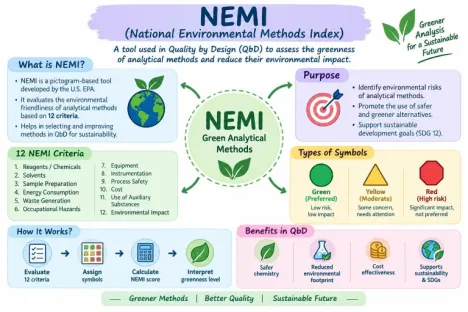
Figure 3: NEMI (National Environment Methods Index) for Assessing Greenness of Analytical Methods.
GAPI (Green Analytical Procedure Index)
The Green Analytical Procedure Index (GAPI) is a visual assessment tool introduced by Płotka-Wasylka in 2018 to examine the environmental impact of analytical procedures. It evaluates the different stages involved in an analysis, including sample collection, sample preparation, analytical measurement, and waste management. The assessment is presented through a pentagonal pictogram containing multiple sections. Green, yellow, and red colours represent low, moderate, and high environmental impact, respectively. [55]
GAPI evaluates several environmental factors, including sample collection methods, sample preparation techniques, the quantity and hazardous nature of reagents and solvents, energy requirements, analytical instrumentation, waste production, and waste disposal practices. This tool allows researchers to compare analytical procedures and identify methods with a lower environmental impact. It is therefore an important assessment approach in Green Analytical Chemistry (GAC) for improving the environmental sustainability of analytical techniques. However, GAPI primarily provides a visual representation of environmental performance rather than generating a single numerical score to express the overall greenness of a method. [56]
AGREE With Metrics
The Analytical Greenness Metric (AGREE) is an assessment method designed to determine the environmental sustainability of analytical procedures within Green Analytical Chemistry (GAC). Introduced by Pena-Pereira, Wojnowski, and Tobiszewski in 2020, this tool incorporates the 12 principles of Green Analytical Chemistry into a unified evaluation framework. Each principle is assessed using a normalized scale ranging from 0 to 1, and the overall assessment is displayed through a circular, clock-shaped pictogram with different colours representing the greenness of the analytical method. The AGREE approach examines several aspects of analytical procedures, including the consumption of reagents and solvents, chemical toxicity, waste production, energy requirements, the number of analytical operations, sample preparation, miniaturization, and automation. Higher scores generally indicate better environmental performance and greater compliance with green analytical principles. Consequently, AGREE provides a practical means of assessing and comparing analytical methods and supports the selection of procedures that reduce environmental impacts while maintaining analytical effectiveness. [57]
AMGS – Analytical Method Greenness Score
AMGS (Analytical Method Greenness Score) is a quantitative metric used in Green Analytical Chemistry (GAC) to evaluate the environmental sustainability of analytical methods. It was introduced by Hicks et al. In 2019, mainly for assessing separation methods such as HPLC. AMGS considers factors including solvent consumption, solvent Safety–Health– Environmental (SHE) characteristics, cumulative energy demand of solvents, and energy consumption of the analytical instrument. The different factors are combined to obtain an overall greenness score. A lower AMGS score indicates a greener analytical method. [58]
Green HPLC and UPLC development
HPLC is widely used in pharmaceutical analysis because of its reliability, selectivity and efficiency. However, conventional chromatographic procedures may consume substantial quantities of organic solvents. Integrating QbD with GAC can address this issue by treating solvent selection and consumption as development variables rather than as secondary considerations. Method development can investigate safer mobile phases, reduced flow rates, shorter analysis times and simplified sample preparation while maintaining required analytical performance. [59]
A QbD-based green chromatographic workflow can therefore include ATP definition, risk assessment, selection of potentially influential method factors, DoE, response modelling, MODR establishment, validation and greenness assessment. NEMI, GAPI, AGREE and AMGS can then be used to compare candidate methods and identify opportunities for further improvement. [60]
Integration of Qbd and Green Analytical Chemistry
QbD and GAC address different but complementary dimensions of analytical method development. QbD focuses on predefined quality, risk management, scientific understanding and robustness, whereas GAC focuses on environmental and safety performance. Their integration allows analytical quality and sustainability to be considered during the same development. [61]
A practical integrated sequence begins with the ATP and identification of required analytical performance characteristics. A preliminary risk assessment then identifies method factors that may influence those responses. Green criteria can be incorporated at this stage so that solvent toxicity, solvent volume, reagent hazard, waste generation and energy use are considered alongside analytical performance. [62]
DOE can subsequently investigate the selected factors and their interactions. Multi-response optimization can be used when several analytical and green objectives must be satisfied simultaneously. For example, a method may need to achieve acceptable resolution and accuracy while reducing solvent consumption and analysis time. The resulting MODR should represent a region in which the analytical method consistently meets its predefined requirements. [63]
After development, validation confirms that the procedure is suitable for its intended purpose. Greenness assessment can then provide an additional comparison between the developed method and alternative procedures. This creates a feedback loop in which analytical performance and environmental performance can both guide continual improvement. [64]
Advantages of the Integrated Approach
The combined approach can reduce reliance on trial-and-error experimentation, improve understanding of critical method variables, and support robust and reproducible analytical procedures. It also promotes efficient solvent use, the adoption of less hazardous reagents, waste minimization, energy conservation, and improved efficiency in laboratory practices. From a quality perspective, the approach supports consistency and method knowledge; from a sustainability perspective, it supports resource conservation and pollution prevention. Challenges and Considerations . [65]
Implementation may require appropriate experimental design, statistical knowledge, analytical expertise and access to suitable assessment tools. Green alternatives must not be selected solely because they appear safer; they must also provide adequate analytical performance and practical feasibility. Likewise, minimizing the use of solvents and reagents must not adversely affect the sensitivity, selectivity, precision, or robustness of the analytical method. Therefore, sustainability targets should be incorporated within the analytical development strategy rather than treated as an isolated final-stage evaluation. The use of multiple greenness metrics can also produce different perspectives because the tools use different criteria and scoring approaches. Consequently, a transparent description of the selected metric, assumptions and method conditions is important when comparing analytical procedures. [66]
Future Perspectives
The continued development of analytical QbD provides an opportunity to embed sustainability into pharmaceutical analytical science. Future methods can increasingly consider environmental performance as a development objective alongside accuracy, precision, selectivity and robustness. Greater use of miniaturized analytical procedures, automation, efficient detectors, safer solvents and real-time monitoring may further reduce the environmental footprint of pharmaceutical analysis. [67]
Digital and statistical approaches can support systematic exploration of analytical variables and prediction of method performance across an operating region. When combined with green assessment tools, such approaches may help laboratories compare alternative procedures using both analytical and environmental evidence. The integration of QbD and GAC is therefore relevant not only to method development but also to method lifecycle management and continual improvement. [68]
CONCLUSION
Quality by Design (QbD) offers a structured and science-driven framework for the development of pharmaceutical products and analytical procedures with consistent and reliable functionality. The approach moves beyond dependence on end-point testing by establishing a detailed understanding of how critical quality attributes, material properties, process variables and analytical method parameters influence the final outcome. Risk-based evaluation, Design of Experiments (DoE), response surface methodology and design-space establishment can be applied to identify significant factors, optimize operating conditions and maintain the desired level of method effectiveness. These approaches contribute to improved robustness, reproducibility, consistency and reliability of pharmaceutical analytical methods.
Incorporating Green Analytical Chemistry (GAC) into the QbD framework further extends this approach toward environmentally responsible analytical development. GAC emphasizes minimizing the use of hazardous substances, organic solvents and other resources, while reducing waste generation, energy requirements and potential environmental risks without affecting the quality of analytical results. Various assessment approaches, including NEMI, GAPI, AGREE and AMGS, can be employed to evaluate the environmental characteristics of analytical methods and support the selection of greener alternatives. The increasing application of Analytical QbD together with GAC demonstrates its potential for developing HPLC and UPLC methods that are not only reliable and efficient but also resource-conscious and environmentally sustainable. Hence, the integration of QbD and green analytical concepts provides a comprehensive strategy for achieving analytical quality, method robustness, operational efficiency, safety and sustainability in pharmaceutical analysis
REFERENCES

Ramya Nagabathula, Kamuju Divya Sri, Kambala Sri Lakshmi, Yemmili Sirisha, Savarapu Srivalli, Korukonda Sravanthi, QbD and Green Analytical Chemistry for Sustainable Pharmaceutical Analytical Development: A Review , Int. J. of Pharm. Sci., 2026, Vol 4, Issue 10, 3048-3065. https://doi.org/10.5281/zenodo.23524604
 10.5281/zenodo.23524604