

We use cookies to ensure our website works properly and to personalise your experience. Cookies policy
Department of Pharmacy, Shree Dev Bhoomi Institute of Education, Science and Technology, Dehradun, Uttarakhand, India 248007
A small evergreen Himalayan tree, Rhododendron arboreum is the national flower of Nepal and state tree of Uttarakhand.North America, Europe, Australia, Thailand, India, Nepal, Myanmar, Sri Lanka, Bhutan, Pakistan, China, and Tibet are among the regions where rhododendron grows.Rich in many nutrients and minerals, it can be used for a variety of things, including firewood, food colouring, decorations, and cooling drinks. The various part of plants like flowers, leaves, bark, and roots, have been used to treat a variety of disease such as illnessesincluding fever, diabetes, inflammation, liver issues, infectionsand respiratory ailments. Different types of phytochemicals are present in this plant which include flavonoids, phenolic acids, tannins, glycosides, terpenoids .These active constituent play an important role in pharmacological activity such as antioxidant, anti-inflammatory, antimicrobial, antidiabetic, hepatoprotective, cardioprotective, antiviral, analgesic, adaptogenic effects and quercetin, hyperoside, ursolic acid, and betulinic acid are some important compound thatcontribute to these therapeutic actions..Flowers of this plant are traditionally utilized by the people residing in the mountainous region to make pickle, juice, jam, syrup, honey, squash.By combining traditional knowledge with modern scientific discoveries, this study highlights the medicinal potential of R. arboreum and encourages its future application in the creation of herbal medications and nutraceutical products.
The name "Rhododendron" comes from the Greek words "rhodo," which means "rose," and "dendron," which means "tree." Carl Linnaeus originally characterised this plant in 1837. It is a member of the Ericaceae family.[1]Rhododendron arboreum, a member of the Ericaceae family, is a tree native to Nepal, India, North America, Europe, Australia, Myanmar, Sri Lanka, Bhutan, Pakistan, China, Tibet, and Thailand.[2]This plant is also known as Nepal's national flower and Uttarakhand's state tree. It is the official flower of Chin state and the state flower of Nagaland.[3]The plant can be found in India's hills of Assam and Manipur at elevations between 1200 and 400 meters, as well as in the Himalayas from Kashmir to Bhutan.[4] It grows at elevations of 4500 to 10,500 ft & grows up to 40 to 50 ft high, sometimes attaining over 100 ft.[5]Deep red or scarlet to pale pink flowers bloom from March to April. The plant needs rather moist, acidic soil and prefers light (sandy) to medium (loamy) soil. This plant is highly valued both economically and medicinally. It is used for a variety of purposes, including firewood, culinary colouring, stimulating drinks, and decorations. It is rich in nutrients and minerals. Traditionally, it has been used to treat a wide range of conditions, including liver problems, dysentery, epistaxis, heart and vision issues, asthma, fever, diabetes, gout, and coughs.[6]This plant included a variety of phytochemicals, including phenols, flavonoids, terpenoids, glycosides, triterpenoids, sterols, tannins, and alkaloids.[7]Figure 1 shows the flower parts of the plant, and Figure 2 shows the entire plant.
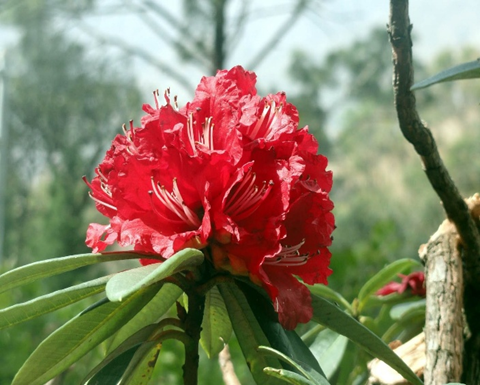
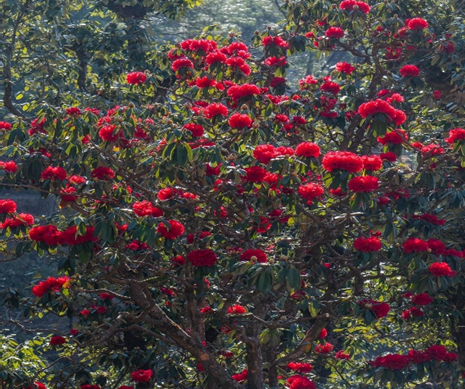
Fig.1(flower of Rhododendron) Fig.2(Tree of Rhododendron)
Rhododendrons are prehistoric families of blooming plants of great ecological significance that predominate in temperate forests and alpine vegetation in the Himalaya. The most delicate habitat in the Himalaya is the subalpine to alpine transition zone, where Rhododendrons are the sole woody flowering species that control plant groups.[8]Rhododendron species' broad geographic and elevational ranges are also reliable indicators of their capacity to adapt to changing climatic conditions. Significant differences in leaf functional features between and within species also help the species' capacity to adapt to changing resource levels under various environmental conditions.[9] Rhododendron phenology is highly sensitive to temperature.[10]Rhododendrons are therefore regarded as useful models for researching climate change in the Himalaya.[11]Taxonomic classification is described in Table 1.[12]
Table 1: Taxonomical Classification of Rhododendron arboreum
|
Kingdom |
Plantae |
|
Phylum |
Magnolliophyta |
|
Class |
Angiospermae |
|
Order |
Ericales |
|
Family |
Ericaceae |
|
Genus |
Rhododendron |
|
Species |
Rhododendron arboreum |
COMMON NAME:
Burans, Eras, Adrawal, Billi, Laligurans, Kattupoovarasu
HABIT AND HABITAT:
Altitude – 1200-3600
Annual temperature 12-17 degrees C
Annual rainfall 200-1800 mm
Soil type –R. arboreum cultivation requires sandy and loamy soil.
Although it may grow in extremely acidic soil, the plant likes acidic soil.
Soil moisture may be necessary. [13]
ORGANOLEPTIC PROPERTIES
Appearance:
Odour:
Taste:
Texture:
Colour:
MACROSCOPIC IDENTIFICATION
Leaf: Rhododendron leaves have a leathery feel, are simple, and alternating. The leaf's lower surface appears pale or covered with fine hair, while the top surface is smooth, dark green, and glabrous.[15]
Flower: The colours of Rhododendron arboreum flowers range from pink to deep scarlet to red with white accents. When in bloom, this Rhododendron is a breathtaking sight, with up to twenty blooms in a single truss[16].Bright red-flowering Rhododendrons are usually found at lower elevations. The stamens are hypozygous and decreasing, the corolla is spotted and formed like a funnel, and the calyx is delicately split. The style is capitate, the anthers are elliptical, and the filaments are filiform.[17]
Seed: Rhododendron seeds are small and have a dark brown colour.[18]
Table 2: Parts of the plant and their use
|
Plant |
Major compounds |
Use |
Reference |
|
Flowers |
Flavonoids, phenolics, anthocyanins |
Use to make juice, wine, jam, To treat headache, asthma, antimicrobial, and antioxidant. Free radical scavenging activity, anti-allergy |
19 |
|
Leaves |
Tannins, Saponins, Flavonoids |
Uses for rheumatism, diarrhoea, and skin infection. |
20 |
|
Bark/stem |
Polyphenol, Terpenoids |
Used for fever, bacterial infection, and antioxidant. |
21 |
|
Seed |
Phenolic acid, flavonoids |
Antioxidant, Antimicrobial; folk use for respiratory. |
19 |
|
Roots |
Alkaloids, Glycosides |
Used for digestive and pain relief, anti-inflammatory. |
20 |
Distribution of species of Rhododendron
There are an estimated 1200 species of Rhododendron worldwide, with China having the greatest number of species (571 total species worldwide, 409 of which are indigenous). There are over eighty species, ten subspecies, and fourteen variations in India. According to available data, 72% of Indian species are located in Sikkim, and 98% of them are found in the Himalayan region.[22]
TRADITIONAL USE:-
The sweet and sour Rhododendron arboreum blossoms are utilised in hilly regions to make squash, jams, jellies, and regional beer. It is a popular and enjoyable beverage that is consumed once a day as a cool appetiser and to ward off altitude sickness. Barah ki chutney is made using fresh petals. On get rid of bed lice, the leaf juice is applied to cots and beds. The plant's wood is used to generate fuel and charcoal. Gunstocks, posts, gift boxes, packsaddles, and "khukri" handles are all made from the grained wood of R. arboreum[23]. Long ropes made of munja grass are used to decorate houses, including temples, with flowers and leaves.[24]
MEDICINAL USE OFPLANT
In Far-West Nepal, Rhododendron has long been used as a treatment for a variety of illnesses. It is favoured due to its various therapeutic benefits and minimal adverse effects. Its leaves and blooms are used to treat disease, headaches, diabetes, rheumatism, and other conditions. Phenolic acids extracted from its leaves and twigs have been shown to have anti-HIV, anti-inflammatory, and anti-nociceptive properties. Some of the medicinal properties of its different parts, along with their specific bioactive compounds and remarks, are mentioned in Table 2.[25]
PHYTO-CHEMISTRY
Bark
Taraxerol (C30H50O) and ursolic acid acetate (C32H50O4) were the only triterpenoid compounds found in the petroleum ether extract of the bark. Betulinic acid (C30H48O3) was identified by the bark's ether extract after the petroleum ether extract. Leuco-pelargonidin (C15H14O6) was obtained from the bark's acetone extract.[26]
Leaves
According to Orwa et al. (2009), green leaves include glucoside, ericolin (arbutin) (C12H16O6), ursolic acid (C30H48O4), α-amyrin (C30H50O), epifriedelinol (C30H52O), a novel triterpenoid called campanulin, quercetin, and hyperoside (C21H20O12). The leaves of R. arboreum var. nilagiricum were found to contain triterpenoid compound epifriedelinol, ursolic acid, and hyperoside (3-D-galactoside of quercetin).[27]Additionally, it has been stated that the leaves contain specific flavonoids, dimethyl ester of terephthalic acid, and flavone glycoside.[28]The GC-MS analysis of methanolic leaf extract revealed approximately 34 compounds, including beta-amyrin, heptadecane, 22-stigmasten3-one, tetradecane, methyl ester, linoleic, linoleyl alcohol, beta-citronellol, dodecane, L-ascorbic acid, 2, 6-dihexadecanoate, alpha-amyrin, and dibutyl phthalate.[29]
Flowers
A crystalline chemical component called quercetin-3-rhamnoside has been identified in this species' flowers.[30]Using high-performance thin-layer chromatography (HPTLC), three physiologically active phenolic compounds—quercetin (C15H10O7), rutin (C27H30O16), and coumaric acid (C9H8O3)—have been identified in R. arboreum flowers.[31]
STRUCTUREOF PHYTOCONSTITUENT
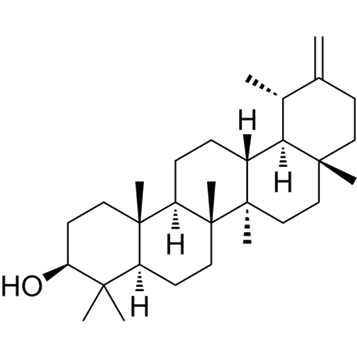
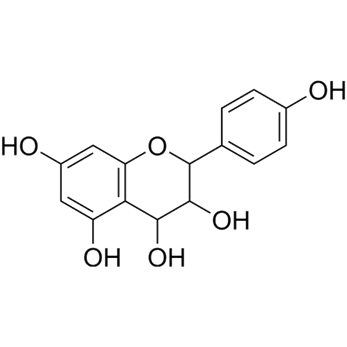
Taraxerol leuco-pelargonidin
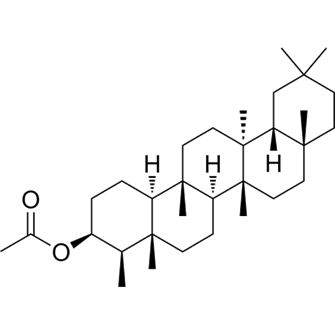
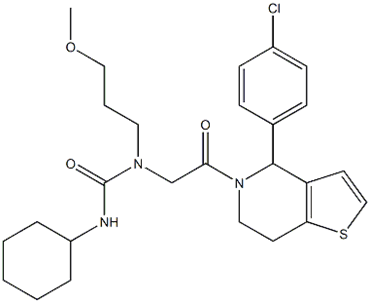
Epifriedelanol campanulin
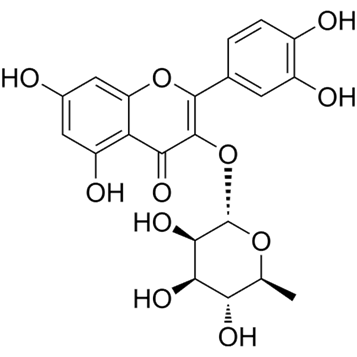

Quercetin-3-rhamnoside Quercetin
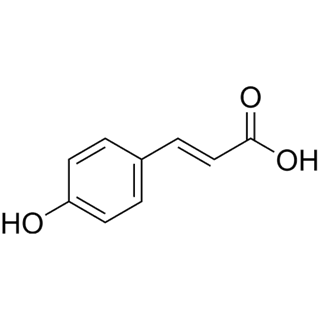

Coumaric acid Rutin
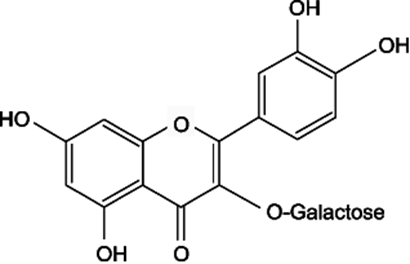
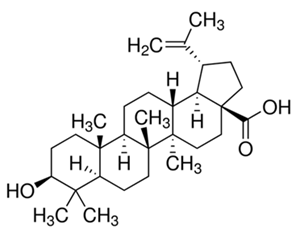
Hyperoside Betulinic acid
PHARMACOLOGICAL ACTIVITIES
Antioxidant activity
Flavonoids isolated from the leaves of R. arboreum were found to have potent antioxidant properties.[32]Numerous phenolic compounds and antioxidant properties found in several Rhododendron species have the potential to be turned into medicinal medicines.[33]Ajaz Ahmad et al. used various specifications in the animal model to determine the antioxidant potential of these plants (RAP). Animals were pre-treated with various doses of RAP orally for a week before receiving an injection of lipopolysaccharide (LPS). Various behavioural characteristics, such as body temperature, burrowing, and changes in the open field, were evaluated. Liver and renal function tests were performed six hours after LPS was administered.[34]In addition to measuring the quantity of inflammatory indicators like interleukin-6 (IL-6), interleukin-1 beta (IL-1β), and tumour necrosis factor-alpha (TNF-α), as well as VEGF, a particular sepsis marker, oxidative stress markers like SOD, CAT, and MDA were also assessed in tissue. All liver and kidney function parameters, antioxidant markers, and plasma pro-inflammatory cytokines were dramatically recovered in the test drug-treated group, avoiding multi-organ and tissue damage in LPS-induced rats 1.[35]
Anti-inflammatory activity
50% methanol and ethanol extracts of the flowers of Rhododendron arboreum reported significant anti-inflammatory activity against carrageenan-, prostaglandin E2 (PGE2)-, histamine-, and 5-HT induced rat hind paw oedema.[36] The ethyl acetate extract also showed anti-inflammatory effects in various pharmacological models.[37]Doses of Rhododendron arboreum extract (EERA) at 100, 200, and 400 mg/kg were administered orally. At doses of 100, 200, and 400 mg/kg, there was a substantial increase in the hot plate reaction time (p<0.001). The extract's anti-inflammatory or nociceptive properties could be attributed to the presence of tannins, saponins, flavonoids (hyperin), and other phytochemicals, either alone or in combination. The high concentration of flavonoids in the ethyl acetate extract may be responsible for its notable degree of anti-inflammatory effect.[38]
Antidiarrheal activity:
The ethyl acetate fraction of the flower significantly (p < 0.05 - 0.001) reduced the number of diarrheal faeces (24.55 73.65%) in the magnesium sulfate-induced diarrhoea and (91.36% + (-66.03%) inhibited the intestinal contents in the castor oil-induced enter pooling (3.87 ± 0.45 to 2.21 plus/minus 0.29). The percentage significantly (p < 0.05–0.01) decreased the number of diarrheal faeces (24.48–71.07%) in the castor oil-induced diarrhoea at the previously described concentrations.[39]
Antiviral activity
Several Rhododendron species demonstrated action against Leishmania donovani and Plasmodium falciparum in a test of 16 Turkish species for anti-protozoal effects.[40]Maneesh Lingwan et al. investigated the antiviral activity of active ingredients of these plants against several viruses in vitro and in vivo, prompting us to test against SARS-CoV-2. In vitro studies of hot aqueous extract of R. arboreum petals revealed a dose-dependent reduction in SARS-CoV-2 virus load in infected Vero E6 cells. [41] The ethanol-soluble extract of Rhododendron caucasicum leaves and twigs stopped Autographa californica nuclear polyhedrosis virus (AcNPV), an insect virus used to model other dangerous DNA viruses, from multiplying. [42]
Cardioprotective activity
The whole plant ethanolic extract of R. arboreum significantly decreased the levels of MDA in serum and heart tissue, as well as the activity of the enzymes ALT, AST, and LDH in rats given isoproterenol. Additionally, it increased the activity of GSH, SOD, catalase, and GPx. Vacuolation, inflammatory cell infiltration, and myocardial degeneration all significantly improved in group 90 treated with ethanolic extract. Ethanolic flower extract reduced the release of lactate dehydrogenase and creatine kinase more effectively than aqueous extract when given to albino rats at a concentration of 70 mg/ml intraperitoneally. Of all the extracts, the ethanolic extract's n-butanol fraction showed the strongest cardioprotective effect.[43]The ethanolic extract from Rhododendron arboreum leaves protected against myocardial ischemia caused by isoproterenol. After 42 days of pretreatment with these plant extracts, rat serum levels of LDH (lactate dehydrogenase), ALT (alanine aminotransferase), and AST (aspartate aminotransferase) were significantly lower than those of the disease group in a dose-dependent manner. Flavonoids may have antioxidant properties in addition to their cardioprotective effects. [44]
Hepatoprotective activity
In both preventive and curative models, the ethyl acetate portion of Rhododendron arboreum demonstrated strong hepatoprotective potential against liver damage caused by carbon tetrachloride (CCl4). In groups II, III, IV, V, and VI treated with CCl4, the fraction was given orally once daily for 14 days at a concentration of 100, 200, and 400 mg/kg. Along with the activities of glutathione S-transferase (GST), glutathione reductase, hepatic malondialdehyde formation, and glutathione content, the serum levels of glutamic oxaloacetic transaminase (SGOT), glutamate pyruvate transaminase (SGPT), alkaline phosphatase (ALP), γ-glutamyl transferase (γ-GT), bilirubin, and glutathione were estimated. Following CCl4 treatment, the significantly increased serum enzymatic activity of SGOT, SGPT, SALP, γ-GT, and bilirubin was dose-dependently returned to normal. In the meantime, glutathione reductase and GST's reduced activities were also brought back to normal. Furthermore, in a dose-dependent way, the ethyl acetate fraction also markedly inhibited the rise in hepatic malondialdehyde production and the decrease in reduced glutathione concentration in the liver of rats intoxicated with CCl4.[44]
Antimicrobial activity
Both Gram-positive and Gram-negative bacteria, mainly Escherichia coli, Pseudomonas aeruginosa, Salmonella enterica, Salmonella sonnei, Staphylococcus aureus, and Listeria innocua, were tested against the ethanolic and methanolic extracts of Rhododendron arboreum. The effects on viruses (enterovirus, chikungunya, and yellow fever) and fungi (Candida albicans) were also assessed. The test drug showed dose-dependent antibacterial, antiviral, and antifungal effects.[45]Significant effectiveness against B. subtilus, Salmonella typhi, and S. aureus was demonstrated by the methanolic crude extracts of R. arboreum's flower, leaf, stem, and roots.[46]In another study, the ethanolic flower extract demonstrated significant activity against E. coli, S. epidermidis, and S. aureus. It also demonstrated antifungal activity against Aspergillus flavus, Candida albicans, and Aspergillus parasiticus, whereas the water extract demonstrated significant results against Aspergillus flavus, Candida albicans, and Aspergillus parasiticus. [47] Methanol and aqueous leaf extract were found to be efficient against Candida and Trichoderma viride, according to Chauhan et al. (2016). [48]
Immunomodulatory activity:
The ethanolic leaf extract-treated mice showed significant suppression of the immune response. The ethanolic extract-treated group was more effectivethen levamisole-treated and control groups. There was no significant difference found in serum glutamate oxaloacetate transaminase, serum glutamate pyruvate transaminase, serum total bilirubin and in the weight of spleen and liver.[49] Rawat et al reported that TMS-10 (ursolic acid), CMS-3 (kaempferol) and RAM fr2 fraction showed 79.67±0.57%, 67.67±2.08% and 40.3±1.5% stimulation, respectively, toward the phagocytic activity of neutrophils and also stimulated the phagocytosis in killed Candida albicans. The 1mg/ml concentration of TMS-10, CMS-3 and RAM fr2 had 7, 6.7 and 6.3 mean particle numbers, respectively.[50]
Antidiabetic activity:
Bhandary and Kawabata found that the ethyl acetate-soluble part was more effective in α-glucosidase inhibitory activity than the water-soluble part.The isolated compound, hyperin,inhibits α-glucosidase in a dose-dependent manner, having (IC50=0.76 mM) for maltase and (IC50=1.66 mM) for sucrose.The aqueous methanolic extract's water-soluble and ethyl acetate-soluble components both exhibited inhibitory effects on αglucosidase, with the ethyl acetate-soluble part exhibiting the highest activity. Enzyme-assay guided separation was used to isolate the αglucosidase inhibitor quercetin-3-O-β-D-galactopyranoside (hyperin) from the ethyl acetate-soluble part. IC50 values for sucrase and maltase were 1.66 mM and 0.76 mM, respectively, indicating that the isolated chemical exhibited dose-dependent α-glucosidase inhibitory action. According to this study, flowers have antidiabetic potential, a quality that could aid in the development of pharmaceutical preparations, nutraceuticals, or functional foods for diabetes and its consequences.[51]According to Parcha et al.The ethylacetate-soluble part was more effective in α-glucosidase inhibitory activity than the water-soluble part.[52]
Anticancer activity:
It was discovered that the ethanolic leaf extract significantly and dose-dependently inhibits the growth of tumors in potato discs caused by Agrobacterium tumefaciens. In the MCF-7 tumor cell line, the flower extract was statically insignificant but the leaf extract was significant when compared to TAM. The anticancer action may be attributed to the separated compounds rutin and quercetin from the ethanol extract.[53]15-oxoursolic acid, the isolated chemical, exhibited IC50 values against A498, NCI-H226, H157, Hep G2, and MDR 2780AD cell lines of 32.8±1.54µM, 10.3±0.01µM, 9.2±0.23µM, 4.9±0.02µM, and 2.3±0.04µM. Cytotoxicity is caused by the carbonyl group at carbon 17 and the OH group at carbon 3.[54]Aqueous leaf extract at concentrations up to 5000µg/ml was shown to be non-cytotoxic to S. cerevisiae, strain BY4741. The extract reduced the expression of HIF-1α to 0.332 fold and VEGE to 0.24 fold while inhibiting cell proliferation in Vero cells (75.30%–25.41%) and HELA cells (87.66%–60.12).[55]
Adaptogenic activity
According to Som et al. (2019), Rhododendron sp. contains diterpenes, triterpenes, flavonoids, steroids, tannin, phenolics, saponin, glycosides, alkaloids, tannin, quercetin, and gallic acid, among other compounds. These compounds have strong anti-oxidant and potent anti-stress properties, which may be the cause of adaptogenic activity.[56]By reducing the impact of acute and chronic stress-induced biochemical and physiological disruption, the ethanolic extract of Rhododendron arboreum demonstrated notable adaptogenic properties. Rats and mice were used in the investigation. Adaptogenic activity was assessed using models of immobilisation stress, swimming endurance, and anoxia stress tolerance. In comparison to the control group, concurrent administration of ethanolic extract at doses of 250 and 500 mg/kg demonstrated a significant increase in anoxia stress tolerance and swimming endurance time. In a similar vein, pretreatment with the extract showed a significant drop in blood levels of lipids, cholesterol, and glucose when compared to the stress control group during immobilisation stress.The weights of the liver and adrenal glands are markedly decreased, but no weight changes in the spleen and testes were observed.[57]
Analgesic activity
The analgesic properties of a few diterpenoids that were isolated from Rhododendron were assessed using an acetic acid-induced writhing test. The findings demonstrated that, at a dose of 1.0 mg/kg, rhodomicranosides A-E and H, pierisformoside F, isograyanotoxin II, and grayanotoxins I, III, and IV suggested strong analgesic effects with percentage inhibitions exceeding 50%. Specifically, at a dose of 0.2 mg/kg, grayanotoxins I and III demonstrated more strong analgesic efficacy than morphine, and even at a lower dose of 0.04 mg/kg, they demonstrated considerable analgesic activity with inhibition rates of 71.5% and 69.3%, respectively.[58]Furthermore, hyperoside exhibited an analgesic effect. Using the hot plate method and the mouse tail shake test, hyperoside was injected into the lateral ventricle at a dosage of 5 μg/20g. The results demonstrated a strong central analgesic effect that was comparable to 1/20 of morphine. The brain's Ca2+ content dramatically dropped when hyperoside caused the analgesic effect, suggesting that the central analgesic impact of hyperoside may be directly linked to the drop in Ca2+ content in the brain.[59]
Anti-feedant and insecticidal activity
Rhododendron, a plant that was turned into a commercial botanical insecticide, is the most researched species in terms of anti-feedant and insecticidal activities. Chiu examined information about Chinese insecticidal plants in 1950.[60]Rhododendron flowers are more potent than the plant's leaves and roots in terms of contact and gastrointestinal toxicity. In stomach-toxicity tests, the flowers offered a median lethal dose of 40.4 mg/g against the fourth instar larva of the silkworm Bombyx mori. With average death values ranging from 18% to 91% after 48 hours, contact poisoning appeared to be the most effective method against the cruciferous leaf beetle Colaphellus bowringi, the bean plataspid Coptosoma cribraria, and the China-grass butterfly Acrarea issoria.[61] Extracts of dichloromethane, ethyl acetate, methanol, and ethanol have been linked to the insecticidal properties of Rhododendron molle flowers. The diamond-back moth Plutella xylostella larvae were shown to be toxically affected by the dichloromethane extract of Rhododendron molle flowers in 1990, with LC50 values of 0.33% and 0.37% against a resistant and a sensitive strain, respectively.[62]
Antifungal activity
The effects of various R. arboreum extracts on various fungal species were investigated, and the zone of inhibition was calculated. The zone of inhibition was 10 mm for Aspergillus flavus, 9 mm for Candida albicans, and 8 mm for Aspergillus parasiticus for the ethanolic floral extract at a dosage of 50 mg/ml, and 10 mm for Candida albicans, 9 mm for Aspergillus parasiticus, and 8 mm for Aspergillus flavus53. At 50μg/ml, the methanolic extract showed 17 mm, 25 mm, 28 mm, 28 mm, 29 mm, and 32 mm of inhibition against F. solani, A. niger, M. canis, C. flavus, C. albacan, and D. glaberata, while the ethyl acetate extract showed 16 mm, 22 mm, 24 mm, 25 mm, 28 mm, 28 mm. Extracts fromRhododendron arboreumshowed antifungal action on the zone of inhibition.[63]
CONCLUSION
Numerous pharmacological activities, including antidiabetic, adaptogenic, antidiarrheal, anti-inflammatory, antioxidant, anticancer, cardioprotective, hepatoprotective, immunomodulatory, and antimicrobial, have been reported by R. arboreum compounds, fractions, and extracts, supporting its ethnomedical use and benefits. However, some studies have found R. arboreum toxic at certain doses. Further research is advised on the purification and isolation of the compounds from R. arboreum, which may add a novel or compatible therapeutic agent in the pharmaceutical industry. Some of the compounds belonging to the classes phenolics, flavonoids, flavonoid glycosides, sterol, and terpenoids have already been isolated from leaves, flowers, and bark, while the remaining compounds are still to be investigated. According to GC-MS profiling, R. arboreum contains a variety of classes of chemicals with significant medicinal and industrial significance, including esters, terpenes, hydrocarbon alkane, organic compounds, steroids, flavonoids, and fatty acids.
REFERENCES


Abhinav Badoni, Rita Saini, Shivanand Patil, Traditional Use, Pharmacology, and Phytochemistry of Rhododendron arboreum, The State Tree of Uttarakhand, Int. J. of Pharm. Sci., 2026, Vol 4, Issue 1, 1495-1508. https://doi.org/10.5281/zenodo.18256957
 10.5281/zenodo.18256957