

We use cookies to ensure our website works properly and to personalise your experience. Cookies policy
1Department of Pharmacognosy, East West Education Institution, Talit, Bardhhaman, West Bengal 713141
2 Department of Pharmacology, Sanaka Educational Trust Group of Institutions, Malandighi, Durgapur, West Bengal-713212
3Department of Pharmacology, East West Education Institution, Talit, Bardhhaman, West Bengal-713141
4Department of Pharmacology, Derozio Pharma Institute, Gopal Chak, Moyna, Dakshin Ankha, West Bengal 721629
5Ind-Swift Laboratories Ltd, Plot No. 123, Industrial Area Phase 1, Panchkula, Haryana 134113
6 Department of Pharmaceutics, Srinath University, Adityapur,Jamshedpur,Jarkhand, 831013
7 Gupta College of Technological Sciences, Ashram More, Asansol, West Bengal-713301
Oroxylum indicum (L.) Kurz, also referred to as Sonapatha or Indian trumpet flower, is an important medicinal tree species of the Bignoniaceae family with a wide geographical distribution in the Indian subcontinent and Southeast Asia. The present review article briefly reviews the ethnobotanical importance, pharmacognostical features, phytochemical and pharmacological properties of the medicinally important plant species. The various parts of the Oroxylum indicum plant, such as the root bark, stem bark, leaves, seeds, flowers, and fruits, have been used as an important medicinal plant for the management of various inflammatory conditions, respiratory disorders, gastrointestinal infections, arthritis, and infections. Phytochemical studies indicate that the plant contains a plethora of flavonoids, including baicalein, chrysin, and oroxylin A, along with other constituents such as tannins, alkaloids, terpenoids, glycosides, phenolics, and saponins. Of these, baicalein has emerged as the major bioactive compound responsible for numerous pharmacological activities. The experimental evidence points to the strong anti-inflammatory, analgesic, antioxidant, antibacterial, gastroprotective, cardioprotective, hepatoprotective, anticancer, and neurogenic activities of the compound, which are responsible for the traditional uses of the plant. Although it possesses a broad therapeutic potential and economic interest, habitat loss and exploitation are still pressing issues that call for its conservation and sustainable use. Further improvement in its standardization, toxicity evaluation, and clinical investigation is crucial in converting its traditional application into a therapeutic approach. Thus, Oroxylum indicum is a potential natural source of drugs and phytopharmaceuticals in the future.
The general belief that green medicine is safe, easily accessible, and has fewer side effects has led to the rise in popularity of herbal medicines for a variety of ailments. Of all the pharmaceutical drugs now on the market, around 25% come from plants. The one that .Herbs have been used for many years in pharmacological treatment of disease (Shintu et al., 2015) Several quality control standards were set by the World Health Organization (WHO) for herbs. The identification of phytochemicals and the standardization of plants will serve as the foundation for the safety and identification of a herbal remedy. Initial phytochemical screening, pharmacognostic evaluation, and physicochemical studies of the plant will aid in the conformation of plant resources (Nowfa et al., 2021). The antibacterial, antioxidant, and anti-inflammatory qualities present in the majority of medicinal plants have allegedly been helpful in preventing a number of infectious diseases and may also benefit overall society (Gauri et al., 2023). Nature has blessed us with a diverse range of plants in different places, making up our vast herbal world (Ganesh et al., 2021) . Oroxylum indicum (L.) Kurz is one of these herbs. Since ancient times, people have used this important species of medicinal tree to treat a wide range of ailments. Oroxylum indicum is commonly known as Sonapatha or Shyonak in Hindi and as the tree of Damocles in English. Sonapatha is a semi-deciduous tree with few branches that grows to a height of 18 to 20 meters. The light brown or greyish-brown stem bark of Sonapatha is spongy, velvety, and filled of corky lenticels. The trunk measures around 40 cm across. Sonapatha's inner bark layer's golden-yellow hue is the source of its name (Shivam et al., 2024). It usually grows well in tropical and subtropical climes and favors damp deciduous woodland areas. It is usually found in damp places, ravines, and moist wooded areas up to 1200 meters above sea level. It is found in North East India, the Eastern and Western Ghats, and the slopes of the Himalayas. It is primarily seen on riverbanks and hillside slopes (Suthasinee et al., 2024). In several nations, parts of its plants have been utilized as traditional medicine. In Thailand, the roasted immature pod is eaten as a local vegetable, the root is used to treat fevers, and the seed is used to alleviate coughs. Stem bark is used to heal wounds and treat arthritis (Anjali et al., 2024) The primary bioactive components of Oroxylum indicum are flavonoids, which include baicalein, chrysin, and oroxylin A. Together with alkaloids, tannins, terpenoids, saponins, phenols, and glycosides, these compounds contribute to the plant's diverse pharmacological characteristics. Baicalein is the most common flavonoid and can be found in the stem bark, root bark, leaves, fruits, and seeds, among other parts of the plant (Rekesh et al., 2021). It possesses potent antioxidant, anti-inflammatory, anti-cancer, and anti-microbial qualities. Numerous plant extracts' pharmacological potential is being studied. The plant is significant economically in addition to its medicinal uses, supporting industries including food, cosmetics, and pharmaceuticals. The sustainable cultivation of O. indicum may help sustain local communities' livelihoods. Ecologically speaking, the plant provides habitat and food for wildlife, and its large, striking blooms attract pollinators, which boost the ecosystem's diversity. O. indicum is therefore an important species that has implications for the economics, culture, medicine, and ecology (Shiva et al., 2024).
A few branches of the little tree O. indicum have enormous leaf scars (Anjali et al., 2024). The plant's light grayish brown bark is spongy and delicate, with corky lenticels (Rekesh et al., 2021). 2-4 pairs of oblong to elliptic, acuminate or caudate, glabrous or glabrescent, rounded or subcordate bases; robust, cylindric rachis; opposite pinnae; terminal clusters of big, ternately 2-3-pinnate leaves. With a golden inside and a reddish-purple outside, the terminal blooms are enormous and feature strong racemes. glabrous, leathery, oblong-campanulate calyx. Corolla is quite meaty. In the vicinity of the base, the filaments are cottony. With woody valves, the capsule is flat, straight, and tapering on both ends. Seeds with wings and flat surfaces (Anjali et al., 2024).
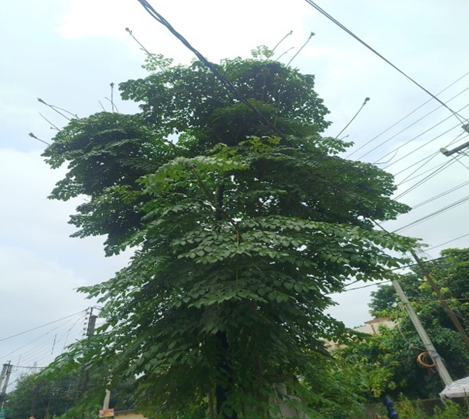
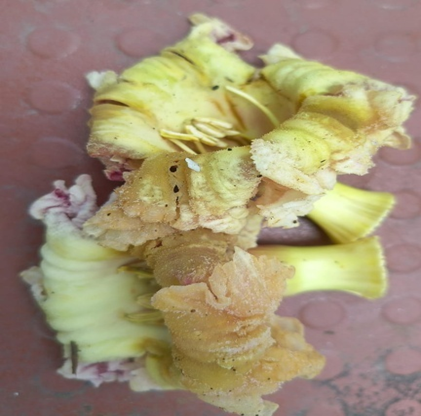
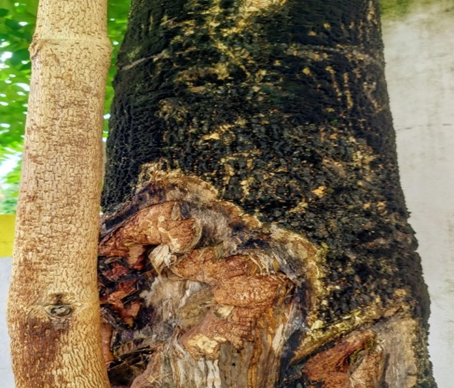
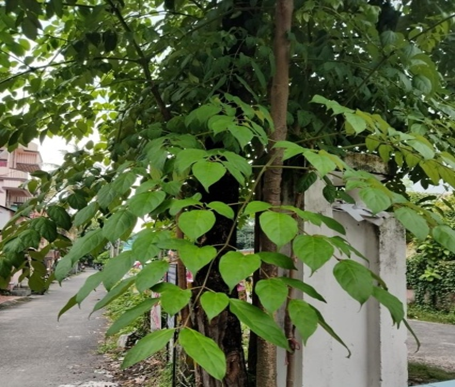
Figure 1. Oroxylum indicum (L.) Kurz: (a): whole tree; (b): flowers; (c): stem bark; (d): leaves
Oroxylum indicum (L.) Kurz. Belongs to the Bignoniaceae family of plants (Shiva et al., 2024).
Kingdom: Plantae
Division: Magnoliophyta
Class: Magnoliopsida
Order: Lamiales
Family: Bignoniaceae
Genus: Oroxylum
Species: indicum
3.1 Synonyms
Bignonia indica L.
Calosanthes indica Blume.
3.2 Vernacular Names
English: Broken bones plant, Indian calosanthes, Indian trumpet flower, Midnight horror, Tree of Damocles
Bengali: Sona, Khonha, Paharijora, Kani-Dingi, Hanghoal, Aflong-Singh, Thona Gach, Naori Chil ana (Chaknma Tribe) Krong-Sa-Bang (Marma Tribe), Tou-Kharung Tripura Tribe), Kaak-Rakung (Tribe Halam), Kanai Dingi (Garo Tribe)
Hindi: Bhut-Vriksha, Dirghavrinta, Kutannat, Manduk (The Flower), Patrorna, Putivriksha, Shallaka, Shuran, Or Son, Vatuk
Malayalam: Palaqapayyani, Vashrppathiri, Vellappathiri
Marathi:Tayitu, Tetu
Sanskrit:Aralu, Shyonaka
Tamil: Cori-Konnai, Palai-Y-Utaici, Puta-Puspam (The Flower)
Telugu: Manduka-Parnamu, Pampena, Suka-Na samu
It is native to the foothills of the Himalayas, southern China, Bhutan, Indo-China, and portions of the Indian subcontinent and Malaysian ecozone (Vimal et al., 2013). It is found in the forest habitat of Manas National Park in Assam, India. The Philippines, Sri Lanka, and Indonesia are also home to it (Ahad et al., 2012).
Thailand uses its fruits and flowers as vegetables. Moreover, it is utilized as wood, tannins, and dye (Ganesh et al., 2021). The tree is commonly planted as an ornamental tree due to its unusual form. Farmers use a sword-shaped fruit or a plant branch to kill crabs in wet paddy fields. To get rid of maggots, a bark paste is applied to animal wounds (Harminder et al., 2011).
According to traditional medicine, every portion of the O. indicum plant has a range of therapeutic uses and has been used to treat human illnesses [receives manuscript]. Throughout history, sonapatha has been used to cure a variety of human illnesses. Sonapatha is utilized to enhance human health in both traditional and Ayurvedic medicine. Chyavanprasha, Amritarishta, Narayana Taila, Dantyadyarista, Dashmularishta, Dhanawantara Ghrita, and Brahma Rasayana rely on it (Ganesh et al., 2021). In addition to being cooling, aphrodisiac, tonic, and increasing appetite, Barko fplanti is a sacrid, bitter, and pungent root that also helps with "vata," biliousness, fevers, intestinal worms, bronchitis, vomiting, dysentery, leucoderma, asthma, pain, and inflammation. Diarrhea, diaphoresis, rheumatism, and dysentery are all treated with it. A paste prepared from powdered root bark and sesame oil (Sesamum indica) is used as a digestive tonic. The seeds have a purgative effect and don't induce throat infections or high blood pressure. Snake bites, diarrhea, and dysentery are all treated with the root bark, stem, and leaves in Indian Ayurvedic medicine (Om Prakash et al., 2021). The seeds of the plant, called Mu Hu Die in Chinese, have long been used in traditional Chinese medicine to treat a number of respiratory ailments, such as pertussis, pharyngitis, bronchitis, and cough (Sweta et al., 2018). Ayurvedic formulations known as "Rymanyl" capsules and "Arthrella" ointment, which contain Oroxylum indicum as a component, are used in Malaysia to treat rheumatoid arthritis and osteoarthritis (Dinda et al., 2015).
The T.S. of the stem bark shows the outermost ten to fifteen stratified cork cells. The cork has a thickness of 171–190 μm. Particles as tiny as 5 μm in diameter can be found in the secondary phloem region (Anupam et al., 2011). The leaf is dorsiventral, with a single-layered top epidermis without stomata and a lower epidermis with unicellular trichomes and anomocytic stomata. The mesophyll exhibits palisade and spongy parenchyma that contains calcium oxalate crystals. The midrib contains a collateral vascular bundle that contains pericyclic fibers. Powder microscopy reveals anomocytic stomata, unicellular trichomes, and reticulates xylem arteries. (Falgun et al., 2023)
The large or collapsed cork cells that make up the thick cork (700–1000 µm) in the TS of root bark are regularly broken up by stone cells. The cork cambium is two to three cell layers thick. A large phelloderm has several stone cells with narrow walls and extensive lumina. The inner zone of these cells has fewer stone cells than the outer zone. The short secondary phloem, composed of tangential or scattered bands of stone cells, is interrupted by two to three seriate medullary rays and the starch-filled parenchyma (Santosh et al., 2015)
The Indian trumpet tree, or Oroxylum indicum, is well recognized for a number of bioactive substances, especially flavonoids, which are mostly present in the roots, stems, leaves, fruits, and seeds of the plant. Baicalein is the most prevalent and physiologically active of them and is also primarily in charge of the plant's medicinal qualities. Oroxylin A, chrysin, baicalin, and its glycosides, such as baicalein-7-O-glucoside and baicalein-7-O-diglucoside, are other noteworthy flavonoids that are found (Zaveri et al., 2008). O. indicum possesses a broad range of secondary metabolites, including phenols, quinones, tannins, terpenoids, and alkaloids like oroxindin, and saponins, all of which contribute to its varied spectrum of biological activity. The fruit pods contain anthraquinones and ursolic acid, but the seeds contain a significant amount of ellagic acid. The remarkable fatty acid composition of the seed oil, which comprises lauric, linoleic, palmitic, stearic, and oleic acids, further enhances the plant's nutritional and therapeutic benefits. These diverse phytochemicals contribute to the plant's extensive use in traditional medicine to treat a range of ailments, including skin conditions, infections, inflammation, and digestive problems.
Baicalein's constant presence in a wide variety of plant parts emphasizes how crucial it is to O. indicum's therapeutic efficacy. The significance of the plant in traditional and modern medicine is further reinforced by continuing studies that investigate and confirm the medicinal potential of these compounds (Suresh et al., 2023).
TABLE 1: Different chemical constituents detected in the Oroxylum indicum [ 25,10,18,19,22]
|
Plant part |
Chemical constituents |
|
Root Bark |
Bhrysin, dihydro baicalein. Iso- flavones, alpha-sitosterol, baicalein, oroxylin A, and prunetin |
|
Root and Stem |
Oroxylin A, P- hydrooxy phenylethanols, pterocarpan, rhodioside, baicalein, chysin, and cyclohexanols |
|
Stem Bark |
Tannic acid, Alkaloids, Sitosterol and galactose |
|
Leaves |
Scutellarein, anthraquinone, flavones, glycosides, baicalein, and aloe- emodine |
|
Seeds |
Crysin, ellagic acid, baicalein-7-0-diglucoside or Oroxylin B, baicalein-7-0-glucoside, quercetin, apigenin |
|
Fruits |
Chrysin, oroxylin A, uroslic acid, and aloe- emodine |
|
Flower |
Baicalein, chrysin |
Numerous researchers have reported unique biochemical activity of O. indicum in a range of in vitro and in vivo test paradigms. Several portions of this plant have been found to have anti-inflammatory, antibacterial, antioxidant, anticancer, gastroprotective, cardioprotective, antiarthritic, analgesic, hepatoprotective, and nurogenesis effect (Harminder et al., 2011).
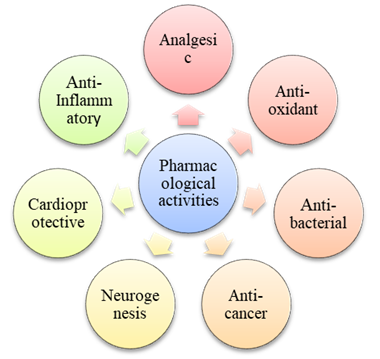
Fig 2: Reported Pharmacological activities of Oroxylum indicum
9.1 Neurogenesis
Neurogenesis, the process by which neurons are created from neural stem cells (NSCs), is aided by neurogenin 2 (Ngn2) and other bHLH activators. In a study by Fuentes et al., bark methanol extract from Oroxylum indicum tripled Ngn2 promoter activity in a luciferase experiment, suggesting neurogenic potential. Seven active compounds were found, including isoverbascoside, apigenin, baicalein, hispidulin, chrysin, and oroxyin A. The extract's effect was paralleled by baicalein, which at 10 μm doubled Ngn2 activity. These findings imply that baicalein is the primary cause of the O. indicum extract's neurogenic effect (kamarudi et al., 2020).
9.2 Cardioprotective effect
In an in vivo study, Menon et al. evaluated the cardioprotective effects of a 70% methanol extract of Sonapatha root bark in Sprague Dawley rats given doxorubicin. 200 and 400 mg/kg taken orally for 14 days significantly decreased cardiotoxicity and recovered ECG features such ST-segment depression and QRS complex. The extract's ability to lower serum levels of the markers CPK, AST, and LDH suggested less heart injury. Antioxidant study showed a decrease in lipid peroxidation (LOO) and an increase in GSH, GPx, and SOD. Reduced myofibril disarray, degeneration, and necrosis were confirmed by histopathological data, which further validated the extract's significant cardioprotective impact (Ganesh et al., 2021)
9.3 Anti-Inflammatory and Analgesic activities
Sonapatha exhibits strong analgesic and anti-inflammatory properties in a range of extracts and models. At 50 μg/mL, its dichloromethane root extract completely inhibited leukocyte lipoxygenase activity. Aqueous leaf and root extracts significantly reduced carrageenan-induced rat paw edema; the effects were stronger at higher dosages (300 and 400 mg/kg) (Aman et al., 2009). Aqueous root extract was equally effective as aminopyrine at 500 mg/kg in reducing acetic acid-induced writhing and suppressing colitis brought on by dinitrobenzene sulfonic acid (Joshi et al., 2011). Ethanol and hydroalcoholic extracts showed notable analgesic activity and reduced paw and ear edema at 250–300 mg/kg. The dose-dependent anti-inflammatory benefits were confirmed by histology studies by reducing inflammation and cell infiltration (Wahida et al., 2019).
9.4 Anti-bacterial activity
According to recent research, Oroxylum indicum extracts have dose-dependent antibacterial action against clinically isolated bacteria, particularly Streptococcus suis and Staphylococcus intermedius. A higher concentration of flavonoids, especially baicalein, was linked to ethanol extracts' stronger antibacterial qualities compared to water extracts, according to Sithisarn et al ( Sithisam et al., 2016 ). The ethanol extract's IC?? values, which ranged from 1.30 to 66.85 mg/mL, were significantly lower than those of water extracts. HPLC study confirmed that ethanol extracts had higher levels of baicalein, demonstrating their superior antibacterial and antioxidant qualities. These findings demonstrate a strong correlation between the content of baicalein in O. indicum extracts and their antibacterial activity (kamarudi et al., 2020).
9.5 Gastroprotective effect
The root and stem bark preparations of Sonapatha (Oroxylum indicum) demonstrated potent gastroprotective effects in Wistar rat models of ethanol-induced stomach ulcers. Among the several extracts, petroleum ether, n-butanol, and chloroform (300 mg/kg) showed the most effective ulcer index reduction, along with enhanced antioxidant indicators (SOD, catalase, and GSH) and reduced lipid peroxidation. Isolated substances like chrysin shown more effectiveness in pylorus ligation and cold-restraint models, while stem bark extracts (acetone, hexane) offered only mild to moderate protection. Furthermore, the ethanol, petroleum ether, and butanol extracts of the stem bark demonstrated impressive ulcer inhibition rates of 86%, 96%, and 99%, respectively (Wahida et al ., 2019).
9.6 Anti-oxidant activity:
Oroxylum indicum is recognized as a valuable source of natural antioxidants because to its high phenolic and flavonoid levels. Particularly when using the DPPH free radical scavenging assay, in vitro studies have shown that seed-derived extracts and concentrated fractions have higher antioxidant activity than young fruit and flower extracts. Orange-red crystalline fractions and yellow precipitates produced from seeds exhibit very significant radical scavenging capacity. This function is mostly caused by flavones such baicalin, baicalein, chrysin, and related glycosides, especially oroxin A. The antioxidant mechanism associated with these phenolic compounds' ability to donate hydrogen and electrons supports the potential use of O. indicum as a natural antioxidant source ( Patchima et al.,2021)
CONCLUSION
A famous medicinal tree native to Southeast Asia and the Indian subcontinent is Oroxylum indicum (L.)Kurz. Commonly referred to as Sonapatha.Indigenous medicine has long employed various parts of this plant to treat a range of ailments, including inflammatory, cutaneous, gastrointestinal, and respiratory conditions. Therapeutic potential is believed to be associated with the plant's complex phytochemical profile, particularly its flavonoid concentration, which includes compounds such as baicalein, chrysin, and oroxylin A.
Numerous traditional use of O. indicum has been confirmed by research. Pharmacological studies have demonstrated its anti-inflammatory, analgesic, antibacterial, hepatoprotective, and neuroprotective properties. For instance, extracts from the bark of the root and stem have demonstrated potent anti-inflammatory effects on par with those of common anti-inflammatory medicines.Moreover, the plant's neuroprotective qualities are believed to be caused by the overexpression of brain-derived neurotrophic factor (BDNF), which is critical for the health and functionality of neurons. Its potential for infection prevention is further shown by the fact that it has shown antibacterial action against a variety of dangerous bacteria.
Despite the potential medicinal properties of Oroxylum indicum, exploitation and destruction of habitat have put it in risk. Conservation actions are required to ensure the sustainable usage of this precious plant. Future research should focus on creating standardized drug formulations and running clinical trials to verify their efficacy and safety in humans. In conclusion, Oroxylum indicum merits further study and conservation because it has a lot of potential as a source of natural medicine.
ACKNOWLEDGEMENT
The author is thankful to all the contributing authors and guides for their valuable help, and the author is thankful to the institution East West Education Institute and Sanaka Educational Trust Group of Institutions for providing valuable resources, which helped a lot in the completion of the article.
FINANCIAL SUPPORT AND SPONSORSHIP
Nil.
CONFLICTS OF INTEREST
The authors declare no conflicts of interest.
ABBREVIATIONS
REFERENCES

Sanchita Podder, Pallabi Mishra, Probal Dhara, Deepanjan Mondal, Sumanta Bhattacharya, Avinaba Samanta, Biswarup Ghosh, A Comprehensive Review on the Ethnobotanical, Pharmacognostic, Phytochemical, and Pharmacological Aspects of Oroxylum indicum (L.) Kurz, Int. J. of Pharm. Sci., 2026, Vol 4, Issue 3, 2085-2094. https://doi.org/10.5281/zenodo.19104857
 10.5281/zenodo.19104857