

We use cookies to ensure our website works properly and to personalise your experience. Cookies policy
R. G. Sapkal College of Pharmacy, Anjaneri, Nashik.
Parthenium hysterophorus (Asteraceae) is an invasive weed found across many parts of the world. It produces a wide variety of natural compounds that show both useful and harmful effects. This review brings together current information about its chemical makeup, medicinal potential, and toxic effects. The plant contains several active compounds, such as sesquiterpene lactones (parthenin), flavonoids, phenolic acids, alkaloids, and essential oils. Research so far through laboratory and animal studies, and a few clinical observations, suggests that Parthenium hysterophorus has many biological activities, including anti-inflammatory, antimicrobial, antioxidant, insecticidal, allelopathic, and even anticancer properties. However, the same plant is also known to be toxic to humans and animals, causing skin allergies, asthma, liver damage, and possible genetic effects. Its chemicals can also harm ecosystems by suppressing native plants and reducing crop yields. This review discusses both the potential benefits and risks of this plant, examines gaps and inconsistencies in existing research, and suggests areas for future study such as better toxicity testing, safer formulations, and improved management to prevent its spread. Overall, Parthenium hysterophorus is a plant with two faces: both a potential medicinal resource and a harmful invader that must be handled with caution.
Traditional phytomedicines are the logical choice for primary health care for 80% of world’s population because of their affordable price and fewer side effect. Phytomedicines play a significant role for the treatment of various ailments along with boosting the immune system against pathology. The positive impact of herbs and plant species is due to the combined effects of their unique secondary metabolic processes. [1,2]
The Parthenium hysterophorus (Asteraceae) is commonly known as Congress plant, Carrot grass, Wild feverfew, Bitter weed, Star weed, and White top, and some call the plant “Scourge of India.” The Parthenium hysterophorus is a widely distributed invasive agricultural weed causing environmental threats. The major active chemicals present in parthenium are sesquiterpene lactones, mainly parthenin and phenolic groups, which also include caffeic, vanillic, ferulic, chlorogenic, and anisic acids, which are responsible for many plant species. [2]
Parthenium hysterophorus is a highly invasive ruderal annual weed that is rapidly spreading throughout Asia and other areas beyond its native range in the central region and South America and the southern USA with highly deleterious effects on native biodiversity, human & animal health, and pasture productivity. Parthenium hysterophorus has a short life cycle of 90 to 120 days. It can thrive under a wide range of weather conditions, germinating at temperatures ranging from 12°C to 27°C. It is also serving in an area of low humidity. [3]
The primary objective of this review is to provide a comprehensive analysis of the current state of knowledge regarding the phytochemistry, pharmacology, and toxicity of Parthenium hysterophorus. [4] By synthesizing findings from recent research, this review aims to identify key bioactive compounds, elucidate mechanisms of action, assess safety profiles, and highlight research gaps that need to be addressed for the safe and effective utilization of this plant's therapeutic potential. Despite its notorious reputation as a weed, Parthenium hysterophorus has attracted considerable scientific interest due to its complex phytochemical profile and diverse biological activities. The plant has been used in traditional medicine systems for treating various ailments, including fever, skin diseases, and digestive disorders. However, the same chemical constituents that confer therapeutic properties also contribute to significant toxicological concerns, creating a complex risk-benefit scenario that requires careful scientific evaluation. [4,5]
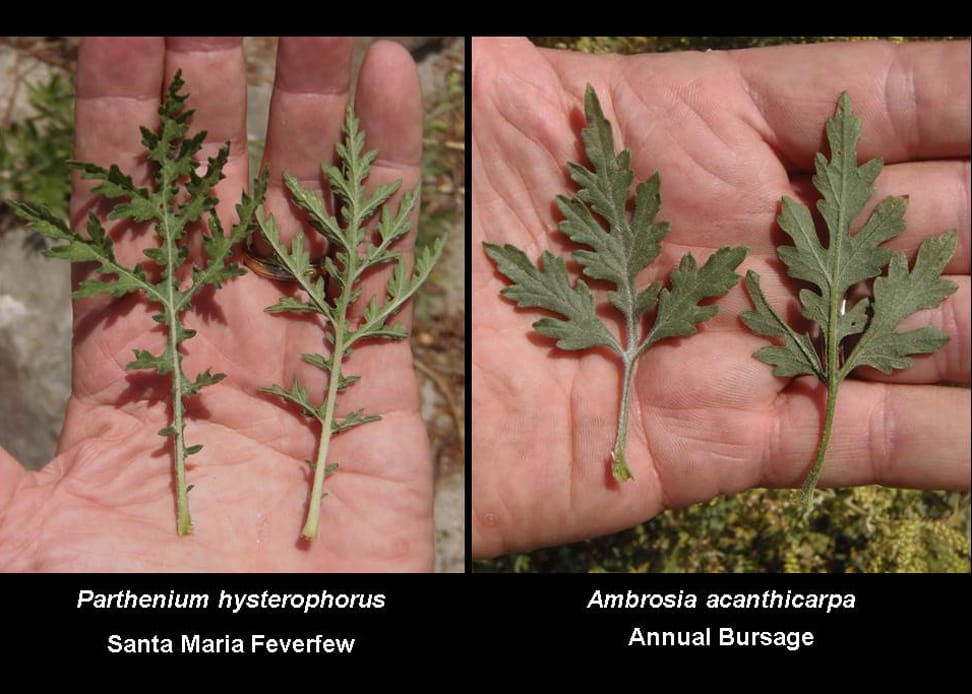
Figure 1. Morphology of Plant
Phytochemistry
Parthenium contains primary metabolites & secondary metabolites dominated by sesquiterpene lactones, flavonoids, phenolic compounds, terpenes, and phytosterols. [6]
Primary and secondary metabolism:
Parthenium hysterophorus has common primary metabolites plus a wide array of secondary metabolites that explain its bioactivity and allelopathy. The phytochemistry survey report covers protein, amino acids, carbohydrates, and fix oil in primary metabolites & sesquiterpene lactones, flavonoids, phenolic, terpenoid sterols, and alkaloids. Primary metabolites are found in the root, stem, and leaves. [4, 7, 9]
Specific Compound Name:
The compound is present depending on the solvent extraction method, such as ethanol, methanol, hexane, benzene, chloroform, ethyl acetate, ethyl alcohol, and aqueous media & isolation method.
1) Parthenin are present in the whole plant, and heir chemical class is pseudo guaianolide sesquiterpene lactone. [1, 2, 4, 6]2) Hysterolides-A are present in the whole plant, and their chemical class is dimeric/monomeric pseudo guaianolide lactone. It is a new compound found in the plant extraction process, and also some investigation is incomplete. [18]
3) 3-o-methylquercetin (ethyl acetate): Their chemical class is flavonoid. [7]
4) Chlorogenic acid, caffeic acid, ferulic acid, and quinic acid are all present in the leaf, flower, and stem (leaf>flower>stem) or leaf methanolic, and their chemical class is hydroxycinnamic/phenolic acid. [9, 10, 12]
5) 4-methoxybenzoic acid is a benzene derivative and is isolated by the acetyl acetate fraction. [9, 10]
6) Beta-sitosterol is isolated by petroleum ether or ethyl acetate, and their chemical name is phytosterols. [18]
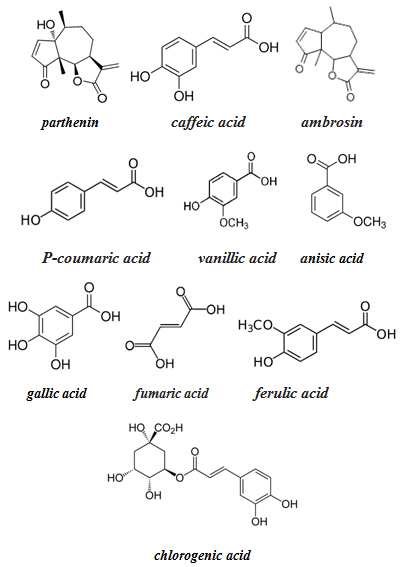
Figure 2. Specific Compound
Table 1. Property And Use Of Compound
|
Compound Name |
Compound Property |
Compound uses |
|
Parthenin |
A sesquiterpene lactone is highly reactive & biologically active. Exhibits antimicrobial, anti-inflammatory, anticancer properties. |
Investigated for its anticancer activity. Also serves as a lead compound for drug development. |
|
Caffeic acid |
A hydroxycinnamic acid; a potent antioxidant. Exhibits anti-inflammatory, antiviral, and immunomodulatory activities.
|
Used in cosmetics and nutraceuticals for antioxidant protection. Shows potential in preventing cardiovascular diseases and cancer. |
|
Ambrosin |
Another sesquiterpene lactone similar to parthenin. Shows cytotoxic and anti-inflammatory effects. |
Studied for its anticancer and antimicrobial activities. Acts as an inhibitor of the NF-κB pathway |
|
P-Coumaric acid |
A phenolic compound with antioxidant and antimicrobial properties. Protects against oxidative stress. |
Used in food and pharmaceutical industries for preservation and protection. Contributes to skin protection and UV-absorbing formulations. |
|
Vanillic acid |
A benzoic acid derivative with antioxidant, antimicrobial, and anti-inflammatory properties. |
Used in flavoring agents, cosmetics, and pharmaceuticals. Potential in treating liver and kidney disorders due to antioxidant effects. |
|
Anisic acid |
Has mild antiseptic and antioxidant activities. Aromatic compound with a pleasant odor. |
Employed in flavor and fragrance industries. Intermediate in drug and dye synthesis. |
|
Gallic acid |
A trihydroxy benzoic acid; a strong antioxidant, antibacterial, and antiviral. |
Used in pharmaceuticals, inks, and food preservatives. Exhibits anticancer, anti-inflammatory, and neuroprotective potential. |
|
Fumaric acid |
A dicarboxylic acid with antioxidant and anti-inflammatory properties. |
Used in food (as acidity regulator E297). Fumarate esters are used in psoriasis treatment and as metabolic intermediates. |
|
Ferulic acid |
A hydroxycinnamic acid, powerful antioxidant and UV absorber. Anti-aging and skin-protective compound. |
Common in cosmetic creams for anti-aging. Shows anticancer, anti-inflammatory, and cardioprotective effects. |
|
Chlorogenic acid |
An ester of caffeic acid and quinic acid; a potent antioxidant. Exhibits antidiabetic, antihypertensive, and hepatoprotective effects. |
Found in green coffee beans used for weight loss and metabolic health. Applied in nutraceuticals and anti-aging formulations. |
Plant part and extraction method:
Organ?targeted chemical profiling demonstrates a strong organ dependence of compound abundance, and multiple solvent systems and chromatographic/spectrometric methods are used for recovery and identification. Studies compare root, stem, leaf, phyllary, and receptacle chemotypes and use solvents from polar (water, methanol, ethanol) to nonpolar (hexane, petroleum ether, dichloromethane, ethyl acetate) followed by chromatographic separation and MS/NMR structural work. [6, 14, 20]
Table 2. Extraction Of Parthenium Hysterophorus
|
Solvent & Method |
Typical target compound recovery |
Compound Analysis |
|
Methanol /Ethanol |
Phenolics, flavonoids, hydroxycinnamic acid, parthenin |
HPLC-DAD, HPLC-MS, antioxidant assay. |
|
Ethyle Acetate/ Dichloromethane |
Terpenoids, flavonoids, sesquiterpene lactones |
Column chromatography, NMR, single-crystal X-ray. |
|
Petroleum ether/hexane |
Nonpolar sterols, fatty acid, and hydrocarbons |
GC-MS |
|
Aqueous extracts |
Polar phenolic and water-soluble constituents |
liquid chromatography, bioassay |
|
Structural conformation method |
- |
1D/2D NMR, MS, X-RD |
|
Volatile terpenes (essential oil) |
Germacrene-D, alpha-myrcene, trans-beta-ocimene, geraniol, beta-caryophyllene |
E0 yield reported low (~0.04-0.05% W/W); sesquiterpenes are ~50% of oil composition in some reports. |
|
Other small molecules |
4-methoxybenzoic acid |
Benzene derivatives and unique lactones were isolated and characterized. |
Extraction yield and which compound predominates vary by solvent and organ. For example, leaf methanolic extract contains a higher total quantified phytochemical ppm than stem in one LC-MS/HPLC survey. And GC of leaves found phytol as a dominant peak.
Pharmacological Activity
In pharmacological activity, experimental findings for antimicrobial, antioxidant, anti-inflammatory, cytotoxic, or anticancer and bioactivities with assay. Parthenium extract, fractions, and isolated compounds show in vitro antimicrobial, radical scavenging, and cytotoxic effects. Various studies used standard assays such as DPPH/TEAC/OH, hemolysis, cell-line cytotoxicity, and in vivo rodent models for quantity activity. The methanolic and ethanolic extracts are the main sources examined for cytotoxicity/anticancer, antimicrobial, antioxidant, and allelopathic activity of sesquiterpene lactones. [9, 11, 13]
Antimicrobial activity:
Crude and solvent extracts displayed antibacterial and antifungal activity in multiple screens; methanolic and n?hexane extracts showed inhibitory zones against bacterial isolates in published surveys, and reviews collate these antimicrobial reports across methodologies.
Specific MIC/MBC values are heterogenous across studies and not consistently reported; primary literature emphasizes extract?level activity rather than standardized MICs in many cases. [9,10]
Antioxidant activity:
Fractions of aqueous (Aq.) and ethanolic extracts (EE) were fractionated (vacuum liquid chromatography) and tested by TEAC, DPPH, and hydroxyl radical scavenging; several fractions produced significant radical scavenging and increased erythrocyte antioxidant enzymes (SOD and CAT) in vitro.
Reported IC50 examples: a methanolic whole?plant extract showed very low DPPH IC50 = 2.5 ± 0.05 μg/mL in one nutritional/biological study; flower methanolic extract showed DPPH IC50 ≈ 54.278 μg/µL (reported units in that study) with TPC and TFC values quantified by Folin and aluminium chloride assays. [17,20]
Anti?inflammatory activity:
Parthenin derivatives have been modified to reduce toxicity and retain anti?inflammatory efficacy; a dispiro?indanedione hybrid of parthenin (DIHP) reduced LPS?induced NO, TNF?α, IL?6, and IL?1β in macrophages and attenuated carrageenan paw edema and LPS?sepsis markers in mice, performing comparably to dexamethasone in those models.[13]
Cytotoxic / anticancer activity:
Isolated parthenin (compound 2 in an isolation study) exhibited cytotoxicity against SGC?7901, BEL?7402, K562, A549, and HeLa cell lines with IC50s of 8.9–14.4 μM depending on the line; cisplatin was used as a positive control in that comparison.
Reviews indicate potential anticancer leads but emphasize the need to separate efficacy from the inherent toxicity of pseudoguaianolide scaffolds. [7,9,13]
Other activities:
Larvicidal /insecticidal effects against mosquito larvae and aphids have been reported in experimental screens summarized by reviews, and essential oils/EO constituents contribute to insecticidal/larvicidal properties.
Nutritional element analyses report macro? and microelements (Ca, K, Na, Mg, Fe, Zn, and trace metals) in the plant but caution against using raw material because of toxic constituents.
Assay details and endpoints are available in the cited primary studies that used RP?HPLC?MS identification of phenolics, standard radical scavenging assays, and cell?based cytotoxicity screens. [13]
Mechanisms and safety:
Mechanistic data link sesquiterpene lactones and phenolics to observed bioactivities, while clinical and animal data document allergenicity and organ toxicity at higher doses. Experimental mechanistic studies indicate modulation of inflammatory signalling and antioxidant pathways, and fraction studies show enzyme modulation; toxicity studies document haematological and biochemical perturbations in vivo. [9]
Toxicity and safety data
Where experimental concentrations and endpoints were reported, they are cited above from the primary studies (e.g., parthenin IC50s, rabbit dosing, DPPH IC50s) and should be consulted directly for full methodological details.
Toxicity of Parthenium hysterophorus
Parthenium hysterophorus contains abundant sesquiterpene lactones (notably parthenin), flavonoids, phenolic acids, and volatile terpenoids; extracts show antioxidant, antimicrobial, anti?inflammatory, and anti?HIV RT activity in vitro. Major safety concerns are allergic contact dermatitis, livestock toxicity, and cytotoxic/genotoxic effects of parthenin. Major chemical constituents and secondary metabolites
Parthenium’s chemistry is dominated by sesquiterpene lactones, diverse flavonoids, and phenolic acids, plus a complex essential?oil fraction; multiple solvent extracts recover different classes of metabolites. Below is a concise list of repeatedly reported compounds and, where available, quantitative notes. [21,22,23]
Table 3. Toxicity Of Parthenium Hysterophorus
|
Class |
Representative compound |
Reported concentration |
|
Sesquiterpene lactones |
Parthenin, ambrosian, hymen in |
Parthenin is identified as the principal bitter or allelochemical and major SQL in many plant parts. |
|
Flavonoids and Flavone Derivatives |
Santin, luteolin, |
Extensive list of flavonoids reported from leaves/flowers in phytochemical surveys. |
|
Phenolic acid and simple phenol |
Caffeic acid, chlorogenic acid, ferulic acid, and vanillic acid. |
Phenolic acid reported across solvent extract |
|
Essential oil terpenoid |
Germacrene-D, myrcene, and geraniol. |
Essential-oil yield from plant parts is typically low (~0.04-0.05% W/W), and oils are sesquiterpene-rich (~50%) and monoterpene-rich (~20%). |
|
Sterols and other lipids |
Stigmasterol, sitosterol. |
Report in phytochemical overview |
|
Miscellaneous |
Histamine, alkaloids, cardiac glycoside, and triterpenes. |
Detected variably depending on extraction and the plant’s part |
|
Endophyte-derived metabolites |
Anhydropseudophlegmacin-9,10-quinone derivatives |
Reported from endophytic fungi or bacteria associated with Parthenium hysterophorus |
Additional phytochemical details and extraction observations:
Biological activities and proposed mechanisms:
Parthenium extracts and isolated chemistry show several in vitro bioactivities and some in vivo effects for derivatives; most pharmacology is preclinical, and mechanisms are partially characterized. The opening paragraphs summarize key therapeutic directions and mechanistic evidence. [5,9]
Evidence: Crude methanolic leaf extracts showed strong DPPH scavenging with an IC50 of 2.5 ± 0.05 μg/mL (methanolic extract) compared with ascorbic acid 3.7 ± 0.03 μg/mL in one study. Spectrophotometric total antioxidant capacity and FRAP assays also indicated notable reducing power in multiple extracts.
Evidence: Hexane/ethyl acetate/methanol/water extracts inhibited bacterial pathogens in disc diffusion assays and showed broad antimicrobial activity in vitro. Silver nanoparticles synthesized with Parthenium leaf extract produced inhibition zones (at 80 mg/mL) of ~12–19 mm against clinical bacteria, including E. coli, P. aeruginosa, S. aureus, and others. Extracts also inhibited HIV?1 reverse transcriptase activity in biochemical assays.
Evidence and mechanism: A chemically modified derivative of parthenin (dispiro?indanedione hybrid, DIHP) demonstrated potent anti?inflammatory and antioxidant effects in macrophage LPS models and in vivo murine models; DIHP attenuated NO, TNF?α, IL?6, and IL?1β production, downregulated NF?κB and MAPK signalling, and upregulated Nrf2 and antioxidant enzymes (SOD, catalase) while reducing prostaglandin E2, leukotriene B4, and ROS; DIHP effects were comparable to dexamethasone in these models.
Interpretation: These data support an inflammation?modulating mechanism (NF?κB/MAPK inhibition plus Nrf2 activation) for a parthenin?derived molecule, but direct, well?characterized mechanisms for native parthenin remain incompletely defined.
Evidence: Reviews and screening studies list anticancer, insecticidal, larvicidal, and hypoglycemic activities attributed to Parthenium constituents and essential oils and suggest the plant as a source for lead molecules; however, most evidence is preliminary (in vitro or rodent models) and requires further mechanistic and translational work.
Practical summary of evidence strength.
Toxicity, dermatitis, and cytotoxicity concerns
Parthenium is a major plant allergen and a leading cause of plant/contact dermatitis in affected regions; sesquiterpene lactones (SQLs) in trichomes, pollen, and dried plant powder are identified as the principal allergens causing airborne contact dermatitis, chronic actinic dermatitis, and widespread/exfoliative patterns in humans. Parthenin is repeatedly noted as a major SQL implicated in clinical parthenium dermatitis, although its role in direct phototoxicity is debated. [15,10]
Conflicting reports exist: some authors report phototoxic/psoralen?type mechanisms and list psoralen?class compounds as culprits in phytophotodermatitis linked to Parthenium exposure, whereas established dermatology reviews emphasize SQLs (parthenin) as the main allergens and note that parthenin itself lacks well?documented phototoxicity; therefore, insufficient evidence exists to conclude that parthenin is phototoxic versus acting as a classic contact allergen. [20]
Human/animal toxicity: Parthenin, hymenin, and ambrosin are repeatedly described as highly toxic allelochemicals and have been associated with mutagenic/clastogenic findings in the literature summarized by reviews.
Livestock effects: Fresh herbage and unprocessed plant material can be toxic to livestock; parthenin has been implicated in acute and chronic toxicity in animals and is the primary suspect compound for adverse effects after ingestion or exposure in grazing/herbage contexts. [10,11,18]
Experimental cytotoxicity: Reviews and biochemical characterizations Note cytotoxic and phytotoxic activities for SQLs and certain essential?oil fractions, but specific standardized LD50 or human exposure thresholds are not consistently reported across the surveyed literature.
Dermatitis management and public health: High prevalence of parthenium dermatitis in parts of India and other endemic regions prompted clinical and public?health reviews emphasizing avoidance, awareness, and control measures because airborne exposure produces widespread morbidity. [4,12]
Safety summary: The plant contains potent biologically active and potentially genotoxic compounds; handling or use of crude material poses real safety risks.
Summary
Parthenium hysterophorus (Asteraceae) is a rapidly spreading weed that causes serious problems for the environment, agriculture, and human health across the world. Although it has long been known mainly as a harmful and allergenic plant, recent research has revealed that it also produces several active compounds, such as parthenin, sesquiterpene lactones, flavonoids, and phenolic substances, that may have useful medicinal properties alongside their toxic effects. A detailed review of its chemical composition, biological activities, and toxicity is therefore important to understand both its potential benefits and risks. This overview aims to bring together current findings on Parthenium hysterophorus, assess how its compounds might be used safely, and point out where more research is needed. Such insights can help guide scientists, healthcare professionals, and policymakers in exploring the plant’s possible use in medicine or agriculture while managing its harmful impacts.
CONCLUSION
Parthenium hysterophorus is a widely distributed invasive weed that has gained scientific attention due to its diverse phytochemical constituents, particularly parthenin, which exhibits significant pharmacological potential. Numerous studies have demonstrated its anticancer, anti-inflammatory, antimicrobial, and antioxidant properties, suggesting that the plant could serve as a valuable source of bioactive compounds for drug development. However, its toxicity and allergenic effects pose serious health and environmental concerns, emphasizing the need for careful isolation, purification, and dose optimization of its active principles. Future research should focus on developing safe, standardized, and targeted formulations to harness the therapeutic potential of Parthenium hysterophorus while minimizing its toxic effects.
Future Perspective
REFERENCES


Ashutosh Wagh*, Jagruti Patil, A Comprehensive Review on the Phytochemistry, Pharmacology & Toxicity of Parthenium Hysterophorus, Int. J. of Pharm. Sci., 2025, Vol 3, Issue 11, 2145-2156 https://doi.org/10.5281/zenodo.17606805
 10.5281/zenodo.17606805