

We use cookies to ensure our website works properly and to personalise your experience. Cookies policy
Vijayrao Naik College of Pharmacy, Shirval, Kankavli – 416602, Maharashtra, India
Non-steroidal anti-inflammatory drugs (NSAIDs) are often linked to gastrointestinal (GI) side effects, such as irritation and ulceration. One practical method to lessen these negative effects is the creation of NSAID prodrugs that, until systemic absorption takes place, momentarily conceal the free carboxylic acid group that damages the stomach mucosa. By chemically modifying NSAIDs through fisher esterification, the prodrug approach improves their lipophilicity, lessens direct gastric irritation, and increases their therapeutic indices. Computational testing is essential in the evaluation process to confirm the gastrosparing qualities of the synthesized prodrugs. Several prodrugs have shown comparable or improved anti-inflammatory efficacy with significantly lowered GI toxicity in evaluation, offering safer alternatives to conventional NSAID therapy.
Inflammation: The vascularized tissue’s reaction to infections and tissue injury is inflammation, which transports host defense cells and chemicals from the circulation to the locations where they are required to eradicate the offending agents. Numerous factors, including infections, damaged cells, and toxic substances, can trigger the immune system's biological response to inflammation. Redness, heat, swelling, discomfort, and loss of function are the main characteristics of inflammation. Inflammation is a pathological response of living tissue to injury that results in a localized accumulation of plasmatic fluid and blood cells. Redness, swelling, heat, discomfort, and loss of tissue function are all signs of inflammation at the tissue level. These symptoms are caused by local immunological, vascular, and inflammatory cell reactions to injury or infection.[1]
Types of Inflammation:
1. Acute Inflammation: Acute inflammation is the first, quick reaction to tissue injury and infections. It usually appears in a matter of minutes or hours and lasts only a few hours or days.
2. Chronic Inflammation: An extended form of inflammation known as chronic inflammation develops when the initial response is unable to eliminate the trigger.[2]
Classification of NSAIDS:
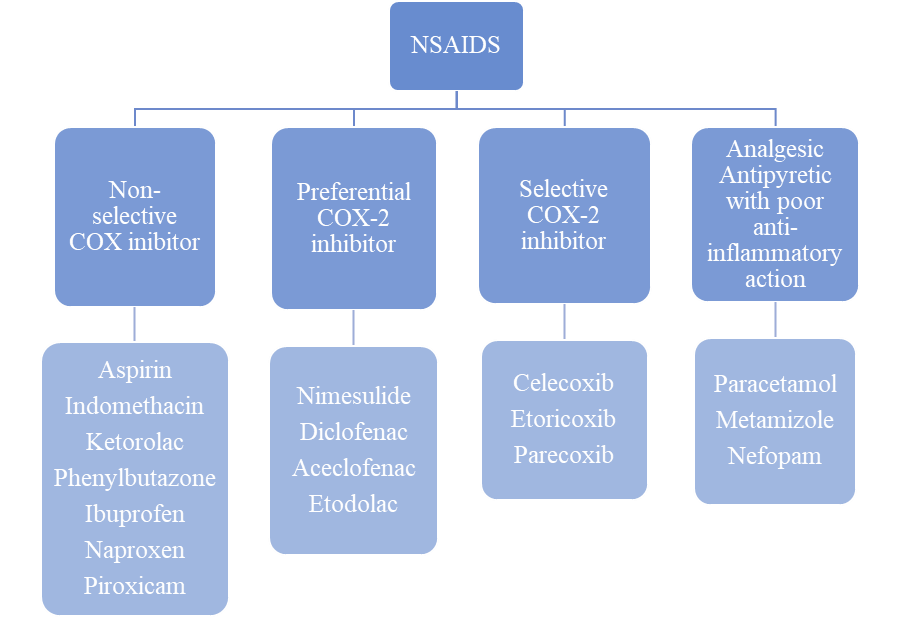
Fig 1. Classification of NSAIDS
NSAIDs Mechanism of Action :
The way non-steroidal anti-inflammatory drugs (NSAIDs) function is by preventing the cyclooxygenases (COX-1 and COX-2) from converting arachidonic acid into prostaglandins and thromboxane’s. Chemical messengers called prostaglandins are crucial in the development of fever, inflammation, and pain. NSAIDs diminish the synthesis of these prostaglandins by inhibiting COX enzymes, which reduces pain and swelling and lowers fever. However, suppression of COX, particularly COX-1, can induce adverse consequences such gastric irritation, ulcers, and kidney issues because prostaglandins also protect the stomach lining and support kidney function.
NSAIDs have analgesic, anti-inflammatory, and antipyretic properties because they inhibit the enzyme cyclo-oxygenase (COX), which prevents arachidonic acid from being converted to prostaglandin H? and other prostaglandins and thromboxane’s.[3]
Prodrug:
Albert invented the word “prodrug”. He defines a pharmacologically inactive compound as one that is converted into an active substance by the mammalian system by chemical or metabolic mechanisms. Prodrugs are bio reversible derivatives of drug molecules that undergo an enzymatic or chemical transformation in vivo to release the active parent drug, which can then exert the desired pharmacologic effect. In both drug discovery and development, prodrugs have become an established tool for improving physiochemical, biopharmaceutical, or pharmacokinetic properties of pharmacologically active agents. An approach in which NSAIDs (Ibuprofen) is converted into its prodrug (Ibuprofen Methyl Ester) is a good way of dealing with Gastric Irritation.[4]
Types of Prodrugs:
1.Hard Prodrug: A biologically active substance with a lengthy biologic half-life and strong lipid or water solubility is called a hard prodrug. Cocaine and heroin are two examples.
2.Soft Prodrug: A physiologically active substance that quickly and reliably bio transforms into harmless moieties in vivo is referred to as a soft medication. Adrenaline and insulin are two examples.
3.Carrier linked prodrug: A molecule with an active medication attached to an enzymatically removable carrier group is known as a carrier-linked prodrug. Because of the connected carrier, these prodrugs-which are typically esters or amides-would have significantly altered lipophilicity.
4.Bio precursors: Bio precursors are inert molecules without a carrier that are produced by chemically altering the active medication. Such a moiety is often bioactivated by enzymatic redox metabolism and has nearly the same lipophilicity as the parent medication.
5.Mutual Prodrug: There are two medications attached to each other, which are typically synergistic. A prodrug that is bipartite or tripartite has a carrier that works in concert with the drug it is connected to.
Ibuprofen methyl ester prodrug is a type of carrier linked prodrug because Ibuprofen is temporarily linked to a carrier group i.e. methyl group through a cleavable ester bond.[5]
Adverse effect of NSAIDs:
Although NSAIDs are widely used for its anti-inflammatory action it does causes some ADR which are as follows:
1.Gastric adverse effect: NSAIDs block prostaglandins, which typically shield the stomach lining. Gastritis, stomach ulcers, nausea, bleeding, or perforation may result from this.
2.Renal adverse effect: Prostaglandins aid in preserving blood flow to the kidneys. Reduced renal perfusion brought on by NSAID inhibition may result in immediate kidney damage, water and salt retention, edema, and increasing hypertension.
3.Cardiovascular adverse effect: NSAIDs can raise blood pressure, cause fluid retention, and raise the risk of heart attack, stroke, and heart failure, particularly when used for an extended period of time.
4.Hepatic adverse effect: Due to direct liver toxicity, NSAIDs may raise liver enzymes and, in rare cases, induce hepatitis or liver damage.
5.Hematologic adverse effect: NSAIDs impair platelet function, which increases the risk of bleeding, prolongs the bleeding period, and infrequently causes thrombocytopenia or anemia.[6]
Why we need Ibuprofen prodrug?:
A common non-steroidal anti-inflammatory medicine (NSAID) with analgesic, antipyretic, and anti-inflammatory qualities is ibuprofen. However, inadequate transdermal permeability, gastric discomfort, and poor water solubility frequently restrict its therapeutic usage. Esterification, a chemical modification of ibuprofen, is a possible strategy to get around these restrictions.Esterification is the process by which an alcohol and a carboxylic acid combine chemically in the presence of an acid catalyst (such concentrated sulfuric acid) to produce an ester and water. Methyl ibuprofen ester, a prodrug derivative of ibuprofen, is created when the carboxylic acid group (-COOH) combines with (-CH3OH).Because its acidic group is concealed as an ester, ibuprofen methyl ester causes less gastrointestinal distress than regular ibuprofen. It is an easily absorbed prodrug that the body transforms into ibuprofen, which has the same action but causes less gastrointestinal distress.[7]
Fisher Esterification:
The main mechanism for preparation of Ibuprofen Methyl Ester is Fisher esterification. Fisher esterification states that when there is an acid-catalysed reaction between acid and alcohol there is formation of esters. In this case carboxylic acid functional group from ibuprofen reacts with methanol in presence of small amount of conc. H2SO4 gives Ibuprofen methyl ester.[8]
Preparation of Ibuprofen methyl ester:
By combining a carboxylic acid with an alcohol in the presence of an acid catalyst, a Fischer esterification reaction can be used to create methyl ibuprofenate from ibuprofen. A few drops of concentrated sulfuric acid (H2SO4) act as a catalyst in the reaction between ibuprofen (2-(4-isobutylphenyl) propanoic acid) and methanol. The reaction mixture is put in a round-bottom flask with a reflux condenser, and it is heated slowly under reflux for one to two hours at a temperature of between sixty and seventy degrees Celsius. Refluxing is used to keep volatile methanol from being lost while allowing the reaction to approach equilibrium.[9] Following the reaction time, the mixture is allowed to cool to room temperature before being slightly diluted with cold water. Saturated sodium bicarbonate solution is carefully added to the surplus acid until the effervescence stops, signifying that all of the acid has been neutralized. After that, the mixture is moved into a separatory funnel, and an organic solvent such ethyl acetate or diethyl ether is used to extract the organic product. To eliminate any traces of water, the organic layer is separated and dried over anhydrous sodium sulphate (Na?SO?). Crude methyl ibuprofenate is left behind when the solvent is evaporated under low pressure using a rotary evaporator following filtering.[10]
Computational Studies:
For Virtual screening of ibuprofen methyl ester prodrug, the macromolecule i.e. protein was selected and prepared.6Y3C is selected as a protein target based on its role in inflammation treatment. The X-ray crystal structure of 6Y3C (resolution 3.36 Å) was downloaded from the RCSB-PDB database in PDB format. The protein’s structure was prepared by removing water molecules, heteroatoms, and co-crystallized ligands.The previously reported 3D structures of 6Y3C were retrieved which have specific properties required for further docking.
It worked well as receptor at higher resolution. Protein was downloaded from the RCSB protein data bank.Protein’s structure was cleaned by withdrawing water molecules.Previously bound ligands groups were also removed.Polar hydrogen atom, were introduced to the cleaned proteins.The optimized proteins were used for further docking study.Protein was saved in PDBQT format.
Mechanism of 6Y3C :
Protein 6Y3C represents the structure of cyclooxygenase-1 (COX-1), an enzyme that plays an important role in inflammation by helping the body produce prostaglandins, which are signaling molecules involved in pain, swelling, and fever. 6Y3C helps us to see how common anti-inflammatory drugs, such as Ibuprofen and other NSAIDs, bind to the enzyme and reduce prostaglandin production.Understanding its structure and function is vital for developing prodrug to enhance anti-inflammatory action and along with minimized gastric irritation.[11]
Table 1: Structural And Biological Information Of 6y3c
|
Parameter |
Details |
|
PDB ID |
6Y3C |
|
Organism(s) |
Homo sapiens |
|
Mutation(s) |
No |
|
Experimental Method |
X-ray Diffraction |
|
Resolution |
3.36 Å |
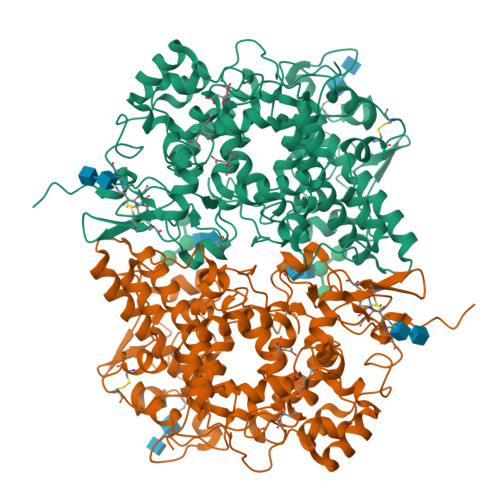
Fig 2. 6Y3C
Preparation of Ligand:
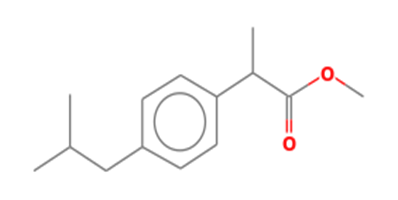
The 3D structure of ibuprofen methyl ester (PubChem CID: 109101) was downloaded in SDF format and converted to PDB using OpenBabel. The ligand was prepared in AutoDockTools by adding polar hydrogens, assigning Gasteiger charges, and defining rotatable bonds. Finally, it was saved in PDBQT format for docking with AutoDock Vina.[12]
Table 2: Ibuprofen Methyl Ester
|
Sr No |
Name of compound |
Pub-chem ID |
Structure |
Use |
|
1. |
Ibuprofen Methyl ester |
109101 |
|
Anti-inflammatory agent, Analgesic, Antipyretic |
Docking Grid:
To perform molecular docking, a grid box was defined around the active site of COX?1 (protein 6Y3C) using AutoDockTools. The center coordinates (x, y, z) of the grid were set to encompass the binding pocket, ensuring the ligand explores the biologically relevant site.[13]
Visualization of Docking Results:
The docking output from AutoDock Vina was visualized using PyMOL to analyze the binding interactions between ibuprofen methyl ester and (6Y3C). AutoDock Vina predicted multiple binding poses of ibuprofen methyl ester within the (6Y3C) active site. The best-ranked mode showed a binding affinity of −6.9 kcal/mol, indicating a favorable interaction. Other poses had slightly lower affinities (−6.1 to −5.0 kcal/mol) with varying RMSD values, suggesting alternative orientations of the ligand in the binding pocket. In AutoDock Vina, affinities between −6 to −9 kcal/mol are generally considered moderate too good for small drug-like molecules.This suggest that prodrug ibuprofen methyl ester bind well with COX enzyme.[14]
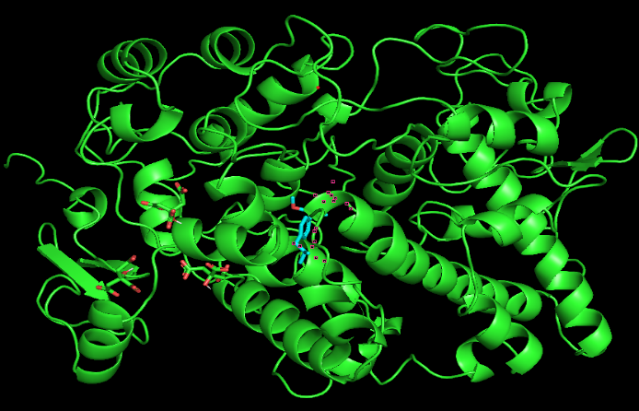
Fig 3. Ibuprofen Methyl ester docked in (6Y3C), binding affinity −6.9 kcal/mol.
PASS Evaluation:
The synthesized prodrug ibuprofen methyl ester was evaluated using the PASS (Prediction of Activity Spectra for Substances) online tool. PASS predicts the probability of biological activity for the compounds based on their structural similarity to known active compounds in the PASS database. Ibuprofen methyl ester shows high PASS prediction scores for anti-inflammatory activity and reduced gastric irritation.[15]
Table 3: Pass-Predicted Biological Activities of Ibuprofen Methyl Ester
|
Activity |
Pa |
Pi |
Comment |
|
Mucomembranous protector |
0.724 |
0.046 |
High probability of protecting gastric mucosa |
|
Gastrin inhibitor |
0.627 |
0.015 |
May reduce gastric acid secretion |
|
Mucositis treatment |
0.642 |
0.035 |
Suggests protective effects on mucosal tissues |
Drug likeness and pharmacokinetic prediction:
The rule describes molecular properties important for a drug's pharmacokinetics in the human body, including their absorption, distribution, metabolism, and excretion ('ADME'). However, the rule does not predict if a compound is pharmacologically active. The rule is important to keep in mind during drug discovery when a pharmacologically active lead structure is optimized step-wise to increase the activity and selectivity of the compound as well as to ensure drug-like physicochemical properties are maintained as described by Lipinski's rule.[16]
Lipinski’s Rule of Five Screening:
The selected phytoconstituent were subjected to Lipinski’s Rule of Five analysis to assess their drug-like properties. Parameters such as molecular weight (MW), lipophilicity (LogP), hydrogen bond donors (HBD), hydrogen bond acceptors (HBA), and Molar refractivity (MR) were evaluated. Compound that satisfied all of Lipinski’s criteria (MW ≤ 500, LogP ≤ 5, HBD ≤ 5, HBA ≤ 10, MR = 40-130) were retained for further analysis, as they are more likely to have favorable pharmacokinetic properties. Ibuprofen methyl ester passes all criteria of Lipinski’s Rule of Five, indicating good potential for oral bioavailability.[17]
Table 4: Lipinski Rule Threshold For Ibuprofen Methyl Ester
|
Parameter |
Ibuprofen methyl ester Values |
Lipinski Rule Threshold |
Pass/Fail |
|
Molecular Weight (Da) |
220.31 |
≤ 500 |
Pass |
|
Hydrogen Bond Donors (HBD) |
0 |
≤ 5 |
Pass |
|
Hydrogen Bond Acceptors (HBA) |
2 |
≤ 10 |
Pass |
|
Log?P (octanol-water) |
3.16 |
≤ 5 |
Pass |
CONCLUSION:
A thorough literature review indicated the ongoing difficulty of gastrointestinal discomfort associated with NSAIDs, emphasizing the need for enhanced drug safety procedures. After careful consideration, ibuprofen was chosen as a candidate for modification due to its widespread use and documented gastrointestinal side effects and reviewing the existence research, the topic of synthesizing ibuprofen methyl ester was selected as it addresses the need for a safer alternative to conventional ibuprofen. Fisher esterification was chosen as the synthetic approach to manufacture the ibuprofen methyl ester, with the goal of creating a prodrug that could potentially lessen gastrointestinal adverse effects by changing the physicochemical features of the parent drug. Based on planned research, expected results were determined, including the successful formation of ibuprofen methyl ester.Different computational studies that were performed on ibuprofen methyl ester indicated that ibuprofen methyl ester prodrug is good alternative as Gastric sparring NSAIDs
ACKNOWLEDGEMENTS:
We would like to thank the researchers and healthcare professionals whose work contributed to the development of this review. We also acknowledge the support of our institutions and the funding agencies.
REFERENCES:






: Ms. N. N. Gurav, * S. S. Harne, O. V. Kadam, S. D. Mahadeshwar K. S. Koli, S. D. Kamble., A Review on Design And Evaluation Of NSAIDs Prodrug With Minimized Gastric Irritation, Int. J. of Pharm. Sci., 2026, Vol 4, Issue 1, 2198-2205. https://doi.org/10.5281/zenodo.18333415
 10.5281/zenodo.18333415