View Article

Abstract

Anemia is a frequent complication of chronic kidney disease (CKD), defined by hemoglobin levels below 13.1 g/dL in males and 12.0 g/dL in premenopausal females. It typically presents as a hypoproliferative, normochromic, normocytic anemia, significantly impacting the quality of life and increasing morbidity in CKD patients. The aim of this study is to evaluate the effectiveness of erythropoietin alone versus a combination of erythropoietin and desidustat in managing anemia associated with CKD. A prospective comparative study was conducted at Durgabai Deshmukh Hospital, Hyderabad, following ethics committee approval and obtaining informed consent from all participants. A total of 70 CKD patients were included, with 56 patients (80%) receiving erythropoietin alone and 14 patients (20%) receiving a combination of erythropoietin with desidustat. Data were collected and analyzed using appropriate statistical tools.The results showed that erythropoietin therapy led to a significant mean increase in hemoglobin levels (71%), compared to a slight improvement (70%) in the combination group. Additionally, erythropoietin alone contributed to a notable reduction in serum creatinine levels, from a mean of 2.78 mg/dL to 1.07 mg/dL. However, a decrease in glomerular filtration rate (GFR) was observed, dropping from a mean of 77 ml/min to 66 ml/min.This study suggests that erythropoietin is a safe and effective option for treating anemia in CKD patients, showing clear benefits in improving hemoglobin levels and reducing serum creatinine. The addition of desidustat provided minimal additional advantage, highlighting the need for further research into its role in combination therapy.

Keywords

Anemia, Chronic Kidney Disease (CKD), Erythropoietin, Desidustat, Hemoglobin.

Introduction

Anemia is generally defined as haemoglobin levels less than 13.1 g/dL for males and 12.0 g/dL for premenopausal women. It is a form of hypo proliferative, normochromic, normocytic anemia brought on by chronic kidney disease (CKD). Among other comorbidities of CKD, it is commonly associated with poor CKD results and greater mortality.[1] The insufficient production of erythropoietin by failing kidneys results in a decrease in the stimulation of red blood cell (RBC) formation in the bone marrow.  Although there is variation across patients, the degree of anemia worsens as renal function impairment advances. The Hct typically starts to decrease when the plasma creatinine level rises above 2 mg/dl and decreases when the glomerular filtration rate (GFR) drops1–3.   Dropped erythropoietin has lately been linked with the down regulation of hypoxia- inducible factor (HIF), a recap factor that regulates gene expression of erythropoietin.[1]

Chronic Kidney Disease:

Kidney damage or an estimated glomerular filtration rate (eGFR) of less than 60 ml/min is considered chronic kidney disease (CKD). regardless of the aetiology, that lasts for three months or more. Kidney replacement therapy, such as dialysis or transplantation, is eventually required due to the increasing loss of kidney function. Increased urine albumin excretion rates, anomalies in urinary sediment, or pathologic abnormalities indicated by imaging investigations or renal biopsy are all considered signs of kidney impairment. [2]

The following is a classification of the stages of CKD:

Stage 1: Kidney damage with normal or increased GFR (>90 mL/min/1.73 m 2)

Stage 2: Mild reduction in GFR (60-89 mL/min/1.73 m 2)

Stage 3a: Moderate reduction in GFR (45-59 mL/min/1.73 m 2)

Stage 3b: GFR declines moderately (30–44 mL/min/1.73 m 2)

Stage 4: Severe reduction in GFR (15-29 mL/min/1.73 m 2)

Stage 5: Dialysis or kidney failure (GFR < 15 mL/min/1.73 m 2)

Anaemia:

 A decrease in the percentage of red blood cells is known as anemia. Anemia is a symptom of an underlying illness rather than a diagnosis. The sharpness of onset, the aetiology of anemia, and the existence of additional comorbidities particularly cardiovascular disease all influence a patient prognosis. The majority of patients exhibit anemia-related symptoms when the haemoglobin level falls below 7.0 g/dL.[3] The kidney produces erythropoietin (EPO), which is the main factor that stimulates the creation of red blood cells (RBCs). EPO is primarily stimulated by tissue hypoxia, and its levels are often inversely correlated with haemoglobin concentration. Put differently, a person with low haemoglobin and anemia has higher amounts of EPO.[4]

Etiology:

  • Dropped erythropoietin has lately been linked with the down regulation of hypoxia- inducible factor (HIF), a recap factor that regulates gene expression of erythropoietin [5].
  • Other mechanisms include uremic leading to RBC disfigurement responsible for haemolysis, folate and vitamin B12 insufficiency, iron insufficiency, bleeding due to dysfunctional platelets and infrequently blood loss from haemodialysis.[6]

Signs And Symptoms:

  • Shortness of breath.
  • Unusually pale skin.
  • Generalised weakness
  • Body aches
  • Chest pain
  • Dizziness
  • Fainting
  • Fatigue or tiredness
  • Irregular heartbeat

Pathophysiology:

  • The progressive reduction of endogenous erythropoietin (EPO) situations has classically been considered to play a preeminent part. still, other factors have also been described to contribute to anemia in CKD cases, similar as an absolute iron insufficiency due to blood losses or a disabled iron immersion, an ineffective use of iron stores due to increased hepcidin situations, systemic inflammation due to CKD and associated comorbidities, a reduced bone gist response to EPO due to uremic poisons, a reduced red cell life span .
  • EPO production in CKD:
  • In CKD cases, EPO situations are deficiently low with respect to the degree of anemia. EPO insufficiency starts beforehand in the course of CKD, but it appears that when eGFR falls below 30 ml/ min per1.73 ml this insufficiency becomes more severe.
  • This absolute EPO insufficiency can be caused by a drop in the EPO product. CKD associates are vision in oxygen delivery to the feathers due to a reduced blood inflow.
  • This results in an adaption of renal towel to consume lower oxygen and the posterior conservation of a normal towel oxygen grade. Consequently, the EPO gene is not activated, the HIF heterodimer is not produced, and the PHD enzymes remain active.
  • likewise, it has been demonstrated experimentally that hypoxia- convinced EPO product is inhibited by some seditious cytokines similar as interleukin- la (IL- la), IL- l beta, transubstantiating growth factor- beta (TGF- beta), and excrescence necrosis factor- a (TNFa)
  • It well- known that CKD itself leads to an increase of inflammation and vulnerable activation motes, which would inhibit hypoxia- convinced EPO product.
  • Hypoxia Inducible Factor System:
  • EPO is a glycoprotein (30.4 kDa) that binds to its receptor on the face of erythroid ancestor cells substantially in the bone gist, and serves as a crucial encouragement for red cell survival, proliferation and isolation.
  • EPO s produced generally by the fibroblast- such like interstitial peritubular cells of the feathers, and in an important lower proportion, by the perisinusoidal cells in the liver, in response to changes in lower oxygen pressure.
  • When oxygen levels are low, the hypoxia-inducible factor (HIF) system kicks in, which is a crucial regulator of its expression.[7][8]

Hypoxia Inducible Factor System:

  • EPO is a glycoprotein (30.4 kDa) that binds to its receptor on the face of erythroid ancestor cells substantially in the bone gist, and serves as a crucial encouragement for red cell survival, proliferation and isolation.
  • EPO is produced generally by the fibroblast- such like interstitial peritubular cells of the feathers, and in an important lower proportion, by the perisinusoidal cells in the liver, in response to changes in lower oxygen pressure.
  • When oxygen levels are low, the hypoxia-inducible factor (HIF) system kicks in, which is a crucial regulator of its expression. [9,10]

Treatment:

EPO production in CKD:

  • Erythropoiesis- ESAs and blood transfusions are administered only in the most extreme and distinctive instances. Considerations such as the rate of hemoglobin concentration decline, prior response to iron therapy, transfusion risk, and the presence of anemia-related symptoms should be considered when deciding whether to initiate ESA treatment in adult patients with CKD who have a hemoglobin concentration below 10.0 g/dL (100 g/L).
  • Beginning ESA medication when haemoglobin is between 9.0–10.0 g/dL (90–100 g/L) is the recommended course of action for adult CKD 5D patients in order to prevent Hb concentrations from dropping below 9.0 g/dL (90 g/L).
  • Treating CKD patients with ESA at a dosage that allows haemoglobin levels to be maintained at or below 11.5 g/dL is advised for the remaining ones.
  • In these cases, erythropoietin (50 to 100 units/ kg IV or SC) is generally given every 1 to 2 weeks [11]

Hypoxia Inducible Factor System:

  • Novel medications have been created recently to treat anemia. Which are known as HIF-prolyl-hydroxylase inhibitors (HIF-PHIs). These medications block the activity of prolyl-hydroxylase, which raises HIF levels and, in turn, increases endogenous EPO.
  • At present, phase III clinical trials are being conducted on four HIF-PHIs, namely Roxadustat, daprodustat, vadadustat, and molidustat. Oral administration is used for all of them. Some substances, such desidustat or enarodustat, are either in the early phases of development or have finished phase II investigations.
  • None the less, their pharmacologic and pharmacokinetic dissimilarities likely dictate variations in how they interact with the HIF system, ultimately resulting in disparities in their safety and effectiveness profiles.[12]

MATERIALS AND METHODS:

Aim:

 A study on efficacy of erythropoietin versus erythropoietin with desidustat in treating chronic kidney disease with anemia.

Objectives:

  • To access the safety and efficacy of erythropoietin versus erythropoietin with desidustat.
  • To monitor the haemoglobin level and serum creatinine
  • To monitor the renal complication.

MATERIALS AND METHODOLOGY:

  • This study was conducted in the Department of Nephrology at Durgabai Deshmukh Hospital and Research Centre (DDHRC), Vidyanagar, Hyderabad, over a period of 6 months.
  • A comparative and prospective study was conducted on 70 patients above 40 years with chronic kidney disease and anemia (Hb < 8 g%), including non-dialysis patients with AKI, hypertension, or diabetes. Patients unwilling to participate, post-surgical cases, and pregnant or lactating women were excluded.
  • Data collection was based on patient reports, and statistical analysis was performed using unpaired T-test and repeated measures Anova.

RESULT AND DISCUSSION:

In this study, a total of 60 case report were reviewed, where erythropoietin and desidustat were compared using following parameters which includes anemia, serum creatinine, GFR levels.

Table1: Distribution Based on Mean Haemoglobin by Treatment:


Treatment

Mean

Std. Deviation

P value

Hemoglobin_Day1

inj. Eponef

8.0446

.48126

0.003

inj. Eponef and T. OXEMIA

7.4286

1.16845

Hemoglobin_Day2

inj. Eponef

8.5268

.49119

0.134

inj. Eponef and T. OXEMIA

8.2786

.74336

Hemoglobin_Day3

inj. Eponef

9.2391

.91191

0.049

inj. Eponef and T. OXEMIA

8.4286

.91600

Figure :1 Bar Graph Depicts the Mean of Haemoglobin by Treatment.

RESULT:

The haemoglobin levels increased drastically when Inj. Eponef was administered. Mean average was found to be 8.0446 >8.5268 >9.2391 respectively, whereas when Inj. Eponef with T. oxemia was administered the haemoglobin levels didn’t increase much. There was no significant difference seen between the baseline parameter.

Distribution Of Subject Based on Mean Serum Creatinine by Treatment


Treatment

Mean

Std. Deviation

P value

Serumcrea_Day1

inj. Eponef

2.6016

.67784

<0.0.01

inj. Eponef and T. OXEMIA

3.5677

.86451

Serumcrea_Day2

inj. Eponef

1.7555

.70661

<0.001

inj. Eponef and T. OXEMIA

2.7425

.72164

Serumcrea_Day3

inj. Eponef

1.0677

.62895

0.001

inj. Eponef and T. OXEMIA

2.0237

.63074

Figure :2 Bar Graph Depicts the Distribution Of Subject Based On Meam Serum Creatinine By Treatment.

RESULT: The serum creatinine levels decreased drastically when Inj. Eponef was administered. Mean average was 2.6016>1.7555>1.0677 respectively, whereas when Inj. Eponef with T. oxemia was administered the serum creatinine levels didn’t decrease much. There was no significant difference seen between the baseline parameter.

Distribution Based on Mean GFR With Treatment:


Treatment

Mean

Std. Deviation

P value

GFR_day1

inj. Eponef

65.88

7.267

0.001

inj. Eponef and  T.OXEMIA

57.29

12.431

GFR_day2

inj. Eponef

70.54

7.772

0.009

inj. Eponef and  T.OXEMIA

63.21

13.463

GFR_day3

inj. Eponef

76.89

8.798

0.163

inj. Eponef and  T.OXEMIA

72.43

16.090

Figure :3 Bar Graph Shows the Distribution of Subjects Based on Mean GFR By Treatment.

RESULT: The GFR levels increased drastically when Inj. Eponef was administered. Mean average was 65.88>70.54>76.89 respectively, whereas when Inj. Eponef with T. oxemia was administered the GFR levels didn’t increase much effectively. The baseline parameter did not vary much.

Disruption Of Subject Based on Estimated Mean of Measure of Haemoglobin by Treatment

Treatment

Mean

Std. Deviation

P value

inj. Eponef

Hemoglobin_Day1

8.1261

.52503

<0.001

Hemoglobin_Day2

8.5174

.51580

Hemoglobin_Day3

9.2391

.91191

inj. Eponef and T. OXEMIA

Hemoglobin_Day1

6.9857

1.48933

0.001

Hemoglobin_Day2

8.0286

.88828

Hemoglobin_Day3

8.4286

.91600

RESULT:

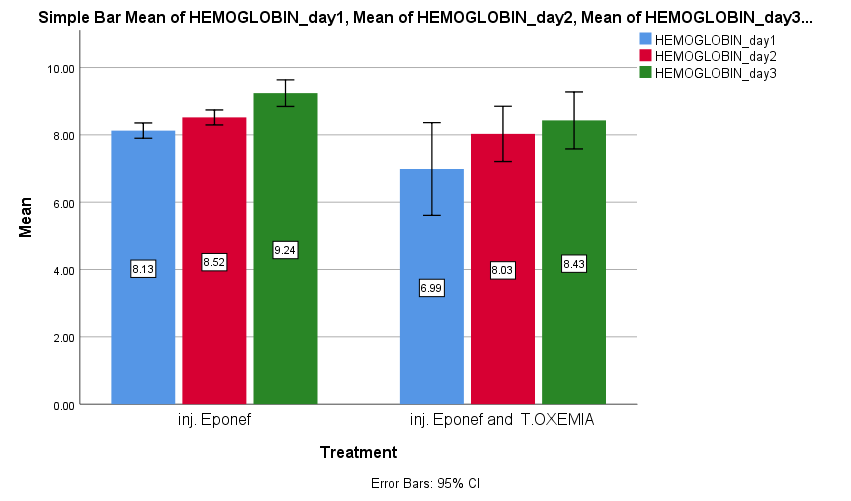
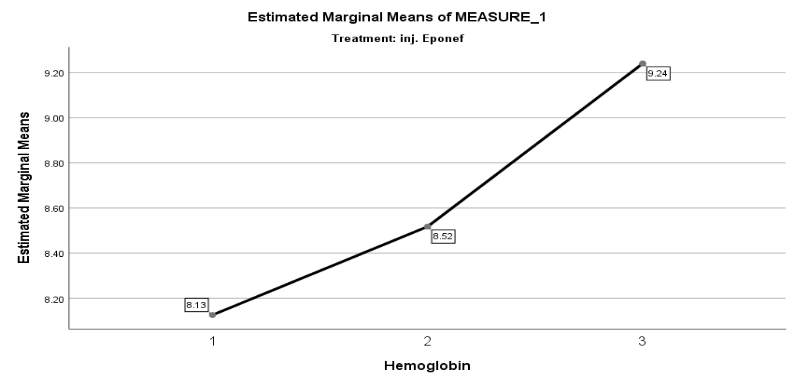
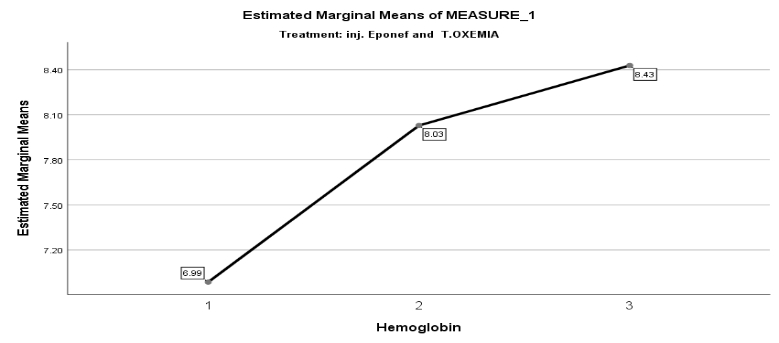
The haemoglobin levels showed drastic increase when Inj.Eponef was given to 70 subject. The average mean of haemoglobin was 8.13>8.52>9.25. There was no significant difference in baseline parameters.
RESULT:

The haemoglobin levels didn’t increase when Inj.eponef with T. oxemia. The average mean of haemoglobin was 6.99>8.03.>8.43 there was no significant difference in baseline parameters.

Disruption Of Subject Based On Estimated Mean Of Measure Of Serum Creatinine By Treatment

Treatment

Mean

Std. Deviation

P value

inj. Eponef

Serumcrea_Day1

2.7810

.73232

<0.001\

Serumcrea_Day2

1.9463

.72749

Serumcrea_Day3

1.0677

.62895

inj. Eponef and  T.OXEMIA

Serumcrea_Day1

3.9150

.42842

<0.001

Serumcrea_Day2

2.9438

.54610

Serumcrea_Day3

2.0237

.63074

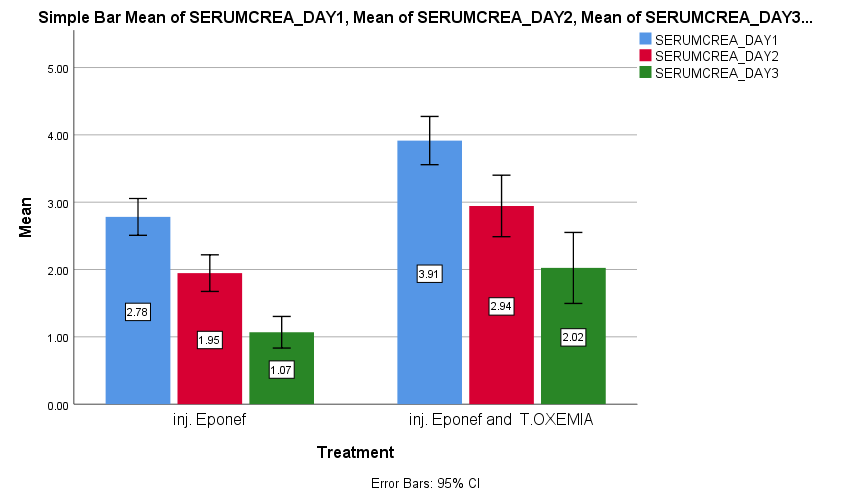
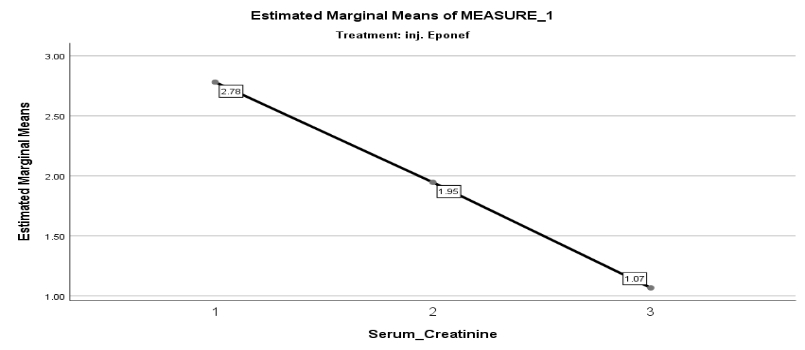
RESULT: Among 70 subjects taken the estimated marginal mean for serum creatinine levels showed drastically decrease when Inj eponef was given to patients. The average mean of serum creatinine was 2.78>1.95>1.07. there was no significant difference in baseline parameters.
Treatment

Mean

Std. Deviation

P value

inj. Eponef

GFR_day1

65.88

7.267

<0.001

GFR_day2

70.54

7.772

GFR_day3

76.89

8.798

inj. Eponef and T. OXEMIA

GFR_day1

57.29

12.431

<0.001

GFR_day2

63.21

13.463

GFR_day3

72.43

16.090

RESULT:

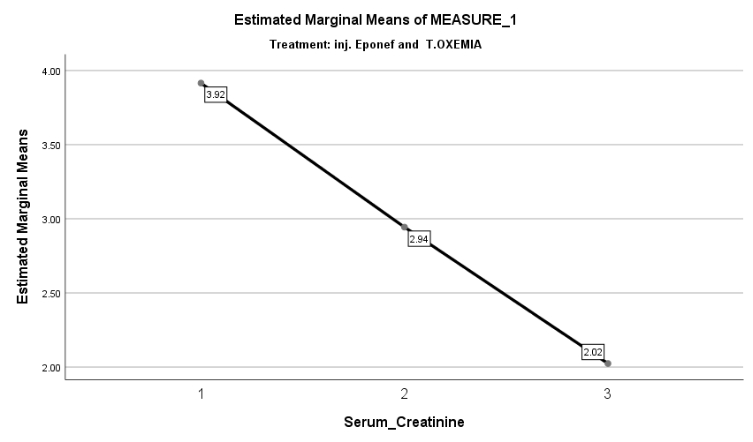
Among 70 subjects taken the estimated marginal mean for serum creatinine levels was ineffective in treating CKD with anemia when Inj eponef with T. oxemia was given to patients. The average mean of was creatinine 3.92>2.94>2.02. There was no significant difference in baseline parameters.

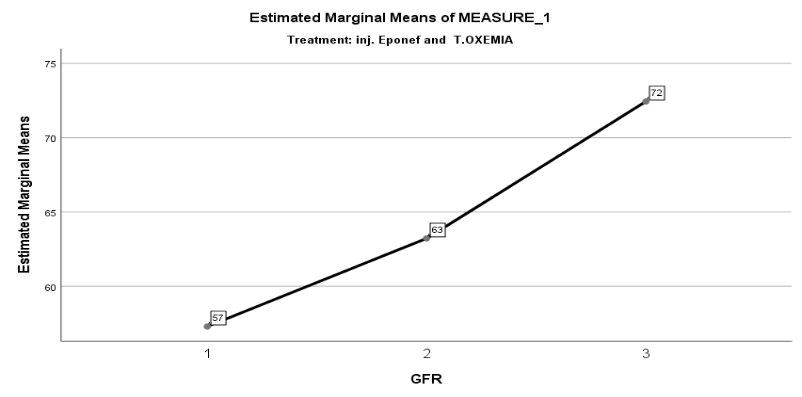
Distribution Of Subject Based On Estimated Mean Of Measure Of GFR By Treatment
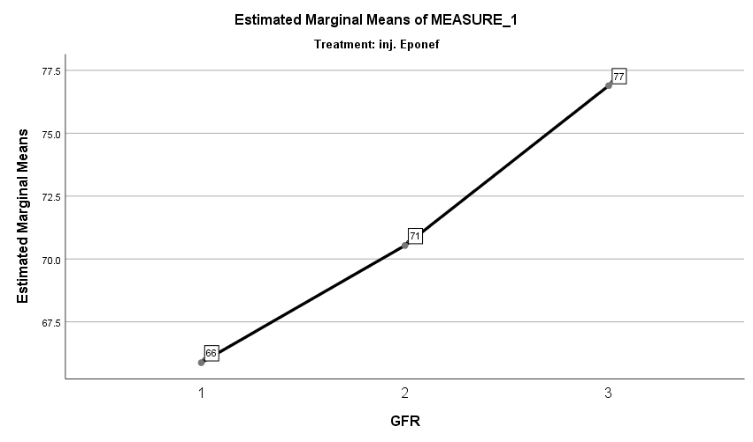
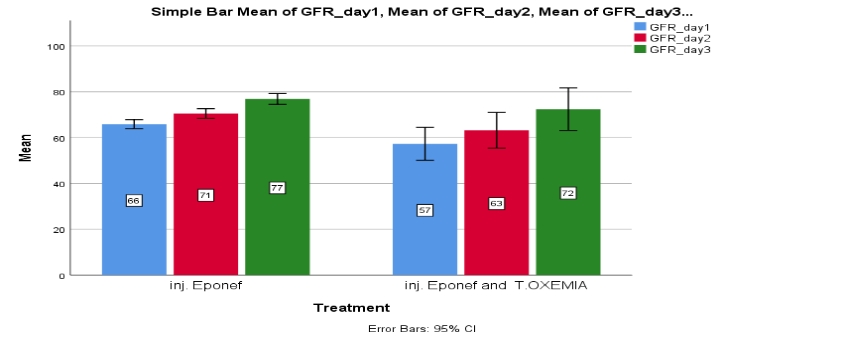
RESULT: Among 70 subjects taken the estimated marginal mean for GFR levels showed drastically increase and showed effective in treating CKD with anemia when Inj eponef was given to patients. The average mean of GFR was 66>71>77. There was no significant difference in baseline parameters.
RESULT:

Among 70 subjects taken the estimated marginal mean for GFR levels was ineffective within in treating CKD with anemia ,when Inj eponef with T. oxemia was given to patient.  The average mean of GFR was 57>63>72 there was no significant difference in baseline parameters.

CONCULSION:

  • There is a yearly rise in the number of people diagnosed with chronic kidney disease (CKD) throughout the world.
  • The majority of kidney ailments are caused by diabetes, hypertension, obstructive uropathy, urinary tract infections (UTIs), nephrolithiasis, HIV, hepatitis (B and C), and cystic kidney disease.
  • Decreased hemoglobin levels exacerbate CKD, which already makes patients less productive at work. When it comes to holistically managing chronic kidney disease (CKD), identifying and treating anemia is crucial at every stage of the illness.
  • Reduced renal erythropoietin production exacerbates anaemia, which occurs with the onset of kidney disease.
  • We analyzed a number of data, including age, gender, medical history, hemoglobin levels, serum creatinine, and glomerular filtration rate (GFR), and we compared the effectiveness of erythropoietin alone with that of erythropoietin combined with desidustat in individuals suffering from chronic kidney disease.

Therefore, we think that erythropoietin is a safe and effective medicine to treat the complications caused due kidney dysfunction and improve in quality of life.

Conflict Of Interest:

The authors have no conflicts of interest regarding this investigation.

ACKNOWLEDGMENT

We sincerely thank the Nephrology Department and our respected guides for their support, which made this study successful. The knowledge gained will be valuable for our future endeavors.

REFERENCES

  1. KDIGO 2012 Clinical Practice Guideline for Anemia in Chronic Kidney Disease. Kidney Int Suppl. 2012;2(4):279–335.
  2. Kidney Disease: Improving Global Outcomes (KDIGO) CKD Work Group. KDIGO 2012 Clinical Practice Guideline for the Evaluation and Management of Chronic Kidney Disease. Kidney Int Suppl. 2013;3(1):1-150.
  3. Anemia. Hematology.org - American Society of Hematology. https://www.hematology.org/education/patients/anemia
  4. Jelkmann W. Erythropoietin: structure, control of production, and function. Physiol Rev. 1992;72(2):449-489.
  5. Haase VH. Regulation of erythropoiesis by hypoxia-inducible factors. Blood Rev. 2013;27(1):41-53. tauffer ME, Fan T. Anemia in chronic kidney disease: a narrative review of the pathophysiology and management strategies. Clin Ther. 2014;36(12):1780–1788. Available from: https://pubmed.ncbi.nlm.nih.gov/25499386
  6. Babitt JL, Lin HY. Mechanisms of anemia in CKD. J Am Soc Nephrol. 2012 Oct;23(10):1631–4.
  7. Available from: https://www.ncbi.nlm.nih.gov/pmc/articles/PMC3458462
  8. National Institute of Diabetes and Digestive and Kidney Diseases (NIDDK). Anemia in Chronic Kidney Disease. Available from: https://www.niddk.nih.gov/health-information/kidney-disease/anemia
  9. Souma T, Yamazaki S, Moriguchi T, Suzuki N. Physiology and pathophysiology of renal erythropoietin-producing cells. Inflamm Regen. 2018;38:13.
  10. Haase VH. Regulation of erythropoiesis by hypoxia-inducible factors. Blood Rev. 2013;27(1):41–53.
  11. Kidney Disease: Improving Global Outcomes (KDIGO) Anemia Work Group. KDIGO 2025 Clinical Practice Guideline for Anemia in Chronic Kidney Disease. Kidney Int Suppl. 2025;13(1):S1–S107.
  12. Sanghani NS, Haase VH. HIF-prolyl hydroxylase inhibitors in renal anemia: current clinical experience. Adv Chronic Kidney Dis. 2019 Jul;26(4):253–266.
  13. K VISWESWARA RAO. BIOSTATISTICS -A manual of statistical methods for use in health, nutrition and anthropology. 2ND ed.
  14. K VISWESWARA RAO BIOSTATISTICS in brief made easy.

Reference

  1. KDIGO 2012 Clinical Practice Guideline for Anemia in Chronic Kidney Disease. Kidney Int Suppl. 2012;2(4):279–335.
  2. Kidney Disease: Improving Global Outcomes (KDIGO) CKD Work Group. KDIGO 2012 Clinical Practice Guideline for the Evaluation and Management of Chronic Kidney Disease. Kidney Int Suppl. 2013;3(1):1-150.
  3. Anemia. Hematology.org - American Society of Hematology. https://www.hematology.org/education/patients/anemia
  4. Jelkmann W. Erythropoietin: structure, control of production, and function. Physiol Rev. 1992;72(2):449-489.
  5. Haase VH. Regulation of erythropoiesis by hypoxia-inducible factors. Blood Rev. 2013;27(1):41-53. tauffer ME, Fan T. Anemia in chronic kidney disease: a narrative review of the pathophysiology and management strategies. Clin Ther. 2014;36(12):1780–1788. Available from: https://pubmed.ncbi.nlm.nih.gov/25499386
  6. Babitt JL, Lin HY. Mechanisms of anemia in CKD. J Am Soc Nephrol. 2012 Oct;23(10):1631–4.
  7. Available from: https://www.ncbi.nlm.nih.gov/pmc/articles/PMC3458462
  8. National Institute of Diabetes and Digestive and Kidney Diseases (NIDDK). Anemia in Chronic Kidney Disease. Available from: https://www.niddk.nih.gov/health-information/kidney-disease/anemia
  9. Souma T, Yamazaki S, Moriguchi T, Suzuki N. Physiology and pathophysiology of renal erythropoietin-producing cells. Inflamm Regen. 2018;38:13.
  10. Haase VH. Regulation of erythropoiesis by hypoxia-inducible factors. Blood Rev. 2013;27(1):41–53.
  11. Kidney Disease: Improving Global Outcomes (KDIGO) Anemia Work Group. KDIGO 2025 Clinical Practice Guideline for Anemia in Chronic Kidney Disease. Kidney Int Suppl. 2025;13(1):S1–S107.
  12. Sanghani NS, Haase VH. HIF-prolyl hydroxylase inhibitors in renal anemia: current clinical experience. Adv Chronic Kidney Dis. 2019 Jul;26(4):253–266.
  13. K VISWESWARA RAO. BIOSTATISTICS -A manual of statistical methods for use in health, nutrition and anthropology. 2ND ed.
  14. K VISWESWARA RAO BIOSTATISTICS in brief made easy.

Photo
Arifa Begum S. K.
Corresponding author

Department of pharmacy practice, Bharat school of Pharmacy, JNTUH, Ranga Reddy, Telangana, India.

Photo
Asha Raj
Co-author

Department of pharmacy practice, Bharat school of Pharmacy, JNTUH, Ranga Reddy, Telangana, India.

Photo
Samreen
Co-author

Department of pharmacy practice, Bharat school of Pharmacy, JNTUH, Ranga Reddy, Telangana, India.

Photo
Swathi Boddupally 
Co-author

Department of pharmacy practice, Bharat school of Pharmacy, JNTUH, Ranga Reddy, Telangana, India.

Photo
Are Bindhu
Co-author

Department of pharmacy practice, Bharat school of Pharmacy, JNTUH, Ranga Reddy, Telangana, India.

Photo
B. Bindu
Co-author

Department of pharmacy practice, Bharat school of Pharmacy, JNTUH, Ranga Reddy, Telangana, India.

Photo
Dileep Katikala
Co-author

Department of pharmacy practice, Bharat school of Pharmacy, JNTUH, Ranga Reddy, Telangana, India.

Arifa Begum S. K.*, Asha Raj, Swathi Boddupally, Samreen, Are Bindhu, B. Bindu2, Dileep Katikala, A Study on Efficacy of Erythropoietin Versus Erythropoietin with Desidustat in Treating Chronic Kidney Disease with Anemia, Int. J. of Pharm. Sci., 2025, Vol 3, Issue 5, 545-556 https://doi.org/10.5281/zenodo.15335482

More related articles
The Role of AI in Pharmaceutical Industry...
Anurag Mahoriya, Dr. Megha Parashar, Dr. Jitendra Banweer, ...
A Case Report on Hereditary Pancreatitis...
Grace N. Raju, Anchana A. T., Shaiju S. Dharan , ...
Recent Advancements in Cosmeceuticals — A Review...
Neha Bandil, Anand Prajapat, Nishant Singh, Kunika Sharma, Rohit ...
Bio-Plastic Production from Agricultural Waste: Utilizing Corn, Potato, Banana P...
Swayamprabha Chaudhari , Pratiksha Markad , Sneha Lavhale , Shravani Kulkarni , ...
Formulation and Evaluation of Wound Healing Cream...
Rajashri Bhosale , Patil R. R., ...
Formulation and Evaluation of Herbal Shampoo ...
Sanket Ashokrao Hood , Ganesh Tulshidas Harkal, Aman Girish Ghivdhonde, Nilesh Gajanan Lokhande, Har...
Related Articles
Green Blood Stoppers : Evaluating Herbal Coagulants As Sustainable Alternative T...
Shivani Mistry, Dhruvini Lad , Priyansi Lad , Riya Lad , Hardik Patel , Harsh Shah , Vikram Pandya ,...
Formulation and Evaluation of Cissus Quadrangularis for Anti-Inflammatory Syrup ...
Urvashi Badole, Ruchi Meshram, Ashwin Kapse, Shahajiyan Pathan, Upadesh Lade, ...
An Overview on Antidiabetic Disease...
Mohammed Zakee Muazzam Malgundkar, Sumedha Bane, ...
The Role of AI in Pharmaceutical Industry...
Anurag Mahoriya, Dr. Megha Parashar, Dr. Jitendra Banweer, ...
More related articles
The Role of AI in Pharmaceutical Industry...
Anurag Mahoriya, Dr. Megha Parashar, Dr. Jitendra Banweer, ...
A Case Report on Hereditary Pancreatitis...
Grace N. Raju, Anchana A. T., Shaiju S. Dharan , ...
Recent Advancements in Cosmeceuticals — A Review...
Neha Bandil, Anand Prajapat, Nishant Singh, Kunika Sharma, Rohit Saini, Tirajan Gurjar, Pawan Kumar ...
The Role of AI in Pharmaceutical Industry...
Anurag Mahoriya, Dr. Megha Parashar, Dr. Jitendra Banweer, ...
A Case Report on Hereditary Pancreatitis...
Grace N. Raju, Anchana A. T., Shaiju S. Dharan , ...
Recent Advancements in Cosmeceuticals — A Review...
Neha Bandil, Anand Prajapat, Nishant Singh, Kunika Sharma, Rohit Saini, Tirajan Gurjar, Pawan Kumar ...