

We use cookies to ensure our website works properly and to personalise your experience. Cookies policy
Matoshri Miratai Aher College of Pharmacy
With a variety of advantages, herbal medicines have recently been the choice of many people. Herbal formulations have become widely acceptable as therapeutic agents for many diseases. In fact, the majority of the applications are non-mainstream and it is still a well-known fact that more than 80% of the global population relies on herbal medicines and products for a healthy lifestyle. Such a rise in the demand for herbal products has led to different kinds of abuses and adulteration of products, thus, resulting in the disappointment of consumers and manufacturers and, in some cases, fatal consequences. One of the major challenges for scientists is the development of authentic analytical methods that can accurately depict the phytochemical composition along with providing quantitative analyses of marker bioactive compounds and other major constituents. Standardization is a significant step towards the establishment of a consistent biological activity, a consistent chemical profile, or simply a quality assurance program for the production and manufacturing of herbal drugs. The present review article describes various convectional methods along with newer advances. Recent advancements are observed in DNA fingerprinting, metabolomics technique, differential pulse polarography, chemometric, X-ray diffraction, etc. The role of capillary electrophoresis and chromatographic techniques in the standardization of herbal drugs is also disclosed.
An herb is a plant product that comes from parts of plants that may be broken, whole, or in powdered form. Because of their healing importance, they are considered as a source of nutrition.
Herbal drug technology is the means which supports in the transforming of herbs to the medicines. In this, standardization and quality maintenance with modern scientific and traditional knowledge are most essential. The interest of people in the whole world in herbal medicines has increased significantly, and the market for herbal medicines has been raised. So, there is a need for proper system adoption for identifying, authenticating, extracting, isolating, and purifying the herbal drugs.
Moreover, it includes various standardization techniques that ensure developing, together with the assurance of quality, purity, safety, and potency, and promoting safe, efficacious, and modernized methods for quality control of herbal drugs to get the maximum benefit from these herbal medicines. According Data of the world Health Organization (WHO) the origin of herbal medicines or herbal medicines are those which are made from herbs, parts of plants, and herbal preparations respectively.[1]
There were major improvements in the field of herb technology over the period of the last 10 years. It is the safety of herbal medicines that the traditional drug system from the ancient times could show. They are waiting to make their choices regarding the safety and efficacy of herbal medicines. The mechanism for regulated use and drug registration varies not only from one country to another but also the legal status of herbal medicines varies from one nation to another. The World Health Organization (WHO) has set up very specific and clear criteria to evaluate the safety, efficacy, and quality of herbal medicinal products as a condition for worldwide compatibility. The advancements in science and technology have permeated deeply into the area of phototherapeutics.
Different methods of identification of plant
One of the most basic requirements of any branch of life sciences is the identification of experimental material. The identification and naming of living beings (any life form including plants, animals, or microbes) have been a subject of fascination throughout history. Plant species have been regarded as the fundamental biological unit of life on Earth, and most evolutionary studies have been at the level of species.[2]The need for the identity of plant species is, thus, very diverse and widespread and includes programs for plant breeding, agricultural seed industry, food processing, conservation biology, forensic evaluation, and many different components of plant science. In the past, identifying plant species had a heavy reliance on the plants' physical features.
Methods of identification of plants:
1. Expert Determination
Expert determination of confidence or precision is the best method of Identification. Usually, experts have authored treatments (monographs, reviews, synopses) of the group in question, and the most recent floras or handbooks will contain the expert's taxa concepts. This method demands the expert to devote more time to the identification. It leads to the delay of plant identification.[3]
2. Recognition
It is similar in reliability to the skilled determination method. This is possible by the extensive, long-term knowledge of the symbol and the plant cluster in question.
3. Comparison
Another method is to put an unknown with named specimens, photos, pictures, or descriptions. This way is quite reliable; however, it might take a long time or be almost impossible if there are no appropriate reference materials.
4. Use Keys and Similar Devices (Synopses, Outlines, etc.)
Without the time and materials for Identification and Investigation, it is the most widely used method by far and does not require the same level of experience as the other methods.
Polyclave identification along with Peck-a-boo or Window Card Key and computerized identification are recently researched as new methods of identification.[4]
Identification of the plant
Medicinal plants have been the main source of healing in different cultures all over the world for a very long time. However, to ensure safety and effectiveness, the practice of mixing and using fake materials as substitutes has been one of the most significant problems that both users and the industry have faced. Hence, the authentication of medicinal plants is the first step towards solving these problems. On the one hand, the use of morphological, anatomical, chemical, and DNA markers can help identify the true material from the batch of the ones that are mixed often, together with substitutes and counterfeit drugs. Methods of Authentication. [5]
It refers to the identification of the main morphological characters that are visible and a description of the plant or botanical drug from Floras or Monographs by size, form, and coloration of leaves (or leaf fragments), flora, or Culmination are usually redescriptions utilized in macroscopic identification.
Focus of the microscopic examination is the identification of anatomic parts of the plant that can only be found when a microscope is used. For example, one of the structures may be the shape and nature of the trichomes (hairs). Besides, the arrangement of stomata in the epidermis, the presence of such compounds as mucus, starch, or lignin, or the presence of certain tissues which have characteristic cells can be used in the microscopic examination of herbal preparations.[6]
Chromatography is the separation of chemical compounds in a mixture. Different chromatographic techniques (all those that are diverse in practice but are having the same fundamental principles in principle) exist. Thin layer chromatography (TLC) is one of the most used methodologies for herb authentication, and most herbal pharmacopoeia monographs include a TLC identification test. TLC separates mixtures of compounds leaving a "fingerprint" of the separated compounds on a silica gel-coated plate without harming or altering them in any significant way. This fingerprint may be compared with that of a standard or reference natural compound. One more liquid chromatography technique - high-overall performance liquid chromatography (HPLC) is a major tool in the authentication and determination of natural substances. In addition, Gas chromatography is the method that is used solely for the cases of essential oils and fatty acids.
The following Institutes are involved in the Authentication of herbs
Names of institutes.
Laboratories:
National institutes
Different Extraction Methods
Extraction has been defined as a process of isolating the medicinally active parts of plants or animals that are of no use and, on the contrary, are considered to be pharmaceutically inactive by applying selective solvents in standard extraction processes. Products derived from plants in this way are maily impure liquids, semi-solids, or powders for oral or topical use. These are such preparations as decoctions, infusions, liquid extracts, tinctures, pillar (semi-solid) extracts and powdered extracts. In the past, these kinds of preparations were known as galenic in the name of Galen. Different extraction methods are used to isolate the therapeutically favoured component and to remove the inert, together with the aid of a selective solvent, which is called menstruum. The extract that is obtained inadvertently can be made to contain the source as tinctures and fluid extracts, it can be further processed to be mixed with other dosage forms such as pills or capsules or it can be fractionated in order to separate the chemical entities like ajmalicine, hyoscine and vincristine, which are used in modem tablets. Therefore, the use of extraction Methods plays a very important role in the final quality of the natural drug. Extraction is the process of separating soluble constituents from the insoluble substance.[9]
Various methods of extraction:
1. Maceration
In maceration, the powdered drug is combined with a solvent in a stoppered jar and for at least 3 days at room temperature it is allowed to stand with frequent shaking. After that, the mixture is separated, the pressed Marc is taken and the fluid is purified by filtration. [10]
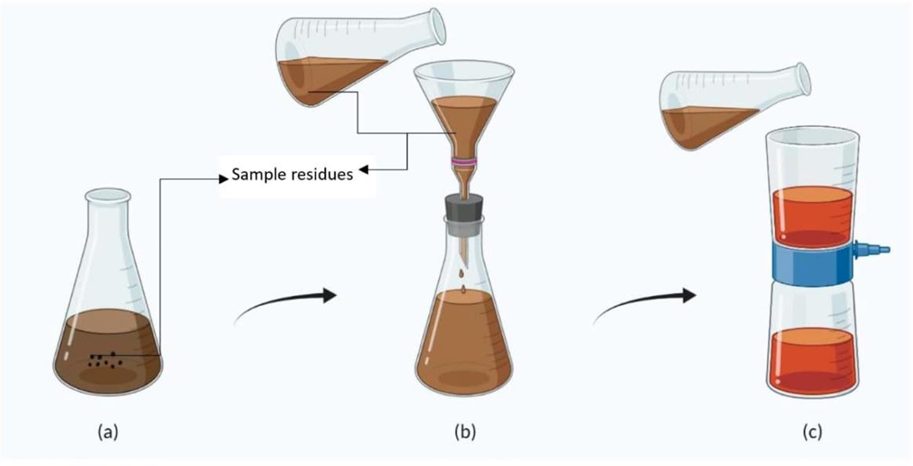
Figure 1
2. Infusion
Fresh Infusions are made by a short soak of the crude drug in cold or boiling water. They are diluted solutions of the readily soluble compounds of crude drugs.
The digestion resembles a maceration, with the only distinction being that in digestion a soft heat is applied during the extraction process. Because of the heat the solvent efficiency for menstrum is increased.
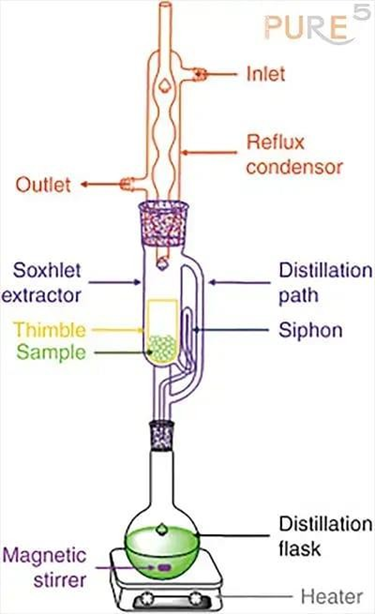
Figure 2
3. Decoction
Basically, the crude drug is boiled with a certain amount of water for a set time and later, it is cooled and strained or filtered. Such a method is suitable for the extraction of water-soluble, heat-resistant fraction. This process is the most common one in the manufacture of Ayurvedic extracts named "quath" or "kawath". Usually, the starting ratio of crude drug to water is determined, for example 1:4 or 1:16; the volume is then changed by boiling down one-fourth of its original volume with the aid of the extraction process. Finally, the extract is filtered.[11]
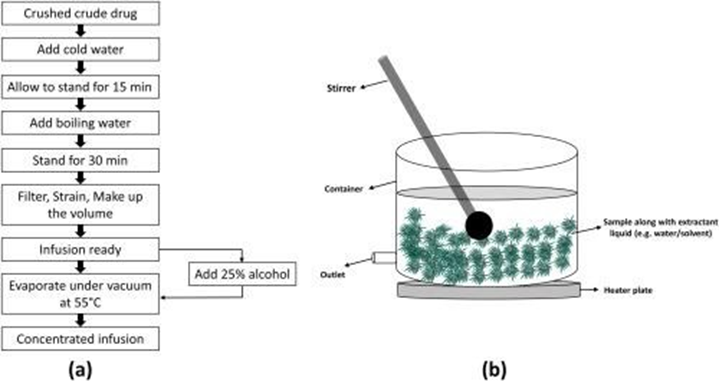
Figure 3
4. Percolation
Percolation extraction is one of the oldest methods of extraction and is still used in the production of traditional Chinese medicines. In the process, the powder of the medicinal fabric is first placed in the percolation tank, then the Extraction solvent is released continuously, and the percolation extract is obtained at the same time.
Extraction, in this case, is the one that involves the passing of a liquid (solvent) through a plant.
Percolation is a method of extraction that is done at room temperature, and the term "pass a liquid through a solid cloth drop by drop" literally means "pass a liquid through a solid cloth drop by drop. "Soaking the coarse plant particles in a percolator with a suitable solvent for 24 to 48 hours, then collecting the percolates at the bottom of the percolator.
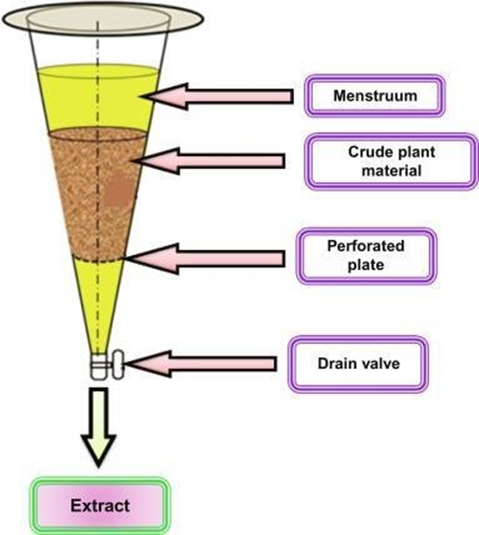
Figure 4
During the percolation process, new solvent must constantly be added to the top of the percolation apparatus. It is more efficient than the immersion method due to the difference in concentration maintained throughout the process. However, this procedure is complex and consumes a lot of solvent and Time.
5. Hot continues extraction (soxhlation)
Soxhlet Extraction refers to the process of transferring the partially soluble components of a solid into the liquid phase by the use of a Soxhlet extractor. The principle of solvent extraction is indeed very straightforward. To solvate a target molecule or to dissolve a group of compounds using a solid plant material with a liquid and then separate it from the solid are the main goals. A liquid (solvent) is separated from the solute so that the solute can be concentrated.
A Soxhlet extractor is a little laboratory apparatus which was designed in 1879 by the aid of Franz von Soxhlet. It Was initially the case for the device to separate the fat from the solid material. Normally, Soxhlet Extraction is employed when the desired substance is slightly soluble in a solvent, and the impurity is insoluble in that solvent. It makes it possible to have an unmonitored and unregulated operation whilst efficiently recycling a small amount of the solvent to dissolve a greater amount of the material. This is an extraction, which is done continuously with hot organic solvent.[13]
The powdered plant material is wrapped in a thimble which is inserted into the Soxhlet extractor. The extractor with the siphoning system is placed over the round bottom flask. At the top of the extractor, the condenser is installed. A heating mantle is used to heat the flask and an adequate amount of the extracting solvent is poured into the flask. Upon heating the solvent turns into vapor, it moves to the condenser, where it liquefies and drips back into the extractor that holds the thimble with the plant material. When the extractor fills with the hot solvent, the solvent along with the extracted constituents is siphoned down to the flask. The recycling of the evaporated solvent is performed until the extraction is complete.
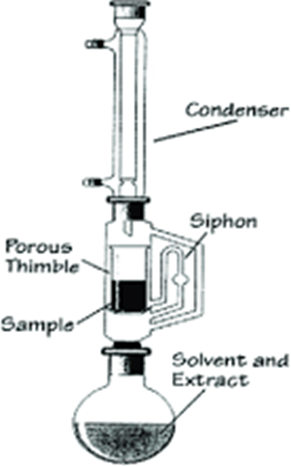
Figure 5
6. Counter current extraction
Firstly, toothed disk disintegrators grind wet raw material into fine slurry, which is then used in Counter Current Extraction (CCE) process.
In this method, the material to be extracted is changed to the opposite direction (usually as a fine slurry) in the cylindrical extractor, thus being in contact with the extraction solvent. [14]
As a matter of fact, the more the source material is agitated, the more concentrated the extract becomes. Hence, it is possible to get complete extraction if the amounts of solvent and material and their flow rates are set to be optimal. The process is very efficient, takes a short time and, most importantly, there are no risks of high temperatures.
Eventually, a sufficiently concentrated extract is discharged from one end of the extractor, while the pomace (practically freed from visible solvent) is left out of the other end
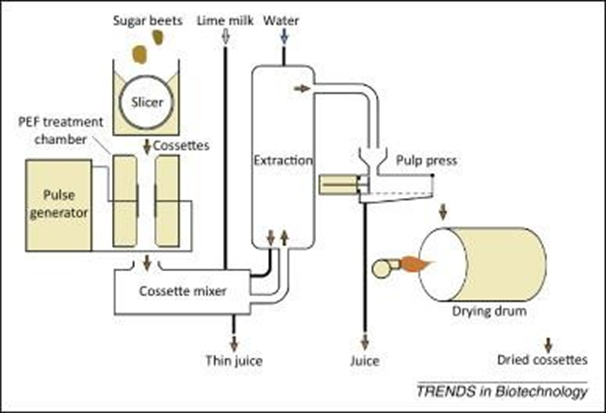
Figure 6
7. Ultrasonic Extraction
The process entails using ultrasound with frequencies starting from 20 kHz to 2000 kHz; this will increase the permeability of cell partitions and produces cavitation.
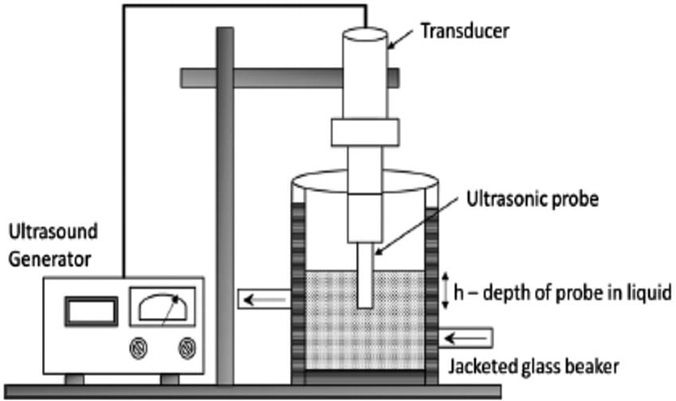
Figure 7
ISOLATION AND PURIFICATION TECHNIQUES
General Isolation techniques
The processes of isolating and purifying bioactive compounds from plants have experienced significant changes in the last few years. This modern method, on the one hand, gives the possibility of keeping the pace of the development and availability of numerous advanced bioassays and, on the other hand, provides the exact isolation, separation, and purification techniques.
The goal of bioactive compound research is to identify a reliable method that can simultaneously detect bioactivity in a source as well as provide simplicity, specificity, and speed. In vitro tests are often more suitable than in vivo tests because the latter are expensive, time-consuming, and at risk of ethical issues.
There are a number of factors that make it impossible to find the final methodologies or protocols for isolating and representing positive bioactive molecules. It could be due to unique parts (tissues) of a plant, numerous to create very unique compounds, and even different chemical and physicochemical properties of bioactive phytochemicals.
The selection and collection of plant materials are the main steps in the isolation and representation of a bioactive phytochemical. The next step involves the sourcing of ethno-botanical data to parent viable bioactive molecules. Extracts might be made with different solvents in order to isolate and purify the living compounds responsible for the bioactivity.[15]
There are several methods for isolating and purifying bioactive compounds from plants, including a number of chromatographic procedures. One of them is Column Chromatography which is one of the methods that can be used for these purposes. The purification of the bioactive molecule is accelerated by developed devices such as High Pressure Liquid Chromatography (HPLC). Various types of spectroscopic methods like UV-visible, Infrared (IR), Nuclear Magnetic Resonance (NMR) and mass spectroscopy can be used to identify the purified compounds.
Chromatographic techniques
One of the common practices in the isolation of bioactive compounds is that a number of Different separation methods like TLC, column chromatography, flash chromatography, Sephadex chromatography, and HPLC should be employed for obtaining pure compounds.
1. Thin layer chromatography (TLC)
TLC is a simple, fast and cheap method that gives a researcher a quick response on the number of components in a mixture. Using TLC one can also prove the identity of a compound in a mixture by comparing the Rf of a compound to the Rf of a known compound. Apart from that, additional tests could be spraying phytosanitary products causing token changes representing the phytochemicals found in a plant extract, or viewing the plate under ultraviolet light. Besides, this has been used for confirming the purity and identity of isolated compounds.[16]
2. High Performance Liquid Chromatography (HPLC)
HPLC is a very flexible and commonly used technique for the isolation of natural products. At present, this method is a front-runner for eco-friendly studies among various analysis techniques as it is the first choice for quality control of herbal plants through fingerprinting. The natural products are often isolated after the biological assay of a rather crude extract is done to fully characterize the active ingredient. Very often, the biologically active group is only a minor component in the extract and the resolution of HPLC is perfect for the fast processing of such multi-component samples both on analytical and on preparative scales.
Nowadays, many benchtop HPLC instruments are modular in design and consist of a solvent supply pump, sample introduction device such as an autosampler or manual injection valve, analytical column, guard column, detector and a recorder or printer. Chemical separations performed by HPLC may utilise the fact that certain compounds have different migration rates given a particular column and mobile phase. The degree or extent of separation is usually determined by the preference of stationary phase and mobile phase. Usually, the identification and purification of phytochemicals can be done with the use of an isocratic system (using a single, unchanging mobile phase). Gradient elution where the percentage of organic solvent to water is changed with time can be suitable if several sample factors are being studied and vary from each other. HPLC purification of the compound of interest is the procedure which separates or extracts the target compound from other (possibly structurally related) compounds or impurities. Under certain chromatographic conditions, each compound must show a characteristic peak. Depending on what needs to be separated and how closely related the samples are, the chromatographer can select such conditions as the right mobile phase, flow rate, detectors and columns to accomplish optimal separation.
3. Column Chromatography
Column chromatography in chemistry is a chromatography technique used to isolate a single chemical compound from a mixture. Chromatography is capable of separate materials primarily based totally on differential adsorption of compounds to the adsorbent; compounds pass through the column at exceptional rates, letting them be separated into fractions. The process is broadly applicable, as many different adsorbents (normal phase, reversed phase, or otherwise) may be used with a variety of solvents. The method may be used on scales from micrograms to kilograms.
The main benefit of column chromatography is the very low cost and the disposability of the stationary phase used in the process. The latter prevents cross contamination and stationary phase degradation as a result of recycling. Column chromatography may be done the usage of gravity to transport the solvent, or the usage of compressed gas line to push the solvent through the column [17]
4. High Performance Thin Layer Chromatography (HPTLC)
The High Performance Thin Layer Chromatography (HPTLC) method is a more advanced and automatic version of the Thin Layer Chromatography (TLC) with higher and advanced separation efficiency and detection limits and is frequently an excellent alternative to GC and HPLC. The applications of HPTLC include phytochemical and biomedical analysis, quantification of herbal drugs, quantification of active ingredients, fingerprinting of formulations, and the check for adulterants in the formulations. HPTLC can also effectively detect the presence of forensic chemicals. Various modern techniques related to HPTLC such as hyphenations in HPTLC- MS, HPTLC-FTIR and HPTLC-Scanning Diode Laser
METHODS OF STANDARDIZATION OF HERBAL DRUG
Standardization:
The standardization of herbal medicines is the process of prescribing a set of standards or inherent characteristics, constant parameters, final qualitative and quantitative values that include a guarantee of quality, efficacy, safety and reproducibility. It is the process of developing arid agreeing on technical standards. The specific standards are developed through experimentation and observation that would lead to the prescribing process for a range of properties exhibited by the particular Drugs. Therefore, standardization is a tool in the quality control process. American Herbal Product association defines: "Standardization refers to the body of information and control necessary to product material of reasonable consistency. This achieved through minimizing the Inherent variation of natural product composition through quality assurance practices applied to agricultural and manufacturing processes.
Need of standardization
In the global perspective, there is a shift towards the use of herbal medicines as the dangers and shortcomings of modern medicine become more apparent. Regulatory agencies strictly follow various quality standards prescribed for raw materials and finished products in pharmacopoeias, formulations and manufacturing operations through statutory good manufacturing practices to maintain purity, safety, potency and effectiveness. These procedures would logically apply to all types of medicines, whether they belong to the modern medical system or to one of the traditional systems. The popularity of the herbal products gets increased in all over the world, one of the barriers to their acceptance is the lack of a standard quality control profile. The quality of the herbal medicinal product, i.e. the profile of the components in the final product, has an impact on ineffectiveness and safety. However, due to the complex nature and inherent variability of herbal drug components, it is difficult to establish quality control parameters, although it is hoped that modern analytical techniques will help circumvent this problem. In addition, the components responsible for the claimed therapeutic effects are often unknown or only partially explained. This is further complicated by using the combination of herbal ingredients as used in traditional practice. It's common to have up to five different herbal ingredients in a single product. Therefore, batch-to-batch variation begins with the collection of the raw material itself, since there is no reference standard to identify it [18]. These fluctuations multiply during storage and further processing. Therefore, standardization for medicinal and herbal products should cover the entire field of study, from medicinal plant cultivation to clinical use. Plant materials and natural remedies derived from them constitute big portion of world marketplace and in this respect the world over recognized guidelines for their quality evaluation and quality control are necessary.
Standardization of single drug or compound Formulation
The natural formulation in general may be standardized as to formulate the medicament the use of raw material collected from distinctive localities and a comparative chemical efficacy of various batches of components are to be observed. The preparations with higher scientific efficacy are to be selected. All the ordinary physical, chemical and pharmacological parameters are checked for all of the batches as a way to pick the very last finished product and to validate the entire production process. Standardization is an critical thing for preserving and assessing the fine and protection of the polyherbal components as those are mixtures of multiple herb to gain the choice healing effect, minimizes batch to batch variation; assure safety, quality and efficacy of compound Formulation. Standardization of herbal formulation requires implementation of Good Manufacturing Practices. In addition, study of various parameters such as pharmacodynamics, pharmacokinetics, dosage, stability, self-life, toxicity evaluation, chemical profiling of the herbal formulations is considered essential. Heavy metals contaminations, Good Agricultural Practices (GAP) in herbal drug standardization are also equally important.
WHO guidelines for herbal drug Standardization
Critical factor affecting on quality control of herbal drug
Microscopic evaluation
Quality control of herbal drugs was recognized mostly by the way they looked but today the role of a microscopic evaluation has been extended to the initial identification of herbs, and subject-wise identification of even tiny fragments of crude or powdered herbs as well as the possibility of the presence of foreign matter and adulterants. A primary visual evaluation which in most cases can be done with just a small magnifying lens can be used to determine if the plant is of the right species and if the correct part of the plant is used. Sometimes, microscopic analysis is required not only for species identification but also for proper verification of the species and/or the correct part of the species. As an example, pollen morphology can be utilized for flowers, and leaf stomata along with other microscopic structures can serve as an identification of the plant part used. The importance of this point is first of all not being neglected when it comes to different parts of the same plant used for different treatments. One of the best examples Stinging Nettle is an instance where the aerial parts are used to treat rheumatism, and the roots are taken along for treatment of benign prostate hyperplasia.
Foreign matter
Herbal drugs must be procured only from the Plant Parts as stated in the description of the drug and should be free from other parts of the same plant or parts from other plants. They should be perfect in quality with no moulds or Insects including excreta and other visible contaminants such as sand stones, poisonous and harmful foreign matter, and chemical residues. Animal matters such as insects and "invisible" microbial contaminants that are capable of producing toxins are also included in the list of potential contaminants of herbal medicines. It is very easy to employ Macroscopic examination for the purpose of checking the presence of foreign matter; however, the use of a microscope becomes necessary in some specific cases. (e.g., starch purposely added to "dilute" the plant material). Besides, TLC is frequently utilized to reveal these contaminants in cases, for example, when foreign matter consists of chemical residues.
Ash content
To measure ash content, plant materials are incinerated and the resultant ash is calculated as both total and acid- insoluble ash. Total ash is the quantification of the total amount of the residues after incineration which, in this case, is the ash derived from the part of the plant as well as acid-insoluble ash. The latter one is the residue obtained after the total ash is boiled with dilute hydrochloric acid and the remaining insoluble matter is burnt. By this last method, the amount of silica mainly in the form of sand and other siliceous earth is determined.
Heavy metals
The contamination with toxic metals is sometimes accidental and other times it is deliberate. The heavy metal contamination in herbal remedies by these metals such as mercury, lead, copper, cadmium and arsenic may be caused by various factors, including environmental pollution, and these contaminants can cause a variety of clinically relevant health hazards and therefore should be limited. One can approximately assess how much of the toxic metal will be ingested with a product if the concentration of this metal in the product and the recommended or estimated dosage of the product are known. This estimate of exposure can harmonize toxicologically when the exposure is compared to what is referred to as Provisional Tolerable Weekly Intake values (PTWI) For toxic metals which are set by Food and Agriculture Organization and World Health Organization (FAO-WHO). There is a simple, straightforward method for determining heavy metals in many pharmacopoeias that utilizes color reactions with specific reagents such as Thioacetamide or diethyldithiocarbamate, and the amount of the metal is gauged by comparing it with an already known standard. If metals are in trace quantities, in mixture or if the analyses have to be quantitative, instrumental analyses must be used.
Microbial contaminants and aflatoxins
The variety of microbes in medicinal plants could be quite large and they may include bacteria, fungi, and viruses. In any case, this microbiological environment is influenced by several ecological factors and has a strong effect on the final quality of herbal products and preparations. As a result, the assessment of the risk from microbial load of medicinal plants has become a major issue in the development of modern Hazard Analysis and Critical Control Point (HACCP) systems. The microbial contamination of Herbal drugs may be accompanied by bacteria and Molds, the main source of which is the soil. Unsatisfactory techniques of harvesting, cleaning, drying, handling, and storage can also provide the source of additional contamination just as Escherichia coli or Salmonella spp. may do. Most bacteria and fungi are the natural microflora of the various materials. However, aerobic spore-forming bacteria are the main proposition of the group of microorganisms in the natural microflora, which generally dominate the latter. Corresponding lab work for the determination of microbial contaminants in their everyday practice as declared in the Pharmacopeia’s and also the WHO guidelines are performed. Limit values are also given in the above mentioned sources. A full method usually consists of tests for the total aerobic microbial count, the total fungal count, and the total Enterobacteriaceae count, along with tests on the presence of Escherichia coli, Staphylococcus aureus, Shigella and Pseudomonas aeruginosa and Salmonella spp. The European Pharmacopoeia also mentions that E. coli and Salmonella spp. Should not be present in herbal preparations. Most of the vegetable products are, in general, more contaminated by microorganisms than synthetic products and the standards for the contamination of the European Pharmacopoeia allow for higher contamination in herbal remedies than in synthetic pharmaceuticals. The extent of the contamination may also rely upon the way in which the drug was processed. For example, if the final herbal preparation includes boiling with water, a higher level of contamination is allowed. The detection of fungi should be one of the most thorough investigations/ monitoring, for some of the most frequent species are those which produce toxins, especially aflatoxins. Aflatoxins in herbal drugs might not only become a source of severe health issues when the contaminated drugs are inhaled/given in large doses, but are still toxin sources directly related to drugs even if extremely low doses are absorbed.
Pesticide residues
There are no reports of severe toxicity due to the presence of pesticides and fumigants; however, it is still necessary that herbs and herbal products be free of these chemicals or controlled at least for the absence of unsafe levels.
Radioactive contamination
The source of dangerous contamination, in this case, may be a nuclear accident. The WHO in cooperation with several other international organizations has come up with suggestions for managing the mishandling of radionuclides after a serious nuclear accident. Such publications highlight that generally, the health risk due to radioactive contamination from natural radio nuclides is not an issue, but those emitted from the big nuclear accidents like the ones in Chernobyl and Fukushima can be severe and vary according to the specific radionuclide, contamination level, and consumed quantity.
Standardization and quality control of herbal drugs: Parameters
Standardization and quality control of herbals are the measures taken for the physicochemical evaluation of the crude drug, which must cover aspects of the drug from the selection and handling of crude materials to safety, efficacy, and stability assessment of the finished product, documentation of safety and risk based on experience, providing product information to consumers and product promotion, as per WHO guidelines.
Some of the quality indices are generally used are given below:
It involves the identification of morphological characters i.e. color, odor, taste, shape, and size, etc. The detail for other features are for instance, fractures, texture, and venation.
The procedures for a microscopic and histological examination are the same for the whole and powdered forms of a drug. The major characteristics are the parenchyma, trichomes, calcium oxalate crystals, vascular bundle arrangements, stomata and fibres. Besides these, the microscopic determination of vein islet number, stomatal index, stomatal number, vein termination number etc. is also carried out.
Physical evaluation embraces the different physical parameters like moisture content, solubility, viscosity, refractive index, melting point, optical rotation, ash values, extractives and foreign organic matter. [19]
Chemical evaluation
Qualitative chemical evaluation
Qualitative tests are also the major part of the work where different chemical tests are implemented to identify the nature of compounds present in the crude drugs.
Quantitative chemical evaluation
It involves chemical assays and chromatographic methods used to measure the amount of chemical compounds present in the crude drug.
Chromatographic Techniques
Chromatographic techniques are the modern and most widely used methods for separating, identifying and measuring the plant constituents. It includes various methods as follows:
Biological parameters
These biological parameters consist of the following methods of evaluation:
Toxicological Studies
It helps to find the pesticide residues, potentially toxic elements, safety studies in animals like LD50 and Microbial assay to confirm the absence or presence of potentially harmful microorganisms.[21]
CONCLUSION
Since the very beginning of time, humans have been using plants, herbs, and ethnobotanicals for health promotion and disease treatment. These activities are still continued by people. Modern medicine as well as flora are based on natural sources, which, in addition, do have a significant share in the commercial medication preparations made at the moment. Roughly a quater of all prescribed medications are plant-derived ones that are used everywhere. Nevertheless, herbs are most often consumed without proper health care vigilance. Herbal medicine is the choice of the treatment for some people. Others think that herbs are used as a supplementary treatment to conventional drugs. However, in many developing countries, Herbal medicines constitute the traditional medicine which is the only system of health care that is available or affordable. No matter what the reasons are, those who use herbal medicines should ensure that the products they are buying are safe and have what they are supposed to have, which can be a particular herb or a specific quantity of a particular herb constituent. Furthermore, consumers should get science-based information on the dose, as well as limitations and effectiveness. To facilitate this and set a standard for the ethical manufacture and distribution of herbal remedies, worldwide legal harmonization is necessary. If scientific evidence supporting the benefits of a herb is sufficient, then regulations should allow such use so as to facilitate the use of herbs for achieving these benefits realized for disease treatment and public health promotion.
REFERENCES

Dalvi Rushikesh, Mundekar Yashraj, Naikwadi Komal, Gagare Rutuja, Sathe Poonam, Sah Ritu, Musale Yogesh, Advanced Herbal Technology: A Review, Int. J. of Pharm. Sci., 2025, Vol 3, Issue 10, 3355-3371. https://doi.org/10.5281/zenodo.17493180
 10.5281/zenodo.17493180