

We use cookies to ensure our website works properly and to personalise your experience. Cookies policy
Ideal Institute of Pharmacy, Posheri ,Wada, Palghar 421303
Aegle marmelos (L.), commonly known as Bael or Bel, is a medicinally valuable species belonging to the Rutaceae family. It has been extensively utilized in traditional medicine for the management of numerous diseases. All parts of the plant, including the fruit, leaves, bark, stem, and roots, possess therapeutic potential and are rich in diverse alkaloids. Bioactive constituents isolated from the fruit have demonstrated significant pharmacological activities, including antidiabetic, antiulcer, and lipid-lowering effects. This review underscores the broad pharmaceutical relevance of Aegle marmelos (L.) due to its wide spectrum of biological properties. The Bael tree is a medium- to large-sized deciduous plant, typically glabrous, bearing axillary spines and trifoliate leaves. Its fruits are generally spherical in shape. Comprehensive anatomical and microscopic investigations have been carried out on the root bark, stem bark, and other plant components to characterize their cellular structures. Distinct diagnostic differences between the root and stem bark have been documented, notably the violet fluorescence observed in the root bark powder in contrast to the brownish-yellow coloration of the stem bark.
Aegle marmelos (L.) Corrêa, commonly known as Bael or Bel, is a prominent member of the family Rutaceae. Although primarily valued for its medicinal importance, the fruit also holds moderate nutritional significance, warranting its inclusion among edible species. The plant is recognized by various vernacular names worldwide—Bengal quince, Indian quince, golden apple, holy fruit, stone apple, and sirphal in India; matum or mapin in Thailand; phneou or pnoi in Cambodia; bau nau in Vietnam; bilak or maja pahit in Malaysia; modjo in Java; oranger du Malabar in French; and marmelos in Portuguese. Occasionally, it is referred to as “elephant apple,” a name also used for the related species Feronia limonia Swingle, which may lead to confusion (Morton, 1987).
The Bael tree is a medium- to large-sized deciduous species characterized by smooth, gray bark, axillary spines, and trifoliate aromatic leaves rich in essential oils. The fruits are typically spherical. Detailed pharmacognostic investigations have been carried out on the root bark, stem bark, and other plant components, including macroscopic, microscopic, and cellular analyses. Diagnostic variations between the root and stem bark have been reported—particularly, the violet fluorescence exhibited by root bark powder in contrast to the brownish-yellow hue of the stem bark.
In recent years, significant attention has been directed toward the discovery and validation of bioactive plant-derived compounds for therapeutic applications. It is estimated that more than 25% of modern pharmaceuticals are directly or indirectly derived from plant sources (Cragg et al., 1997). A. marmelos exhibits diverse biological activities, including antipyretic, analgesic, and anti-spermatogenic effects, demonstrated in various animal studies (Badam et al., 2002; Jagetia et al., 2005).
Beyond its pharmacological potential, the Bael plant supports multiple value-added products such as ready-to-serve beverages, nectars, squashes, syrups, jams, candies, toffees, and powders, which hold promising prospects for both domestic and international markets. Environmentally, A. marmelos contributes as a “climate purifier” by releasing a higher concentration of oxygen during photosynthesis compared to many other plants and by absorbing harmful atmospheric gases, thus neutralizing chemical pollutants. Its flowers and volatile compounds further aid in deodorizing and sanitizing the air, reducing the risk of bacterial infections associated with decaying organic matter (Dhankhar et al., 2011).
In terms of botany and distribution, A. marmelos is native to India, Myanmar (Burma), and Sri Lanka, with natural growth observed across central and southern India and widespread cultivation in the northern regions. The genus Aegle comprises three recognized species distributed across tropical Asia and Africa. The Bael tree, a slow-growing medium-sized species, features a short trunk with soft, exfoliating bark and stiff, straight thorns. Remarkably, the unripe fruit is consumed in its raw state, and it also holds religious significance in Hindu culture. According to the Shiva Purana, offering milk, ghee, and grains to a devotee of Lord Shiva at the base of the Bael tree ensures the donor’s prosperity and protection from poverty.
Modern pharmacological studies have validated numerous therapeutic properties of A. marmelos, including anticancer, antibacterial, antifungal, antidiabetic, antioxidant, hepatoprotective, haemolytic, larvicidal, and anti-inflammatory activities. Traditionally, various parts of the plant have been employed to manage intermittent fever, digestive disturbances, fertility disorders, postpartum recovery, and even cases of food or seafood poisoning.
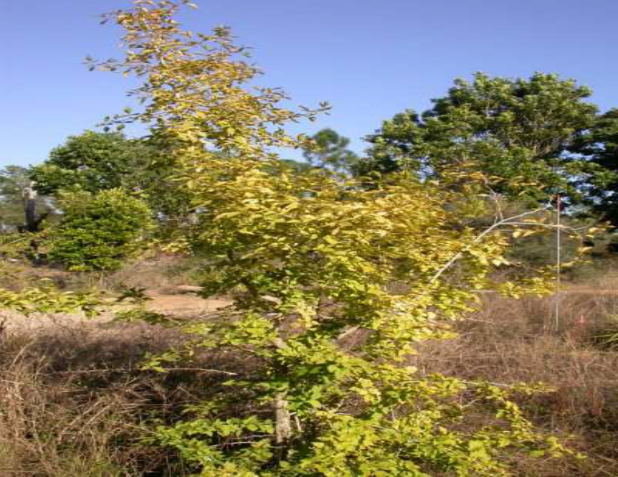
Figure 1.1 Bael Tree (Aegle marmelos)
PLANT PROFILE:
Botanical Name: Aegle marmelos (L.) Corrêa,
Common Name: Bael.
Biological Source
Bael refers to the unripe or partially ripe fruits, as well as their sliced or fragmented forms, obtained from Aegle marmelos Corrêa — a species belonging to the family Rutaceae. These fruits are primarily utilized for their pharmacological and therapeutic applications
CLASSIFICATION:
|
Kingdom |
: Plantae |
|
Subkingdom |
: Tracheobionta |
|
Division |
: Magnoliophyta |
|
Class |
: Magnoliopsida |
|
Subclass |
: Rosidae |
|
Order |
: Sapindales |
|
Family |
: Rutaceae |
|
Genus |
: Aegle |
|
Species |
: A marmelos |
Plant Names in Various Languages4:
Morphology of the Plant
Aegle marmelos is a medium-sized, slow-growing deciduous tree that typically reaches a height of 7–9 meters (25–30 feet). The young shoots bear straight, rigid spines approximately 2.5 cm (1 inch) long, and the branches are armed with sharp axillary thorns.
Leaves:
The leaves are alternately arranged, pale green, and trifoliate. The terminal leaflet measures approximately 5.5–6 cm in length and 2.5–3 cm in width, with a long petiole about 3 cm in length. The lateral leaflets are nearly sessile, about 4 cm long and 2 cm wide, exhibiting an oblong to lanceolate shape with distinct reticulate-pinnate venation.
Leaflets:
Each compound leaf typically consists of three to five leaflets, oval to lance-shaped, ranging from 4–10 cm in length and 2–5 cm in width. The terminal leaflet possesses a distinct petiole, while the lateral ones are sessile. The petiole length varies between 2.5 and 6 cm. When crushed or damaged, mature leaves emit a characteristic aromatic odor due to volatile oils.
Flowers:
The flowers are borne in clusters of four to seven along young branchlets. Each flower consists of four fleshy, recurved petals that are greenish-white in color and exude a pleasant fragrance. The blooming season occurs primarily during May and June.
Fruit:
The fruit of Aegle marmelos is typically spherical or oval, measuring between 5 and 10 cm (2–4 inches) in diameter. It possesses a hard, woody, and smooth outer shell that is initially green when unripe and gradually turns yellow as it matures. The internal pulp is divided into 8 to 15 compartments, each containing aromatic, yellowish, and soft tissue with a pasty and resinous consistency. The pulp is noted for its pleasant fragrance and sweet flavor.
Phytochemical investigations have revealed the presence of several bioactive constituents, including marmelosin, luvangetin, aurapten, psoralen, marmelide, and tannins (Badam et al., 2002; Rastogi & Mehrotra, 1998). Marmelosin has been shown to possess both antibacterial and antihelminthic properties (Ghosh & Playford, 2003; Shoba & Thomas, 2001), while luvangetin, a pyranocoumarin isolated from the seeds, has demonstrated significant gastroprotective activity in experimental ulcer models in rodents (Shoba & Thomas, 2001).
Seeds:
The seeds are enclosed individually within mucilaginous sacs embedded in the fruit pulp. They are hard, flattened, and oblong in shape, with their outer surface covered by fine, silky hairs. This adhesive coating aids in the attachment of the seeds to the surrounding pulp and contributes to the fruit’s sticky texture.
Stamens:
The stamens consist of several elongated, pointed filaments that may occur either freely or in small clusters encircling a minute disc. The ovary is ovoid and multilocular, typically comprising 10–20 chambers. Numerous ovules are arranged in two vertical rows within each cell. The style is terminal, short, and deciduous, and it ends in a capitate stigma.
Origin and Distribution:
Aegle marmelos thrives in subtropical climates and can grow at elevations up to approximately 1,200 meters. In regions such as Punjab, India, the plant endures extreme climatic variations, tolerating summer temperatures as high as 49°C and winter temperatures as low as –7°C, as well as extended periods of drought. Although it prefers fertile, well-drained soil, A. marmelos demonstrates remarkable adaptability, successfully growing on diverse substrates such as oolitic limestone in southern Florida, and in marshy, alkaline, or rocky soils with pH values between 5 and 8. In India, flowering generally occurs between April and May, coinciding with the emergence of new foliage, while fruit maturation typically takes place during May and June (Rastogi & Mehrotra, 1998; Anonymous, 2001).
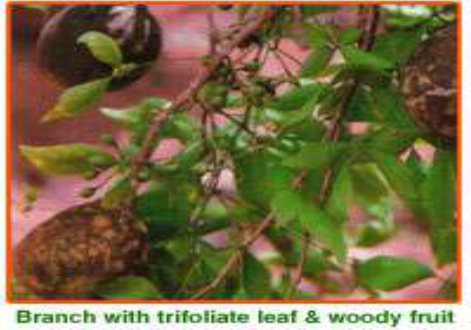
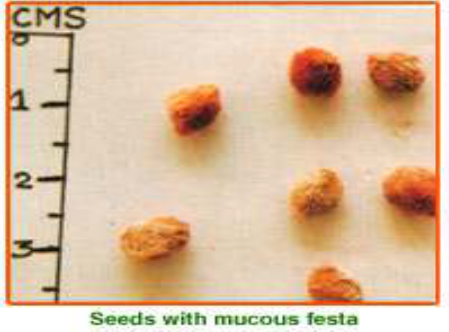
Figure 2.2 & 2.3: Branch with trifoliate leaf and woody fruit; Seeds with mucous testa (Anon, 2005a).
Chemical Constituents of the Plant
Leaves:
The leaves of Aegle marmelos are rich in diverse phytochemicals, including alkaloids, flavonoids, and essential oils. Reported constituents comprise marmesinin, rutin, phenylethyl cinnamides, anhydromarmeline, and aegelinosides (16–19). In addition, sterols and volatile oils contribute to the plant’s distinctive aroma and biological activities (20). These compounds are known for their antioxidant, antimicrobial, and anti-inflammatory properties, which play a crucial role in the plant’s pharmacological profile.
Stem Bark and Roots:
The stem bark and root extracts of A. marmelos contain coumarins and alkaloids of notable therapeutic importance. Aegelinol, a coumarin derivative, has been identified as a major constituent, along with psoralen, xanthotoxin, tembamide, mermin, skimmianine, and other related compounds (21). These phytochemicals exhibit diverse biological activities, including antimicrobial, anti-inflammatory, and hepatoprotective effects, thereby supporting the plant’s traditional medicinal applications.
Alkaloids:
Alkaloids constitute one of the most structurally diverse and pharmacologically significant groups of secondary metabolites found in A. marmelos. Recent phytochemical studies have reported several new alkaloids isolated from the leaves, such as ethyl cinnamamide, O-3,3-(dimethylallyl) halfordinol, and N-2-methoxy-2-[4-(3′,3′-dimethylallyloxy)phenyl]ethyl cinnamamide, among others (22). These compounds are believed to contribute to the plant’s antiulcer, antimicrobial, and cytoprotective properties.
Coumarins:
Coumarins represent another major class of bioactive constituents distributed throughout the bark, leaves, fruits, and roots of A. marmelos. Identified compounds include marmin, marmesin, umbelliferone, umbelliferine, skimmianine, scoporone, scopoletin, psoralen, marmelide, xanthotoxol, and impertonin (11, 23). Among these, marmelosin, skimmianine, and umbelliferone are regarded as the principal pharmacologically active components responsible for many of the plant’s therapeutic effects (24). These coumarins have demonstrated significant antioxidant, antidiabetic, and hepatoprotective activities in experimental studies.
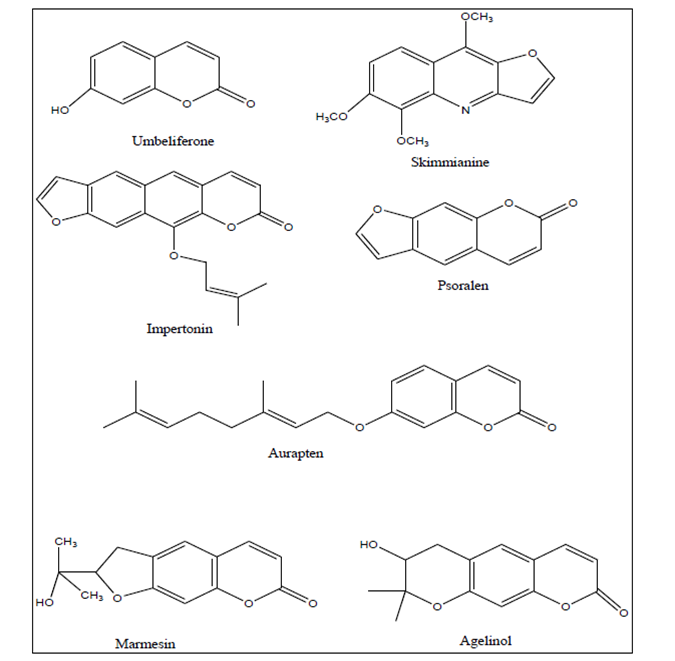
Figure 2.4 Chemical structure.
Traditional Applications of Aegle marmelos
The medicinal significance of Aegle marmelos (Bael) has been extensively described in ancient Ayurvedic and Vedic scriptures, where it is revered for its wide therapeutic spectrum. Nearly every part of the plant—including the seeds, roots, leaves, flowers, and fruits—has been traditionally employed in the management of various human and animal diseases.
Seeds:
Oil extracted from A. marmelos seeds possesses potent antibacterial properties and has been shown to inhibit the growth of several pathogenic microorganisms, including Vibrio cholerae, Staphylococcus aureus, and Escherichia coli (27). This antimicrobial potential supports its traditional use in managing intestinal and infectious diseases.
Roots:
The root bark is traditionally used in the treatment of ailments such as palpitations induced by excessive body heat, melancholia, and intermittent fevers. It is also administered as an antidote for fish poisoning. A decoction prepared from root bark juice mixed with cumin seeds and milk is prescribed in traditional medicine for treating seminal deficiencies. Experimental studies have confirmed the hypoglycemic activity of alcoholic root extracts (28). Additionally, root-based preparations are employed in the management of dog bites, gastrointestinal disturbances, cardiac disorders, amoebiasis, rheumatoid arthritis, and intermittent fevers (29).
Leaves:
The leaves of A. marmelos are valued for their broad therapeutic utility. They are traditionally applied in the treatment of abscesses, backache, abdominal pain, vomiting, wounds, dropsy, beriberi, and general weakness. The leaves are also used as a remedy for cholera, diarrhea, and cardiovascular ailments, and they exhibit cardiotonic and antidiabetic effects (30). In traditional veterinary practices, Bael leaves are used for treating wounds and intestinal worms, and as a nutritious fodder for livestock such as sheep, goats, and cattle. Physiological studies have shown that the leaves can induce contraction of the smooth membranes in anesthetized cats, suggesting the presence of bioactive compounds influencing muscle tone (31).
Flowers:
Distillates and extracts derived from the flowers of A. marmelos are used in traditional medicine as stomachic and intestinal tonics. They are also known for their anti-dysenteric, antidiabetic, diaphoretic, and mild anesthetic actions. Furthermore, flower-based formulations are used as expectorants and as supportive therapy for epilepsy (32).
Fruits:
The Bael fruit holds a prominent place in Ayurvedic formulations due to its diverse therapeutic properties. It acts as a natural laxative, digestive aid, and tonic for the brain, heart, and stomach. Traditionally, it has been used to manage dysentery, ulcers, viral infections, and intestinal parasitic infestations. The fruit is also prescribed for gonorrhea, epilepsy, and as a restorative agent following diarrheal episodes (33, 34). These traditional uses are consistent with the pharmacological studies demonstrating its antimicrobial, antiviral, and gastroprotective activities.
Pharmacological Properties of Aegle marmelos:
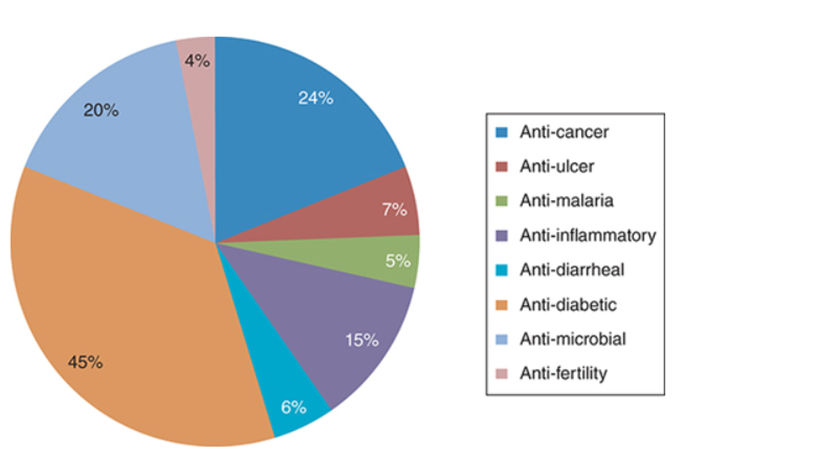
Figure 2.5 Percentage of reported biological activity of Aegle marmelos linked with each compound, from all investigated articles.
Antidiarrheal Activity:
Diarrhea is one of the most common symptoms of gastrointestinal (GI) infections and is often associated with alterations in the intestinal microflora, frequently induced by the use of broad-spectrum antibiotics. In recent years, extensive research has focused on identifying pathogenic causes of diarrhea and exploring natural plant-based treatments as safer alternatives to synthetic drugs.
The antidiarrheal potential of Aegle marmelos has been validated through several in vitro and in vivo investigations. In one in vitro assay, the ethanolic extract of dried A. marmelos fruit pulp was evaluated against diarrheagenic pathogens such as Shigella dysenteriae, S. boydii, S. flexneri, and S. sonnei. The results demonstrated that S. dysenteriae showed the lowest susceptibility, with a minimum inhibitory concentration (MIC) of 250 µg/mL and a minimum bactericidal concentration (MBC) of 400 µg/mL. Notably, the extract exhibited enhanced antibacterial efficacy at lower concentrations (0.5–1.0 mg/mL), suggesting strong potency even at minimal doses [42].
Further in vivo studies using murine models of castor oil–induced diarrhea revealed significant protective effects of A. marmelos fruit extracts. Oral administration of ethanolic extracts at doses of 400 mg/kg and 800 mg/kg body weight (BW) markedly reduced (p < 0.05) the number of wet fecal outputs in treated mice compared to controls. The percentage inhibition of defecation at these doses was reported as 67.44% and 70.93%, respectively [43]. Similarly, a methanolic extract of A. marmelos fruit demonstrated potent activity in Sprague-Dawley (SD) rat models of castor oil–induced diarrhea, achieving 100% inhibition after the first hour (78.13% at the initial interval) [44].
Interestingly, independent research suggests that the antidiarrheal mechanism of A. marmelos is primarily attributed to calcium channel–blocking constituents rather than tannic acid derivatives [45]. These findings collectively support the traditional use of A. marmelos fruit in managing gastrointestinal disturbances and highlight its potential as a natural antidiarrheal agent.
Antioxidant Activity:
Antioxidants play a critical role in protecting the body from oxidative stress caused by free radicals, which are implicated in the pathogenesis of various disorders, including cardiovascular diseases, hypertension, cancer, and diabetes. Several studies have demonstrated that Aegle marmelos fruit exhibits potent antioxidant properties.
In one investigation, both alcoholic (ethanolic) and aqueous extracts of Bael fruit pulp were evaluated for their free radical scavenging activity using the DPPH assay. The results indicated inhibition rates of 44.36% and 40.12% at a concentration of 100 µg/mL, with IC50 values of 92.65 µg/mL and 106.15 µg/mL, respectively. The reducing power (Fe³? to Fe²? conversion) was also assessed, showing 28.7% and 50.33% activity at 100 µg/mL, with IC50 values of 283.06 µg/mL (alcoholic extract) and 158.99 µg/mL (aqueous extract). Both extracts exhibited significant nitric oxide (NO) radical scavenging activity, achieving inhibition rates of 52.02% and 63.74% at 100 µg/mL. Additionally, the extracts demonstrated dose-dependent hydrogen peroxide (H?O?) scavenging activity, with inhibition rates ranging from 69.0% (ethanolic extract) to 73.77% (aqueous extract) and corresponding IC50 values of 52.19 µg/mL and 56.53 µg/mL [46].
In another study, the methanolic extract of Bael fruit was evaluated using DPPH and FRAP (ferric-reducing antioxidant power) assays. The extract exhibited IC50 values of 52.06 µg/mL (DPPH) and 59.32 µmol/g dry weight (FRAP). Comparative analysis revealed that the fruit extract had significantly higher radical scavenging and reducing potential than the leaf extract of A. marmelos (IC50 = 46.5 µmol/g dry weight; p < 0.05) [47].
Furthermore, Wijewardana et al. [48] reported that methanolic extracts of Bael fruit powder displayed DPPH radical scavenging activity ranging from 24.31% to 81.33% at concentrations between 200 and 1000 µg/mL. These findings collectively confirm the strong antioxidant potential of Aegle marmelos fruit, highlighting its utility in mitigating oxidative stress–related disorders.
Antidiabetic Activity:
Hyperglycemia, characterized by elevated blood glucose levels, is a common complication of uncontrolled diabetes and can lead to severe damage to nerves, blood vessels, and other organs [49,50]. Aegle marmelos fruit has recently gained attention for its traditional use in managing diabetes, although scientific studies on its antidiabetic properties remain limited.
In one study, ethanolic extracts of A. marmelos fruit were evaluated in alloxan-induced diabetic rats. The results demonstrated a significant improvement in body weight gain (BWG: 30.41–32.80%) and feed efficiency ratio (FER: 0.087–0.096; p < 0.001), along with a reduction in daily feed intake (DFI: 26.50–22.54 g/rat/day). Oral administration of the fruit extract at doses of 125, 250, and 500 mg/kg led to a marked decrease in blood glucose levels (p < 0.001; 97.48–78.82 mg/dL) and a corresponding increase in plasma insulin levels (p < 0.01; 6.58–15.64 IU/mL) compared to untreated diabetic controls [51]. The study also suggested that hyperphagia observed in alloxan-treated rats, caused by impaired glucose utilization due to insulin deficiency, was mitigated by the fruit extract, thereby contributing to improved glucose homeostasis and food efficiency [51,52].
Another investigation assessed the effects of the aqueous extract of Bael fruit (AMFEt) in female albino Wistar rats with Streptozotocin (STZ)-induced diabetes. Diabetes was induced by intraperitoneal injection of STZ (45 mg/kg), followed by oral administration of AMFEt (250 mg/kg) twice daily for one month. The study reported a significant reduction in plasma insulin levels (p < 0.05) and elevated blood glucose in diabetic rats. In contrast, treatment with AMFEt significantly lowered blood glucose (p < 0.05; 280.0 → 61.4 mg/dL), increased plasma insulin (17.9 → 21.6 IU/mL), and improved body weight (178.6 → 194.0 g), food intake (51.2 → 54.8 g/day), and water consumption (212.5 → 230.0 mL/day). Notably, no significant alterations were observed in normal rats receiving the extract [53,66].
Collectively, these studies indicate that A. marmelos fruit extract can effectively regulate plasma insulin and blood glucose levels, highlighting its potential as a natural antidiabetic agent. Despite these promising results, comprehensive research on the antidiabetic mechanisms and long-term efficacy of A. marmelos remains limited, emphasizing the need for further studies to facilitate the development of standardized antidiabetic formulations.
Hepatoprotective Activity:
The liver is a vital organ responsible for detoxification and metabolic regulation, but it is highly susceptible to damage from chemotherapeutic agents, hepatotoxins, and xenobiotics, which can impair its function and overall metabolism [54,55]. Studies have demonstrated that Aegle marmelos (Bael) fruit exhibits significant hepatoprotective potential.
Rajasekaran et al. [56] investigated the protective effects of both aqueous and ethanolic extracts of Bael fruit in mice with carbon tetrachloride (CCl?)-induced liver injury. The ethanolic extract (500 mg/kg; p < 0.01) effectively reduced elevated serum glutamate pyruvate transaminase (SGPT: 64.5 U/mL), serum glutamate oxaloacetate transaminase (SGOT: 81.3 U/mL), and alkaline phosphatase (ALP: 8.1 KA units), indicating moderate hepatoprotective activity. These results suggest that the ethanolic extract helps restore normal liver function compromised by CCl? exposure.
In another study, Wistar albino rats were administered diets supplemented with A. marmelos fruit to assess protection against cisplatin-induced hepatotoxicity [57]. Treatment with the fruit extract restored antioxidant defenses (p < 0.05), reduced lipid peroxidation (p < 0.05), and elevated levels of key antioxidant enzymes, including superoxide dismutase, catalase, and glutathione. Additionally, dietary supplementation (2–4% Bael fruit) significantly lowered serum markers of liver injury, including alanine aminotransferase (ALT), acid phosphatase (ACP), ALP, aspartate aminotransferase (AST), and bilirubin [68]. The hepatoprotective effects were attributed primarily to the antioxidant activity of the fruit, counteracting the oxidative stress induced by cisplatin treatment.
Sastry et al. [58] further evaluated the hepatoprotective potential of aqueous Bael fruit extract against paracetamol-induced liver damage in Wistar albino rats. Oral administration of the extract (100–400 mg/kg BW) significantly reduced elevated serum biomarkers in a dose-dependent manner (p < 0.001), including ALP (123–168 IU/L), bilirubin (1.5–1.22 mg/dL), SGPT/ALT (43–54.33 IU/L), and SGOT/AST (176–218.3 IU/L).
Collectively, these studies confirm that Aegle marmelos fruit possesses hepatoprotective properties capable of preventing or ameliorating liver toxicity induced by chemical agents. However, the limited number of studies highlights the need for further research to fully elucidate the mechanisms and clinical relevance of Bael fruit in hepatoprotection.
Radioprotective Activity:
Recent studies have explored the potential radioprotective effects of Aegle marmelos fruit, demonstrating both nutritional and medicinal benefits [59,60]. In one investigation, hydroalcoholic extracts of Bael fruit pulp were administered intraperitoneally to Swiss albino mice at doses of 5, 10, 20, 40, or 80 mg/kg daily for five consecutive days prior to exposure to 10 Gy of gamma radiation. The results revealed that the 20 mg/kg dose significantly improved survival, with 50% survival at 10 days and 29% at 30 days post-irradiation (p < 0.001). Subsequent dose-dependent studies comparing placebo and 20 mg/kg extract prior to radiation exposure (6–11 Gy) showed that the LD50/30 increased from 8.2 Gy in radiation-only controls to 8.8 Gy in the extract-treated group, corresponding to a Dose Reduction Factor (DRF) of 1.1 [61].
A more detailed study further confirmed the radioprotective efficacy of hydroalcoholic A. marmelos fruit extract (AME) in mice subjected to varying doses of gamma radiation. Optimal protection was achieved by administering AME (20 mg/kg) intraperitoneally for five consecutive days before irradiation at 10 Gy. Pretreatment with AME not only increased overall survival but also mitigated radiation sickness and reduced mortality in both the bone marrow and gastrointestinal systems. For example, at 10 Gy and 9 Gy irradiation, 10-day mortality decreased by factors of 2 and 1.4, respectively (p < 0.001 and p < 0.05). At 11 Gy, a significant proportion of AME-treated animals survived, whereas all controls succumbed by day 10. Similarly, 30-day survival improved in the AME-pretreated group at 9 Gy and 8 Gy, with mortality reductions of 2.6- and 1.2-fold, respectively. The survival rate after 10 Gy radiation was 41.6% in the AME group, while no animals survived in the control group. The LD50/30 values were calculated as 8.8 Gy for the AME-treated mice and 8.2 Gy for the saline-treated controls [62].
These studies collectively indicate that pretreatment with Aegle marmelos fruit extract confers measurable radioprotection, enhancing survival and reducing radiation-induced morbidity, likely through a combination of antioxidant and cytoprotective mechanisms.
Anticancer Activity:
The anticancer potential of Aegle marmelos fruit has been evaluated in multiple preclinical studies, demonstrating both chemopreventive and cytotoxic effects. In a rat model of breast cancer, tumors were induced using 7,12-dimethylbenz(a)anthracene (DMBA; 20 mg/mL in olive oil) in rats aged 55–60 days and weighing 150 ± 10 g. Once tumors reached approximately 0.5 cm in diameter, ethanolic fruit pulp extract of A. marmelos was administered orally at 200 mg/kg body weight per day for five consecutive weeks. Treatment resulted in a significant reduction in breast tumor volume (p < 0.05) and markedly decreased serum biomarkers, including malondialdehyde (MDA), TNF-α, and glucose (p < 0.0001). Post-treatment assessments also showed significant improvements in liver and kidney function markers, indicating hepato-renal protection. These findings suggest that the ethanolic fruit pulp extract exhibits anti-proliferative effects and may serve as a safe therapeutic option for breast cancer management [63].
In vitro studies further support the anticancer activity of Bael fruit extracts. The MTT assay, a colorimetric method that evaluates cell viability and cytotoxicity, revealed that the aqueous fruit pulp extract induced 66.51% cell death in MCF7 breast cancer cells at a concentration of 100 µg/mL, with an IC50 value of 47.92 µg/mL [64]. Methanolic fruit pulp extract also exhibited cytotoxic effects on the SKBR3 human breast cancer cell line, with an IC50 of 144.00 ± 1.21 µg/mL [66]. These results highlight the potential of Bael fruit phytochemicals as chemopreventive and cytotoxic agents targeting breast cancer cells.
Chemoprevention studies in Swiss albino mice demonstrated that oral administration of methanolic Bael fruit extract effectively reduced DMBA-induced cutaneous papillomas. During the pre-initiation phase (seven days before and after DMBA application), treatment with 50 mg/kg body weight of the extract reduced tumor incidence by 70%. In the post-initiation phase (following croton oil application), tumor prevalence decreased by 50%. Moreover, the extract lowered the total number of tumors, tumor frequency per animal, and tumor yield, indicating a strong chemopreventive effect [68].
Collectively, these findings suggest that A. marmelos fruit possesses both anticancer and chemopreventive properties, potentially acting through inhibition of tumor progression, reduction of oxidative stress, and modulation of cellular signaling pathways. The results support its further development as a natural adjunct in cancer therapy.
Anti-inflammatory & antipyretic activity:
The anti-inflammatory potential of Aegle marmelos has been explored using various plant parts, including leaves, flowers, and unripe fruit. Repeated administration of leaf extracts demonstrated significant analgesic and anti-inflammatory effects in mouse models of carrageenan-induced paw edema and cotton-pellet granuloma. The extracts alleviated both early and late phases of paw licking and reduced hyperpyrexia, confirming their analgesic and antipyretic properties [69].
In another study, the aqueous extract of dried A. marmelos flowers was evaluated for anti-inflammatory activity in Wistar rats. The extract exhibited maximal inhibition of inflammation at a dose of 200 mg/kg, two hours post-administration, indicating potent anti-inflammatory effects [70].
Furthermore, an aqueous extract of unripe Bael fruit demonstrated dose-dependent anti-inflammatory activity in albino Wistar rats with experimentally induced inflammatory bowel disease. The treatment significantly increased superoxide dismutase (SOD) levels while reducing malondialdehyde (MDA) levels, indicating strong antioxidant activity. Additionally, the extract stabilized mast cells, providing further protection against inflammatory responses [71].
Collectively, these studies highlight the broad-spectrum anti-inflammatory, antioxidant, and analgesic properties of A. marmelos, supporting its traditional use in managing inflammatory disorders and related conditions.
Antimicrobial activity:
Aegle marmelos exhibits significant antimicrobial properties against a broad spectrum of bacterial and fungal pathogens. The Minimum Inhibitory Concentrations (MIC) of Bael fruit extracts were determined for several microorganisms, with values recorded as 19.5 µg/mL for Candida albicans, 39 µg/mL for Aspergillus niger, 625 µg/mL for Aspergillus fumigatus, and 1.25 µg/mL for Staphylococcus aureus [72]. The Minimum Fungicidal Concentration (MFC) for C. albicans and A. niger was 2.5 mg/mL and 5 mg/mL, respectively, indicating that the decoction was more effective against fungal strains compared to food-pathogenic bacteria. Notably, the antimicrobial activity of the ethanolic fruit pulp extract was comparable to that of the standard antibiotic ampicillin in inhibiting pathogenic bacterial growth [73].
The antibacterial efficacy of various leaf extracts of A. marmelos was also investigated using the disc diffusion method against multi-resistant bacterial strains. Among these, the petroleum ether extract demonstrated superior antibacterial activity relative to standard streptomycin [74]. Additionally, the ethyl acetate extract of A. marmelos leaves was found to contain quinine compounds, which exhibited significant inhibitory effects against both Gram-positive and Gram-negative bacteria [75].
These findings collectively highlight the potent antimicrobial potential of A. marmelos, supporting its traditional application in treating bacterial and fungal infections and emphasizing its relevance in developing alternative therapeutic agents.
Antispermatogenic activity:
Aegle marmelos has demonstrated notable effects on male reproductive function, primarily attributed to bioactive compounds present in its bark and leaves. Elevated levels of marmin and fagarine in bark extracts have been linked to reduced male fertility [76]. Although the ethanolic bark extract may initially enhance sperm motility, higher concentrations have been observed to impair motility, indicating a dose-dependent effect. Similarly, alkaloids isolated from the leaves significantly decreased fertility in male albino rats, also in a dose-dependent manner [77].
The antifertility potential of A. marmelos makes it a promising candidate for male contraception, as it can completely inhibit pregnancy while allowing rapid restoration of fertility upon cessation of treatment [76]. In one study, male albino rats received daily oral doses of 50% ethanolic leaf extract at 100, 200, or 300 mg/kg for 60 consecutive days. Treatment resulted in marked shrinkage of accessory sex organs, with the cauda epididymis producing significantly fewer sperm, both in terms of motility and density. At the highest dose (300 mg/kg), fecundity was completely abolished [78].
These findings indicate that A. marmelos contains bioactive constituents capable of modulating male reproductive parameters, supporting its traditional use as a natural contraceptive.
Antiviral activity:
Various parts of Aegle marmelos have demonstrated significant antiviral properties in vitro. Extracts have been tested against human coxsackie viruses B1–B6, with Marmelide showing inhibitory activity approximately 32 times more potent than the standard antiviral agent ribavirin [79].
In addition, A. marmelos extracts exhibited efficacy against the white spot syndrome virus in shrimp at a dosage of 150 mg/kg body weight [80]. The isolated volatile oil from the plant was further evaluated against eight different fungal species. At a concentration of 0.05%, the essential oil completely inhibited spore production in all tested fungi. Partial inhibition of fungal growth was observed at 0.03% and 0.04% concentrations, with suppression rates ranging from 75% to 90%. The most resistant strain, Fusarium udum, showed 65% and 80% inhibition at 0.03% and 0.04%, respectively [81].
These findings highlight the potent antiviral and antifungal potential of A. marmelos, underscoring its value as a source of bioactive compounds for therapeutic applications.
IMPORTANCE:
Effect of Aegle marmelos Leaf on Rat Sperm Motility:
Aegle marmelos is a widely distributed plant renowned for its diverse medicinal properties (Bhattacharya, 1986). The leaves of this plant have been reported to exert insulin-like effects in hyperglycemia, with documented mechanisms of action (Seema et al., 1996). In Ayurvedic medicine, A. marmelos leaves are traditionally considered beneficial in managing spermatorrhoea. Previous studies in our laboratory have shown that the ethanolic leaf extract exhibits antispermatogenic activity in rats (Sur et al., unpublished).
The present study was designed to evaluate the effect of A. marmelos leaf extract on rat sperm motility using in vitro analysis. This investigation aims to elucidate the potential reproductive and antispermatogenic properties of the leaf, providing a scientific basis for its traditional use in fertility regulation.
Traditional and Cultural Significance of Bael:
The Bael tree (Aegle marmelos) holds profound cultural and religious importance, particularly among Hindus, who offer its leaves to Lord Shiva during worship. Both the leaves and fruits of the tree yield essential oils with notable health-promoting properties. The leaves are effective in absorbing environmental pollutants, thereby contributing to a cleaner and healthier atmosphere.
The fruit exhibits distinct effects depending on its ripeness. Raw Bael fruit is thermogenic and acts as a purgative, traditionally used to manage ailments such as arthritis and gout. In contrast, the ripe fruit exerts a cooling effect and is slightly constipative, making it suitable for consumption during summer to maintain bodily coolness and mental calmness. Beyond its physical health benefits, Bael is also traditionally believed to enhance intellect and improve mental concentration (Parichha, 2004).
Therapeutic Uses of Bael Fruit:
The various parts of Aegle marmelos—including its fruit, leaves, rind, and pulp—possess wide-ranging therapeutic benefits. Traditional and ethnomedicinal practices have documented its use in managing multiple health conditions:
These therapeutic applications highlight the versatility of Bael as a natural remedy for a broad spectrum of ailments, supporting both traditional medicine practices and potential modern pharmacological investigations.
Anticancer Activity of Aegle marmelos and Other Medicinal Plants:
A study investigated the effects of extracts from several Bangladeshi medicinal plants—including Emblica officinalis, Aegle marmelos, Vernonia anthelmintica, Oroxylum indicum, and Argemone mexicana—on the proliferation of human breast cancer cell lines and the expression of the estrogen receptor alpha (ERα) gene. Extracts of E. officinalis and O. indicum displayed antiproliferative activity against both MCF7 and MDA-MB-231 cell lines, whereas A. mexicana extracts were effective only on MCF7 cells, showing minimal inhibition of MDA-MB-231 proliferation.
Extracts of A. marmelos and V. anthelmintica demonstrated antiproliferative effects on both breast cancer cell lines, but only at higher concentrations. The accumulation of ERα mRNA, a marker of neoplastic activity, was measured using quantitative reverse-transcriptase polymerase chain reaction (qRT-PCR). Notably, only E. officinalis extracts increased ERα mRNA levels in MCF7 cells, while in MDA-MB-231 cells, E. officinalis, V. anthelmintica, and A. mexicana extracts induced ERα mRNA accumulation.
These findings highlight the potential of medicinal plant extracts, including A. marmelos, as sources of bioactive compounds for breast cancer therapy, particularly through modulation of ERα gene expression (Elisabetta et al., 2004).
Biodiversity and Soil Quality Enhancement:
A study conducted in Mohan Bhata, Bilaspur district, Madhya Pradesh, India, assessed the diversity of ground flora, soil microflora, and fauna beneath plantations of Acacia catechu and Aegle marmelos. Under each plantation, a total of 15 ground flora species were documented, including Oplismenus burmannii, Sida acuta, Evolvulus nummularis, Desmodium triflorum, Sporobolus sp., Euphorbia hirta, Melochia corchorifolia, Hyptis suaveolens, Heteropogon contortus, Alysicarpus monilifer, Indigofera linnaei, Evolvulus alsinoides, Stylosanthes fruticosa, Atylosia scarabaeoides, and Zornia gibbosa (Verma et al., 2001).
These findings highlight the positive role of Aegle marmelos in supporting biodiversity and improving soil quality, suggesting that its cultivation can enhance ecosystem stability and productivity in plantation environments.
Utilization of Bael Processing Waste:
By-products of Aegle marmelos processing, such as peel and pomace, have been evaluated for their potential use as animal feed. After pulp extraction or fruit preparation, the peel and pomace were dried, ground into powder, and analyzed for biochemical composition, palatability, and in vitro dry matter digestibility.
Analysis revealed that both peel and pomace are rich in nutrients. Crude protein content was 31.85% in peel and 10.50% in pomace, while crude fiber content was 27.34% in peel and 9.98% in pomace. Mineral analysis indicated high levels of calcium (peel: 1.00%; pomace: 1.20%) and phosphorus (peel: 0.14%; pomace: 0.10%). When incorporated into cattle feed at a 1:3 ratio, both peel and pomace were readily accepted, demonstrating their palatability. In vitro digestibility studies showed that 40.1% of the peel and 69.6% of the pomace were digestible. Specifically, digestibility rates for calcium, phosphorus, crude fiber, and crude protein were 0.26%, 0.15%, 22.29%, and 3.15% for the peel, and 0.80%, 0.01%, 6.57%, and 11.90% for the pomace, respectively.
These results indicate that bael processing wastes can serve as a nutritious supplement, potentially replacing up to 25% of conventional animal feed. Utilizing these by-products not only reduces feed costs but also mitigates environmental pollution and associated health risks (Saini et al., 2002).
Management of Prevalent Health Issues with Siddha Remedies:
The efficacy of Siddha-based treatments was evaluated in managing worm infestations, chloasma, diabetes mellitus, and asthma. The study included ten children aged 2–10 years with worm infestations, and thirty adults aged 30–70 years suffering from chloasma, diabetes, or asthma.
For pediatric patients with worm infestations, twenty medicinal capsules containing extracts of Ferula assa-foetida, Trachyspermum ammi, Butea monosperma, and Abrus precatorius were administered over ten days. Post-treatment assessments revealed a reduction in gastrointestinal discomfort, insomnia, and pruritus, though persistent nail-biting was noted in three children and hypopigmented patches in two children. The prevalence of Escherichia coli, Ascaris lumbricoides, and Entamoeba histolytica was significantly reduced.
In adults with chloasma, a topical application of Vangu Virana Kalimbu—which contained lead sulfide, mercuric sulfide, mercuric chloride, Galena lead sulfide, and beeswax—was applied twice daily to affected areas of the nose and cheeks for twenty days. This treatment successfully diminished hyperpigmented spots and alleviated associated symptoms such as burning, pruritus, and headaches.
Diabetic patients received Siddha formulations, leading to reduced fatigue in five patients and improved vision in three. Symptoms including itching, numbness, paresthesia, polyphagia, polyuria, and polydipsia were alleviated, accompanied by improved blood glucose regulation.
Asthmatic patients were administered chooranam, prepared from Aegle marmelos, Azadirachta indica, Trigonella foenum-graecum, and Gymnema sylvestre, over a three-month period, with doses every twenty days. Treatment outcomes included decreased chest tightness, dry cough, wheezing, nasal congestion, and sneezing, along with reductions in white blood cell counts, eosinophils, and erythrocyte sedimentation rates.
Overall, these findings highlight the therapeutic potential of Siddha remedies in managing common health conditions, providing symptomatic relief and supporting physiological improvements in patients (Vijayalakshmi and Amirthaveni, 2002).
History of the Tree:
Aegle marmelos is widely distributed across India and holds profound cultural and religious significance. Regarded as sacred by Hindus, it is extensively cultivated in gardens, with its leaves prominently used in rituals dedicated to Lord Shiva. Classical Sanskrit literature associates the tree with fertility and growth, considering its destruction sacrilegious. While various parts of the plant are utilized locally, in England, only the partially ripe fruit is commonly employed.
The tree is officially recognized in both the Pharmacopoeia of India and the British Pharmacopoeia. Ripe fruits are often processed into a thick sherbet highly valued for its laxative properties. When fully mature, the fruit resembles an orange, featuring a pleasant aroma and a sweet taste. In contrast, the unripe fruit has a thick, astringent rind, which is traditionally used in India for treating gastrointestinal disorders such as diarrhea and dysentery. Additionally, a yellow dye can be obtained from the rind when the fruit reaches ripeness (Harvey et al., 1898).
CONCLUSION
The collective findings from various studies underscore the significant therapeutic potential of Aegle marmelos, highlighting its diverse bioactive compounds that could contribute to the development of novel medications for the prevention, management, and treatment of diabetes, cancer, and a variety of infectious diseases. Traditionally, A. marmelos has been employed in numerous ethnobotanical applications; however, many of its bioactive constituents remain underexplored, with only a limited number having clearly defined mechanisms of action.
Further in-depth research is necessary to elucidate the pharmacological mechanisms, bioactivity profiles, and clinical efficacy of its phytochemicals. As a member of the Rutaceae family, A. marmelos plays a prominent role in Ayurvedic and traditional medicine, being used to treat conditions such as diarrhea, obesity, gastric ulcers, cancer, bacterial and viral infections, radioprotection, and chemoprevention. These therapeutic effects are largely attributed to its rich phytochemical composition, including aegelenine, fragrine, halfordinol, marmelide, marmelosin, marmesin, marmin, psoralen, umbelliferone, limonene, rutin, skimmianine, lupeol, quercetin, esculetin, scopoletin, auraptene, and seselin. Notably, seselin has demonstrated antiviral activity against SARS-CoV-2.
While substantial research has been conducted on this plant, several properties remain to be fully investigated. This review aims to consolidate current knowledge on A. marmelos, encompassing its traditional uses, pharmacological potential, and bioactive constituents, providing a comprehensive reference for researchers and scholars interested in further exploring its medicinal applications.
REFERENCES

Shruti Patil, Harshali Thakare, Dr. Sonali Uppalwar, Aegle marmelos: Where Divinity Meets Remedy in The Leaves of a Sacred Tree, Int. J. of Pharm. Sci., 2025, Vol 3, Issue 10, 3018-3038. https://doi.org/10.5281/zenodo.17465285
 10.5281/zenodo.17465285