
Department of Biotechnology, K. S. Rangasamy College of Technology, Tiruchengode
In reference to enhanced needs around health and hygiene, the higher demand for safer and environment friendly personal care products, plant-based formulations are gaining more importance now-a-days. This study reveals the formulation of an antimicrobial herbal handwash using Coleus amboinicus (Karpooravalli), an ancient, traditional medicinal plant known for its antimicrobial, anti-inflammatory, and wound-healing properties. To witness its whole bioactive potential, two consecutive extraction methods were employed: Soxhlet extraction of 10 g dried leaves in 100 mL ethanol, and distillation of 50 g fresh leaves in 100 mL distilled water. The ethanol extract yielded chlorophyll rich compounds that not only contributed to antimicrobial efficiency but also served as a natural green dye, enhancing the product’s appearance. The handwash formulation was carefully designed to balance efficacy, aesthetics, and dermatologically safe. The dual-extraction strategy enabled the inclusion of both ethanol-soluble and water-soluble botanical actives, profiling broader antimicrobial coverage and improved skin compatibility. Preliminary evaluations suggest that the formulation is effective against common skin pathogens, while remaining gentle on the skin. This work highlights the potential of Coleus amboinicus as a key ingredient in dermal care applications and supports further research into plant-based antimicrobial agents for everyday use.
The increasing awareness of hygiene and the demand for natural, non-toxic personal care products have driven innovation in herbal formulations. Among these, handwash products infused with plant-based bioactives offer a promising alternative to synthetic antimicrobial agents, which often pose risks of skin irritation and environmental harm. Coleus amboinicus, commonly known as Karpooravalli, is a medicinal plant widely recognized in traditional systems for its potent antimicrobial, anti-inflammatory, and wound-healing properties. Its phytochemical richness makes it an ideal candidate for incorporation into herbal hygiene solutions. In this study, an antimicrobial herbal handwash was developed using extracts of C. amboinicus obtained through two distinct methods. Soxhlet extraction was employed using 10 grams of dried leaves with 100 mL of ethanol to isolate ethanol-soluble bioactive compounds. In parallel, a distillation method was applied to 50 grams of fresh leaves with distilled water to capture volatile and water-soluble constituents. The residual ethanol extract, rich in chlorophyll and other pigments, yielded a natural green dye that was used to enhance the visual appeal of the final product. The formulation aimed to balance efficacy, aesthetics, and skin compatibility. Natural essential oils were added for fragrance, while the plant-derived dye provided a vibrant, eco-friendly coloration. The surfactant base was carefully selected to ensure gentle cleansing without compromising antimicrobial performance. This dual-extraction approach not only maximized the therapeutic potential of C. amboinicus but also aligned with sustainable formulation practices. By integrating traditional knowledge with modern extraction techniques, this study highlights the versatility of C. amboinicus in personal care applications and supports its role in promoting herbal alternatives for everyday hygiene. The resulting handwash offers a holistic solution that is effective, aromatic, and visually appealing—catering to both health-conscious and environmentally aware consumers.
METHODOLOGY
DESIGN
An antimicrobial herbal handwash was formulated using Coleus amboinicus as the primary source of bioactive compounds. A two-step sequential extraction process was employed, first with ethanol and then with distilled water, to ensure a comprehensive extraction of the plant's constituents. The resulting extracts were then used to prepare the handwash. The quality of the final product was rigorously evaluated through a series of physical evaluation tests. These tests included assessing the pH, viscosity, and spreadability of the handwash, as well as a visual examination of its appearance. Additionally, a natural dye, extracted from the ethanol extraction waste of Coleus amboinicus, was utilized in the formulation. This approach not only provides an effective antimicrobial product but also demonstrates the potential for utilizing waste materials.
PREPARATION OF PLANT EXTRACT
The plant materials for extraction were prepared by weighing 10?g of dry leaves, which were then ground into coarse powder and combined with 100?mL of absolute ethanol. This ethanol mixture was subjected to Soxhlet extraction, facilitating efficient isolation of organic-soluble phytochemicals from the powdered leaves. Simultaneously, 50?g of fresh leaves were weighed, cut into small pieces to enhance surface area and facilitate the release of essential oils and polar compounds, and immersed in 100?mL of distilled water. The fresh leaf-water mixture was also extracted using the Soxhlet apparatus, allowing for the continuous hot extraction of water-soluble and thermally stable constituents. Both extraction protocols aimed to maximize yield and facilitate the subsequent phytochemical analysis of the resulting extracts.
For leaves extracts,
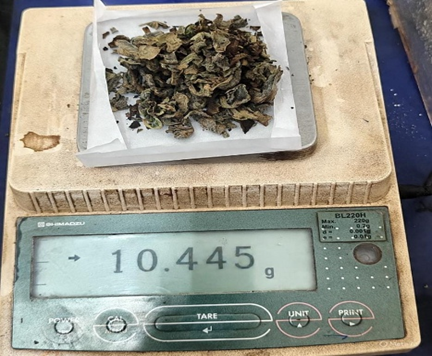
Fig.1: Weight of Dried leaves
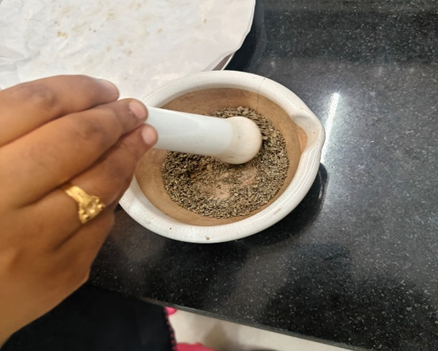
Fig.2: Grinding to coarse powder
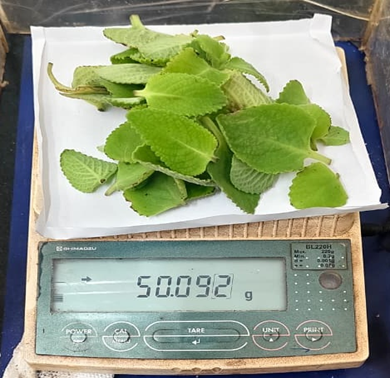
Fig.3: Weight of Fresh leaves
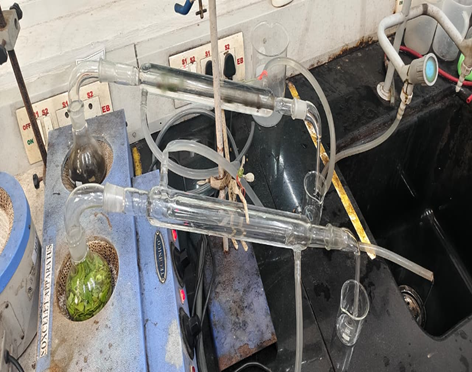
Fig.4: Soxhlet Extraction of both
FORMULATION OF HERBAL HANDWASH
The current study involved the formulation of a herbal handwash gel utilizing both aqueous and ethanolic extracts of Coleus amboinicus leaves, each at a standardized volume of 10mL. The aqueous extract served as a source for volatile oil constituents and contributed a fresh herbal aroma, whereas the ethanolic extract enabled the concentration of bioactive compounds, including non-volatile phytochemicals. Notably, the residual matter from Soxhlet extraction of dried leaves was employed as a natural colorant, enhancing the visual appeal of the gel. Following preparation of the handwash base with defined concentrations of active surfactants and excipients, the herbal extracts and natural dye components were carefully infused. This strategy was designed to integrate the diverse chemical profiles present in the selected extracts, combining aromatic qualities and therapeutic actives, to produce a stable and effective cleansing formulation suitable for topical application. The physicochemical properties and stability of the final product were systematically evaluated to confirm homogeneity, appropriate viscosity, pH compatibility, and prolonged retention of sensory attributes in alignment with established standards for herbal handwash gel.
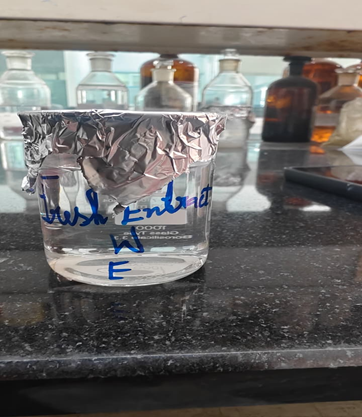
Fig.5: Fresh leaves Aqueous extract
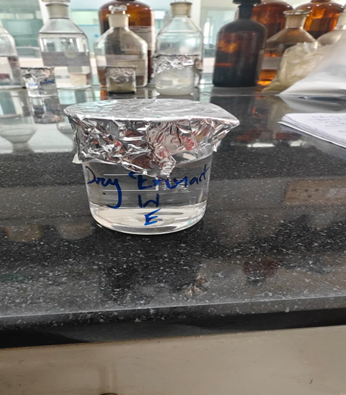
Fig.6: Dried leaves Ethanol extract
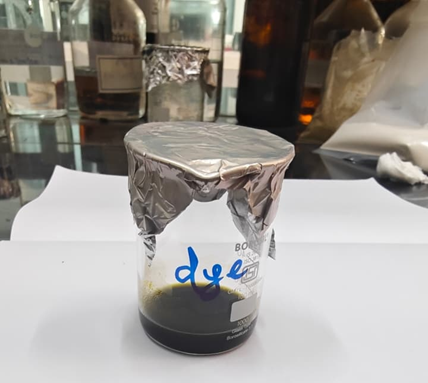
Fig.7: Natural dye from Ethanolic extract residue
The table below lists the components used in the preparation of the handwash gel base, formulated to a final volume of 100 mL.
Table 1: Tabulation of materials required in certain quantities
|
Sr. No. |
Materials required |
Quantity |
|
1. |
Xanthan gum |
0.5g in 50mL D.H2O |
|
2. |
Sodium Lauryl Sulfate |
10mL |
|
3. |
Methyl paraben |
0.5g |
|
4. |
Glycerin |
10mL |
|
5. |
Essential oil |
1mL |
|
6. |
Distilled water |
To make up to 100mL |
|
7. |
Stabilizer |
To balance pH |
To the prepared handwash base, equal volumes (10 mL each) of both aqueous and ethanolic extracts of Coleus amboinicus leaves were incorporated, alongside a few drops of natural dye. The dual extraction approach leverages the complementary solubility profiles of water and ethanol as solvents; aqueous extraction primarily isolates hydrophilic volatile oils and fresh aromatic compounds, while ethanolic extraction efficiently recovers a broader spectrum of bioactive phytochemicals, including flavonoids, phenolics, and other non-volatile constituents. This synergistic infusion not only enhances the therapeutic potential of the formulation but also preserves the fresh fragrance and imparts a natural coloration derived from the residual extracts. The integration of these extracts ensures a comprehensive phytochemical profile within the handwash, contributing to its efficacy, sensory appeal, and stability.
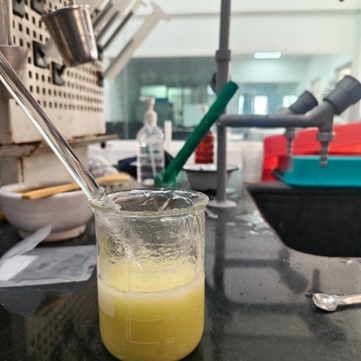
Fig.8: Handwash Base
PROCEDURE FOR PREPARATION
COMPARATIVE ANALYSIS
For comparative analysis, two different thickeners were selected to evaluate their effects on the handwash gel base, focusing on differences and similarities between a natural and an artificial thickener. Xanthan gum, a natural polysaccharide, and Carbomer 940, a synthetic polymer, were incorporated separately into the base formulation. Upon visual and tactile assessment, Carbomer 940 produced a free-flowing, gentle gel with good clarity and smooth texture, characteristic of its high thickening efficiency and ability to form stable, transparent gels at neutralized pH. In contrast, the xanthan gum-based gel exhibited slight stickiness and a thinner consistency, attributable to its nature as a natural gum that can produce more viscous but less clear gels with a perception of drag or "stringiness." These observations align with known properties where Carbomer 940 is favored for clear, fluid gels, while xanthan gum is appreciated for natural formulations but may lead to a more textured and less flowing gel. Such comparative insights are crucial for optimizing formulation parameters based on desired consumer experience and functional attributes.
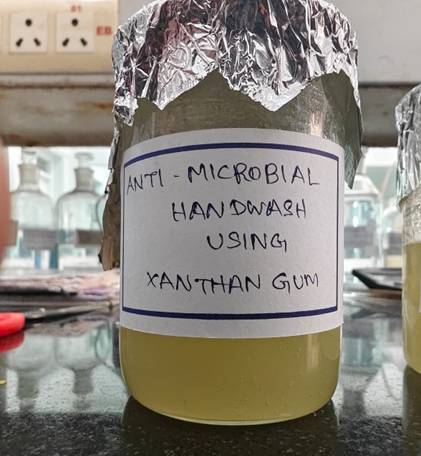
Fig.9: Using Xanthan gum
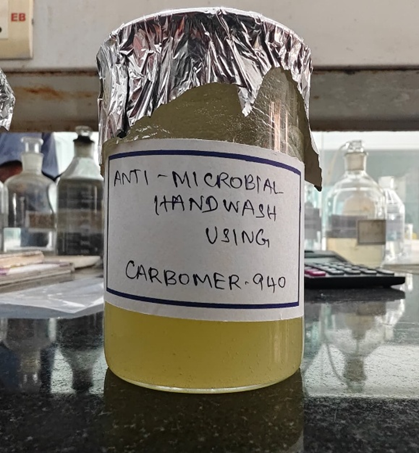
Fig.10: Using Carbomer 940
PHYSICAL EVALUATION
pH EVALUATION
The pH of the herbal handwash gel is measured using a calibrated digital pH meter by dissolving 1 g of gel in 100 mL of distilled water. Maintaining an appropriate pH range, usually between 7.0 to 9.0, ensures the formulation is compatible with skin’s natural pH, minimizing irritation and preserving skin barrier integrity. Accurate pH measurement is crucial to maintain the stability and efficacy of the gel and to avoid any adverse reaction upon topical application.
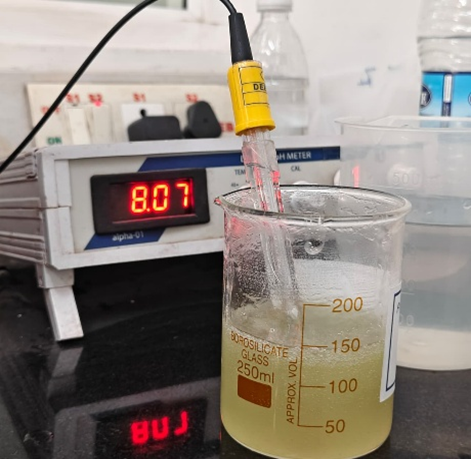
Fig.11: pH Analysis
VISCOSITY MEASUREMENT
Viscosity is determined using a digital Brookfield viscometer by analyzing the flow resistance of the gel under shearing stress. Proper viscosity ensures the gel has an ideal consistency—neither too runny nor too thick—allowing ease of dispensing, spreading, and comfortable skin feel. Different thickeners influence the viscosity, affecting the gel’s performance and consumer acceptance. Monitoring viscosity also helps in assessing the stability of the formulation over time. The typical viscosity range for handwash gels is optimized between 1000-4000 centipoise (cP) to balance flow and adherence on the skin. The viscometer display reads a viscosity value of 1069.6 mPa·s (millipascal seconds) at 32.9°C, 6.0 RPM, and spindle setting SPL2, the specification for hand wash gel ranges from 20-80%. The gel sample—yellowish in colour—demonstrates the practical assessment of viscosity, an important physical parameter for topical formulations to ensure proper consistency, spreadability, and user acceptability. The measurement confirms the viscosity of the handwash gel formulated with xanthan gum.
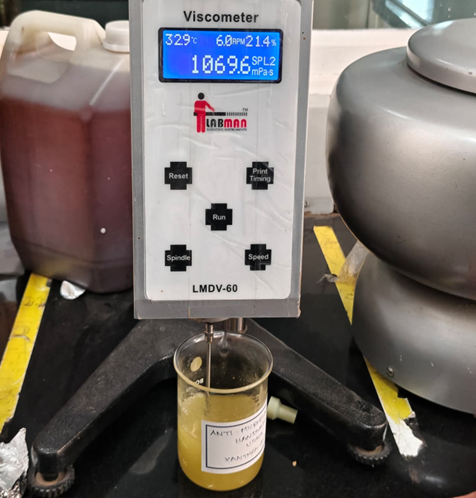
Fig.12: Viscosity Analysis
LOSS ON DRYING (LOD)
Loss on drying (LOD) refers to the amount of moisture evaporated from the gel when dried under specified conditions. This test helps determine the water content and overall moisture level in the formulation, which impacts shelf stability and microbial susceptibility. A controlled moisture content is essential to prevent microbial growth and maintain product texture. LOD is typically measured by weighing the sample before and after drying in an oven at a specified temperature for a fixed duration. A consistent LOD value suggests stable formulation with minimal water loss during storage. Keeping the sample in Hot air oven at 100-106°c for upto 3-31/2 hours.
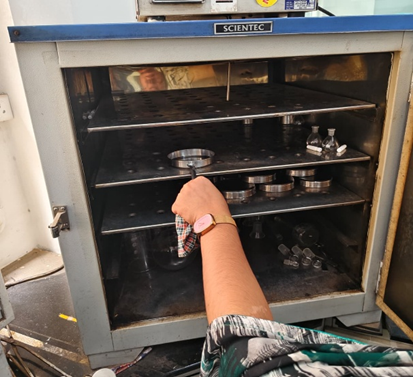
Fig.13: Kept for LOD Analysis
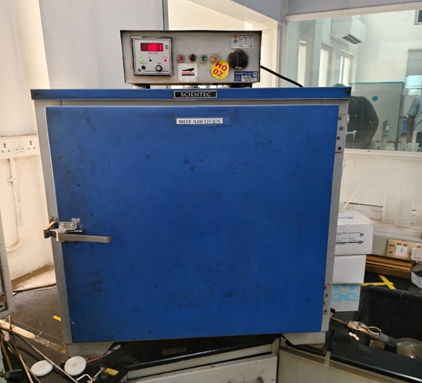
Fig.14: Hot air oven at 101°c
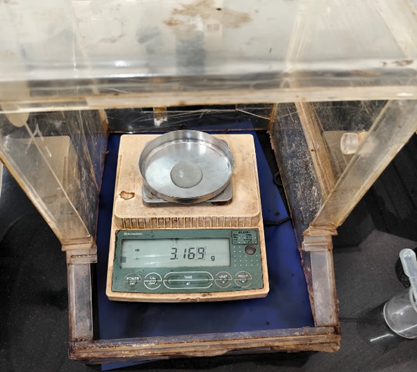
Fig.15: Before LOD
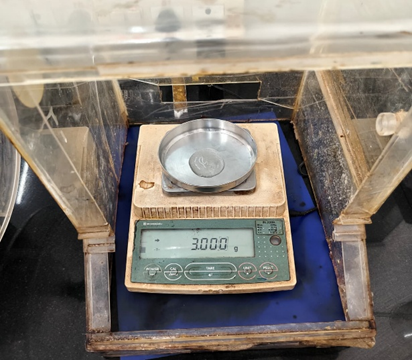
Fig.16: After LOD
SPREADABILITY
Spreadability indicates the ease with which the gel spreads across a surface, measured by placing a fixed quantity of gel between two glass slides under a set weight and recording the time taken for the slides to separate over a standard distance. A formulation with good spreadability ensures uniform application on the skin with minimal effort, improving user experience. Higher spreadability values correspond to gels that are less viscous and easier to apply, while lower values indicate thicker gels. Optimizing spreadability is critical for balancing product performance and sensory attributes in handwash gels.
RESULT
The study successfully formulated a herbal handwash gel incorporating both aqueous and ethanolic extracts of Coleus amboinicus, aiming to combine volatile oils and non-volatile bioactive compounds to maximize therapeutic efficacy and sensory appeal. Two thickeners, natural xanthan gum and synthetic carbomer 940, were evaluated comparatively. Carbomer 940 yielded a free-flowing, gentle gel with clear appearance and smooth texture, while xanthan gum produced a slightly sticky, thinner gel, reflecting the intrinsic physicochemical properties of these agents.
The physical evaluation parameters of the formulated gels showed desirable characteristics:
The addition of natural dye from residual ethanolic extracts contributed color without compromising stability or sensory attributes. Overall, the dual-extract inclusion strategy enhanced the formulation’s holistic phytochemical profile, combining fresh fragrance and bioactive potential. This comprehensive approach validates the feasibility of using herbal extracts and different thickening agents in handwash gels, providing insights into optimizing natural and synthetic formulations for efficacy, aesthetic quality, and consumer acceptability. Further advanced stability and antimicrobial efficacy studies are recommended to complement the preliminary formulation assessment.
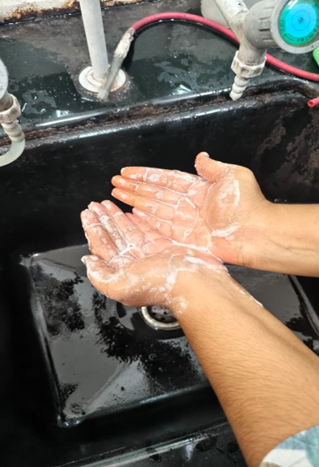
Fig.17: Washing hands with our Herbal Handwash
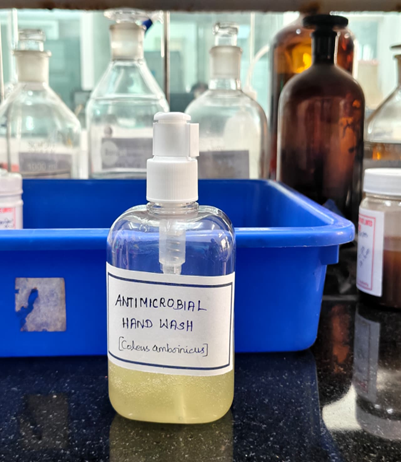
Fig.18: Final Product (Herbal Handwash)
DISCUSSION
The formulation of the herbal handwash gel utilizing aqueous and ethanolic extracts of Coleus amboinicus was aimed at harnessing both volatile oils and bioactive, non-volatile phytochemicals. The use of dual extraction solvents effectively combined fresh aromatic compounds with enriched bioactive constituents, providing a balanced therapeutic and sensory profile. The comparative evaluation of natural xanthan gum and synthetic carbomer 940 as thickeners revealed significant differences in gel texture and flow properties. Carbomer 940 facilitated a clear, free-flowing, and smooth gel, consistent with its well-documented ability to form stable, easily neutralized gels suitable for topical applications. Conversely, xanthan gum imparted a thicker, slightly sticky consistency reflective of its natural polysaccharide structure, which may influence user perception and spreadability. Physicochemical characterization affirmed product stability, appropriate pH compatible with skin, and favorable viscosity ensuring adequate spreadability during use. The herbal extracts contributed not only to the color and fragrance but also to the antimicrobial potential, as supported by previous studies attributing antibacterial, anti-inflammatory, and antioxidant properties to Coleus amboinicus. The formulated gels demonstrated promising attributes aligned with effective hand hygiene products, balancing natural formulation considerations with consumer aesthetics and performance requirements. Future work focusing on microbiological efficacy, dermatological safety, and long-term stability will be critical to establishing clinical applicability.
REFERENCES



S. Bhuvanesh, V. Dhivyadharshini, S. Gowsika, Antimicrobial Herbal Handwash Using Coleus Amboinicus (Karpooravalli) Extracts, Int. J. of Pharm. Sci., 2025, Vol 3, Issue 12, 2538-2548. https://doi.org/10.5281/zenodo.17942748
 10.5281/zenodo.17942748
