
Shri Dhaneshwari Manav Vikas Mandal’s, Dr. Vedprakash Patil Pharmacy College, Georai Tanda, Paithan Road, Chh. Sambhajinagar, India 431001
Stress has become a common challenge in today’s fast-paced lifestyle, affecting students, working individuals, and people of all age groups. Continuous exposure to stress can disturb emotional balance, reduce concentration, affect sleep, weaken immunity, and lower overall productivity. Because of these harmful effects, many people prefer natural, safe, and effective methods to manage stress. Aromatherapy is one such method that uses essential oils obtained from medicinal plants to calm the mind, relax the body, and improve overall well-being. These essential oils contain active plant compounds that influence the brain’s emotional centers, helping reduce anxiety, tension, and mental fatigue. Herbal antistress roll-on formulations are gaining popularity because they are easy to carry, simple to apply, affordable, and provide soothing effects within a short time. Commonly used essential oils such as lavender, peppermint, chamomile, lemongrass, rose, and eucalyptus have proven calming and mood-enhancing properties. Along with these, rarely used but effective oils like patchouli, vetiver, and sweet basil offer additional therapeutic benefits and give the formulation a unique, innovative touch. Scientific studies show that these essential oils work through inhalation and skin absorption pathways, helping reduce stress hormones and promoting relaxation. This review article discusses the concept of stress, mechanism of aromatherapy, commonly used and rarely used essential oils, their pharmacological actions, formulation aspects, and research studies supporting their antistress effects. The findings highlight that herbal aromatherapy roll-ons are safe, natural, and effective solutions for everyday stress management and have great potential for future development in herbal and complementary medicine.
Stress has become an unavoidable part of modern life. Whether it is due to academic pressure, work responsibilities, emotional challenges, or lifestyle habits, almost everyone experiences stress at some point. When the body is exposed to continuous stress, it triggers physical, emotional, and mental changes that can disturb normal health. People may feel tired, anxious, irritated, confused, or unable to concentrate. Long-term stress can even lead to sleep disturbances, headaches, mood swings, lowered immunity, and reduced productivity. Because of these effects, managing stress in a safe and natural way has become very important.
Aromatherapy is one of the oldest and most widely accepted natural therapies used for calming the mind and balancing emotions. It involves the use of essential oils extracted from medicinal plants, flowers, leaves, roots, and herbs. These essential oils contain natural active compounds that help relax the nervous system, improve mood, and provide a sense of peace and comfort. Aromatherapy works through two main pathways: inhalation, where pleasant aromas stimulate brain centers responsible for emotions, and topical absorption, where oils applied on the skin enter the body gently and provide soothing effects. Among different aromatherapy products, the herbal antistress roll-on is one of the most convenient and effective options. It is small, portable, easy to use, and provides instant relaxation when applied on pulse points such as the temples, wrist, or behind the ears. Essential oils like lavender, peppermint, chamomile, lemongrass, eucalyptus, and rose are commonly used because they have proven calming, refreshing, and mood-lifting properties. In addition to these, some rarely used but powerful oils such as patchouli, vetiver, and sweet basil can make the formulation more unique and effective.
Herbal antistress roll-ons are gaining popularity because they are chemical-free, non-toxic, safe, and rely on natural plant-based ingredients. They offer a holistic way to manage everyday stress without causing side effects. This makes them suitable for students, professionals, and individuals looking for a simple and natural method to feel relaxed. In pharmacy education, the formulation of aromatherapy roll-ons also helps students understand the scientific principles of essential oils, their mechanism of action, and their role in complementary medicine. This review article aims to provide a complete understanding of herbal antistress roll-ons, including their mechanism, commonly used and rare essential oils, formulation procedure, pharmacological actions, and literature support.
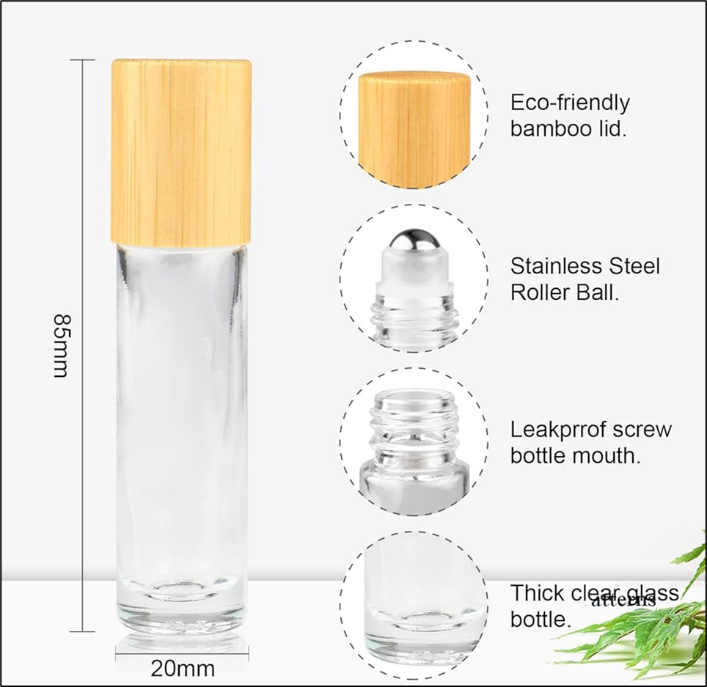
Roll-On Bottle
LITERATURE REVIEW
Stress is one of the most prevalent psychosocial problems in today’s world, affecting both mental and physical health. In recent years, herbal and aromatherapy-based therapies have gained popularity as safe and effective natural approaches for stress management. Several studies have highlighted that essential oils and adaptogenic herbs play a vital role in promoting emotional stability and relaxation.
Amitani et al. (1) reported that lavender essential oil significantly reduced anxiety levels and improved sleep quality in patients with anxiety disorders. Similarly, Liu et al. (3) found that inhalation of lavender oil resulted in mood enhancement and a reduction in anxiety among haemodialysis patients. Supporting these findings, Sayorwan et al. (9) demonstrated that lavender inhalation lowered heart rate, blood pressure, and skin temperature, producing deep relaxation and reduced autonomic nervous system activity.
Studies have also explored blended essential oils for synergistic stress-relieving effects. Hung et al. (4) observed that a combination of lavender, peppermint, and citrus oils notably decreased occupational stress among healthcare workers. Likewise, Hanc? et al. (5) concluded that a blend of lavender and peppermint oils effectively reduced pain and anxiety in patients undergoing medical procedures, proving the combined benefit of multiple essential oils.
In addition to aromatherapy, herbal adaptogens such as Withania somnifera (Ashwagandha), Bacopa monnieri (Brahmi), and Melissa officinalis (Lemon Balm) have shown powerful antistress effects. Majeed et al. (2) revealed that Ashwagandha significantly lowered cortisol levels and enhanced serotonin activity, establishing its adaptogenic potential. Kumar et al. (7) reported that Brahmi extract improved cognitive performance and reduced oxidative stress in experimental models. Similarly, Alijaniha et al. (8) found that Lemon Balm extract improved sleep quality and reduced anxiety in patients with mild to moderate anxiety disorders.
Recently, topical formulations such as herbal roll-ons have emerged as convenient and user-friendly modes of aromatherapy. Ramanathan et al. (10) documented that herbal essential oil roll-ons provided instant relaxation, improved mood, and mental clarity upon topical application on pulse points. Furthermore, DataIntelo Research Group (6) highlighted the rapid growth of the global aromatherapy market, estimated at USD 1.29 billion in 2024 with a projected annual growth rate of 8.4% up to 2033.
Overall, these findings collectively confirm that herbal and essential oil-based formulations are effective in managing stress and improving overall well-being. However, limited research exists on the combined use of herbal extracts and essential oils in roll-on formulations, signifying a need for further research and innovation in this area.
Table 1: Summary of Previous Research Studies Related to Herbal Antistress and Aromatherapy
|
Sr. No. |
Author(s) & Year |
Study Title / Focus |
Main Findings |
|
1. |
Amitani et al. (2023) |
Effects of lavender essential oil on anxiety and sleep quality in patients with anxiety disorders |
Lavender oil significantly reduced anxiety levels and improved sleep quality; showed calming and anxiolytic effects. |
|
2. |
Majeed et al. (2023) |
Clinical evaluation of Withania somnifera (Ashwagandha) in reducing stress and anxiety |
Ashwagandha extract lowered cortisol levels and improved mood and serotonin balance; confirmed adaptogenic activity. |
|
3. |
Liu et al. (2025) |
Effect of lavender oil inhalation on mood and anxiety in haemodialysis patients |
Inhalation of lavender oil reduced anxiety and improved mood in clinical subjects. |
|
4. |
Hung et al. (2023)
|
Impact of essential oil blends on occupational stress among healthcare workers |
A mixture of lavender, peppermint, and citrus oils reduced occupational stress and fatigue. |
|
5. |
Hanc? et al. (2025) |
Comparison of lavender and lavender–peppermint aromatherapy for anxiety and pain |
Combined oils reduced pain and anxiety more effectively than single oils. |
|
6. |
Kumar et al. (2022) |
Neuroprotective role of Bacopa monnieri (Brahmi) against stress-induced cognitive impairment |
Brahmi improved cognitive performance and reduced oxidative stress. |
|
7. |
Alijaniha et al. (2021)
|
Efficacy of Melissa officinalis (Lemon Balm) extract in anxiety disorders |
Lemon Balm extract improved sleep and reduced anxiety in patients with mild to moderate anxiety. |
|
8. |
Ramanathan et al. (2020) |
Evaluation of herbal essential oil roll-ons in relieving everyday stress |
Roll-ons provided instant relaxation, improved mood, and mental clarity when applied on pulse points. |
|
9. |
Sayorwan et al. (2012) |
Effects of lavender oil inhalation on autonomic nervous system and mood |
Lavender inhalation decreased heart rate and induced deep relaxation. |
|
10. |
DataIntelo Research Group (2024)
|
Global aromatherapy roll-on market analysis |
Market valued at USD 1.29 billion (2024) with 8.4% projected annual growth (2025–2033), showing rising preference for natural stress relief products. |
CONCEPT OF STRESS AND ITS MANAGEMENT:
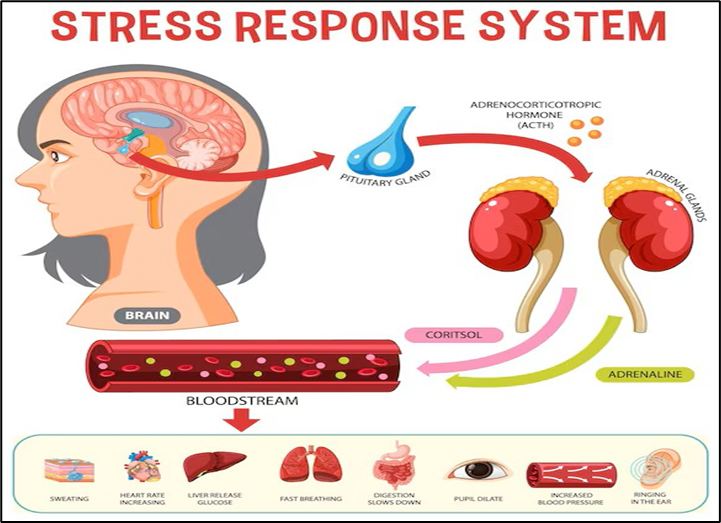
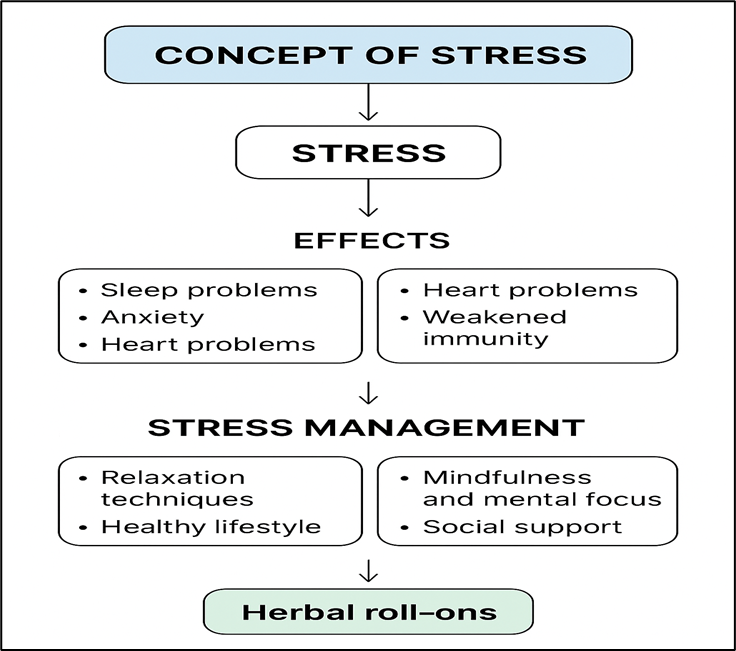
Stress is a natural response of the body when a person faces pressure, challenges, or emotional discomfort. It occurs when the brain feels that the situation is difficult to handle, which leads to the release of stress hormones like cortisol and adrenaline. These hormones make the heart beat faster, increase tension in muscles, disturb sleep, and reduce concentration. While small amounts of stress can motivate a person to work harder, continuous stress can become harmful to both physical and mental health.
Common signs of stress include tiredness, irritability, anxiety, headache, lack of focus, mood swings, and difficulty sleeping. Because stress affects daily life and overall well-being, it is important to manage it in healthy ways. Stress management means using simple techniques that help relax the mind and body. Effective methods include deep breathing, meditation, physical activity, listening to calming music, taking short breaks, and spending time with family or nature.
Natural therapies like aromatherapy are also very helpful for stress relief. Aromatherapy uses essential oils from plants to calm the nervous system and improve mood. Oils like lavender, peppermint, chamomile, and lemongrass are known for their soothing and refreshing effects. When used as a roll-on or inhaled, these oils help lower stress levels and create a feeling of relaxation. Thus, stress management becomes easier with a combination of healthy habits and natural remedies like aromatherapy.
OVERVIEW OF AROMATHERAPY:
Aromatherapy is a holistic healing practice that uses natural plant extracts, primarily essential oils, to promote physical, mental, and emotional well-being. This therapy is based on the principle that aromatic compounds can influence the human body and mind through inhalation or topical application, often targeting relaxation, stress reduction, mood enhancement, and overall health improvement.
Essential oils are concentrated extracts obtained from various parts of plants, such as flowers, leaves, bark, stems, or roots, through techniques like steam distillation, cold pressing, or solvent extraction. Each oil possesses unique therapeutic properties depending on its chemical composition. For example, lavender oil is widely recognized for its calming effects, while peppermint oil may help in improving alertness and relieving headaches.
Aromatherapy operates primarily through two mechanisms: olfactory stimulation and transdermal absorption. Inhalation of essential oils triggers the olfactory system, which directly communicates with the limbic system—a brain region responsible for emotions, memory, and stress responses. This can help in reducing anxiety, enhancing mood, and improving sleep quality. Topical application, often through massage or specially formulated products like roll-ons, allows the skin to absorb active compounds, which may provide localized relief from tension or muscle discomfort.
Recent research has highlighted the potential of aromatherapy in stress management, showing that certain essential oils can reduce cortisol levels, alleviate anxiety, and promote relaxation. This has made aromatherapy an attractive complementary therapy in clinical and wellness settings, particularly in managing daily stressors, enhancing mental clarity, and supporting emotional balance.
In the context of herbal antistress formulations, aromatherapy offers a natural and non-invasive approach to stress relief. Products such as roll-ons, diffusers, and inhalers combine convenience with targeted delivery of essential oils, making them suitable for modern lifestyles where quick, accessible stress management is increasingly valued.
COMMONLY USED ESSENTIAL OILS FOR ANTISTRESS ACTIVITY:
1. Lavender Oil (Lavandula angustifolia)
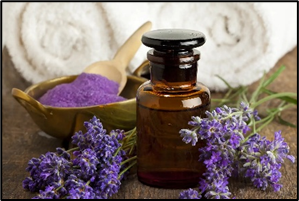
Lavender oil is one of the most widely studied essential oils for its calming and antistress effects. Diego et al. (1998) reported that inhalation of lavender aroma significantly reduced anxiety and increased relaxation in human subjects. Similarly, Koulivand et al. (2013) stated that the linalool and linalyl acetate present in lavender act on the limbic system of the brain and help produce sedative and anxiolytic effects. Because of its strong relaxation properties, lavender is commonly included in commercial antistress and sleep-enhancing formulations.
Pharmacological Actions
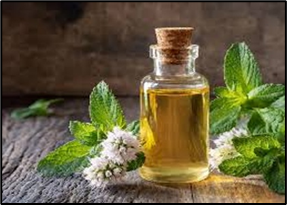
2. Peppermint Oil (Mentha piperita)
Peppermint oil is commonly used due to its refreshing, cooling, and mentally stimulating aroma. Moss et al. (2008) demonstrated that peppermint inhalation enhanced alertness, reduced mental fatigue, and improved cognitive performance. According to Göbel et al. (1994), menthol, the major active component of peppermint oil, produces muscle-relaxing and analgesic effects, helping relieve tension headaches and stress-related discomfort.
Pharmacological Actions
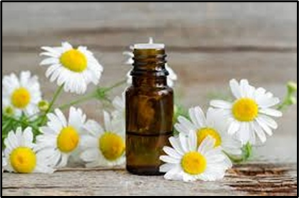
3. Chamomile Oil (Matricaria chamomilla)
Chamomile is widely recognized for its calming properties. Srivastava et al. (2010) reported that chamomile contains apigenin, a flavonoid that binds to benzodiazepine receptors in the brain, producing mild tranquilizing effects. Amsterdam et al. (2009) showed that chamomile extract reduced generalized anxiety symptoms, making it a popular ingredient in stress-relief formulations.
Pharmacological Actions
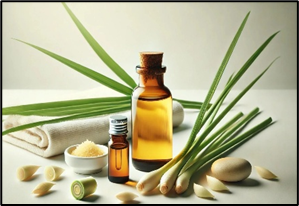
4. Lemongrass Oil (Cymbopogon citratus)
Lemongrass oil is widely used for its fresh citrus aroma and stress-relieving action. Atsumi & Tonosaki (2007) showed that inhalation of citral (the major component of lemongrass oil) helped reduce stress markers and improved mood. Shah et al. (2011) also reported that lemongrass has anxiolytic effects due to its influence on the central nervous system.
Pharmacological Actions
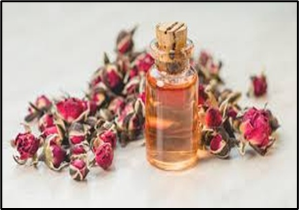
5. Rose Oil (Rosa damascena)
Rose oil is known for its relaxing and mood-enhancing aroma. Hongratanaworakit (2009) observed that topical application and inhalation of rose oil reduced breathing rate, blood pressure, and cortisol levels—indicating significant antistress action. Another study by Umezu et al. (2002) suggested that rose oil has anxiolytic effects due to its effect on serotonin pathways.
Pharmacological Actions
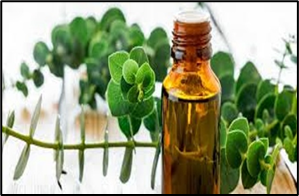
6. Eucalyptus Oil (Eucalyptus globulus)
Eucalyptus oil is commonly used for mental refreshment and respiratory ease. Saad & Muller (2014) reported that inhalation of eucalyptus oil improved alertness and reduced psychological stress. Its active compound 1,8-cineole shows anxiolytic and uplifting effects.
Pharmacological Actions
Rarely Used but Research-Supported Essential Oils:
1. Patchouli Oil (Pogostemon cablin)
Patchouli oil is not commonly used in commercial roll-ons, but it has strong scientific evidence for antistress activity. Hongratanaworakit (2004) demonstrated that inhalation of patchouli oil significantly reduced sympathetic nervous system activity and produced relaxation effects. According to Hasegawa et al. (2012), patchouli alcohol, the major constituent, exhibits sedative, anxiolytic, and mood-stabilizing properties by modulating GABAergic neurotransmission. Because of its grounding and soothing aroma, patchouli is considered an innovative yet effective choice for stress-relief formulations.
Pharmacological Actions
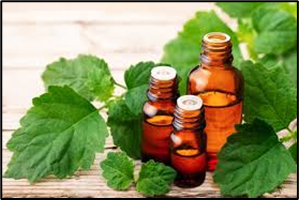
2. Vetiver Oil (Vetiveria zizanioides)
Vetiver, also called “oil of tranquility,” is rarely used but scientifically proven. Haley et al. (2008) found that inhalation of vetiver aroma increased alertness and reduced signs of stress by regulating autonomic nervous system activity. Zhang et al. (2015) reported that vetiver oil constituents (sesquiterpenes) exert anxiolytic effects similar to mild tranquilizers. Because of its deep earthy aroma, vetiver is mainly used in therapeutic aromatherapy, making it a unique addition to roll-on formulations.
Pharmacological Actions
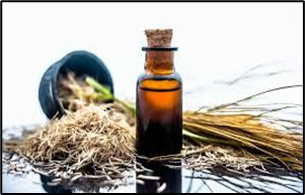
3. Sweet Basil Oil (Ocimum basilicum)
Sweet basil oil is rarely included in stress-relief roll-on products, but it has strong traditional and scientific support. Akhondzadeh et al. (2003) showed that basil essential oil exhibited significant anti-anxiety effects in experimental models. According to Joshi (2011), basil contains linalool and eugenol which reduce oxidative stress and calm the central nervous system. Its fresh herbal aroma makes it an innovative option in aromatherapy formulations.
Pharmacological Actions
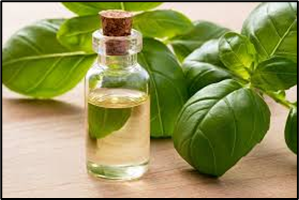
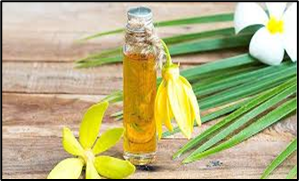
4. Ylang-Ylang Oil (Cananga odorata)
Ylang-ylang is effective but not commonly used due to its strong floral aroma. Hongratanaworakit & Buchbauer (2004) reported that ylang-ylang oil reduced blood pressure, heart rate, and stress parameters, producing calming and harmonizing effects. Another study by Setzer (2009) highlighted its role in balancing nervous system activity and enhancing emotional well-being.
Pharmacological Actions
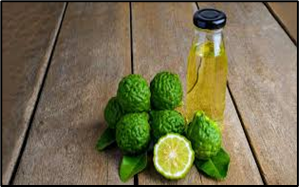
5. Bergamot Oil (Citrus bergamia)
Bergamot is clinically validated but rarely used in roll-on formulations. Watanabe et al. (2015) demonstrated that bergamot inhalation significantly reduced cortisol levels and improved psychological well-being. Saiyudthong & Mekseepralard (2015) reported that bergamot oil reduces anxiety by modulating neurotransmitters in the limbic system.
Pharmacological Actions
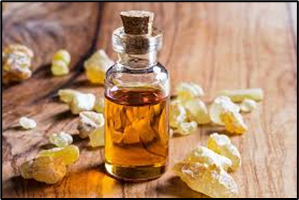
6. Frankincense Oil (Boswellia serrata)
Frankincense is well known in Ayurveda but rarely used in modern roll-ons. Sharma et al. (2013) reported that boswellic compounds provide anxiolytic and mood-stabilizing effects. Najafabadi et al. (2018) found that inhalation of frankincense enhances emotional relaxation and reduces stress-related irritability.
Pharmacological Actions
Formulation and Development of an Herbal Antistress Aromatherapy Roll-On:
Ingredients used in herbal antistress aromatherapy roll-on formulation:
|
Sr. no. |
Ingredient |
Quantity (in ml) |
Role |
|
1. |
Lavender essential oil |
0.01ml |
Calming, reduces anxiety |
|
2. |
Peppermint essential oil |
0.05ml |
Refreshing, reduces mental fatigue |
|
3. |
Chamomile essential oil |
0.05ml |
Mild sedative, relaxes mind |
|
4. |
Lemongrass essential oil |
0.05ml |
Mood uplifting, reduces stress |
|
5. |
Patchouli essential oil |
0.05ml |
Grounding, reduces nervous tension |
|
6. |
Sweet almond carrier oil |
9.0-9.2ml |
Base oil, skin-friendly |
|
7. |
Vitamin E oil |
0.1ml |
Antioxidant, improves stability |
Method of Preparation:
This method ensures a simple, safe, and reproducible formulation.
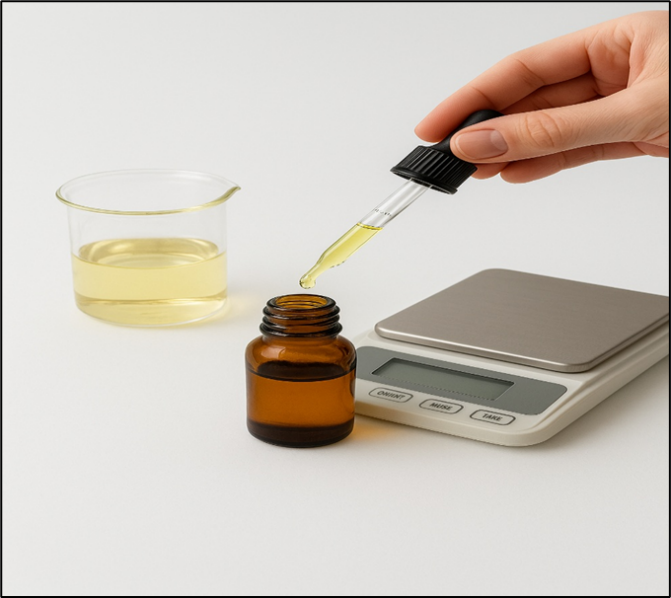
Mixing Procedure of Essential oil and Carrier Oils
Evaluation Parameters of Herbal Antistress Aromatherapy Roll-On
|
Sr. no. |
Evaluation parameter |
Test Method |
Acceptance Criteria |
Purpose/ Remarks |
|
1. |
Organoleptic properties (appearance, colour, odour) |
Visual inspection and sniff test at room temp (3 trained observers) |
Clear or pale-yellow liquid; characteristic pleasant aroma; no foreign odour |
Basic quality check and sensory acceptability |
|
2. |
pH (if aqueous phase present) |
pH meter (calibrated) on 1:10 dilution in distilled water |
pH 5.0–6.5 (skin-compatible) |
Ensures skin compatibility; adjust if product contains water |
|
3. |
Roll on Functionality Test |
Roll the bottle on skin 10 times and observe smooth movement & flow |
Ball should rotate freely; oil should come out evenly without leakage |
Ensures pack suitability & smooth application |
|
4. |
Viscosity / Flow behaviour |
Brookfield viscometer (suitable spindle) at 25 °C |
Smooth, non-runny; viscosity that ensures easy roll action (report measured cP) |
Ensures pleasant feel and dispensing performance |
|
5. |
Spreadability |
Apply 1 drop on the forearm and observe area spread in 10 seconds
|
Should spread easily and uniformly without heaviness |
Checks skin feel & ease of application |
|
6. |
Stability Test |
Store samples at room temperature and sunlight separately for 7–14 days; observe colour, odour, and separation |
No phase separation, no strong colour change, aroma remains pleasant |
Predicts short-term stability |
|
7. |
Fragrance Retention Test |
Smell formulation on Day 0, Day 7, Day 14 and compare intensity |
Aroma should remain ≥70% of original |
Confirms fragrance stability |
|
8. |
Leakage Test |
Keep roll-on bottle horizontally & upside down for 24 hours |
No leakage or wet patches around cap |
Ensures packaging quality |
|
9. |
Skin Irritation Test (Self or volunteer patch test) |
Apply small amount on inner forearm; observe for 24 hours |
No redness, itching, burning |
Ensures safety for normal skin
|
|
10. |
Photostability |
Expose to light chamber or UV for specified hrs |
No significant change in colour/odour compared to dark control |
Ensures storage instructions and packaging adequacy |
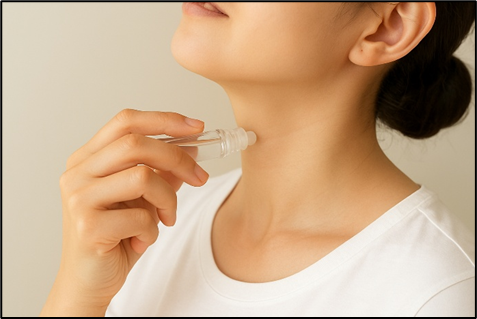
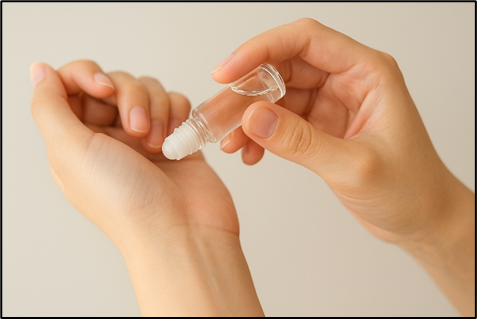
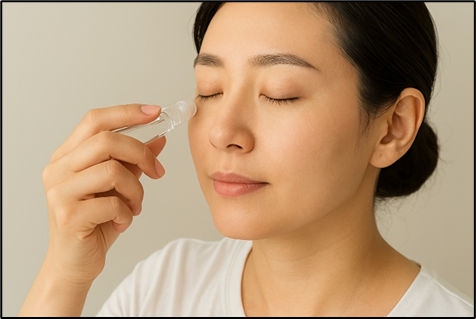
Topical Application of Herbal Antistress Roll-On
Advantages
Disadvantages
Limitations
FUTURE PROSPECTS:
There is a wide scope for improving herbal antistress roll-ons in the future. More research can focus on using advanced extraction methods to obtain purer essential oils and improving the stability of formulations through techniques like nano emulsions or microencapsulation. Standardization of essential oil quality is also important to maintain consistent therapeutic effects.
Future work can include clinical studies on larger populations to scientifically validate the stress-relief benefits. Developing personalized roll-ons based on user preference and stress levels can make the product more effective. Additionally, eco-friendly packaging and ethically sourced ingredients can enhance sustainability. Overall, further scientific research and improved formulation techniques can make herbal aromatherapy roll-ons more reliable and efficient for stress management.
REFERENCES



Samiksha Shinde, Dattatray Parihar, Sakshi Ghodke, A Review on Herbal Antistress Roll-on Formulations: An Aromatherapy Based Approach to Stress Management, Int. J. of Pharm. Sci., 2026, Vol 4, Issue 1, 1678-1691. https://doi.org/10.5281/zenodo.18273156
 10.5281/zenodo.18273156
