

We use cookies to ensure our website works properly and to personalise your experience. Cookies policy
Department of Medicinal Chemistry, Shri Pandit Baburao Chaughule College of Pharmacy, Bhiwandi 421302, Maharashtra, India
Chalcones are simple structural compounds that occur naturally and have been widely used in medicinal chemistry to develop drugs with potential therapeutic applications. This article reviews the synthesis methods, physicochemical properties, and structural variations of chalcones. It also discusses their preparation techniques and a range of biological activities, such as antibacterial, anti-inflammatory, anticancer, and antioxidant effects, with emphasis on structure–activity relationships. Chalcone derivatives continue to attract the interest of medical researchers due to their easy synthesis, simple chemical nature, ease of hydrogen modification, and diverse biological activities. Despite their significant potential as chemical precursors for developing new and effective drugs, chalcones have not yet received the level of recognition they deserve.
Chalcones are natural compounds found in many plants such as vegetables, fruits, beverages, and other plant-based sources. The term chalcone comes from the Greek word “chalcos,” which means bronze, referring to the typical color seen in most natural chalcones. These compounds are commonly present in edible plants and act as important precursors for flavonoids and isoflavonoids.Structurally, chalcones contain conjugated double bonds and a delocalized π-electron system that extends across both benzene rings. Because of this structure, such molecules usually have lower redox potential and can efficiently participate in electron transfer reactions. Several naturally occurring chalcones have been studied for their medicinal properties and have shown potential in the treatment of cancer, viral infections, and cardiovascular diseases, indicating their significant pharmacological importance.[8]
Method and Material of Chalcones
Claisen–Schmidt Condensation
Claisen–Schmidt condensation is a simple and commonly used method for preparing chalcones. In this reaction, benzaldehyde (substituted or unsubstituted) reacts with acetophenone (substituted or unsubstituted) in the presence of a base or acid catalyst(NaoH , KoH , etc ). The reaction is usually carried out in a suitable solvent at a temperature between 50°C and 100°C for a few hours .Generally, the reaction takes place in the liquid phase, but sometimes it can also occur in the solid phase, such as when the reactants are supported on resin. The reaction can also be performed under solvent-free conditions or using microwave-assisted methods, which help to reduce reaction time and increase the yield of . [3]
Scheme 1. The Claisen–Schmidt condensation.
Heck Reaction
The Heck reaction is an important method used for forming carbon–carbon bonds. In this process, unsaturated ketones react with aryl halides or aryl iodides in the presence of a palladium catalyst and a base. This reaction is generally used to prepare stilbene and chalcone derivativesSometimes, carbon monoxide is also used in the reaction, which converts it into a carbonylative Heck reaction; to form substituted chalcones. Palladium (Pd) acts as the main catalyst, while bases help in activating the reactants. Substituted chalcones and aromatic olefins can also be synthesized by reacting aryl halides or aryl triflates with styrene derivatives under similar reaction conditions[2]
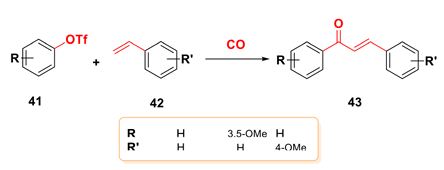
Scheme 2: Chalcone synthesis through Heck reaction
Carbonylative Heck’s Coupling Reaction (Simplified Version):
Chalcones can be prepared by reacting an aryl halide (like phenyl halide) with styrene in the presence of carbon monoxide. Palladium acts as a catalyst and helps in the carbonylative coupling reaction. [3]
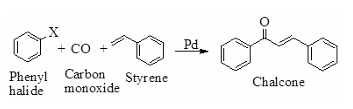
Scheme 3. Carbonylative Heck coupling reaction
Suzuki–Miyaura Coupling
The Suzuki–Miyaura coupling reaction was first introduced by Akira Suzuki in 1979. It is one of the most widely used methods for forming carbon–carbon (C–C) bonds between two different chemical fragments. This reaction is especially important for the synthesis of chalcone derivatives and other aromatic compounds.In this method, aryl halides or acyl chlorides react with aryl boronic acids in the presence of a palladium catalyst (Pd(PPh?)?), cesium carbonate (Cs?CO?)n as a base, and anhydrous toluene as a solvent under argon atmosphere. The reaction is usually carried out under reflux conditions for a few hours, resulting in moderate to high yields of the desired chalcones (Haddach and McCarthy, 1999).
This coupling is highly efficient because it joins two different organic groups to form new C–C bonds without significant by-products. However, the yield can vary depending on the type of boronic acid or halide used. Substitution patterns on the aromatic rings may also affect the reaction outcome.Formation of substituted chalcones by Suzuki–Miyaura coupling of cinnamoyl chloride with various aryl boronic acids using Pd(PPh?)? as catalyst. [1]
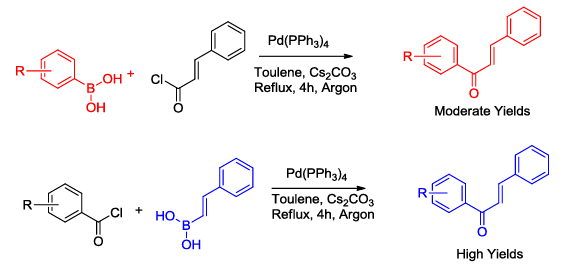
Scheme 4: Suzuki–Miyaura coupling reaction.
Suzuki Coupling
The Suzuki coupling reaction was first applied for the synthesis of chalcones by forming carbon–carbon bonds using palladium catalysts. This method proved to be one of the most efficient synthetic routes for constructing chalcone derivatives. Two main approaches for the synthesis of chalcones via Suzuki coupling involve: substituents, making it a versatile and reliable route for
1.The reaction of benzoyl chloride with phenylvinylboronic acid, and
2.The coupling of cinnamoyl chloride with phenylboronic acid, as illustrated in Scheme 5.
Additionally, an aqueous PdCl?-catalyzed cross-coupling system has been developed for the reaction of arylboronic acid with carboxylic anhydride, yielding aryl ketones. This method is highly efficient, offering short reaction times, excellent yields, and performing effectively without the need for phosphine ligands. Notably, the reaction remains unaffected by both electron-releasing and electron-withdrawing chalcone.[2]

Scheme 5: Suzuki coupling reaction.
Julia–Kocienski Olefination
Julia–Kocienski olefination this in method, chalcones are formed through a condensation reaction involving a Julia coupling reagent and aromatic aldehydes under basic conditions.
The reaction typically employs heteroaryl sulfone reagents such as sulfonyl phenylethanone, along with bases like 1,8-diazabicyclo[5.4.0]undec-7-ene (DBU) or 2-benzo[d]thiazol-2-ylsulfonyl-1-phenylethanone, which have been found to be the most effective combinations for producing chalcones. The use of less polar solvents and efficient bases plays a key role in improving reaction selectivity and yield.Overall, the Julia–Kocienski olefination provides a versatile and reliable route for the preparation of E-chalcones, which are the major products even at relatively low temperatures.[1]
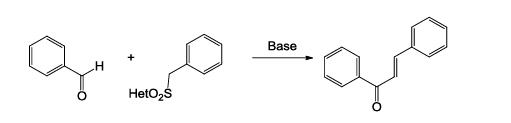
Scheme 6: Synthesis of chalcone via the Julia–Kocienski olefination reaction.
Wittig Reaction
Chalcones can also be synthesized efficiently through the Wittig olefination, utilizing the basic functional property of chalcones as α,β-unsaturated carbonyl compounds. In this reaction, chalcones are obtained by the condensation of triphenylbenzoylmethylenephosphorane with benzaldehyde in THF over 30 hours under reflux conditions, or alternatively, in benzene over 3 days, producing moderate yields .Later, Xu et al. (1995) introduced a microwave-assisted Wittig olefination method, which remarkably shortened the reaction time to just 5–6 minutes while significantly improving the yields. This innovative approach not only minimizes reaction duration but also enhances product formation efficiency, making it an excellent method for the rapid synthesis of chalcones.[1]

Scheme 7: Synthesis of chalcones via the Wittig reaction.
Solid Acid Catalyst-Mediated Reaction
Chalcones can be efficiently synthesized using a solid acid catalyst, which is heterogeneous in nature. This method involves the condensation of aromatic aldehydes (such as benzaldehyde) with ethylbenzene in ethylene dichloride solvent under microwave irradiation. The reaction proceeds smoothly using ion-exchange resins, such as Amberlyst-15, which serve as effective solid acid catalysts.This environmentally friendly approach offers advantages like shorter reaction times, high product yields, and easy catalyst recovery, making it a sustainable and practical method for chalcone synthesis.[3]
BIOLOGICAL ACTIVITY OF CHALCONE
Antimalarial Activity of Chalcones:
Malaria, caused by Plasmodium species such as P. falciparum and P. knowlesi, remains a major global health concern due to increasing drug resistance. Traditional antimalarials like chloroquine and artemisinin are becoming less effective against resistant strains. This has led to the search for novel therapeutic agents, including natural and synthetic compounds. Chalcones, a class of α,β-unsaturated ketones, have emerged as promising candidates for antimalarial drug development due to their versatile chemical structure and biological activity.Chalcones consist of two aromatic rings linked by an α,β-unsaturated carbonyl system. The conjugated double bond acts as a Michael acceptor, facilitating electron transfer reactions that are essential for biological activity. Substituents on the aromatic rings significantly influence pharmacological activity, including antimalarial efficacy. Secondary amine substitutions, electron-withdrawing groups, and heteroaryl rings have been shown to enhance antiplasmodial activity.[10,11]
Antioxidant Activity of Chalcones
Different studis have reported that antioxidants exhibit multiple pharmacological properties, including free radical scavenging and protection against oxidative stress.”The synthesized coumarin–chalcone compounds contained hydroxyl (-OH) and methoxy (-OCH?) groups on the aromatic ring, which act as electron-donating groups. Antioxidant activity was tested by the DPPH free radical scavenging method at 100 µg/mL using ascorbic acid and BHT as standards. Compounds 5, 14, 22, and 26 showed strong activity (66–78 %), with compound 22 giving the best result (77.9 %), proving that –OH and –OCH? groups increase radical-scavenging ability.[4]Different hydroxy- and methoxy-substituted chalcones were evaluated by the DPPH assay and β-carotene–linoleic acid method. Compounds containing 2-OH, 3-OCH?, and 3,4,5-trimethoxy groups gave the highest antioxidant effect (up to 78 %). These groups donate hydrogen atoms and stabilize free radicals through resonance, confirming that electron-releasing substituents improve antioxidant power.[5] Coumarin–chalcone hybrid derivatives with –OH and –OCH? functional groups were synthesized and tested using the FRAP (Ferric Reducing Antioxidant Power) and DPPH methods. The presence of these electron-donating groups enhanced both free-radical scavenging and metal-ion chelation, showing that such hybrids act as strong multifunctional antioxidants.[6]For application in biofuels, hydroxychalcone derivatives containing phenolic -OH groups were used as antioxidant additives to improve biodiesel stability. Their efficiency was tested by oxidation-stability (Rancimat) method. The compounds interrupted oxidative chain reactions and decomposed peroxides, with one derivative showing the highest stabilization effect, making chalcones excellent eco-friendly fuel antioxidants.[7]
Antiviral Activity of Chalcone
Tobacco mosaic virus (TMV) is the first identified virus and is composed of single-stranded RNA enclosed within a capsid protein forming a rod-like shape. TMV infects over 400 plant species, including tobacco, tomato, pepper, cucumber, and potato, causing serious agricultural losses. Infected plants show symptoms such as stunted growth, leaf defoliation, and reduced yield, leading to economic losses of up to $100 million annually. Although ningnanmycin is a commonly used antiviral agent, its effectiveness remains below 60% at 500 µg/mL. Existing antiviral strategies generally focus on inhibiting viral infection, limiting viral spread, or inducing host resistance. Therefore, there is a growing need to develop new eco-friendly antiviral compounds with simple structures, high efficiency, and novel mechanisms of action to effectively control TMV.Natural products have gained attention in pesticide and pharmaceutical research due to their biocompatibility, structural diversity, and unique mechanisms of action. Exploring natural sources for lead compounds is an important approach for developing eco-friendly or "green" pesticides. Among these, chalcones, a class of naturally occurring flavonoids, have shown diverse biological activities, including antiviral, antibacterial, insecticidal, herbicidal, antitumor, and antioxidant effects.Similarly, nitrogen-containing heterocyclic compounds such as pyrimidines and purines possess ssess structural similarity to natural alkaloids and exhibit good environmental compatibility. Pyrimidine derivatives have been widely used in agriculture and medicine as insecticides, herbicides, fungicides, and antimicrobial agents. Commercial examples include azoxystrobin, pyrimidifen, and flazasulfuron. Recent studies highlight pyrimidine-based compounds as promising candidates for developing new antiviral agents against plant viruses. Therefore, the synthesis of chalcone-pyrimidine derivatives represents a potential strategy for discovering novel and efficient ant drugs.[9]
CONCLUSION
Chalcones represent an important class of bioactive compounds in medicinal chemistry due to their simple structure and wide range of pharmacological properties. In the present review, the synthesis of chalcone derivatives, mainly through the Claisen–Schmidt condensation reaction, and their significant biological activities have been discussed. Several studies reported that chalcone derivatives exhibit promising antimalarial activity by inhibiting the growth of Plasmodium species, highlighting their potential as leads for new antimalarial agents. Additionally, chalcones have shown strong antioxidant activity by scavenging free radicals and reducing oxidative stress, which plays a key role in many diseases. Furthermore, various chalcone analogues demonstrated notable antiviral activity against different viral strains, indicating their ability to interfere with viral replication. Overall, the diverse biological activities, easy synthesis, and scope for structural modification make chalcones valuable candidates for further drug development. Future research focusing on structure–activity relationship studies and in-vivo evaluation may lead to the development of effective and safer therapeutic agents based on the chalcone scaffold.
ACKNOWLEDGEMENT
The authors acknowledge the support and guidance of the faculty members of the Department of Pharmacy during the preparation of this review article. The authors also acknowledge the use of various academic journals, databases, and published literature that contributed to the successful completion of this work.
REFERENCES

Sabiya Shaikh, Pragati Patil, Dakshata Patil,Sakshi patil, Sweta Patel, Tabrez pathan, Chalcones: A Review on Multiple pharmacological activities. , Int. J. of Pharm. Sci., 2026, Vol 4, Issue 2, 1465-1472. https://doi.org/10.5281/zenodo.18584509
 10.5281/zenodo.18584509