

We use cookies to ensure our website works properly and to personalise your experience. Cookies policy
1Department Pharmaceutics Bhagwant Global University.
2Bhagwant Institute of Pharmacy
The persistent rise in diabetes mellitus worldwide has intensified interest in medicinal plants as alternative or complementary therapeutic agents. Strychnos potatorum Linn., a well-recognized plant in traditional Indian medicine, has historically been used for ocular ailments and detoxification purposes. Recent scientific investigations have expanded its relevance to metabolic disorders, particularly diabetes mellitus. This review critically examines the antidiabetic potential of Strychnos potatorum with reference to its phytochemical composition, pharmacological actions, and underlying mechanisms. The role of oxidative stress, inflammation, and insulin resistance in diabetes progression is discussed in relation to the bioactivity of the plant. In addition, the importance of modern drug delivery strategies, especially ophthalmic in situ gel systems, is highlighted for managing diabetes-associated ocular complications. The review aims to provide a scientifically grounded and original perspective on the therapeutic relevance of Strychnos potatorum in diabetes management.
Diabetes mellitus is a chronic metabolic disorder characterized by persistent hyperglycemia resulting from impaired insulin secretion, altered insulin action, or a combination of both. The condition represents a major global health concern due to its rapidly increasing prevalence and its association with serious long-term complications, including cardiovascular disease, nephropathy, neuropathy, and ocular disorders. Despite the availability of several synthetic antidiabetic agents, effective long-term management remains challenging because of adverse effects, limited patient compliance, and progressive loss of therapeutic response.
In recent years, growing interest has been directed toward medicinal plants as alternative or complementary therapeutic options for diabetes management. Plant-based drugs are often valued for their multitargeted mechanisms of action, biochemical diversity, and comparatively favorable safety profiles. Traditional systems of medicine, particularly Ayurveda, have documented numerous plants with antidiabetic potential, many of which are now being scientifically evaluated to validate their therapeutic claims.
Strychnos potatorum Linn., a member of the family Loganiaceae, is a medicinal plant widely used in traditional Indian medicine. The plant is commonly known for its seeds, which have been traditionally employed for water purification and treatment of ocular disorders. In addition to its ophthalmic relevance, Strychnos potatorum has been reported to exhibit several pharmacological activities, including antioxidant, anti-inflammatory, and metabolic regulatory effects. Emerging experimental studies suggest that the plant possesses significant antidiabetic activity, making it a promising candidate for further pharmaceutical investigation.
Oxidative stress and chronic inflammation play critical roles in the pathogenesis and progression of diabetes mellitus and its complications. Bioactive phytoconstituents present in Strychnos potatorum, such as flavonoids and phenolic compounds, are known to modulate oxidative pathways and improve glucose metabolism. These properties support the potential role of the plant in restoring metabolic balance and protecting against diabetes-induced tissue damage.
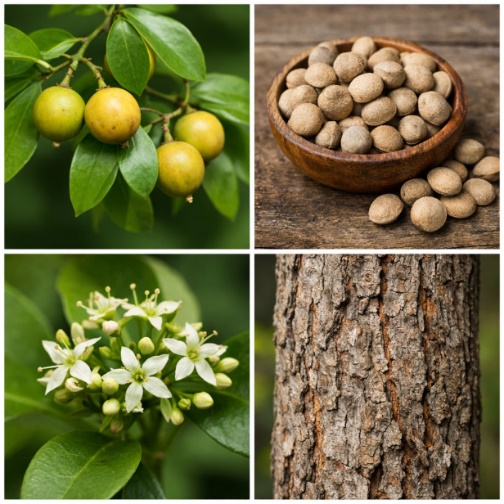
Fig1 Strychnos potatorum Linn.
Strychnos potatorum Linn. is a medium-sized deciduous tree belonging to the family Loganiaceae. The plant typically attains a height of 10–15 meters and is characterized by a straight trunk with a grey to brown rough bark. The branches are spreading, forming a moderately dense crown. Young parts of the plant are generally glabrous, while mature structures exhibit a firm and woody texture.The leaves are simple, opposite, and elliptic to ovate in shape, with entire margins and a smooth surface. They possess a leathery texture and prominent venation, contributing to their durability in dry climatic conditions. The flowers are small, greenish-white, and arranged in axillary or terminal cymes. Flowering is usually followed by the development of globose berries containing one to two seeds.The seeds of Strychnos potatorum are the most pharmacologically significant part of the plant. They are small, flat, discoid, and covered with fine silky hairs, giving them a characteristic appearance. These seeds have been traditionally used for medicinal purposes, particularly in ophthalmic applications and water purification.Geographically, Strychnos potatorum is widely distributed across the Indian subcontinent and neighboring regions of South Asia. It is commonly found in dry deciduous forests, scrublands, and plains, thriving in well-drained soils and semi-arid climates. In India, the plant is predominantly observed in states such as Andhra Pradesh, Tamil Nadu, Karnataka, Maharashtra, Madhya Pradesh, and parts of Uttar Pradesh.The plant’s adaptability to varied environmental conditions has contributed to its widespread availability and extensive use in traditional medicine. Its natural distribution in regions with long-standing ethnomedical practices further supports its relevance as a medicinal resource. The consistent availability of Strychnos potatorum across diverse geographical zones facilitates its continued exploration for therapeutic and pharmaceutical applications.
3. Phytochemical Composition
The therapeutic potential of Strychnos potatorum Linn. is closely associated with its rich and diverse phytochemical profile. Phytochemical investigations of different parts of the plant, particularly the seeds and bark, have revealed the presence of several bioactive secondary metabolites that contribute to its pharmacological activities, including antidiabetic effects.
Preliminary qualitative and quantitative studies indicate that Strychnos potatorum contains alkaloids, flavonoids, phenolic compounds, tannins, saponins, and glycosides. These classes of compounds are widely recognized for their role in regulating glucose metabolism, reducing oxidative stress, and modulating inflammatory pathways. The presence of multiple bioactive constituents suggests that the antidiabetic activity of the plant is likely mediated through synergistic mechanisms rather than the action of a single compound.
Flavonoids and phenolic compounds are particularly important due to their antioxidant properties, which help counteract oxidative stress associated with chronic hyperglycemia. Alkaloids and saponins have been reported to influence insulin secretion and glucose uptake, while tannins may contribute to the inhibition of carbohydrate-digesting enzymes in the gastrointestinal tract. Together, these phytochemicals support the metabolic regulatory effects observed in experimental studies of Strychnos potatorum.
The variability in phytochemical composition may depend on factors such as geographical location, climatic conditions, plant part used, and extraction method. Therefore, standardization of extracts is essential to ensure reproducible therapeutic outcomes in pharmaceutical applications.
Table 1: Major Phytochemical Constituents of Strychnos potatorum Linn. and Their Pharmacological Relevance
|
Phytochemical Class |
Plant Part Reported |
Representative Role in Antidiabetic Activity |
|
Alkaloids |
Seeds, bark |
Enhancement of insulin secretion; modulation of glucose metabolism |
|
Flavonoids |
Seeds, leaves |
Antioxidant activity; improvement of insulin sensitivity |
|
Phenolic compounds |
Seeds, bark |
Free radical scavenging; protection of pancreatic β-cells |
|
Tannins |
Seeds |
Inhibition of carbohydrate-digesting enzymes; reduction of postprandial glucose |
|
Saponins |
Seeds |
Improvement of glucose uptake; lipid-lowering effects |
|
Glycosides |
Bark, seeds |
Regulation of metabolic pathways; supportive hypoglycemic action |
4. Traditional and Ethnomedicinal Significance
Strychnos potatorum Linn. has a long history of use in traditional systems of medicine, particularly Ayurveda, Siddha, and regional folk practices of the Indian subcontinent. The plant has been valued not only for its therapeutic properties but also for its practical applications, most notably in water purification, which reflects its historical importance in community health and hygiene.
In classical Ayurvedic literature, the seeds of Strychnos potatorum are described as cooling, astringent, and detoxifying in nature. They have traditionally been used to manage disorders related to excessive thirst, urinary disturbances, and fatigue—symptoms that are commonly associated with metabolic imbalances such as diabetes mellitus. The use of the plant in regulating body fluids and thirst provides ethnomedical support for its antidiabetic relevance.The ophthalmic significance of Strychnos potatorum is well documented in traditional practice. Seed extracts and aqueous preparations have been applied in the treatment of eye inflammation, conjunctival irritation, and visual discomfort. These traditional applications are particularly relevant in the context of diabetes, where ocular complications such as dryness, inflammation, and retinopathy are prevalent.In addition to its metabolic and ophthalmic uses, the plant has been employed in the management of gastrointestinal disorders, including diarrhea and dysentery, owing to its astringent and antimicrobial properties. Traditional healers have also utilized bark and seed preparations for wound healing and inflammatory conditions, suggesting broader systemic benefits.Ethnomedicinal knowledge indicates that Strychnos potatorum is often administered in the form of decoctions, powders, or aqueous extracts. These preparations are typically used at low doses, reflecting empirical understanding of safety and efficacy. The consistent use of the plant across different regions and generations highlights its perceived therapeutic value and cultural acceptance.
The traditional and ethnomedicinal applications of Strychnos potatorum have provided a strong foundation for modern scientific investigations. Contemporary pharmacological studies exploring its antidiabetic, antioxidant, and anti-inflammatory properties appear to validate many of these traditional claims. Thus, ethnomedicinal knowledge serves as a valuable guide in the rational development of Strychnos potatorum–based pharmaceutical formulations.
5. Experimental Evidence of Antidiabetic Activity
The antidiabetic activity of Strychnos potatorum Linn. has been primarily evaluated through controlled preclinical investigations using established experimental models of diabetes mellitus. These studies provide important scientific validation for its traditional use in metabolic disorders. Most experimental work has employed chemically induced diabetic models, such as streptozotocin- and alloxan-induced diabetes in laboratory animals, which mimic impaired insulin secretion and hyperglycemia observed in human diabetes.Administration of Strychnos potatorum seed or bark extracts to diabetic animals has resulted in a marked reduction in fasting blood glucose levels compared to untreated diabetic controls. The glucose-lowering effect has generally been dose-dependent, indicating pharmacological consistency and therapeutic relevance. In addition to basal glycemic control, treated animals demonstrated improved oral glucoseSeveral studies have also reported restoration of altered biochemical parameters associated with diabetes. Treatment with Strychnos potatorum extracts improved serum insulin levels and increased hepatic and muscular glycogen content, reflecting better glucose utilization and storage. These effects suggest a possible improvement in insulin sensitivity and pancreatic β-cell function.Histopathological evaluations further support the antidiabetic potential of Strychnos potatorum. Pancreatic tissue from treated animals showed reduced β-cell degeneration and partial preservation of islet architecture when compared with diabetic controls. Such findings indicate a protective role against diabetes-induced pancreatic damage, likely mediated through antioxidant and anti-inflammatory mechanisms.In addition to glycemic control, improvement in lipid abnormalities has been observed. Treated diabetic animals exhibited reduced serum cholesterol and triglyceride levels, highlighting the plant’s ability to address diabetes-associated dyslipidemia and reduce cardiometabolic risk.Although current evidence is largely limited to animal studies, the consistency of findings across different experimental designs supports the therapeutic potential of Strychnos potatorum as an antidiabetic agent. These experimental outcomes provide a strong foundation for future clinical investigations.
Table 2: Summary of Experimental Studies Demonstrating Antidiabetic Activity of Strychnos potatorum Linn.
|
Experimental Model |
Plant Part / Extract Used |
Key Observations |
Pharmacological Implications |
|
Streptozotocin-induced diabetic rats |
Seed extract |
Significant reduction in fasting blood glucose |
Hypoglycemic activity |
|
Alloxan-induced diabetic rats |
Seed and bark extracts |
Improved glucose tolerance and insulin levels |
Enhanced insulin function |
|
Chronic diabetic animal model |
Seed extract |
Restoration of hepatic glycogen content |
Improved glucose utilization |
|
Diabetic rats (histopathology study) |
Seed extract |
Preservation of pancreatic β-cell structure |
Pancreatic protective effect |
|
Diabetic dyslipidemia model |
Seed extract |
Decrease in serum cholesterol and triglycerides |
Lipid-lowering and cardioprotective effect |
6. Mechanism of Antidiabetic Action
The antidiabetic activity of Strychnos potatorum Linn. is attributed to its ability to modulate multiple biological pathways involved in glucose homeostasis. Unlike conventional antidiabetic agents that often act through a single mechanism, plant-derived therapeutics generally exert multitargeted effects. Experimental evidence suggests that Strychnos potatorum influences glucose metabolism through a combination of insulin-dependent and insulin-independent pathways.One of the primary mechanisms involves the enhancement of insulin secretion and preservation of pancreatic β-cell integrity. Chronic hyperglycemia induces oxidative stress, leading to β-cell dysfunction and apoptosis. Bioactive constituents present in Strychnos potatorum, particularly phenolic compounds and flavonoids, exhibit strong antioxidant activity, which may protect pancreatic tissue from oxidative damage and support residual insulin secretion.
Improvement in peripheral insulin sensitivity represents another important mechanism. Extracts of Strychnos potatorum have been shown to enhance glucose uptake in peripheral tissues such as skeletal muscle and adipose tissue. This effect may be mediated through modulation of insulin signaling pathways and increased translocation of glucose transporters, thereby promoting efficient cellular glucose utilization.Inhibition of carbohydrate digestion and absorption is also proposed as a contributory mechanism. Tannins and related polyphenolic compounds present in the plant may inhibit key digestive enzymes involved in carbohydrate breakdown, leading to reduced postprandial glucose spikes. This mechanism is particularly beneficial in controlling post-meal hyperglycemia.Additionally, Strychnos potatorum exhibits anti-inflammatory activity, which plays a supportive role in improving insulin action. Chronic low-grade inflammation interferes with insulin signaling and contributes to insulin resistance. By modulating inflammatory mediators, the plant may help restore metabolic balance and improve glucose regulation.
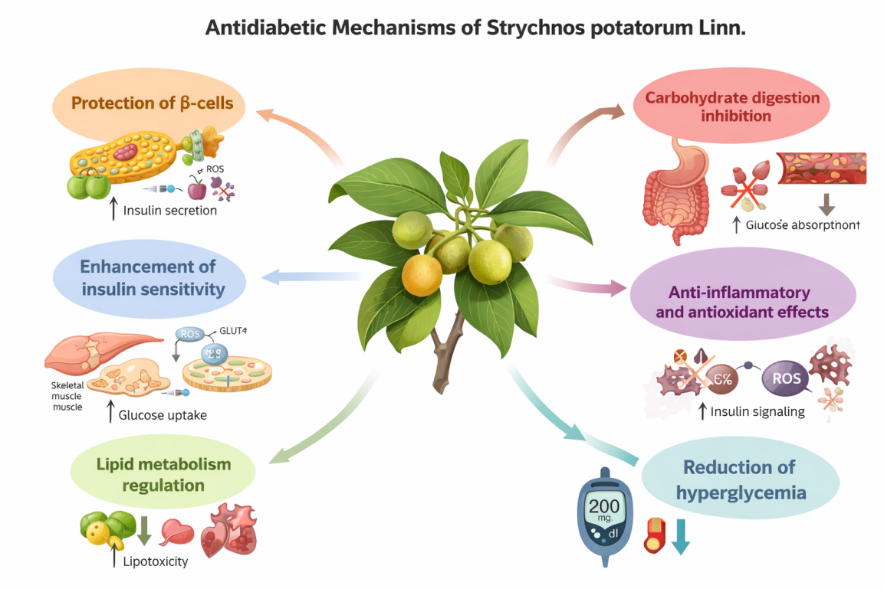
Fig2 Mechanism of Antidiabetic Action
The lipid-lowering effects observed in experimental studies further contribute to improved glycemic control. Reduction in circulating lipids decreases lipotoxicity, which is known to impair insulin sensitivity. Thus, the combined influence on glucose, lipid metabolism, oxidative stress, and inflammation highlights the comprehensive antidiabetic mechanism of Strychnos potatorum.
Table 3: Proposed Mechanisms Underlying the Antidiabetic Activity of Strychnos potatorum Linn.
|
Mechanistic Pathway |
Contributing Phytochemicals |
Biological Effect |
Therapeutic Outcome |
|
Protection of pancreatic β-cells |
Flavonoids, phenolic compounds |
Reduction of oxidative damage |
Improved insulin secretion |
|
Enhancement of insulin sensitivity |
Alkaloids, flavonoids |
Increased peripheral glucose uptake |
Lower fasting blood glucose |
|
Inhibition of carbohydrate digestion |
Tannins, polyphenols |
Reduced glucose absorption |
Control of postprandial hyperglycemia |
|
Antioxidant defense |
Phenolics, flavonoids |
Scavenging of reactive oxygen species |
Prevention of diabetic complications |
|
Anti-inflammatory modulation |
Saponins, phenolic compounds |
Suppression of inflammatory mediators |
Improved insulin signaling |
|
Regulation of lipid metabolism |
Saponins, alkaloids |
Reduction in serum lipids |
Improved metabolic profile |
7. Antioxidant Role in Diabetes
Oxidative stress is a critical factor in the onset and progression of diabetes mellitus and its associated complications. Persistent hyperglycemia leads to excessive generation of reactive oxygen species (ROS), which overwhelm endogenous antioxidant defense systems and result in cellular and tissue damage. This oxidative imbalance contributes to insulin resistance, pancreatic β-cell dysfunction, and the development of long-term diabetic complications such as neuropathy, nephropathy, and retinopathy.
Strychnos potatorum Linn. has demonstrated significant antioxidant potential, which plays a supportive and protective role in diabetes management. Experimental studies have shown that extracts of the plant effectively scavenge free radicals and inhibit lipid peroxidation, thereby reducing oxidative damage at the cellular level. The antioxidant activity is largely attributed to the presence of phenolic compounds and flavonoids, which are known for their redox-modulating properties.In diabetic conditions, oxidative stress damages pancreatic β-cells due to their relatively low intrinsic antioxidant capacity. By reducing oxidative burden, Strychnos potatorum may help preserve β-cell integrity and function, indirectly supporting insulin secretion. This protective effect contributes to improved glycemic control observed in experimental studies.Antioxidant activity also plays a crucial role in improving insulin sensitivity in peripheral tissues. Reactive oxygen species interfere with insulin signaling pathways, leading to impaired glucose uptake. By neutralizing excess ROS, Strychnos potatorum may restore insulin signaling efficiency and enhance glucose utilization in skeletal muscle and adipose tissue.Furthermore, oxidative stress is a major contributor to diabetes-associated ocular complications. The traditional ophthalmic use of Strychnos potatorum, combined with its antioxidant properties, supports its potential role in protecting ocular tissues from hyperglycemia-induced oxidative damage. This rationale strengthens the relevance of incorporating the plant into ophthalmic in situ gel formulations for localized antioxidant therapy.
8. Ophthalmic In Situ Gel: Formulation and Characterization
Ophthalmic drug delivery presents unique challenges due to rapid tear turnover, nasolacrimal drainage, and limited corneal permeability, which collectively reduce ocular bioavailability. Conventional eye drops often require frequent administration and may result in poor patient compliance. In situ gel systems have emerged as an effective alternative by offering prolonged ocular residence time and sustained drug release following instillation.In situ gels are liquid formulations that undergo a sol–gel transition upon exposure to physiological conditions such as pH, temperature, or ionic strength. For ophthalmic applications, pH- and ion-activated systems are particularly advantageous, as they remain in liquid form during administration and rapidly convert into a gel in the cul-de-sac of the eye. This transformation enhances precorneal retention and minimizes drug loss.The incorporation of Strychnos potatorum Linn. extract into an ophthalmic in situ gel system is pharmacologically justified by the plant’s traditional ophthalmic use and its antioxidant and antidiabetic properties. Such a formulation may be particularly beneficial in managing diabetes-associated ocular complications, where sustained local delivery of bioactive compounds is desirable.
8.1 Formulation Considerations
Selection of appropriate polymers is critical for successful in situ gel formulation. Commonly used polymers include sodium alginate, gellan gum, carbopol, and hydroxypropyl methylcellulose (HPMC), which provide gelation capability, viscosity control, and ocular compatibility. The concentration of polymers is optimized to ensure rapid gelation without compromising clarity or comfort.
The formulation must maintain suitable physicochemical properties, including optimal pH, isotonicity, and viscosity, to ensure ocular safety and patient acceptability. The herbal extract should be uniformly dispersed within the formulation to achieve consistent drug delivery.
8.2 Characterization Parameters
Comprehensive characterization is essential to ensure the quality, stability, and performance of ophthalmic in situ gels. Key evaluation parameters include appearance, pH, gelling capacity, viscosity, drug content uniformity, in vitro drug release, and sterility.The pH of the formulation should be close to physiological tear pH to minimize irritation. Gelling capacity is assessed by evaluating the speed and strength of gel formation under simulated ocular conditions. Viscosity measurements before and after gelation provide insight into ease of administration and retention behavior. In vitro drug release studies help predict sustained release performance, which is critical for prolonged therapeutic action.
Sterility testing is mandatory for ophthalmic formulations to ensure patient safety, while stability studies assess the formulation’s integrity over time under different storage conditions.
Table 5: Key Formulation and Characterization Parameters of Ophthalmic In Situ Gel of Strychnos potatorum Linn.
|
Parameter |
Purpose |
Desired Characteristics |
|
Appearance and clarity |
Visual acceptability |
Clear, particulate-free solution |
|
pH |
Ocular compatibility |
Near physiological tear pH |
|
Gelling capacity |
Evaluation of sol–gel transition |
Rapid gel formation with sustained consistency |
|
Viscosity (sol state) |
Ease of instillation |
Low viscosity for drop administration |
|
Viscosity (gel state) |
Ocular retention |
Increased viscosity after gelation |
|
Drug content uniformity |
Dose consistency |
Uniform distribution of extract |
|
In vitro drug release |
Release behavior |
Sustained and controlled release |
|
Sterility |
Patient safety |
Absence of microbial contamination |
|
Stability studies |
Shelf-life assessment |
No significant change in properties |
9. Safety and Toxicological Evaluation
Safety assessment is an essential component of developing herbal formulations, particularly when they are intended for chronic use or sensitive routes of administration such as the eye. While traditional use provides preliminary reassurance regarding the safety of Strychnos potatorum Linn., systematic toxicological evaluation is required to establish its risk profile under controlled conditions. The toxicological assessment typically includes acute, sub-acute, and chronic studies, along with specific evaluations for ophthalmic safety.
9.1 Acute and Sub-acute Toxicity
Acute toxicity studies involve administering a single high dose of the plant extract to experimental animals and monitoring for signs of toxicity, mortality, and behavioral changes over a defined period. Existing preclinical data suggest that Strychnos potatorum extracts are generally well tolerated at therapeutic dose levels, with no significant mortality or severe adverse effects observed in most studies. Sub-acute studies, which involve repeated dosing over a period of weeks, provide insight into potential organ-specific toxicity and systemic effects. These studies commonly include evaluation of body weight, food intake, hematological parameters, and biochemical markers of liver and kidney function.
9.2 Chronic Toxicity and Safety Concerns
Chronic toxicity studies are essential to determine long-term safety, particularly for antidiabetic agents that may be used continuously. These studies assess potential cumulative toxicity, carcinogenicity, and reproductive effects. Although data on long-term toxicity of Strychnos potatorum are limited, the available evidence suggests a favorable safety profile. However, comprehensive chronic toxicity evaluations are needed to confirm safety for prolonged clinical use.
9.3 Ophthalmic Safety Evaluation
Ophthalmic formulations require specific safety testing due to the sensitivity of ocular tissues. Evaluation includes irritation testing, corneal compatibility, and assessment of changes in intraocular pressure or tear production. In situ gel formulations must be non-irritant, sterile, and free from particulate matter to prevent discomfort or ocular damage. The choice of polymers and excipients should ensure ocular tolerance and avoid adverse reactions such as redness, burning, or blurred vision.
9.4 Safety Considerations in Herbal Drug Development
Herbal extracts may vary in composition depending on geographic origin, harvesting time, and extraction method. Standardization of extract and control of potential contaminants such as heavy metals, pesticides, and microbial load are important safety considerations. Additionally, interactions with conventional antidiabetic medications should be evaluated, as synergistic or adverse interactions may occur.Overall, while traditional use and preliminary studies indicate that Strychnos potatorum is relatively safe, systematic toxicological studies and clinical evaluation are necessary to ensure its safety and reliability as an antidiabetic agent and as an ophthalmic formulation.
Table 6: Safety and Toxicological Parameters for Strychnos potatorum and Ophthalmic In Situ Gel
|
Safety Parameter |
Evaluation Method |
Expected Outcome |
Relevance |
|
Acute toxicity |
Single high-dose study |
No mortality or severe toxicity |
Establishes initial safety |
|
Sub-acute toxicity |
Repeated dosing for 14–28 days |
No significant organ damage |
Indicates short-term safety |
|
Chronic toxicity |
Long-term dosing study |
No cumulative toxicity |
Validates long-term use |
|
Hematological profile |
CBC and blood indices |
Normal values |
Indicates systemic safety |
|
Biochemical markers |
Liver and kidney function tests |
Within normal range |
Detects organ toxicity |
|
Ophthalmic irritation |
Draize test or similar |
No redness or swelling |
Ensures ocular compatibility |
|
Sterility |
Microbial limit test |
Absence of contamination |
Prevents infection risk |
|
Heavy metal screening |
ICP-MS or equivalent |
Within permissible limits |
Ensures extract purity |
CONCLUSION
Strychnos potatorum Linn. demonstrates significant potential as a natural antidiabetic agent, supported by both traditional knowledge and experimental evidence. The plant’s diverse phytochemical profile, particularly its flavonoids, phenolic compounds, alkaloids, and tannins, provides a strong biochemical basis for its therapeutic effects. These bioactive constituents collectively contribute to glucose regulation through multiple mechanisms, including enhancement of insulin secretion, improvement in peripheral glucose uptake, inhibition of carbohydrate digestion, and protection of pancreatic β-cells.Antioxidant activity emerges as a key factor in the antidiabetic action of Strychnos potatorum, as oxidative stress plays a central role in the progression of diabetes and its complications. By reducing oxidative damage and modulating inflammatory pathways, the plant may help preserve pancreatic function and improve insulin sensitivity. Additionally, its traditional use in ophthalmic applications supports the rationale for developing targeted ocular formulations to address diabetes-associated eye complications.The concept of incorporating Strychnos potatorum extract into an ophthalmic in situ gel represents a promising intersection between traditional herbal medicine and modern drug delivery technology. Such a formulation can potentially provide sustained drug release, prolonged ocular retention, and improved patient compliance. However, comprehensive safety and toxicological evaluations, along with clinical studies, are essential to confirm its efficacy and long-term safety.In conclusion, Strychnos potatorum offers a valuable natural resource for antidiabetic therapy, particularly when integrated with advanced formulation approaches. Future research should focus on standardization of extracts, isolation of active compounds, mechanistic validation, and clinical trials to establish its role in evidence-based diabetes management.
REFERENCES


Lalit verma*1, Dr. Sachin2 Development and Characterization of Ophthalmic in Situ Gel of Strychnos potatorum Linn.: A Review of Its Antidiabetic Activity, Int. J. of Pharm. Sci., 2026, Vol 4, Issue 1, 3396-3407. https://doi.org/10.5281/zenodo.18409698
 10.5281/zenodo.18409698