
Dr. CSN Institute of Pharmacy.
Drug-free implantable vagus nerve stimulation (VNS) devices represent a promising neuromodulation technology for managing chronic and treatment-resistant disorders. These implantable systems deliver controlled electrical impulses to the vagus nerve, providing therapeutic effects without long-term drug use. VNS is an approved treatment for drug-resistant epilepsy and treatment-resistant depression, and recent innovations have extended its application to stroke rehabilitation, heart failure, and autoimmune disorders. This review summarizes the structure, mechanism, manufacturers, clinical applications, advantages, limitations, and future directions of drug-free implantable VNS devices. Continuous developments in bioelectronic medicine and closed-loop systems are expected to broaden their clinical utility and improve patient outcomes.
WHEN IT WAS INVENTED & IT’S HISTORY
19th century:
The vagus nerve was first studied for its role in heart rate, digestion, and the autonomic nervous system. Researchers found that stimulating the vagus could slow the heart and affect respiration.
1930s–1950s:
Experiments in animals showed that electrical stimulation of the vagus could influence brain activity, suggesting potential therapeutic use in neurological disorders.
Origins of Vagus Nerve Stimulation Therapy
1980s:
Researchers began exploring the vagus nerve as a therapeutic target for epilepsy.
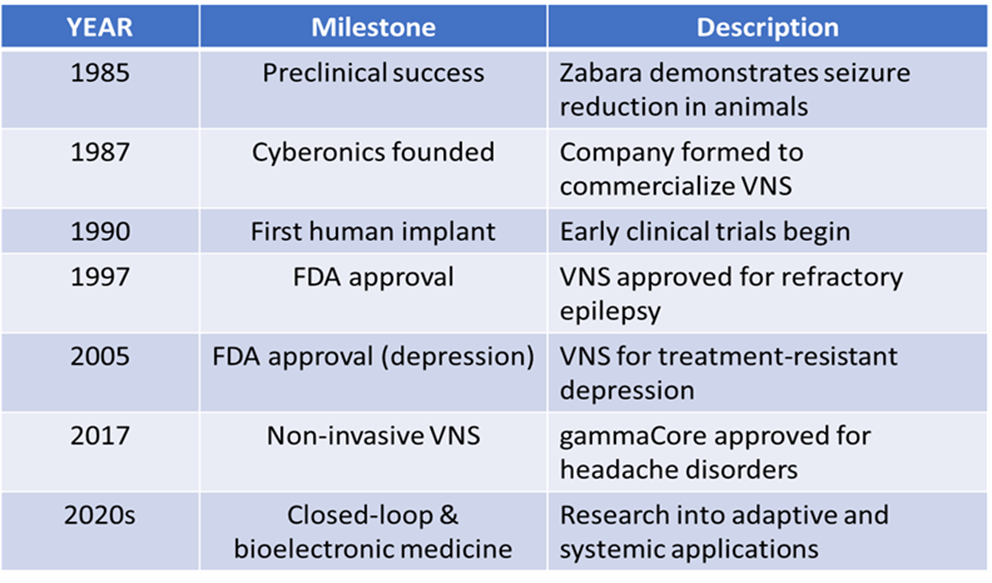
In 1985, Jacob Zabara, a researcher in the U.S., demonstrated that intermittent vagus nerve stimulation reduced seizure activity in dogs.
Zabara founded Cyberonics, Inc. in 1987 to develop implantable VNS devices.
First Human Use and FDA Approval
1988–1990:
The first human clinical trials of VNS for refractory epilepsy were conducted. The results showed reduced seizure frequency in some patients.
1994:
The VNS Therapy System (Cyberonics) received CE Mark approval in Europe for epilepsy.
1997:
The U.S. FDA approved VNS therapy as an adjunctive treatment for refractory epilepsy in adults and children over 12 years old.
2005:
The FDA approved VNS for treatment-resistant depression (TRD) after evidence showed mood improvement in some patients unresponsive to medication.
2010s:
Research expanded into heart failure, anxiety disorders, migraine, cluster headaches, and inflammatory diseases (e.g., rheumatoid arthritis).
Table No1: based on the discovery of vagus nerve stimulation device
WHAT IS VAGUS NERVE
The vagus nerve (also known as the 10 cranial nerve, or cranial nerve X) is the longest and one of the most complex nerves in the autonomic nervous system.
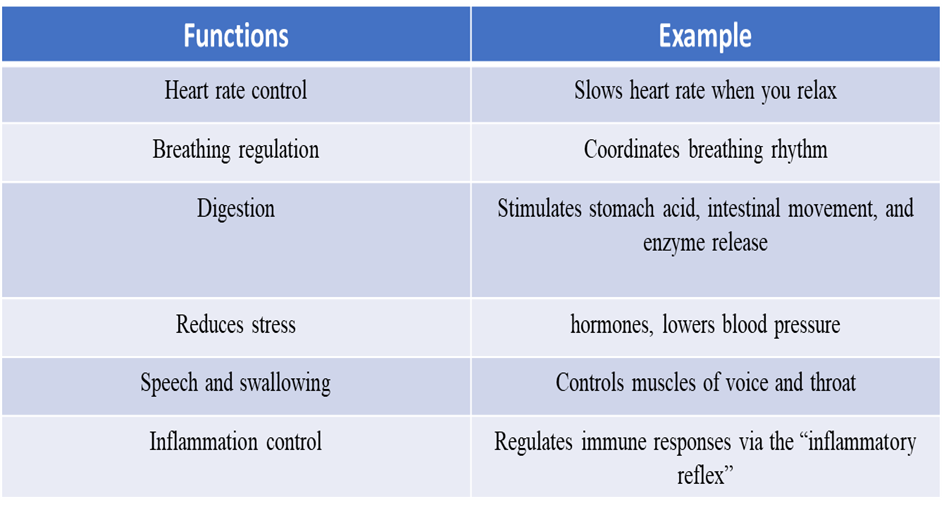
The part of your nervous system that controls Involuntary actions like heart rate, digestion, and breathing, moods, seizure.
Connects brain to heart, lungs, stomach, intestines.
Anatomy and Pathway
Origin:
Begins in the brainstem, specifically in the medulla oblongata.
Pathway:
Travels down the neck, through the chest, and into the abdomen.
Connections:
It sends fibers to several organs:
Table No 2: Functions of Vagus Nerve
Why It’s Important in Medicine
WHAT IS VAGUS NERVE STIMULATION DEVICE
A vagus nerve stimulation (VNS) device is a medical device designed to stimulate the vagus nerve — a long cranial nerve that runs from the brainstem through the neck and into the chest and abdomen. The vagus nerve helps regulate many vital functions, including heart rate, digestion, and mood.
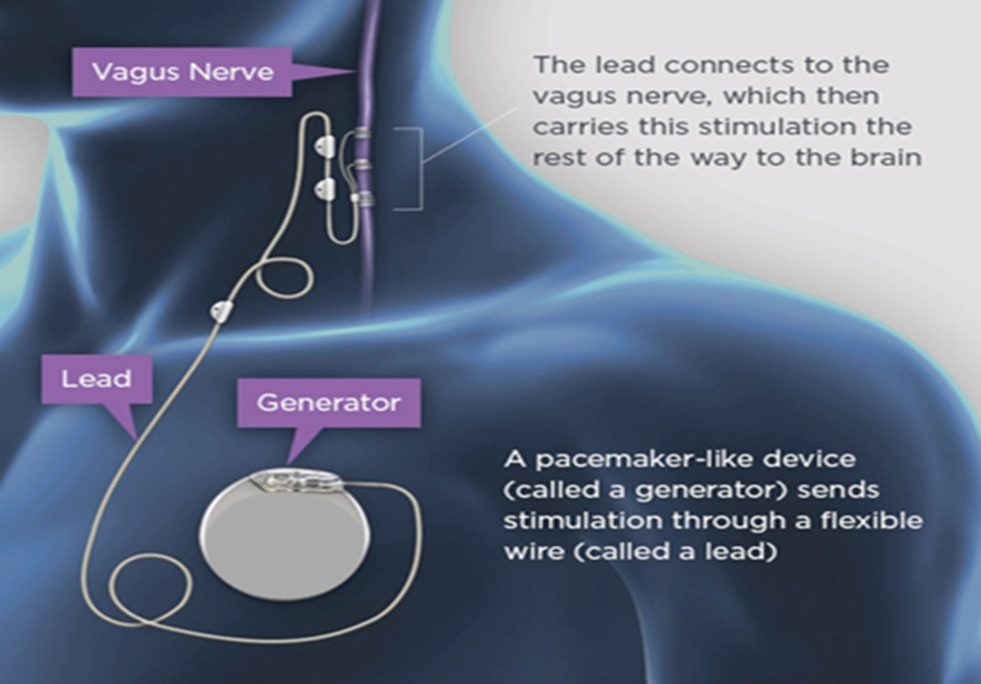
Figure No 1: Diagrammatic representation of VNS (reference in 13)
Types of VNS Devices
IMPLANTABLE VNS
A vagus nerve stimulation (VNS) device is a medical device designed to stimulate the vagus nerve — a long cranial nerve that runs from the brainstem through the neck and into the chest and abdomen. The vagus nerve helps regulate many vital functions, including heart rate, digestion, and mood.
PARTS OF VAGUS NERVE STIMULATION DEVISE
PULES GENERATOR (Implantable Stimulator)
Main Components & Materials of an Implantable Pulse Generator
Titanium or Biocompatible Metal Casing
Electronic Circuitry (Pulse Generation Unit)
Battery (Power Source)
Telemetry Coil / Communication System
Connector Port
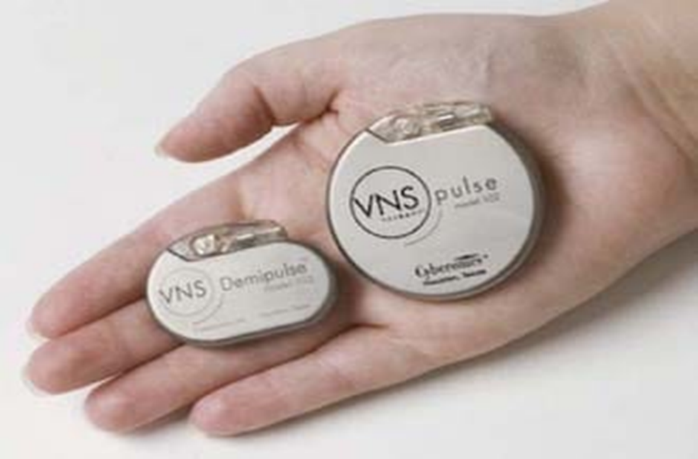
Figure No 2: diagram represent pulse generator (reference in 14 )
LEADS (electrode wires)
In a vagus nerve stimulation (VNS) system, the lead wire is the insulated cable that connects the pulse generator (implanted in the chest) to the electrodes wrapped around the vagus nerve in the neck.
It’s a highly specialized medical component made from biocompatible, flexible, and electrically conductive materials, designed to work safely inside the human body for many years.
Components & Materials of a VNS Lead Wire
Part Typical Material Function / Properties
Conductors (core wires) Platinum–Iridium alloy (Pt–Ir) or sometimes MP35N (nickel-cobalt-chromium alloy) Carries electrical pulses from generator to electrodes; excellent conductivity, corrosion resistance, and fatigue strength.
Insulation (outer coating) Silicone elastomer or polyurethane Provides electrical insulation; biocompatible, flexible, and resistant to body fluids.
Electrodes (at nerve end) Platinum–Iridium contacts with silicone cuff Deliver stimulation to the vagus nerve; soft cuff wraps gently around the nerve to avoid damage.
Connector (generator end) Titanium and medical-grade polymer Connects securely to the pulse generator header; ensures a hermetic, low-resistance connection.
Helical (coiled) structure — (Design feature) The wire is coiled like a spring to allow stretching and bending with body movement, minimizing stress and breakage.
DIMENSIONS
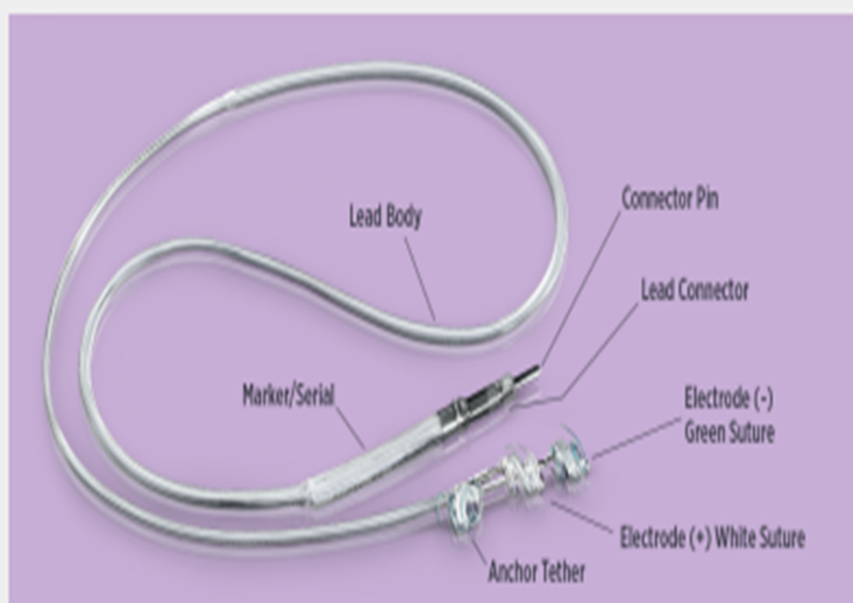
Figure no 3: Diagram represent lead wire of the VNS device (refe =15)
PROGRAMMING SYSTEM: (electrode)
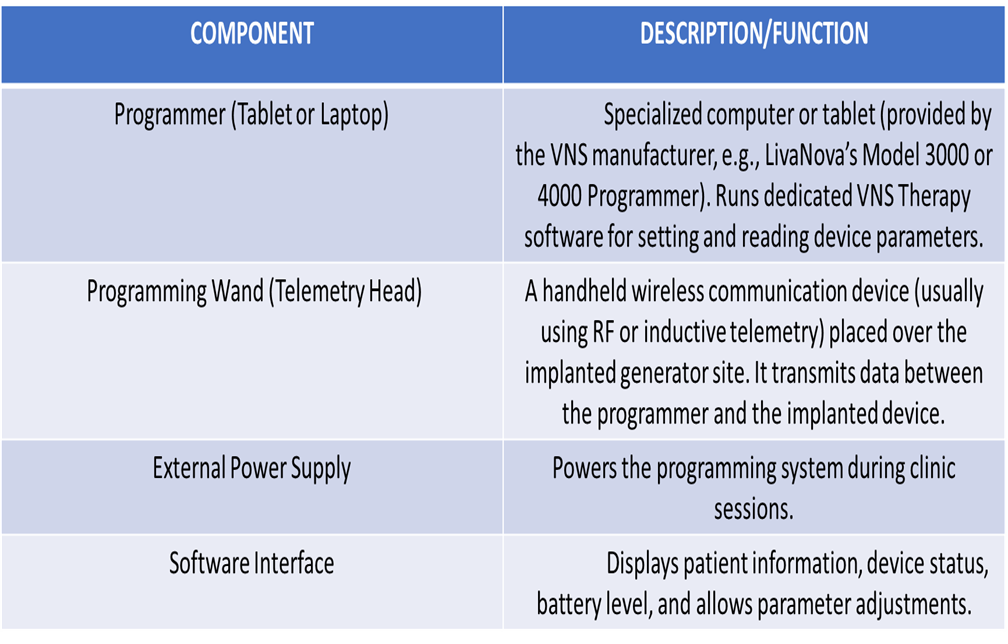
The programming system of a vagus nerve stimulation (VNS) device is the external equipment that allows a clinician to set, adjust, and monitor how the implanted pulse generator delivers electrical stimulation to the vagus nerve.
Table No 3: Components of The VNS Programming System
How the Programming Process Works
Patient Visit:
Device Interrogation:
Parameter Adjustment:
Programming Confirmation:
Example Programming Parameters (Typical Ranges)
Parameter Typical Range
Output Current 0.25 – 3.5 mA
Pulse Width 130 – 500 µs
Frequency 20 – 30 Hz
On Time 30 se
Off Time 5 min

Figure No 4:Diagram represent programming system of VNS device (refe =16)
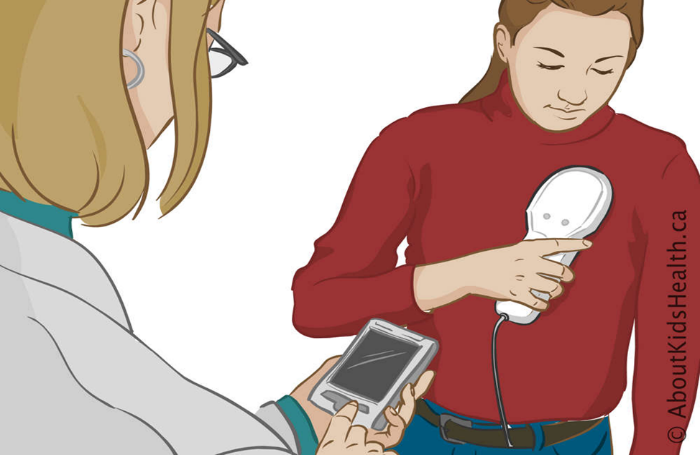
Figure No 5: Diagram represents how the doctor adjust the VNS devise frequency as per the patient. (refe =17)
Transcutaneous (Non-Invasive) VNS Devices
These do not require surgery.
They stimulate the vagus nerve through the skin — either at the ear (auricular branch) or the neck.
A. Auricular (Ear-based) VNS
Stimulates the auricular branch of the vagus nerve in the ear.
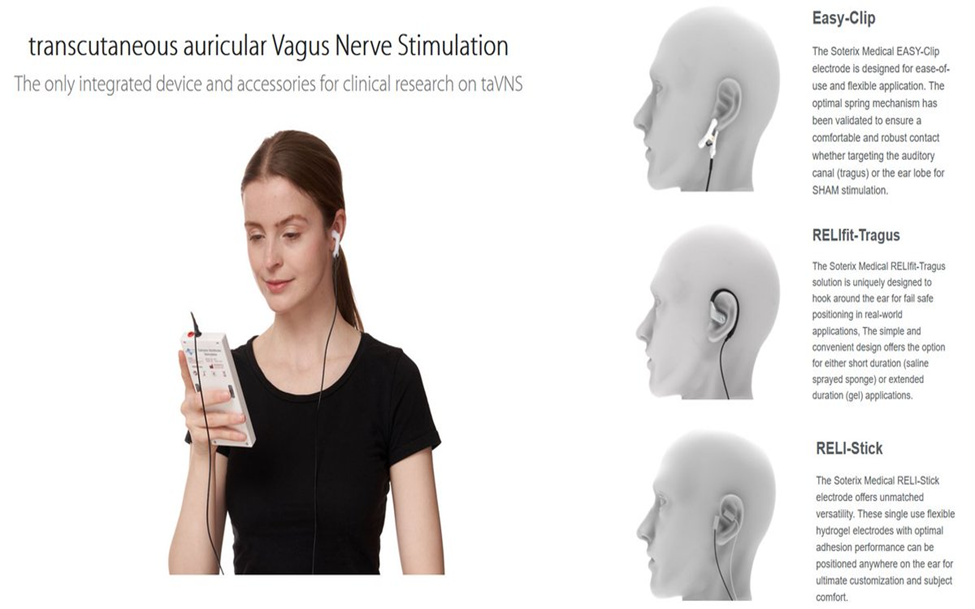
Figure No 6: image of auricular VNS devise( refe =18)
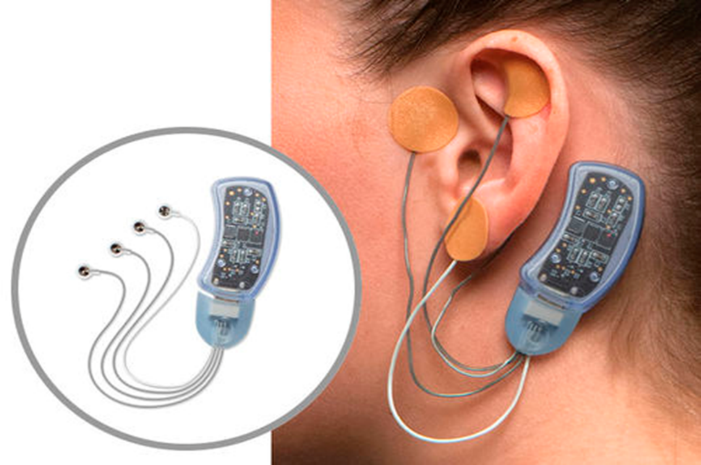
Figure No 7: Picture of TAVNS device ( refe =19)
B. Cervical (Neck-based) tVNS
Stimulates the cervical branch of the vagus nerve through the neck skin.
Example:
FDA-cleared for:
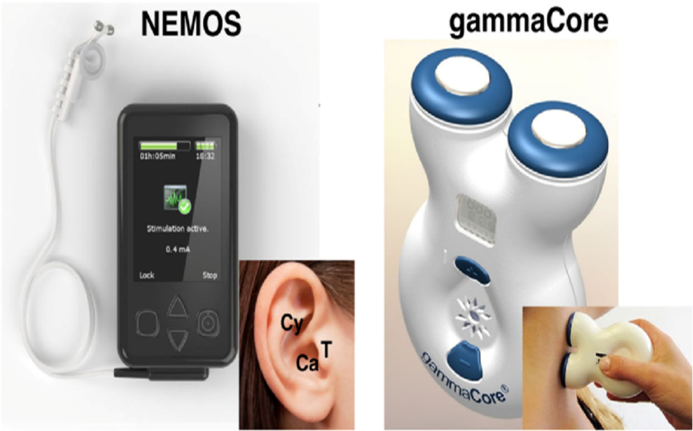
Figure No 8: diagram of NIVNS device (refe =20)
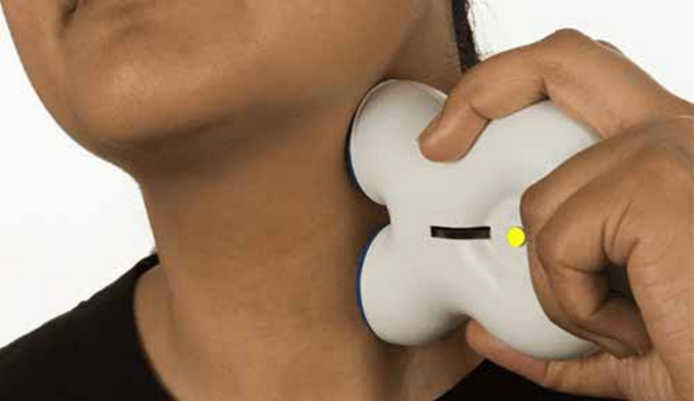
Figure No 9: diagram of CtVNS device (refe =21)
IMPLANTATION PROCEDURE
Before the procedure
Before surgery, you have a physical exam. Your surgeon may have you start taking antibiotics before surgery to prevent infection.
During the procedure
Surgery to implant the vagus nerve stimulation device often is done on an outpatient basis. You go home that day. During surgery, you'll likely get medicine, called general anesthesia, to put you into a sleep like state.
The surgery itself doesn't involve the brain. The surgeon makes two cuts, called incisions. One is on the chest or in the armpit area. The other is on the left side of the neck.
The surgeon puts the pulse generator in the upper left side of the chest. The pulse generator is about the size of a stopwatch. It runs on battery power.
A lead wire connects to the pulse generator. The surgeon guides the lead wire under the skin from the chest up to the neck. Then the surgeon connects the wire to the left vagus nerve through the second cut.
The device and its battery last for years before it needs to be replaced. A surgeon also can remove it, if needed.
After the procedure
If you had the device implanted to treat epilepsy or depression, your healthcare team turns on the pulse generator during a medical visit a few weeks after surgery. Then the team programs how long and how often the device sends electrical impulses to the vagus nerve.
Vagus nerve stimulation most often starts at a low level. Your healthcare team can raise it depending on your symptoms and side effects.
The device turns on and off in cycles, such as 30 seconds on, five minutes off. You may feel some tingling or slight pain in your neck. Your voice may be hoarse when the device is on.
Newer models that treat epilepsy can sense a sudden increase in your heart rate and react by sending a signal to the nerve. A sudden increase in heart rate may mean you're about to have a seizure. You can use a hand-held magnet to start the impulse at other times. For instance, you can turn it on if you feel you're about to have a seizure.
For a device that's put in after a stroke, a specialist most often turns it on during rehabilitation. You also can turn it on at home using a magnet. You might turn it on to help with certain tasks such as cooking.
You need to make follow-up visits to your healthcare professional to make sure that the pulse generator is working and hasn't moved out of place. Check with your healthcare team before having medical tests, such as an MRI. The test might affect the device.
MECHANISIM & WORKING OF VNS
Vagus Nerve Stimulation (VNS) – Mechanism of Action
The vagus nerve stimulation device is a small, battery-powered implant placed under the skin in the chest. It sends mild electrical pulses to the vagus nerve in the neck at regular intervals.
Step-by-step Mechanism:
Electrical pulse generation:
The implanted device (like a pacemaker) produces small, controlled electrical signals.
Signal transmission to vagus nerve:
A thin wire connects the device to the left vagus nerve in the neck. The signals travel through this wire to the nerve.
Activation of brain areas:
The vagus nerve carries the signals to important parts of the brain — such as the thalamus, amygdala, and brainstem — that control mood, seizure activity, and body functions.
Balancing brain chemicals:
The stimulation helps release or regulate neurotransmitters like norepinephrine, serotonin, and GABA, which calm overactive nerve cells.
Reduced abnormal brain activity:
This reduces the irregular electrical activity in the brain that causes epileptic seizures or mood disorders.
Automatic and adjustable:
The device works automatically, but doctors can adjust the strength and timing of the signals using a computer.
Some patients can also trigger extra stimulation using a magnet if they feel a seizure coming.
EXPLANATION
1. Device implantation
2. Electrical pulse generation
3. Stimulation of the vagus nerve
4. Transmission of signals to the brain
Once the vagus nerve is stimulated, the impulses move up to the brainstem, mainly to an area called the nucleus tractus solitarius (NTS).
From there, signals are sent to different regions of the brain such as:
5. Neurochemical modulation
VNS influences neurotransmitters like:
TREATMENT
Epilepsy
Anti-seizure medicines don't fully manage seizures for about one-third of people with epilepsy. For some of them, vagus nerve stimulation may help manage their seizures.
The FDA has approved vagus nerve stimulation for people with epilepsy who
Table No 4: shows VNS device epilepsy trials
|
Authors |
Study/ sample size |
Parameters (active group) |
Implanted/ transcutaneous |
Primary outcome |
Study conclusions |
|
Penry and Dean [19] |
4 patients with seizure disorder |
PW: 47–50 Hz On/off: varied I: 1–3 mA |
Implanted |
Long-term safety and efficacy |
All patients tolerated the procedure with minimal long-term side effects. Seizures were reduced in 3/4 of patients |
|
Uthman et al. [123] |
14 patients with medically refractory partial seizures |
PW: 250 μs Freq: 50 Hz On/off: 60 s/60 min I: 1 mA |
Implanted |
Mean reduction in seizure frequency |
Mean reduction in seizure frequency was 46.6% after 14–35 months; 14 of 35 patients showed at least 50% reduction in seizure frequency |
|
Amar et al. [37] |
18 patients with medically refractory epilepsy and at least six complex partial or secondarily generalized seizures per month |
High-level group: PW: 500μs Freq: 30 Hz On/off: 30 s/5 min I: up to 3.5 mA Low-level group: PW: 130μs Freq: 1 Hz On/off: 30 s/3 h I: up to 3.5 mA |
Implanted |
Comparison of high stimulation VNS vs. low-stimulation on seizure frequency |
High-stimulation VNS patients had significantly greater reduction in seizure frequency at 3- and 18-month follow-up |
|
Scherrmann et al. [38]
|
95 adult patients with drug-resistant seizures who had received implants |
PW: 500 μs Freq: 20 Hz On/off: 7 s/30 s I: 0.25–3 mA |
Implanted |
Median percentage of reduction in seizure frequency compared to antiepileptic drug alone |
Median percentage of reduction in seizure frequency as compared to baseline was 30%, and seizure outcome was positively correlated with VNS duration |
|
Klinkenberg et al. [40] |
41 children with either partial or generalized epilepsy |
PW: 0.5ms Freq: 30 Hz On/off: 30 s/5 min I: 0.25 mA |
Implanted |
Comparison of high stimulation VNS vs. low-stimulation on seizure frequency and severity in children |
VNS well tolerated in children, but no significant difference seen in frequency or severity between low and high stimulation groups |
Depression
Vagus nerve stimulation may help people with depression. It may be used when medicines, psychological counselling and electroconvulsive therapy haven't worked well.
The FDA has approved vagus nerve stimulation for the treatment of depression in adults who:
Stroke recovery
For people who are recovering from a stroke, the FDA has approved vagus nerve stimulation for use in rehabilitation. Vagus nerve stimulation with rehabilitation may help people recover the use of their hands and arms after an ischemic stroke.
ONGOING REASCHER ON
Table No 5: work of VNS as per patient condition

USED TO MANUFACTURE VNS DEVISE
Table No 6: companies used to manufacture VNS device
|
Company names |
Devise name/ system |
Main use/ Indication |
|
LivaNova plc |
VNS Therapy r System |
Drug-resistant epilepsy, Depression. |
|
Micro Transponder Inc. |
Vivistim Paired VNS system |
Stroke rehabilitation (improves arm function) |
|
Setpoint Medical |
Bioelectronic VNS system |
Autoimmune diseases like rheumatoid arthritis. |
|
BioControl Medical |
CardioFit |
Heart failure |
|
EnteroMedics (Reshape lifesciences) |
VBLOC Therapy |
Obesity treatment |
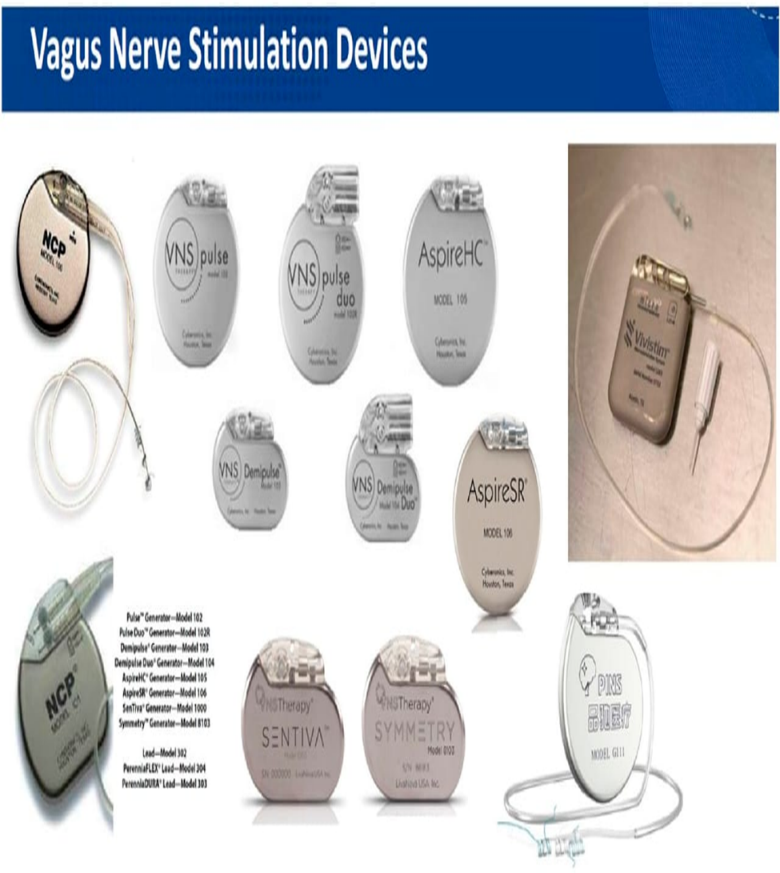
Figure No10: Devices of Different companies.(refe -22)
Side effects
Common side effects of vagus nerve stimulation include:
Advantages of VNS Device
Reduces frequency and severity of seizures in patients who do not respond to anti-epileptic drugs.
Provides clinical improvement in mood and depressive symptoms when medications and psychotherapy fail.
Avoids long-term drug-related side effects and interactions.
Delivers stimulation regularly without requiring patient intervention.
Intensity, frequency, and timing can be optimized based on patient respons
Patients can swipe a magnet over the device to activate extra stimulation during aura or seizure onset.
Gradual improvement over months and sustained therapeutic response in many patients.
No direct surgery on the brain; device is implanted in the chest with lead attached to vagus nerve.
CONCLUSION
Inevitably, more data will help shape our understanding of how these novel treatments can be made more effective. As in other areas of VNS research, future areas for improvement are in our understanding of how parameters interact with disease state. VNS has an infinite number of parameter combinations, as clinicians can adjust frequency, pulse width, duty cycle, and duration of stimulation. Understanding how these parameter combinations affect treatment outcomes is of utmost importance. Additionally, non invasive VNS has opened the door for further study of the effects of VNS. This includes translation of the wealth of evidence in animal models to human clinical research, as well as further study of how VNS may be an effective treatment for other medical and neuropsychiatric disorders. Discovery of reliable biomarkers will be crucial in aiding the development of personalized VNS treatments, a revolution that is already occurring in other areas of brain stimulation.
In conclusion, the history of VNS spans four decades but has already accomplished a great deal. To date, VNS has gained approvals from the FDA for medication-refractory epilepsy, treatment-resistant depression, obesity, post-stroke motor rehabilitation, and migraine and cluster headache. The development of novel non invasive forms of VNS promises to further advance the field’s evolution.
REFERENCE





Spandana Puli, Mohana Sri Pujitha Ravada, Saranya Durga Boppana, Navitha Busi, Venkata Durga Inti, Naveen Gudala, Drug Free Implantable Vagus Nerve Stimulation Device (Epilepsy), Int. J. of Pharm. Sci., 2025, Vol 3, Issue 11, 4902-4917. https://doi.org/10.5281/zenodo.17766594
 10.5281/zenodo.17766594
