
Nootan Collage of Pharmacy, Kavathe Mahankal, Maharashtra, India
Depression is a major public health concern characterized by persistent symptoms, limited therapeutic response, high relapse frequency, and lengthy treatment durations. These limitations highlight the urgent need for more efficient and advanced therapeutic strategies. Recent research indicates that novel drug-delivery systems can significantly enhance the therapeutic potential of natural plant-based compounds by improving their stability, bioavailability, and targeted delivery. The integration of herbal antidepressant agents with modern delivery technologies has renewed scientific interest in developing more effective treatments for depression.
A Novel Drug Delivery System (NDDS) refers to an advanced approach that incorporates innovative techniques, new formulations, and modern technologies to deliver pharmaceutical substances safely and effectively to specific sites in the body to achieve optimal therapeutic outcomes.
Characteristics of NDDS:
Benefits of NDDS:
Introduction:
An effective drug-delivery system is expected to deliver therapeutic agents to the intended target at the correct dose and at appropriate intervals until the desired therapeutic effect is achieved. Before modern drug-delivery technologies emerged, conventional dosage forms such as immediate-release formulations, sustained-release oral systems, and long-acting injectables were widely used. However, these traditional systems often face challenges such as poor solubility, rapid metabolism, enzymatic degradation, food interactions, and unwanted effects on non-target cells or organs.
Novel Drug Delivery Systems (DDS) address these limitations by incorporating advanced carriers capable of transporting drugs across biological barriers and releasing them at controlled rates. Carriers such as nanoparticles, liposomes, niosomes, dendrimers, hydrogels, ethosomes, and exosomes play a central role in improving therapeutic performance. Nanoparticles offer significant advantages due to their small size, large surface area, high drug-loading capacity, and ability to cross physiological barriers. They can also integrate diagnostic and imaging functions and be engineered to respond to internal or external stimuli.
Advantages of Innovative Drug-Delivery Techniques:
Phytosomes:
Phytosomes are vesicular systems in which plant-derived bioactive compounds are complexed with phospholipids. This protects herbal constituents from degradation and enhances absorption and bioavailability.
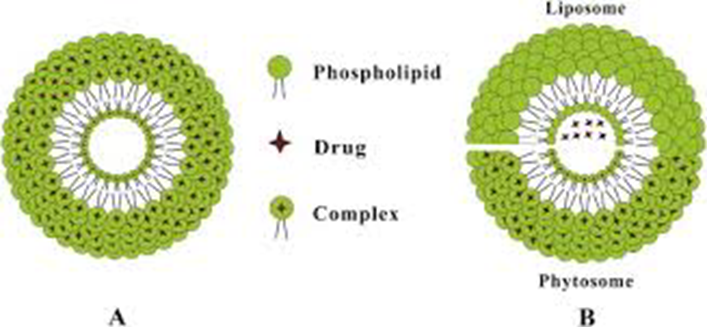
Fig. Structure of Phytosome
Liposomes:
Liposomes are spherical vesicles composed of phospholipid bilayers. They protect drugs from degradation, reduce toxicity, and support targeted delivery. Several liposomal formulations are clinically approved.
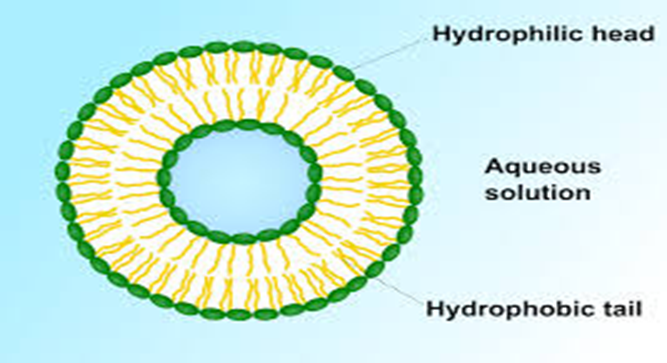
Fig. Structure of Liposomes
Niosomes:
Niosomes are vesicular systems made from non-ionic surfactants and cholesterol. They are stable, cost-effective, and capable of delivering both hydrophilic and hydrophobic drugs.
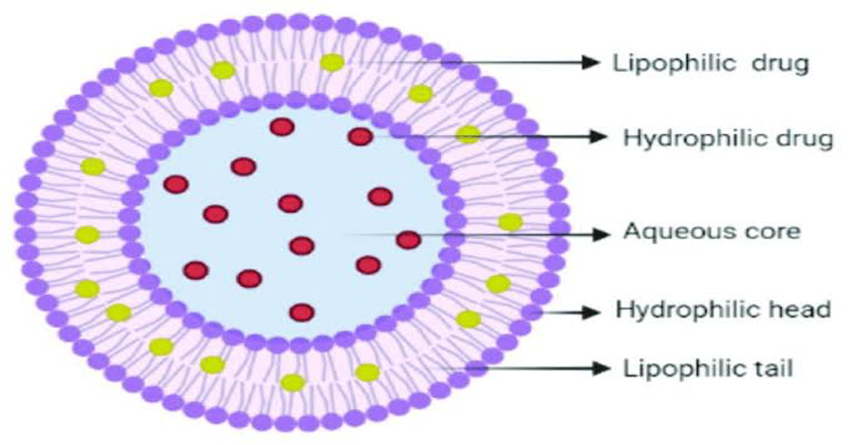
Fig. Structure of Niosomes
Transfersomes:
Transfersomes are ultra-flexible lipid vesicles capable of penetrating deep into the skin, making them ideal for transdermal drug delivery.
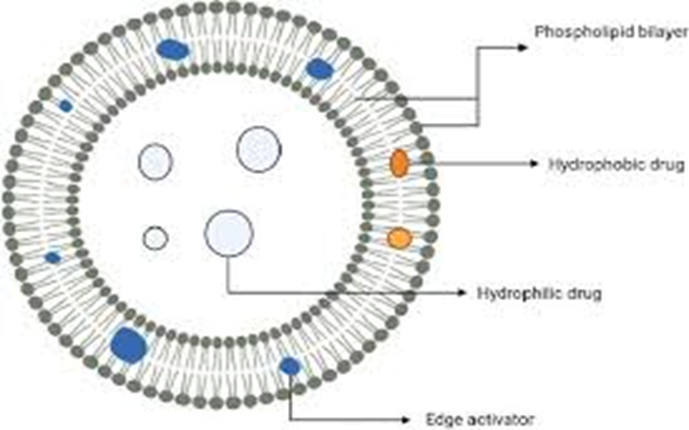
Fig. Structure of Transfersome
Nanoparticles:
Nanoparticles are solid particles ranging from 10 to 200 nm. They can encapsulate drugs, protect them from degradation, and support controlled and targeted delivery.
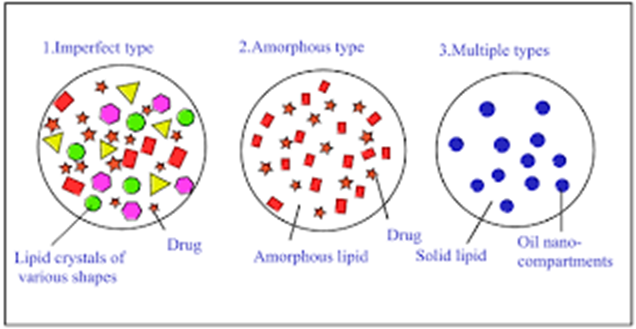
Fig. Structure of Nanoparticles
Routes of Administration:
Oral, pulmonary, transdermal, parenteral, local, and gene-delivery routes are used depending on drug type and therapeutic need.
Intelligent Drug-Delivery Systems:
4.1 Stimuli-Responsive Drug Delivery Systems
Stimuli-responsive drug delivery systems often called smart delivery platforms are engineered to release therapeutic agents only when exposed to specific internal or external triggers. These triggers may originate from within the body (such as pH gradients, enzyme concentrations, temperature differences, or redox states) or may be applied externally (including magnetic fields, ultrasound, light, or electrical signals). By responding selectively to these stimuli, such systems ensure that bioactive compounds are delivered precisely where and when they are needed, thereby reducing systemic exposure and minimizing adverse effects.
In cancer therapy, these systems hold particular significance because tumor environments typically differ from normal tissues in acidity, hypoxia, and enzymatic activity. Smart nanoparticles can therefore accumulate in tumor sites and discharge plant-derived actives in a controlled manner. For instance, doxorubicin-loaded systems and polycaprolactone-based electrospun nanofibers containing quercetin have shown enhanced therapeutic profiles due to controlled and targeted release mechanisms. Internally triggered systems are generally preferred because they depend on natural physiological characteristics, whereas externally activated systems provide flexibility for localized on-demand release. Overall, stimuli-responsive platforms represent an important advancement in elevating the precision and effectiveness of plant-based therapeutics.
4.2 Nanobots
Nanobots also described as nanoscale robotic or semi-autonomous devices operate at dimensions close to individual biological molecules. Their development merges nanotechnology, molecular engineering, and bio-robotics, enabling them to navigate biological environments and perform specialized medical tasks. Within the human body, nanobots can theoretically transport drugs, sense biomarkers, remove pathogenic molecules, or repair minute areas of tissue damage.
Although most nanobot technologies remain in the research and conceptual phases, early prototypes demonstrate their promise in targeted drug delivery, precision therapy, and minimally invasive diagnostics. For instance, some designs exploit biochemical gradients that allow nanobots to move directionally toward disease sites. Others use magnetic or ultrasound signals as external navigation controls. Despite challenges such as designing biocompatible materials, minimizing toxicity, ensuring energy efficiency, and regulating their behavior in biological systems nanobots are anticipated to transform future medicine. Their potential extends to delivering plant-derived actives directly to diseased tissues, thereby enhancing the therapeutic potential of herbal medicines through unprecedented precision.
4.3 DNA Origami Technology
DNA origami is an advanced nanofabrication platform that uses DNA strands as programmable building blocks to create highly organized nanoscale structures. By folding a long single-stranded DNA sequence with multiple short "staple" strands, researchers can generate intricate 2D and 3D architectures capable of carrying drugs, responding to biological cues, and interacting with cell membranes.
These DNA-based designs are ideal for drug delivery because they can encapsulate active molecules, protect them from degradation, and release them selectively in response to cellular signals. Their inherent biocompatibility and programmability allow precise control over size, shape, and surface modifications. This makes DNA origami suitable for carrying plant-derived compounds with poor stability or solubility. Although DNA origami is still emerging as a therapeutic tool, ongoing research is enhancing its durability, cost-effectiveness, and scalability, paving the way for its incorporation into next-generation herbal drug delivery systems.
4.4 3D Printing Technology in Drug Delivery
Three-dimensional (3D) printing has rapidly transformed pharmaceutical development by enabling the production of customized drug formulations and delivery devices. Through layer-by-layer fabrication, 3D printing allows precise control of dose, geometry, surface characteristics, and release behavior of drug-loaded systems. This technology is invaluable for personalizing therapies, especially for patients requiring individualized dosing schedules or multi-drug combinations.
Several 3D-printed formulations have been successfully explored for their ability to protect sensitive plant actives, improve solubility, and enable sustained release. By modifying the printer substrate, polymer matrix, or infused active ingredient, researchers can tailor the mechanical strength, disintegration time, and pharmacokinetic profile of the final product. As the technology progresses, 3D printing is expected to play a pivotal role in preparing advanced dosage forms for herbal medicines and natural compounds.
Proprietary Novel Drug Delivery Systems for Plant Actives
A diverse range of proprietary NDDS technologies have been developed to overcome challenges associated with delivering plant-derived bioactive compounds, such as poor solubility, rapid metabolism, low stability, or limited permeability. Some of the most noteworthy platforms include:
Phytosomes : Complexes formed between phospholipids and plant actives, which significantly improve absorption and bioavailability.
Eudragit Systems: Polymer-based coatings and matrices that provide controlled release, taste masking, and targeted delivery to specific gastrointestinal regions.
Self-Emulsifying Drug Delivery Systems (SEDDS): Formulations that spontaneously form fine emulsions in the gastrointestinal tract, enhancing the solubility and uptake of lipophilic herbal constituents.
Multifaceted Nanocarriers (liposomes, niosomes, microspheres, nanoparticles, etc.): Each system enables protection of active compounds and controlled systemic release, improving therapeutic outcomes.
These proprietary platforms have expanded the practical use of herbal medicines by enhancing stability, intestinal permeability, and clinical reliability. They are widely adopted in nutraceuticals, phytopharmaceuticals, and modern herbal therapeutics.
Potential of NDDS for Herbal Drugs
Novel drug delivery systems hold remarkable potential for elevating the therapeutic performance of herbal medicines. Traditional plant-based remedies often suffer from limitations such as low bioavailability, poor solubility, chemical instability, and extensive first-pass metabolism. NDDS technologies such as nanoparticles, nanoemulsions, liposomes, solid dispersions, phytosomes, and polymeric carriers help overcome these hurdles by enhancing absorption, protecting labile constituents from degradation, and enabling sustained or targeted release.
By integrating herbal compounds into innovative delivery platforms, researchers can achieve higher therapeutic efficiency at lower doses, reduce dosing frequency, and improve safety profiles. Additionally, targeted delivery systems minimize off-site effects and allow drug accumulation at the site of disease, which is particularly beneficial in chronic disorders, metabolic diseases, and cancer. As research advances, NDDS is expected to bridge traditional herbal medicine with modern pharmaceutical science, resulting in more predictable, standardized, and clinically effective natural therapies.
Herbal Novel Drug Delivery Systems
Herbal medicines are increasingly being incorporated into novel drug-delivery platforms such as mouth-dissolving tablets, sustained-release formulations, mucoadhesive systems, transdermal patches, implants, microparticles, microcapsules, and nanoparticles. These innovations aim to overcome the limitations of conventional herbal dosage forms and improve therapeutic performance. While many technologies are still under laboratory investigation, several have progressed to practical application.
One example is Res-Q, a multi-herbal formulation used for respiratory disorders including asthma. Delivered as a mouth-dissolving tablet, it bypasses first-pass metabolism and dissolves rapidly in the oral cavity, allowing quick systemic absorption. This mechanism produces relief within fifteen minutes and resembles the fast-acting effect of sublingual Sorbitrate tablets used in cardiac emergencies.
Formulating plant extracts into sustained-release tablets is often difficult due to poor flow and compressibility. Techniques such as coating-pan processing, fluidized-bed coating, and extrusion spheronization are used to prepare microgranules.
A study on buccal mucoadhesive tablets demonstrated sustained release using herbal ingredients such as mastic gum, lavender, sage, and echinacea. The formulation provided slow dissolution, pleasant taste, and zero-order release kinetics.
Another patented formulation incorporated herbs including Radix Polygoni Multiflori, Rhizoma Drynariae, Rhizoma Ligustici Chuanxiong, and others in gels, chewing gums, and pastes designed for oral retention. A study on Shuanghua Aerosol (SHA) in children found that it possessed antiviral and anti-inflammatory properties and was effective for upper-respiratory infections.
Gugulipid, derived from Commiphora wightii, is clinically known to reduce harmful serum lipids. Microparticles containing gugulipid were developed using chitosan, albumin, alginate, ethyl cellulose, beeswax, and other materials.
Nanoparticle-based formulations greatly enhance absorption and systemic distribution of Traditional Chinese Herbs (TCH). These nanoparticles exhibited potent thrombolytic activity and accelerated recovery from arterial embolism.
Chitosan gelatin implants loaded with danshen extract demonstrated sustained release and supported tissue healing at abdominal incision sites.
Clinical Applications of Smart Devices
Smart devices are becoming integral in personalized medicine for both monitoring health parameters and assisting in drug delivery.
Cardiovascular Disorders
Wearable devices monitor indicators such as heart rhythm, oxygen saturation, blood pressure, and heart rate.
Endocrine Disorders
Smart scales, continuous glucose-monitoring patches, artificial pancreas systems, and smart contact lenses assist in monitoring endocrine conditions.
Neurological Disorders
Wearable sensors are used to monitor movement in patients with stroke, Parkinson's disease, Alzheimer’s disease, and Bell’s palsy.
Skin Disorders
Smart bandages and sensors detect hydration levels, inflammation, enzymatic activity, and wound healing status.
Smart Drug Delivery Systems
Wearable systems include smart insulin pens, wearable infusion pumps, smart auto-injectors, and smart inhalers.
Implantable systems include implantable infusion pumps, drug-eluting stents, and indigestible smart devices.
Novel Carriers for Drug Delivery
Advances in molecular medicine demand precise drug-delivery systems that localize potent therapeutic agents to specific sites. New carriers such as liposomes, nanoparticles, micelles, dendrimers, carbon nanotubes, inorganic particles, liquid crystals, and aquasomes address these limitations.
Liposomes are phospholipid vesicles with a hydrophilic core surrounded by a lipid bilayer.
Niosomes are non-ionic surfactant vesicles providing stability, lower cost, and versatile loading capacity.
Novel Drug Delivery Carriers:
A Comprehensive Review
Liposomes are spherical vesicles composed of phospholipid bilayers capable of encapsulating both hydrophilic and lipophilic drugs. They enhance bioavailability, improve stability, and minimize toxicity. Their biocompatibility and ability to protect active compounds from degradation make them one of the most widely used nanocarriers. Niosomes, similar to liposomes but formed from nonionic surfactants, offer improved chemical stability and cost-effectiveness. They enhance targeted delivery, reduce side effects, and prolong the therapeutic action of encapsulated drugs.
Microparticles, typically ranging from 1 to 1000 µm, are extensively used for controlled and sustained drug release. Their long-lasting effect helps maintain consistent therapeutic levels, improving patient compliance. They also protect drugs from degradation and allow for both single-dose and controlled-release formulations. Emerging alternative nanocarriers such as micelles, nanoparticles, nanocapsules, and nanoemulsions offer novel approaches for efficient drug delivery. These systems possess exceptional solubility enhancement, prolonged circulation, and improved bioavailability, making them valuable for delivering plant-derived bioactive compounds.
Future perspectives in drug delivery technologies emphasize the importance of plant-based medicines, personalized healthcare, and advanced delivery mechanisms such as smart nanocarriers, stimuli-responsive systems, and biodegradable polymers. Continuous advancements in nanotechnology, material science, and pharmacology are driving the development of safer and more efficient therapeutic systems.
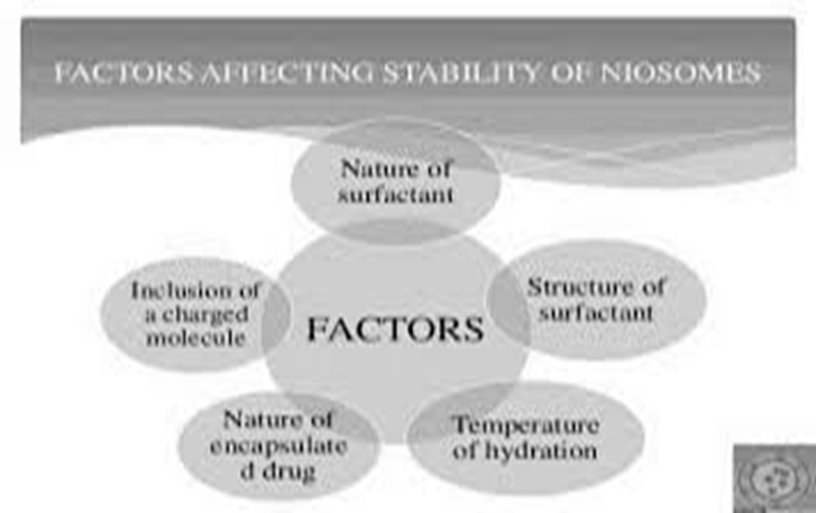
Fig. Factors Affecting Stability of Niosomes
CONCLUSION
Novel drug-delivery carriers including liposomes, niosomes, microparticles, and emerging nanocarriers represent a major advancement in improving the stability, bioavailability, and therapeutic potential of natural plant-based compounds. Their ability to protect active ingredients, enhance targeted delivery, and offer sustained release marks a significant step forward in modern pharmaceutical research.
REFERENCES


Srushti Koshti, Mayuri Bhosale, Novel Drug Delivery Systems, Int. J. of Pharm. Sci., 2025, Vol 3, Issue 12, 69-77. https://doi.org/10.5281/zenodo.17777470
 10.5281/zenodo.17777470
