
Fabtech College of Pharmacy, Sangola, Solapur, Maharashtra- 413307
The current study's objective was to assess the ethanolic extract of Prosopis juliflora leaves' in vitro anthelmintic effectiveness against Pheretima posthuma worms. The activity of the extract and standard at different concentrations (25, 50, and 75 mg/ml) was investigated by timing the worms' paralysis and demise. The typical medication is albendazol [25 mg/ml]. As a control, worms were given regular saline water treatment. Flavonoids are included in this ethanolic extract. According to the current study, Prosopis juliflora leaves have anthelmintic properties. Activity was assessed by measuring the amount of time needed for the extract to cause paralysis and worm death. The data indicates that the anthelmintic activity of ethanol extract (100 mg/ml) is similar to that of a typical medication. The plant may be employed as an anthelmintic, according to the results.
Helminthes are also referred to as parasitic worms. Another name for them is intestinal worms. Because of their long, flat, or spherical bodies, helminthes are classified as invertebrates. Flukes and tapeworms are considered flatworms, or Platyhelminthes (platy from the Greek root meaning "flat") in medical systems. Nematodes, which are roundworms, are derived from the Greek word "thread."Based on their overall outward structure and the host organ they inhibit, the therapeutically relevant groupings are divided.
Types of Helminthes Species:-
Another name for them is blood flukes. Flukes have bilateral symmetry, a distinct front end, and a dorsiventrally flattened body. Flukes have a leaf-like form and can be anywhere from five millimeters to several centimeters long. Flukes have an acetabulum or ventral stucker that they can use to stick to host tissues, as well as an oral sucker around the mouth.
General life cycle of flukes:-
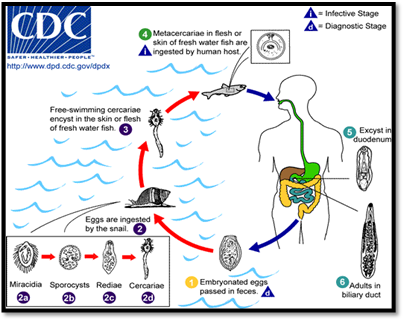
Fig.1. General life cycle of flukes
2. TAPEWORMS (Cestode)
Tapeworms resemble long, white ribbons.They can survive in humans for up to 30 years and reach a length of 50 feet. They are made up of thousands of segments.While some tapeworm species can lay eggs that travel to different parts of the body, others embed their heads in the intestinal wall and stay there.
Life Cycle of Tapeworm
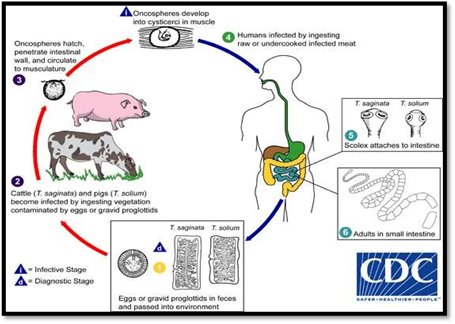
Fig.2 Life cycle of tapeworm
3. ROUNDWORMS (Nematode)
Nematodes are cylindrical rather than flattened, unlike Platy helminthes, which is why they are commonly referred to as roundworms.Their lengths range from several millimeters to two meters. They can enter the body through the mouth or direct skin contact, and they are typically found in soil and excrement.
Major Problems Caused Due To Serious Helminthiasis :-
Ascariasis lumbricoides is a species of roundworm that causes ascariasis, an infection of the small intestine. Roundworm infections are somewhat prevalent. The symptoms, which might include fever and dyspnea during the onset of the illness, worsen with the number of worms present. Symptoms including diarrhea, stomach pain, and edema may follow. Malnutrition, poor weight gain, and learning difficulties are the most common effects in children.
A parasitic illness called taeniases is brought on by infection with tapeworms from the genus Taenia. Taenia solium, or pig tapeworms, and Taenia saginata, or beef tapeworms, are the two most significant human diseases in the genus. Only East Asia is home to the third species, Taeia Asyatics. A roundworm infection of the filariodea type is the cause of filariasis, a parasitic disease. Mousquitoes and black files that feed on blood disseminate these.
ANTIHELMINTIC DRUG :-
Antithelmintic medications target metabolic targets that are present in the parasite but either lack or differ from those of the bost. Therefore, antihelmintic medications are utilized to lower the helminthes parasite population.
Classification of Antihelminthic Drugs:-
1. Drugs used for treatment of nematodes:-
ALBENDAZOLE
MOA:-
One broad-spectrum anti-helminthes is albendazole. Albendazole primarily works by inhibiting tubulin polymerization, which leads to the loss of cytoplasmic microtubules in nematode worms' intestines. This finally depletes the organism's energy and causes it to die.
2. Drugs used for treatement of trematodes :-
PRAZIQUANTEL
MOA:-
Early research showed that PZQ interferes with the worm's calcium ion homeostasis, and it is now generally accepted that it inhibits voltage-gated calcium channels. Uncontrolled calcium ion influx is thought to cause uncontrollable muscular contraction and paralysis when these channels are disrupted.
3. Drugs used for treatment of cestode :-
NICLOSAMIDE:-
MOA:-
Niclosamide kills tapeworms when they come into touch with it. The quick death of adult worms (but not ova) is likely caused by either activation of ATPase activity or uncoupling of oxidative phosphorylation. After being killed, the worms are either eliminated in the intestine or expelled in the stool.
Mode of Action of Anthelmintic Drug:-
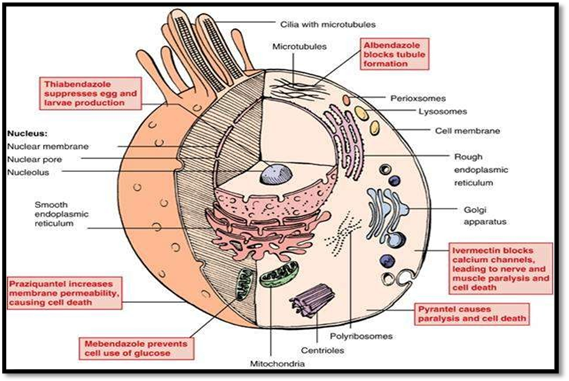
Fig.1 Mode of action of Anthelmintic Drug
LITERATURE REVIEW;-
PLANT PROFILE :-
Prosopis Juliflora Plant-
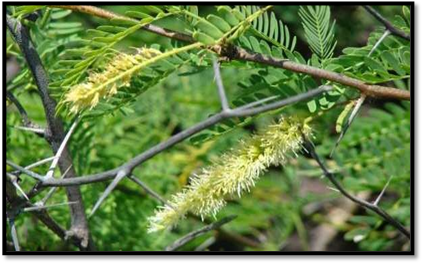
Fig :Prosopis juliflora
Botanical Name: Prosopis Juliflora (sw) DC
Synonym : Acacia juliflora
Family : Fabaceae
Genus : Prosopis
Part used : Leaves
Chemical constituents: Alkaloids, Flavonoids, Tannin
Traditional Uses:-
Numerous plants in the genus Prosopis are known to have therapeutic qualities and are employed in traditional medicine as astringents, treatments for rheumatism, and cures for snake and scorpion bites. Pregnant women use floral extract powders combined with sweets to prevent miscarriage.
Pharmacological uses:-
Anthelmintic, Antibacterial.
Reported Pharmacological Activity:-
1. Antibacterial activity: Several gram negative and gram positive bacterial strains, including E. coli, Bacillus cereus, and Staphylococcus aureus, were used to test the alkaloid-rich fraction extracted from different parts of Prosopis juliflora for antibacterial properties using the disc diffusion method. MIC [minimum inhibitory concentration] indicates a strong antibacterial action on leaf, pod, and flower extract. Of all the plant parts, leaf extract has the most activity.
2. Antifungal Activity: To assess P. juliflora's antifungal efficacy against tobacco plant phytopathogenic fungi. In order to create management techniques, either the aqueous extract alone or in combination with synthetic fungicides was evaluated. Alkaloids with a variety of biological functions, such as broad spectrum antifungal action against a variety of seed-borne fungus, are known to be present in Prosopis juliflora.
3. Activity Against Tumors: Prosopis juliflora DC's total alkaloids extracts. The acid/base modified extraction procedure was used to acquire the leaves. MTT-based cytotoxicity monitoring was used to assess the extracts' in vitro anti-tumor potential after 24, 48, and 72 hours. The MOLT-4 cell was exposed to various extract concentrations. The cytokines in-vitro micronucleus assay was also used to examine the extracts' potential for genotoxicity.
4. Antagonistic Effect: The ethanolic crude extract of P. juliflora inhibits all tested bacteria, according to a well diffusion test conducted on three Gram positive and two Gram negative bacteria.Of all the examined microorganisms, green leaves exhibit the largest zone of inhibition (22 and 19 mm) against streptococcus sp. and Bacillus sp., respectively, while dry leaves showed a moderate level of inhibition.
NEED OF WORK:-
The prevalence and severity of anthelmintic resistance in human and animal pathogenic helminthes have increased to the point where multidrug resistance against the three main classes of anthelmintic—benz imidazole, imidazoles, and macrocyclic lactones—has become a worldwide occurrence in farm animal gastrointestinal nematodes. An anthelmintic medication with a method of action is therefore desperately needed.
Multidrug resistance against the three primary classes of anthelmintic—benz imidazole, imidazoles, and macrocyclic lactones—has become a global phenomenon in farm animal gastrointestinal nematodes due to the prevalence and severity of anthelmintic resistance in human and animal pathogenic helminthes. Thus, there is an urgent need for an anthelmintic drug with a mechanism of action.
Why Should Consider Natural Medicine:-
Multidrug resistance against the three primary classes of anthelmintic—benz imidazole, imidazoles, and macrocyclic lactones—has become a global phenomenon in farm animal gastrointestinal nematodes due to the prevalence and severity of anthelmintic resistance in human and animal pathogenic helminthes. Thus, there is an urgent need for an anthelmintic drug with a mechanism of action.
PLAN OF WORK:-
MATERIALS AND METHOD :-
Drugs Used:-
1. Prosopis Juliflora (sw) DC (Test)
2. Albendazole (Standard)
Chemical Used:-
1. Alcohol
2. Water that has been distilled
Instrument Used:-
1. Soxhlet device
Experimental Animal:-
For the anthelmintic study, mature Indian earthworms Pheretima posthuma were gathered from local damp soil and cleaned with regular saline to get rid of all the excrement. For the entire experimental regimen, earthworms measuring 6–8 cm in length and 0.2–0.3 cm in width were utilized.
Collection and Authentication of plant material:-
Bahe (Islampur) was the source of the Prosopis Juliflora leaf materials. Dr. S. M. Shendge of the botany department of Balwant College of Vita verified the authenticity of the plant. A voucher specimen (Herbarium No. SBI 001) was placed in the botany department's herbarium at Balwant College of Vita.
Extraction:-
The gathered leaves were washed and allowed to air dry in the shade. A 20 mesh screen was used to filter the dried leaves after they had been ground up using an electrical grinder. Using the soxhlation process, a powdered leaf (50 gm) was gradually extracted with ethanol. The extraction was done at room temperature for 72 hours while being gently shaken. After filtering, the extracts were concentrated at 350 degrees Celsius.
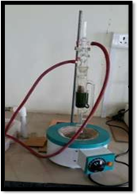
Fig: Ethanolic extraction of Prosopis juliflora leaves using Soxhlet method
Preliminary Photochemical Investigation:-
|
Test |
Observation |
Conclusion |
|
The test was carried out after the dry extract was dissolved in distilled water using acacia. |
_ |
_ |
|
1. Mayers test:- Three drops of Mayers reagent (potassium mercuric iodide) were added to the three milliliters of test solution. |
appearance of a cream or reddish-brown ppt. |
shows that alkaloids are present. |
|
2. Hagers test Four to five drops of the Hagers reagent (saturated picric acid solution) were added to three milliliters of the test solution. |
Yellow PP appearance |
Show whether alkaloids are present. |
|
3. Dragendorfs test- Dragendorff's reagent (potassium bismuth iodide) was added to three milliliters of the test solution. |
PPT has a reddish-brown appearance. |
Show that alkaloids are present. |
|
Ferric chloride test to test a solution containing a little amount of ferric chloride. |
displays a vibrant green color |
showing that flavonoids are present. |
|
1. Ferric chloride test cc of test solution combined with three milliliters of ferric chloride solution |
No dark color development. |
shows that there are no tannins present. |
|
2. Gelatin test 3 milliliters of the test solution and 3 milliliters of the gelatin solution. |
provides a white PowerPoint. |
shows that tannins are present. |
The test solution was forcefully shaken. |
creation of persistent foam, which was at least foramin stable. |
shows that saponins are present. |
|
1. Buljets test Two milliliters of the test solution were served with two milliliters of sod. solution of picrate. |
yellow to orange color development. |
Show that cardiac glycosides are present. |
|
2. Borntrager’ s test Two milliliters of the test solution were diluted with sulfuric acid, heated for a few minutes, and filtered. Two milliliters of benzene or chloroform were then included into the filtrate. and thoroughly shook Add ammonia after separating the organic layer. |
The ammonical layer's shift to a pink-red hue |
.shows that anthraquinone glycosides are present. |
Preparation of drug solution :-
Prosopis juliflora (sw) DC leaf extract. were examined for their ability to inhibit Pheretima posthuma. Distilled water and acacia were used to create ethanolic extract at varying concentrations, such as 25 mg/ml, 50 mg/ml, and 75 mg/ml. Distilled water was used to create the standard medication solution (25 mg/ml). Before the experiment began, every extract and normal medication was made fresh.
Procedure:-
1. Three groups of earthworms were identified: Control: (Saline Normal Water) Standard: (Albendazole) EPJ: 25, 50, and 75 mg/ml 1. Using the Pheretima posthuma model, ethanolic extracts from Prosopis juliflora leaves were tested for anthelminthic activity.
2. The bioassay was used to examine three concentrations (25, 50, and 75 mg/ml) of each extract using two parameters: the worms' time of paralysis and time of death. In this case, saline water served as the control and albendazole as the standard reference.
3. The first set of experiments involved releasing seven groups of four earthworms into 50 milliliters of solutions containing ethanolic extracts of Prosopis juliflora (25,50,75 mg/ml) and albendazole in distilled water.
4. Before beginning the experiment, standards and extract solutions were made fresh.
5. The time it took for each worm to become paralyzed and die was noted.
6. The time for paralysis was recorded when the worms were shaking violently and no movement of any kind could be seen.
7. When the worms died, their body colors faded and they lost their ability to move. Additionally, no movement was seen when the worms were submerged in boiling water.
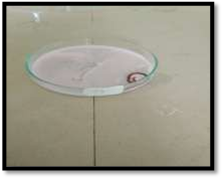
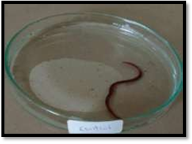
Standard (25mg/ml) Control
ETHANOLICEXTRACT
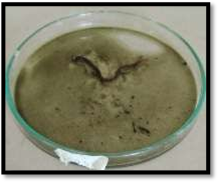
25 mg/ml (EPJ)
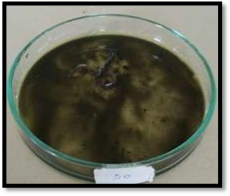
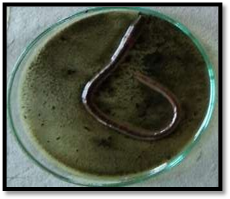
50 mg/ml (EPJ) 75 mg/ml (EPJ)
RESULT AND DISCUSSION:-
Table No. 1 Initial photochemical screening of a prosopis juliflora leaf ethanolic extract. (EPJ)
|
Sr. No |
Photochemical Tests |
EPJ |
|
1. |
Alkaloids |
+++ |
|
2. |
Flavonides |
+ |
|
3. |
Tannins |
+ |
|
4. |
Saponins |
+ |
Table No. 2: Anthelmintic potential of ethanolic extract of leaves of prosopis juliflora (EPJ)
|
Treatment |
Concentration (mg/ml) |
Time of Paralysis (min) |
Time of Death (min) |
|
Control (normal saline) |
_ |
_ |
_ |
|
Standard (Albendazole) |
25 |
7.0 |
25.0 |
|
EPJ |
25 |
6.0 |
20.0 |
|
50 |
4.5 |
14.0 |
|
|
75 |
3.0 |
9.1 |
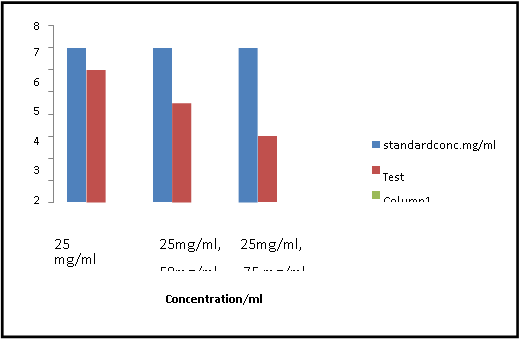
Graph no.1: Prosopis juliflora leaf ethanolic extract's (EPJ) anthelmintic properties in comparison to a common medication (paralysis).
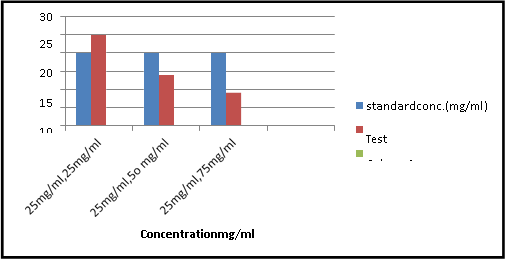
Graph 2. Prosopis juliflora leaf ethanolic extract's (EPJ) anthelmintic activity in comparison to a common medication (Death).
Different concentration (25, 50 & 75mg/ml) of ethanolic extract of leaves of Prosopis juliflora swing were evaluated for in-vitro anthelmintic activity. Preliminary Photochemical screening extract revealed the presence of saponins, glycosides, and flavonoids and tannins. (Table no.1) The chemical constituents saponins, triterpenoid, were already identified in the Prosopis juliflora leaves. Pheretima posthuma, an adult earthworm from India, was chosen due to its easy accessibility and anatomical and physiological similarities to the human intestinal roundworm infection. According to the aforementioned study, ethanolic extract shown notable anthelmentic efficacy in a dose-dependent manner when compared to the common medication albendazol (Table No. 2). It took 3.0 minutes for the worms to become paralyzed and 9.1 minutes for them to die at the highest dose of ethanolic extract (75 mg/ml), which demonstrated more notable anthelmintic potential. At a dosage of 25 mg/ml, the conventional medication albendazole caused paralysis in 6.0 minutes and worm death in 25 minutes.
The presence of tannin sand, which damages the mucopolysaccharide layer and causes paralysis and death, may be the cause of the anthelmintic activity of the ethanolic extract of Prosopis juliflora leaves. Therefore, more research is needed to identify the active ingredients responsible for anthelmintic activity.
CONCLUSION
The ethanolic extract of the leaves of Prosopis juliflora (sw) DC possesses anthelmintic activity comparable to standard, which is effective against human parasite infection. The presence of flavonoidal phytoconstituents, which will contribute to anthelmintic activity, may be the cause of the activity observed.
FUTURE SCOPE
Future research is required to determine the precise mechanism of action and to investigate the isolation, purification, mechanism, and pharmacological screening of the active principle responsible for the anthelmintic activity of the extract of Prosopis juliflora (sw) DC. Therefore, further information must be gathered in order to assess prosopis juliflora (sw) DC's therapeutic efficacy as an anthelmintic.
REFERENCES


Amol Pore, Gopika Dongare, Sanjay Bais, Evaluation of Anthelmintic Activity, Int. J. of Pharm. Sci., 2026, Vol 4, Issue 2, 3121-3131. https://doi.org/10.5281/zenodo.18700735
 10.5281/zenodo.18700735
