
DES Dayanand College of Pharmacy, Latur. Maharashtra, India
Annona reticulata Linn., a member of the family Annonaceae, is a widely valued medicinal plant traditionally used across India and other tropical regions. Various parts of the plant, including the leaves, bark, roots, fruits, and seeds, possess diverse phytochemicals such as alkaloids, flavonoids, phenolics, tannins, acetogenins, terpenoids, and glycosides, which contribute to its broad pharmacological profile. The present review compiles comprehensive information on the phytochemistry, ethnomedicinal relevance, and experimentally validated pharmacological activities of A. reticulata. Studies report significant antipyretic, antiulcer, antinociceptive, anthelmintic, analgesic, anti-inflammatory, antihyperglycemic, antioxidant, antimicrobial, antiproliferative, and anticancer properties. These activities are supported by bioactive constituents such as acetogenins (neoannonin, bullatacin), aporphine alkaloids (liriodenine, reticuline), and sesquiterpenes. Quantitative phytochemical analyses further highlight its high phenolic, flavonoid, and antioxidant content, particularly in roots. Preclinical investigations demonstrate dose-dependent therapeutic effects, validating many of its traditional uses. However, most findings are limited to in vitro and animal studies. Therefore, future work should focus on isolating lead compounds, elucidating mechanisms of action, establishing safety profiles, and conducting clinical evaluations. Overall, Annona reticulata represents a promising natural source of pharmacologically active molecules with significant potential for developing novel therapeutic agents.
A large proportion of people in developing nations rely on plant-based traditional medicine as their primary form of healthcare. Ayurveda, the ancient Indian medical system, is also rooted in the use of plants. Remedies derived from plants serve as the body’s first line of defense and play a vital role in restoring health. Extracts obtained from different plant parts exhibit diverse medicinal properties and are widely employed as raw materials in the herbal industry.[1]
The genus Annona (family Annonaceae) comprises 119 species, with 109 native to tropical America, 10 found in tropical Africa, and seven species along with one hybrid cultivated for domestic and commercial purposes. These plants are valued not only for their fragrance but also for their medicinal potential. Extracts from various parts of the plant are used as coloring agents, preservatives, sweeteners, and additives in numerous medicinal formulations.[1]
Plants are rich in secondary metabolites, making them a major source of therapeutically active compounds. Beyond medicinal applications, they have also been successfully incorporated into cosmetics and toiletry products. Several phytochemicals have been identified in different parts of Annona reticulata. The stem bark contains tannins, alkaloids, and phenolic compounds. Leaves are abundant in alkaloids, amino acids, carbohydrates, steroids, flavonoids, proteins, tannins, glycosides, and phenolics. Roots are known to contain acetogenins, alkaloids, carbohydrates, proteins, flavonoids, and tannins.[1]
Annona reticulata is recognized as a medicinal plant, and extracts obtained from its various parts possess significant therapeutic properties. Traditionally, it has been used to manage conditions such as epilepsy, dysentery, cardiac disorders, parasitic and worm infections, constipation, hemorrhage, bacterial infections, dysuria, fever, ulcers, and as an insecticidal agent. A. reticulata is also reported to exhibit spasmolytic, anti-inflammatory, anti-anxiety, anti-stress, and anti-mutagenic activities. The unripe fruits, which contain high levels of tannins, have been used in treating diarrhoea and dysentery, while in India, the pulp of ripe fruits has been applied to aid in the healing of superficial tumors. Additionally, extracts from the leaves and stems show inotropic, chronotropic, and spasmolytic effects.[2]
1.1 TAXONOMICAL CLASSIFICATION
1.2 BOTANICAL DESCRIPTION:
Table. 1: Botanical Description [3]
|
Category |
Description |
|
Taxonomy |
Kingdom: plantae, order: Magnoliales, family: Annonaceae, genus: Annona, species: reticulata |
|
Synonyms |
Annona laevis, Annona humilis |
|
Common names |
Krishnabeejam (Sanskrit), Wild Sweetsop (English), Raamaaphal (Marathi).{India} |
|
Habit |
It is a small, upright tree with a rounded or spreading crown and a trunk measuring 25–35 cm in thickness. Its height generally ranges between 5 and 10 meters. |
|
Stem\bark |
The stems are cylindrical having lenticels and very short coffee coloured hairs |
|
Leaves |
The leaves, which emit an unpleasant odor, are deciduous, alternate, and either oblong or narrowly lanceolate, measuring 10–20 cm in length and 2–5 cm in width, with prominent veins. |
|
Fruit |
The fruit is compound, measuring 8–16 cm in diameter, and may appear heart-shaped, irregular, lopsided, nearly round, or oblate, often with a depression at the base. Its skin is thin yet tough, turning yellow or brownish upon ripening, sometimes with a pink, reddish, or brownish-red blush, and showing faint to distinct reticulations. Beneath the skin lies a thick, cream-colored layer of custard-like flesh, slightly granular in texture, surrounding moderately juicy segments of similar color. |
|
Seed |
Many segments contain a single seed that is hard, glossy, and dark brown to black, oblong, smooth, and less than 1.25 cm long. Recorded seed counts range from 55 to 76. At the center of the fruit is a pointed, fibrous core, firmly attached to the thick stem, which extends more than halfway through the fruit. |
|
Flower |
The flowers grow in drooping clusters, are aromatic and slender, and possess three outer fleshy petals about 2–3 cm long. Externally, the petals are light green, while the inner surface is pale yellow with a dark red or purple spot at the base. Notably, the flowers never fully open. |
|
Roots |
Many fine lateral roots, typically brown/greyish with a bitter inner bark |
1.3 DISTRIBUTION
It is widely distributed and also cultivated across India up to an altitude of about 900 meters. The plant grows abundantly in hilly regions, wastelands, and has become fully naturalized in several states, including Andhra Pradesh, Punjab, Rajasthan, Uttar Pradesh, Madhya Pradesh, Bihar, West Bengal, Assam, Gujarat, Maharashtra, Karnataka, Kerala, and Tamil Nadu. Although now common in India, it is originally native to South America and the West Indie [3].
1.4 MORPHOLOGY
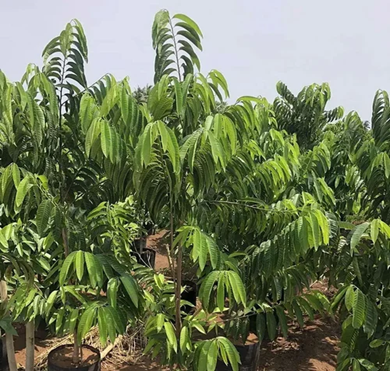
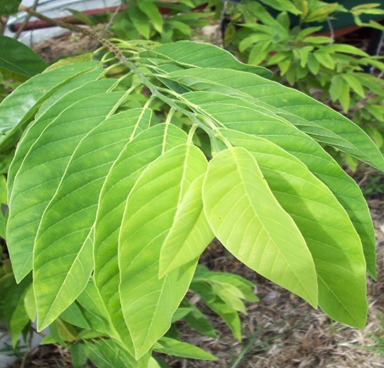
Whole plant Leaves
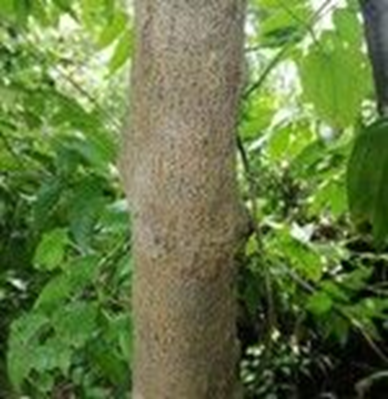
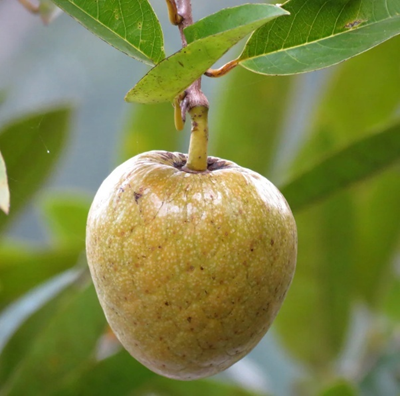
Stem Unripe fruit
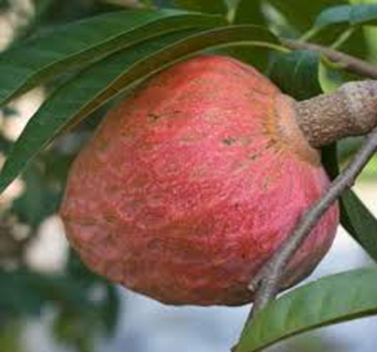
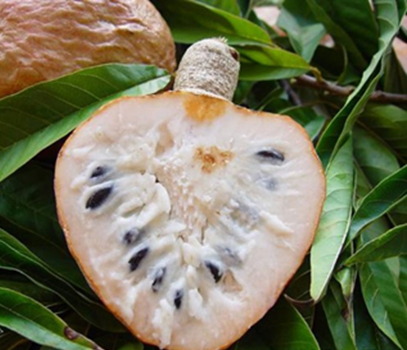
Ripe fruit Seeds
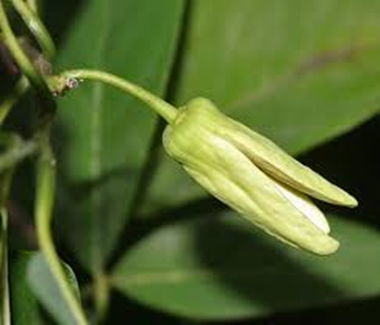
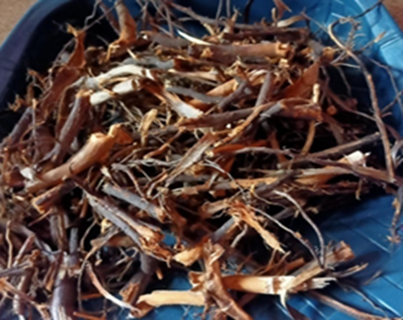
Flower Roots
Fig. 1. Parts of Annona reticulata Linn. Plant
1.5 PROPAGATION AND CULTIVATION
Annona reticulata Linn, commonly found in India and cultivated in Thailand and originates from the West India and south America. It is mainly grown in for small ever green tree is cultivated throughout India. The tree starts fruiting during 4-7 years, flowers open during August-December, ripened in 8 months and the annual yield of fruits is up to 70 [4].
1.6 TRADITIONAL USES
Traditionally, the plant has been used to manage cardiac disorders, dysentery, epilepsy, parasitic and worm infections, constipation, hemorrhage, bacterial diseases, dysuria, fever, ulcers, and also as an insecticidal agent. The bark acts as a strong astringent and serves as a tonic, while the leaves are utilized for treating helminthic infestations [4].
2. EXTRACTION METHODS
Table 2: Plant part, extraction procedure, pharmacological activities and their results obtained
|
Plant part |
Extraction procedure |
Activity |
Results |
References |
|
Leaves |
- |
Antipyretic |
Proved |
6 |
|
Cold maceration |
Anthelmintic |
Proved |
7 |
|
|
- |
Antihyperglycemic |
Proved |
8,36 |
|
|
Soxhlet |
Antiulcer |
Proved |
9 |
|
|
Soxhlet |
In vitro cytotoxic |
Proved |
10 |
|
|
Recombinant caspase |
Proved |
|||
|
inhibitory activity |
Failed |
|||
|
- |
Antinociceptive |
Proved |
11 |
|
|
Bark |
Soxhlet |
Analgesic and CNS depressant |
Proved |
12,37 |
|
Maceration |
Analgesic and anti-inflammatory |
Proved |
13,14 |
|
|
Root |
Soxhlet |
Antiproliferative |
Proved |
15,16 |
|
Soxhlet |
Anticancer |
17 |
||
|
Soxhlet |
Antioxidant and antimicrobial |
18,38 |
||
|
Stem bark |
Refluxed with distilled water |
Analgesic and Anti-inflammatory |
Proved |
19 |
|
Seed |
Soxhlet |
Wound healing and antimarking activity |
Proved |
20 |
3. PHYTOCHEMISTRY
Table 3: Phytochemical constituents of Annona reticulata
|
Plant parts |
Phytochemicals |
References |
|
Leaf |
Dopamine, Salsolinol, Coclaurine, Sesquiterpenes mainly Spathenelol, Muurolene, Copaene, Eudesmol, Acetogenine Squamone, Solamin, Annomonicin Rolliniastatin 2 Annoreticuin-9-One. Triterpenoid annonaretin A |
7, 11,12,21,22 |
|
Bark
|
Monotetrahydrofuron acetogenins, Reticulatacin, Diterpenes: (-)-kau-M-en-19-oiaccid acid and methyl 1b,17-dihydro-(e)-kauran-19-oate, Alkaloids: Liriodenine, Copaene, Patchoulane and 1H-cycloprop (e) azulene, (-)Kau-16-en-19oic acid, Bistetrahydrofuroneacetogenin, Bullatacin |
13,14,23 |
|
Stembark
|
Dopamine, Salsolinol, Coclaurine, Diterpenes (-)-kaur-16--en-19-oicacid, 16-α-hydroxy-(e)-kauran-19-oicacid, Methyl-17 hydroxy-16-b-(e)-kauran-19-oate, reticullacinone, Rolliniastatin-2 (=bulatacin = annonin-VI ), Molvizarin. |
7,12,24 |
|
Root
|
Aporphine alkaloids, Liriodenine, Norushinsunine, Reticuline, Acetogeninneoannonin, Sesquiterpenes mainly spathenelol, Muurolene, Copaene, Eudesmol |
12,15 |
|
Rootbark
|
Anonaine, Michelalbine, Oxoushinsunine, Reticuline, Unknown phenolic comp. Aporphine alkaloids Liriodenine, Norushinsunine, Reticuline. |
7 |
3.1 Phytochemical parameters
Table 4: Phytochemical parameters
|
Sr.no |
Parameters |
Leaf |
Stem bark |
Roots |
References |
|
1 |
Total ash |
15.10 |
6.62 |
5.80 |
25,26 |
|
2 |
Water soluble ash |
4.45 |
4.41 |
0.93 |
25,26 |
|
3 |
Acid insoluble ash |
0.89 |
0.503 |
1.99 |
25,26 |
3.2 Quantitative estimation of phytochemical constituents in Annona reticulata
Table 5: Quantitative estimation of phytochemical constituents in Annona reticulata TE- Trolox Equivalents, GAE- Gallic Acid Equivalents; DW-Dry Weight; FW-Fresh Weight.
|
Sr.no |
Phytoconstituents |
Leaves |
Bark |
Roots |
References |
|
1 |
Total phenolic content (mg GAE/g DW) |
20.76 |
13.77 |
82.08 |
1 |
|
2 |
Total antioxidant capacity (mg TE/g DW) |
30.09 |
69.39 |
337.70 |
1 |
4. PHARMACOLOGICAL ACTIVITIES
Antipyretic Activity- A study was carried out to evaluate the fever-reducing potential of a crude aqueous leaf extract of Annona reticulata, administered at doses of 200 mg/kg and 400 mg/kg. Hyperpyrexia was induced in rats through a subcutaneous injection of a 20% aqueous suspension of Brewer’s yeast. Animals showing a rise in body temperature of 0.5–1 °C or more after 18 hours were selected for the experiment. The activity of the extract was compared with that of the standard drug paracetamol, given at 150 mg/kg. Results indicated that the leaf extract of A. reticulata exhibits notable antipyretic effects [27].
Anthelmintic Activity- The effectiveness of A. reticulata leaves in treating worms was tested using Indian earthworms, Pherentima posthuma. The leaves were ground and soaked in ethanol to make an extract. Vacuum distillation was used to concentrate the extract, yielding 15.83 g. The extract was then separated into fractions using petroleum ether, chloroform, ethyl acetate, and ethanol. Each fraction was concentrated, yielding 3.39 g, 0.15 g, 0.13 g, and 1.51 g respectively. Earthworms of specific dimensions were selected for the study, with Albendazole serving as the control. The ethanol fraction showed faster paralysis onset, indicating it had stronger anthelmintic activity compared to the other fractions [7].
Antiulcer Activity- The potential of the aqueous extract from A. reticulata leaves to treat ulcers was explored using ethanol and indomethacin to induce ulcers in rats. The extract, obtained through Soxhlet extraction and vacuum concentration, was administered to different groups of rats alongside a vehicle-treated group and a group treated with famotidine as a reference drug. Significant reductions in ulcer index, acid volume, and total acidity were observed in rats treated with both the extract and famotidine. Additionally, the extract showed improvements in glutathione levels and pH compared to the vehicle- treated group. These findings suggest that the antiulcer activity of the extract may be attributed to its cytoprotective, antisecretory, and antioxidant properties [28].
Antinociceptive Activity- A model using acetic acid-induced gastric pain was employed to evaluate the potential pain-relieving effects of methanolic extract from A. reticulata leaves in Swiss albino mice. The leaves were dried, powdered, and soaked in methanol for 48 hours. Swiss albino male mice weighing 20–25 g were divided into groups. The control group received a vehicle, while another group received aspirin at doses of 200 and 400 mg/kg. The remaining groups were given different doses of the extract (50, 100, 200, and 400 mg/kg). After 60 minutes, the mice were injected intraperitoneally with 1% acetic acid to induce writhing, and the number of writhings was recorded for 10 minutes. The extract reduced the number of writhings by 47.0%, 55.1%, 67.3%, and 69.4% at doses of 50, 100, 200, and 400 mg/kg, respectively, indicating a significant dose-dependent effect and suggesting the presence of potent pain-relieving compounds in the leaves [29].
Analgesic and Anti-inflammatory- The sesquiterpene portion of A. reticulata bark underwent testing for its pain-relieving and anti- inflammatory effects, both centrally and peripherally. The study utilized a sesquiterpene fraction extracted from unsaponified petroleum ether, containing a mix of three primary sesquiterpenes, constituting 71.66% of the fraction. Analysis via GC/MS revealed copaene (35.40%), patchoulane (13.49%), and 1H-cycloprop(e)azulene (22.77%) within the fraction. Central and peripheral pain relief was assessed using the Eddy's hot plate and acetic acid-induced writhing methods, while anti- inflammatory properties were evaluated through the carrageenan- induced paw edema method. Significant pain relief was observed with the sesquiterpene fraction at doses of 12.5 and 25 mg/kg, and with the unsaponified petroleum ether extract at 50 mg/kg. Pentazocin and aspirin served as standard analgesics. The inhibition of carrageenan- induced paw edema was dose-dependent in groups treated with the extract and fraction, comparable to aspirin's effects [30].
Antiproliferative Activity- The research explored the antiproliferative abilities of aporphine alkaloids liriodenine, norushinsunine, reticuline, and acetogenin neoannonin, sourced from A. reticulata roots, against various cancer cell lines (A-549, K-562, HeLa, MDA-MB) and normal Vero cells using MTT assay. The compounds were identified structurally through 1HNMR, 13CNMR, and mass spectroscopic techniques. Aporphine alkaloids were extracted via column chromatography (neutral alumina) from the root's ethanolic extract using a toluene:ethyl acetate:diethyl amine solvent system, while acetogenin was isolated via ethanol partitioning and column chromatography with n-hexane, ethyl acetate, and methanol. The activity was assessed using isolated compounds at concentrations of 5, 10, and 20 μg respectively. Neoannonin demonstrated significant cytotoxicity (IC50: 5.8 to 6.9 μg/ml) against all cancer cell lines, whereas norushinsunine showed moderate cytotoxicity (IC50: 7.4 to 8.8 μg/ml). The compounds exhibited lower cytotoxicity (IC50: 13.8 to 26.0 μg/ml) on normal Vero cells compared to cancer cell lines. The study concluded that the pronounced cytotoxicity of the isolated aporphine alkaloids is attributed to the isoquinoline moiety, the presence of a hydroxyl group, and the apoptosis-inducing ability of these compounds in cancer cell lines [31].
Antioxidant and Antimicrobial Activity- The study focused on exploring the antioxidant and antimicrobial properties of A. reticulata root extract. Antioxidant screening involved DPPH free radical scavenging and hydrogen peroxide assays, while antimicrobial analysis utilized agar cup and poison plate methods for bacteria and fungi, respectively. The roots were processed, dried, powdered, and extracted using a Soxhlet apparatus. Antioxidant activity was assessed at various concentrations, and antibacterial efficacy was tested against both gram-negative and gram-positive bacteria. Similarly, antifungal activity was evaluated against several fungi strains. The extract demonstrated significant scavenging activity comparable to ascorbic acid, notably inhibiting B. cereus and showing substantial effectiveness against all bacteria strains. It also exhibited notable antifungal activity, particularly against T. viride and C. albicans. These findings underscore the potent antimicrobial potential of A. reticulata root extract [33,37].
Wound healing activity of ethanol extract of Annona reticulata L. leaf both in vitro and in diabetic mice:
This study shows that the ethanolic extract of Annona reticulata leaf promotes wound healing by enhancing the growth and movement of skin cells. It activates key healing pathways (TGF-β/SMAD and PI3K/Akt) and increases proteins involved in tissue repair. In diabetic mice, treated wounds healed faster, supported by histological evidence. Quercetin and β-sitosterol were identified as the main active compounds. Overall, the extract demonstrates strong potential for diabetic wound treatment [34].
5. CONCLUSION
Annona reticulata is a medicinally important plant rich in diverse phytochemicals such as alkaloids, flavonoids, phenolics, tannins, and acetogenins, which contribute to its wide range of therapeutic effects. Scientific studies support its traditional uses by demonstrating significant antipyretic, antiulcer, antinociceptive, anti-inflammatory, antioxidant, antimicrobial, antihyperglycemic, and anticancer activities. Although these findings are promising, most research is limited to experimental and preclinical models. Therefore, further work is needed to isolate active compounds, clarify mechanisms of action, and conduct clinical studies to confirm its safety and effectiveness. Overall, A. reticulata holds strong potential for the development of future herbal and pharmaceutical formulations.
REFERENCES

Supriya Jadhav, Wadulkar R. D., Satpute K. L., Undare A. S., A Comprehensive Review on Phytochemistry and Pharmacological Potential of Annona reticulata, Int. J. of Pharm. Sci., 2026, Vol 4, Issue 1, 896-905. https://doi.org/10.5281/zenodo.18207385
 10.5281/zenodo.18207385
