

We use cookies to ensure our website works properly and to personalise your experience. Cookies policy
Pravara Rural College of Pharmacy, Pravaranagar, 413714.
The glycemic index (GI) and Insulin index (II) are essential parameters used to evaluate the how a food substance is effect on the blood sugar and the insulin level in the body. The study aims to evaluate the GI and ll of a marketed sugar product. It also providing the potential impact on diabetes and non-diabetic individuals. The GI was calculated by comparing the glucose response to the sugar product with their reference food (White bread) while II was measured using a similar method. High GI food increases the risk of noncommunicable disease i.e. diabetes. Test meals contain high amount of dietary fiber which affect the GI value and blood insulin. Soluble fiber as beta glucans source in the developed to eat meal and other vegetables are help to delay gastric emptying time. The glucose in the diet was absorbed more rapidly with decrease blood glucose levels and increased insulin response. The results showed the sugar product has a moderate GI and II. when compared to other sweetens. These finds suggest that sugar product may have with diabetes and manage their blood sugar levels.
Glycemic index & Insulin index are parameters. They are evaluating the how effects on blood sugar & insulin for food products. Glycemic index (GI) & Insulin index are most useful in postprandial effects of food on blood glucose & insulin levels. Glycemic index (GI) is a numerical scale that ranks foods based on their effect on blood sugar levels, while Insulin index evaluates the insulin response to a specific food [1,2]. Sugars are present in various form one of the most widely consumed sweeteners globally. It is important role in increased the level of blood glucose & insulin. Individuals with insulin resistance or Type 2 diabetes [3]. Many types of the sugar such as table sugar (sucrose) & high fructose corn syrup (HFCS) have been extensively studied. Sucrose are compound of the fructose & glucose, has a moderate glycemic effect, whereas fructose are alone has a lower GI but a higher the Insulin index (II) [4]. Recent studies: the potential benefits of understood both the GI & II of sugar products. They are help in development of the strategies to prevent & manage metabolic disorders such as type 2 diabetes & obesity [5]. Various variety of the marketed sugar products are available on the market and it is difficult to evaluate the effect on insulin and blood glucose levels, special in light of increase the frequency diabetes worldwide.
1. Glycemic Index of Different Foods
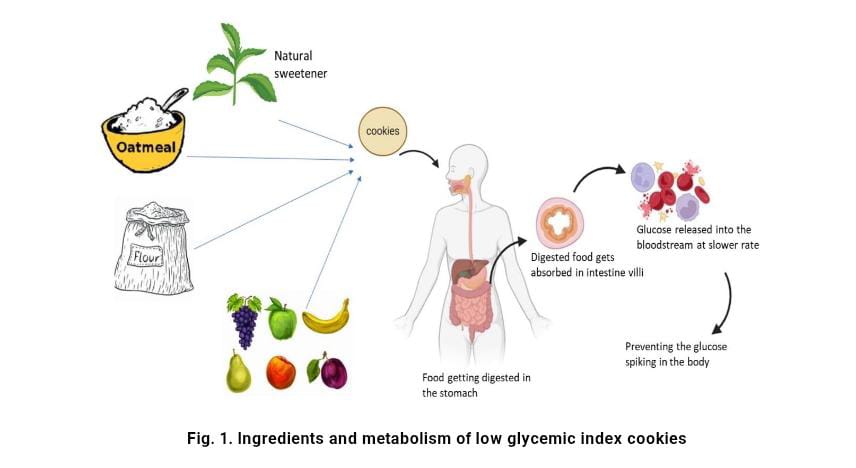
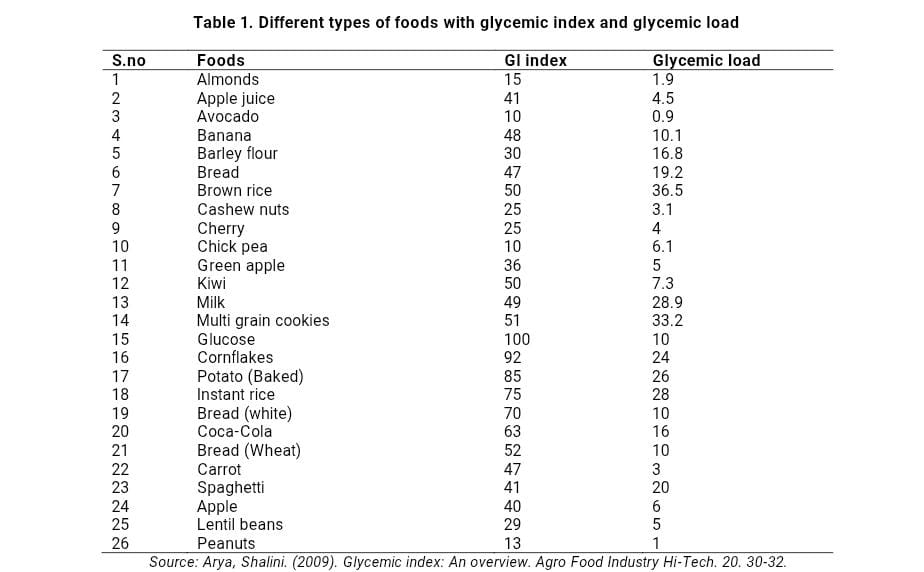
The glycemic index of different foods depends on composition and factors like the making process, use of sweeteners, etc. Based on the various levels of GI, the foods are classified as low GI, where the GI of food ranges from 55 or less; medium, where food GI levels range from 56 to 69; and high, where the glycemic index ranges more than 70. Fruits, legumes, and dairy products have also been shown to have low GI values. Some of the glycemic values of various common foods are represented in Table 1.
2. Different Low-Gi Bakery Foods
Many bakery food products are staple foods in various countries, eaten as breakfast, snacks, and decadent treats. These are accessible sources of energy, carbohydrates, and pleasure for dieters. Obesity and diabetes are among the common health problems caused by the excessive concentrations of processed carbohydrates and harmful fats in many traditional bakery items. Reducing sugar content and adding whole grains can increase nutritional value and decrease the glycemic index to overcome these issues. Healthy fats and fruits, vegetables, nuts, seeds, and baked goods must be added to boost nutrient density.
2.1 Low GI Biscuits
A biscuit is a tiny, baked, flour-based food item that can be savory or sweet, depending on therecipe and local variations. Biscuits are usually crispy. A baked good with a low glycemicindex is composed of components that gradually release glucose into the bloodstream,promoting stable blood sugar levels. Frequently used components in low-GI biscuits are wholegrain flour, almond flour, among other nut flours, natural sweeteners (such as erythritol, date syrup, and stevia), components high in fiber (such as flaxseed and oats), and unsaturated fats (such as avocado and olive oil). Adding fiber and good fats from whole grain and nut flour encourages slower digestion and a lower glycemic index, Natural sweeteners offer sweetness that doesn’t rapidly increase blood sugar levels. Ingredients rich in fiber encourage satiety and slow the digestive process, while unsaturated fats assist in maintaining stable blood sugar levels.research performed by Anju et al. [6] on creating biscuits with a low glycemic indexdetermined that according to the results achieved, refined wheat flour and millet flour were utilized inthe proportion of 45% and 55%. And additional components included eggs (5.5), confectioners' sugar (14%), hydrogenated oil (23%), leavening agent, and yogurt (11.5%). This item possesses the maximum crude. protein, raw fiber, mineral content, carbs, biological energy, glycogen, different minerals, low glycemic index, and improved sensory attributes, shelf life and nutrition value, This tasty item posseses has been developed and offers significant health advantages for human well being. The research conducted by Hussain, S.Z et al. [7]. Created biscuits incorporating water chestnut and barley flour. Merging the combination of WCF and BF in a 70:30 ratio enable the creation of biscuits with the preffered sensory characteristics attributes. The final product exhibited a higher concentration of resistance starch. More than WCF and BF. Studies have indicated that incorporating BF in place of 30% WCF may lead to cookies with optimal sensory characteristics and low glycemic index Based on the storage study, the produced metalized polyethylene biscuits might be stored in a refrigerator for as long as 35 days and in a room temperature setting for as long as 28 days. (overall acceptability score exceeding 3 on a 5-point scale) A different case study conducted by Marangoni et al. [8] created bread and biscuits with a low glycemic index and outlined the combination of temperature and time along with glucose levels during baking the cookies. The control and altered samples contained 75 g of carbohydrates accessible to an individual. following the consumption of the low glycemic index cookies. Following baking, the nutritional worth of the low The glycemic index biscuit contained 481 calories, with carbohydrates at 55%, fat at 25%, protein at 9%, and total fiber. % 6, and the water content was 5%.
2.2 Low GI Bread
Bread is a common food typically created using bekrig dough composed of flour, usually wheat. Glycemic bread is a variety of bread characterized by a low glycemic index, indicating that it has a slight influence on blood sugar levels. This loaf is prepared with components that delay the digestive process, unlike typical bread, which is generally produced from refined white flour that the body can readily digest and absorb. This stops abrupt increases in blood. sugar levels, offering a more steady energy source by gradually releasing glucose into the blood circulation.[9] Low-glycemic bread is frequently crafted with whole grains because of its capacity to preserve natural fibers and nutrients. In the research conducted by Prabhahar et al. [10], Glycyrrhiza glabra extracts were added to ordinary bread to turn it into authentic herbal bread. Diverse Quantities of Glycyrrhiza glabra, including 2%, 4%, and 6%, are utilized to enhance bread. Fluid Chromatography-mass spectrometry (LCMS) analyzed the functional properties of Glycyrrhiza glabra elements. The study on antioxidants indicates that the extract possesses significant antioxidant strength. This study also evaluated the anti-diabetic efficacy of the extract. Several of Sensory and taste elements were examined in the enriched bread assessment. The blood sugar index and additional biochemical assessments, like the in vitro digestibility evaluation, suggest that fortified bread reduces the glycemic index. The study concluded that 6% was more effective than 2 and 4%. Infused bread possessed significant strength as a functional food. Based on the research, as noted Enriched bread reduces the glycaemic index, making it suitable for diabetics. individuals following a diet plan. Research has shown that reformulating ingredients, such as partially replacing resistant starch, dextrin, lentil flour, and wheat flour can reduce baked glycemic index (GI) of products. This is particularly important for gluten-free products because their A reduction in protein, fiber, and mineral levels often leads to an increased GI. It has additionally been found that incorporating pulse ingredients can lower the GI of cereal-based products, like pea and lentil meal. Additionally, since coconut flour contains a significant amount of dietary fiber content, its GI can be reduced with higher quantities in baked goods that incorporate it [11]
2.3 Cereals and legumes
Cereals and legumes play a important role in diets of people. They provide essential nutrients and key component of a balanced diet.A report from the National Health and Medical Research Council states that cereals like barley, millet, and rye account for 56% of human energy and 50% of protein intake. These grains, along with legumes such as chickpeas and lentils, give health benefits due to their high content of dietary fiber, proteins, vitamins and minerals. Legumes are rich in protein, complex carbohydrates, and essential vitamins like B- complex, making them highly nutritious [9]. Cereals and legumes are vesatile, consumed in various forms such as whole or proceed products like breakfast cereals [10]. Legumes contain anti- nutritional factors like phytates and tannins , which can mitigated through processing methods such as soaking , cooking, or fermentation to enhance digestability and nutrient absorption . They are beneficial for heart health, blood sugar regulation , and digestive function. Finger millet and kodo, for example,are powerful sources of antioxidant like phenolics and tannins, which have manage glucose levels and oxidative sterss in people with type ll diabetes [11].
2.4 Low GI Pasta
Pasta is a dish usually created by combining wheat flour, water, and eggs to produce a smooth dough. The dough is subsequently formed into sheets of different shapes and prepared by either boiling or baking. Historically, pasta was made exclusively from durum flour, but today the term encompasses other gluten-free flour alternatives including rice flour, legumes such as beans, and substitutes like lentils. Although pasta is thought to have begun in Italy and is a crucial part of Cucina italiana. The research conducted by Pachipulusu M et al. [12] created a low glycemic index. noodles and determined that these flours may be included in noodle recipes along with legumes flour (X2-35%), leafy green vegetable powder (X3-12.5%), and millet flour (X1-52.5%) without sacrificing the sensory and textural attributes of the final product, from all the Among the products made, this one has the highest fiber, protein, and low GI levels. It is additionally the most accommodating to sensory needs. A mixture of these flours is used to improve pasta's sensory. attributes. Goods can be produced that are both visually appealing and rich in nutrients. through employing the potential of merging various ingredient designs and sensory examination. Consequently, this pasta possesses great potential to offer significant health advantages to the public. well-being. energy consumption that is intensified by lack of exercise. Excessive fat consumption is a major contributing element to these situations. Consequently, a diet low in fat is recommended by a count of public health organizations (such as the American Diabetes Association, 1997), Gabir et al., [13] focused on controlling and preventing obesity and diabetes A possibly dangerous result of these suggestions could be a real reduction in fat consumption paired with a rise in dietary carbohydrates, which could elevate the glycemic levels and possibly the overall GI of the diet. Choosing low-GI meals is essential for individuals who experience a significant decrease in consumption of dietary fats. This type of diet may offer advantages such as weight loss Maziarz et al. [14] and reducing the aging process due to the high antioxidant content in the foods. Additionally, the free radical Formation is decreased by lowering oxidation. Low GL diets additionally safeguard the heart from different CVDs and hinder multiple cancer-inducing elements [15] this type of research assists inform individuals and assist them in making improved decisions for maintaining a healthy lifestyle. This research will assist us in comprehending recent progress. A significant amount of research has been conducted on the subject, and numerous progressions have been achieved. Improvements like utilizing various alternative flours such as banana starch, quinoa flour, water chestnuts, etc., to create the product instead of using wheat Flour enhances the fiber content and lowers the GL. Additional elements, like components, also contribute to a significant part in reducing Numerous choices exist for a nutritious breakfast, including nutritious grains, nuts, and seeds, granola packets, oatmeal pouches, and low-GI breakfast cereals, snack bars containing nuts, seeds, and dried fruits. Options for low-GI and easily transportable foods offer power and protein. Individuals concentrate on managing blood sugar levels for better health, thus the demand for low-GI ready-to-eat meals is rising because of heightened consumer awareness. knowledge of the glycemic index (GI) [16,17]
2.5 Low GI Crackers
Low-GI crackers are an excellent option for individuals seeking to manage their blood sugar levels. effectively. These crackers fall into the low-GI food category because their glycemic index (GI) is fewer than 55. Crackers with a low glycemic index have been associated with enhanced feelings of satiety and management of post-meal glucose responses, potentially aiding in blood sugar regulation and weight loss administration. The research conducted by Diana N et al. [20] created chocolate crackers with a silky - dough created with the correct proportions of wheat flour, margarine, stevia sweetener, cocoa powder, nonfat milk, baking soda, yeast, and altered kepok banana flour Moreover, chocolate crackers created with kepok banana flour were tough and easily shattered. due to the low gluten content in the flour. These crackers had a dull flavor because of the use of stevia. in place of sucrose. Regarding flavor, texture, and aroma in relation to the organoleptic characteristics, the chocolate crackers in the AC group that replaced 50% of the banana flour with kepok had the top -values. Moreover, their starch level was the most resilient. Diana N et al. [20] noted that chocolate crackers prepared with 75% kepok banana flour through the ACF The method exhibited the lowest in vitro starch digestibility (22%) and the highest level of resistant starch. content (9%). The chocolate crackers in the AC group contained 50% less banana flour compared to Kepok showcased the finest organoleptic qualities regarding flavor, consistency, and aroma. The air conditioning unit and ACF group crackers exhibited a reduced GL and a low GI of under 55 in contrast to noncrackers. Kepok banana flour is produced through autoclaving, followed by cooling and fermentation. Bananas may serve as a beneficial ingredient in reducing the GL and creating low-GL snacks for individuals diagnosed with type 2 diabetes.
2.6 Low GI Muffins
Muffins are fast breads similar to cakes that can be either sweet or savory and are baked in single portions. Many people adore them for their delightful flavor and tender texture. Nevertheless, wheat flour serves as the main component in all baked products and possesses a medium to high glycemic index (GI). When extra components such as sugar are included, the glycemic load of the baked The quantity of goods is further raised, rendering them inappropriate for individuals with diabetes. The method applied The recipe for the muffins was developed by Hussain et al. [19]. The recipe entails mixing sifted mixing dry components and whisking eggs separately with a flat beater in a stand mixer. The defeated the eggs are subsequently mixed with creamed shortening while being continuously stirred. H2O and Emulsion is incorporated into the dry mixture and thoroughly blended. The batter is subsequently poured into cupcake liners. pans (65g) and stored in the freezer for four hours at a temperature of -20°C. The cups filled with batter are cooked for 30 minutes at 180°C in an oven. Once cooled to regular temperature, the baked Muffins are stored in a bag at 20°C for 72 hours. The response of glycemia and The inclusion of certain elements significantly influenced (p < 0.05) the qualitative characteristics of muffins. barley meal (BM). It was found that the concentration of resistant starch in the final product (43.5%) exceeded that of BF (5.18%) and water chestnut (40.24%). The research shows that it is feasible to make low-GI muffins with the suitable sensory attributes by replacing 30% of the water chestnut flour (WCF) with BF. The muffins produced with 70% WCF and 30% BF were observed to exhibit enhanced firmness, water activity, free fatty acid and peroxide levels during storage, while moisture content and general acceptability fallen.
MATERIALS AND METHODS
1.Test Foods and Procedure
The marketed sugar product (sucrose) was purchased from the local market and provided to 30 individually and each participants gives 50 gm. for a reference food white bread was use which contains a known glycaemic index. Blood glucose level was measured at base line (before consumption), 30,60,90 and 120 minutes after consumption. Blood insulin level were measured at base line and at 30 minutes interval for the same duration.
Glycemic Index (GI) Calculation:
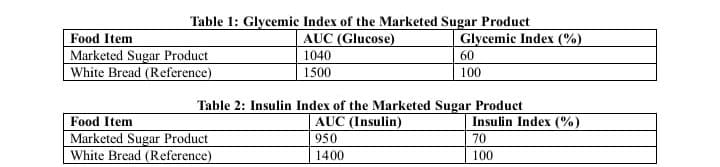
The GI was calculated by comparing the area under the blood glucose curve (AUC) for the marketed sugar product to that of the reference food. The GI of the sugar product was calculated as follows:
GI = (AUC of test food AUC of reference food) ×10 0\text{GI} = \left(\frac{\text{AUC of test food}}{\text{AUC of reference food}} \right) \times
100GI (AUC of reference foodAUC of test food) ×100
Insulin Index (II) Calculation:
Similarly, the II was calculated using the same method, comparing the AUC of the insulin response after consuming the sugar product to that of the reference food.
CONCLUSION
In conclusion, the marketed sugar products increase. In this study a moderate glycemic Index and Insulin Index are compared to the reference food. Results of the sugar products could acceptably option for individuals managing their blood glucose levels. The GI values of foods can be used to increase menu choices and important from prevention and treatment of Type 2 diabetes, CVD and obesity. The development of nutritious food or a disease diet offer alternative healthy eating choices for patients or healthy people. This is choice for the therapeutic diet that may suitable for diabetes patients.
REFERENCES


Patole Varsha*, Varade Shruti, Vadak Prachi, Zite Sonali, Evaluation of Glycemic Index and Insulin Index Marketed Sugar Product, Int. J. of Pharm. Sci., 2025, Vol 3, Issue 9, 1614-1622 https://doi.org/10.5281/zenodo.17119007
 10.5281/zenodo.17119007