
Gajanan Maharaj college of pharmacy, chh. sambhajinagar
Malaria is a life-threatening disease caused by parasites transmitted through the bite of infected female mosquitoes. In many parts of the world, particularly in tropical regions, . malaria remains a major health challenge. Traditional plant-based medicines have been used for centuries to treat various diseases, including malaria. One such plant, Nyctanthes arbor-tristis, commonly known as Night Jasmine, is known for its medicinal properties. This study focuses on the formulation and preparation of an anti-malarial syrup using the leaves of Nyctanthes arbor-tristis. The leaves of this plant were selected due to their potential antimalarial activity, which has been documented in several scientific studies. The preparation process involves extracting the active compounds from the leaves, followed by formulating them into a syrup that is easy to administer. This syrup aims to provide an effective, natural remedy for malaria, offering an alternative to synthetic anti-malarial drugs. This formulation could offer a safe, cost-effective, and accessible treatment option for malaria, particularly in areas with limited access to conventional healthcare services. The study highlights the potential of Nyctanthes arbor-tristis as a valuable resource in the fight against malaria and calls for more research to confirm its efficacy and safety.
In the last decade, 40% of the malaria-endemic countries reported reduction in the incidence of malaria by half. This has raised hopes to the stage of ‘complete eradication’ of malaria in the near future. Recently, the World Health Organization (WHO) announced an ambitious new plan to “almost” eradicate malaria by 2030; 40% by 2020 and 90% by 2030. However, alarming reports of artemisinin resistance, first from Thai-Cambodian border in 2009 and it's spread in 5 countries within 5 years have contributed to the unceasing threat of resistance development. This has put forth again an urgent need for the development of new antimalarial drugs. In spite of persistent efforts and significant investment, availability of long lasting antimalarial drugs is still a quest. Medicinal plants, being a source of diverse compounds, have been a major attraction for drug discovery scientists. The two major antimalarial drugs; artemisinin and quinine, have been discovered from plant.
MALARIA
Malaria is a life-threatening disease spread to humans by some types of mosquitoes. It is mostly found in tropical countries. It is preventable and curable. The infection is caused by a parasite and does not spread from person to person.Symptoms can be mild or life-threatening. Mild symptoms are fever, chills and headache. Severe symptoms include fatigue, confusion, seizures, and difficulty breathing. Infants, children under 5 years, pregnant women, travellers and people with HIV or AIDS are at higher risk of severe infection. Malaria can be prevented by avoiding mosquito bites and with medicines. Treatments can stop mild cases from getting worse.
Drugs used in treatment of Malaria
Cinchona alkaloids: quinine, quinidine
4 aminoquinolines: chloroquine, hydroxychloroquine, amodiaquine,
8 aminoquinolines: primaquine, tafenoquine, bulaquine
Chemical Constituents.
Many distinct compounds, including flavonoids, terpenes, steroids and alkaloids which belong to various chemical classes, have been identified and described from the various portions of the N.arbor and produces a significant number of chemicals, which fall under the category of secondary metabolites as shown in Table.
Chemical constituents present in different parts of N. arbor
|
Plant parts |
Phytoconstituents |
|
Bark |
Iridoid, Phenylpropanoid |
|
Flower |
Diterpenoid nyctanthin, Flavonoids, Anthocyanins, Essential oil, βmonogentibioside, β-digentibiosi |
|
Fruits |
Anthocyanin, tannins, D-mannitol, glucose, carotenoids, kaemferol, Essential oil, glycosides. |
|
Leaves |
Ascorbic acid, Tannic acid, D-mannitol, carotene, friedeline, lupeol, glucose, methyl salicylate, Fructose, β-sitosterol, Nyctanthic acid , Quinine |
|
Stem |
Glucoside- naringenin -4’ -o-beta-glucapyranosyl - alpaxylopyranoside, Betasitosterol |
|
Seeds |
Myristic acid, Stearic acid, Lignoceric acid, Arbortristoside A&B, Glycerides, Palmitic acid |
How Nyctanthes arbor-tristis works on Plasmodium and Malaria Cycle:
Inhibition of Parasite Growth
Disruption of Parasite Cell Membrane
parasite's cell membrane, allowing ions and small molecules to leak out, ultimately leading to the parasite's death.
Immunomodulatory Effects
Active Compounds
Some of the active compounds present in Nyctanthes arbor-tristis that have been found to exhibit antiplasmodial activity include:
MATERIAL AND METHODS
Step 1: Collection of Plant Material
Plant Part Used: Leaves (commonly used for antimalarial properties) Time of Collection: Early morning or late afternoon
Cleaning: Wash thoroughly with water to remove dirt and dust.
Drying: Shade dry for 3–5 days, then crush to coarse powder (or use fresh leaves if immediate extraction)
Grinding: Grind the dried leaves into a fine powder using a mechanical grinder. Storage: store the powder in an airtight container further use.
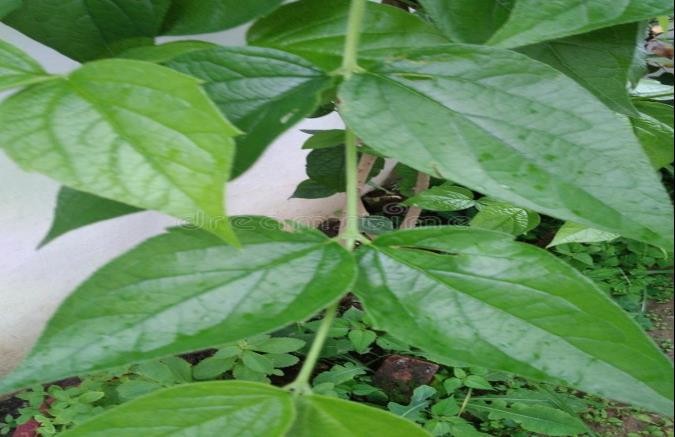
Botanical name: Nyctanthes arbor-tristis L.
Family: Oleaceae (the olive family)
Synonyms: Jasminum arbor-tristis
Parts which are used : leaves
2. EXTRACTION PROCESS
Method: Hydroalcoholic or Aqueous Extraction ( both are commonly used)
Aqueous Extraction (Decoction)
(simple and suitable for Syrup formulation)
1. Weigh 50 g of leaf powder.
2. Boil in 500 ml of distilled water for 30-45 minutes.
3. Cool and filter using muslin cloth followed by Whatman No.1 filter Paper.
4. Concentrate the extract using a water bath at 60-70 C until a thick concentrate is obtained.
5. store the extract in a refrigerator
PEPARATION AND PROCEDURE
Weigh 18 g of sucrose.
Dissolve it in about 25 ml of warm purified water. Stir continuously until fully dissolved.
Cool to room temperature.
Sprinkle 0.1 g of tragacanth gum into 5 ml warm water. Stir well to prevent lumping.
Let it hydrate for 1–2 hours (or overnight) for best results.
Dissolve 0.05 g citric acid in 2–3 ml purified water. Set aside.
Mix 0.025 ml tea tree oil and 0.1 ml orange oil in 1–2 ml glycerin.
Stir thoroughly to emulsify (glycerin helps disperse the oils).
In a clean beaker:
Add hydrated tragacanth gum, Add prepared sugar syrup,
Add remaining glycerin (totaling 4 ml), Add honey (12 ml).
Stir well to create a uniform base.
6.Add Herbal Extract
Add 2.0 ml of Nyctanthes arbortristis extract to the mixture. Stir gently and mix thoroughly.
7.Add Citric Acid and Oils
Add the citric acid solution.
Then add the oil blend (tea tree + orange oil in glycerin). Mix thoroughly to ensure even distribution.
8. Add Beetroot Coloring
Add beetroot juice/extract drop by drop.
Stir until a uniform, natural reddish color is achieved.
9. Adjust Volume
Add purified water q.s. to make exactly 50 ml. Stir the final mixture well.
10. Optional Filtration
Filter through muslin cloth or filter paper if a clearer syrup is desired.
11. Bottling and Labeling
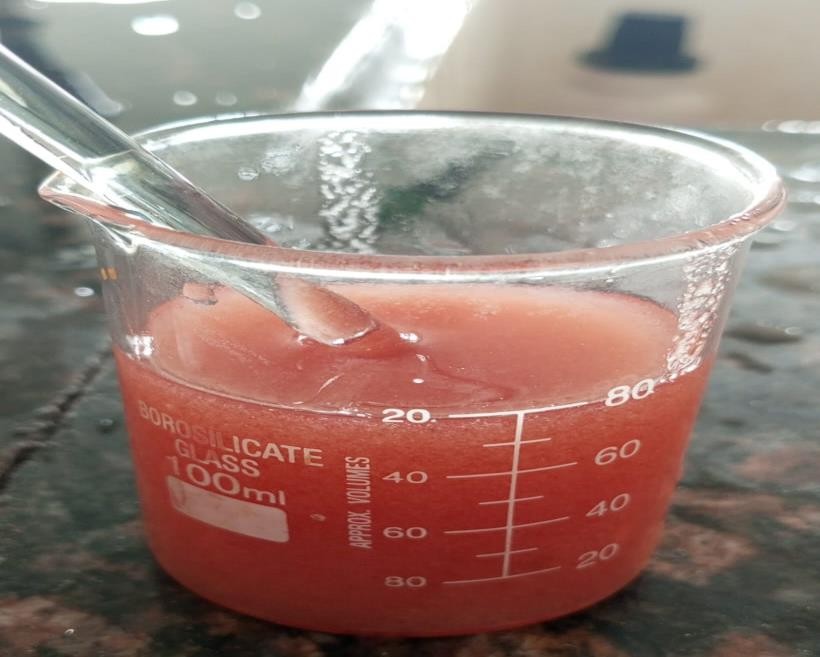
Formulated Syrup
Result for Evaluation Parameter
|
Parameter |
Observation |
|
Density |
1.11 |
|
Viscosity |
3.81 cp |
|
pH Paper |
Acidic |
|
PH meter |
6.4 |
|
Colour |
Pink |
|
Odor |
Aromatic |
|
Taste |
Bitter |
|
Appearance |
Clear |
CONCLUSION
The present study was undertaken to explore the potential of Nyctanthes arbor-tristis leaves in the formulation of an effective, stable, and patient-compliant antimalarial syrup. Based on traditional Ayurvedic knowledge and modern pharmacognostic principles, the leaves were selected due to their documented antipyretic and antimalarial properties. The formulated syrup using Nyctanthes arbor-tristis leaves extract is stable, palatable, and shows promising antimalarial activity in both in vitro and in vivo models. Further clinical trials are recommended to validate its efficacy in human subjects.
RESULT
|
Sr.no |
Ingredients |
F1 |
F2 |
F3 |
|
1 |
Nyctanthes arbortristis extract |
2.0 ml |
2.5 ml |
2.0 ml |
|
2 |
Glycerin |
4.0ml |
3.5 ml |
3.0 ml |
|
3 |
Sucrose |
18 g(or~16ml syrup) |
16 g |
14 g |
|
4 |
Honey |
12.0 ml |
14 ml |
16 ml |
|
5 |
Citric acid |
0.05 g |
0.04 g |
0.03g |
|
6 |
Tea tree oil |
0.05 ml (1-2 drop) |
0.02 ml (1 drop) |
0.015 ml |
|
7 |
Orange oil
|
0.1ml (2 drop) |
0.15 ml |
0.2 ml ( 4 drop) |
|
8 |
Beet root |
q.s (1-2 drop) |
q.s (1-2 drop) |
1-2 drop |
|
9 |
Tragacanth gum |
0.1g |
0.08 g |
0.05 g |
|
10 |
Purified water |
q.s to 50 ml |
q.s to 50 ml |
q.s to 50 ml |
|
|
Total |
50 ml |
50 ml |
50 ml |
The syrup was developed using standard pharmaceutical excipients to ensure adequate palatability, viscosity, microbial safety, and shelf life. The inclusion of natural flavoring agents and sweeteners addressed the inherent bitterness of the extract, improving patient acceptability particularly important for pediatric use.
REFERENCES


Komal Chavan, Shital Satpute, Formulation And Evaluation of An Antimalarial Syrup Using Nyctanthes Arbortristis Leaf Extract, Int. J. of Pharm. Sci., 2025, Vol 3, Issue 6, 2435-2440. https://doi.org/10.5281/zenodo.15649056
 10.5281/zenodo.15649056
