

We use cookies to ensure our website works properly and to personalise your experience. Cookies policy
Department of Pharmaceutics, Agnihotri College of Pharmacy Ram Nagar Wardha, Maharashtra, India.
The present study focuses on the formulation and evaluation of a polyherbal foot crack healing cream developed using plant extracts known for their wound-healing and skin-protective properties. The cream incorporates aqueous and ethanolic extracts of Moringa oleifera (Drumstick plant), Ficus religiosa (Peepal), Bryophyllum pinnatum (Panfuti), and Annona reticulata (Custard apple), which are reputed for their therapeutic efficacy against wounds, burns, and various skin disorders. The base formulation consists of beeswax, coconut oil, and almond oil, selected for their emollient and moisturising properties.Among the different formulations, batch F3 exhibited the most desirable results in terms of spreadability, washability, stability, and healing efficacy. The cream demonstrated effective protection against foot infections and showed significant healing effects on cracked heels. Overall, the formulated polyherbal foot crack cream proved to be safe, stable, and effective, providing a natural and beneficial alternative to synthetic preparations. The study concludes that this herbal formulation offers promising potential for the treatment and prevention of cracked heels with excellent skin compatibility and therapeutic performance.
The human foot is a vital organ that is constantly exposed to friction and various external environmental factors. The absence of oil glands on the sole predisposes the foot to dryness, making it more susceptible to cracking and related disorders. Neglect of foot care, often due to improper footwear or hygiene, can lead to a variety of conditions, including infections caused by the penetration of dirt, fungi, and bacteria through cuts and fissures. Foot odour is commonly associated with bacterial decomposition, particularly by Staphylococcus epidermidis, while foot-resident microorganisms such as Staphylococcus aureus, Escherichia coli, and Candida albicans can contribute to infections.1
Cracked heels, also known as heel fissures, represent one of the most prevalent foot problems. While often considered a cosmetic concern, severe fissures can result in discomfort, bleeding, and increased risk of infection. Natural remedies have been widely recognised for their affordability and safety, with the Ayurvedic system of medicine emphasising the use of herbal plants and extracts for the management and treatment of various disorders. Herbal formulations, with their wound-healing, antimicrobial, and anti-inflammatory properties, offer a promising alternative for the prevention and treatment of foot disorders, particularly cracked heels.2
Complications of Cracked Heels4:
? Discolouration may develop due to thick skin.
? Yellow or dark brown skin will form around the heels.
? Unattractive when worn with your favourite shoes.
? Untreated, broken heels may cause bleeding. It can cause an infection.
? This can be problematic for persons with chronic conditions like diabetes.
? Walking aches due to thick skin on heels. Prevention is crucial.
? The skin of the feet tends to get drier because there are no oil glands present. Dryness can lead to cracked skin. Dry and cracked feet can be caused by a lack of moisture, pollution exposure, and certain medical disorders such as eczema, diabetes, thyroid, and psoriasis.
Cosmetics are widely used globally to preserve and enhance the appearance of the face and other body parts, including skin, eyes, hair, and hands. Herbal cosmetics are cosmetics formulated with active bio-ingredients, nutraceuticals, and medications. Cosmetics are products used to wash and enhance the skin. Creams are semisolid emulsion systems with an opaque appearance, whereas ointments are translucent. Skin feeding is essential for maintaining healthy skin and treating dryness.
For cracked heels, mostly Natural treatment is cheap and claimed to be safe. The Ayurvedic system of medicine was one of the most important systems that uses herbal plants and extracts for the treatment of management of various diseases and diseased states.5
For cracked heels, mostly Natural treatment is cheap and claimed to be safe. The Ayurvedic system of medicine was one of the most important systems that uses herbal plants and extracts for the treatment of management of various diseases and diseased states.5
ADVANTAGES: -6
1.Natural Ingredients: The majority of polyherbal foot creams are made with natural plant ingredients. These substances are frequently chosen for their therapeutic characteristics and can offer a gentler approach to foot care than synthetic or chemical-based treatments.
2.Moisturization: - Foot creams hydrate the skin of the feet. Polyherbal foot lotions use herbal extracts and oils to moisturise and nourish dry, rough skin of the feet.
3.Calming and Cooling Effects: When applied to the feet, certain herbal compounds, such as peepal, panfuti, almond oil, and coconut oil, can have a calming and cooling impact. This can be cooling and ease pain, particularly if your feet are fatigued and achy after a long day. The anti-inflammatory and antifungal qualities of the herbal components used in polyherbal foot creams are well-established.
4.Odour Control: Clove oil is one herbal ingredient that has natural deodorising qualities that can help reduce foot odour. These components can mask offensive smells and produce a more energising aroma.
5.Relaxation and Stress Relief: The act of massaging a polyherbal foot cream into your feet can be a relaxing and therapeutic experience. Additionally, certain herbs like lavender or chamomile are known for their calming properties, which can contribute to stress relief.
Drug and Excipient Profile: Indigenous herbal formulation containing i. Moringa oleifera (drumstick plant), ii. Ficus religiosa (peepal), iii Bryophyllum pinnatum (panfuti), iv Annona reticulata (custard apple) claim to have the potential in the treatment of wounds, burns, etc., were selected for the study.
Taxonomical classification –
Kingdom: Plantae
Order: Brassicas
Family: Moringaceae
Genus: Moringa
Species : M.Oleifera
Moringa oleifera, commonly known as drumstick in English and Shevga in Marathi, is a small to medium-sized tree growing up to 10 meters and widely cultivated in India. It is valued for its high nutritional content and is used to combat malnutrition. The leaves, pods, seeds, and flowers are rich in minerals (calcium, potassium, magnesium, iron, zinc, copper) and vitamins (beta-carotene, B-complex, C, D, and E).
The plant contains diverse bioactive compounds, including tannins, sterols, terpenoids, flavonoids, saponins, anthraquinones, alkaloids, and reducing sugars. It also possesses anticancer agents such as glucosinolates, isothiocyanates, glycosides, and glycerol-1-9-octadecanoate. Key leaf constituents include niazirin, niazirinine, benzyl isothiocyanate, benzyl glucosinolate, aminoglycosides, sterols, and palmitic acid ethyl esters, contributing to its therapeutic and medicinal potential.7-8
Pharmacological Activities and Uses
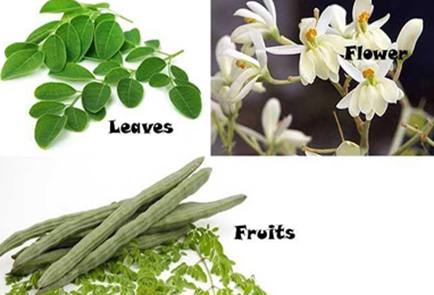
Figure No.2. Moringa oleifera (Drumstick plant):
A Nutritional and Medicinal Plant
Taxonomical classification
Kingdom: Plantae
Order: Rosales
Family: Moraceae
Genus: Ficus religiosa
Species : F.religosa
Ficus religiosa is a large tree with wide-spreading branches, brown bark, and can grow up to 30?m with a 3?m trunk diameter. Leaves are chordate with extended drip tips (10–17?cm × 8–12?cm), reddish-pink when young, turning deep green at maturity. Fruits are compressed and circular.
Phytochemicals include phenols, tannins, steroids, flavonoids, alkaloids, β-sitosteryl-D-glucoside, vitamin K, n-octacosanol, lanosterol, stigmasterol, and lupen-3-one. The root bark β-sitosteryl-D-glucoside shows hypoglycemic activity. Fruits and seeds contain proteins, essential amino acids, flavanols (kaempferol, quercetin, myricetin), carbohydrates, lipids, and minerals. Aqueous bark extracts contain phytosterols, flavonoids, tannins, and furanocoumarins (bergapten, begaptol).
Uses: It shows wound healing (leaves), Anti-inflammatory and antimicrobial (bark), and an anti-ulcer activity. 9-10
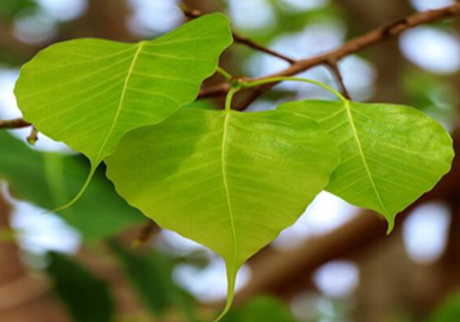
Figure 3. F. Religiosa
Taxonomical classification
Kingdom: Plantae
Order: Saxifragales
Family: Crassulaceae
Genus: Bryophyllum
Species: B.plantae
Bryophyllum pinnatum Kurz, commonly known as Panfuti, Life Plant, or Air Plant, is a glabrous, succulent herb belonging to the family Crassulaceae. It grows up to 1–1.5 m in height and is commonly found in hot and humid regions, especially around dwellings, roadsides, and abandoned fields. The plant has opposite, decussate, fleshy leaves measuring 10–20 cm in length, with scalloped margins that bear vegetative buds capable of developing into new plants. The lower leaves are simple, while the upper ones are usually 3–7 foliate with long petioles united by a ridge around the stem. The flowers are reddish-purple, pendent, about 5 cm long, arranged in large panicles, and produce membranous follicles containing smooth, ellipsoid seeds. The plant contains alkaloids, flavonoids, phenolic compounds, tannins, carbohydrates, and essential macro- and microelements such as magnesium, calcium, potassium, phosphorus, sodium, iron, and zinc. It is also rich in vitamins, including ascorbic acid, riboflavin, thiamine, and niacin, contributing to its medicinal and nutritional significance.
Uses: Bryophyllum shows useful activities for skin care, it shows antibacterial, antifungal, Anti-inflammatory, Wound healing, and anti-hypertensive action.11-12
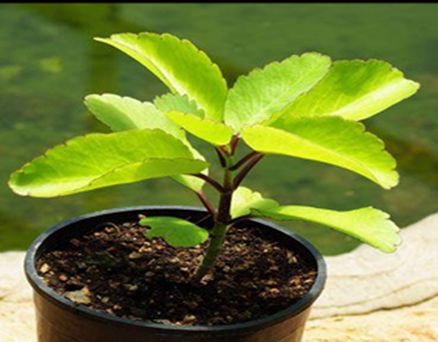
Figure No.4. B. Pinnatum
• Annona reticulata (custard apple):-
Taxonomical classification
Kingdom: Plantae
Order: Magnoliales
Family: Annonaceae
Genus: Annona
Species: A. Reticulata
Annona reticulata L., commonly known as Custard Apple, is a small deciduous or semi-evergreen tree growing up to 6 meters in height with thin grey bark. Leaves are simple, alternate, oblong-lanceolate to elliptic, measuring 3.5–8 × 1.5–4 cm, glabrous above and pubescent beneath when young. The plant is native to South America and the West Indies but is widely cultivated and naturalised throughout India up to 900 m altitude, especially in hilly and wasteland regions.
The roots act as a powerful purgative and are used in treating mental depression, spinal disorders, and dysentery. Leaves exhibit suppurative, stimulant, antispasmodic, sudorific, anthelmintic, and insecticidal properties and are applied externally for ulcers and lice. The ripe fruit is sweet, cooling, tonic, and sedative. The plant contains terpenoids, phenols, tannins, carbohydrates, and proteins, contributing to its diverse medicinal properties.
Uses- The root is a powerful purgative. It is used in mental depression, spinal disorders and dysentery. The leaves are suppurative, stimulant, anti-spasmodic, sudorific, anthelmintic, and insecticidal, and are useful in destroying lice. It enriches the blood, increases muscular strength, and lessens burning sensation, tendency to biliousness and vomiting. Leaves show potent anti-diabetic activity 13
Excipient Profile: Role of action of ingredients for Cream Formulation
|
Name of Ingredient |
Role |
|
Beeswax |
Stiffening and Thickening Agent. |
|
Cocoa Butter |
Hydrating Agent. |
|
Rose water |
Perfuming Agent. |
|
Glycerin |
Humectant and Lubricant. |
|
Almond oil |
Moisturiser and Emollient |
Experimental Study: - Materials – Bees’ wax, cocoa butter, almond oil, coconut oil, glycerin, rose water. All other chemicals and reagents were of analytical grade. The leaves of Moringa oleifera (Drumstick plant), Ficus religiosa (Peepal), Bryophyllum pinnatum (Panfuti), and Annona reticulata (custard apple) were collected from the local areas.
2) Collection of Plant – All Plant materials, Moringa oleifera (Drumstick plant), Ficus religiosa (Peepal), Bryophyllum pinnatum (Panfuti), Annona reticulata (custard apple), were collected from the local areas of Wardha.
3) Identification – Plants were collected from the local areas of Wardha and were identified by the Department of Botany, J.B. College of Science, Wardha, Maharashtra.
4) Extraction – There are various types of methods used for extraction. Common conventional methods include maceration, decoction, infusion, and Soxhlet extraction, while novel methods use advanced technologies like microwave-assisted extraction (MAE), ultrasound-assisted extraction (UAE), and supercritical fluid extraction (SFE). From all the above methods, we are using the maceration process for the ethanolic and aqueous extract.
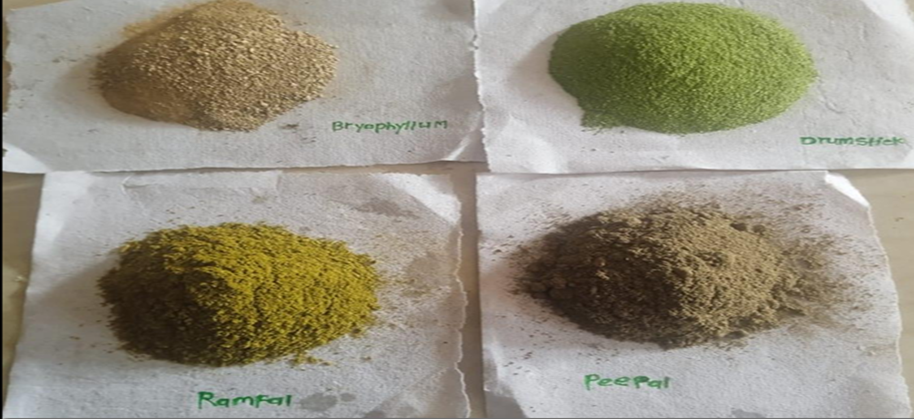
Figure 5. Dried leaves powder of collected specimens 1) Bryophyllum pinnatum (Panfuti), 2) Moringa oleifera (Drumstick plant), 3) Annona reticulata (custard apple),
4) Ficus religiosa (Peepal).
Maceration:- In this process, the crude drug (whole or coarsely powdered) is macerated with a solvent in a stoppered container for at least 3 days with frequent agitation. The mixture is then strained, the marc pressed, and the combined liquids clarified by filtration or decantation.14
?extraction process – The maceration method was employed for both aqueous and ethanolic extractions. Accurately weighed 15 g of fine powder was placed in a stoppered container with a sufficient quantity of solvent—distilled water for aqueous extraction and ethanol for ethanolic extraction. The mixtures were allowed to stand at room temperature for 3 days with occasional shaking, then filtered using filter paper. The aqueous extract contained water-soluble constituents, while the ethanolic extract contained alcohol-soluble constituents, both of which were used for formulation.
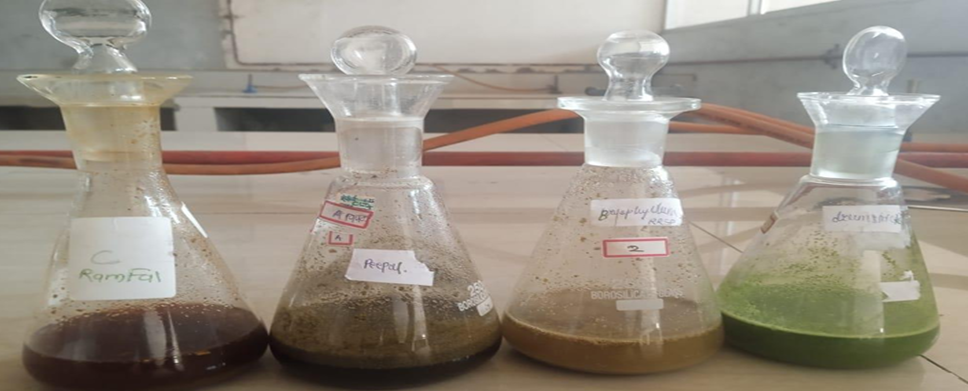
Figure 6. Aqueous extract
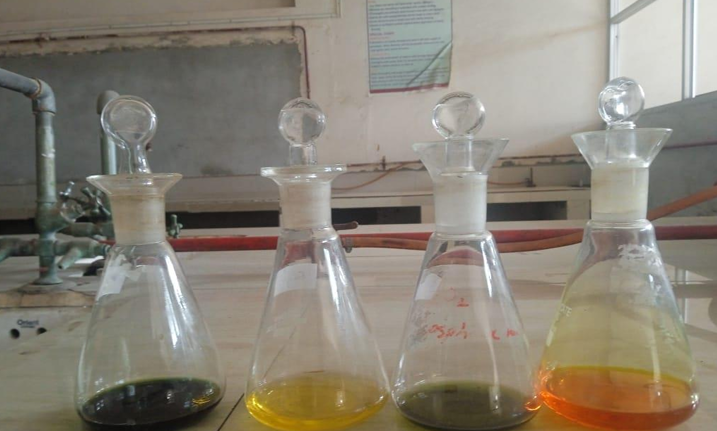
Figure 7. Alcoholic extract
Preformulation Studies: -1. Preliminary Test15-16
|
Sr. no |
Test |
Observation |
Result |
|
1. |
Ferric chloride solution test: To 1 ml of the extract, add ferric Chloride solution |
Formation of dark blue or greenish blue, or greenish black colour |
Tannin is present. |
|
2. |
Gelatin test: To the test solution, add a few mL of 1? gelatin solution chloride 10? sodium chloride |
Formation of the white precipitate. |
Tannin is present. |
|
3. |
Lead acetate test: To the test solution, add 10 ? lead acetate |
The formation of a voluminous white precipitate |
Tannin is present. |
|
Sr. no |
Test |
Observation |
Result |
|
1. |
Dragendorff's test: Add a few drops of Dragendorff's reagent to the filtrate |
Formation of orange brown colour precipitate |
Alkaloids are present |
|
2. |
Mayer's test: Add a few drops of Mayer's reagent to the 3 ml of test solution |
Formation of cream color precipitate indicates the presence of alkaloids |
Alkaloids are present |
|
3. |
Hager's test: Add a small quantity of Hager's reagent to a filtrate |
Formation of yellow color precipitate shows the presence of alkaloids |
Alkaloids are present |
|
4. |
Wagner's test: Add a few drops of the reagent to 3 mL of filtrate |
Formation reddish brown colour |
Alkaloids are present |
|
Sr. no |
Test |
Observation |
Result |
|
1. |
Foam test: Shake the drug extract or dry powder vigorously with water |
Persistent foam formation |
Saponins are present |
|
2. |
Lieberman Burchard test: To the drug extract few drops of glacial acetic acid and add 2 drops of conc. H2SO4 |
Colour change from rose red, violet, blue to green |
Saponins are present |
D)Test for Flavonoid
|
Sr. no |
Test |
Observation |
Result |
|
1. |
Shinoda test: To test the solution, add 5 ml of 95? ethanol, add a few drops of concentrated HCl and 0.5g of magnesium, turning |
Pink, red, to purple colours appear |
Flavonoids are present |
|
2. |
Lead acetate test: To a small quantity of the test, add lead acetate solution |
Yellow colored precipitate formation shows the formation of flavonoids |
Flavonoids are present |
Figure 8. Various Preliminary Tests for Identification
Method of Preparation of Herbal Foot Crack Cream
The herbal foot crack cream was formulated as an oil-in-water (O/W) emulsion–based semi-solid preparation using aqueous and ethanolic extracts of Ramfal, Drumstick, Panfuti, and Peepal. These extracts provided wound-healing, antimicrobial, antifungal, and anti-inflammatory properties.
Procedure:
Beeswax (7.5 g) and cocoa butter (7.5 g) were melted together and maintained at 60°C to form the oil phase. In a separate mortar, distilled water and glycerin were mixed to prepare the aqueous phase. The hot oil phase was gradually added to the aqueous phase with continuous trituration to form a uniform emulsion. After cooling to about 40°C, the aqueous and ethanolic extracts were incorporated with gentle stirring until a smooth, homogenous cream was obtained. The final product was packed in airtight containers and stored in a cool, dry place.
Preparation of Cream Base
|
Sr. No |
Ingredient |
Quantity (gm) |
|
1. |
Coconut oil |
7.5 |
|
2. |
Almond oil |
5 |
|
3. |
Cocoa butter |
7.5 |
|
4. |
Bees wax |
7.5 |
|
5. |
Glycerin |
1ml |
|
6. |
Rose water |
1-2drops |
|
7. |
Water |
5ml |
Formulation and Development of Cream: -
|
Ingredient |
F1 |
F2 |
F3 |
F4 |
|
Aqueous Extract |
1ml |
1ml |
1.5ml |
2ml |
|
Ethanolic Extract |
1 ml |
1.5ml |
1ml |
4ml |
|
Coconut Oil |
6.0 |
6.5 |
7.0 |
7.5 |
|
Almond Oil |
3.0 |
3.5 |
4 |
5 |
|
Cocoa Butter |
5.0 |
6.0 |
7.0 |
7.5 |
|
Bees Wax |
4.5 |
5.5 |
6.5 |
7.5 |
|
Glycerine |
1ml |
1ml |
1ml |
1ml |
|
Rose Water |
1-2drops |
1-2drops |
1-2drops |
1-2drops |
|
Water |
2ml |
3ml |
4ml |
5ml |
Evaluation: -
State: The state of the cream was examined visually. The cream has a semisolid state.
pH- The pH of the formulated herbal cream was measured using a digital pH meter. A 1% cream solution was prepared by dispersing the cream in 100 mL of distilled water and allowed to stand for 2 hours to ensure complete hydration. The pH of the solution was then recorded using the calibrated digital pH meter. 17
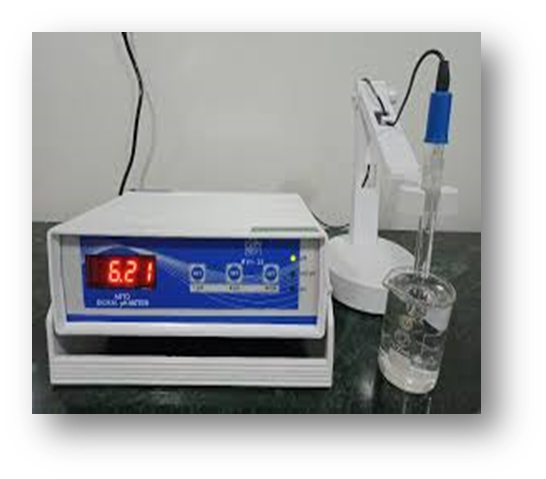
Fig 9:-Digital pH meter
Viscosity: -The viscosity of the formulations was determined using a Brookfield viscometer (Model: [CAP2000]) equipped with spindle number 64, operated at a speed of 100 rpm. Each sample was placed in a clean beaker, and measurements were recorded at room temperature. The mean of three consecutive readings was calculated to obtain the final viscosity value.

Fig 10: - Brookfield viscometer
Spreadability18: -The spreadability of the formulated herbal cream was evaluated by placing a measured amount of the cream between two glass slides and compressing it to a uniform thickness using a specified weight for a fixed duration. The time required to separate the two slides was recorded, which was used to calculate the spreadability of the cream.
Formula
S=????× ????/ ????
where,
S= Spreadability
M= Weight tide to the upper slide
L= Length of glass slide T= Time taken to separate the slides.
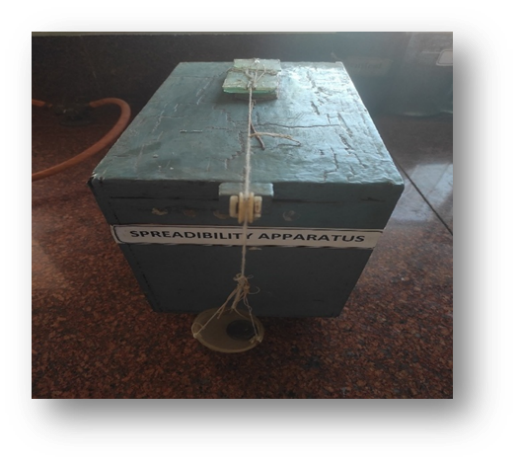
Fig .11:- Spreadability Apparatus
The formulated herbal foot crack cream was transferred into a suitable wide-mouth container and stored. After 24 hours, the cream was observed for any separation of the oil and aqueous phases, and no phase separation was detected.19
zThe type of smear was evaluated by applying the polyherbal foot crack cream on the skin surface of a human volunteer. After application, the nature of the film formed on the skin was observed to assess whether the cream produced a greasy, non-greasy, or uniform smooth film upon spreading.20
Stability testing: - A stability study was done for 30 days, and it has been observed that the prepared polyherbal foot crack creams were stable for one month with respect to appearance, colour, odour, pH, moisture absorption test, viscosity, irritancy, spreadability, washability, smear test, and homogeneity.21
Antimicrobial evaluation: -For antimicrobial screening, a diluted sample of the polyherbal foot crack cream was prepared by weighing 0.2 g of the formulation and adding 0.8 ml of sterile distilled water. The antimicrobial efficacy of the cream was evaluated against Staphylococcus aureus using the well diffusion method to determine the zone of inhibition. The microorganisms were cultured in an appropriate growth medium, and the wells were filled with the diluted cream formulation. The plates were then incubated at 37 °C for 48 hours. The antimicrobial activity of the polyherbal cream was confirmed by the appearance of a clear zone of inhibition surrounding the wells, and the diameter of this zone was measured and recorded.22-23
Skin irritation test: - A skin irritation study was conducted using three healthy adult rats to evaluate the dermal safety of the polyherbal foot crack cream. A 4?cm² area on the dorsal side of each rat was carefully shaved, cleaned with distilled water, and allowed to dry. The cream was applied uniformly to the shaved area. At designated intervals up to 24 hours post-application, the treated sites were gently washed with distilled water and examined for signs of irritation, including erythema (redness), edema (swelling), or other abnormalities. Observations were recorded to assess the severity of any irritation. The results indicated the dermal safety of the polyherbal foot crack cream. 24.
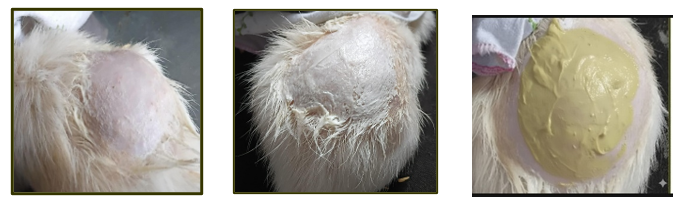
Fig 12: -1) Without Any Kind of Formulation 2) Polyherbal Footcrack Cream 3) Marketed Formulation
2.Result and Discussion: The primary objective of this study was to develop a safe and effective polyherbal foot crack healing cream. The formulation incorporated aqueous and ethanolic extracts of Moringa oleifera (Drumstick), Ficus religiosa (Peepal), Bryophyllum pinnatum (Panfuti), and Annona reticulata (Custard apple), selected for their wound-healing and antimicrobial properties. The cream base, composed of beeswax, coconut oil, and almond oil, was found to be compatible, safe, and effective for topical application on cracked heels.
3.Among the prepared batches, batch F3 exhibited the most desirable characteristics. Subjective evaluation demonstrated that the cream had good spreadability, smooth consistency, and minimal residue, providing effective protection against foot infections. Additionally, the polyherbal extracts contributed significantly to the wound-healing and antimicrobial activity, promoting the recovery of cracked heels. Overall, the polyherbal foot crack cream was found to be safe, non-irritant, and effective in managing foot disorders.
Results of Polyherbal Cream F3
|
Sr. No |
Parameters |
F1 |
F2 |
F3 |
|
1. |
Appearance |
yellow |
Faint yellow |
Greenish yellow |
|
2. |
odor |
Unpleasant |
Pleasant |
Pleasant |
|
3. |
pH |
5–5.5 |
5.5-6 |
6-6.5 |
|
4. |
Washability |
Non-Washable |
Somewhat washable |
Washable |
|
5. |
Spredability |
Fair |
Fair |
Good |
|
6. |
Thermal Stability |
UnStable |
Stable |
Stable |
|
7. |
Microbial Growth |
Small Microbial Growth |
No Microbial Growth |
No Microbial Growth |
|
8. |
Type of Smear |
Greasy |
Greasy |
Non-Greasy |
|
9. |
Irritancy |
Slight Irritant |
Non-Irritant |
Non-Irritant |
|
10. |
Homogenecity |
Non-homogenous |
Homogenous |
Homogenous |
|
11. |
Sensitivity Test |
Sensitive |
Non-Sensitive |
Non-Sensitive |
SUMMARY AND CONCLUSION: -
A polyherbal foot crack cream was successfully developed using aqueous and ethanolic extracts of Moringa oleifera (Drumstick), Ficus religiosa (Peepal), Bryophyllum pinnatum (Panfuti), and Annona reticulata (Custard apple) incorporated into a cream base of beeswax, coconut oil, and almond oil. The formulation exhibited desirable physicochemical properties, including smooth consistency, good spreadability, non-greasy after-feel, and stability. It was found to be safe and non-irritant upon evaluation.
The cream demonstrated significant wound-healing and antimicrobial activity, particularly against Staphylococcus aureus, providing protection against infections and promoting recovery of cracked heels. No microbial growth was observed in the product, indicating its safety and stability. Overall, the polyherbal foot crack cream proved to be an effective, safe, and natural alternative for the treatment and management of cracked heels, highlighting its potential for therapeutic use in foot care.
REFERENCES




Shamal Watkhede*, Rutuja Bhange, Pallavi Lakhe, Prashant Wake, Formulation and Evaluation of Polyherbal Foot Crack Cream, Int. J. of Pharm. Sci., 2025, Vol 3, Issue 12, 1465-1478 https://doi.org/10.5281/zenodo.17856630
 10.5281/zenodo.17856630