
1Assistant professor, , Department of Pharmaceutics, Raghu College Of Pharmacy, Visakhapatnam, Andhra Pradesh, India
23456B.Pharmacy, Department of Pharmaceutics, Raghu College Of Pharmacy, Visakhapatnam, Andhra Pradesh, India
Thespesia populnea Linn belongs to the Malvaceae family. The average height ranges from 10 meters [20 to 33 feet], has glossy green heart-shaped leaves, and yellow hibiscus-like flowers. The plant contains a wide variety of biologically active substances, including Sugars, Antioxidants, Tannins, Sesquiterpenoids, Flavonoids, Alkanes and Essential oils. This plant includes phytochemical constituents that are responsible for anti-bacterial, anti-diarrhoeal, anti-diabetic, memory-boosting, anti-inflammatory, anti-oxidant, and wound-healing activity.A transdermal drug delivery system (TDDS) offers a better route for drug delivery. It is known that drugs from herbal origin, when incorporated into transdermal patches, improve the efficacy. Transdermal patches are medicated adhesive pads that release the medicament over a period of time for several hours at a constant rate. The medicament is directly released into the bloodstream and thereby avoids first-pass metabolism. These patches were assessed using Physicochemical criteria, including pH, Thickness, and Moisture content, Weight uniformity, Folding Endurance, Physical Appearance, and an In-vitro drug release and Stability Study
Thespesia populnea Linn, also known as the Portia tree, is a plant used in traditional medicinal formulations for its pharmacological and Therapeutic properties[1] Thespesia populnea (Malvaceae) is a small evergreen tree ranging from 6-10m (20-30ft) in height. The trees grow well in warm coastal areas from the east coast of Africa and South and Southeast Asia to Melanesia. The Trees grow best under full sunlight and also tolerate drought conditions[2].It propagates easily and grows rapidly. The plant is Astringent, Cooling, Anti-inflammatory, anti-diarrhoeal and Antibacterial. It is useful in Dysentery, Diabetes, and Haemorrhoids. Also cures Ulcers, itching, scabies and other skin diseases[3].
PLANT PROFILE:
Botanical Name: T. Populnea Linn
Common name: Portia Tree.
Author: Linn.
Year: 2006
Synonym: Hibiscus bacciferus, Hibiscus populneus
Family: Malvaceae
Active Phytoconstituents: Lupeol, Gossypol, Quercetin, Beta-sitosterol[4]
2. Taxonomy
Kingdom: Plantae
Division: Magnoliophyla
Class: Magnoliopsida
Order: Malvale
Family: Malvaceae
Genus: Thespesia
Species: T. populnea Linn
3. Vernacular names:
Sanskrit: Parisah, Kapitana, Phalisah, Gardabhandah.
Hindi: Paraspipal.
English: Portia tree, Umbrella tree.
Marathi: Parasa pimpala.
Bengali: Gajashundi, Paraasapipula.
Gujarati: Paraspipalo.
ENVIRONMENTAL CONDITIONS :
Common iCommonworld The species has been planted throughout the tropics, and it is naturalised in tropical climates throughout the world. It is a typical coastal species of South Africa and the Pacific Islands.In India: It is a common species in the coastal tracts of the Indian peninsula and in mangrove swamps. It is especially wild in South Kanara, Malabar, the deltas of Godavari and Mahanadi and in Cuttack. It is also found in the Sunderbans of West Bengal and in the Andamans.
Uses
These compounds encoPass several chemical classes such as alkaloids, flavonoids, carbohydrates phytosterols, tannins, Saponins, proteins and amino acids, terpenes, phenols and essential oils, exhibit significant Pharmacological activity[5]. The yellow juice of Thespesia fruits is employed in treating Hepatic diseases. A decoction from the bark is given internally for skin diseases and also as an antidote for poisoning. Various Parts of the Thespesia contain high tannin content, which has been shown to have anti-bacterial and anti-viral activity.The oil of bark and capsule is useful in Arthritis and Gonorrhea. The seed possesses purgative properties that promote free bowel Movement and provide relief from symptoMs of constipation. The plant is also effective in malaria treatment[6]. Air-dried flowers of T. populnea contain kaempferol, β-sitosterol, Gossypetin, quercetin, and a mixture of kaempferol 3-glucoside, quercetin 3-glucoside, kaempferol 5-glucoside, rutin, kaempferol 3-rutinoside, and kaempferol 7-glucoside [7]. Dextro-rotatory gossypol has recently been isolated from flowers, Fruits, and bark. The gossypol Content in different Parts of the tree is a seed (3.14%), flower buds(3.37%), leaves (1.66%), roots (2.11%), and stem (1.43%). Presence of herbecetin and thespesin has been reported Leaf, flower and stem bark of T. populnea showed varying levels of protective action against CCl4-induced liver damage as evidenced from a significant reduction in the activities of serum marker enzymes for liver damage (alanine transaminase, aspartate transaminase, and alkaline phosphatase), and bilirubin levels when compared with CCl4-intoxicated control rats. The stem bark suspension showed maximum hepatoprotection compared with the leaf and flower. An ethanol extract of the stem bark was more active than n-hexane and water extracts; the hepatoprotective effect of this extract was almost comparable to that of silymarin (100 mg/kg), a reference herbal drug. Thus, the present study indicates that the ethanol extract of T. populnea bark is promising for further studies leading to hepatoprotective drug development [8].
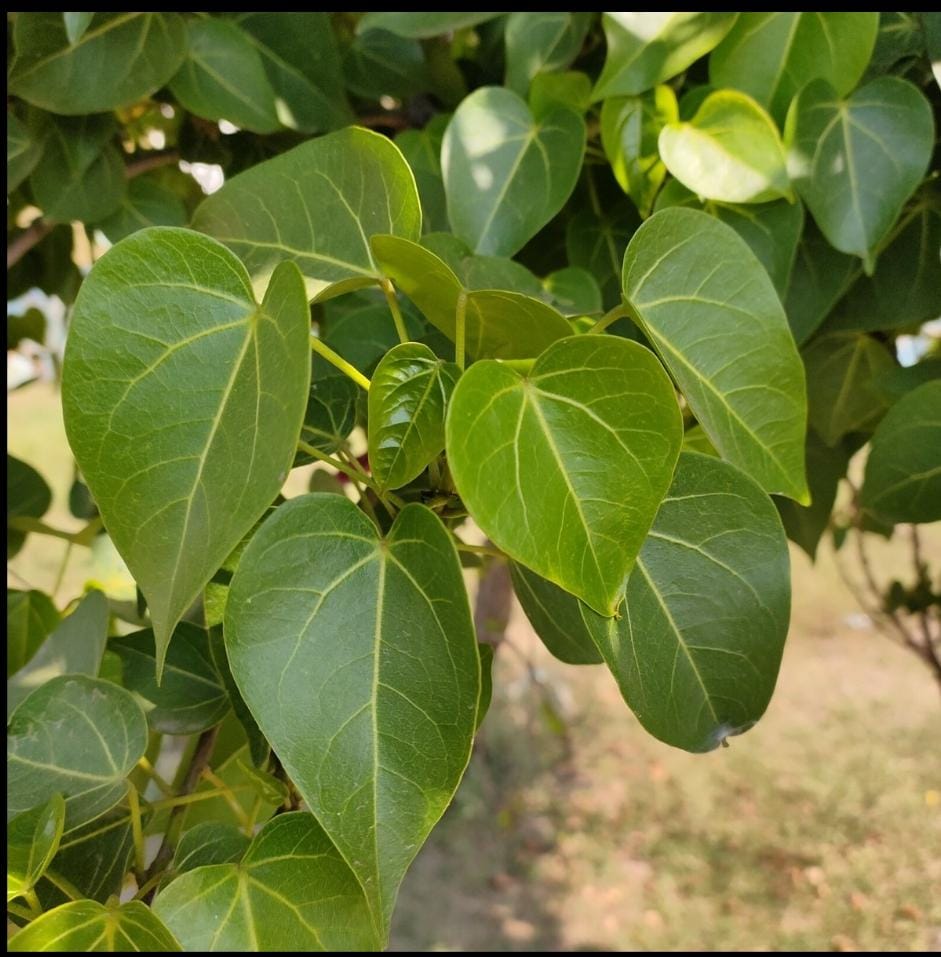
Fig -1: Leaves of Thespesia populnea
The various chemical constituents isolated from the T. Populnea are Gossypol [9], 7 Hydroxy-2,3,5,6-tetrahydro-3,6,9 Trimethylnaphto [1,8-B, C] Pyran-4,8-Dione[10]. Kaempferol, Quercetin [11], Kaempferol 3-glucoside, Quercetin 3-glucoside, Nonacosane, lupenone, myricyl alcohol, lupeol, β-sitosterol and β-sitosterol-β-D-glucoside 5, 8-dihydroxy-7-Methoxyflavone, 7-1ydroxyisoflavone and Thespone [12], Mansonones D, E and F Populneol, Thespesin.[13].
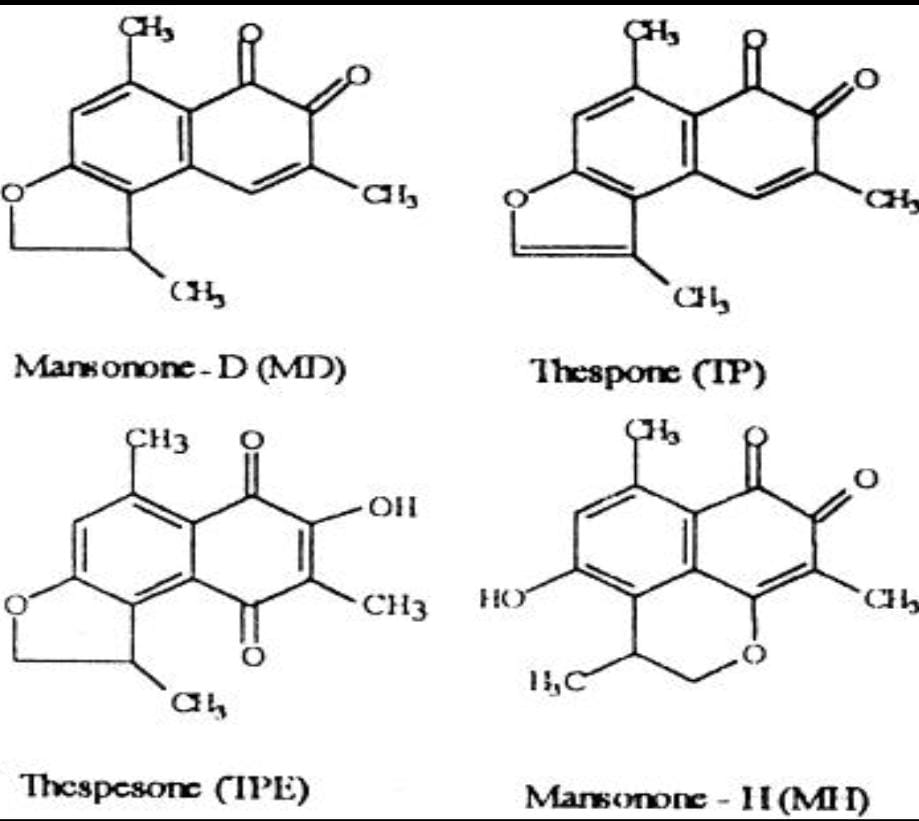
Fig -2: Chemical Structure of Thespesia populnea
Stem bark contains Alkaloids, carbohydrates, Proteins, tannins, Phenols, Flavonoids, Gums and Mucilage, Saponins And Terpenes[14]. Thespesia populnea is reported to contain β-sitosterol-3-O-β-D-glucopyranoside-6’-O-stearate, β-sitosterol, daucosterol, kaempferol, 1-hentriacontanol, stearic acid, and botulin [15].
Leaves of T. populnea contain lupeol and β-sitosterol as the Major constituents[16]plant extract exhibited a remarkable cholesterol-lowering property comparable to Simvastatin (a standard Drug).T. populnea bark possessed a powerful memory-enhancing activity in Mice. Since diminished cholinergic transmission and increased Cholesterol levels appear to be responsible for the development of Amyloid plaques and dementia in Alzheimer patients, Plant extract may prove to be a useful medicine on account of its multifarious Beneficial effects, such as memory-improving property, cholesterol-lowering, anti-cholinesterase and Anti-Inflammatory activity[17]Terpenoid fraction from T. populnea leaves showed significant Antiulcer activity in experimentally induced Ulcer in the rat model by decreasing the Gastric Secretions and by enhancing Glycoprotein levels[18]. The Analgesic activity was assessed using the acetic acid-induced writhing response and Formalin-induced paw licking time in the early and late phases of Mice. The higher doses of Plant extract (200 and 400 mg/kg, p.o.) were inhibiting Carrageenan (responsible for inflammatory reaction), Histamine and Serotonin-Induced Paw Oedema as well as Formaldehyde-Induced Arthritis successfully [19] Bark, Root and Fruits are stated to be used in Dysentery, Cholera, Haemorrhoids; the Mashed Bark is employed as a Politice or Hot fermentation for wounds and mainly responsible for Astringent Activity[20]Seeds of T.populunea were successively extracted using Petroleum Ether (40–60ºC)and Ethanol. Unsaponifiable matter and fatty acids were separated from seed oil [21]Ethanolic extract was fractionated using CHCl3, Ethoxyacetate, n-Butanol and water as solvents. Acute arthritis was induced by sub-plantar injection of carrageenan into the left hind Paw of rats and the paw Volume was measured using Plethysmometer. Analgesic activity assessed by heat induced pains (tail immersion model) and antipyretic activity assessed using Brewer’s yeast-induced pyrexia Model. Oral administration of TPO And Plant extract at 200 and 400 mg/kg body weight and tested fractions at 200 mg/kg significantly reduced carrageenan induced paw enema and brewer’s Yeast-induced pyrexia [22] In tail immersion method also Extracts and fractions showed significant Analgesic activity. Amongst All fractions Ethoxyacetate showed most significant results. Unsaponifiable Matter showed significant anti-inflammatory and analgesic activity[23]
INTRODUCTION TO TRANSDERMAL PATCHES:-
Transdermal patches are the adhesive patches In this method the medicament is directly released into the skin the systemic circulation .in 1981 the FDA The approved ever transdermal patch was the scopolamine patch, which is marketed under the brand name transdermal scop various transdermal patches are available they include clonidine and nitro-glycerine for cardiovascular ailments, fentanyl for chronic pain, scopolamine for motion sickness, and nicotine for smoking cessation. These patches enable controlled and sustained pharmacological action, and they facilitate continuous drug delivery. These patches have major advantages for drugs with short biological half-lives.The major key parameters taken into consideration while characterising the adhesive property of patches are: tack, shear adhesion and peel adhesion.
LITERATURE REVIEW
1. Formulation and Evaluation of Transdermal Patch for Pain Management: Sakshi D. Ghodke, Vaishnavi M. Kalamkar, Swapnali R. Musmade, Devram K.Jori, Manoj L. Chaudhari (2025). Transdermal drug delivery has gained significant attention as a convenient and effective route for systemic drug administration. Unlike conventional oral formulations, transdermal systems bypass first-pass hepatic metabolism, thereby improving drug bioavailability and reducing the risk of gastrointestinal irritation and metabolic degradation. Herbal medicines, with their wide range of therapeutic properties, they also explored safer and more cost-effective alternatives to synthetic drugs. The herbal constituents in transdermal systems offer a promising strategy to overcome such challenges by ensuring sustained release, improved permeability, and enhanced therapeutic efficiency. The present study focused on the formulation and evaluation of herbal-based transdermal patches using rice and corn starch as natural polymeric bases. prepared patches were subjected to preliminary phytochemical screening to confirm the presence of active constituents responsible for therapeutic effects. The formulations were further evaluated for critical physicochemical parameters, including weight uniformity, thickness, and tensile strength, to ensure consistency and mechanical stability. Among the developed formulations, the optimised patch demonstrated satisfactory physical properties, effective drug release, and minimal skin irritation, suggesting its suitability for prolonged therapeutic application. The literature suggests that herbal-based transdermal patches represent a promising drug delivery system, combining the therapeutic benefits of phytoconstituents with the advantages of transdermal technology.
2. Phytochemical, Pharmacological and Phytopharmaceutics Aspects of Thespesia populnea (linn.) Soland. : A Review. Invent Impact: Ethnopharmacology. 1. Chumbhale, Deshraj & Pawase, Amit & Chaudhari, S. & Upasani, Chandrashekhar. (2010). Thespesia populnea (Linn.) Soland., a member of the family Malvaceae, contains a diverse range of bioactive compounds, including terpenoids, lipids, glycosides, and flavonoids, which contribute to its wide spectrum of pharmacological activities.
Different parts of the plant—such as the roots, bark, leaves, flowers, and fruits—have been reported to exhibit distinct therapeutic properties. T. populnea in traditional medicine has been employed in the management of liver disorders, skin diseases, and inflammatory conditions. Its chemical constituents have been linked to free radical scavenging activity and protection against oxidative stress, thereby substantiating its potential application in the development of hepatoprotective and antioxidant formulations. The objective of this review is to present a detailed account of the phytochemical composition, pharmacological activities, and phytopharmaceutical applications of Thespesia populnea (Linn.) Soland. Special emphasis is placed on its therapeutic potential, particularly its role in traditional medicine and its prospects for development as a modern medicinal plant.
3. Memory-Enhancing Activity of Thespesia populnea in Rats: Mani, Vasudevan & Parle, Milind. (2007). Thespesia populnea (Soland ex Correa; Malvaceae) is a medicinal tree, traditionally recognised for its antibacterial, anti-inflammatory, antioxidant, purgative, and hepatoprotective properties. Ethanolic extract of T. Populnea bark (TPE) was administered orally at doses of 100, 200, and 400 mg/kg for seven consecutive days to young and aged rats. Memory performance was assessed using the elevated plus-maze and Hebb-Williams maze as exteroceptive models, while diazepam-, scopolamine-, and ageing-induced amnesia served as interoceptive models.TPE at 200 and 400 mg/kg significantly improved memory in both young and aged rats compared with controls. Furthermore, TPE effectively reversed memory deficits induced by scopolamine (0.4 mg/kg, i.p.) and diazepam (1 mg/kg, i.p.).The observed cognitive benefits may be attributed to the extract’s cholesterol-lowering, anticholinesterase, anti-inflammatory, and antioxidant activities. These findings suggest that Thespesia populnea bark extract exhibits promising memory-enhancing effects and may serve as a potential natural therapeutic candidate for cognitive impairment. Further investigations, including mechanistic studies and clinical validation, are warranted to explore its application in the management of Alzheimer’s disease and related neurodegenerative disorders. The Present study was designed to assess the memory-enhancing effects of Thespesia populnea bark extract in rats employing validated behavioural models.
4. TRANSDERMAL PATCHES: A REVIEW OF A NEW DRUG DELIVERY SYSTEM APPROACH: Mahdiyyah, Ade & Diyah, Nuzul & Hendradi, Esti. (2022). Transdermal patch is a transdermal delivery system that can overcome problems in conventional drug administration, such as oral drug administration. Patches can provide controlled drug release and have advantages over oral administration, such as increasing drug bioavailability, avoiding adverse effects on the gastrointestinal (GI) tract, minimising patient variability, maintaining a constant drug in plasma, and minimising a stable therapeutic effect. The effectiveness of a patch is determined by the drug’s ability to release from the patch matrix and penetrate the stratum corneum. The methods used to make the patches are divided into single-layer, multi-layer, reservoir system, and matrix system patches. The basic components of a patch are a polymer matrix, membrane, drug, permeation enhancer, pressure-sensitive adhesives, backing film, release liner, and plasticiser This review focuses on patch analysis methods after manufacturing process, such as physical characteristics test, in vitro drug release test, in vitro skin permeation test, skin irritation test, and stability test, as well as some explanations related to the transdermal drug delivery system.
5. Dermal and Transdermal Drug Delivery Systems: Current and Future Prospects. Drug Delivery, Brown, M. B., Martin, G. P., Jones, S. A., & Akomeah, F. K. (2006). The protective function of human skin possesses physicochemical limitations to the types of substances that can traverse the barrier. For a drug to be delivered passively via the skin it needs to have adequate lipophilicity and also a molecular weight <500 Da. These requirements have limited the number of commercially available products based on transdermal or dermal delivery. Various strategies have emerged over recent years to optimise delivery, and these can be categorised into passive and active methods. The passive categorisation entails the optimisation of formulation or drug-carrying vehicle to increase skin permeabilityPassive methods, however, do not greatly improve the permeation of drugs with molecular weights >500 Da. In contrast, active methods that normally involve physical or mechanical methods of enhancing delivery are generally superior. Improved delivery has been shown for drugs of differing lipophilicity and molecular weight including proteins, peptides, and oligonucleotides using electrical methods (iontophoresis, electroporation), mechanical (abrasion, ablation, perforation), and other energy-related techniques such as ultrasound and needless injection. This article provides a detailed review of the next generation of active delivery technologies.
6. A Review on Herbal Transdermal Patches D.S. Bhujbal, S. A. Kanase, V. V. Kunjir. Drug delivery technologies have become a major focus in the pharmaceutical industry to improve therapeutic efficiency, minimise adverse effects, and enhance patient compliance. Among these, transdermal patches stand out as a novel system, functioning as medicated adhesive patches that deliver drugs through the skin into systemic circulation. This route offers several advantages over conventional oral and injectable forms, such as non-invasiveness, controlled release, and improved patient comfort. Although synthetic drugs are widely used for treating complex diseases, their administration is often linked to side effects and safety concerns.
7.Thespesia populnea : AN UNDERUTILIZED COSMETOLOGICALLY POTENT PLANT Thespesia populnea (Linn.) Soland ex Correa, popularly known as the Indian Tulip Tree, is a traditionally valued plant that is gradually being recognised for its potential in cosmetology. The plant contains a rich array of phytochemicals such as flavonoids, tannins, saponins, and phenolic compounds, all of which are well known for their strong antioxidant, anti-inflammatory, and antimicrobial activities. These properties suggest that Thespesia populnea can play a vital role in protecting the skin from oxidative stress, delaying premature aging, promoting wound healing, and preventing microbial infections, thereby making it highly suitable for cosmetic formulations. Despite its diverse pharmacological and ethnomedicinal significance, the plant remains underexplored in terms of cosmetic applications, creating a gap between its traditional uses and modern scientific validation. With the current global shift toward herbal and sustainable beauty products, there is an urgent need for comprehensive research to evaluate, standardize, and formulate Thespesia populnea-based cosmetics. Bridging traditional knowledge with contemporary scientific studies could unlock its true potential as a natural, effective, and eco-friendly source of cosmetic ingredients, paving the way for its utilization in skincare, haircare, and other beauty-enhancing products.
OBJECTIVES:
1. To provide effective relief from inflammation and severe pain, thereby helping reduce the risk and progression of various associated diseases.
2. To reduce dosing frequency and enhance patient adherence to therapy.
3. To facilitate the management of diabetes through the regulation and maintenance of blood glucose levels.
4. To enable the delivery of drugs that are poorly absorbed or unstable in the gastrointestinal environment.
FACTORS AFFECTING TRANSDERMAL PATCHES:
MECHANISM OF ACTION:
Transdermal permeation of a drug moiety involves the following steps:
1. Sorption by stratum corneum
2. Permeation of the drug through viable epidermis
3. Uptake of the drug moiety by the capillary network in the dermal papillary layer.
4. The drug must possess some physicochemical properties to reach the target site systemically through the stratum corneum.
The rate of permeation of a drug through the skin is governed by the following equation:
dQ/dT = ps(Cd -Cr)
Where, Cd concentration of penetrant in the donor phase (on the surface of skin);
Cr- concentration of penetrant in the receptor phase (body)
Psis the overall
permeability coefficient of the skin which is defined as
Ps=ks Dss/hs
Where, K = Partition coefficient of the penetrant
Dss Apparent diffusivity of penetrant
hs Thickness of skin
ROUTES OF DRUG PENETRATION THROUGH SKIN :
Drugs penetrate through the skin through various pathways, depending on the formulation and chemical properties of the drug
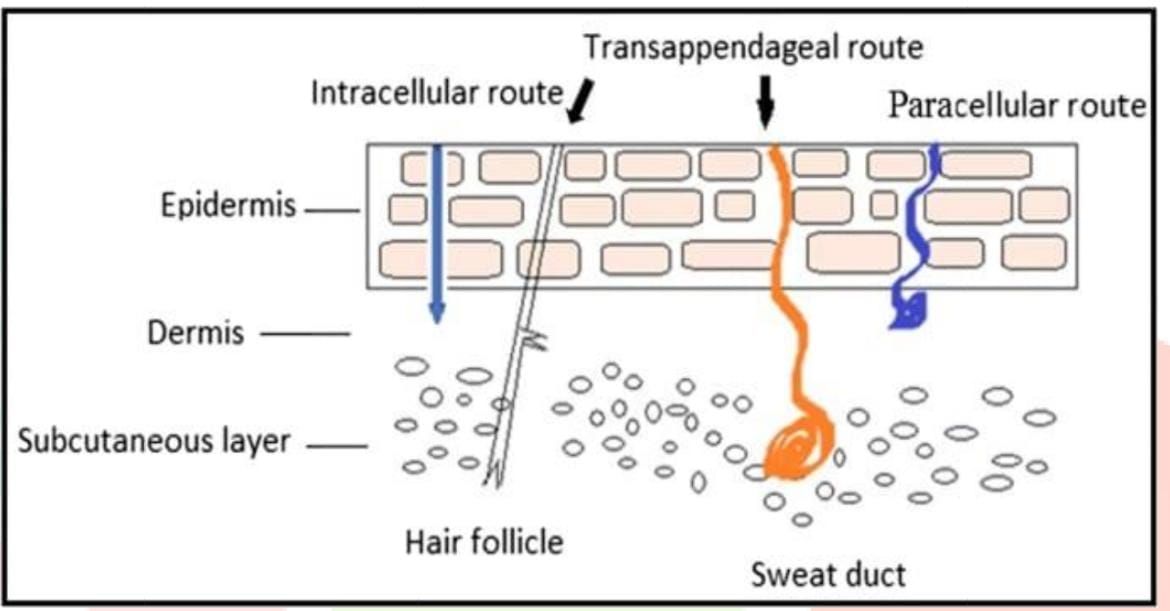
Fig. 5: Route for penetration of the drug by transdermal drug delivery system
MATERIALS USED IN FORMULATION OF TRANSDERMAL PATCHES:
1.POLYMERS:
Mainly Regulates or Controls the DRUG from Medicated Patch.
A.NATURAL:
Starch, Gelatin, Waxes, Gums, Natural Rubber.
B.SYNTHETIC:
Polyvinyl Alcohol ,Polymethyl Actylate ,Poly Urea, Chloride, Polyethylene, Polyvinyl Pyrrolidone, Polypropylene.
2.API/DRUG:
For the incorporation of Drug into the Transdermal Drug the Necessary Physicochemical Properties are:
3.PERMEATION ENHANCERS:
Agents or Chemical Substances that facilitate the permeability of skin by modifying the skin as a barrier to the flux of a desired penetrant that includes:
A. SOLVENTS:
Increases the penetration by Fluidizing the lipid or oily substances present at the surface of the Skin.
B.Miscellaneous chemicals:
These include urea, a hydrating and keratolytic agent; N, N-dimethyl-m-toluamide; calcium thioglycolate; anticholinergic Agents.some potential permeation enhancers have recently been described but the available data on their effectiveness sparse. These include Eucalyptol, di-o-methyl-ß-cyclodextrin and soyabean casein [24]
GENERAL METHOD OF FORMULATION OF TRANSDERMAL PATCHES:
1.SOLVENT CASTING METHOD:
It is a common method to formulate patches. The drug is mixed into a solution containing a Polymer, a plasticizer, and other ingredients [25].This liquid is then poured onto a flat surface, like a piece of glass or a Teflon sheet. After pouring, the liquid evaporates under controlled conditions, leaving behind a thin, flexible film. Once it’s dry, the film is cut to the required size. A Backing layer and liner were considered to help for an application [26]
2.HOT MELT-EXTRUSION METHOD:
This method doesn’t use any liquid solvents and is good for drugs and polymers that can resists a higher temperature. The drug is mixed with polymers and melted together in a Hot-Melt Extruder. The hot mix is then made into a thin film, cooled down, and cut into patches [27].
3.DIRECT COMPRESSION METHOD:
This method involves mixing the drug with dry ingredients like polymers, fillers, and Binders. This dry mix is then pressed by a machine into a thin sheet or film. The sheet is then given a backing and sticky layers to make a complete patch. This method is fast, cost effective, and doesn’t require heat or liquids, which is useful for drugs that are susceptible to heat or moisture.
4. MEMBRANE CONTROLLED RESERVOIR SYSTEM:
The drug is turned into a gel or liquid and stored in a reservoir. The reservoir is placed between a backing layer and a membrane that controls the release of the drug. The reservoir is sealed to prevent leaks. This system ensures a steady release of the drug over time, making it suitable for long-term treatments that need stable blood levels, like hormone or pain relief .
5.MATRIX DISPERSION METHOD:
In this method, the drug is directly mixed with a polymer to form a solid or semi-solid structure called a matrix. This matrix is spread onto a Backing layer and allowed to dry. Once the film forms, it’s covered with an adhesive and liner. the drug is evenly spread in the matrix, and when the patch is used, it causes the prolong release of drug and slowly passes through the skin. This method doesn’t require any special reservoir or membrane.
6.ADHESIVE DISPERSION METHOD:
In this approach, the drug is mixed into a Pressure-sensitive adhesive that serves as both the drug holder and the sticky part that attaches to the skin. This mixture is spread on a backing layer and dried to form a patch. It is a popular method due to its simplicity and effectiveness in ensuring close contact with the skin for better Absorption. It tends to be used for drugs that are needed in low doses.
7.MICRO RESERVOIR SYSTEM:
This hybrid system combines the benefits of Reservoir and Matrix patches. It creates tiny doplets of the drug within a gel, embedded into a polymer matrix. This allows for precise control of drug release over a longer period. The droplets are stable and evenly spread across the Patch, offering both flexibility and controlled release. This system is suitable for drugs that need extended release and steady blood levels.
8.MULTILAMINATE FILM METHOD:
In this technique, multiple film layers are made separately, with each layer doing a different job, like a drug layer, a sticky layer, or a barrier layer. These layers are then joined together to form One patch with controlled drug release. The Multilayer design allows for adjusting drug release, protecting the drug from outside exposure, and improving the patch’s strength and flexibility.
9.ELECTRO-SPRAYING METHOD:
This method is used to create super-thin films or particles. The drug-polymer mixture is charged and sprayed in a high-voltage electric field onto a surface to form a thin film. Electro-spraying forms small structures and increases the surface, helping the drug release better. Although it’s more complex, it’s helpful for Modern Patches that need to act quickly or enhance absorption [28].
10. SUPERCRITICAL FLUID METHOD:
This innovative approach uses supercritical fluids like supercritical CO? to create films that go on the skin. These fluids work as solvents under High pressure and temperature, dissolving the Drug and polymers. Then, when the pressure lowers, the fluid disappears, filled with the drug. This method is environmentally friendly, doesn’t leave residues behind, and achieves uniform, stable drug films, making it suitable for sensitive drugs and advanced skin patch systems [29]
|
INGREDIENTS |
CATEGORY |
|
HPMC [E15] |
Polymer |
|
HPMC[E50] |
Polymer |
|
Methyl Cellulose |
Polymer |
|
Leaf Extract |
Anti inflammatory Agent |
|
Propylene Glycol |
Plasticizer |
|
Polyethylene Glycol (4000) |
Plasticizer |
|
DMSO |
Permeation Enhancer |
|
Glycerol |
Moisturizer |
|
Tween -80 |
Surfactant |
|
Ethanol |
Solvent |
|
Anhydrous Calcium Carbonate |
Drug release controller |
Table 1: Ingredients for Formulation
EXTRACTION APPARATUS
Extraction is an important process in pharmacognosy and pharmaceutical sciences, used to separate bioactive constituents from crude plant material with the help of suitable solvents. The efficiency of extraction depends on the method employed, solvent used, and the nature of the plant material.Generally, five methods of extraction are commonly practised:
1. Soxhlet extraction
2. Cold maceration
3. Successive solvent extraction
4. Hot versus cold extraction
5. Aqueous extraction
1. SOXHELET EXTRACTION
Weigh 50 g of coarse leaf powder.
↓
Fill in a thimble
↓
Pack the Soxhlet extraction in ethanol (95% as solvent)
↓
Process continued for 6 hours.
↓
Extract will evaporate to produce the crude drug.
↓
Preserve vials are used for further process.
2 MACERATIONS:
Submerge the plant material in Ethanol
↓
Leave for 7 days
↓
Occasional agitation (allowing solvent to extract the active ingredient)
↓
After 7 days, filter the liquid extract to remove plant material.
↓
Concentrate through evaporation to produce potent extract.
Cold Maceration:
Take the leaf powder
↓
Macerated in petroleum ether
↓
Shake once initially
↓
Keep undisturbed for 24 hours.
↓
Cold maceration extract obtained
3 Successive Solvent Extraction
Plant material (bark and leaves)
↓
Shade dry
↓
Cut into small pieces.
↓
Powder coarsely
↓
Keep in an airtight container
FLOW CHART OF SUCCESSIVE SOLVENT EXTRACTION PROCESS
2 kg of air-dried bark powder
↓
Cold maceration with 95% ethanol
↓
Concentrated under reduced pressure
↓
Dry extract obtained – 615 g
(Ethanolic Bark Extract, EBE)
↓
Suspend the EBE in water.
↓
Partition with solvents in increasing polarity
↓
Petroleum ether fraction (170.52 g)
↓
Methylene chloride fraction (8.83 g)
↓
Ethyl acetate fraction (109.25 g)
↓
Butanol fraction (153.75 g)
↓
Storage = EBE + fractions stored at –20 °C until use
↓
Formulation and evaluation
EVALUATION TESTS FOR TRANSDERMAL PATCHES:
1. ORGANOLEPTIC CHARACTERISTICS:
Mainly includes Colour, Consistency, Nature, odour , and pH, which are evaluated for physical properties
2. THICKNESS OF PATCH:
A Vernier Caliper is used to measure the thickness of the Transdermal Patch three times at different sites of the patch .
3. FTIR STUDIES:
In this study, the micron constituents found in the leaf extract of Thespesia populnea were analysed using FTIR. The dried leaf powder of Thespesia populnea was extracted using suitable solvents, such as ethanol, methanol, or water.
4.pH OF PATCH:
Prior to pH Test, the Patch is placed in 1ml of distilled water and allowed to stand at room temperature for two hours. Using pH Paper ,the pH Of the patch is evaluated.
5.WEIGHT OF PATCH:
8 Individual patches has to be weighed on electronic balance with the sensitivity of 0.1mg
6.SCANNING ELECTRON MICROSCOPY STUDIES:
The surface morphology and particle characteristics of Thespesia populnea leaf extract using Scanning Electron Microscopy (SEM).Scanning Electron Microscopy (SEM) is an imaging technique that employs a focused beam of high-energy electrons to create detailed three-dimensional images of a sample’s surface. The interaction between the electrons and the sample generates various signals that provide information about the topography, texture, and morphology of the material.The dried Thespesia populnea leaf extract was finely powdered and mounted on a suitable substrate for SEM analysis. An aluminum stub using double-sided conductive carbon tape. The sample was then coated with a thin layer of gold or platinum to enhance its electrical conductivity and prevent charging under the electron beam.
7.PERCENTAGE MOISTURE CONTENT:
The Patches has to be dried for 24 hrs in a Dessicator that contain Silica gel which is responsible for the absorption of moisture from the Patches, [30] the % Moisture Content was determined by using formula:-
{%Moisture Content = [Initial Weight -Final Weight ] /Initial weight x 100}
8.FOLDING ENDURANCE TEST:
A Particular area of the Strip (1cm x 1cm) was cut uniformly, folded over and over until it broke .The time period where a patch can be folded in the same spot without breaking is known as Folding Endurance
9.SKIN IRRITATION TEST :
Before Applying the patch, the dorsal skin of a healthy subject was washed with 70% Ethanol .The Patches were applied on right forearm for 24 hrs .After 24 hours ,the Patches were removed and the forearms were cleansed with Saline. The Cutaneous responses were assessed by observing skin allergy and irritation for 15 min,1 hour, 24 hrs after the removal of test patch.
10.TENSILE STRENGTH:
The developed patches’ mechanical properties has to be measured by evaluating their tensile strength. Using self-designed assembly, the patches’ tensile strength will be ascertained. The assembly consists of a pan that is hung with a string thread, with the center of patch serving as an attachment point for the thread’s other end. Weighing weights in a pan, the assembly were will be handled like a beam balance. The weights needed to shatter the patch were applied.
11.DRUG CONTENT:
For determination of drug content, the known area of the patch was cut and dispersed in chloroform in a 100 mL Volumetric Flask. The flask was then kept in a shaking incubator for 4 hours. The solution obtained was filtered and 1-mL solution was taken. After diluting it in 10 mL chloroform, the absorbance of the prepared solution was measured at wavelength 267 nm under a UV-visible spectrophotometer.From the Absorbance values,a Calibration curve is constructed to determine the concentration of drug in the given Patch.
12. STABILITY STUDIES:
Stability testing of prepared formulation was conducted for formulations by storing at different temperature conditions for the period of one month. The packed formulation stored at different Temperature conditions viz. Room temperature, 20°C and 40°C and were evaluated for physical parameters like Colour, Odour, pH, Appearance Texture.
CONCLUSION:
In this review, the solvent casting method and its role in film and patch formulation were discussed. The process involves preparing polymeric solutions, incorporating active constituents, and using suitable plasticizers to obtain flexible and uniform films. The method remains widely used due to its simplicity, ability to ensure homogeneous drug distribution, and compatibility with various polymers and phytoconstituents.
The characteristics of the resulting films such as thickness, clarity, and mechanical strengthdepend on factors like polymer concentration, type of plasticizer, and drying conditions. Solvent casting continues to be an important technique in developing transdermal and topical delivery systems, offering controlled release potential and versatility in formulation design.
ACKNOWLEDGEMENT:
We sincerely thank our esteemed guide for their constant encouragement, guidance, and kind support throughout the completion of this article titled “Formulation and Evaluation of Transdermal Patches from Thespesia populnea for Anti-inflammatory Activity.” We express our special gratitude to our Instructor L.Ramanamma for their continuous support, motivation, and valuable encouragement, which greatly helped us to stay involved and focused during the preparation of this work.
REFERENCES:





Ramanamma.L *, Navya Jyothi.CH 1, Shivangi Dimple.B 2, Sravya Sri P R 3, Bavana.K4 ,Sravani.N 5 , Formulation And Evaluation of Transdermal Patches from Thespesia Populnea for Anti-Inflammatory Activity., Int. J. of Pharm. Sci., 2026, Vol 4, Issue 1, 3586-3600. https://doi.org/10.5281/zenodo.18441909
 10.5281/zenodo.18441909
