
View Article

Abstract

Hair problems are increasing due to the pollution, stress and improper lifestyle because of all this condition hair problem are associated such as hair fall, dandruff, dryness, premature graying and alopecia. The growing awareness regarding safe and effectiveness of natural product has resulted in increased demand for herbal cosmetic formulation. The herbal hair serum is new and modern formulation for topical use which is designed to improve hair texture, promote scalp health, improve follicular cycle provide protection against physical and chemical damage. Some essential herbal product containing phytoconstituents such as flavonoids, tannins, saponins and vitamin which is essential for improving hair strength and reducing hair breakage. Among these plants, fenugreek (Trigonrlla foenum- graecum), Hibiscus (Hibiscus rosa-sinensis), and kalonji ( Nigella sativa) . Formulation of herbal hair serum requires proper selection of excipients , suitable extraction methods and standardization parameter to ensure product quality and stability. This review focuses on formulation, herbal ingredients, prepration methods and their evaluation parameter involve in prepration of herbal hair serum. The review also highlights phytochemical constituents, pharmacological activities, extraction technique, formulation procedure, evaluation parameter, and quality control methods used in cosmetic formulation

Keywords

Herbal hair serum, phytochemicals, cosmetic formulation, fenugreek, Hibiscus leaves, kalonji, Hydroalcoholic extraction, Hair growth promotion

Introduction

Hair is an essential component of the human body that contributes significantly to aesthetic appearance and psychological confidence.  Healthy hair is considered as sign of overall well?being and good health. However, hair disorders such as alopecia, dandruff, scalp irritation, and premature hair loss are common problems affecting both men and women worldwide. Hair loss can occur due to multiple factors including genetic predisposition, hormonal imbalance, oxidative stress, microbial infection, nutritional deficiency, and environmental pollution. Among these factors, oxidative stress and inflammation are major contributors to hair follicle damage. Modern lifestyles, stress, and excessive use of chemical hair care products further aggravate these conditions.

Synthetic drugs such as minoxidil and finasteride are commonly used for treating hair loss. However, prolonged use of these medications may cause side effects including scalp irritation, itching, dryness, and dermatitis. Therefore, herbal formulations have gained increasing popularity as safe alternatives for hair care management.

Herbal cosmetics are cosmetic products that contain active plant?derived ingredients. These formulations are widely accepted due to their natural origin, minimal toxicity, and multiple therapeutic properties. Polyherbal formulations containing multiple medicinal plants often provide synergistic effects which enhance the efficacy of the product. Fenugreek, hibiscus, and kalonji are medicinal plants traditionally used in Ayurvedic and herbal medicine for promoting hair growth and maintaining scalp health. These plants contain numerous bioactive phytochemicals that nourish hair follicles, improve scalp circulation, and prevent hair fall. The development of herbal hair serum using hydroalcoholic extracts of these plants provides a promising approach for natural hair care management. In recent  years, herbal cosmetic preparation have gained considerable attention due to their safety profile and therapeutic benefits. Among different dosage forms, hair serum has emerged as a population  formulation because of its non-greasy nature, ease of application and rapid action on hair shafts. Herbal hair serum formulation contain plant extracts and conditioning agents which help in nourishing scalp, improving hair strength and enhancing shine. Scientific formulation and shatndardization of herbal hair serum is necessary to ensure uniformity, stability  and effectiveness. Evaluation parameters such as pH, viscosity, spreadability and stability studies are important in determining the quality of finished products.

ANATOMY AND PHYSIOLOGY OF HAIR

Hair is a filamentous structure composed mainly of keratin protein. It originates from hair follicles present in the dermal layer of the skin. The hair follicle is a complex mini?organ responsible for hair growth and regeneration.

Table 1: The major components of the hair follicle

Hair shaft – visible portion of hair above the skin surface.

Hair root – portion of hair embedded within the follicle.

Dermal papilla –  contains blood vessels that supply nutrients to the hair follicle.

Sebaceous glands – produce sebum which lubricates the hair.

Arrector pili muscle – responsible for hair erection.

Proper functioning of the hair follicle is essential

Structure of hair follicle

The hair follicle is a dynamic mini?organ responsible for hair growth. It consists of the hair shaft, hair bulb, dermal papilla, and sebaceous gland.
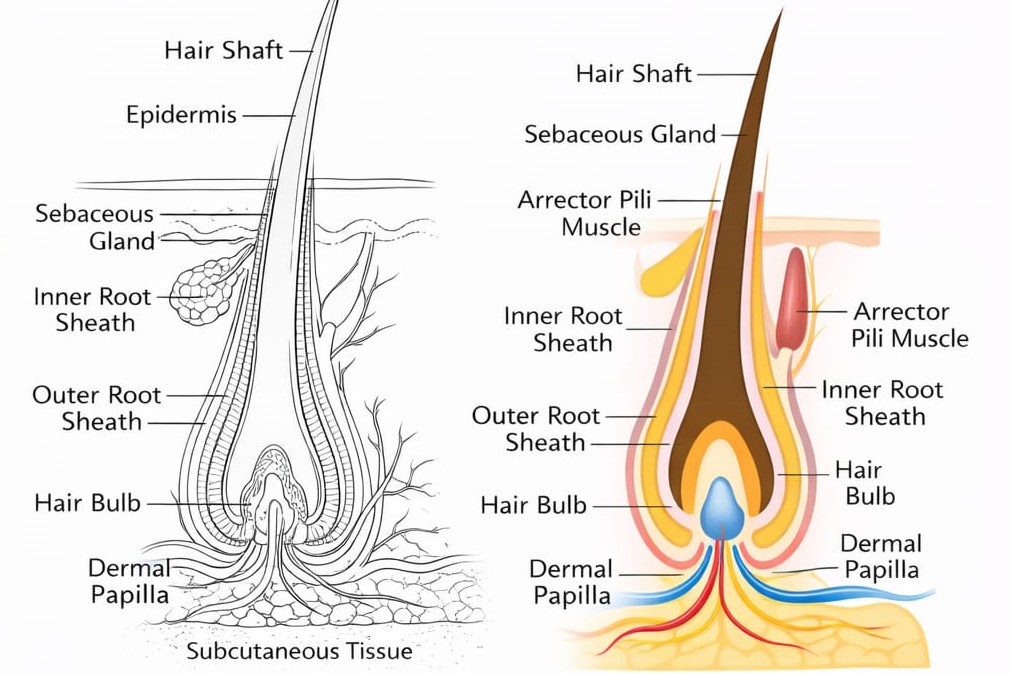


Fig 1. Schematic representation of the anatomical structural of the human hair follicle.


B .Hair Growth cycle

Hair growth occurs through cyclic phases including anagen (growth phase), catagen (transition phase), and telogen (resting phase).

Table 2 : Phases of Hair growth cycle

Phase

Duration

Function

Anagen

2–6 years

Active hair growth

Catagen

2–3 weeks

Transition phase

Telogen

3–4 months

Hair shedding phase

C. Causes of Hair Loss

Hair loss may result from multiple biological and environmental factors including hormonal imbalance, stress, nutritional deficiency, and genetic variations.

D. Synthetic Treatments for hair Loss

Table 3 : synthetic Drug use for the hair treatment

Drug

Mechanisum

Side effects

Monoxidil

Improves  blood  circulation to follicles

Scalp irritation

Finasteride

Inhibits conversion of testosterone to DHT

Hormonal side effect

Herbal Ingredient used in hair serum

Medicinal plant are widely incorporated in hair serum formulation due to their beneficial effects on hair and scalp.

Plants use for the formulation:


Herbs

Scientific name

Active constituent

Uses

Hibiscus leaves

Hibiscus rosa-sinensis

Flavonoids

Anthocyanins

Vitamin C

Stimulate hair growth

Conditioning and  nourishes hair

Kalonji

Nigella sativa

Thymoquinone

Fixed  oil

Protein

Prevent hair fall

Improve scalp health


Fenugreek

Trigonella foenum-graecum

Alkaloid

Flavonoid

Promote hair growth

Reducedandruff


Formulation componants of  herbal  hair serum

Base and vehicle        

  1. Distilled water
  2. Ethanol
  3. Glycerin
  4. Propylene glycol

Conditioning Agents

  1. Natural polymers
  2. Plant mucilage

Preservatives and fragrance

  1. Vitamin E
  2. Sodium benzoate
  3. Essential oils

4. General Method of  preparation of Herbal Serum.
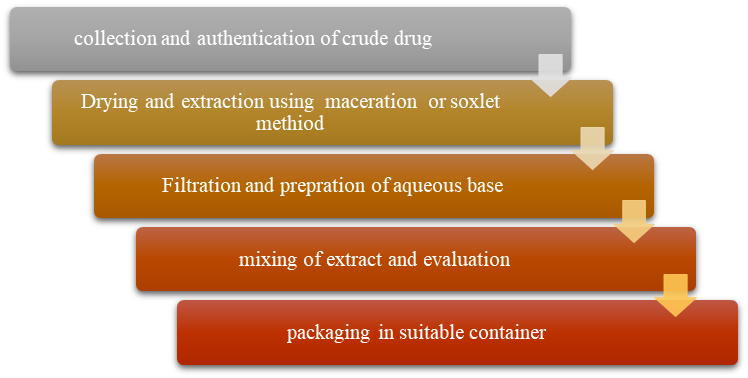


5.  Evaluation and Standardization Parameters

The evaluation and standardization processes play a crucial role in confirming the quality, safety, stability and effectiveness of herbal hair serum preparations .There are Various  physicochemical and biological parameters are assessed to maintain uniformity and therapeutic performance.

Organoleptic evaluation

Study of the  organoleptic properties such as color odor appearance and texture of the serum. All these properties are helps to determining product acceptability and detecting any physical instability during storage .

Determination of pH   The  pH  of herbal hair serum should be compatible with scalp pH to avoid irritation. Generally, a slightly acidic pH is preferred as it help to maintain the smoothness.

Viscosity Measurement

Viscosity indicates the flow rate  and consistency of the serum. Proper viscosity ensures easy application, uniform spreading on hair shafts and usefull for regular use.

 Spreadability Test

Spreadability determines serum can be distributed on hair surface. Good spreadability enhance the hair result and reduce the excessive use of the product.

Stability Studies.

Stability testing is performed to evaluate the effect of temperature, light and humidity on formulation characteristics. Changes in the color, phase separation Observation.

Phytochemical Screening

Qualitative tests are performed to confirm the presence of the active constituent.

6. Advantages of Herbal Hair Serum

  1. Non-sticky formulation
  2. Easy to application
  3. Improve hair shine
  4. Reduce  hair fall
  5. Stimulate follicular cycle
  6. Minimal Side effects

7. FUTURE PROSPECTS

  1. Development of nano-herbal serum formulation
  2. Clinical evaluation of herbal cosmetics
  3. Advanced stability studies
  4. Standardization using modern and standard techniques
     

CONCLUSION

Herbal hair serum is one of the natural tool which promises us the healthy hair care where the enhancement of healthy and effective hair growth, this serum involves the advancement in the field of pharmaceutical and cosmetic sciences. The significance of this hair serum is constitutes the natural derivation of plants extracts which are full of vitamins, calcium and the substances which are essential for the healthy hair.

The formulation of herbal hair serum involves the measured amount of pH, concentration, spreadability, viscosity measurement and the important stability measures. Therefore, the scientific investigation and quality control in the herbal hair serum formulation plays a crucial role in reliability and advancement thus, also it is an alternative for modern hair care management.

REFERENCES

  1. Patil, V., Pawar, P., Salunkhe, T., Gurav, L., & More, J. (2025). Formulation and evaluation of an herbal hair serum containing natural ingredients. International Journal of Pharmacognosy and Pharmaceutical Sciences, 7(1), 48–50.
  2. Kumar, S. M., Madhumitha, S., Mohammed, A. K., Mohanabaladevi, V., Muniyaiya, C., & Nandhini, V. (2025). Formulation and evaluation of liposomal herbal hair serum using alkanet root extract. International Journal of Innovative Science and Research Technology, 10(3), 747–755.
  3. Bhagat, S., Unhale, A. A., & Deshmukh, S. P. (2025). Formulation and evaluation of herbal hair serum. Zenodo Research Archive.
  4. Avhale, G. J., Mohan, R. S., & Kawade, R. M. (2024). Formulation and evaluation of herbal hair serum. International Journal for Research in Applied Science and Engineering Technology, 12(2), 100–107.
  5. Anusha, R., Akhila, N., Nikhitha, J., Harish, K., Shaikh, A. R., Sony, Y., & Inamul. (2023). Formulation and evaluation of herbal hair serum: A review. International Journal of Basic and Clinical Pharmacology, 12(4), 550–556.
  6. Rao, K. S. S., Mishra, H., Sahu, S. S., Patra, A., Patro, C., Satapathy, S., & Dash, S. (2023). A study on formulation and evaluation of herbal hair oils. Journal of Pharmaceutical Negative Results, 14(S2), 1972–1978.
  7. Sharma, P., & Singh, R. (2024). Herbal cosmetics: Current trends and future prospects. Journal of Cosmetic Dermatology, 23(2), 455–462.
  8. Patel, D., & Patel, N. (2022). Evaluation parameters of herbal topical formulations. Asian Journal of Pharmaceutical Research, 12(1), 34–41.
  9. Kaur, G., & Kumar, S. (2021). Role of phytoconstituents in hair growth promotion. Pharmacognosy Reviews, 15(29), 89–97.
  10. Joshi, H., & Parle, M. (2023). Polyherbal formulations in cosmetic science. International Journal of Green Pharmacy, 17(3), 210–218.
  11. Verma, A., & Yadav, R. (2020). Stability studies of herbal cosmetic formulations. Journal of Applied Pharmaceutical Science, 10(6), 120–126.
  12. Kulkarni, S., & Deshpande, P. (2024). Standardization techniques for herbal drugs and formulations. Indian Journal of Pharmaceutical Education and Research, 58(1), 15–24.
  13. Gupta, R., & Sharma, V. (2022). Herbal extracts in dermatological preparations. Research Journal of Pharmacy and Technology, 15(4), 1750–1756.
  14. Mehta, K., & Shah, B. (2021). Cosmetic potential of medicinal plants. Journal of Herbal Medicine, 27, 100430.
  15. Ali, A., & Khan, M. (2023). Antioxidant activity of plant-based hair care products. Natural Product Research, 37(5), 890–897.
  16. Singh, M., & Singh, P. (2024). Advances in herbal nano-cosmetics. Nanomedicine Research Journal, 9(2), 65–72.
  17. Das, S., & Bose, A. (2020). Extraction techniques for herbal drug development. Pharmacognosy Journal, 12(3), 512–520.
  18. Nair, R., & Chanda, S. (2022). Evaluation of antimicrobial herbal formulations. International Journal of Pharmaceutical Sciences Review and Research, 72(1), 45–52.
  19. Thomas, J., & Mathew, L. (2023). Hair biology and cosmetic science. Clinical Dermatology Research Journal, 8(2), 110–118.
  20. Reddy, P., & Reddy, S. (2021). Formulation approaches in topical herbal products. World Journal of Pharmacy and Pharmaceutical Sciences, 10(9), 650–662.
  21. Jain, S., & Jain, N. (2020). Role of Ayurveda in herbal cosmetics. AYU Journal, 41(3), 150–156.
  22. Roy, A., & Chakraborty, S. (2022). Polyphenols as hair growth promoters. Biomedicine & Pharmacotherapy, 148, 112764.
  23. Kapoor, R., & Gupta, S. (2024). Quality control of herbal cosmetic formulations. Journal of Drug Delivery and Therapeutics, 14(1), 30–37.
  24. Bansal, M., & Bansal, P. (2023). Formulation development of herbal gel for topical application. International Journal of Pharmaceutical Investigation, 13(2), 220–226.
  25. Mishra, N., & Tiwari, P. (2021). Phytochemical screening methods for herbal drugs. Journal of Pharmacognosy and Phytochemistry, 10(5), 90–96.
  26. Khandelwal, K. R. (2020). Practical pharmacognosy techniques in herbal drug evaluation. Nirali Prakashan.
  27. Bhattacharya, S., & Das, D. (2022). Modern analytical methods in herbal standardization. Analytical Chemistry Letters, 12(4), 520–530.
  28. Yadav, M., & Kumar, A. (2023). Herbal conditioning agents in hair formulations. Cosmetics, 10(3), 75.
  29. George, D., & Joseph, L. (2024). Consumer acceptance of herbal cosmetic products. International Journal of Cosmetic Science, 46(1), 22–31.
  30. Soni, A., & Soni, P. (2021). Safety assessment of topical herbal preparations. Regulatory Toxicology and Pharmacology, 124, 104967.

Reference

  1. Patil, V., Pawar, P., Salunkhe, T., Gurav, L., & More, J. (2025). Formulation and evaluation of an herbal hair serum containing natural ingredients. International Journal of Pharmacognosy and Pharmaceutical Sciences, 7(1), 48–50.
  2. Kumar, S. M., Madhumitha, S., Mohammed, A. K., Mohanabaladevi, V., Muniyaiya, C., & Nandhini, V. (2025). Formulation and evaluation of liposomal herbal hair serum using alkanet root extract. International Journal of Innovative Science and Research Technology, 10(3), 747–755.
  3. Bhagat, S., Unhale, A. A., & Deshmukh, S. P. (2025). Formulation and evaluation of herbal hair serum. Zenodo Research Archive.
  4. Avhale, G. J., Mohan, R. S., & Kawade, R. M. (2024). Formulation and evaluation of herbal hair serum. International Journal for Research in Applied Science and Engineering Technology, 12(2), 100–107.
  5. Anusha, R., Akhila, N., Nikhitha, J., Harish, K., Shaikh, A. R., Sony, Y., & Inamul. (2023). Formulation and evaluation of herbal hair serum: A review. International Journal of Basic and Clinical Pharmacology, 12(4), 550–556.
  6. Rao, K. S. S., Mishra, H., Sahu, S. S., Patra, A., Patro, C., Satapathy, S., & Dash, S. (2023). A study on formulation and evaluation of herbal hair oils. Journal of Pharmaceutical Negative Results, 14(S2), 1972–1978.
  7. Sharma, P., & Singh, R. (2024). Herbal cosmetics: Current trends and future prospects. Journal of Cosmetic Dermatology, 23(2), 455–462.
  8. Patel, D., & Patel, N. (2022). Evaluation parameters of herbal topical formulations. Asian Journal of Pharmaceutical Research, 12(1), 34–41.
  9. Kaur, G., & Kumar, S. (2021). Role of phytoconstituents in hair growth promotion. Pharmacognosy Reviews, 15(29), 89–97.
  10. Joshi, H., & Parle, M. (2023). Polyherbal formulations in cosmetic science. International Journal of Green Pharmacy, 17(3), 210–218.
  11. Verma, A., & Yadav, R. (2020). Stability studies of herbal cosmetic formulations. Journal of Applied Pharmaceutical Science, 10(6), 120–126.
  12. Kulkarni, S., & Deshpande, P. (2024). Standardization techniques for herbal drugs and formulations. Indian Journal of Pharmaceutical Education and Research, 58(1), 15–24.
  13. Gupta, R., & Sharma, V. (2022). Herbal extracts in dermatological preparations. Research Journal of Pharmacy and Technology, 15(4), 1750–1756.
  14. Mehta, K., & Shah, B. (2021). Cosmetic potential of medicinal plants. Journal of Herbal Medicine, 27, 100430.
  15. Ali, A., & Khan, M. (2023). Antioxidant activity of plant-based hair care products. Natural Product Research, 37(5), 890–897.
  16. Singh, M., & Singh, P. (2024). Advances in herbal nano-cosmetics. Nanomedicine Research Journal, 9(2), 65–72.
  17. Das, S., & Bose, A. (2020). Extraction techniques for herbal drug development. Pharmacognosy Journal, 12(3), 512–520.
  18. Nair, R., & Chanda, S. (2022). Evaluation of antimicrobial herbal formulations. International Journal of Pharmaceutical Sciences Review and Research, 72(1), 45–52.
  19. Thomas, J., & Mathew, L. (2023). Hair biology and cosmetic science. Clinical Dermatology Research Journal, 8(2), 110–118.
  20. Reddy, P., & Reddy, S. (2021). Formulation approaches in topical herbal products. World Journal of Pharmacy and Pharmaceutical Sciences, 10(9), 650–662.
  21. Jain, S., & Jain, N. (2020). Role of Ayurveda in herbal cosmetics. AYU Journal, 41(3), 150–156.
  22. Roy, A., & Chakraborty, S. (2022). Polyphenols as hair growth promoters. Biomedicine & Pharmacotherapy, 148, 112764.
  23. Kapoor, R., & Gupta, S. (2024). Quality control of herbal cosmetic formulations. Journal of Drug Delivery and Therapeutics, 14(1), 30–37.
  24. Bansal, M., & Bansal, P. (2023). Formulation development of herbal gel for topical application. International Journal of Pharmaceutical Investigation, 13(2), 220–226.
  25. Mishra, N., & Tiwari, P. (2021). Phytochemical screening methods for herbal drugs. Journal of Pharmacognosy and Phytochemistry, 10(5), 90–96.
  26. Khandelwal, K. R. (2020). Practical pharmacognosy techniques in herbal drug evaluation. Nirali Prakashan.
  27. Bhattacharya, S., & Das, D. (2022). Modern analytical methods in herbal standardization. Analytical Chemistry Letters, 12(4), 520–530.
  28. Yadav, M., & Kumar, A. (2023). Herbal conditioning agents in hair formulations. Cosmetics, 10(3), 75.
  29. George, D., & Joseph, L. (2024). Consumer acceptance of herbal cosmetic products. International Journal of Cosmetic Science, 46(1), 22–31.
  30. Soni, A., & Soni, P. (2021). Safety assessment of topical herbal preparations. Regulatory Toxicology and Pharmacology, 124, 104967.

Photo
Nidhi Rajurkar
Corresponding author

G H Raisoni University, Saikheda

Photo
Romanshu Walde
Co-author

G H Raisoni University Saikheda

Photo
Dr. Dhanashree Tumme
Co-author

School of Pharmacy, G H Raisoni University Saikheda

Nidhi Rajurkar, Romanshu Walde, Dr. Dhanadhree Tumme, Formulation and Standardization of Herbal Hair Serum: A Review, Int. J. of Pharm. Sci., 2026, Vol 4, Issue 3, 2500-2505. https://doi.org/10.5281/zenodo.19147548

More related articles
Bridging Traditional Wisdom and Modern Science: A ...
Divya Monde , Jyoti Sonawane, Swati Wakchoure, Shreya Mumbaikar, ...
The Usage of Antibacterial Botanicals in The Produ...
Ancy Antony, Able Mariya Varghese, Devika Sanil, Litty Reji, Raha...
Investigation of the Anti-inflammatory Potential o...
Tisha Gupta, Sourabh Yadav, Dr. Satyam Pandey, ...
A Review on Diabetes Mellitus...
Jagruti G. Musale, Dikshita D. Wagh, Rishikesh S. Bachhav, Smita S. Aher, ...
Formulation and Evaluation of Topical Polyherbal Antifungal Spray...
Jyoti K. Sonawane, Iram Rashid Gore, Nishita Nimba Hole, Sonu Madhukar Harad, ...
Related Articles
Innovative Approaches in Levodopa Nasal Spray Formulation: A Review on Excipient...
Devendra Sonawane, Rutik Liddad, Pravin Waghmode, Rushikesh Nikam, Pachpute D. S., ...
Risk Based Study of Sample Spot Fixing for Conducting Environmental Monitoring T...
Shrawan Kr. Singh, Dr. Kamlesh Dutta, Ravi Chaudhary, ...
Innovative and Alternative Approaches to Urticaria Management...
Krunal K. Detholia, Mukesh B. Jadeja, Umang R. Varia, Hitesh B. Katariya, Vidhi D. Panchal, Vishal B...
Bridging Traditional Wisdom and Modern Science: A Comparative Review on the Safe...
Divya Monde , Jyoti Sonawane, Swati Wakchoure, Shreya Mumbaikar, Diya Mhaskar, Rudra Mhatre, ...
More related articles
Bridging Traditional Wisdom and Modern Science: A Comparative Review on the Safe...
Divya Monde , Jyoti Sonawane, Swati Wakchoure, Shreya Mumbaikar, Diya Mhaskar, Rudra Mhatre, ...
The Usage of Antibacterial Botanicals in The Production of Paper Soap: A Compreh...
Ancy Antony, Able Mariya Varghese, Devika Sanil, Litty Reji, Rahana Ramesh, ...
Bridging Traditional Wisdom and Modern Science: A Comparative Review on the Safe...
Divya Monde , Jyoti Sonawane, Swati Wakchoure, Shreya Mumbaikar, Diya Mhaskar, Rudra Mhatre, ...
The Usage of Antibacterial Botanicals in The Production of Paper Soap: A Compreh...
Ancy Antony, Able Mariya Varghese, Devika Sanil, Litty Reji, Rahana Ramesh, ...