

We use cookies to ensure our website works properly and to personalise your experience. Cookies policy
Swami Institute of Pharmacy, Abhona, Nashik, Maharashtra, India 423502
Formulation development is the process of changing a drug into a suitable form like tablets, capsules, liquids, creams, or injections so it can be used safely and effectively. Since some drugs have problems like poor solubility, instability, or bad taste, they are mixed with excipients to improve their quality and patient acceptance. Preformulation studies help in selecting the right dosage form and manufacturing method. cGMP, evaluation tests, SOPs, and stability studies ensure the product is safe, stable, and of good quality for patient use.
Formulation development refers to the scientific process of designing and producing a pharmaceutical product (tablet, capsule, injection, cream, etc.) In a form that is stable, effective, safe, and acceptable to the patient. Formulation development is a core part of pharmaceutical product design. It involves transforming a pure drug substance (active pharmaceutical ingredient — API) into a safe, effective, stable, and easy-to-administer dosage form such as tablets, capsules, liquids, semisolids, or injectables. This process ensures that the patient receives the correct dose of the drug in a form that delivers the desired therapeutic action with maximum safety and reliability.
A drug by itself cannot always be administered directly because it may have limitations such as poor solubility, instability, unpleasant taste, hygroscopicity, or low bioavailability. Therefore, formulation development combines the API with appropriate excipients (inactive but essential ingredients) to overcome these limitations. These excipients help improve drug stability, manufacturability, absorption, palatability, and patient acceptability. The formulation development process is scientific and systematic. It begins with preformulation studies that characterize the physical and chemical properties of the drug. Based on these results, a suitable dosage form and appropriate excipients are selected. Prototype formulations are prepared and optimized through laboratory trials. Manufacturing processes such as mixing, granulation, drying, compression, coating, filling, or sterilization are developed and standardized to ensure consistent product quality.
Objectives:
2. CONCEPT OF cGMP:
cGMP= current good manufacturing practices → ensures product quality & patient safety.
Purpose: prevent contamination, ensure consistency, maintain quality.
Facilities of cGMP:
3. Steps In Formulation Development:
A. Drug Identification & Characterization :
Drug identification and characterization involve studying the identity, purity, and essential physical–chemical properties of a drug before formulation.
1. Identification Of Drug :
2. Characterization of drug:
Used to study the properties that affect formulation performance.
B. Excipient Compatibility Study:
Excipient compatibility study is done to check whether the drug and excipients are chemically and physically compatible when mixed together in a formulation.
C. Formulation Development :
Formulation development is the process of designing and preparing a safe, effective, stable, and acceptable dosage form of a drug using suitable excipients and manufacturing methods.
D. Formulation Optimization:
Formulation optimization is the process of adjusting and improving the formulation to achieve the best quality, stability, safety, and effectiveness of a dosage form.
Purpose: To get best quality, stability, patient acceptance & low cost.
Steps in formulation optimization:
E. Evaluation Of Formulations:
Evaluation of formulations involves testing the quality, safety, stability, and performance of a prepared dosage form to ensure it meets standard requirements.
F. Stability Studies (ICH):
Stability study is the process of testing how a drug product maintains its quality, safety, and effectiveness over time under different environmental conditions.
Purpose: determine shelf life & storage conditions.
Types Of Stability Study:
Parameters To Be Tested (IP):
4. Requirement Listing And Procurement:
A. Procurement Of Drug And Excipients Require For Selected Formulation:
2. Common excipients used in various dosage forms:
B. Procurement Of Equipment And Instruments For Formulation And Analysis:
For Solid, Liquid Semisolid Forms:
Solid Dosage:- blender, RMG, FBD, tablet press, hardness tested liquids:- mixing tank, stirrers, filters, filling machine
Liquid:-beakers, measuring cylinders, volumetric flasks , magnetic stirrer, homogenizer,water bath ,PH meter, viscometer, filtration unit, autoclave, laminar airflow
Semisolids:- planetary mixer, triple roller mill, tube filler
Qc Instruments:- PH meter, UV-spectrophotometer, viscometer
BASIC TECHNIQUES:
1. SOP Handling:
A standard operating procedure (SOP) is a written, step-by-step instruction that explains how to perform a routine or repeated activity in an organization.
SOP Preparation:
2. Various Equipment And Instruments Handling:
A. Tablet Compression Machine:
Objective:- To provide the standard operating procedure for tablet compression machine
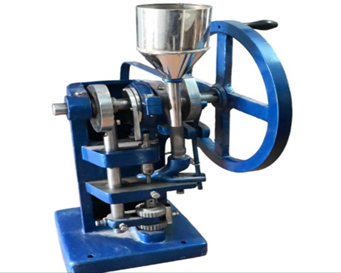
Fig 1: Tablet Compression Machine
Procedure Of Tablet Compression Machine:
B. Fluidized Bed Dryer:
Objective:- To provide the standard operating procedure for fluidized bed dryer
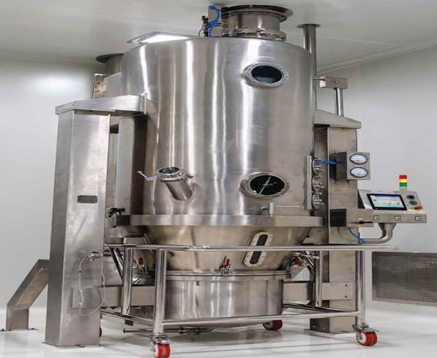
Fig 2: Fluidized Bed Dryer
Procedure Of Fluidized Bed Dryer:
C. Tablet Coater:
Objective: To provide the standard operating procedure for tablet coater
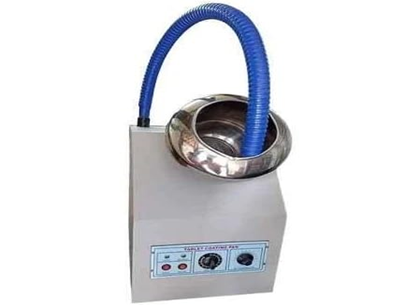
Fig 3: Tablet Coater
Procedure Of Tablet Coater:
D. Capsule Filling Machine:
objective: to provide the standard operating procedure for capsule filling machine.
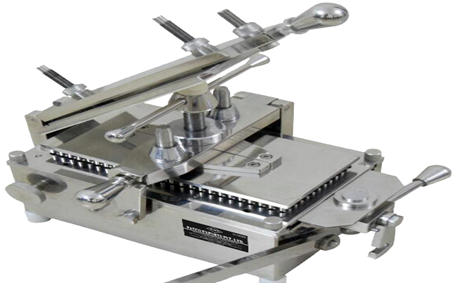
Fig 4: Capsule Filling Machine
Procedure of Capsule Filling Machine:
E. Extruder And Spheronizer:
A. Extruder:
Objective: To provide the standard operating procedure for extruder
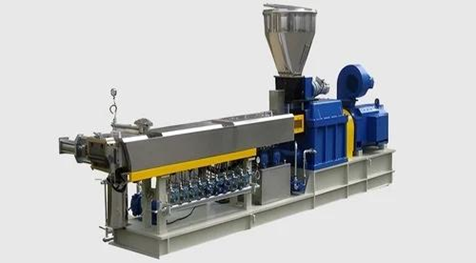
Fig 5: Extruder
Procedure Of Extruder:
B. Spheronizer :
Objective: To provide the standard operating procedure for spheronizer.
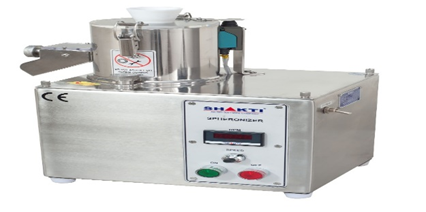
Fig 6: spheronizer
Procedure Of Spheronizer:
F. Others:
Ball Mill :
Objective: To provide the standard operating procedure for ball mill.
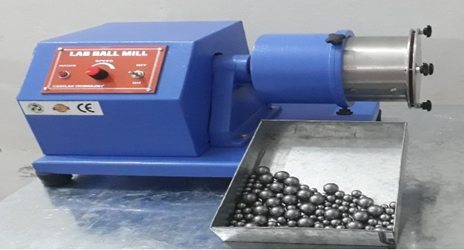
Fig 7: ball mill
Procedure of Ball Mill:
EXPERIMENTAL:
1. Preformulation Studies And Preparation Of Preformulation Data Sheet:
A. Introduction To Preformulation, Goals And Objectives, Study Of Physicochemical Characteristics Of Drug Substances:
Introduction:
Preformulation is a set of studies that evaluate the physicochemical properties of a new drug to understand how it will behave in a dosage form.
Before preparing tablets, capsules, or liquids, the drug and excipients are evaluated for their suitability. This evaluation process is called preformulation.
Objectives of Preformulation:
Goals of Preformulation:
Study Of Physicochemical Characteristics Of Drug Substances: It involves testing the physical and chemical properties of a drug to understand how it will behave during formulation, storage, and in the body.
Physicochemical Characteristics:
B. Identification And Characterization Of Drug Using FTIR, DSC, And UV:
1. FTIR:- Used to identify functional groups in the drug. each group shows a characteristic peak (fingerprint).confirms drug identity and checks drug–excipient interaction.
FTIR Procedure :
2. DSC:- Studies thermal behavior of the drug. gives melting point, purity, crystallinity, and polymorphism.
Peak shift indicates incompatibility with excipients.
DSC Procedure:
3. UV Spectroscopy:- UV spectroscopy is used to measure how much UV light a substance absorbs to determine its concentration and λmax.
UV Spectroscopy Procedure:
C. Physical Properties: Physical Form (Crystal & Amorphous), Particle Size, Shape, Flow Properties, Solubility Profile Etc:
1. Physical Form (Crystal & Amorphous): Crystalline drugs have a fixed structure, stable, lower solubility.
Amorphous drugs are less stable but have higher solubility and faster dissolution.
2. Particle Size: Smaller particles → increased surface area, better dissolution and absorption larger particles → slower dissolution.
3. Particle Shape: Spherical particles → better flow needle or irregular shapes → poor flow, difficult to compress.
4. Flow Properties: Important for tablet/capsule manufacturing.
Measured by angle of repose, Carr’s index, hausner ratio.
5. Solubility Profile: Determines how easily the drug dissolves in different solvents and pH. essential for predicting bioavailability and selecting dosage form.
D. Drug-Excipient Compatibility Study Using DSC, FTIR Etc:
To check if the drug and excipients interact so the formulation remains stable.
Methods Used Are Commonly:
DSC: detects changes in melting point.
FTIR: detects changes in functional-group peaks.
Procedure:
Interpretation:
No interaction: no major peak shifts or loss of peaks.
Possible interaction: melting point change (DSC) or peak shifts (FTIR).
E. Application Of Preformulation In Dosage Form Design:
2. Formulation Of Conventional Or Novel Drug Delivery Systems:
A. Formulation Of Conventional Drug Delivery System:
1. Tablet :- Made by mixing drug + excipients (diluent, binder, disintegrant, lubricant) → granulation → drying → compression.
2. Capsules :-Drug blend filled into hard/soft gelatin shells → sealed → packed.
3. Oral Liquids:-Drug dissolved or dispersed in water with sweeteners, preservatives, flavors → filtered → filled.
4. Semisolids (Ointments/Creams/Gels):-Drug mixed with base (petrolatum, paraffin) → phases heated → mixed → cooled → packed.
5. Parenteral (Injections):-Drug dissolved in sterile solvent → filtered → filled under aseptic conditions → sterilized → sealed.
B. Formulation Of Novel Drug Delivery System:
3. Evaluation:
A. Solid Dosage Forms:
B. Liquid Dosage Forms:
C. Semisolid Dosage Forms:
4. Labeling & Packaging:
A. Types Of Packaging: Primary, secondary, tertiary.
B. Packaging Materials: Glass, plastic, metal, paper/foil.
C. Evaluation Tests For Packaging Materials: Leak test, extractives test, hydrolytic resistance, self-seal test.
D. Labelling For Different Dosage Forms: Dose, directions, storage; “shake well” for liquids, “external use” for semisolids, sterility info for injections.
Formulation:
Object: To prepare cresol with soap solution (20ml as per IP)
Synonyms: Lysol.
Requirements:
A. Apparatus:- Beaker , water bath, tripod stand, measuring cylinder, stirrer, wire gauze, bunsen burner, pair of tongs, funnel , weighing balance , matchbox, pipette.
B. Chemicals:- Cresol, olive oil, sodium hydroxide, water.
Theory: Cresol, a mixture of o,m and p-cresol. It acts as disinfectant. It has low water solubility (about 3%), but the preparation requires a 50% concentration. A solubilizing agent is needed to dissolve this high proportion. This agent is a soap, formed when fatty acids in vegetable oil react with potassium hydroxide in a process called saponification. Cresol is added only after this reaction is complete.
Formulation Table:- 1
|
Sr. No |
Ingredients |
Quantity Given |
Quantity Taken |
Uses |
|
1. |
Cresol |
50.0ml |
10 ml |
Main disinfectant |
|
2. |
Olive oil |
18.0 gm |
3.95 ml |
Solubilizing agent |
|
3. |
Sodium hydroxide |
4.20 gm |
0.84gm |
Alkali |
|
4. |
Purified water |
Q.s upto 100ml |
Q.s upto 20 ml |
Vehicle |
Procedure:
Category: Disinfectant.
Storage: Store protected from moisture .
Uses: Disinfectant
Direction: For external use only.
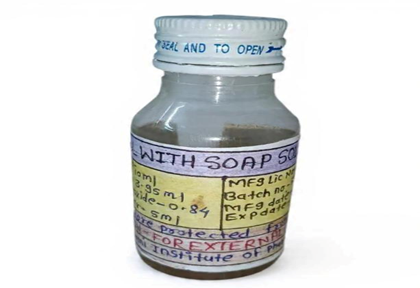
Fig 8: Cresol With Soap Solution
3. Evaluation:
Liquid Dosage Form Testing Of As Per IP:
Cresol Soap Solution:
1. Physical Test:
Evaluation Table:- 2
|
Sr. No |
Test |
Inferences |
|
1. |
Volume |
20ml |
|
2. |
Description |
Reddish brown viscous liquid |
|
3. |
Insoluble particles |
Absent |
|
4. |
Colour |
Reddish brown |
|
5. |
Odour |
Cresol/ phenol like |
|
6. |
Separation of solution |
No separation |
2. Chemical Test:
Category- Disinfectant
Test:
1. Appearance of Solution – 2.5ml mixed with 47.5ml of water forms a clear solution without producing any opalescence on standing for 3hrs.
2. Alkalinity- Dilute 2.5ml with 25ml of ethanol neutralised to phenol red solution and titrate with 1m sulphuric acid, using phenol red solution as indicator; not more than 0.6ml is required.
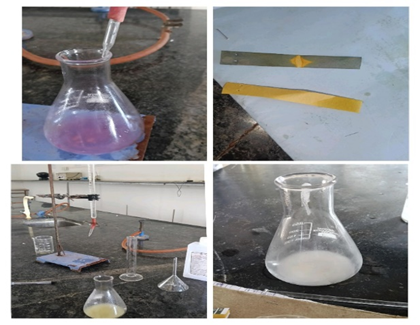
Fig 9: The Alkalinity Test Are Pass. Titred Are Required In 0.3ml And Solution Are Neutralised.
Category: Excipient
1. Identification-Suspend 1 gm in 10ml of water, add 0.1ml of 0.1m iodine, and shake for 30 sec . Add 1ml of starch solution and shake ; no blue colour develops.
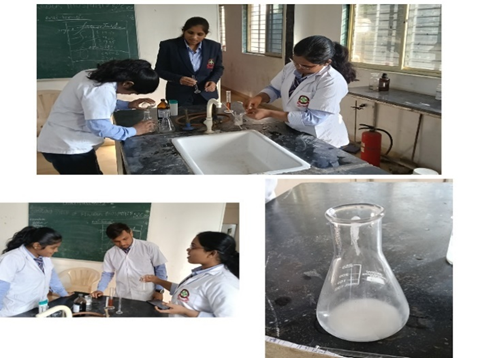
Fig 10: Identification Test Are Pass No Blue Colour Develops
2. pH- 5.0 and 8.0 , determined in a 1.0 per cent w/v aqueous suspension.
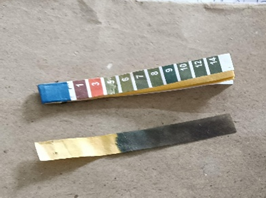
Fig11: The pH Test Are Pass.
HANDS ON ACTIVITIES:
1. Identification And Characterization Of Drug By Melting Point, Solubility Study, UV Spectroscopy Etc:
Melting Point:-
Melting point is the temperature (or range of temperature) at which a substance changes from the solid state to the liquid state under specified conditions. The melting points of paracetamol where determined by capillary method observed value was compared with the reported value is 169- 172°c.
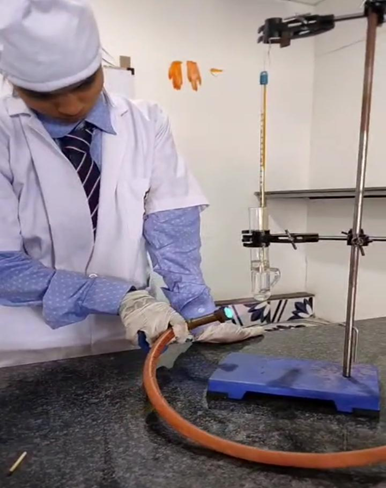
Fig 12: Set Up For Melting Point
Solubility Study:-
Solubility is defined in the IP as the extent to which a substance dissolves in a specified solvent to form a homogeneous solution under specified conditions.
According To IP, Solubility Of Paracetamol Is:
UV Spectroscopy Of Paracetamol:-Paracetamol shows a characteristic UV absorption maximum (λmax) due to its aromatic ring and acetanilide structure.
Assay Of Paracetamol Tablet By UV Spectroscopy:
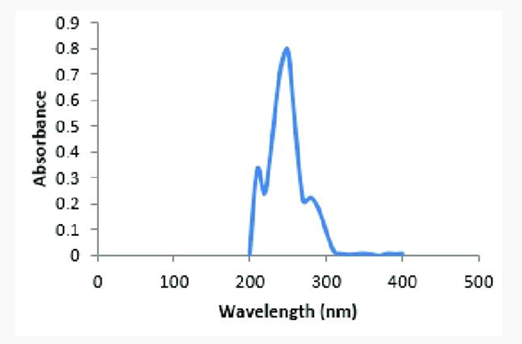
Fig 13: Absorbance Maxima Of Paracetamol (λ max)
2. To Study The Dissolution Of Given Solid Dosage Form:
Dissolution test is a test used to measure the rate and amount of drug that goes into solution from a solid dosage form in a given time, under specified conditions.
Method How To Perform In Dissolution Test:
3. Study Of Disintegration Time Of Different Marketed Tablets:
Disintegration time is the time required for a tablet or capsule to break down into small particles when placed in a specified liquid medium under standard test conditions.
Table No:-3
|
Sr. No |
Brands |
Disintegration time (min) |
|
1. |
Medamol 650 mg |
1.31 |
|
2. |
Paracip 650mg |
1.13 |
|
3. |
P-650mg |
0.15 |
|
4. |
Paracetamol 650 mg |
1.00 |
4. Quality Control Of Different Dosage Forms As Per Pharmacopoeia:
A. Weight Variations :
According to the USP xxiv monograph, twenty tablets of each batch were used to evaluate weight variation among tablets. The mean and standard deviation were calculated based on these measurements.
B. Friability:-Friability testing was performed using a Roche friabilator. The test was carried out in triplicate for all batches as per the USP xxiv monograph.
C. Hardness:-hardness was determined using a digital force gauge (model: el=500n, electrolab).the test was carried out in triplicate for all batches as per the USP xxiv monograph for uncoated tablets.
4. Thickness:-The thickness of the matrix tablets was measured using a vernier caliper (mitutoyo dial thickness gauge, mitutoyo, japan).results were expressed as mean values of 10 determinations with standard deviations.
5. Tests For Evaluation Of Different Packaging Materials:
Packaging is an outer protective covering of a product,in which the product is enclosed in such a manner, that it becomes convenient to handle and open. Container and closure are the two main components of pharmaceutical packages.
Packaging Materials May Be Classified Into Three Categories:
Tests For Evaluation of Packaging Materials:
6. Study Of Flow Properties Of The Designed Formulations:
Flow properties help to check how well a powder or granules flow before tablet/ capsule manufacturing.
Important Flow Property Tests:
1. Angle Of Repose:-Measures flowability of powder.lower angle = better flow.
Formula: tan θ = h / r
2. Bulk Density:-Weight of powder / bulk volume. indicates packing ability.
3. Tapped Density:-Density after tapping the cylinder. shows how much the powder can settle.
4. Carr’s Compressibility Index:-Shows compressibility and flow.
Formula:- ci = (tapped – bulk) / tapped × 100
Ci < 15% = good flow.
5. Hausner Ratio:- Another Flow Indicator:-
Formula:-hr = Tapped density / bulk density
Hr < 1.25 = good flow.
7. Determination Of Different Bulk Characteristics Like Bulk Density, Tapped Density:
1. Bulk Density:-Bulk density is the mass of powder divided by the bulk volume (before tapping).
Procedure:
2. Tapped Density: Tapped density is the mass of powder divided by the tapped volume after tapping.
Procedure:
8. Determination of Viscosity of Liquid And Semisolid Dosage Forms:
1. For Liquid Dosage Forms (Syrups, Suspensions):
Instrument:- Ostwald viscometer or brookfield viscometer
A. Using Ostwald Viscometer:
Principle: Time taken for a liquid to flow between two marks is proportional to viscosity.
Procedure:
Viscosity = (density × flow time of liquid) / (density × flow time of water
B. Using Brookfield Viscometer:
Procedure:
2. For Semisolid Dosage Forms (Ointments, Creams, Gels):
Instrument: Brookfield viscometer (cone-and-plate spindle)
Procedure:
9. Partition Coefficient Determination:
Partition coefficient (p) is the ratio of a drug’s concentration in oil phase (usually n-octanol) to its concentration in water phase at equilibrium.
It shows lipophilicity (fat solubility) of a drug.
10. Saturation Solubility Estimation:
Saturation solubility is the maximum amount of drug that can dissolve in a solvent at a specific temperature and pH. until the solution becomes saturated (equilibrium).
Purpose:
CONCLUSION:
As the objective of this study was to attempt a formulation of the cresol soap solution using olive oil as a solubilizing agent and sodium hydroxide as an alkali, the cresol soap solution was successfully formulated and evaluated. The cresol soap solution was evaluated for physical tests such as volume, description, insoluble particles, colour, odour, and separation of solution, and for chemical tests such as appearance of solution, alkalinity, identification test, and ph. The results of the evaluation showed that the cresol soap solution prepared with olive oil as a solubilizing agent exhibited better alkalinity.
REFERENCES

Siddhesh Pagar, Gayatri Patil, Chetan Patil, Tejaswini Patil, Saloni Pawar, Ankita Shewale, Formulation Development, Int. J. of Pharm. Sci., 2026, Vol 4, Issue 1, 1355-1371. https://doi.org/10.5281/zenodo.18245235
 10.5281/zenodo.18245235