

We use cookies to ensure our website works properly and to personalise your experience. Cookies policy
Kamla Nehru College of Pharmacy, Butibori, Nagpur, Maharashtra, India 441108
The present study focuses on the formulation and evaluation of a herbal face wash gel using natural ingredients known for their skincare benefits. The main objective was to develop a safe, effective, and eco-friendly formulation incorporating orange peel, rosemary, and honey, each recognized for their antibacterial, antioxidant, moisturizing, and rejuvenating properties. The formulation process involved extraction via maceration with rosewater, followed by gel formation using Carbopol 940, preservatives, foaming agents, and neutralizers. Three formulations (F1, F2, F3) were prepared with varying concentrations of herbal extracts, and F3 was identified as the most stable and effective. The formulated gels were evaluated through physicochemical and performance-based parameters including pH, viscosity, spreadability, grittiness, foamability, washability, irritancy, and antimicrobial activity against Staphylococcus aureus and Escherichia coli. The F3 batch showed a pH of 6.54, high spreadability (8.33 g·cm/s), suitable viscosity (5200 cP), and non-irritant behavior. The zone of inhibition in the antimicrobial assay confirmed its antibacterial efficacy. Stability studies showed no significant change over three months. Overall, the study concludes that herbal face wash formulations can serve as effective and natural alternatives to synthetic products, promoting healthy skin without adverse effects.
Facial skin is exposed daily to environmental pollutants, UV rays, and dust, contributing to various skin concerns such as acne, blackheads, whiteheads, and premature aging. The rising incidence of such dermatological conditions has led to the widespread use of facial cleansers[1]. However, many commercially available synthetic face washes, though effective, often lead to side effects like dryness, irritation, or allergic reactions due to harsh chemicals. To address this, herbal formulations have garnered increasing attention. These preparations, rooted in traditional knowledge, are derived from plant-based ingredients known for their therapeutic benefits. They are generally free from harmful additives, making them safer for long-term use[2]. In this context, the development of a herbal face wash offers a promising alternative that combines efficacy with skin safety[3-4].
The skin is composed of three layers: the epidermis, dermis, and subcutaneous tissue. Proper cleansing of the epidermal layer is essential to maintain skin health. A facial wash functions by removing dead skin cells, excess oil, dirt, and impurities, which may otherwise clog pores and lead to inflammation or bacterial infection[5]. Herbal face washes perform this function while offering additional benefits like antioxidant protection, hydration, and anti-aging effects. Orange peel is rich in flavonoids and antioxidants, known to absorb excess oil, prevent acne, and improve skin tone[6]. Honey, a natural humectant, helps retain skin moisture, possesses antibacterial activity, and contributes to a smooth texture. Rosemary, an aromatic herb, has antimicrobial, anti-inflammatory, and astringent properties, promoting collagen production and improving skin elasticity[7].
The current research focused on formulating a herbal face wash using these ingredients and evaluating its physicochemical, aesthetic, and antimicrobial properties. The formulation employs Carbopol 940 as a gelling agent, triethanolamine for pH adjustment, and methylparaben as a preservative. Sustainable techniques like maceration in rosewater and use of minimal synthetic additives align this study with the principles of green chemistry[8]. To ensure product acceptability and efficacy, the prepared formulations were subjected to various tests such as pH determination, spreadability, washability, grittiness, foamability, and microbial inhibition assays[9]. Additionally, the formulations were tested for physical stability over a three-month period[10]. This study aims to demonstrate that a scientifically developed herbal face wash can be a viable, safe, and effective skincare solution, fulfilling both cosmetic and therapeutic roles. By integrating natural ingredients with proven biological activities and employing simple, cost-effective formulation techniques, the work promotes the broader adoption of herbal-based personal care products[11].
MATERIALS AND METHODS
Collection of Materials:
The herbal ingredients used in the formulation such as orange peel, rosemary, and honey, were procured from the local market in Butibori, Nagpur. These ingredients were selected based on their well-documented antibacterial, antioxidant, and moisturizing properties. The chemicals required for formulation, such as Carbopol 940 (gelling agent), methylparaben (preservative), sodium lauryl sulfate (foaming agent), propylene glycol (moisturizer), triethanolamine (neutralizer), and distilled water (vehicle), were obtained from the laboratory of Kamla Nehru College of Pharmacy, Butibori.
Preparation of Herbal Extracts:
Orange peel and rosemary were dried in a hot air oven at 45°C to remove moisture and prevent microbial growth. The dried materials were then powdered using a grinder. For extraction, the powdered herbs were subjected to cold maceration using rosewater. Approximately 10 g of each powdered herb was added to 100 mL of rosewater in separate conical flasks. These mixtures were shaken intermittently and kept aside for 72 hours to ensure maximum extraction of phytoconstituents[12]. After 3 days, the mixtures were filtered using Whatman filter paper through a funnel to obtain clear extracts. Filtration was repeated twice to remove residual particles. The filtrates were subjected to evaporation at 60°C using an electronic water bath to concentrate the extracts to the desired volume[13].
Formulation of Herbal Face Wash:
Gel Base Preparation: 1 g of Carbopol 940 was dispersed in 50 mL of distilled water and left undisturbed for 24 hours to allow full swelling and gel formation.
A solution was prepared by dissolving 0.2 g methylparaben in 5 mL distilled water with heating. Once cooled, 5 mL propylene glycol and 2 g sodium lauryl sulfate were added to this solution.
The concentrated herbal extracts (orange peel, rosemary, and honey) were homogenized and added to the hydrated Carbopol gel base with continuous stirring to ensure uniform distribution[14]. Finally, 1.2 mL of triethanolamine was added drop wise to adjust the pH (~6.5–7.0) and achieve the desired gel consistency.
Formulation Variants:
Three batches (F1, F2, F3) were prepared by varying the concentrations of the herbal extracts (1 mL, 1.5 mL, and 2 mL respectively of each extract). Among them, F3 was identified as the most effective based on evaluation parameters.
This method ensured the formulation of a stable, homogenous, and skin-compatible herbal face wash gel using safe, accessible, and cost-effective natural ingredients.
EXPERIMENTAL METHODS
Extraction Process:
To begin, fresh orange peels and rosemary leaves were cleaned, shade-dried, and then transferred to a hot air oven maintained at 45°C for several hours until they were completely dehydrated. The dried herbs were ground into a coarse powder using a laboratory-grade electric grinder. For extraction, 10 g of each powdered herb was subjected to cold maceration in 100 mL of rosewater (1:10 w/v ratio) in separate conical flasks. The flasks were sealed and kept at room temperature for 72 hours, with occasional shaking to ensure uniform solvent contact and improved extraction of phytoconstituents[15].
After maceration, the herbal mixtures were filtered twice using Whatman No. 1 filter paper to remove particulates and obtain clear filtrates. These filtrates were collected in clean beakers and subjected to evaporation at 60°C using an electronic water bath until the extracts reached the desired concentration suitable for formulation. The concentrated extracts were preserved in clean, amber-colored bottles to protect them from light-induced degradation[16].
Formulation Development:
The gel formulation was developed in sequential steps to ensure consistency, stability, and uniformity of the herbal ingredients.
Gel Base Preparation:
To formulate the base, 1 g of Carbopol 940 was gradually dispersed in 50 mL of distilled water under continuous stirring to avoid clumping. This dispersion was kept aside for 24 hours to allow the Carbopol to fully hydrate and form a clear, viscous gel.
Preservative and Functional Additives:
In a separate container, 0.2 g of methylparaben was dissolved in 5 mL of distilled water using gentle heating. After cooling, 5 mL of propylene glycol (a humectant and penetration enhancer) and 2 g of sodium lauryl sulfate (a mild surfactant and foaming agent) were added to this solution. This mixture was then incorporated into the Carbopol gel base under constant stirring[17].
Incorporation of Herbal Extracts:
The concentrated extracts of orange peel and rosemary, along with honey (used in its pure form), were homogenized to ensure even consistency. This homogenized herbal blend was added slowly to the gel base under continuous mechanical stirring. Lastly, 1.2 mL of triethanolamine was added dropwise to neutralize the Carbopol gel, adjust the pH to a skin-compatible level (~6.5–7.0), and achieve the required gel consistency.
Formulation Batches:
Three different formulations were developed by varying the concentrations of herbal extracts while keeping other components constant:
All formulations were prepared in triplicate for reproducibility and consistency.
Table 2: Formulation ingredient and their use.
|
Sr. No. |
Ingredients |
F1 |
F2 |
F3 |
Category |
|
1. |
Orange peel extract |
1ml |
1.5ml |
2ml |
Anti-bacterial, antioxidant |
|
2. |
Honey |
1ml |
1.5ml |
2ml |
Soothing, moisturizing agent |
|
3. |
Rosemary extract |
1ml |
1.5ml |
2ml |
Anti-bacterial, antioxidant |
|
4. |
Carbopol |
1g |
1g |
1g |
Gelling agent |
|
5. |
Methyl paraben |
0.2g |
0.2g |
0.2g |
Preservative |
|
6. |
Triethanolamine |
1.2ml |
1.2ml |
1.2ml |
Neutraliser |
|
7. |
Propylene glycol |
5ml |
5ml |
5ml |
Moisturiser |
|
8. |
Sodium lauryl sulphate |
2g |
2g |
2g |
Foaming agent |
|
9. |
Distilled water |
Qs |
Qs |
Qs |
Vehicle |
The prepared herbal face wash formulations were evaluated using a comprehensive set of parameters to determine their quality, effectiveness, physical stability, and skin compatibility, ensuring their suitability for topical application[18]. The pH of a 1% aqueous solution of the gel was measured using a calibrated digital pH meter, with the ideal range targeted between 5.5 and 7.0 to match the natural pH of human skin. Spreadability was assessed using the glass slide method by placing 2 g of the gel between two slides and recording the time required for the upper slide to move a fixed distance under a standard weight, calculated using the formula S = (m × l)/t. Foamability, a reflection of cleansing ability, was determined by shaking 1 mL of gel with 10 mL of water and measuring foam volume after ten shakes. Viscosity was measured using a Brookfield viscometer at 50 rpm at room temperature to ensure a consistent and stable gel texture. Washability was tested by applying a small amount of gel on the skin and observing its ease of removal under running water, while odour and colour were evaluated organoleptically, with an expected pleasant herbal aroma and a natural yellow-orange appearance. Grittiness was checked manually by rubbing a small amount between fingers to ensure a smooth, grit-free formulation. Consistency was visually assessed, aiming for a stable, uniform, and non-runny gel. An irritancy test was conducted by applying the formulation on the dorsal hand and monitoring for any signs of redness or irritation over 1–2 hours, with results indicating non-irritant behavior.
Antimicrobial Assay
The antimicrobial efficacy of the prepared herbal face wash formulation was evaluated using the cup-plate agar diffusion method. This technique allows for the assessment of antibacterial activity by measuring the zone of inhibition produced around wells filled with the test sample. Nutrient agar plates were inoculated with Staphylococcus aureus (Gram-positive) and Escherichia coli (Gram-negative), followed by the addition of the face wash formulation (F3), herbal extract alone, and a standard antibiotic (Ciprofloxacin) into separate wells. After incubation at 37°C for 24 hours, the microbial growth inhibition zones were observed. The presence of clear zones indicated the effectiveness of the formulation against the test organisms. This method provides a reliable and reproducible means to evaluate the antibacterial potential of topical formulations.
Zone of Inhibition:
The optimized formulation (F3) demonstrated promising antibacterial activity, with a 23 mm zone of inhibition against E. coli and 17 mm against S. aureus. In comparison, the standard antibiotic Ciprofloxacin showed 32 mm and 26 mm zones against the same strains, respectively. The extract alone exhibited lower zones (16 mm for E. coli, 14 mm for S. aureus), confirming that the complete formulation had enhanced activity. This antibacterial effect can be attributed to the bioactive constituents of the herbal ingredients—flavonoids and essential oils in orange peel, phenolic compounds in rosemary, and the mild hydrogen peroxide content in honey. The combination of these phytochemicals likely exerted a synergistic effect, making the formulation suitable for managing acne-prone and infected skin.
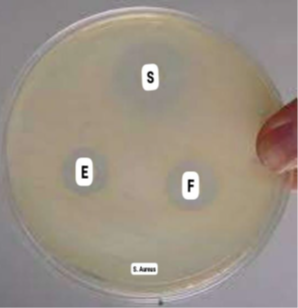
Table : Zone of inhibition for the antimicrobial assay
|
Content |
E. coli |
S. aureus |
|
Standard |
32 mm |
26 mm |
|
Formulation F3 |
23 mm |
17 mm |
|
Extract |
16 mm |
14 mm |
Stability:
The physical and chemical stability of formulation F3 was evaluated over a period of three months under accelerated storage conditions (45°C and 75% relative humidity). Observations were made at one-month intervals to detect any changes in color, odour, consistency, or pH. Throughout the study, the formulation retained its original yellow-orange color, characteristic herbal aroma, smooth consistency, and skin-friendly pH, indicating no phase separation or microbial contamination. These results confirm the robustness of the gel matrix and the chemical stability of the herbal components within the formulation. The findings suggest that the product has a satisfactory shelf life and is suitable for long-term use under typical storage conditions.
RESULTS AND DISCUSSION
In this study, three herbal face wash formulations—F1, F2, and F3—were developed and evaluated based on their physical characteristics, antimicrobial properties, and stability. Among the three, formulation F3, which contained the highest concentration of herbal extracts (2 mL each of orange peel extract, rosemary extract, and honey), was identified as the most effective and desirable. This optimized batch showed superior results in nearly all evaluation parameters and was therefore selected for detailed analysis.
The physical properties of formulation F3 were well-suited for topical application and user acceptability. The gel exhibited a yellowish-orange color, primarily due to the presence of natural pigments from orange peel and honey. This visual appeal aligns with consumer expectations for herbal cosmetic products. The odour of the formulation was pleasant and distinctly herbal, with mild citrus notes contributed by orange peel and aromatic tones from rosemary, making it sensorially acceptable. The pH of the formulation was measured at 6.54, which falls within the ideal range for skin compatibility, reducing the likelihood of irritation or disruption of the skin’s natural acid mantle.
In terms of spreadability, formulation F3 exhibited a value of 8.33 g·cm/sec, indicating excellent ease of application and uniform distribution over the skin. A spreadable and smooth texture ensures convenience during use and enhances the user experience. The gel also demonstrated ideal consistency—a non-runny, cohesive structure—alongside an absence of any grittiness, reflecting good physical stability and an effective emulsification process. Foamability was adequate, showing that the formulation could generate a sufficient amount of foam during application, an important criterion for cleansing effectiveness in face wash products. Additionally, the washability of the formulation was excellent; it was easily removed from the skin under running water, leaving no sticky or greasy residue. This property enhances the refreshing and non-clogging effects often expected from facial cleansers.
Viscosity plays a crucial role in determining the texture and feel of a topical gel. The optimized formulation F3 showed a viscosity of 5200 cP when measured at 50 rpm using a Brookfield viscometer, which reflects a well-structured gel system that maintains its form during use but still spreads easily upon application. Importantly, an irritancy test conducted on human skin revealed that the formulation was non-irritating, confirming its safety for regular topical use.
The antimicrobial potential of the formulation was assessed using the cup-plate agar diffusion method, with promising results. The zone of inhibition for Escherichia coli was recorded at 23 mm, while for Staphylococcus aureus, it measured 17 mm. These values, although slightly lower than those obtained from the standard drug ciprofloxacin (32 mm for E. coli and 26 mm for S. aureus), still indicate significant antibacterial activity. In contrast, the extract mixture alone produced smaller zones (16 mm and 14 mm, respectively), suggesting that the complete gel formulation enhanced the delivery and performance of the active phytoconstituents. The observed antimicrobial efficacy can be attributed to the synergistic effects of the ingredients used: flavonoids and essential oils in orange peel, phenolic compounds in rosemary, and hydrogen peroxide content in honey. Together, these components provided broad-spectrum antibacterial protection, making the formulation potentially useful for acne-prone and sensitive skin.
To assess the shelf stability of the optimized formulation, F3 was stored at 45°C and 75% relative humidity for a period of three months. Observations were recorded monthly to detect any physical or sensory changes. Over the course of the study, there were no significant alterations in colour, odour, consistency, or pH, indicating that the formulation remained stable under accelerated conditions. This suggests a good shelf life and the possibility of long-term storage without the use of heavy preservatives, thus maintaining the formulation’s natural appeal.
The discussion of these findings underscores the efficacy and feasibility of using herbal extracts in the development of safe and effective skincare formulations. The combination of orange peel, honey, and rosemary not only imparted desirable cosmetic attributes such as improved skin tone, hydration, and oil control, but also contributed to notable antimicrobial activity. Orange peel’s astringent and sebum-regulating properties made it ideal for oily or acne-prone skin, while honey functioned as a humectant and mild antibacterial agent. Rosemary extract provided antioxidant support and stimulated microcirculation, which may aid in skin rejuvenation. The Carbopol 940 polymer used as a gelling agent offered excellent consistency and clarity, and triethanolamine effectively adjusted the pH while also helping to stabilize the emulsion system.
This study also demonstrates the value of adopting green chemistry principles in cosmetic formulation. The use of a simple maceration technique for extraction, minimal reliance on synthetic additives, and an emphasis on natural, biodegradable ingredients aligns the product with environmentally responsible practices. Moreover, the formulation process is simple, cost-effective, and scalable, offering potential for small-scale or cottage industry applications. Such formulations not only cater to the increasing consumer demand for herbal and chemical-free products but also support sustainable development in the pharmaceutical and cosmetic sectors.
However, while the laboratory evaluation of this herbal face wash shows encouraging results, further clinical and dermatological trials are essential to validate its safety and efficacy on a wider population. Long-term stability testing under various climatic conditions and packaging formats would also be beneficial. Overall, the findings from this study suggest that the developed herbal face wash formulation, especially batch F3, could serve as a promising natural alternative to synthetic face cleansers, combining therapeutic and cosmetic benefits with environmental safety.
CONCLUSION
The current study successfully formulated and evaluated an herbal face wash using orange peel extract, honey, and rosemary extract, embedded in a Carbopol 940 gel base. Among the three batches prepared, formulation F3 demonstrated optimal physical and functional characteristics. It showed ideal pH, smooth consistency, high spreadability, adequate foamability, and excellent washability, making it suitable for regular skin care use. The antimicrobial activity observed against both Staphylococcus aureus and Escherichia coli further reinforces its potential in preventing bacterial infections associated with acne and other skin disorders. Stability studies confirmed the physical integrity of the gel over a three-month period, suggesting that the formulation can maintain its efficacy and quality over time. This work highlights the promise of integrating natural plant-based ingredients into skincare formulations, addressing consumer demand for safer, eco-friendly, and effective cosmetic products. When formulated with scientific precision, the study illustrates how herbal cosmetics can offer dual benefits i.e. therapeutic and aesthetic. The herbal face wash developed in this study can serve as an effective, natural alternative to synthetic facial cleansers. Further clinical studies and consumer trials are recommended to evaluate long-term effects and large-scale applicability. The approach offers a blueprint for the development of similar herbal cosmetic formulations aimed at promoting sustainable personal care.
ACKNOWLEDGEMENT: The author/s are thankful to Management and Principal Kamla Nehru College of pharmacy Butibori Nagpur for providing laboratory facilities and constant help.
FINANCIAL SUPPORT: Authors received no financial support from any agencies for the research
REFERENCES


Chetan Darne, Sakshi Bhandarkar, Jagdish Baheti, Formulation and Antimicrobial Evaluation of a Polyherbal Face Wash Gel Using Citrus and Medicinal Plant Extracts, Int. J. of Pharm. Sci., 2025, Vol 3, Issue 8, 153-161. https://doi.org/10.5281/zenodo.16723429
 10.5281/zenodo.16723429