
J. K. K. Nattraja college of pharmacy, Kumarapalayam-638613, Tamil Nadu, India
Migraine is a prevalent and debilitating neurological disorder that requires rapid and effective therapeutic intervention. Zolmitriptan, a selective 5-HT?B/1D receptor agonist, is widely used in the acute management of migraine; however, its conventional oral administration is limited by delayed onset of action, variable absorption, and reduced bioavailability due to first-pass metabolism and migraine-associated gastric stasis. The present study aims to formulate and evaluate a zolmitriptan-loaded mucoadhesive nanogel for effective transmucosal drug delivery to overcome these limitations. Zolmitriptan-loaded chitosan nanoparticles were prepared using the ionotropic gelation technique and subsequently incorporated into a mucoadhesive gel base to form a nanogel. The formulated nanoparticles and nanogels were characterized for physicochemical properties including particle size, zeta potential, drug loading, encapsulation efficiency, surface morphology, and compatibility using FTIR. The nanogel formulations were further evaluated for pH, viscosity, drug content, mucoadhesive strength, in vitro drug release, release kinetics, and stability under different storage conditions. The optimized formulation demonstrated nanoscale particle size, satisfactory encapsulation efficiency, strong mucoadhesive properties, and a controlled drug release profile following suitable kinetic models. Stability studies indicated no significant changes in formulation characteristics, confirming good physical stability. Overall, the developed zolmitriptan-loaded mucoadhesive nanogel shows promise as an alternative transmucosal delivery system, offering rapid onset of action, improved bioavailability, and enhanced patient compliance in migraine therapy.
Migraine is a common, chronic, and debilitating neurological disorder characterized by recurrent episodes of moderate to severe headache, often accompanied by nausea, vomiting, photophobia, and phonophobia. It affects nearly 12% of the global population and is more prevalent in women, particularly during their reproductive years. Migraine significantly impacts quality of life, daily functioning, and work productivity, making it a major public health concern.
Migraine is a complex neurovascular disorder involving dysfunction of the trigeminovascular system, cortical spreading depression, neurogenic inflammation, and altered neurotransmitter signaling, particularly serotonin (5-HT). Activation of trigeminal nerve endings leads to the release of vasoactive neuropeptides such as calcitonin gene-related peptide (CGRP), resulting in vasodilation, inflammation, and pain transmission. Effective acute migraine management therefore requires rapid onset of action and reliable drug absorption.
Zolmitriptan, a selective 5-HT?B/?D receptor agonist, is widely prescribed for the acute treatment of migraine attacks. It exerts its therapeutic action by constricting dilated cranial blood vessels, inhibiting neuropeptide release, and reducing central pain transmission. Despite its proven efficacy, conventional oral administration of zolmitriptan presents significant limitations, including delayed onset of action, variable absorption, and reduced bioavailability (~40–50%) due to extensive first-pass hepatic metabolism. Additionally, migraine-associated symptoms such as nausea, vomiting, and gastric stasis further compromise oral drug absorption and patient compliance.
To overcome these drawbacks, alternative drug delivery approaches capable of bypassing gastrointestinal barriers and hepatic first-pass metabolism are increasingly being explored. Transmucosal drug delivery systems—including nasal, buccal, and sublingual routes—offer several advantages such as rapid absorption, improved bioavailability, and enhanced patient compliance, particularly during acute migraine attacks. These routes allow direct drug absorption into systemic circulation through highly vascularized mucosal tissues, enabling faster therapeutic effects.
In recent years, mucoadhesive nanogel-based delivery systems have gained considerable attention as advanced transmucosal drug carriers. Nanogels are hydrogel-based nanoparticles, typically ranging from 20–200 nm, capable of encapsulating both hydrophilic and lipophilic drugs. The application of mucoadhesive nanogels in migraine therapy offers distinct advantages, including rapid onset of action, reduced dosing frequency, improved bioavailability, and minimized systemic side effects. Intranasal or buccal nanogel formulations of triptans, such as zolmitriptan, may further enable direct nose-to-brain transport via the olfactory pathway, bypassing the blood–brain barrier and enhancing central nervous system targeting.
The present study focuses on the formulation and characterization of a zolmitriptan-loaded mucoadhesive nanogel for transmucosal delivery. The primary objectives are to enhance bioavailability, achieve rapid onset of therapeutic action, and improve patient compliance in migraine management. The developed formulation will be evaluated for physicochemical properties, mucoadhesive strength, in vitro drug release kinetics, and stability, thereby establishing its potential as an effective alternative to conventional oral migraine therapies.
2.AIM AND OBJECTIVES
Aim:
To formulate and characterize a zolmitriptan-loaded mucoadhesive nanogel for effective transmucosal delivery to enhance therapeutic efficacy and patient compliance in migraine therapy.
Objective:
3. DRUG PROFILE
Generic Name: Zolmitriptan
Chemical Class: Triptan (substituted tryptamine)
Molecular Formula: C??H??N?O?
Molecular Weight: 287.36 g/mol
Chemical Structure: Zolmitriptan is a derivative of N,N-dimethyltryptamine (DMT) in which the hydrogen atom at the 5-position of the indole ring is substituted with a [(4S)-2-oxo-1,3-oxazolidin-4-yl]methyl group (Figure 1).
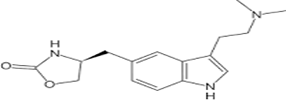
Figure No: 1
Description:
Zolmitriptan is a selective serotonin (5-hydroxytryptamine) receptor agonist belonging to the triptan class. It exhibits high affinity for 5-HT?B and 5-HT?D receptors and moderate affinity for 5-HT?F receptors, with negligible activity at other serotonin receptor subtypes. It acts as a serotonergic agonist, vasoconstrictor, and anti-inflammatory agent and is widely used in the acute treatment of migraine attacks. Zolmitriptan is a second-generation triptan developed to overcome the poor oral bioavailability and limited lipophilicity of first-generation agents such as sumatriptan. It was approved by the US FDA in 1997 and is marketed under brand names such as Zomig®.
Therapeutic Uses:
Pharmacological Mechanism of Action:
Zolmitriptan selectively activates 5-HT?B and 5-HT?D receptors, resulting in vasoconstriction of dilated intracranial blood vessels and inhibition of pro-inflammatory neuropeptide release (e.g., CGRP) from trigeminal nerve endings. This dual action reduces neurogenic inflammation and central pain transmission. Due to its lipophilicity, zolmitriptan is capable of crossing the blood–brain barrier and exerting central effects.
Pharmacokinetics:
Zolmitriptan exhibits rapid absorption, with an oral bioavailability of approximately 40% due to hepatic first-pass metabolism. It has a mean elimination half-life of about 3 hours. The drug is primarily metabolized by CYP1A2 to form an active metabolite, N-desmethylzolmitriptan, which contributes significantly to its therapeutic effect. Renal excretion is the main route of elimination. Food intake has no clinically significant effect on its absorption.
Physicochemical Properties:
Available Dosage Forms:
Clinical evidence suggests that the nasal spray provides faster and more effective relief compared to oral tablets.
Advanced Drug Delivery Approaches:
Recent research focuses on polymeric and nanocarrier-based delivery systems, including chitosan and PLGA-based nanoparticles, to enhance zolmitriptan bioavailability, achieve rapid onset of action, and improve brain targeting.
4. POLYMER PROFILE
4.1 Chitosan
Chemical Structure:
Chitosan (Figure 2) is a natural, cationic polysaccharide obtained by partial deacetylation of chitin, which is abundantly present in the exoskeletons of crustaceans such as shrimp and crabs. Structurally, it consists of β-(1→4)-linked D-glucosamine and N-acetyl-D-glucosamine units arranged in a linear polymer chain.
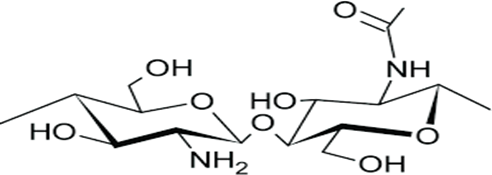
Molecular Formula: C??H??N?O??
Molecular Weight: 501.5 g/mol
Description: Chitosan is a biodegradable, biocompatible, and non-toxic biopolymer with significant pharmaceutical importance. It is produced by alkaline deacetylation of chitin using agents such as sodium hydroxide. Owing to the presence of primary amino groups, chitosan exhibits a positive charge in acidic environments, enabling strong interactions with negatively charged biological membranes and macromolecules. These properties make chitosan particularly suitable for biomedical and drug delivery applications.
Physicochemical Properties: Chitosan is sparingly soluble in water and practically insoluble in ethanol and most organic solvents. It dissolves readily in dilute aqueous solutions of organic acids, where protonation of amino groups occurs, resulting in water-soluble chitosan salts. Its solubility is strongly influenced by pH and degree of deacetylation, with precipitation occurring at pH values above approximately 6.5. Chitosan exhibits a glass transition temperature of approximately 203°C and has a particle size typically below 30 µm. It is incompatible with strong oxidizing agents.
Pharmacokinetics: Following oral administration, chitosan is poorly absorbed from the gastrointestinal tract and is primarily eliminated via feces. Limited degradation and metabolism may occur through gut microbiota. Due to its cationic nature, chitosan can interact with negatively charged biomolecules such as DNA, RNA, and proteins, influencing its distribution and functional behavior in biological systems.
Pharmaceutical Applications: Chitosan has been extensively studied as a polymer in drug delivery systems due to its mucoadhesive nature, ability to form nanoparticles, and capacity to enhance drug bioavailability. Chitosan-based nanoparticles provide controlled and sustained drug release, improved permeation across biological membranes, and prolonged residence time at the site of administration. In addition to drug delivery, chitosan is widely used in wound healing due to its antimicrobial and tissue-regenerative properties, in tissue engineering as a scaffold material, and in gene therapy for the delivery of nucleic acids such as plasmid DNA and siRNA.
5. PLAN OF WORK
Preformulation study:
Formulation of zolmitriptan nanoparticles Characterization of nanoparticles
Formulation of mucoadhesive nanogel Evaluation of nanogel
6. MATERIALS AND METHODS
6.1 Materials
Zolmitriptan was procured from Sigma-Aldrich. Chitosan was obtained from Nalinc Pharmaceuticals Ltd., Mumbai. Sodium tripolyphosphate (TPP), glycerin, and methanol were purchased from Loba Chemie. HPMC and Tween-80 were obtained from Sigma-Aldrich. Acetic acid, ethanol, and methanol were sourced from Aldrich Co. All chemicals used were of analytical grade.
Table 1. Materials and Suppliers
|
Sr. No |
Material |
Supplier |
|
1 |
Zolmitriptan |
Sigma-Aldrich |
|
2 |
Chitosan |
Nalinc Pharmaceuticals Ltd., Mumbai |
|
3 |
Sodium Tripolyphosphate |
Loba Chemie |
|
4 |
HPMC |
Sigma-Aldrich |
|
5 |
Glycerin |
Loba Chemie |
|
6 |
Acetic acid |
Aldrich Co. |
|
7 |
Ethanol |
Aldrich Co. |
|
8 |
Methanol |
Aldrich Co. |
|
9 |
Tween-80 |
Sigma-Aldrich |
6.2 Instruments
Analytical and characterization instruments included a digital balance (Shimadzu BL-220H), dissolution apparatus (Labindia Disso 2000), FTIR spectrophotometer (Shimadzu FTIR-8400S), particle size analyzer (AccuSizer 780), SEM (Hitachi S-450), UV-Visible spectrophotometer (Shimadzu), pH meter (Systronics MK-VI), Brookfield viscometer, magnetic and mechanical stirrers (REMI), and stability chamber (REMI CHM-10S).
6.3 Preformulation Studies
6.3.1 Melting Point
The melting point of zolmitriptan was determined by the capillary method using 2–5 mg of sample to assess drug purity.
6.3.2 Solubility Study
Excess drug was added to various solvents (water, buffer saline, ethanol, methanol, ether, and ethanol:water). Samples were shaken at 25 ± 1 °C for 12 h, equilibrated for 24 h, centrifuged, filtered, and analyzed spectrophotometrically.
6.3.3 Calibration Curve
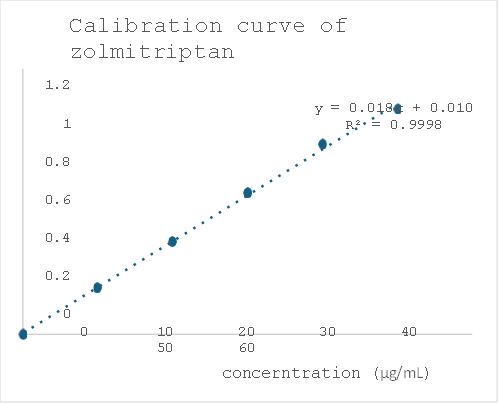
A stock solution (100 µg/mL) was prepared in methanol. Serial dilutions (2–12 µg/mL) were analyzed at 222 nm using UV-Vis spectrophotometry, and a calibration curve was constructed.
6.3.4 FTIR Compatibility Study
Drug, polymers, and physical mixtures were analyzed using FTIR (500–4000 cm?¹) employing the KBr pellet method to detect any drug–excipient interactions.
6.4 Preparation of Zolmitriptan Nanoparticles
Zolmitriptan-loaded chitosan nanoparticles were prepared by the ionotropic gelation method. Chitosan was dissolved in 1% acetic acid, followed by incorporation of zolmitriptan and Tween-80 under stirring. TPP solution was added dropwise under mechanical stirring (4000 rpm, 30 min). pH was adjusted using 1N NaOH, and nanoparticles were isolated by centrifugation (12,000 rpm)
Table 2. Composition of Nanoparticle Formulations
|
Formulation |
Drug % |
Chitosan % |
TPP % |
Tween-80 % |
NaOH % |
|
F1–F10 |
0.5 |
0.05–0.55 |
0.75 |
0.25 |
1.5 |
6.5 Characterization of Nanoparticles
Drug Content & Encapsulation Efficiency: Nanoparticles were centrifuged (10,000 rpm, 30 min). Free drug in supernatant was quantified at 222 nm. EE% and LC% were calculated using standard equations.
In vitro Drug Release: USP Type II apparatus was used with hydroalcoholic medium (70:30 water:ethanol) at 37 ± 0.5 °C. Samples were withdrawn at intervals up to 90 min and analyzed spectrophotometrically.
Release Kinetics: Release data were fitted to zero-order, first-order, Higuchi, and Korsmeyer-Peppas models to determine release mechanism.
Particle Size & Zeta Potential: Measured by dynamic light scattering after suitable dilution. Zeta potential was used to assess colloidal stability.
Surface Morphology: SEM was used to study particle shape, size, and surface characteristics.
6.6 Stability Study of Nanoparticles
Optimized nanoparticles were stored at 4 °C and 25 °C for three months. Particle size, PDI, zeta potential, and entrapment efficiency were periodically evaluated.
6.7 Formulation of Zolmitriptan Nanogel
Nanoparticles were incorporated into an HPMC-based mucoadhesive gel. HPMC concentration was varied (0.4–0.55% w/w), glycerin (5% w/w) served as humectant, and sodium benzoate (0.01% w/w) as preservative. pH was adjusted to 6.4–6.8.
Table 3. Nanogel Composition
|
Ingredient |
Z1 |
Z2 |
Z3 |
Z4 |
|
HPMC (%) |
0.4 |
0.45 |
0.5 |
0.55 |
|
Glycerin (%) |
5 |
5 |
5 |
5 |
|
Sodium benzoate (%) |
0.01 |
0.01 |
0.01 |
0.01 |
|
Water |
q.s. |
q.s. |
q.s. |
q.s. |
6.8 Evaluation of Nanogel
pH, viscosity, drug content, mucoadhesive strength, in vitro drug release, and release kinetics were evaluated using standard methods. Mucoadhesive strength was determined using a modified balance method with porcine buccal mucosa.
7. RESULTS AND DISCUSSION
7.1 Preformulation Studies
7.1.1 Melting Point
The melting point of zolmitriptan was determined by the capillary tube method and found to be 143°C. Melting point determination is a critical preformulation parameter that provides insight into the purity, crystalline nature, and thermal stability of a drug substance. The observed value closely matches reported literature values, indicating that the zolmitriptan sample used in the study was of high purity and suitable for formulation development.
7.1.2 Solubility Studies
Solubility studies revealed that zolmitriptan is freely soluble in methanol and ethanol, moderately soluble in water and buffered saline, and poorly soluble in non-polar solvents such as ether (Table 5). The moderate aqueous solubility supports its suitability for transmucosal formulations. A hydroalcoholic mixture (30:70 ethanol:water) was selected for dissolution and in vitro release studies to enhance solubility and maintain sink conditions, ensuring reliable evaluation of drug release behavior.
Table 4: solubility studies
|
Solvent |
Nature of solubility |
|
Ethanol |
Soluble |
|
Ether |
Poorly soluble |
|
Water |
Moderately soluble |
|
Methanol |
Soluble |
|
Buffered saline |
Moderately soluble |
|
Ethanol: distilled water (30:70) |
Soluble |
7.1.3 Calibration Curve
A UV-visible spectrophotometric calibration curve for zolmitriptan was developed at 222 nm over a concentration range of 0–50 µg/mL. The calibration plot showed excellent linearity, following the equation y = 0.018x + 0.010, with a correlation coefficient R² = 0.9998 (Table 6). This confirms the suitability of the method for accurate quantitative estimation of zolmitriptan in subsequent studies
Table 5: calibration curve
|
Concentration (µg/ml) |
Absorbance |
|
0 |
0 |
|
10 |
0.21 |
|
20 |
0.46 |
|
30 |
0.65 |
|
40 |
0.82 |
|
50 |
0.99 |
7.1.4 FTIR Compatibility Study
FTIR spectroscopy was performed to evaluate the compatibility between zolmitriptan and formulation excipients, including chitosan, sodium tripolyphosphate (TPP), and Tween 80. Characteristic peaks corresponding to N–H, O–H, C=N, C–N, and aromatic C–H stretching vibrations were preserved in the physical mixture with only minor shifts in wavenumbers. These slight variations indicate physical interactions such as hydrogen bonding or ionic association, rather than chemical incompatibility. Overall, the FTIR results confirmed that zolmitriptan is compatible with the selected excipients and suitable for nanoparticle formulation.
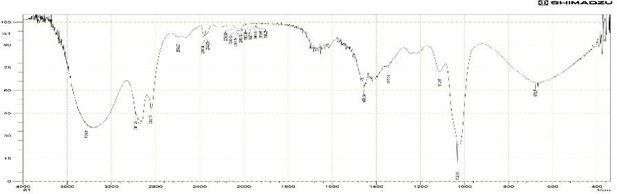
Figure No: 3 - FTIR of zolmitriptan
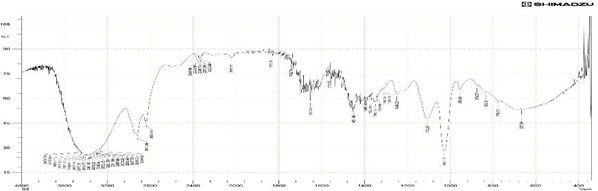
Figure No: 4 – FTIR of chitosan
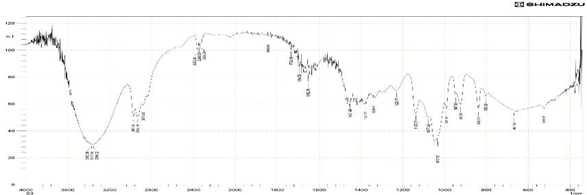
Figure No: 5 – FTIR of Tripolyphosphate (TPP)
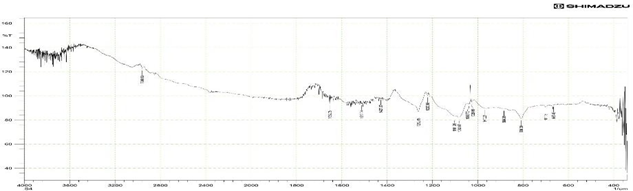
Figure No: 6 – FTIR of tween 80
Table no: 6
|
Functional group |
Zolmitriptan |
Chitosan |
Tripolyphosphate |
Tween 80 |
Physical mixture |
|
N-H stretching |
3325.40 |
3354.71 |
3383.26 |
3420.00 |
3329.00 |
|
C–H stretching |
2964.80 |
2919.36 |
2835.45 |
2960.83 |
2949.26 |
|
C=N stretching |
1675.25 |
1652.09 |
- |
1739.00 |
1652.00 |
|
N–H bending |
- |
1595.00 |
- |
- |
1590.00 |
|
C–H bending |
754.20 |
1451.48 |
- |
1456.00 |
1455.34 |
|
C–N stretching |
1248.65 |
- |
- |
- |
1245.00 |
|
Ether stretching |
- |
1098 |
- |
1150.00 |
1100.00 |
|
P=O stretching |
- |
- |
1238.00 |
- |
1240.00 |
|
P–O–P stretching |
- |
- |
883.00 |
- |
883.00 |
7.2 Evaluation of Zolmitriptan Nanoparticles
7.2.1 Encapsulation Efficiency
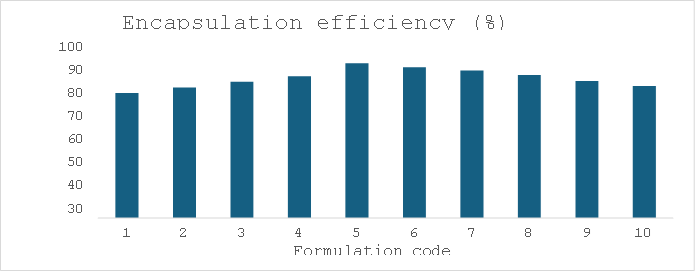
The encapsulation efficiency of zolmitriptan nanoparticles ranged from 72.4% to 89.7% across formulations F1–F10 (Table 7). Formulation F5 exhibited the highest encapsulation efficiency (89.7 ± 0.9%), indicating optimal polymer–drug interaction and efficient entrapment. The results demonstrate that formulation variables significantly influence drug encapsulation.
Table 7: Encapsulation efficiency
|
Formulation |
Encapsulation efficiency (%) |
|
F1 |
72.4±1.3 |
|
F2 |
75.6±1.1 |
|
F3 |
78.9±1.2 |
|
F4 |
82.1±1.0 |
|
F5 |
89.7±0.9 |
|
F6 |
87.3±1.1 |
|
F7 |
85.5±1.4 |
|
F8 |
82.9±1.2 |
|
F9 |
79.3±1.5 |
|
F10 |
76.5±1.3 |
7.2.2 Drug Loading Capacity
Drug loading capacity varied between 68.5% and 84.6% (Table 8). Formulation F5 showed the highest drug loading (84.6 ± 1.0%), confirming its superiority among the tested formulations. Based on encapsulation efficiency and drug loading results, F5 was selected for further characterization and development.
Table 8: Drug loading capacity
|
Formulation code |
Drug loading capacity (%) |
|
F1 |
68.5 ±1.4 |
|
F2 |
71.2±1.1 |
|
F3 |
74.8±1.3 |
|
F4 |
78.1±1.2 |
|
F5 |
84.6±1.0 |
|
F6 |
82.3±1.4 |
|
F7 |
80.2±1.6 |
|
F8 |
77.9±1.3 |
|
F9 |
74.5±1.7 |
|
F10 |
71.1±1.5 |
7.2.3 In Vitro Drug Release
The in vitro release profile of formulation F5 demonstrated a controlled and sustained release of zolmitriptan. An initial release of 23.10% was observed, followed by gradual drug release reaching ~99.85% at the end of the study (Table 9). This sustained release behavior suggests that the nanoparticle system can potentially reduce dosing frequency and enhance therapeutic efficacy in migraine management.
Table 9: invitro drug release
|
Time (h) |
Absorbance |
Conc (µ/ml) |
Conc (mg/ml) |
Conc*df |
Error |
Bath conc |
Drug release |
% DR |
|
0 |
0 |
0 |
0 |
0 |
0 |
0 |
0 |
0 |
|
1 |
0.234 |
32.05 |
0.03 |
0.33 |
0.33 |
11.25 |
11.25 |
23.10 |
|
2 |
0.451 |
50.94 |
0.06 |
0.54 |
0.84 |
17.45 |
18.97 |
37.42 |
|
4 |
0.578 |
67.23 |
0.08 |
0.64 |
1.54 |
23.87 |
26.71 |
50.89 |
|
5 |
0.642 |
84.23 |
0.9 |
0.85 |
2.13 |
28.64 |
31.56 |
59.71 |
|
6 |
0.794 |
98.65 |
0.10 |
0.99 |
2.35 |
31.65 |
35.78 |
63.78 |
|
8 |
0.863 |
110.84 |
0.10 |
1.01 |
3.32 |
35.87 |
37.47 |
74.31 |
|
10 |
0.892 |
119.21 |
0.11 |
1.10 |
4.42 |
38.91 |
42.89 |
85.64 |
|
11 |
0.951 |
122.68 |
0.11 |
1.19 |
5.60 |
41.89 |
46.71 |
95.01 |
|
12 |
0.993 |
124.98 |
0.12 |
1.23 |
6.83 |
43.87 |
49.32 |
99.85 |
Table 10: invitro kinetic study
|
% CR |
Time (T) |
Root T |
Log (%) release |
Log (T) |
Log (%) remain |
Release (Cum Rls/ T) |
1/Cum % Rls |
Peppas log Q/100 |
% DR |
Q01/3 |
Qt1/3 |
Q01/3 - Qt1/3 |
|
0.00 |
0 |
0 |
0 |
0 |
0 |
0 |
0 |
0 |
0 |
0 |
0 |
0 |
|
23.10 |
2 |
0.0 |
0.00 |
0.00 |
2.00 |
0.00 |
0.00 |
0.00 |
100 |
4.64 |
4.64 |
0.00 |
|
37.42 |
4 |
0.5 |
1.57 |
0.60 |
1.89 |
5.78 |
2.00 |
-0.43 |
76.9 |
4.64 |
4.25 |
0.39 |
|
50.89 |
5 |
1.0 |
1.71 |
0.70 |
1.80 |
7.48 |
1.00 |
-0.43 |
62.58 |
4.64 |
3.97 |
0.67 |
|
59.71 |
6 |
2.0 |
1.78 |
0.78 |
1.69 |
8.48 |
0.50 |
-0.29 |
49.11 |
4.64 |
3.66 |
0.98 |
|
63.78 |
8 |
4.0 |
1.80 |
0.90 |
1.61 |
7.46 |
0.25 |
-0.22 |
40.29 |
4.64 |
3.43 |
1.21 |
|
74.31 |
10 |
6.0 |
1.87 |
1.00 |
1.56 |
6.38 |
0.17 |
-0.20 |
36.22 |
4.64 |
3.31 |
1.33 |
|
85.64 |
12 |
8.0 |
1.93 |
1.08 |
1.41 |
6.19 |
0.13 |
-0.13 |
25.69 |
4.64 |
2.95 |
1.69 |
|
95.01 |
18 |
10.0 |
1.98 |
1.26 |
1.16 |
4.76 |
0.10 |
-0.07 |
14.36 |
4.64 |
2.43 |
2.21 |
|
99.85 |
24 |
12.0 |
2.00 |
1.38 |
0.70 |
3.96 |
0.08 |
-0.02 |
4.99 |
4.64 |
1.71 |
2.93 |
7.2.4 Release Kinetic Study
Release kinetics of formulation F5 were analyzed using zero-order, first-order, Higuchi, and Korsmeyer–Peppas models. The release data best fitted the Higuchi model, indicating a diffusion-controlled release mechanism. This suggests that zolmitriptan diffuses gradually through the polymeric nanoparticle matrix, ensuring prolonged drug release.

Table 11: particle size analysis
|
Formulation |
Particle size(nm) |
Polydispersity Index (PDI) |
|
F5 |
160.3 |
0.254 |
7.2.5 Particle Size and Zeta Potential
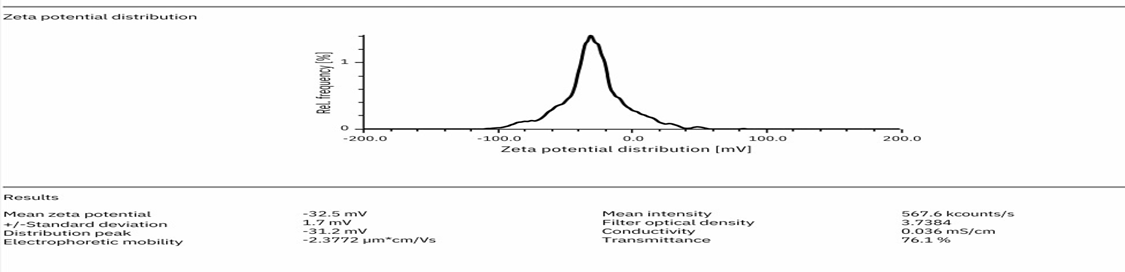
Formulation F5 exhibited an average particle size of 160.3 nm with a PDI of 0.254, indicating a relatively uniform nanoparticle population (Table 11). Zeta potential analysis revealed a surface charge of –32.5 mV, confirming good colloidal stability and reduced particle aggregation.
7.2.6 Surface Morphology
SEM analysis showed that the nanoparticles were spherical in shape with smooth surfaces, supporting uniform drug encapsulation and predictable release behavior.
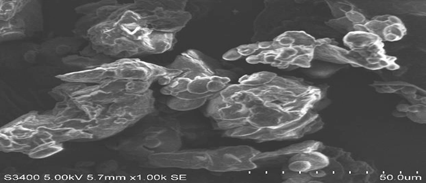
Figure No: 8 – Surface Morphology
7.2.7 Stability Study of Nanoparticles
Stability studies conducted at 4°C and 25°C demonstrated negligible changes in encapsulation efficiency, drug loading, particle size, PDI, and zeta potential (Table 12). The results confirm the physical stability of formulation F5 under the tested storage conditions.
Table 12: Stability studies
|
For F5 |
4°C |
25°C |
|
%EE |
89.65±0.9 |
90.01±0.2 |
|
Drug loading capacity |
84.7±1.0 |
85.2±0.2 |
|
Particle size |
160.5±3.5 |
161.7±3.0 |
|
Polydispersity index |
0.25 |
0.26 |
|
Zetapotential |
32.5mv |
33.5mv |
7.3 Formulation and Evaluation of Zolmitriptan Nanogel
Four nanoparticle-loaded mucoadhesive gel formulations (Z1–Z4) were prepared by varying the concentration of HPMC while keeping other components constant.
7.3.1 pH, Viscosity, and Drug Content
All gel formulations exhibited a pH range of 6.3–6.8, suitable for transmucosal application. Viscosity increased with increasing HPMC concentration, with Z3 (0.5% HPMC) showing optimal viscosity for mucosal retention. Drug content ranged from 95% to 99.54%, indicating uniform drug distribution
Table 13: pH
|
Formulation |
pH |
|
Z1 |
6.4 |
|
Z2 |
6.3 |
|
Z3 |
6.5 |
|
Z4 |
6.4 |
Table 14: viscosity
|
Formulation |
Viscosity (cps) |
|
Z1 |
12150 |
|
Z2 |
12740 |
|
Z3 |
15600 |
|
Z4 |
23559 |
7.3.2 Mucoadhesive Strength
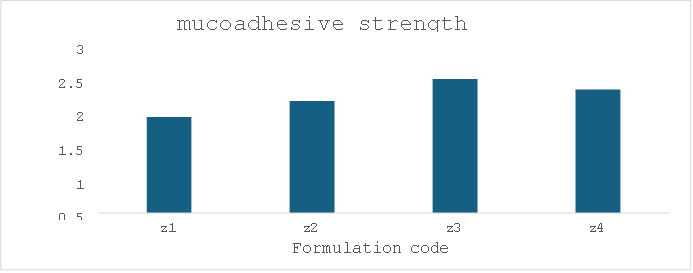
Mucoadhesive strength increased with polymer concentration. Formulation Z3 showed the highest mucoadhesive force (2.45 N), suggesting improved retention at the site of application and enhanced drug absorption.
Table 15:mucoadhesive strength
|
Formulation |
Mucoadhesive strength (g) |
Force of adhesion (N) |
|
Z1 |
18 |
1.76 |
|
Z2 |
21 |
2.05 |
|
Z3 |
25 |
2.45 |
|
Z4 |
23 |
2.26 |
7.3.3 In Vitro Drug Release and Kinetics
Formulation Z3 exhibited sustained drug release, reaching ~99.1% within 12 hours (Table 17). Kinetic modeling showed the best fit to the Higuchi model, confirming diffusion-controlled release from the gel matrix
Table 16 : invitro drug release
|
Time |
Absorbance |
Conc (µ/ml) |
Conc (mg/ml) |
Conc*df |
Error |
Bath conc |
Drug release |
%DR |
|
0 |
0 |
0 |
0 |
0 |
0 |
0 |
0 |
0 |
|
2 |
0.214 |
33.64 |
0.03 |
0.54 |
0.54 |
23.47 |
24.61 |
45.12 |
|
4 |
0.350 |
56.77 |
0.08 |
0.59 |
0.97 |
24.56 |
23.75 |
46.31 |
|
5 |
0.487 |
88.76 |
0.9 |
0.67 |
1.43 |
31.78 |
33.61 |
66.32 |
|
6 |
0.511 |
98.66 |
0.10 |
0.74 |
2.17 |
35.97 |
37.16 |
75.61 |
|
8 |
0.623 |
115.20 |
0.11 |
1.01 |
3.11 |
36.68 |
38.75 |
76.51 |
|
10 |
0.894 |
130.24 |
0.13 |
1.13 |
5.44 |
38.14 |
44.33 |
89.99 |
|
12 |
0.995 |
134.49 |
0.16 |
1.25 |
6.12 |
45.77 |
49.54 |
99.1 |
|
Cumulative (%) Release Q |
Time ( T ) |
Root ( T) |
Log( %) Release |
Log ( T ) |
Log (%) Remain |
Release Rate (Cumulative % Release / T) |
1/Cum% Release |
Peppas Log Q/100 |
% Drug Remaining |
Q01/3 |
Qt1/3 |
Q01/3- Qt1/3 |
|
0 |
0 |
0 |
|
|
2.000 |
|
|
|
100 |
4.642 |
4.642 |
0.000 |
|
45.12 |
0.5 |
0.707 |
1.654 |
-0.301 |
1.739 |
90.240 |
0.0222 |
-0.346 |
54.88 |
4.642 |
3.800 |
0.841 |
|
46.31 |
1 |
1.000 |
1.666 |
0.000 |
1.730 |
46.310 |
0.0216 |
-0.334 |
53.69 |
4.642 |
3.773 |
0.869 |
|
66.32 |
2 |
1.414 |
1.822 |
0.301 |
1.527 |
33.160 |
0.0151 |
-0.178 |
33.68 |
4.642 |
3.229 |
1.412 |
|
75.61 |
4 |
2.000 |
1.879 |
0.602 |
1.387 |
18.903 |
0.0132 |
-0.121 |
24.39 |
4.642 |
2.900 |
1.742 |
|
76.51 |
8 |
2.828 |
1.884 |
0.903 |
1.371 |
9.564 |
0.0131 |
-0.116 |
23.49 |
4.642 |
2.864 |
1.778 |
|
89.99 |
10 |
3.162 |
1.954 |
1.000 |
1.000 |
8.999 |
0.0111 |
-0.046 |
10.01 |
4.642 |
2.155 |
2.486 |
|
99.1 |
12 |
3.464 |
1.996 |
1.079 |
-0.046 |
8.258 |
0.0101 |
-0.004 |
0.9 |
4.642 |
0.965 |
3.676 |
7.4 Stability Study of Nanogel
Formulation Z3 remained physically stable at 4°C/60% RH and 25°C/75% RH over 30 days, with no evidence of phase separation, crystallization, or consistency changes (Table 18). These findings confirm the stability and suitability of Z3 for transmucosal delivery.
Table 17: Stability studies
|
Formulation (Z3) |
Colour |
Phase separation |
Crystallization |
Consistency changes |
|
At 4°C |
None |
None |
None |
None |
|
25°C |
None |
None |
None |
None |
REFERENCES

R Suresh Kumar, S Divyadharshini, Formulation and Characterization of Zolmitriptan Mucoadhesive Nanogel for Transmucosal Delivery in Migraine Therapy, Int. J. of Pharm. Sci., 2026, Vol 4, Issue 2, 213-227. https://doi.org/10.5281/zenodo.18458359
 10.5281/zenodo.18458359
