

We use cookies to ensure our website works properly and to personalise your experience. Cookies policy
School of Pharmaceutical Sciences, MVN University, Palwal, Haryana, 121102
Tinidazole is an antimicrobial and antiprotozoal agent that faces significant challenges in conventional oral delivery due to its poor aqueous solubility and extensive first-pass metabolism, resulting in low and variable bioavailability. This study aims to enhance the therapeutic efficacy of Tinidazole by formulating mucoadhesive tablets using the direct compression method. Sodium alginate, combined with excipients such as microcrystalline cellulose, HPMC, magnesium stearate, and talc, was selected to optimize adhesion, tablet integrity, and sustained drug release. Pre-formulation studies, including solubility, partition coefficient, melting point, and spectrophotometric analysis, were conducted to characterize the drug. FTIR and DSC studies confirmed polymer compatibility without drug-excipient interaction. Post-compression evaluations revealed acceptable weight variation, friability, hardness and thickness. After perform all evaluation parameters of optimized formulation it was found that the hardness of the optimized tablet is 5kg/cm2 and 6kg/cm2, friability is 0.25 ± 0.01 to 0.51 ± 0.02, weight variation is 495.65 mg ± 505.50 mg, thickness is 3mm to 4mm, which matched with reference values given in review of literature. In vitro dissolution studies demonstrated a cumulative drug release of 97.26% within two hours, and ex vivo mucoadhesion testing using goat GIT tissue verified strong adhesive properties. Antibacterial activity against E. coli confirmed therapeutic viability. This formulation offers a promising strategy for gastro-retentive delivery, improving Tinidazole’s bioavailability and providing sustained action for clinical applications.
Tinidazole is a drug derived from the 5-nitroimidazole substituted imidazole compound; it contains amoebicidal, germicidal, antifungal, and antimicrobial activities. Tinidazole is active against protozoa (Trichomonas vaginalis, Entamoeba histolytica, and Giardia lamblia) and anaerobic bacteria (Bacteroides fragilis, Bacteroides melanogenesis, and Bacteroides clostridium). Tinidazole was widely used to treat trichomoniasis, amoebiasis, and giardiasis. Tinidazole is categorized as a BCS Class II drug. The chemical name of tinidazole is 1-[2-(ethyl-sulfonyl) ethyl]- 2-methyl-5-nitroimidazole, with a formula of C8H13N3O4S and a molecular weight of 247.27 g/mol (1). It appears as colorless crystals with a melting range of 125-128 °C, has a low water solubility of 0.1 g/L, and is more soluble in organic solvents such as ethanol, propanol, butanol, and methanol. Tinidazole’s mechanism of action involves the reduction of its nitro group to generate reactive intermediates that induce DNA damage in anaerobic bacteria and protozoa. This disrupts cellular replication and transcription, leading to cell death. Its selective toxicity, effective absorption, and sustained plasma levels contribute to its clinical success in treating various infections. Understanding these mechanisms can help healthcare professionals optimize its use and anticipate potential resistance issues, ensuring continued efficacy in the fight against microbial infections (2).
1.1 Mucoadhesive drug delivery systems:
Mucoadhesive drug delivery systems engage with the mucus layer that coats the mucosal epithelial surface. These systems attach to mucin molecules, thereby extending the amount of time the dosage form remains at the absorption site(3). Mucosal adhesion is backed by several theories, which include electronic, adsorption, wetting, diffusion, fracture, and mechanical. Mucoadhesive delivery systems offer multiple benefits, such as extended residence time, targeted drug delivery, and close interaction between the dosage form and the absorptive mucosa. Furthermore, mucoadhesive dosage forms have been utilized to address local issues at the mucosal surface, thereby decreasing the required dose and lessening side effects (4).
The oral route primarily bypasses first-pass metabolism and minimizes degradation caused by the gastrointestinal environment. This is based on the route of administration for the mucoadhesive delivery system are classified as buccal, sublingual, vaginal, rectal, nasal, ocular and gastro intestinal delivery systems (5).
Mucoadhesive tablets must ensure compatibility with the mucosal tissue they contact and exhibit effective adhesive properties to stay attached until the tablets dissolve. In addition to these qualities, adhesive polymers are notable for their molecular network, which progressively enhances their porosity in line with the swelling ability of each polymer, leading to a prolonged release of the drug (6).
1.2 Direct compression:
Direct compression is the most straightforward and cost-effective approach for tablet production, as it involves fewer steps than alternative methods. The phrase direct compression describes the technique where tablets are formed directly from powder mixtures of active substances and excipients, which flow consistently in the dies to create a solid form (7). This technology has been utilized for compressing tablets that primarily contain moisture-sensitive and heat-sensitive active pharmaceutical ingredients. Direct compression is a technique utilized to form tablets by directly compressing powdered substances (8). This method is generally used when the active ingredient constitutes a large part of the tablet's overall mass.
2. MATERIAL AND METHOD
The materials used in this study included Tinidazole as the active pharmaceutical ingredient, sourced from Brawn Laboratories Pvt. Ltd., and a range of polymers and excipients selected to optimize mucoadhesive properties and tablet performance. Sodium alginate served as the primary mucoadhesive polymer, while Hydroxypropyl Methylcellulose (HPMC), Carbopol 934, and Chitosan were incorporated in varying concentrations across formulations to modulate adhesion and drug release. Excipients such as microcrystalline cellulose (filler), gum acacia (binder), starch (disintegrant), magnesium stearate (lubricant), and talc (glidant) were used to ensure tablet integrity and manufacturability. Nine formulations (F1–F9) were prepared using the direct compression method, with each tablet containing 300 mg of Tinidazole. Evaluation involved post-compression testing (weight variation, hardness, thickness, friability), drug content analysis via UV-Vis spectrophotometry at λ max 312 nm, in vitro dissolution studies using USP Type II apparatus in 0.1N HCl, and ex vivo mucoadhesion strength testing using goat gastric mucosa in phosphate buffer (pH 6.8).
2.1 Characterization of Tinidazole
2.1.1 Description: The sample of tinidazole was analysed for its nature, color, and taste.
2.1.2 Melting Point: The melting point was taken by open capillary method.
2.1.3 Standard Curve of Tinidazole: Tinidazole has been quantitatively analysed by various techniques. In present studies, Tinidazole was estimated by the UV Spectrophotometry method. Standard Curve of Tinidazole: Tinidazole has been quantitatively analysed by various techniques. In present studies, Tinidazole was estimated by the UV Spectrophotometry method.
2.1.4 Infrared spectra analysis: Infrared spectrum of Tinidazole was determined on Fourier Transform Infrared Spectrophotometer using KBr dispersion method. The base line correction was done using dried potassium bromide. Then the spectrum of dried mixture of drug and potassium bromide was run.
2.1.5 Differential scanning calorimetry: DSC was performed in order to assess the thermotropic properties and thermal behaviour of Tinidazole. About 5 mg of the sample was sealed in the aluminium foil.
2.1.6 Ultraviolet (UV) spectroscopy: UV spectrum of the drug powder in 0.1 N aqueous hydrochloric acid solution was recorded in the range of wavelengths from 200nm to 400nm using a UV-visible beam Spectrophotometer.
2.2 Preparation of Mucoadhesive Tablets
Mucoadhesive tablets, each containing 300 mg of Tinidazole, were prepared in different proportions of drug and polymer. Different tablet formulations were prepared by the Direct compression method (9). The required quantities of drug and polymers were mixed thoroughly in a glass mortar by following the geometric dilution technique. Then, it was mixed with sodium bicarbonate and lubricated with magnesium stearate. The blended powder of the core was compressed on a 4-mm punch in a single-stroke tablet punching machine (10).
Table 1: Materials used in the Formulation of Mucoadhesive tablet of Tinidazole
|
Ingredient (mg) |
F1 |
F2 |
F3 |
F4 |
F5 |
F6 |
F7 |
F8 |
F9 |
|
Tinidazole |
300 |
300 |
300 |
300 |
300 |
300 |
300 |
300 |
300 |
|
Gum Acacia |
20 |
20 |
20 |
20 |
20 |
20 |
20 |
20 |
20 |
|
Sodium Alginate |
50 |
30 |
20 |
50 |
30 |
20 |
50 |
30 |
20 |
|
HPMC (Hydroxypropyl Methylcellulose) |
30 |
30 |
30 |
20 |
20 |
20 |
10 |
10 |
10 |
|
Microcrystalline Cellulose |
15 |
15 |
15 |
20 |
20 |
20 |
25 |
25 |
25 |
|
Talc |
5 |
5 |
5 |
10 |
10 |
10 |
5 |
5 |
5 |
|
Magnesium stearate |
10 |
10 |
10 |
10 |
10 |
10 |
10 |
10 |
10 |
|
Starch |
100 |
100 |
100 |
100 |
100 |
100 |
100 |
100 |
100 |
|
Total |
500 |
500 |
500 |
500 |
500 |
500 |
500 |
500 |
500 |
2.3 Post compression parameters
2.3.1 Weight Variation
Twenty tablets were randomly selected and weighed both individually and collectively using a single pan balance. The average weight was recorded, and the standard deviation was computed. The test is considered successful if no more than two tablets exceed the percentage limit, and none of the tablets differ by more than double the percentage limit (11). The weight is 495.65 mg ± 505.50 mg.
2.3.2 Thickness
A Vernier caliper of the Electro Lab type was used to measure the thickness of the tablets. Every batch has five tablets chosen at random (12). The average values were computed, and the expression is in millimetres (mm); the thickness of the optimized formulation is 3mm to 4mm.
2.3.3 Hardness
The hardness of the tablets was determined using a Pfizer hardness tester. The value was noted in kg/cm2. Three tablets were randomly picked, and the hardness of the tablets was determined(13). The hardness of optimized formulations is 5kg/cm2 and 6kg/cm2.
2.3.4 Friability
Twenty-five tablets were subjected to rotation at a speed of 25 revolutions/minute for 4 minutes. In each revolution, the tablets were lowered from a height of 6 inches. This process was repeated for a total of 100 revolutions. The Roche friabilitor (Electro lab, India) was used to assess the friability of the tablet. After dedusting the tablets with a soft muslin cloth, they were weighed again, and the % of weight reduction was computed (14). The formula used to calculate the tablets’ % friability. The friability of the optimized formulation is 0.25 ± 0.01 to 0.51 ± 0.02.
2.3.5 In vitro drug release study for optimized formulation F3
Using a Type II dissolution apparatus with a paddle stirrer at 50 rpm, in vitro drug release tests were conducted for 2 hours in an acidic buffer (0.1 N HCL). Observations from the study indicate that drug release occurs from the mucoadhesive tablets. Following this, a period of slow and sustained release was detected when the mucoadhesive tablets were introduced to an acidic buffer, lasting up to 2 hours (15).
Several other factors can influence the release of a drug from the mucoadhesive tablet, including the hardness & friability, the type of polymer used, the physical state of a drug within the polymer, and its morphology (16).
2.3.6 Disintegration Time
The disintegration apparatus was used to calculate the disintegration time. 6 tablets in each of the six tubes in the basket were taken. The bottom of the basket is composed of a steel screen (mesh number 10) that was submerged in water kept at 37? to act as a disintegration fluid. A 100-rpm paddle was utilized as a stirring element (17). The time it took for the tablet to dissolve inside the device completely was 27 minutes.
2.3.7 Drug content
Ten tablets are measured and pulverized into a powder for each batch. The necessary amount of powder, which is equivalent to 300 mg of tinidazole, was dissolved in 100 millilitres using a phosphate buffer at a pH level of 6.8. Using a UV-Visible spectrophotometer to quantify the drug content of the solution at 317 nm (18). The absorbance of the solution is 0.720µg/ml with a dilution factor of 100.
2.3.8 Ex-Vivo study on the GIT tract of Goat
The intestinal mucosa of the goat was collected from the slaughterhouse (2cm x 2cm). The mucosa was rinsed with distilled water and normal saline to remove the debris from the lumen and the muscular parts from the surfaces (19). Then, it was put on a glass slide (7.5cm x 2.5cm) using a thread. The tablet was placed on the moist tissue specimen. The prepared slide was placed in a slot of the disintegration testing apparatus. The tissue sample was agitated vertically in a container containing 900 ml of 0.1N HCL (pH 1.2) at a temperature of 37°C ± 0.5°C. Note the time when the tablet has fully separated from the mucosal surface (20).
2.3.9 Stability Study
A 3-month stability study was conducted of the optimized formulation in accordance with ICH recommendations. Regular intervals were used to monitor the samples for changing in their physical characteristics and drug concentration. The samples were maintained at 25±2 °C with 60±5%, relative humidity and at 30±2 °C with 65±5% relative humidity, appropriately (21).
2.3.10 Antibacterial activity
The agar well diffusion assay was used here for studying the antibacterial activity of the samples against Gram-negative bacteria (Escherichia coli). With the help of a sterile spreader, 0.1 ml of grown broth culture of E. coli was spread separately previously prepared sterile nutrient agar plate, and the plates were marked respectively (22). After the completion of spreading, the plates were allowed to dry for 5 minutes. For the plates, 10,20,30 μg/ml of each formulated drug dose (F1, F2, and F3) was loaded separately and aseptically into the punched wells in the agar medium. Tinidazole drug was also loaded in one of the wells in the plate, and the sample is called F4 (25 μg/ml). Sterile double-distilled water was used as a negative control. The plates were then incubated in an incubator for 24 hours, maintaining the temperature at 37°C (23).
3. RESULT AND DISCUSSION
3.1 Post-Compression Evaluation Parameters of Mucoadhesive Tablet
The parameters for evaluating mucoadhesive tablets encompass tablet thickness, hardness, weight variation, and percentage friability. The assessment revealed that the tablet thickness ranged from 3.8±0.03 to 4.3±0.03 mm. The hardness of the tablet formulations (F1-F9) was determined to be between 5.5 ± 0.2 kg/cm2 and 6.2 ± 0.04 kg/cm2. The weight variation for the tablet formulation was recorded at 495.65 mg ± 505.50 mg, which falls within the acceptable limits (24). The friability results for the formulations (F1-F9) were found to range from 0.25 ± 0.01 to 0.51 ± 0.02.
Table 2: Post-Compression Evaluation Parameters of Mucoadhesive Tablet
|
Formulation code |
Weight variation (mg) |
Thickness (mm) |
Hardness (kg/cm2) |
Friability (%) |
|
F1 |
495.65±0.22 |
4.0±0.01 |
5.5±0.2 |
0.25±0.01 |
|
F2 |
499.75±1.22 |
3.9±0.05 |
6.0±0.1 |
0.30±0.06 |
|
F3 |
500.67±4.89 |
4.1±0.02 |
5.5±0.12 |
0.45±0.44 |
|
F4 |
501.23±2.06 |
4.2±0.02 |
6.0±0.16 |
0.55±0.82 |
|
F5 |
499.98±0.78 |
4.0±0.04 |
6.5±0.09 |
0.21±0.03 |
|
F6 |
598.09±5.99 |
4.2±0.01 |
6.2±0.65 |
0.34±0.09 |
|
F7 |
501.23±1.22 |
3.8±0.03 |
6.1±0.74 |
0.42±0.44 |
|
F8 |
500.65±3.03 |
4.3±0.03 |
6.0±0.23 |
0.36±0.65 |
|
F9 |
505.50±0.66 |
4.2±0.02 |
6.2±0.04 |
0.51±0.02 |
3.2 DSC study
A sharp process of melting transition of pure drug Tinidazole was observed at 40-400?. Sodium alginate showed an endothermic peak at 131.12? and 317.53?. A DSC thermogram of the optimized formulation displayed a peak at 131.12?, indicating there was no interaction observed between the drug and other excipients in the optimized formulation. The physical state of Tinidazole remained unchanged.
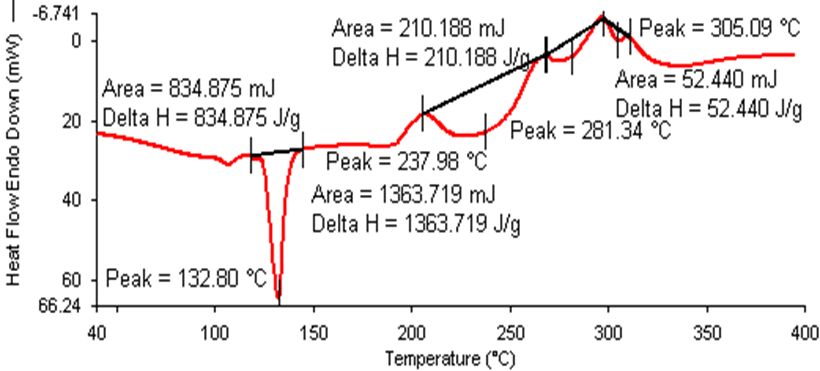
Fig.2: Physical mixture
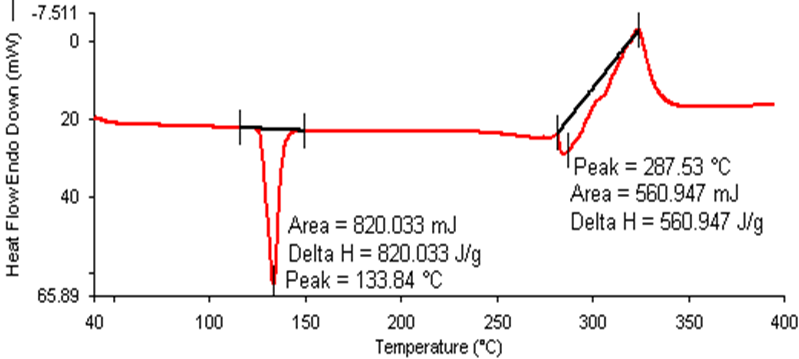
Fig.3: Tinidazole drug
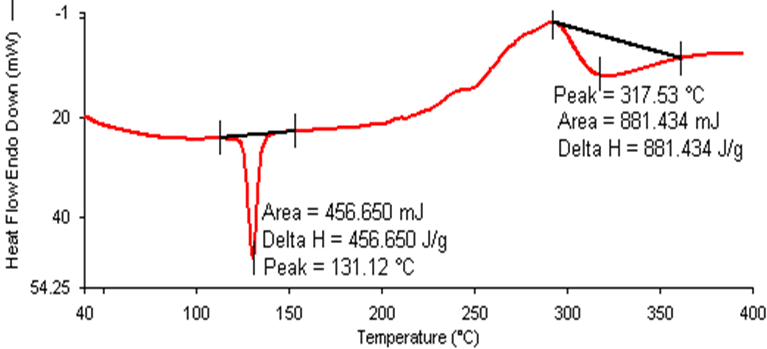
Fig.4: Tinidazole formulation
3.3. Fourier transform infrared spectroscopy (FTIR)
These studies were carried out to find either the appearance of new chemical bonds or the modifications of the existing ones, which can be ascribed to the possible interaction of the drug and the physical mixture of the drug and polymers. The obtained spectra for the drug Tinidazole are 819 cm-1, which is due to the aromatic C-H, and 1120 cm-1, which is due to C-O stretching and 1451 cm-1, which is due to (C-H). The obtained spectra of the physical mixture of the drug and polymers at 1629 cm-1 are due to C=O stretching. From the FTIR results, it was verified that the drug Tinidazole and the physical mixture of the drug and polymer exhibit compatibility, suggesting that there is no interaction between them.
Table 3: FTIR Spectra of Tinidazole Drug and formulation
|
Functional group |
Reference Wavenumber (cm-1) |
Observed Wavenumber (cm-1) Tinidazole |
Observed Physical Mixture |
Observed Formulation |
|
C=O Stretching |
1600-1500 cm-1 |
1520 cm-1 |
1629 cm-1 |
1632 cm-1 |
|
C-H |
1400-1500 cm-1 |
1451 cm-1 |
1422 cm-1 |
1424 cm-1 |
|
C-O |
1050-1000 |
1120/1188 |
1007 |
1384 |
|
Aromatic C-H |
800-700 |
819/742 |
556 |
778 |
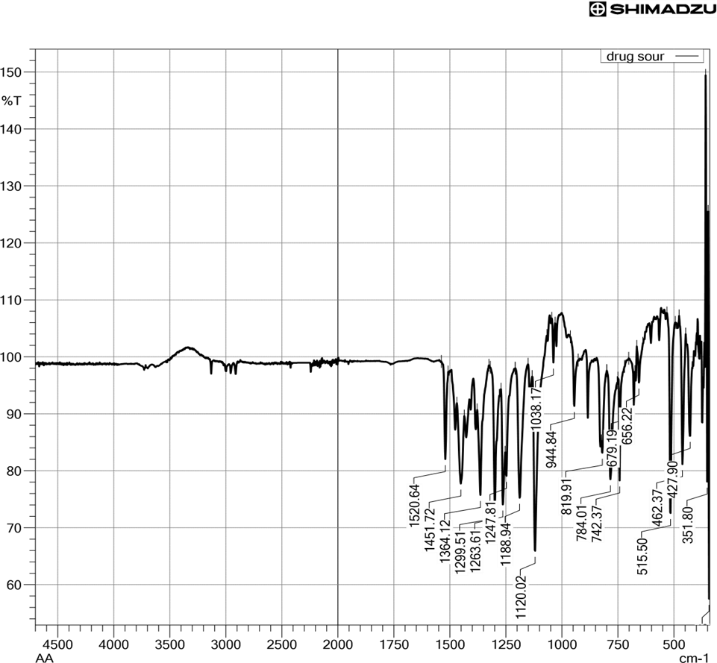
Fig.5: FTIR Spectrum of Tinidazole Drug
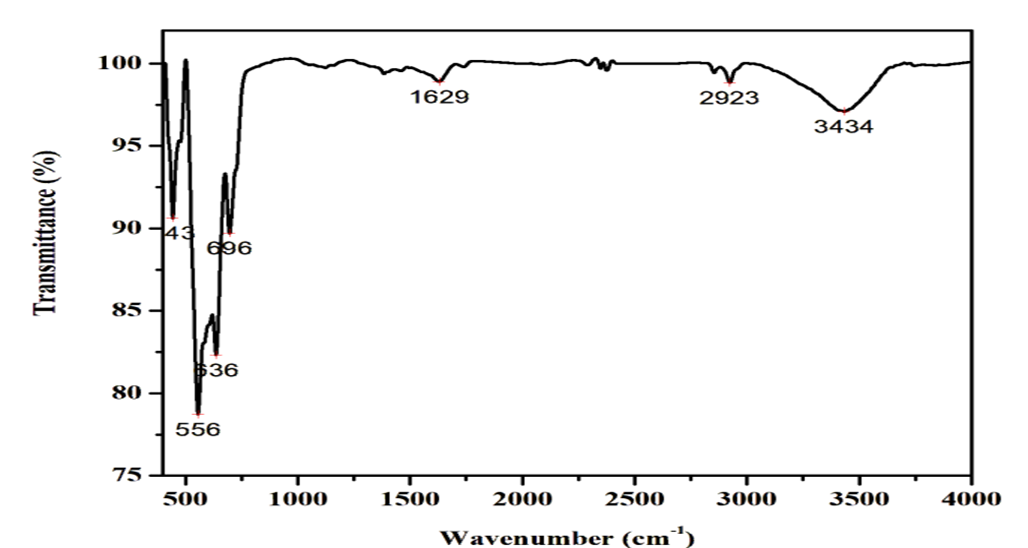
Fig.6: FTIR Spectrum of the drug physical mixture
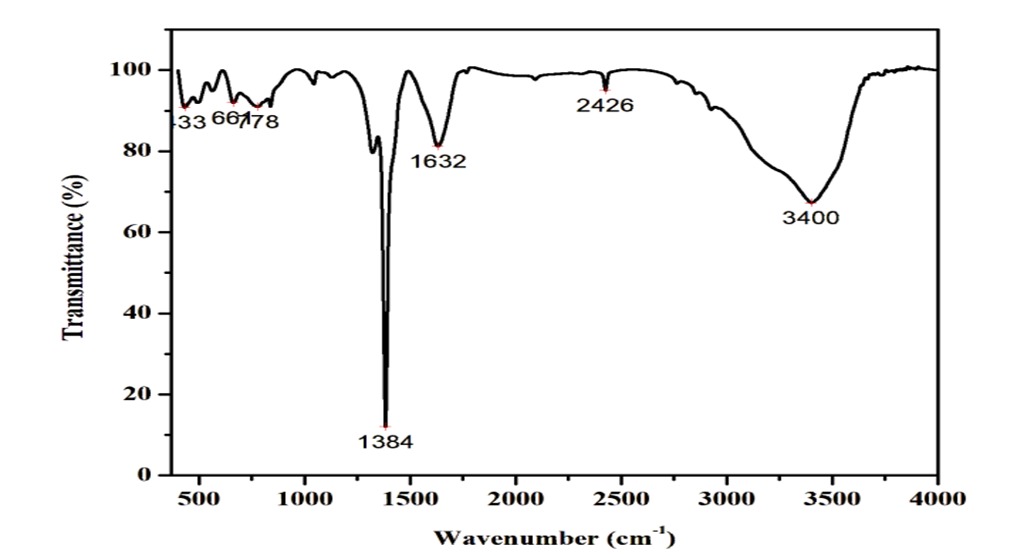
Fig.7: FTIR Spectra of the Formulation
3.4 Ex-Vivo study on the GIT tract of Goat
The ex vivo study of the optimized formulation f3 of the mucoadhesive tablet was performed on simulated gastric pH (0.1N HCL, pH 1.2) for 2 hours to simulate the gastrointestinal conditions. In this test, it was observed that the mucoadhesive tablet was attached to the intestinal segment. After 1 hour and 10 minutes, the mucoadhesive tablet was entirely separated from the intestinal segment, and the tablet was dissolved in the medium (25). The polymer sodium alginate shows mucoadhesive properties in the study.
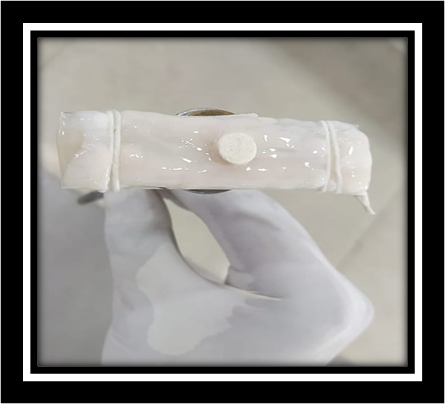
Fig.8: Ex-Vivo study on the GIT tract of Goat
3.5 Antibacterial Activity of Tinidazole
Tinidazole diffusion from the wells into the surrounding agar medium made a clear hollow zone, i.e, zone of inhibition (ZOI), because of the inhibition of bacterial growth in the adjacent area of the well. The diameter of these zones was measured by a metric ruler and compared with each other for analysis (26).
Table.4: Antibacterial activity of Tinidazole against E. coli
|
Sr. No. |
Concentration (µg/ml) |
Zone of inhibition in (mm) |
|
1 |
Negative control |
No zone |
|
2 |
Positive control 10 µg/ml |
21 mm |
|
3 |
Formulation 10 µg/ml |
15 mm |
|
4 |
Formulation 20 µg/ml |
23 mm |
|
5 |
Formulation 30 µg/ml |
25 mm |
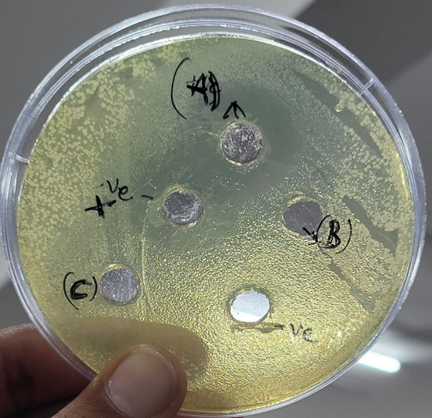
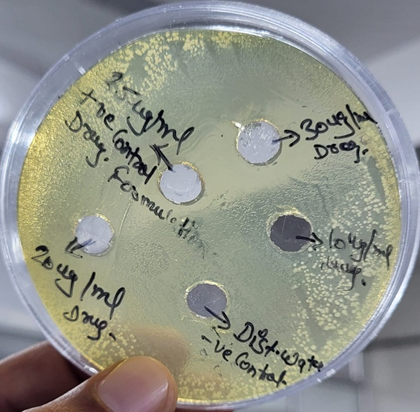
Fig.9: Antibacterial activity against Escherichia coli
CONCLUSIONS
Tinidazole, despite its well-established antimicrobial and antiprotozoal efficacy, presents notable formulation challenges due to its poor aqueous solubility and bioavailability resulting from extensive first-pass metabolism. These intrinsic limitations hinder its therapeutic potential, particularly in conventional oral dosage forms.
The present study successfully addressed these challenges through the development of mucoadhesive tablets using the direct compression method. By incorporating sodium alginate as the primary adhesive polymer alongside functional excipients such as microcrystalline cellulose, HPMC, and magnesium stearate, the optimized formulation demonstrated enhanced drug solubility and prolonged gastrointestinal residence time.
Evaluation of post-compression parameters confirmed excellent tablet integrity, with acceptable hardness, friability, thickness, and weight variation values. After perform all evaluation parameters of optimized formulation it was found that the hardness of the optimized tablet is 5kg/cm2 and 6kg/cm2, friability is 0.25 ± 0.01 to 0.51 ± 0.02, weight variation is 495.65 mg ± 505.50 mg, thickness is 3mm to 4mm, which matched with reference values given in review of literature. In vitro dissolution profiling revealed sustained drug release with a cumulative release of 97.26% over two hours, while ex vivo studies verified strong mucoadhesive strength against goat intestinal mucosa. Additionally, the formulation exhibited notable antimicrobial activity against E. coli, validating its therapeutic potential.
Overall, the mucoadhesive tablet formulation significantly improves tinidazole's dissolution rate and bioavailability, offering a promising alternative for gastro-retentive drug delivery and setting a foundation for future advances in targeted antibacterial therapy.
REFERENCES

Soarav Godara, Geeta Mahlawat, Yogesh Vashsith, Pushpika Jain, Ashutosh Upadhyay, Formulation and Evaluation of Mucoadhesive Tablet of Tinidazole, Int. J. of Pharm. Sci., 2025, Vol 3, Issue 12, 835-845. https://doi.org/10.5281/zenodo.17819060
 10.5281/zenodo.17819060