

We use cookies to ensure our website works properly and to personalise your experience. Cookies policy
Bhagwant University, Sikar Road, Ajmer, Rajasthan, India
The objective of the present research was to design, formulate, and evaluate sustained-release (SR) matrix tablets of Bethanechol Hydrochloride to prolong therapeutic activity and minimize frequent dosing. Bethanechol HCl has a short biological half-life that limits therapeutic effectiveness. Six matrix formulations (F1–F6) were prepared using hydrophilic and hydrophobic polymers. Pre-formulation studies confirmed drug–excipient compatibility and good micrometric properties. Post-compression evaluation indicated compliance with pharmacopoeial limits. Among all formulations, F5 (HPMC 2208) provided optimal sustained-release behaviour with ~95% drug release in 24 hours. Kinetic modeling confirmed diffusion-controlled release following the Higuchi model. Stability studies indicated the robustness of the optimized formulation. The results support once-daily dosing and commercial feasibility of the SR matrix system.
Bethanechol Hydrochloride is a direct-acting Para sympathomimetic agent prescribed for urinary retention and gastrointestinal atony. Its short half-life necessitates frequent dosing, leading to poor patient adherence. Sustained-release (SR) matrix tablets are an effective strategy to maintain therapeutic concentrations over an extended period. Hydrophilic polymers such as HPMC swell and form a gel layer that controls diffusion, while hydrophobic polymers regulate erosion and permeability. This study focuses on designing an SR matrix system capable of once-daily administration
Chemical name: 2-[(Aminocarbonyl)oxy]-N, N, N-trimethyl-1-propanaminium chloride
Molecular formula: C?H??ClN?O?
Molecular weight: 196.68 g/mol
Category: Parasympathomimetic (Cholinergic agonist)
Structure:
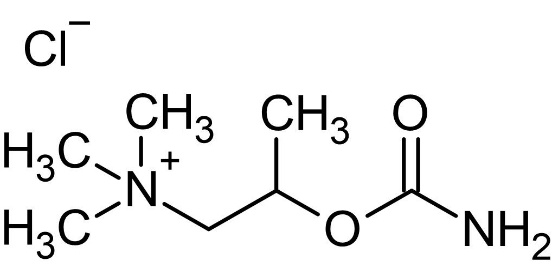
Figure 1: The Bethanechol Hydrochloride.
Matrix systems regulate drug release through mechanisms such as diffusion, erosion, swelling, or a combination of these processes. Hydrophilic matrices (e.g., HPMC) absorb water to create a gel layer that controls the diffusion of the dissolved drug; as the outer layer erodes or becomes increasingly porous, the release continues. Hydrophobic matrices (e.g., ethylcellulose) depend on restricted water penetration and complex diffusion pathways to slow down the release. The integration of hydrophilic and hydrophobic polymers can offer complementary mechanisms to stabilize release rates and reduce burst effects.
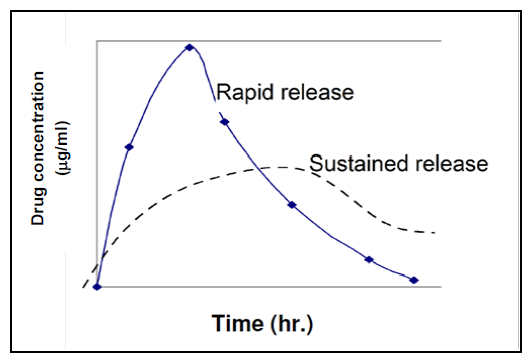
Figure 2: A regular release product and sustained release drug plasma drug concentration
METHOD DEVELOPMENT
Matrix tablets of Bethanechol HCl were prepared by “direct compression method”. All ingredients were accurately weighed and sieved through #60 mesh. The drug was mixed with polymers (HPMC K100M, Ethyl cellulose, and PVP K30) in different ratios to achieve varying release profiles. Lubricants (magnesium stearate and talc) were added and mixed gently before compression.
Direct compression method
Table 1: Formulation design
|
Ingredient |
Formulation Code |
|||||
|
F1 |
F2 |
F3 |
F4 |
F5 |
F6 |
|
|
Bethanechol chloride |
100 |
100 |
100 |
100 |
100 |
100 |
|
Carbopol |
175 |
100 |
175 |
- |
- |
|
|
Eudragit RLPO |
- |
- |
- |
175 |
- |
- |
|
High-viscosity HPMC 2208 |
- |
- |
- |
- |
175 |
- |
|
Glyceryl Stearate SE |
- |
- |
55 |
55 |
55 |
- |
|
Di calcium phosphate |
- |
- |
- |
- |
- |
175 |
|
Calcium Carbonate |
4.55 |
4.55 |
4.55 |
4.55 |
4.55 |
4.55 |
|
Magnesium stearate |
2.45 |
2.45 |
2.45 |
2.45 |
2.45 |
3.45 |
|
Total |
282 |
207 |
337 |
337 |
337 |
283 |
Evaluation of Pre?compression Parameters
Flow properties and compressibility were evaluated to ensure uniform die filling and reproducible tablet weights.
Parameters:
• Angle of repose
• Bulk density
• Tapped density
• Carr’s index
• Hausner ratio
Evaluation of Post?compression Parameters
Each batch was evaluated for:
• Hardness (kg/cm²)
• Thickness and diameter
• Friability (%) using Roche Friabilator
• Weight variation test
• Drug content analysis using HPLC
MATERIALS AND METHODS
Medication: Bethanechol Hydrochloride
Polymers: HPMC K4M / K15M / K100M, Ethyl cellulose, NaCMC, Xanthan gum
Excipients: Magnesium stearate, Talc, Lactose/Avicel PH 102, PVP K30 (for granulation)
Chemicals: HCl buffer, phosphate buffer, methanol (analytical grade)
Equipment: UV-Visible spectrophotometer, Dissolution tester (USP Type II), Hardness tester, Friabilator, Digital balance, pH meter.
In?vitro Dissolution Study
Dissolution profile were generated pH 6.8 phosphate buffer selected as media. Samples were withdrawn at predetermined intervals and analyzed at λmax of Bethanechol HCl.
Table 2: Dissolution parameter
|
Dissolution media |
Potassium dihydrogen phosphate buffer pH 6.80 |
|
Apparatus |
Type-II (paddle) |
|
Rotation speed |
50 rpm |
|
Volume |
900 mL |
|
Temperature |
37°C |
RESULTS AND DISCUSSION
The objective of this section of the research is to evaluate the experimental data, relate the outcomes to scientific principles, and discuss the implications of the results. The study aimed to develop a formulation that ensures prolonged and controlled drug release while preserving physical stability and the desired mechanical characteristics. The findings are compared with existing literature to validate the results of the study and establish their scientific significance.
Organoleptic and Physicochemical Properties
Bethanechol Hydrochloride was observed as a white crystalline powder, lacking any odor, and possessing a slight bitterness. The compound demonstrated high solubility in water and acidic environments, moderate solubility in ethanol and methanol, and limited solubility in non-polar solvents. These characteristics validated the appropriateness of an aqueous dissolution medium for in-vitro assessment.
Solubility Studies
The solubility characteristics of Bethanechol HCl were assessed in different media to ascertain a suitable dissolution medium for the research. The findings are detailed below:
Table 3: Solubility at different pH
|
Medium |
Solubility (mg/mL) |
|
Water |
1.8 |
|
Methanol |
5.4 |
|
Ethanol |
4.8 |
|
Phosphate buffer (pH 6.8) |
6.2 |
|
0.1 N HCl |
8.0 |
Bethanechol HCl exhibited good solubility in acidic and buffer media, confirming its suitability for dissolution in phosphate buffer (pH 6.8).
Pre-compression Parameters
The powder mixtures demonstrated bulk densities ranging from 0.44 to 0.47 g/mL, tapped densities from 0.51 to 0.54 g/mL, and Carr’s indices between 11% and 13%, indicating favorable compressibility.
Table 4: Pre-compression parameter results
|
Parameter |
F1 |
F2 |
F3 |
F4 |
F5 |
F6 |
|
Avg. Weight (mg) |
282 |
207 |
337 |
337 |
337 |
283 |
|
Hardness (kg/cm²) |
6 |
6.3 |
6.5 |
6.7 |
6.8 |
6.4 |
|
Friability (%) |
0.54 |
0.52 |
0.48 |
0.47 |
0.46 |
0.5 |
|
Thickness (mm) |
3.1 |
3.1 |
3.2 |
3.2 |
3.3 |
3.1 |
|
Drug Content (%) |
98.4 |
98.7 |
99.1 |
99 |
99.2 |
98.9 |
In-vitro Drug Release Studies
Dissolution studies were performed in a phosphate buffer (pH 6.8) for a duration of 24 hours at a temperature of 37 ± 0.5°C utilizing USP type II apparatus.
Table 5: Dissolution profiles of formulation F1-F6
|
Time (h) |
F1 |
F2 |
F3 |
F4 |
F5 |
F6 |
|
2 |
25 |
20 |
18 |
15 |
12 |
10 |
|
4 |
38 |
34 |
31 |
27 |
24 |
22 |
|
8 |
51 |
47 |
45 |
41 |
39 |
36 |
|
12 |
63 |
59 |
57 |
54 |
52 |
49 |
|
16 |
72 |
70 |
69 |
66 |
67 |
64 |
|
20 |
81 |
82 |
80 |
78 |
81 |
78 |
|
24 |
88 |
91 |
92 |
94 |
95 |
93 |
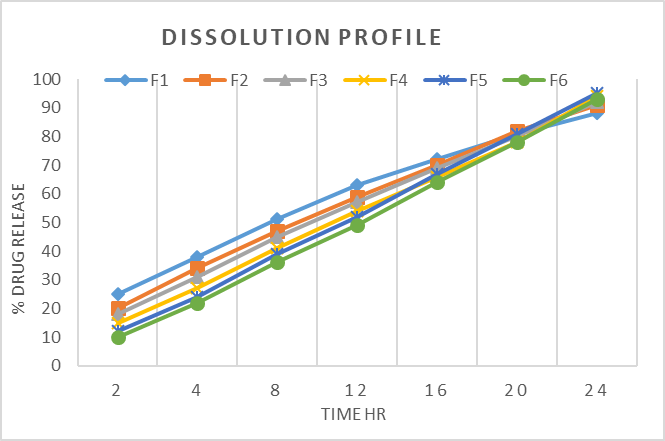
Figure 3: Dissolution profile graph of formulation F1-F6
Interpretation
F1 and F2 (low polymer ratio) showed faster drug release (~90% within 20 h).
F4–F6 with higher polymer content exhibited extended release up to 24 h.
F5 achieved the desired sustained release (≈95% at 24 h) and was selected as the optimized batch.
CONCLUSION
Based on mechanical strength, drug content, and dissolution kinetics, formulation F5 was identified as the optimized batch. The release profile followed the desired sustained pattern, providing therapeutic plasma levels for prolonged duration while minimizing dosing frequency. The present research successfully developed sustained-release matrix tablets of Bethanechol chloride (100 mg) using different hydrophilic and hydrophobic polymers to achieve controlled drug release over 24 hours for the management of urinary retention.
ACKNOWLEDGMENT
Nil
CONFLICTS OF INTEREST
The authors declare no conflict of interest.
Competing Interests Disclaimer
Authors have declared that they have no known competing financial interests OR non-financial interests OR personal relationships that could have appeared to influence the work reported in this paper.
REFERENCES

Raman Singh*, K. Saravanan, Formulation and Evaluation of Sustained-Release Matrix Tablets of Bethanechol Hydrochloride, Int. J. of Pharm. Sci., 2025, Vol 3, Issue 12, 533-538. https://doi.org/10.5281/zenodo.17802858
 10.5281/zenodo.17802858