

We use cookies to ensure our website works properly and to personalise your experience. Cookies policy
Department of Pharmacology, Bharathi College of Pharmacy, Bharathinagara, Maddur taluk, Mandya district, Karnataka, India-571422.
The present investigation aimed to assess and compare the in vitro anti-hypolipedemic and antioxidant activities of ethanolic extracts of mimosa pudica. The extracts were tested at different concentrations ranging from 10 to 100 µg/mL. Anti-hypolipidemic activity was evaluated by the inhibition of enzymes and other, and anti protiens involved in lipid metabolism ,and antioxidant potential was determined using the DPPH radical scavenging assay. The results revealed that root extracts exhibited a concentration-dependent increase in activity. The lower IC?? value obtained for mimosa pudica indicates its stronger free radical scavenging ability and hypolipidemic activity. The potent biological activities observed may be due to the presence of various phytoconstituents such as flavonoids, phenolic compounds, tannins, and alkaloids, which are well-known for their antioxidant and anti-hypolipidemic roles. These findings suggest that mimosa pudica could serve as a valuable natural source for developing safe and effective anti-hypolipidemic and antioxidant agents. Further research focusing on isolation, purification, and structural characterization of the bioactive compounds, along with in vivo pharmacological studies, is recommended to validate and enhance its therapeutic potential.
Hyperlipidaemia is a metabolic disorder characterized by elevated levels of one or more lipids and/or lipoproteins in the blood. Depending on the lipid group altered, hyperlipidaemia can be classified as hypercholesterolemia or hypertriglyceridemia. It is also classified according to its cause into primary forms caused by genetic alterations or secondary forms linked to a high-fat diet, hypothyroidism, obesity, liver diseases, and medication (Dybiec et al., 2023).
Hyperlipidemia is a risk factor for cardiovascular disease and stroke (Alloubani et al., 2021). It is also a risk factor for the development of several types of cancer (Zhang, Xi & Feng, 2021; Narii et al., 2023), acute pancreatitis (Yang & McNabb-Baltar, 2020), and chronic renal failure.[1]
Cardiovascular disease is the leading cause of death in both developed and developing countries. A well-established association exists between cholesterol levels and the incidence of heart attacks. Low-density lipoprotein (LDL) cholesterol levels of 130 mg/dL or higher, and high-density lipoprotein (HDL) cholesterol levels of 40 mg/dL or lower, are recognized risk factors for cardiovascular disease in humans. Maintaining normal body function requires reducing elevated serum cholesterol to an appropriate level. In many rural areas, people rely on medicinal plants to manage hyperlipidemia and cardiovascular disorders.[2]
Hyperlipidemia is a disorder of lipid metabolism and a major risk factor for coronary heart disease. Nowadays, synthetic drugs are often associated with various side effects, whereas herbal medicines possess lipid-lowering and antioxidant properties with minimal or no adverse effects.[3] Hyperlipidemia is not only a medical but also a social issue, particularly associated with diabetes mellitus, leading to increased rates of morbidity and mortality. The major contributing factor to hyperlipidemia is atherosclerosis, which in turn results in cerebrovascular and ischemic coronary heart diseases.[4]
Hyperlipidemia can be either primary or secondary type, the primary syndrome may be treated by hypolipidemic drugs, but secondary induced by diabetes, hypothyroidism or renal lipid nephrosis which treated by treating the original disease moderately than hyperlipidemia[5].Obesity is a complex and chronic condition resulting from the interaction of various factors, including dietary habits, lifestyle, genetics, and environmental influences.[6]
Hyperlipidemia is characterized by alterations in the serum lipid and lipoprotein profile, including increased concentrations of total cholesterol (TC), low-density lipoprotein cholesterol (LDL-C), very low-density lipoprotein cholesterol (VLDL-C), and triglycerides (TAG), along with a decreased level of high-density lipoprotein cholesterol (HDL-C) in the blood circulation [7]. In addition, an increase in blood glucose levels occurs because fat serves as an alternative energy source for muscles, thereby reducing glucose utilization. This condition stimulates the pancreas to secrete excess insulin in an attempt to counteract hyperglycemia; however, this compensatory response often fails, resulting in peripheral insulin resistance, which may eventually contribute to the development of diabetes.[8]
Mimosa Pudica
Mimosa pudica L. is a creeping herb that may grow annually or perennially. In Ayurveda, it is identified as Lajjalu and is reported to exhibit antiasthmatic, aphrodisiac, analgesic, and antidepressant activities. Additionally, M. pudica possesses sedative, emetic, and tonic properties and has been traditionally employed in the management of various disorders such as alopecia, diarrhea, dysentery, insomnia, tumors, and urogenital infections.[9] Mimosa pudica (Family: Mimosaceae), commonly known as the sensitive plant in English and Lajvanti or Chuimui in Hindi, is widely distributed throughout India, particularly in moist habitats. It is a diffuse, prickly undershrub that grows to a height of about 45–90 cm. The leaves are bipinnately compound, with 2–4 pinnae, each bearing 10–20 pairs of small leaflets. The rachis is covered with fine, ascending bristles. The plant bears pink, globose flower heads on prickly peduncles, usually found in axillary pairs along the branches. The fruits are flat, straw-colored, bristly pods, each composed of 3–5 one-seeded segments.[10]
Mimosa pudica is a tropical weed belonging to the legume family, native to South America. It is also widely distributed across various regions of India, including Andhra Pradesh, Telangana, Karnataka, Kerala, Odisha, and Tamil Nadu. The plant is well known for exhibiting thigmonastic movement—a rapid folding of leaves in response to touch or mechanical stimulation. M. pudica possesses a wide range of biological activities, such as antimicrobial, antidiabetic, anticonvulsant, antivenom, anti-inflammatory, antitumor, antifungal, antinociceptive, and antiulcer properties. Additionally, it exhibits antioxidant, antifertility, antihistaminic, wound-healing, and diuretic effects.[11]
The tannin and flavonoid fractions of Mimosa pudica leaves were analyzed for their phytochemical constituents. Phytochemical screening of the extract revealed significant wound-healing activity using the wound excision method. This activity is attributed to the presence of bioactive compounds such as tannins and flavonoids. Traditionally, Mimosa pudica has been used in the treatment of various ailments, including blood and bile disorders, bilious fever, piles, jaundice, leprosy, ulcers, and smallpox.[12]
Mimosa pudica has attracted global research interest due to its wide range of pharmacological activities, including antidiabetic, antitoxic, antihepatotoxic, antioxidant, and wound-healing effects. Phytochemical studies have shown that the plant contains alkaloids, glycosides, flavonoids, and tannins. In Ayurveda, it is traditionally used to balance Kapha and Pitta doshas, owing to its bitter, astringent taste and cooling properties.[13]
2.METHODOLOGY:
Collection and drying of mimosa pudica root extract:
The roots of Mimosa pudica were collected from Bharathinagara, Mandya district, Karnataka, and authenticated by Dr. Thejas Kumar, Department of Botany, Bharathi College. The shade-dried roots (500 g) were powdered and extracted using ethanol. The collected Mimosa pudica roots (500 g) were washed thoroughly to remove soil and dirt, then cut into small pieces. They were shade-dried in a clean environment at room temperature for 10 days to remove all moisture and prevent spoilage. After drying, the roots were ground into a fine powder using a grinder and stored in an air-tight container to avoid humidity and contamination. This careful preparation helped preserve the sample and ensured accurate results during analysis.
Preparation of mimosa pudica root extract:
The dried root powder of Mimosa pudica (150 g) was extracted using ethanol by the maceration method. The powder was mixed with 400 ml of ethanol, covered with aluminium foil, and kept at room temperature for 48 hours. It was then stirred continuously for two more days to extract the plant compounds fully. The liquid extract was left on a ceramic plate for about a week to let the solvent evaporate, giving 11.355 g of dry extract. This extract was tested for solubility and then screened to identify bioactive compounds with antioxidant and hypolipidemic properties.
3.Hyperlipidemic Activity:
Experimental Design:
The pancreatic lipase enzyme inhibition assay is based on measuring the activity of pancreatic lipase and evaluating the effect of potential inhibitors on this activity. Pancreatic lipase catalyzes the hydrolysis of triglycerides into free fatty acids and glycerol in the digestive system. Inhibitors may reduce this activity either by competing with the substrate (competitive inhibition) or by binding to the enzyme or enzyme–substrate complex (non-competitive inhibition).
Chemicals: p-nitrophenyl butyrate (p-NPB), 0.1 M Tris HCl buffer (pH8 ), Pancreatic lipase.
Procedure:
Pancreatic lipase activity was determined by measuring the hydrolysis of p-nitrophenyl butyrate (p-NPB) to p-nitrophenol using a method reported previously. The 0.1 mg/ml of enzyme solution was prepared by reconstituting porcine pancreatic lipase using 0.1 M Tris-HCl buffer (pH 8). Then, 5 μl of test sample was mixed with 90 μl of enzyme buffer, and incubated for 15 min at 37°C. After incubation, 5 μl of 10 mM p-nitro phenylbutyrate (p-NPB) was added to enzyme mixture and the reaction was allowed to proceed for further 15 min at 37°C. After incubation, the absorbance of p- nitrophenol released was measured at 405 nm using a UV Vis spectrophotometer. Furthermore, a positive control, Orlistat ,was used to ensure the reliability of results. Relative pancreatic lipase activity (%) was calculated as (the activity of the compound with the substrate -the activity of the compound without the substrate)/(activity without the compound and with the substrate—negative control without the compound and substrate)] x 100.
Antioxidant Activity:
DPPH assay (2, 2-diphenyl-1-picrylhydrazyl) free radical scavenging method:The radical scavenging activity of different extracts was determined by using DPPH assay according to. The decrease in the absorption of the DPPH solution after the addition of an antioxidant was measured at 517nm.
Reagent Preparation :0.1mM DPPH solution was prepared by dissolving 4mg of DPPH in 100ml of DMSO.
Procedure:
Different volumes (2 - 20µl) of plant extracts were made up to 40µl with DMSO and 2.96ml DPPH (0.1mM) solution was added. The reaction mixture was incubated in dark condition at room temperature for 20 min. After 20 min, the absorbance of the mixture was read at 517 nm. 3ml of DPPH was taken as control. The % radical scavenging activity of the plant extracts was calculated using the following formula,
%RSA = {(Abs control – Abs sample)/Abs control} × 100
Where, RSA is the Radical Scavenging Activity;
Abs control is the absorbance of DPPH radical +DMSO;
Abs sample is the absorbance of DPPH radical + plant extract.
4.RESULTS:
4.1 Pancreatic Lipase Inhibition Assay:
In the present study to establish hypolipidemic potential of root extract, we carried out in-vitro lipase inhibition assay. The root extract inhibited pancreatic lipase enzyme with IC50 value of 81.76 µg. The results shown in the table 1 and figure 1.
Table 1: Pancreatic lipase inhibition Activity of root extract
|
Sl. No. |
Concentration (µg) |
% inhibition |
IC50 value (µg) |
|
1. |
10 |
5.86 |
81.76 |
|
2. |
20 |
24.51 |
|
|
3. |
40 |
29.55 |
|
|
4. |
60 |
40.23 |
|
|
5. |
80 |
49.20 |
|
|
6. |
100 |
61.35 |
|
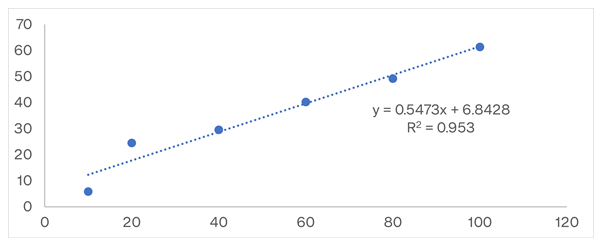
Figure 2: Scatter graph of pancreatic lipase inhibition activity of root extract.
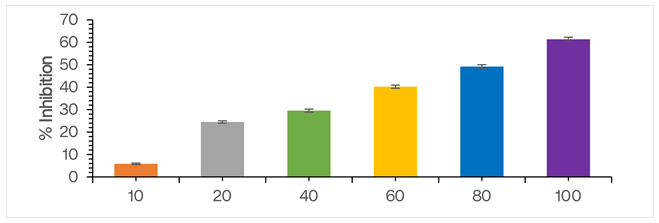
Figure 3 : Bar graph of pancreatic lipase inhibition activity of root extract.
Antioxident Activity:
4.1.2 DPPH radical scavenging assay:
Medicinal plants are an important source of antioxidants. Typical phenolic content that possess antioxidant activity are known to be mainly phenolic acids and flavonoids. It is reported that the phenolic content are responsible for the variation in the antioxidant activity of the plant. The stable radical DPPH had been used widely for the determination of primary antioxidant activity. The DPPH antioxidant assay is based on the ability of a stable free radical to decolorize in the presence of antioxidants (Table 2and Figure 4).
Table 2: Concentration and % RSA, IC50 value of ascorbic acid and root extract.
|
Sample |
Concentration (µg) |
%RSA |
IC50 Value (µg) |
|
Standard (Ascorbic acid) |
6 |
50.55 |
5.63 |
|
12 |
60.88 |
||
|
18 |
70.79 |
||
|
24 |
83.05 |
||
|
30 |
91.04 |
||
|
Root Extract |
5 |
16.97 |
19.52 |
|
10 |
26.16 |
||
|
15 |
30.37 |
||
|
20 |
52.18 |
||
|
25 |
54.36 |
||
|
|
30 |
65.73 |
|
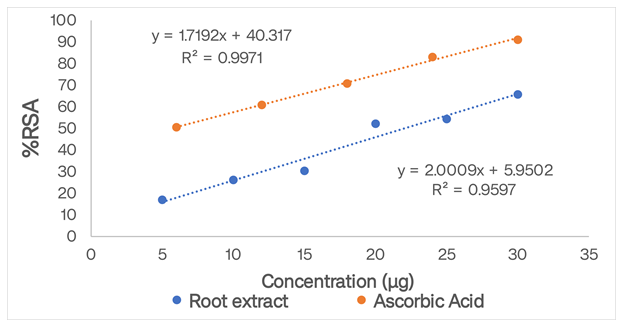
Figure 4 : DPPH radical scavenging potential of ascorbic acid and root extract.
5.DISCUSSION
In the present study we subjected Mimosa pudica root extract to evaluate its antioxidant and hypolipidemic activity in vitro. Also, extract is subjected to preliminary screening for its secondary metabolites. The results obtained indicate that mimosa pudica possess antioxidant and hypolipidemic activity. The antioxidant effect of mimosa pudica was evaluated by using DPPH assay. The hypolipidemic effect of mimosa pudica was assessed by pancreatic lipase inhibition assay by using in-vitro assay method.
Antioxidant activity by DPPH radical scavenging assay:
DPPH scavenging assays is most common spectrophotometric method to assess the antioxidant potential of chemical moieties. Advantages of these methods include easy performing, having a high sensitivity and rapidity. DPPH is commercially available long lived organic nitrogen radical and freely soluble in organic solvents. It produces stable purple coloured radical, having an absorption maximum at 517 nm. The DPPH assay is believed to involve hydrogen atom transfer reaction. On the other hand, it is suggested that electron transfer reaction will be the major principle involved in this assay. Therefore, the antioxidant strength of the compound depends upon its hydrogen or electron donating nature. The antioxidant potential of extract of Mimosa pudica root was measured by the bleaching of the purple coloured methanol solution of the stable DPPH radical. The root extract of mimosa pudica exhibited EC50 of 19.52 µg against this radical.
Hypolipidemic activity by pancreatic lipase inhibition assay:
Pancreatic lipase activity was measured in vitro by hydrolysis of p- nitrophenyl butyrate (p-NPB) in the presence of pancreatic lipase enzyme. Further the process was quantified using 0.1 M Tris-Hcl buffer (PH 8). The root extract of mimosa pudica possess pancreatic lipase inhibitory activity, thus the intensity of colour decreases and the absorbance is measured at 405 nm.The root extract of mimosa pudica exhibited IC50 value of 81.76 µg.
CONCLUSION:
Based on the results, it was concluded that the ethanolic extract of Mimosa pudica root at doses of 20, 40, 60, 80 and 100 µg/ml exhibited Hypolipidemic and DPPH radical scavenging activity. Among these, the extract at higher doses showed a more significant percentage of inhibition. This study highlights the importance of conducting further pharmacological evaluations of Mimosa pudica root extract in different experimental models, as well as the isolation of specific chemical constituents responsible for its hypolipidemic and DPPH effects.
ACKNOWLEDGMENT
I sincerely thank to Department of Pharmacology, Bharathi college of pharmacy, Bharathinagara for encouragement and availing of the laboratory facilities during course of investigation.
Conflict of interest: The authors declared no conflict of interest.
REFERENCES

Meghana B. P.*, Harshitha S., Spandana A. R., Shilpa R., Abhishek K. S., In Vitro Anti-Oxidant and Hypolipidemic Activity of Ethanolic Extract of Mimosa Pudica, Int. J. of Pharm. Sci., 2025, Vol 3, Issue 11, 2971-2978 https://doi.org/10.5281/zenodo.17651215
 10.5281/zenodo.17651215